A funny post by a teacher quite sick of the same old questions.
Posts Tagged ‘Teaching’
Introducing the World’s Oldest Teacher
October 15, 2012

When I say that I am not intending to retire anytime soon, I am not quite referring to teaching until I’m 100:
It is official. St Aloysius’ College’s Father Geoffrey Schneider, who turns 100 on December 23, is the world’s oldest serving teacher.
The Australian representative for Guinness World Records Chris Sheedy ,who is a former Aloysius’ student (1980-88), presented the world record certificate at the school in Kirribilli.
Father Schneider featured on the front page of the Mosman Daily as Australia’s oldest teacher but this world record will give him global fame.
Eight hundred members of the school community including parents, past parents and students gathered at the college for a Celebration of a Century to honour Father Schneider’s life.
He grew up in Melbourne and came to live at the college in 1965. The children have nicknamed him Father Schnitzel and both a classroom and trophy are named in his honour.
He takes 15-minute religious instruction classes at the college and is chaplain of the junior school.
The Jesuit priest has no intention of retiring from his teaching career.
“I’ve been gifted with strengths,” Father Schneider said.
Of the fuss being made, Father Schneider said he “lets it all flow by” while he awaits his telegram from the queen for turning 100.
Click on the link to read Meet the Armless Math Teacher
Click on the link to read School Fires Entire Staff!
Click on the link to read The Case of a Teacher Suspended for Showing Integrity
Click on the link to read Teaching is Worth It!
10 Art Related Games for the Classroom
October 8, 2012

Courtesy of Becca Swanson. Perfect for substitute teachers who haven’t been provided with work for the class:
1.) The Creativity Design Game – This art game, originally inspired from the book “Design Synectics” by Nicholas Rourkes, takes problem-solving to a new level. Students are asked to take two very different objects and create a drawing, combining these separate objects into one completely new invention.
In my classroom, I call this the “Creativity Game” and I made this activity more game-like by typing out hundreds of random nouns on slips of paper, and placing them in a bag. Two students then blindly reach in the bag and pull out a ‘mystery word’. The students are given one to two minutes to come up with an idea, sketch it out and name it. As they work, I observe their drawings and ask the most creative thinkers to share their ideas with the class when time is up.
2.) The Artwork Memory / Matching Game – Artwork memory games – inspired by the child’s matching game “Concentration” – can be perfect free-time activities for elementary art students. The “Art Memo” game comes with 72 artwork images and can be purchased for around $20 here at Amazon. However, if you have a color printer you can easily make your own Art Memory game by photographing student artwork or finding art online, printing out 2 of each image, then laminating the cards (or glue onto note cards).
3.) Art Jeopardy! – A great way to review art terms, art history information, processes or artists before a test – or simply as lesson closure – a teacher can plan an Art Jeopardy game by coming up with five or more categories, and five questions to go in each category. Depending on the art teacher’s time, A Jeopardy board can be drawn onto the chalkboard, made in PowerPoint, or can be assembled with fabric and ‘pockets’ for questions on note cards.
4.) Art Room “Win, Lose or Draw” – A great classroom reward, last-day activity or holiday treat, your classes can play the classic art game “Win, Lose or Draw” (or “Pictionary”). Simply put students in two teams, give the player a word to draw and have them try to draw it in a given amount of time with their teammates guessing correctly.
5.) “Clay Wars” Game – When introducing students to ceramics — or as a way to practice recently learned skills — have students play a clay-based art game. All students will have an equal amount of clay, and compete to sculpt items, such as: the tallest structure without falling over, the most perfect sphere, the longest single rope coil, the best cube, the most realistic animal, the funniest face, etc. Students can be split into teams, or compete individually.
6.) Educational Art Novelties – When students have additional activity time in art class, they can play solo art games and puzzles by looking at hidden-picture art books (such as “Can You Find It Inside?” by the Metropolitan Museum of Art), using mosaic tiles to create pictures, working on art-based jigsaw puzzles, working on origami, and studying optical illusions. Students can easily create their own artwork novelties and games by designing tangrams (a Chinese puzzle, easily made with paper) or creating thaumatropes (a toy popular in the Victorian era).
7.) “Paint Wars” Game – Similar to “Clay Wars”, this paint-based art game is also a way to practice recently-learned processes and theory. Students can compete as teams or individuals, and will try to do the following: best match their skin tone using only primaries and neutrals, most closely match the color of a flower, paint the most realistic piece of food, the scariest monster, and other ideas.
8.) Art Book / Internet Scavenger Hunts– This fun art game is going to be more effective with older students, and requires either a large assortment of art books or the internet in your library or classroom. You can either compile a list of items that students will need to search for, perhaps with a worksheet to write them down on, or give one item at a time for students to search for as a timed competition. Your scavenger hunts can be customized to whatever your students have been learning about lately (find an Impressionist painting with a dog in it, find a sculpture made in France, etc.).
9.) Art Vocabulary Word Searches / Puzzles – Word searches, crosswords and other puzzles can be an effective and fun way to review art class vocabulary. Try making your own customized art puzzles here at Discovery Education Puzzlemaker.
10.) Online Art Games – There are thousands of online art games and activities that are safe for students to play in school (some more so than others, so be sure to check them out beforehand). These can be a great educational activity for students who finish their work early. Check out the Incredible Art Department’s list of Online Art Activities for Kids for a huge list of online art games and resources.
Click on the link to read Do Kids Need A Classroom Pet (The Four-Legged Variety)?
Click on the link to read 5 Rules for Rewarding Students
Click on the link to read Tips for Engaging the Struggling Learner
Click on the link to read the Phonics debate.
12 Tips for Managing Time in the Classroom
October 5, 2012
Courtesy of Susan Fitzell from teachers.net:
1. Keep students on task during activities: Use visual timers during class activities such as think-pair-shares, group work, timed individual assignments, etc. A visual timer is one that enables students to “see” time.
2. Save class time by using efficient note-taking practices: For example, rather than have students spend valuable class time copying notes that the teacher writes on an overhead projector, whiteboard, chalk board or LCD Screen, give students a copy of linear notes as well as a blank graphic organizer based on those notes. Rather than copy notes, students fill in the words of the graphic organizer. This not only saves tremendous class time, it presents the notes in a linear as well as graphic mode and still requires students to pay attention because they have to fill in the missing words.
3. Get students to class on time: Choose a ‘gripping’ novel, or a short educational game (Around the World, Vocabulary Hang Man, etc. One that would only take about five minutes to complete.). Every day, exactly as the bell rings, start reading or playing the game. Students will rush to class to avoid missing the ‘fun’.
4. Use song clips or cell phone ring tones as timers: Sort them by how long they take to play through and use them as auditory timers for the students. Whether it’s a transition or a non-reading activity (Avoid playing music while students are reading.) the music will cue students in to the ‘time’ and keep them hopping.
5. Keep lengthy group work activities on target: When giving students a good chunk of time to work on a project, for example, twenty minutes; tell students that you will do a ‘check-in’ every 3 min and 22 seconds. (Or some other odd time) Why not five minutes? Because the brain likes novelty and they are more likely to pay attention to something like 3:22. Then set your visual timer for that amount of time. When the time’s up, stop the action and do a “check-in” with each group. This should only take a minute or two. Have students whip around the room with a quick report. This allows you to zero in on the students that are struggling to get started and stay abreast of the students who are barreling ahead and may finish early.
6. Get through your lesson plan with minimal distraction: Summarize what must be accomplished in a period of time in a bulleted list. Try to keep it to four or five bullets. List the bullets on a flip chart pad or white/chalk board. Draw check boxes next to each bullet. As the class completes each bullet, ask a student to check off the completed item. If the bullets are checked off before the end of the allotted time, students are rewarded with ‘talk time’, an educational game that they love to play, or another incentive. Say, “When we finish these bullets early, we have time to do something fun!”
7. Provide an environment that makes writing more efficient AND saves time: When assigning students a writing assignment, structure 10+ minutes (or more) for students to create a mind map of their ideas. When assigning students a project, structure time during class for students to create a plan. When students start projects with a ‘map’ of where they are going, the quality of their end product not only improves, they work more effectively and efficiently, thus saving time.
8. Give students clear directions so the need for repetition is minimized: Write your directions, assignments, sequences of activities, etc. on the chalk/white board or PowerPoint screen. Have one or two students paraphrase the instructions out loud for the class. Paraphrasing not only allows the teacher to determine how clear the directions are, but it provides the directions once again with a different voice.
9. Say it so all can hear it: If all students could hear what teachers said, or were listening, class activities would move along faster. If possible, use a wireless microphone and a speaker in your classroom. Teachers who use such a system for ‘one’ student in the class who needs it as an accommodation report that they notice a marked difference in the class; all students hear and respond better. This step saves time because teachers repeat and re-teach less.
10. Allow students to contribute to managing THEIR class: Assign them jobs, or if appropriate, have them come up with a fair system of assigning jobs. Students can not only help with taking attendance, and collecting and passing papers; they can contribute to creating memory devices (mnemonics), songs for learning, vocabulary cartoons, flow charts and graphic organizers. Find out what strengths students bring to the class and use those strengths to differentiate lesson plans and learning materials.
11. Students who take time away from class must give time back: Restitution: When students caused the class to lose time because of poor behavior and disruption, I require them to make it up to the class. Students might have to prepare and present a 20 minute lesson, come after school to tutor another student for 7 minutes, work on the computer to create a crossword puzzle worksheet, etc. They must give back for what they took away. This is not only an effective deterrent to wasted time; it can be a positive experience for the student and an opportunity for you to build rapport and relationship with the student.
12. Shorten the time it takes to prep: Use internet resources to provide ready made materials for your lesson plans. See my Dozen Internet Tips article from December 2008 for some great time saving tips for using the Internet.
Click on the link to read If Teachers Were Paid More I Wouldn’t Have Become One
Click on the link to read Different Professions, Same Experiences
Click on the link to read Our Pay Isn’t the Problemt
7 Tips for Transforming Your Classroom
October 1, 2012Courtesy of esteemed educator and blogger David Truss:

Inquiry based learning is a key tenet of the Inquiry Hub. When students get to choose their own topics, with guidance and support from their teachers, peers and community members, these learners will produce thoughtful, rich and compelling answers.
By helping students connect, create and learn together, we will encourage them to look outside of their box and seek a world of potential.
* Transforming Classrooms with Inquiry: It starts with educators asking really good questions. There are a lot of resources on Inquiry Learning, here is a great list of resources to get teachers started. The Calgary Science School’s Exemplary Learning and Teaching posters are excellent examples of the resources shared in the list. Which of these resources will help you develop more inquiry based lessons?

When students explore their interests in-depth, they will often discover insights worth sharing with others. At the Inquiry Hub, we believe that an integral part of learning is the ability to share what you’ve learned with others in meaningful ways.
* Transforming Classrooms with Voice: Be it a presentation to a small group, the entire school, the local community or online (with the world), work with students to craft their message in thoughtful, well represented ways. How can you use recording devices, now available on almost every phone and on every computer, to get students prepared for presentations or to get students to share their work publicly?

An important skill to learn is how to ‘write to a specific audience’, and there is no better way to promote this than to give learners a legitimate audience for their work.
* Transforming Classrooms with Audience: Through the use of blogs, wikis, digital portfolios and social media tools, you can invite the world to be a participatory audience in the work that our students do. An Authentic Audience Matters! What can you do to increase the audience of your students’ work beyond the class or just you, their teacher?

Collaboration is a learned skill that is essential in today’s world. Our goal will be to have students collaborate on projects that matter, in many different communities.
* Transforming Classrooms with Community: Provide opportunities for projects to extend beyond age-group peers to include younger and/or older students, parents and teachers, community members, subject area experts, and students from around the globe. Who do you know in your community (or your online network) that can share their expertise with your students?
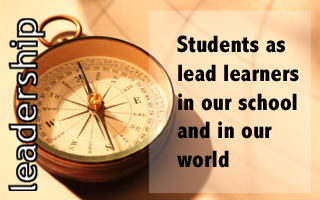
“In a learning organization, leaders are designers, stewards, and teachers.” ~Peter Senge
At the Inquiry Hub, students will be provided with many opportunities to be designers, stewards and teachers. We believe that every student has the potential to lead!
* Transforming Classrooms with Leadership: Buddy up with students in younger classes. Create activities and events which truly allow students to ‘run the show’. Here is a resource I developed for teaching leadership and developing a school-wide leadership program. How can you create more authentic leadership opportunities for your students in your class?

We can learn a lot from (and within) play. Play promotes discovery and invites the idea that we can have fun learning, even from our mistakes. From the MIT Media Lab’s advocation of ‘Lifelong Kindergarten‘ to Google’s promotion of employees getting 20% of their work week dedicated to personal-interest projects, it is quickly becoming apparent that ingenuity and creativity are both sparked from an environment that incorporates play into learning.
* Transforming Classrooms with Play: There is a lot of pedagogy in play (at all ages). Do we provide “gaps” in our teaching? Time and spaces where students can be creative beyond the scope of the content we are teaching? Watch this interesting slide show, think about how ‘Game design’ invites creative play, and question how you can embed some of these ideas into your lessons?

A key principle in the new learning theory, Connectivism, considers networks to be a central metaphor for learning. The theory suggests that ‘learning and knowledge rests in diversity of opinions’. The COL Inquiry Hub will use a hybrid model that blends classroom, community and online experiences, and so students will be exposed to a multitude of learning networks.
* Transforming Classrooms with Networks: Skype is a great tool to bring classes from across the country or across the globe together. Who can you connect your class with, and what tools can you use, beyond Skype, to connect the learning that’s happening in other physical and digital learning spaces?
For more wonderful material and advice from David Truss please follow this link.
Click on the link to read Top Ten Funny Excuses For Being Late To School
Click on the link to read Why Spelling is Important
Click on the link to read 2 Kids Outsmart 3 Robbers
Click on the link to read the 100 Skills Parents Should Teach Their Children
Who Corrects Our Spelling Mistakes?
September 14, 2012
Um … I think that should read “public education“.
Click on the link to read This is What Happens When You Rely on Spell Check
Click on the link to read The 15 Most Commonly Misspelled Words in the English Language
Click on the link to read Who Said Grammar Isn’t Important?
Click on the link to read Why Spelling is Important
100 Skills Parents Should Teach Their Children
August 27, 2012
Courtesy of blog.sfgate.com:
- Love one another
- Tie shoes
- Swim
- Brush and floss daily
- Ride a bike
- Do a somersault
- Fly a kite
- Make a bed
- Read before going to bed
- Put your napkin in your lap at the dinner table
- Say please and thank you
- Cook a meal
- Watch TV (and play video games) in moderation
- Apply sunscreen
- Sew on a button
- Tell time using a non-digital clock
- Treat others with kindness and respect
- Blow a runny nose into a tissue
- Eat one bag (not three bags) of potato chips
- Throw a ball
- Skip a rock
- Jump rope
- Wipe from front to back
- Hammer in a nail
- Be a good sport
- Write a thank-you letter
- Iron a pair of pants
- Make healthy food choices
- Fix a leaky faucet
- Catch a fish
- Develop self control
- Resolve a dilemma
- Read a map
- Be respectful to elders
- Show compassion
- Apologize when you are wrong
- Use a public restroom
- Do the laundry
- Grow something like flowers
- Balance a checkbook
- Have confidence
- Make a pie crust from scratch
- Speak in front of a group
- Take public transportation
- Fight courageously, lose graciously
- Save a life using CPR or the Heimlich maneuver
- Clean up a mess
- Study for a test
- Turn off all the lights before leaving the house
- Properly pop a zit
- Dress for the occasion
- Sing at least one song well
- Dance
- Have safe sex
- Know when to say no
- Write a sonnet, or at least a limerick
- Make an honest dollar
- Save money, and spend wisely
- Do your research
- Look someone in the eye during a conversation
- Find a book in a library
- Wrap a present
- Remove a chocolate stain
- Tie a tie (bonus points for a bow tie)
- Apply mascara
- Read a newspaper
- Donate time to those less fortunate
- Be independent
- Be confident
- Sneeze and cough into your arm
- Lead
- Speak a second language, especially Spanish
- Ask questions
- Hold a baby
- Accept others for their differences
- Manage stress
- Distinguish needs from wants
- Negotiate
- Support yourself
- Comfort others
- Write an essay
- Take a taxi home (or call mom) when you’re not fit to drive
- Add, subtract, multiply, and divide without using a calculator
- Get along with people you may not like that much
- Deal with tragedy
- Build a campfire (and put it out)
- Open a bottle of champagne
- Celebrate and congratulate
- Use chopsticks
- Deal with rejection and disappointment
- Parallel park
- Drive a stick shift
- Change a flat tire
- Parallel park with ease
- Use a fire extinguisher
- Bake a cake
- Pitch a tent
- Pick a piece of fruit that’s ripe
- Look on the bright side
- Listen
Click on the link to read Inspirational Dad Competes In Triathlon With Daughter Who Has Cerebral Palsy
Click on the link to read Brilliant Rap Song By Parents About Parenting
Click on the link to read 20 Tips to Ensuring Your Kids Find You Embarrassing
Click on the link to read This is What You Get for Doing Your Homework
The Dog Eat Dog Style of Education
August 23, 2012
Classrooms are increasingly becoming a case of a battle of the fittest. The pressure to deliver individual achievement on curriculum benchmarks and standardized testing have not helped. More and more we are seeing classroom relationships fracture and a strong preference for achievement over effort.
A friend of mine discussed an issue he was having with his son’s school. He told me that his son’s teacher is rewarding some of his students for reaching a certain goal. His son, among others, are excluded from a field trip because they didn’t fully rote learn the expected material. He tried his best, but didn’t get there by the deadline. He is in Grade 4 and is already being excluded for not meeting benchmarks.
When I was doing my teaching rounds I encountered a scenario in the music room where a child had disturbed the class. The teacher was considering punishing the child by excluding him from the next activity. The teacher decided to ask the class to determine this child’s fate. The teacher gave them two options. The first was to give the boy one more chance, the second was to exclude him. I watched in amazement as the entire class voted to prevent him from taking part in the activity. The class were taught to be ruthless towards each other so that’s what they did.
When will our educators realise that a child cannot achieve their potential when they are not valued for their efforts or respected by their peers? All this talk of ‘child centered teaching’ and ‘teacher centered teaching’ is off the mark. I prefer, what I call, ‘classroom centered teaching‘ – where the needs of the group necessitate the style in which I teach. According to this method, it is my job as my first priority to ensure that each child feels valued for who they are, what skills they have and how they are treated by their peers.
This means that when there is a disagreement among students, I do not hesitate to use teaching time to work things out. The time I invest into the social environment in my class has a strong impact on academic progress. Those of you that have witnessed a rift between students or groups of students in the classroom may have noticed how hard it is to get the class to focus on classwork when the playground politics is unresolved.
Whilst standardised testing doesn’t consider a child’s effort or the qualities and interests of a child, I can think of nothing more important. When a teacher decides to treat half the class at the expense of the other half, they are anointing winners and losers.
My students are all winners.
Click on the link to read Problem Kids, Suspensions and Revolving Doors
Click on the link to read The Solution to the Disruptive Student Has Arrived: Body Language Classes
Click on the link to read When Something Doesn’t Work – Try Again Until it Does
Click on the link to read Teachers Should Stop Blaming Parents and Start Acting
Where Have These So-Called “Master Teachers” Been All this Time?
July 19, 2012
I am very frustrated by the lack of investment from many of our “best teachers” in helping mentor their less experienced and less confident colleagues.
In a post in May, I raised the question – Do experienced teachers give enough back to the profession? I argued that these experienced teachers could be a vital resource for improving teacher quality.
It seems President Obama agrees:
President Barack Obama on Wednesday proposed a $1 billion program to recruit high-performing math and science teachers to mentor and evaluate their peers and help students excel.
The so-called Master Teacher Corps program calls for recruiting 2,500 such educators at the outset and increasing that to 10,000 over four years, paying them $20,000 stipends on top of their base salaries. Each teacher would be required to serve at least four years.
To help launch the program, the Obama administration has pledged to release $100 million already available to school districts that have made plans to develop and retain effective teachers of science, technology, engineering and math, or STEM.
Education Secretary Arne Duncan said the plan would raise the prestige of the profession and increase teacher retention.
I just wish experienced teachers could offer more voluntarily without having to be bribed to help with costly incentives.
Click on the link to read my post, Do experienced teachers give enough back to the profession?
Would Good Parents Ever Sign Up for a Reality TV Show?
July 13, 2012
A good parent, like a good teacher, makes mistakes on a regular basis. The difference is, that they reflect on their mistakes and work on strategies for continuous improvement.
I am not convinced that good parents would ever feel comfortable advertising their skills to a prime time television audience.
But there are many out there desperate for their 15 minutes:
Those who believe their parenting skills are worthy of an audience have many chances to be seen in the near future. Apparently reality show producers also think the whole world needs to weigh in on different ways to raise children, based on the sample of casting calls made recently.
The latest, from the people who bring you “Dance Moms” and “American Stuffers,” will be called “Extreme Parenting” (if one of the “multiple” cable networks bidding on the show come through, says producer Jeff Collins).
He was inspired to create the show, he says, after watching the national paroxysms of outrage over the Time magazine cover showing self-described “attachment parent” Jamie Lynne Grumet breastfeeding her 3-year-old son.
“I think it is fascinating when Americans find something to be provocative and upsetting,” Collins explains. “We are a country of extremes. The shows I do peel back the curtain on the choices people make — some of them will outrage other people.”


 Topical Teaching