Posts Tagged ‘Reading’

Different Professions, Same Experiences

September 5, 2012


It’s interesting how teachers often complain as if their problems and challenges are completely unique.

Some point out that they take their work home unlike many other professions.

Others talk about the low wages and hostile work environment.

Many talk about the troubles they have from bullying parents.

In truth, there are a myriad of different professions that struggle with similar problems to that of a teacher. They may not be similar occupations on the surface, but they can have almost identical constraints.

I recently had the pleasure of reading Vadim Chelom’s brilliant new book, Vet Bites Dog. Vadim is a veterinarian and fellow blogger who has a keen interest in educational affairs. He used his expertise to design a program for teachers to help instruct children about dog safety practices. In Vet Bites Dog, a book about his experiences working at a not-for-profit animal clinic, Chelom writes the following:

I take another deep breath. 8PM is just around the corner. People often say that being a veterinarian must be hard because our patients can’t talk to us. The truth is, it’s not our patients which make our work a challenge. More often than not it’s the animal on the other end of the lead. Learning to treat pets is easy. Learning to ‘treat’ their owners is what takes years of practice, boundless patience and expert negotiation skills.

Sounds familiar to the plight of a teacher?

I think it’s important to realise that teaching has it’s unique issues and challenges, but essentially all job with deadlines, paperwork, bosses, expectations and key performance indicators are distinctly similar in many ways.

I urge you to grab a copy of Dr. Chelom’s book. It’s hilarious, revealing and brilliantly written. You may, like me, realise you have much more in common with a vet than had previously thought.

Click on the link to read If Teachers Were Paid More I Wouldn’t Have Become One

Why are Teachers so Threatened by Phonics?

September 4, 2012

I am on record as saying that I find teaching phonics to be a challenge because it can be so dry and tedious to students. However, I can clearly see the benefits of the method.

There is a clear campaign from teacher’s unions and academics against phonics. This campaign is heated and vitriolic and makes absolutely no sense to me. Why would an organisation which is entrusted to help children to read, write and spell condemn a method which has a favourable track record? Even if you believed in other approaches (I like to incorporate other approaches too), it makes no logical sense to rant and rave about strategies that others support such as phonics.

Surely, as our students learn in different ways, it is incumbent on us as teachers to teach skills using a variety of different methods:

Nearly nine out of 10 teachers said they practised nonsense words in the run up to the test.

Words like spron, fape and thazz were included in the test designed to check pupils’ abilities to decode using phonics.

And four out of 10 admitted drilling phonics in the week prior to the test.

One Year one teacher said: “Some able readers failed and some non-fluent, less-able readers passed! What does that prove?

“It proves synthetic phonics is only part of a variety of strategies used in learning to read.”

Another teacher said: “I was willing to try it to see if it helped the children and if it helped inform my planning and assessment.

“It was a waste of time and money – (I had to have) a supply teacher to cover me – and had a negative effect on several of the children in my class.”

A Year One teacher said: “Many children made mistakes trying to turn the pseudo words into real words – ‘strom’ became ‘storm’.”

Some 86% of those polled believed the screening check should not be continued.

Perhaps the test needs some improving, but educators can’t be too tough on phonics as a method. After all, many of us can attribute being able to read by phonics.

Click on the link to read Who Said Grammar Isn’t Important?

Click on the link to read The Resistance Against Teaching Grammar

Click on the link to read Captain Phonics to the Rescue!

Click on the link to read the Phonics debate.

The Most Unlikely Children’s Author Yet

August 1, 2012

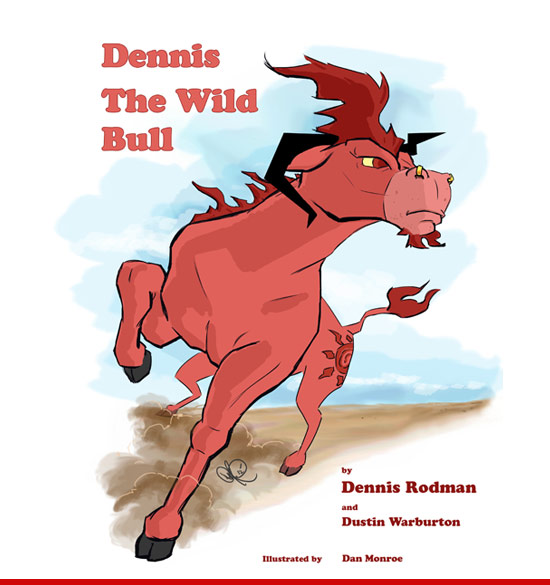
I would never have predicted that former basketballer Dennis Rodman would even contemplate becoming a writer of children’s books:

What do Katie Couric, Gloria Estefan, Jamie Lee Curits and Dennis Rodman all have in common? If you said “They’ve all been photographed in a wedding dress!” … you’re correct. But we also would have accepted … they have all written children’s books.

That’s right … the NBA Hall of Famer and occasional crossdresser is releasing his own book for kids called “Dennis The Wild Bull” … set to be released sometime later this year.

Dennis and his people are tight-lipped about the premise, but the book’s website says it will “convey good lessons to children based on Dennis’ own experiences as a world class athlete while overcoming obstacles as a child.”

Dennis recently reconnected with his father … and we’re told he’s been re-motivated to strengthen his relationship with his own children … and believes this book will help the process.

Click on the link to read Who Said Grammar Isn’t Important?

Click on the link to read Using Spam Emails in Your Literacy Lessons

Click on the link to read It’s Not the Right Time to Put Age Classifications on Kids Books

Our Authors Don’t Want us Teaching Phonics

July 25, 2012

There is a major phonics debate going around. One side argues that one must learn phonics to be able to read properly, the other suggests that phonics is dry and boring and detracts from the pleasure of reading:

More than 90 of Britain’s best-known children’s authors and illustrators have called on the government to abandon its plans to introduce early-year reading tests, warning that they pose a threat to reading for pleasure in primary schools.

The former children’s laureate Michael Rosen is leading the writers’ charge against a phonics-intensive approach to teaching young children how to read.

A letter to the Guardian signed by 91 names including Meg Rosoff, Philip Ardagh and Alan Gibbons says millions is being spent on “systematic synthetic phonics programmes” even though there is “no evidence that such programmes help children understand what they are reading”.

Rosen told the Guardian: “It does not produce reading for understanding, it produces people who can read phonically.”

Click on the link to read Who Said Grammar Isn’t Important?

Click on the link to read The Resistance Against Teaching Grammar

Click on the link to read Captain Phonics to the Rescue!

Click on the link to read the Phonics debate.

It’s Not the Right Time to Put Age Classifications on Kids Books

July 10, 2012

It’s ultimately the role of parents to ensure that their children are reading age appropriate books. Beyond that, I don’t think the major problem here is that some children are reading violent books. The real problem is that many children aren’t reading at all.

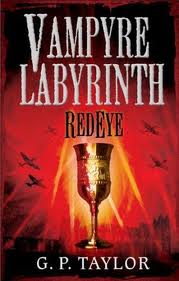
Bestselling children’s author GP Taylor believes that children’s literature has become too frightening and should be marked with an age certification system.

Taylor, appearing this morning on BBC Breakfast, said he plans to withdraw from the direction he has taken in his latest trilogy of books, the Vampyre Labyrinth series, which adds vampires to the backdrop of Yorkshire during the second world war. “I wrote the Vampyre Labyrinth, it came out, I hadn’t really read it when I wrote the book, and people who were reading it and reviewing it were saying this is the most frightening thing that has ever been written for kids,” said Taylor. “I have changed my mind: I think children’s literature has gone too far.”

His comments follow new analysis of recent award-winning children’s literature which shows that the books of today are more likely to feature abandoned children, with troubled or absent parents, as opposed to the fictional children of times past, who were carefree and happy and would set off on adventures of their own accord, rather than being forced out.

Short Attention Span Blamed for Lack of Interest in Reading

June 22, 2012

People don’t have patience any more. Everything needs to be immediate and instantaneous. I heard someone on the radio last night complain about the 5 seconds of advertising they had to sit through before they could access their YouTube clip.

It is no wonder that children no longer have the attention span for reading:

More than four-in-10 teachers said children failed to read for pleasure at the age of 11, it emerged.

The study – by the publisher Pearson – found that many schools fear children have short attention spans and prefer to spend time online rather than reading a novel.

Teachers also said that books were not seen as “cool” by pupils and raised fears that parents are failing to do enough to promote a love of reading in the home.

Frank Cottrell Boyce, the author, said: “It’s worrying to think that so many young children are not being inspired to pick up a good book and get lost in a story.

“According to Unesco, the biggest single indicator of whether a child is going to thrive at school and in work is whether or not they read for pleasure.”

The poll questioned around 400 secondary school English teachers.

Two-thirds of those questioned said that reading was not seen as “cool” by pupils, according to the study.

Three-quarters said that children’s attention spans were shorter than ever before, while 94 per cent claimed that pupils preferred to be using the internet rather than reading.

It is my belief that a crucial part of my job is to promote the joys of reading. I take pride in selecting books for my class that will appeal and entertain. I also have a Book Club. This allows my students to see that reading is not necessarily a personal experience but it can be a shared experienced too.

Standardised Testing Meets Spin City

May 15, 2012

A few weeks ago I sought to have an interview with Australia’s Education Minister regarding the upcoming NAPLAN standardised tests. I am still waiting for a reply.

Luckily, I came across his op/ed piece over the weekend, where he tries to allay the fears of the parenting community and make a case for these highly pressured, incredibly unpopular series of tests.

In his piece, he claims that:

Parents and the community should rest assured that the NAPLAN tests are simply a way of measuring how our students and our schools are performing in the three key areas of reading, writing and numeracy. Nothing more, and nothing less.

I assure you Mr. Garrett that parents of 8-years olds subjected to 4 rigorous exams in 3 days understand that these tests represent much more than just a simple way of measuring child progress.

There is nothing in any of the tests that students need to learn above and beyond what is already being taught in the classroom, namely the curriculum.

I am not sure that is true. Whilst my students are expected to write persuasive essays, there is no mention of persuasive writing in the Grade 3 curriculum.

By measuring how our students are performing as they progress through school, we can get a clear national picture, for the first time, of where we need to be directing extra attention and resources.

This is just spin. This implies that these tests exist to help direct the Government in regards to spending and programs. There is no evidence of any Governmental response whether it be financial or a simple change of priorities based on the yearly NAPLAN results. Instead, the outcome of the NAPLAN is designed to expose failing schools, inept teachers and anything and everything that can divert attention from a Government good at measuring performance but poor at performing themselves.

It needs to be made clear to schools and teachers that excessive test practising ahead of NAPLAN is unnecessary. While it helps to be familiar with the structure of the tests, carrying out endless practices should not be encouraged. NAPLAN matters, but it is not the be all and end all.

Unnecessary to whom? If you and your staff were to be tested on the performance of your portfolio wouldn’t you take the time to prepare? When a class gets appraised, so does the teacher. Are we meant to sit back and watch 8-years old kids sit for their first formal exams without preparing them for the kinds of questions and scenarios they are likely to encounter?

Mr. Garett, your opinion piece tries to win over parents, yet it completely deviates from the very issue that parents are most concerned about. Parents do not like seeing their young children exposed to so much pressure. They don’t like to see their children who may currently enjoy learning, subjected to such a negative learning experience.

Today, one of my students was so frightened by the prospect of these exams that he was reluctant to get in the car. We are talking about a child that loves learning.

I have no problem with High School children being tested. But 3rd Graders? Is it really worth it?


R.I.P Jan Berestain of Berenstain Bears Fame

February 29, 2012

As a child, I absolutely adored the Berenstain Bears books. I made my parents read them to me over and over again. I particularly loved “The Bike Lesson”, a father’s cautionary tale to his young son on how not to ride a bike. I have since started reading the books to my daughter and on occasion, to my students.

Jan Berenstain, one of the writers of the series of books died at 88:

Jan Berenstain, who with her husband, Stan, wrote and illustrated the Berenstain Bears books that have charmed children and their parents for 50 years, has died. She was 88.

Berenstain, a long-time resident of Solebury in south-eastern Pennsylvania, suffered a severe stroke on Thursday and died on Friday without regaining consciousness, her son Mike Berenstain said.

The gentle tales of Mama Bear, Papa Bear, Brother Bear and Sister Bear were inspired by the Berenstain children, and later their grandchildren. The stories address children’s common concerns and aim to offer guidance on subjects like dentist visits, peer pressure, a new sibling or summer camp.

Thank you Jan for contributing to my love of reading and literature. You have left a legacy that will continue to entertain children. May you rest in peace.

The ‘100 Greatest Books for Kids’ is Released

February 16, 2012

Scholastic Parent & Child magazine have gone to the trouble of ranking the 100 “Greatest Books for Kids.” There are some great titles among the list and some notable omissions. I am a tad disappointed “The Cat in the Hat” didn’t make the list. I suppose you can’t please everybody.

Below is the list:

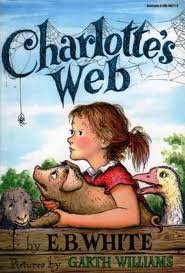
1. Charlotte’s Web by E.B. White

2. Goodnight Moon by Margaret Wise Brown

3. A Wrinkle in Time by Madeleine L’Engle

4. The Snowy Day by Ezra Jacks Keats

5. Where the Wild Things Are by Maurice Sendak

6. Harry Potter and the Sorcerer’s Stone by J.K. Rowling

7. Green Eggs and Ham by Dr. Seuss

8. The Diary of a Young Girl by Anne Frank

9. The Giving Tree by Shel Silverstein

10. Frog and Toad Are Friends by Arnold Lobel

11. Anne of Green Gables by L.M. Montgomery

12. The Very Hungry Caterpillar by Eric Carle

13. Madeline by Ludwig Bemelmans

14. The Wind in the Willows by Kenneth Grahame

15. The Dot by Peter H. Reynolds

16. Tuck Everlasting by Natalie Babbitt

17. Pat the Bunny by Dorothy Kunhardt

18. When Marian Sang by Pam Munoz Ryan

19. Knuffle Bunny: A Cautionary Tale by Mo Willems

20. Where the Sidewalk Ends by Shel Silverstein

21. Bud, Not Buddy by Christopher Paul Curtis

22. Corduroy by Don Freeman

23. The Phantom Tollbooth by Norton Juster

24. The Little Engine That Could by Watty Piper

25. The Giver by Lois Lowry

26. Where the Mountain Meets the Moon by Grace Lin

27. Black on White by Tana Hoban

28. Don’t Let the Pigeon Drive the Bus! by Mo Willems

29. Are You There God? It’s Me, Margaret. by Judy Blume

30. My Rotten Redheaded Older Brother by Patricia Polacco

31. The Mitten by Jan Brett

32. The Runaway Bunny by Margaret Wise Brown

33. The Hunger Games by Suzanne Collins

34. Swimmy by Leo Lionni

35. Freight Train by Donald Crews

36. The Secret Garden by Frances Hodgson Burnett

37. The Little Mouse, the Red Ripe Strawberry, and the Big Hungry Bear by Don & Audrey Wood

38. Diary of a Wimpy Kid by Jeff Kinney

39. Zen Shorts by John J. Muth

40. Moo, Baa, La La La! by Sandra Boynton

41. Matilda by Roald Dahl

42. What Do People Do All Day? by Richard Scarry

43. The Lion, the Witch and the Wardrobe by C.S. Lewis

44. Good Night, Gorilla by Peggy Rathmann

45. The Composition by Antonio Skarmeta

46. Not a Box by Antoinette Portis

47. Brown Bear, Brown Bear, What Do You See? by Bill Martin Jr. and Eric Carle

48. Hatchet by Gary Paulsen

49. Martin’s Big Words by Doreen Rappaport

50. Sarah, Plain and Tall by Patricia MacLachlan

51. Sylvia Long’s Mother Goose by Sylvia Long

52. The Lightning Thief by Rick Riordan

53. The House at Pooh Corner by A.A. Milne

54. Through My Eyes by Ruby Bridges

55. Smile! by Roberta Grobel Intrater

56. Living Sunlight by Molly Bang & Penny Chisholm

57. The Bad Beginning by Lemony Snicket

58. Harvesting Hope: The Story of Cesar Chavez by Kathleen Krull

59. Dear Juno by Soyung Pak

60. Head, Shoulders, Knees, and Toes… by Annie Kubler

61. The Lion and the Mouse by Jerry Pinkney

62. Diary of a Worm by Doreen Cronin

63. The Invention of Hugo Cabret by Brian Selznick

64. My Truck Is Stuck! by Kevin Lewis

65. Birds by Kevin Henkes

66. The Maze of Bones by Rick Riordan

67. Esperanza Rising by Pam Munoz Ryan

68. Counting Kisses: A Kiss & Read Book by Karen Katz

69. The Magic School Bus at the Waterworks by Joanna Cole

70. Blackout by John Rocco

71. Bridge to Terabithia by Katherine Paterson

72. Are You My Mother? by P.D. Eastman

73. Tea With Milk by Allen Say

74. Owl Moon by Jane Yolen

75. Holes by Louis Sachar

76. Peek-a Who? by Nina Laden

77. Hi! Fly Guy by Tedd Arnold

78. Mrs. Frisby and the Rats of NIMH by Robert C. O’Brien

79. Llama Llama Red Pajama by Anna Dewdney

80. What Do You Do With a Tail Like This? by Steve Jenkins & Robin Page

81. Lincoln: A Photobiography by Russell Freedman

82. Ivy + Bean by Annie Barrows

83. Yoko by Rosemary Wells

84. No No Yes Yes by Leslie Patricelli

85. Tales of a Fourth Grade Nothing by Judy Blume

86. Interrupting Chicken by David Ezra Stein

87. Rules by Cynthia Lord

88. Grumpy Bird by Jeremy Tankard

89. An Egg Is Quiet by Dianna Hutts Aston

90. Puss in Boots by Charles Perrault

91. Team Moon: How 400,000 People Landed Apollo 11 on the Moon by Catherine Thimmesh

92. What Shall We Do With the Boo Hoo Baby? by Cressida Cowell

93. We the Kids: The Preamble to the Constitution of the United States by David Catrow

94. I Took the Moon for a Walk by Carolyn Curtis

95. A Single Shard by Linda Sue Park

96. Gossie by Olivier Dunrea

97. The Adventures of Captain Underpants by Dav Pilkey

98. First Words by Roger Priddy

99. Joyful Noise: Poems for Two Voices by Paul Fleischman

100. Animalia by Graeme Base

The Unique Challange of Teaching Boys

January 31, 2012

There is no doubt in my mind that teaching boys is a more difficult proposition than teaching girls. It is also clear to me that boys have suffered from a traditional classroom setup which has proven far less successful in engaging them than it has for girls.

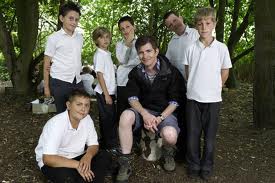
Currently in Australia, local television station ABC1 is showing a brilliant series entitled, Gareth Malone’s Extraordinary School For Boys. Gareth is a choir master and isn’t qualified to teach, but takes on an 8 week trial with a group of underperforming boys in an attempt to improve their literacy skills.

Mr. Malone draws on his three rules for teaching boys:

1. Make the work feel like play.

2. Have a real sense of competition

3. Have a real sense of risk.

I have just finished watching the first episode and fell in love with his unique and creative style. I also enjoyed watching his colleagues putting down his methods, clearly a byproduct of feeling threatened by this novice.

Below is episode 1 in its entirety. All episodes are available on YouTube.