Posts Tagged ‘Parenting’

Are Kids Addicted to Technology?

April 11, 2011

Technology is a wonderful thing when it doesn’t take over your life.  In context, technological innovations such as mobile phones and the internet connect you to others and make day-to-day operations easier to carry out and more time effective.  But technology addiction, like all other addictions, is something to be concerned about.

Children need a range of different experiences and stimuli.  They need exercise, real human interaction and routine.  When an addiction, such as internet addiction occurs, it tends to become quite a negative and destructive situation.

But are kids really addicted to technology?

Researchers found nearly four in five students had significant mental and physical distress, panic, confusion and extreme isolation when forced to unplug from technology for an entire day.

They found college students at campuses across the globe admitted being “addicted” to modern technology such as mobile phones, laptops and television as well as social networking such as Facebook and Twitter.

A “clear majority” of almost 1,000 university students, interviewed at 12 campuses in 10 countries, including Britain, America and China, were unable to voluntarily avoid their gadgets for one full day, they concluded.

The University of Maryland research described students’ thoughts in vivid detail, in which they admit to cravings, anxiety attacks and depression when forced to abstain from using media.

One unnamed American college student told of their overwhelming cravings, which they confessed was similar to “itching like a crackhead (crack cocaine addict)”.

The study, published by the university’s International Centre for Media & the Public Agenda (ICMPA) and the Salzburg Academy on Media & Global Change, concluded that “most students… failed to go the full 24 hours without media”.

The research, titled The world Unplugged, also found students’ used “virtually the same words to describe their reactions”.

These included emotions such as fretful, confused, anxious, irritable, insecure, nervous, restless, crazy, addicted, panicked, jealous, angry, lonely, dependent, depressed, jittery and paranoid.

Prof Susan Moeller, who led the research, said technology had changed the students’ relationships.

“Students talked about how scary it was, how addicted they were,” she said.

“They expected the frustration. But they didn’t expect to have the psychological effects, to be lonely, to be panicked, the anxiety, literally heart palpitations.

“Technology provides the social network for young people today and they have spent their entire lives being ‘plugged in’.”

The study interviewed young people, aged between 17 and 23, including about 150 students from Bournemouth University, who were asked to keep a diary of their thoughts.

They were told to give up their mobile phones, the internet, social networking sites such as Facebook and Twitter, and they were not allowed to watch television.

They were, however, permitted to use landline telephones and read books.

The study found that one in five reported feelings of withdrawal akin to addiction while more than one in 10 admitted being left confused and feeling like a failure.

Just 21 per cent said they could feel the benefits of being unplugged.

One British participant reported: “I am an addict. I don’t need alcohol, cocaine or any other derailing form of social depravity… Media is my drug; without it I was lost.2

Another wrote: ‘I literally didn’t know what to do with myself. Going down to the kitchen to pointlessly look in the cupboards became regular routine, as did getting a drink.’

A third said: ‘I became bulimic with my media; I starved myself for a full 15 hours and then had a full-on binge.’

While a fourth student added: “I felt like a helpless man on a lonely deserted island in the big ocean”.

Prof Moeller added: “Some said they wanted to go without technology for a while but they could not as they could be ostracised by their friends.’

“When the students did not have their mobile phones and other gadgets, they did report that they did get into more in-depth conversations.

“Quite a number reported quite a difference in conversation in terms of quality and depth as a result.”
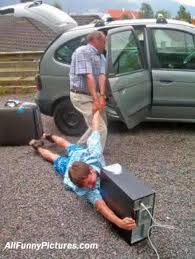
I realise that it is absolutely vital for teachers to embrace technology and ensure that they are well-trained and up to date with the latest in technological advances.  There is no doubt that introducing technology in the classroom has real benefits.  But in the primary level, I am careful to encourage a balanced approach where my students get a broad range of experiences and use different mediums.
As great as technology is, you can have too much of a good thing.

Anaphylaxis: The New Form of Discrimination

April 8, 2011

As a father of a beautiful child who suffers from anaphylaxis, I couldn’t be more disappointed in the parents of Edgewater Elementary School for their repeated calls for a young girl with a peanut allergy to be removed from their school. Their reaction is alarmism at its best and warrants a strong and decisive response by the school board.  Unfortunately, the best they could do is blame Federal law for not being able to remove the child.

Some public school parents in Edgewater, Florida, want a first-grade girl with life-threatening peanut allergies removed from the classroom and home-schooled, rather than deal with special rules to protect her health, a school official said.

“That was one of the suggestions that kept coming forward from parents, to have her home-schooled. But we’re required by federal law to provide accommodations. That’s just not even an option for us,” said Nancy Wait, spokeswoman for the Volusia County School District.

Wait said the 6-year-old’s peanut allergy is so severe it is considered a disability under the Americans with Disabilities Act.

To protect the girl, students in her class at Edgewater Elementary School are required to wash their hands before entering the classroom in the morning and after lunch, and rinse out their mouths, Wait said, and a peanut-sniffing dog checked out the school during last week’s spring break.

Wait said school leaders will meet this week with parents to address concerns and try to halt inaccurate rumors that children’s mouths were being wiped with disinfectant.

Chris Burr, a father of two older students at the school whose wife has protested at the campus, said a lot of small accommodations have added up to frustration for many parents.

“If I had a daughter who had a problem, I would not ask everyone else to change their lives to fit my life,” said Burr.

Am I missing something here?  Are we not in the year 2011?  So what if children are slightly inconvenienced my having to wash their hands and rinse their mouths?  How can the inconvenience of added personal hygiene measures compare to the possibility of an anaphylactic attack?

How dare the school for not taking a much more calm and rational approach.  Talk about pandering to parents!  Why couldn’t they just say that nut allergies are common, and with sensible but thorough measures, we can deliver great educational outcomes for all students with allergies?

My daughter has egg and sesame allergies.  Otherwise, she is a normal, sweet-natured and delightful person.  I would be horrified if there was a campaign to have her removed and homeschooled.

There is enough descrimination already in this world, let’s not add to it!

Stop Banning Our Kids From Being Kids

April 7, 2011

Society pretends it isn’t so, but let’s face it – school is not a natural environment for the growing child. Kids have to sit in an often uncomfortable seat for hours on end, have no say who they can sit next to, can not talk unless spoken to, can not go to the toilet without permission and often cannot choose for themselves what they would like to wear.

As a teacher, I devote so much of my time to help maximise my students’ enjoyment for learning and appreciation for the positive aspects of school such as positive social interactions and self growth.  I am drawn to this profession because I can see that it is possible to create joy from the school experience. That kids who have only seen school as a negative can be turned around quite quickly.

That is why I get frustrated with the constant barrage of regulations and bans that lessen the students’ opportunity for enjoyment of school.

Take this unfortunate case for example:

Children at Pope Paul Catholic Primary School, in Baker Street, have been barred from playing the national sport over concerns there could be accidents.

An angry parent of a year five child contacted the Potters Bar Edition to say he thought “the world has gone mad” over the 
ball game ban.

The whistleblower did not wish to be named as he feared the school would “bear grudges” against his child.

He said: “I’m just rather fed up of the health and safety coming out of the school.

“Break times are time to let off some energy and relate with other kids.”

He also pointed to football’s ability to teach valuable life lessons like winning and losing and the importance of teamwork.

And speaking about the injury fears, he added: “Boys might fall over and hurt their leg, but you just get up, wipe it off and carry on.”

Headteacher Helen Lines said: “The children aren’t allowed to play football on the playground during the winter months because there isn’t enough room.”

She added: “Many of the children want their own game and there’s no room to do anything else.

“In the summer there are plenty of ball games on the field, but it’s too muddy in the winter.”

Despite the weather picking up as spring has sprung, Mrs Lines said pupils were still banned from playing football.

She said: “We’ve tried a rota system but it’s too tempting for others not to join in.

“We’ve got lots of people trying to play a very active sport like football, there are going to be accidents.

“There are lots of children who don’t want to play football.”

She added playing the sport in the confines of the playground was too “dangerous”.

Ms. Lines rationale makes no sense at all.  On the one hand she says there isn’t enough room because of the great demand for multiple soccer games and on the other hand she claims that there are children who don’t want to play, thereby intimating that their stance wont affect too many.

There’s a reason why kids like to play active sports during recess – they are kids!  Not only that, they are sitting down for hours on end.  Let them run!  Let them enjoy their recess!  Don’t even bother investigating why boys aren’t thriving at school when you want to ban the very activity that gives them an outlet for their restlessness and something to look forward to.

Ultimately, it’s not entirely the fault of schools.  They are entitled to cover their backs in the fear of being sued.

Here is an idea:  How about Governments passing legislation that makes it much harder for parents to sue schools for run of the mill accidents?

And how far will this go?  If you ban soccer, you have to ban monkey bars, slides, basketballs, cartwheels, running, bunsen burners, scissors and sharp pencils etc.

School is already a less than perfect place for our children.  Why make it so much worse?

Asperger’s Teacher Must Be Penalised for His Comments

April 1, 2011

I don’t know enough about Asperger’s Syndrome to be considered an expert on the condition.  Regardless, I am sure of this – a teacher who has a reputation for saying demeaning and insulting things to his/her students with some level of frequency needs to find another profession whether they have Asperger’s Syndrome or not.

I am a deep critic of the general lack of understanding and support given to students with autism and other related conditions, so I want to make it clear that I am not insensitive to the difficulties that such a condition poses on a person’s social skills.

Having said that, it is my belief that Robert Wollkind, if indeed it is proven that he did do what is alleged, needs to be fired for his behaviour:

A Connecticut high school teacher faces the loss of his job after asking a student, who is overweight, if he had eaten his homework. According to the Hartford Courant, officials in the Brookfield school district want to fire Robert Wollkind who, they say, has made a ‘string of inappropriate remarks over his 32-year career.’ Wollkind, a math teacher at Brookfield High School, was diagnosed in 2002 with Asperger’s Syndrome, an autism spectrum disorder in which individuals have normal or above intelligence but struggle with social, communicative and sensory skills. Wollkind has been on administrative leave since the November 2010 incident.

Lawyers representing the school district says that Wollkind has ‘used abusive language to others, including telling one student that he hated him.’ According to the News-Times:

The student, identified as “Student 21,” had been previously teased by peers about his weight, said the school district’s attorney Patrick McHale.

Wollkind’s personnel file also contains reported incidents of him screaming at a student, grabbing a student, and using “abusive and foul language” with students.

Wollkind counters that ‘many of those incidents have been described inaccurately.’

The fact that more than 1,000 Brookfield parents and students have signed a petition supporting him suggests he has some fine qualities as a teacher and that the parents of Brookfield are very understanding.

My issue is with his behaviour.  Teachers have an important role to fulfill that goes beyond the teaching of skills and knowledge.  They are there to build up the confidence of their students, empower them to take responsible risks and help them to realise their full potential.

Comments that hurt and strike at a child’s self-esteem do not belong in a teacher’s repertoire.  It hurts enough in the schoolyard by peers, but to get teased by your teacher is simply not acceptable and potentially destructive to the child.

Whilst I can understand that Mr. Wollkind’s jibe’s were a product of Asperger’s Syndrome, and I am deeply sympathetic to it’s likely influence over his actions, I am not sure I would want him teaching my child.


The Use of Video in Education

March 31, 2011

Attached is a wonderful clip of presentation given by Salman Khan.  Salman started making YouTube tutorial clips for his cousins interstate.  Not only did his cousins benefit from the online video tutorials but so did thousands of others across the globe.  He talks about how he quit his high paying job to develop online lessons that were easy to follow, interactive and humorous.  Soon his Khan Academy programs became a hit with teachers, changing the way maths is taught in class and helping to make homework more enjoyable.

Whilst I am not a convert to the style of teaching he is advocating, I find his approach quite fascinating.

What do you think?

Teaching to The Blasted Test!

March 29, 2011


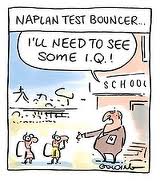
It sickens me to see the Government so smug about the upcoming round of National Testing.  In Australia it’s called the NAPLAN (I refer to it as “NAPALM”), and like other National tests around the world it compares student data against the average.  The Government uses the National tests as an easy way out of doing something constructive about Education.

Before I slam these pathetic tests, in the spirit of goodwill, I will acknowledge some advantages of National Testing:

  • It uses these tests as a vehicle for pressurising schools and teachers to lift their game and secure good results for their students.
  • It forces teachers not strictly following the curriculum to adhere to the syllabus
  • It gives parents some real data to consider, rather than the deliberately vague school reporting, which essentially tells parents nothing.
  • It gives parents an opportunity to become more involved in their child’s education.

Now for the disadvantages:

  • It forces teachers to stop what they are doing, and spend weeks if not months practicing for the test.  Everything gets put on hold while the sample test papers get wheeled out.
  • It fills students as young as 8 years-old with anxiety, pressure and insecurity.
  • It causes schools to “encourage” the parents of special needs students to keep their kids at home during the testing week.  This is to ensure that their child doesn’t affect the school’s results.  It also achieves in further marginalising these children who, in many cases, already feel disconnected from their peers.
  • It puts enormous stress on teachers.  This stress has an effect on their quality of teaching.
  • It turns education into an extreme negative at a time when kids still show an interest in learning.

I am currently teaching Grade 5 for the first time.  I am preparing my students for the rigours of NAPLAN (they sat for them 2 year ago).  It means that my emphasis has had to change.  Instead of teaching in an engaging and creative way, I’ve been forced to teach to the tests.  The result has been a succession of comparatively boring and turgid lessons on strategies for answering multiple choice questions, “debugging” sample tests and revising basic skills.  My students are not enjoying these lessons at all!  I fear that when they sit these tests they will sabotage the process by rushing through it as revenge for what its done to their enjoyment of school.

What makes these tests even worse is that they are testing the children at Grade 5 level even though they have just started Grade 5.  Because of that, my students haven’t covered some of the concepts being tested.  Surely, if they wanted to test a Grade 5 class against the Grade 5 benchmarks they should have done it at the end of the school year, not at the beginning!

When are Governments going to stop being so lazy and start taking on a fresh and innovative approach to learning?  Why must my students be subjected to sample tests and other turgid preparatorylessons, instead of conventional, authentic lessons?

Parents have the right to know how  their child is progressing.  At the same time though, their children deserve the right to have a pressure reduced primary education, where the teachers are able to harness their natural curiosities, instead of burden them with weeks of test prepa
ration!

50 Books Every Child Should Read

March 24, 2011

I stumbled on a wonderful piece by the Independent entitled The 50 Books Every Child Should Read. It was written in response to Michael Gove’s recommendation that children read 50 books a year.  They asked three of Britain’s leading children’s authors and two of their in-house book experts to each pick 10 books, suitable for Year 7 students.”

Below is the list:

Philip Pullman

* Alice’s Adventures in Wonderland and Through the Looking Glass by Lewis Carroll. Indispensable. The great classic beginning of English children’s literature.

* Pinocchio by Carlo Collodi. What effortless invention looks like.

* Emil and the Detectives by Erich Kastner. A great political story: democracy in action.

* Swallows and Amazons by Arthur Ransome. As clear and pure as Mozart.

* Black Hearts in Battersea by Joan Aiken. If Ransome was Mozart, Aiken was Rossini. Unforced effervescence.

* The Owl Service by Alan Garner. Showed how children’s literature could sound dark and troubling chords.

* The Phantom Tollbooth by Norton Juster. Superb wit and vigorous invention.

* Moominsummer Madness by Tove Jansson. Any of the Moomin books would supply the same strange light Nordic magic.

* A Hundred Million Francs by Paul Berna. A particular favourite of mine, as much for Richard Kennedy’s delicate illustrations (in the English edition) as for the story.

* The Castafiore Emerald by Hergé. Three generations of this family have loved Tintin. Perfect timing, perfect narrative tact and command, blissfully funny.

Michael Morpurgo

* The Star of Kazan by Eva Ibbotson.

The heroine is blessed with such wonderful friends who help her through the twists and turns of this incredible journey.

* A Christmas Carol by Charles Dickens. The first few pages were so engaging, Marley’s ghostly face on the knocker of Scrooge’s door still gives me the shivers.

* Just William books by Richmal Crompton. These are a must for every child.

* The Happy Prince by Oscar Wilde. This was the first story, I think, that ever made me cry and it still has the power to make me cry.

* The Elephant’s Child From The Just So Stories by Rudyard Kipling. The story my mother used to read me most often, because I asked for it again and again. I loved the sheer fun of it, the music and the rhythm of the words. It was subversive too. Still my favourite story.

* Treasure Island by R.L. Stevenson This was the first real book I read for myself. I lived this book as I read it.

* The Old Man and the Sea by Ernest Hemingway. A classic tale of man versus nature. I wish I’d written this.

* The Man Who Planted Trees by Jean Giono. A book for children from 8 to 80. I love the humanity of this story and how one man’s efforts can change the future for so many.

* The Singing Tree by Kate Seredy The story of two children who go to find their father who has been listed missing in the trenches of the First World War.

* The Secret Garden by Frances Hodgson-Burnett. I love this story of a girl’s life being changed by nature.

Katy Guest, literary editor for The Independent on Sunday

* Refugee Boy by Benjamin Zephaniah. Story of a young Ethiopian boy, whose parents abandon him in London to save his life.

* Finn Family Moomintroll (and the other Moomin books) by Tove Jansson.

A fantasy series for small children that introduces bigger ones to ideas of adventure, dealing with fear, understanding character and tolerating difference.

* Diary of a Wimpy Kid by Jeff Kinney. It’s rude, it’s funny and it will chime with every 11-year-old who’s ever started a new school.

* I Capture the Castle by Dodie Smith. Written for a teenage audience but fun at any age.

* The Hobbit and The Lord of the Rings by JRR Tolkein. Be warned, these tales of hobbits, elves and Middle Earth are dangerously addictive.

* The Tygrine Cat (and The Tygrine Cat on the Run) by Inbali Iserles. If your parents keep going on at you to read Tarka the Otter, The Sheep-Pig and other animal fantasies, do – they’re great books – also try Iserles’ stories about a cat seeking his destiny.

* Carry On, Jeeves by PG Wodehouse. A grown-up book – but not that grown-up.

* When Hitler Stole Pink Rabbit by Judith Kerr. Judith Kerr’s semi-autobiographical story of a family fleeing the Nazis in 1933.

* Moving Pictures by Terry Pratchett. Elaborate mythological imagery and a background based in real science. If you like this, the Discworld series offers plenty more.

* The Story of Tracy Beaker by Jacqueline Wilson. The pinnacle of the wonderful Jacqueline Wilson’s brilliant and enormous output.

John Walsh, author and Independent columnist

* The Adventures of Sherlock Holmes by Sir Arthur Conan Doyle. Irresistible puzzle-solving tales of the chilly Victorian master-sleuth and his dim medical sidekick.

* The Curious Incident of the Dog in the Night-Time by Mark Haddon. Age-transcending tale, both funny and sad.

* Mistress Masham’s Repose by TH White. Magical story of 10-year-old Maria, living in a derelict stately home, shy, lonely and under threat from both her governess and her rascally guardian.

* Little Women by Louisa May Alcott. Inexplicably evergreen, trend and taste-defying 1868 classic.

* How to be Topp by Geoffrey Willams and Ronald Searle. Side-splitting satire on skool, oiks, teechers, fules, bulies, swots.

* Stormbreaker by Anthony Horowitz. First of the action-packed adventures with 14-year-old Alex Rider.

* Private Peaceful by Michael Morpurgo. “Dulce et Decorum Est” for pre-teens.

* Artemis Fowl by Eoin Colfer. Lively, amoral, wildly imaginative debut (six more followed) about the money-grabbing master-criminal Artemis, 12. The author called it “Die Hard with fairies”.

* The Silver Sword by Ian Serraillier. Inspiring wartime story of the Balicki family in Warsaw.

* Animal Farm by George Orwell. Smart 11-year-olds won’t need any pre-knowledge of Marx, Lenin, Trotsky and 1917 to appreciate this brilliantly-told fable.

Michael Rosen

* Skellig by David Almond. Brings magical realism to working-class North-east England.

* Red Cherry Red by Jackie Kay. A book of poems that reaches deep into our hidden thoughts but also talks in a joyous voice exploring the everyday.

* Talkin Turkeys by Benjamin Zephaniah. A book of poems that demands to be read aloud, performed and thought about.

* Greek myths by Geraldine McCaughrean. Superheroes battle with demons, gods intervene in our pleasures and fears – a bit like the spectres in our minds going through daily life, really – beautifully retold here.

* People Might Hear You by Robin Klein. A profound, suspenseful story about sects, freedom and the rights of all young people – especially girls.

* Noughts and Crosses by Malory Blackman. A book that dared to go where no one thought you could with young audiences because it raises tough stuff to do with race.

* Einstein’s Underpants and How They Saved the World by Anthony McGowan. A crazy adventure set amongst the kids you don’t want to know but who this book makes you really, really care about.

* After the First Death by Robert Cormier. Cormier is never afraid of handling how the personal meets the political all within the framework of a thriller.

* The London Eye Mystery by Siobhan Dowd. A book that allows difference to be part of the plot and not a point in itself.

* Beano Annual. A cornucopia of nutty, bad, silly ideas, tricks, situations and plots.

Top Ten Lists are fun.  What books would you recommend for a Year 7 child?

Facebook Banning Children For Lying About Age

March 23, 2011

Congratulations to Facebook for actively banning kids who are lying about their age. Age requirements are important, because young students are often prone to making bad choices with social media and fail to use the recommended privacy settings:

Social networking giant Facebook is banning 20,000 children every day because they have lied about their age to join the site.

The company admitted it had to do more to stop young people using Facebook, as it revealed about a third of Australia’s population uses the site every day, the Herald Sun reported.

At a parliamentary inquiry into cyber-bullying, other social networking and online companies called for campaigns to highlight the dangers of the internet.

And there have been calls for an overhaul of the Australian school curriculum to include more effective cyber-danger classes.

The chief privacy adviser of Facebook, Mozelle Thompson, said many Australian children under the age of 13 were trying to access the site by lying about their age.

“It’s something that happens on a regular basis,” Mr Thompson said.

Globally, about seven million children who lie about their age are blocked from the site each year.

For those parents/teachers unaware of the problem of cyber-saftey or if you have children or students that don’t use the privacy settings option, I urge you to watch this clip with them.

Our Children Must be Taught About Society’s Lie

March 18, 2011

It’s time to correct the mistakes of my generation by ensuring that our children aren’t given the same misleading message.  For too long society has fed our young a big, destructive lie.  For too long that lie has been allowed to take over our lives, muddy our relationships and bring out the worst in people.

It’s time to revisit the following question and change the answer:

What is success?

  • Success in Not Dependant on Money – For too long we have been programmed to look at wealthy people as successful.  This is simply unfair.  No matter how you structure a democratic society, there will always be a very small percentage of wealthy people.  Are we saying that only 5% of our population are going to be successful?  Surely success is something obtainable to a broader group of people?  We have seen how easily wealthy people lose their wealth.  We have also seen how dishonestly some wealthy people obtain their wealth.  Is this the trademark of success?  Surely not.  We must tell our young that a wealthy person is someone who can feed and clothe their family.  Not someone with cars they don’t drive and a holiday home only lived in for a few weeks during the summer.


  • Success is Not Dependant on Appearance – This one really upsets me.  It is a sentiment which allows the advertising agency to take control of our self-esteem, flog us products that don’t work and make perfectly “normal” and healthy people feel ugly.  By setting up a model of beauty that is impossible for 95% of society to ever achieve is tragic!  The current model of how we should look goes against the natural aging and metabolic process of the body.  It says that if you have wrinkles, freckles, dimples, big ears, a bent nose, cellulite, small breast or a certain complexion you are not beautiful.  Gone are the days where we can even say “Beauty is in the Eyes of the Beholder”, because this model of beauty has infiltrated and brainwashed the beholder.  Is it alright to look your best?  Sure.  Is it beneficial to look after yourself? Absolutely!  But an obsession with looks, like every other obsession is destructive.  Even those that are blessed with such looks soon find out that it doesn’t last forever, and when it goes, they often haven’t developed other parts to their character to fall back on.  I personally, don’t believe in forcing the media and advertisers to change their policy.  I believe in advocating a change of perspective starting from parents and supported by teachers.  We must redefine beauty and then show our children that our appearance has nothing at all to do with success.


  • Success is Not Dependant on a Title – Not everyone can win an Oscar or become a President, and nor should they to feel successful.  For too long society has peddled the belief that doctors and lawyers are successful while taxi drivers and house painters are not.  A taxi cab driver might not sound like a successful profession on face value.  But that same taxi driver has a crucial role to play.  They help the disabled and the aged, are crucial in keeping intoxicated people off the roads and protect vulnerable people from walking the streets and taking the trains late at night.  A house painter may seem like an ordinary profession, but have you ever looked at the difference a bright, well-painted room makes to a persons mood and outlook?  All jobs have a critical role to play in making life more enjoyable regardless of the pay involved.  We must tell our children and students that it’s not what you do that determines your success it’s how you do it.

So what is the measure of success?  If it has nothing to do with a person’s level of wealth, appearance or job description, what does success look like?  I prescribe to the following checklist:

Are you a good person?  Do you treat others with respect and show empathy and concern? Do you avoid speaking disparagingly about others (particularly behind people s backs)?  Do you refrain from spreading rumours about others?

Are you patient?  Do you allow others to have different views and opinions?

Do you follow the law? Are you truthful?  Are you fair in business?

Are you a good parent? Do you put your children first?  Do you spend enough time with them and take an interest in their passions?

Are you a good husband/wife/partner?  Do you accept your spouse for who they are?  Do you avoid putting down or heaping guilty on your partner?

My checklist isn’t dependant on characteristics that are only obtainable by a miniscule proportion of society.  Instead it reinforces my belief that all of society can be successful regardless of background or job description.  That’s why I think that an educator has an even more important job than simply covering the curriculum.  We get the chance to instill in our students a sense of self, what they can achieve, and how they can use their unique qualities and skills to positively affect the world.

I usually don’t impart my personal beliefs on my students.  I believe that teachers should allow their students the opportunity to form their own beliefs.  But on this subject, I gladly make an exception.

I will not hear it that only some of my students can achieve success. While I have them, I will continue to fight for their right to a self-esteem, an opportunity to claim “real success” and a an awareness of society’s lie about what success is.


Wake Up Schools: You’ve Got a Bullying Problem

March 17, 2011

Whilst anti-bullying programs and policies have their place, the epidemic known as schoolyard bullying is on the rise, and the measures for counteracting it is pathetic at best.  Schools must take responsibility for their culture and must ensure that the safety of their students is paramount.  I can’t believe that incidents like the infamous NSW “body slam” incident, which has now become an internet sensation is allowed to take place at our schools.

THERE are only so many times you can try to turn the other cheek.

A Sydney schoolboy has become an internet sensation after video emerged of him body-slamming another student during a verbal and physical attack.

The year 10 boy – who pleaded with his tormenter to leave him alone – picked up his attacker and slammed him to the ground.

The teenager, said to have been bullied all his school life, was taunted and punched by a younger, smaller boy.

The victim took a hit to the face and then more blows as the year 7 boy goaded him to fight.

Suddenly the boy had had enough. He launched himself at his attacker, picked him up and threw him to the ground.

The younger boy staggered away, stunned and hurt.

Both students were suspended for four days after the incident which took place on Monday.

How can you justify punishing the victim with the very same punishment as the bully?

How can you let the kids filming and commentating from the sidelines go unpunished?  Talk about enablers!

How can the school not accept some of the blame for the lack of adequate supervision and providing an environment where such bullying exists.  If the film hadn’t been shot, there probably wouldn’t have been any punishments.  How can this happen in an age where there is a higher level of bullying awareness?

Below is the link to the video.  I must warn you it is not for the squeamish.

http://video.heraldsun.com.au/1841676941/Shocking-school-fight-video

Suspended for 4 days?  Seriously?  The school should have closed down for 4 days, and made to use that time to reflect on its core values.