Posts Tagged ‘Parenting’

5th Graders Caught Playing “Rape Tag”

February 3, 2012

One has to wonder what level of  outside supervision schools have if it overlooks a game involving “dry humping”. For this to be stopped only after a complaint from a parent suggests that some teachers should put down their mugs of coffee and actually observe the children during yard duty.

A disturbing playground activity has parents riled over what is going on during recess at an elementary school.

Washington Elementary School in New Ulm, Minnesota, is at the centre of controversy as it was learned fifth grade students had played ‘rape tag’ during recess.

The game is very similar to freeze tag, except to unfreeze someone, a student would have to simulate a sex act on the frozen person.

A parent reported the incident to school officials after finding their child was talking about the game on Facebook.

So what flimsy excuse does the Principal give for something that should have been banned minutes after it was first trialled in the playground?
The school’s principal, Bill Sprung, told KEYC-TV: ‘This age level of kids – 10, 11, 12—is a time when kids start to mature; start to experiment. 

He added: ‘Part of that experimentation is that they do things we wish they wouldn’t have done.’

There is a great level of trust that parents bestow to teachers and schools. They expect, amongst other things, that respect for women and girls is inherent in all activities both inside and outside of the classroom. These parents have been justifiably let down by a school that overlooked the obvious and acted reactively rather than proactively.

The Unique Challange of Teaching Boys

January 31, 2012

There is no doubt in my mind that teaching boys is a more difficult proposition than teaching girls. It is also clear to me that boys have suffered from a traditional classroom setup which has proven far less successful in engaging them than it has for girls.

Currently in Australia, local television station ABC1 is showing a brilliant series entitled, Gareth Malone’s Extraordinary School For Boys. Gareth is a choir master and isn’t qualified to teach, but takes on an 8 week trial with a group of underperforming boys in an attempt to improve their literacy skills.

Mr. Malone draws on his three rules for teaching boys:

1. Make the work feel like play.

2. Have a real sense of competition

3. Have a real sense of risk.

I have just finished watching the first episode and fell in love with his unique and creative style. I also enjoyed watching his colleagues putting down his methods, clearly a byproduct of feeling threatened by this novice.

Below is episode 1 in its entirety. All episodes are available on YouTube.

Should Parents Be Allowed to Smack Their Children?

January 29, 2012

Parenting is a difficult job, and as much as I am not in favour of smacking, I think it inappropriate for me as a loving yet imperfect parent to impose restrictions on other parents. How they choose to discipline their children should not be up to me or our politicians.

I believe that smacking does little good in the long-term and can potentially do a disservice to the child. Yet, I was smacked by my parents and have nothing but respect for the way they reared me. They clearly disciplined me out of love and an unwavering determination to enforce healthy routines and boundaries, not out of frustration.

I realise that smacking can escalate into worse cases of abuse, and I naturally abhor the abuse of children. I must say, that I also dislike the spoiling of children and the indifference of some parents in setting boundaries and enforcing consequences for their childs’ unruly behaviour.

Advocate good parenting skills and practices by all means, but don’t stop parents from doing what they feel is right for their own children.

The Exploitation of Children Reaches a New Low

January 27, 2012

For a developed country like Australia to stoop so far as to allow cafes to give free food to children whilst their parents gamble is simply unacceptable.

CHILDREN are being offered free food as an enticement for their parents to play pokies, in what is being labelled as a gambling loophole.

The gambling watchdog is investigating as inducements for gamblers are banned in South Australia.

In one instance, Cafe 540 – on Port Rd, Allenby Gardens is offering the food to children of gamblers playing nearby poker machines at Tavern 540.

A spokesman for Cafe 540 said the business was a separate entity from Tavern 540 but acknowledged it was “under the same roof”.

He said the free food was served in an area totally separated from the gaming machines of Tavern 540 and was not an enticement to gamble. The Advertiser investigated the issue after a reader complained that the school holiday free food deal was offered “all day every day”.

How to Get Kids to Eat From Their Packed Lunch

January 26, 2012

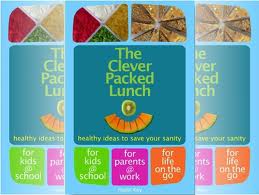
Hazel Keys, the author of The Clever Packed Lunch has come up with a system for getting kids to eat the contents of their lunchbox.

Below is a portion of an interview of Ms. Keys conducted by the Courier Mail:

Q: You’ve run a tuckshop – what’s your take on ensuring kids leave home each day with a properly packed lunchbox?

 A: It’s essential. A healthy nutritious lunch supports learning by allowing children to settle, focus and learn. Processed, refined and sugary foods have been shown to do the opposite.

Q: What motivated you to write The Clever Packed Lunch?
A: My many years of parenting and preparing school lunches resulted a system that I felt could benefit families and I wanted to share that.

Q: What are your three top tips when it comes to creating great packed school lunches?
1. Involve your kids in the preparation; listen to them and try to accommodate their preferences within the guidelines of health and balance.
2. Include plenty of fresh fruit and vegetables, preferably choosing in-season varieties.
3. Choose “whole” foods and ingredients that are as close to their natural state as possible, like seeds and whole grains.

Q: You suggest parents should try to get their children actively involved in making lunchbox choices – what are the benefits?
A: This is a great way to achieve a number of goals, so that:
• children feel empowered
• they’re far more likely to eat their lunch
• they’ll learn how to cook and feed themselves healthily in the process.

Q: Can you give us an example of a delicious and balanced lunchbox that could turn fussy eaters into fans?
A: Kids are attracted to “fast” food, there’s no doubt, and in my experience they love pizza. Pizza can definitely be healthy as long as you use quality ingredients like (some) wholemeal flour, olive oil and organic tomatoes. I serve it with salad, or the mixed potato wedges recipe from the book, which uses sweet potato, a highly nutritious food. And then there’s my healthy chocolate cake recipe!

Q: It’s Sunday night and the fridge is looking bare any lunch items that can be made up from simple pantry staples?
A: Yes! I always keep small tins of prepared salmon in the pantry, along with dried egg (not wheat) noodles, and frozen vegetables like corn and peas. The other items I always have on hand are a wide range of seeds. The noodles, once cooked, can be combined with the salmon, veggies and some sesame seeds, perhaps with a little sesame oil.

Q: Top three sandwich combos?
A: Ooh, yes! For kids I find the following are popular:
– sliced turkey breast, cranberry sauce and sliced green apple
– salmon, chopped gherkin, egg mayonnaise and cucumber
– grated cheddar, creamed corn and diced red capsicum toasted

Q: We automatically think of sandwiches when it comes to packed lunches? Can you suggest three options we could consider instead?
A: Yes, I’ve a recipe in the book I call “Sleeping Dogs”, which is a healthy version of hot dogs or sausage rolls. Home-made dips with wholegrain rice crackers or pappadams are a nutritious gluten-free choice. And my personal favourite, also from the book; the creamed corn puddings, which are rich in eggs and served with sour cream and guacamole. Yummy!

Q: How important is it to include a treat?
A: I think it’s important not to give “treat” foods too much attention, but to demonstrate flexibility by including them now and again, although not in the lunchbox unless the food has a nutritional benefit, like quality dark chocolate. That’s a real win-win treat!

Q: You suggest doubling up lunch box prep with dinner – can you give us a couple of examples to get us thinking on the right lines?
A: When making meatballs I double the quantity and shape some into patties instead. I serve them for dinner in a wholemeal or multi-grain roll with lots of salad. And when I make chicken and corn soup, I add the uncooked chicken to the stock. Chicken cooked this way is both moist and tender and adds flavour to the soup. So I often double the amount of chicken, and once cooked, remove half. Then I freeze it and use it for Asian dishes another day.

Q: What do you think are the main issues facing families in relation to providing healthy lunches for children at school, and what solutions can you offer?
A: It seems to me that families are finding themselves over-stretched, and lacking the time and money to provide really nutritious lunches. I’m convinced that this is contributing to the growing issue of child obesity. My answer is to move away from packaged and processed foods and choose fresh, simple, high quality foods instead. So much of our money goes straight into the bin wasted on fancy packaging and clever marketing, and the ingredients are often inferior. Feeding ourselves properly takes a little effort, but it’s absolutely worth it. Good food, like charity begins at home and offers an opportunity to develop in your children healthy eating habits that will last a lifetime. It’s one of the greatest gifts you can give them. And there are clever systems that can make the process fast and efficient too, such as the one outlined in my book.


The author can be contacted at hazel@lunchideasforschool.com

The Meteoric Rise of the Educational App

January 25, 2012

We are in the midst of an educational app bonanza. The educational app is fast taking over, with the startling statistic that more than a quarter of all parents have downloaded apps for their children to use. In a recent study entitled, iLearn II: An Analysis of the Education Category on Apple’s App Store, the popularity of the educational app was discussed as was recommendations for future growth.

Below are some of the findings of the report:

1. Apps are an important and growing medium for providing educational content to children, both in terms of their availability and popularity.

  • Over 80% of the top selling paid apps in the Education category of the iTunes Store target children.
  • In 2009, almost half (47%) of the top selling apps targeted preschool or elementary aged children.  That number has increased to almost three-­‐quarters (72%).
  • The percentage of apps for children has risen in every age category, accompanied by a decrease in apps for adults.

2. Early learning apps for toddler/preschool are particularly prominent. Developers should consider potential saturation of this market.

  • Apps for toddlers/preschoolers are the most popular age category (58%), and experienced the greatest growth (23%).
  • General early learning is the most popular subject (47%), and there are significantly more general early learning apps than the second most popular subject (math, 13%).

For those interested in a more comprehensive summary of the report please follow this link. If you would like to read the entire report please click on this link.

Facebook and Teachers: How Evil Predators are Ruining it For the Rest of Us

January 25, 2012

It sickens me to read about teachers misusing their privileges and being accused of engaging in inappropriate dealings with students. Similarly, it upsets me no end that these horrendous people end up making life even harder for well-meaning, caring and decent teachers.

Male teachers will be completely aware with what I am saying. It is hard to be a male teacher (especially Primary teacher) in an age where there are daily stories doing the rounds about teacher sexual abuse. We have to be careful to the point of obsession. Whilst female teachers wouldn’t hesitate to talk to a student alone behind closed doors, a male teacher cannot afford to. Whilst female teachers cuddle and get kids to sit on their laps without the slightest of hesitation, male teachers wouldn’t even extend their hand for a handshake. I am not trying to complain about this. In fact, I am a big advocate of these rules. It’s the fear of being falsely implicated that makes it a struggle.

And it’s not just male teachers who are effected by these evil people. They have also taken technology like social media, which I hear has incredible benefits as an educational tool, and prevented good, hard-working teachers from freely using it to assist their students.

One in 10 misconduct cases from schools involved teachers using social networking sites like Facebook to start inappropriate relationships with their pupils, it was reported.

n 43 of the 336 cases referred to the General Teaching Council for England last year for “unacceptable professional conduct”, teachers had used online forums, emails and websites like Facebook and Twitter to contact children.

A total of 14 were suspended and 18 were given prohibition orders, according to the Guardian.

The figures also revealed a wide variation in school policy over social networking websites with some banning teachers from having accounts while others allow staff to be “friends” with pupils.

The GTC registrar, Paul Heathcote, told the Guardian: “Often the use of social media by teachers can be positive and make a valuable contribution to a teacher’s practice, to pupils or to the school.

“Only if the use of social media by a teacher is relevant and serious enough to potentially affect a teacher’s registration is it likely to progress to a hearing.”

I would argue that it has become too risky to use Facebook as an educational tool between teacher and student. And we know exactly who to blame for that.

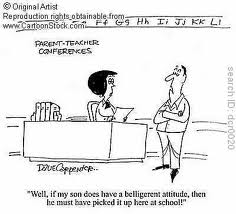
The Importance of a Healthy Parent-Teacher Relationship

January 22, 2012

One of the most important skills of a successful teacher is the ability to harness positive interactions with parents. I believe that a teacher must consider themselves part of a team. After all, the parents and teacher form the three major stakeholders in a child’s education.

Such a notion is supported by expert Karen Campbell.

A GOOD parent-teacher relationship is important to every child’s learning journey and helps develop a memorable school experience.

That’s the opinion of Sunshine Coast education expert Karen Campbell.

And like any relationship, she says these need nurturing and constant attention to be of benefit to the child.

With the new school year only a week away, many parents may be meeting their child’s teacher for the first time.

“Parents have to realise that a teacher is such an important part of their child’s life,” Mrs Campbell, a tuition facilitator and former teacher, said.

“They need to introduce themselves to the teacher, and tell the teacher any special things about their child.

“Open communication is essential, so it’s important for parents to inform the teacher if there’s a problem at home such as a death, break-up or business failure.

“This allows teachers to develop an understanding and appreciate why a child may be behaving a certain way.”

Not all parents are easy to get along with and some employ methods that are not exactly to my liking, but I realise that a disconnect between myself and the childs’ parents is potentially destructive to the academic progress of the child.

It is important to work past any differences one may have and find common ground in the best interests of the child.

Tips for healthy parent-teacher relationships:

  • Re-introduce yourself to your child’s teacher by appointment
  • Inform your child’s teacher of any home-related problems
  • Volunteer to help with school activities
  • Make sure you adopt the same learning style at home as at school
  • Notify the teacher of any special talents or gifts your child may have
  • Open the lines of communication through casual conversations outside the classroom, for example, when dropping off your child or picking them up

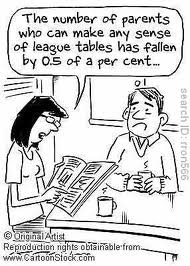
The Only Ones Who Should Be Named and Shamed are the Policy Makers

January 22, 2012

Nick Gibb wants to remove incentives to schools that are protecting their league table ranking at the expense of extending bright students.

Secondary schools that fail to push bright children will be named and shamed in a bid to prevent comprehensives from manipulating the league table rankings, the schools minister has said.

Nick Gibb said he wanted to remove the incentive for schools to play the system by focusing only on pupils whose grades will affect their league table ranking.

Gibb said the tables would include additional information to expose schools who fail to push bright students who were capable of performing even better if they had better teaching.

In the reformed league tables, which will be published for the first time next week, parents will be able to compare schools based on the amount of progress made by the top pupils between 11 and 16.

“The way school league tables have evolved over the past two decades can encourage a degree of ‘gaming’ by some weaker schools, desperate to keep above the standard that would trigger intervention by Ofsted or the Department for Education,” Gibb writes in Saturday’s Telelgraph.

“But the purpose of performance tables must be to incentivise schools to raise standards and to enable parents to make informed decisions when choosing a school.”

The reason why schools don’t invest more time into bright students is not because they don’t care. It is because the system was set up to force schools to protect their ranking. It’s these blasted rankings that taint education. Teaching and learning is not a game. It shouldn’t come by way of fear or shaming, but through sound methods and a positive approach,

Policy makers should be named and shamed for changing the landscape of education. No industry is under so much pressure, with so little real reward. Teaching under a cloud of negativity poorly impacts staff and students.

Perhaps there will be more attention to brighter students as a result of these measures. But in the end, nobody wins from negative tactics and a data driven school system.

Make-Up Lessons for 14-Year-Old Girls Draws Outrage

January 19, 2012

You would have thought we were stuck in the 1960’s. Honestly, to offer make-up classes to young girls is such an outdated idea.

A school has triggered outrage for giving make-up lessons to girls as young as 14.

The classes at Mount St Mary’s Catholic High School in Leeds even teach the youngsters how to get ready for a night out, the Mirror reports.

Teachers claim they help pupils learn how to make a good first impression and can boost their self-confidence.

However, family campaign groups and parents yesterday criticised the school.

The Family Education Trust told the paper: ‘At a time when there is growing public concern about the sexualisation of children and young people, it is irresponsible for schools to provide make-up lessons.

‘Parents don’t send their daughters to school to learn how to put on make-up but to receive a decent education.

‘The fact that some of the pupils asked for these lessons is no defence.

Indeed, it is not for students to dictate what is taught in class. My issue here is it sends the wrong message. True confidence doesn’t come from the ability to apply make-up, it comes from achievement. Far more worthier programs can be undertaken by the school than this one.

Whilst I don’t feel it’s necessary to condemn the school for this error in judgement, I think it’s time they concentrated on making these girls feel good about themselves within their charter of educational outcomes.