Posts Tagged ‘life’

How Do Teachers Answer Questions About Osama?

May 3, 2011

There is no easy way to respond to questions about the death of Osama Bin Laden.  Young kids are clearly confused as to why people are gaining satisfaction from a person’s death.  It is not for a teacher of young children to go in to great detail about Bin Laden and his evil monstrous ways.

The problem then becomes – what do we say?

While many of us are still processing last night’s late-breaking news that Osama bin Laden was killed by a team of Navy SEALs, many teachers had to stand up bright and early this morning in front of a classroom of curious youngsters to field their questions on everything from assassination to terrorism, with little preparation.

“One of my students walked in this morning and said: ‘Osama Bin Laden is dead … is that a good thing?’ Leave it to a six year old to put things in perspective,” a California teacher wrote on Facebook today.

BeAtrice Mazyck, who teaches 11th-grade U.S. history at Lee Central High School in Bishopville, South Carolina, tells The Lookout she had already finished her curriculum for the semester, so she was glad to have a big current event to talk about. Her students had studied the 9/11 attacks earlier in the year, and today were debating the effect bin Laden’s death would have on the U.S. war efforts.

“Some of them were wondering, ‘Is the war over? Can the soldiers come home now?’ Because we live like 20 minutes from the Shaw Air Force Base,” Mazyck said, adding that some of her students have parents who are in the military.

 In Cincinnati, one 9th grade teacher found she had to rehash for her students the events of September 11, 2001–when they were very young–for them to understand the context and significance of bin Laden’s killing.

“Most of these students were in kindergarten or first grade and have very little memory of September 11th,” Oak Hills High teacher Amanda Ruehlmann told the Cincinnati Enquirer. “Many have even less of an idea of how much their lives have been impacted by the results and effects of 9/11. So I’ve shown students information on how bin Laden came to be Public Enemy No. 1.”

Some older students wrote they were glad for a distraction from regular coursework. A senior at Glades Central High School in Florida joked on Facebook that Monday should be a school holiday, and that he planned to “bring up the Osama killing to distract all of my teachers from teaching today.”

Teachers aren’t the only ones getting questions. Parents around the country are going online to talk about how difficult it can be to explain to a child why so many people seem happy that a person has been killed.

“I got to explain to my 7 year old son this morning about the news that osama is dead…. he was instantly happy and in his words ….. so the war is over and daddy doesnt have to go away again? really, how do you answer that?” wrote Kate Harbison in Bangor, Maine. “I explained that we all love daddy, and would love for daddy to be home all the time, but considering all that is going on in this world, daddy and all the rest of the armed forces have alot still to do, and probably always will,” Harbison told The Lookout in a note.

“In explaining who Osama is this morning to my 6 year old, my 8 year old said ‘it’s like he is Voldemort.’ I’m so glad it is clear to them now,” a woman from Coppell, Texas wrote.

Have you been asked any questions about Osama by your students?  What did you say?  Do you have any advice for this slightly tongue-tied teacher who is looking for the right words which stubbornly refuse to come out?

Encouraging Kids to Use Social Media is Not the Way to Go

May 2, 2011

My experiences in teaching has taught me that while we try to empower our kids to act responsibly at all times, reality suggests that the message doesn’t always filter through.  Sometimes, as unfair or overbearing as it sounds, it is simply naive to suggest that children can act with the responsibility and maturity required to warrant the rights and privileges of older individuals.

Facebook is a two-edged sword.  It has its benefits.  But even adults can’t ignore that there are risks to privacy involved.  The call to bring down the age restrictions of Facebook users from 13, to accommodate Primary students lacks foresight and ultimately makes little sense.  Sure you can teach them about privacy settings and warn them about cyber-bullying and cyber-safety, but sadly, there will always be frequent cases of misuse and bullying should the current restrictions be softened.

Soraya Darabi, social media correspondent for ABC America, disagrees:

PRIMARY school students should be receiving lessons in how to make the most of social media and how to protect themselves from its dangers and pitfalls, says a US specialist.

Soraya Darabi, social media correspondent for ABC America, says platforms such as Facebook, Twitter and a raft of newer sites have taken social media to a point where kids need to know how to control what they post online.

“We’re reaching the point where schools should be teaching best practice for social media, right from primary school age, and the importance of protecting their images and information online,” says Darabi.

“They need to know, for instance, that if they are using Twitter they should only be conveying information they are happy to have recorded in the Library of Congress for all time, because that is what’s happening.”

Four years ago, at the age of 23, Darabi helped The New York Times move into social media and she has more than 400,000 followers on Twitter. She says she uses a variety of sites to secure online privacy.

“You must have a few networks that are sacred. For me, anyone can follow me on Twitter. I only accept people as friends on Facebook if I have personally met them. And there’s a site called Path that I reserve for my closest 50 friends, and where I feel safer posting more personal stuff.

“My personality has changed so much online. I still post some personal things. I’m still playful on Twitter, but nowhere near as much as I used to be.

“There’s this whole thing with the personal-professional hybrid that social media is that we’re all still getting used to,” she says. Darabi is reticent about the future of social media; a five-year horizon is far too distant, she says.

Do you honestly think ten-year olds would uniformly accept only the friend requests from people they have met?  What is the point of a Primary aged child having a Twitter account anyway?  I have absolutely no issues in teaching the importance of privacy settings and alerting my students to cyber safety practices.  This is something I currently do.   But what is gained from lessons that “make the most of social media?”

Whilst it is essential to enlighten our children of the issues that arise from improper social media use, there is simply no good reason for Primary students having their own Facebook and Twitter accounts.

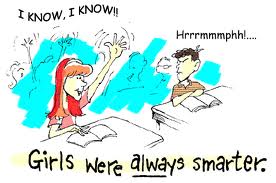
Girls Performing Much Better in the Classroom

May 1, 2011

It is no surprise that girls are out doing boys in the classroom.  This has been the trend for quite some time.  But it should focus our energies on how we can teach boys in a more effective manner.

Girls are teaching their male classmates a lesson, blitzing them in almost every subject in Victoria’s classrooms.

Details of NAPLAN tests conducted last May also show Melbourne students narrowly outscore their country cousins, while those with highly educated or professional parents get the best marks.

Girls scored better than boys in 19 of the 20 categories measured in Years 3, 5, 7 and 9.

Nationwide, boys fell behind in almost all categories. Overall, Victoria’s students placed second in half the categories and lead the nation in three.

Year 9 boys were cause for the most worry – 15 per cent failed to meet the writing standard. However, their struggles matched those across Australia, meaning Victoria was still the best in the subject.

There are matters I would like to raise on this topic:

1.  We must do more to engage our boys.  Whether it’s a lack of male teachers or a teaching style that doesn’t work as well with boys, we must get to the heart of the problem and help mend the disparity.

2.  It is absolutely mind-boggling that in todays age we do not have more women in high positions and on multi-national company boards.  It is insane that we even need to talk about employing a quota system to get more female C.E.O’s.  Whilst it isn’t always the choice of women to sacrifice other aspects of their lives for a time-consuming and stressful career, there are many who are keen to get as far as they can go up the corporate ladder.  The argument that positions should be filled by those who are most qualified and capable is true.  However, that should result in females overtaking males in these leadership positions, because they are proving how much better they are in critical areas of learning and thinking.  Unfortunately, I suspect competency has nothing to do with it.

Should Teachers be Dismissed for Leading Double Lives?

April 29, 2011

Whilst I don’t think it’s ideal for a teacher to be involved in the racy novel-writing industry, I’m not sure that the crime befits anything more than a ban on writing future novels.  A teacher caught involved in such activities hasn’t broken laws but they have somewhat tarnished their reputation.  Still, is it really worth more than a slap on the wrist?

Parental complaints have led Midd-West School District officials to investigate a veteran high school teacher who writes erotic romance novels under a pen name.

The teacher, Judy Buranich, of Selinsgrove, has taught at Midd-West for 33 years. Under the pen name Judy Mays, she has been writing novels for a number of those years. Her books include liaisons involving werewolves, aliens and vampires and can be found in the Romance section at Waldenbooks.

Buranich declined to comment about the controversy Wednesday.

On her website, she refers to herself as “a mild-mannered tenth grade English teacher in a small public high school.”

Wesley Knapp, superintendent of the Midd-West School District, said he has received a few complaints, but it was after The Daily Item approached him on April 18 to ask about the connection. Until then, he said, “I didn’t know anything about it.”

Knapp said he has told those making complaints “that we’d look into it.”

He declined to discuss the matter further.

“When it’s a personnel matter, I can’t comment,” he said.

Deanna Stepp, mother of a district student, said: “We are not questioning Mrs. Buranich’s teaching credentials. We are not even questioning her ability as a writer … . What we’re questioning is that the two jobs are not compatible with one another.”

Another parent, Wendy Apple, said she had Buranich as an English teacher in high school.

“I thought she was a top-of-the-line teacher,” Apple said.

But the erotica, she said, “is unethical, totally unacceptable. Period. It just sort of sickens and saddens me to know everybody’s sort of looking at this like, hey, this is OK.”

Apple has received comments and messages on her Facebook page, she said, from people who are attacking her for speaking out.

Apple said she heard the rumor from several students, and started during her own research. Although most of Buranich’s defenders are saying it’s not an issue because she does the writing on her own time, Apple said, “then how did these kids find out? These kids knew what kind of writer she was.”

As a result of her speaking out, which she had contemplated for about a month, Apple said her son, who has Buranich as a teacher, has received backlash at school as well.

“I wholeheartedly believe that more parents are looking at things the same way we are,” Apple said.

Writing as Mays on Facebook on April 22, Buranich said, “The world is full of idiots.”

She also referred to support she has gotten.

“I have a lot of people supporting me, including students and ex-students,” she wrote.

She wrote that she hopes the expose will make the sales of her books go up, and already has.

Meanwhile, a Facebook page titled “Support Judy Mays (Mrs. Buranich)” hit 88 likes by Wednesday afternoon.

Cindy Wagner, manager, at Waldenbooks, said the novels are under the category of “Romance,” not “Erotica” at the bookstore. She said the books are already tagged when they arrive, and she simply places them on the shelves according to those tags.

So should teachers be allowed to lead a double life?  At what point would they be taking it too far?  Do you think that the parents of Ms. Buranich have what to complain about?  Do you agree that she should be advised to quit writing these novels while she is still teaching?

Monitoring Your Child’s Facebook

April 28, 2011

It’s never ideal to secretly review your child’s activities, but sometimes it’s an imperative that cannot be avoided.  Rather than recommend that parents use this new innovation that allows them to oversee their child’s Facebook page without being classified as their friend, I think it’s important to alert parents and teachers of its existence.

INTERNET security firm Check Point overnight launched software that lets parents watch over offspring on Facebook without being “friends” at the online social network.

ZoneAlarm SocialGuard alerts parents to signs of trouble in a child’s Facebook account without them being privy to all posts, comments, pictures, videos or other digital content shared between friends at the website.

The program scans Facebook profiles, communications and “friend” requests and uses algorithms to identify potential bullying, sexual overtures, or talk of drugs, violence or suicide.

SocialGuard software runs unseen in the background, flagging suspicious activity and sending alerts to parents, according to its Redwood City, California-based creators.

“It’s about protecting your kids from the social threats out there, while still respecting their privacy and fostering open communication,” said Check Point vice president of consumer sales Bari Abdul.

“We are offering Facebook users a simple way to embrace social networking safely,” he continued.

SocialGuard is crafted to detect hacked accounts, malicious links, online predators, and cyber-bullies, according to Check Point.

The software also checks to determine whether people contacting children online are being deceptive about their ages or if a stranger is trying to become a Facebook “friend.”

“Parents are increasingly concerned, and rightfully so, about the dramatically increasing trend of criminals, predators and bullies targeting children over social networks,” said analyst Rob Enderle of Enderle Group in Silicon Valley.

“SocialGuard provides a strong suite of tools that can effectively protect children from these types of social threats that are keeping parents awake at night.”

Check Point cited a survey indicating that 38 percent of teenagers have ignored requests from parents to be friends on Facebook, and that 16 percent of children have only done so as a condition of using the social network.

SocialGuard was available online at zonealarm.com for $US2 ($1.85) monthly or $US20 annually.

Spying on kids is the very last resort.  You would hope that children are able to use social media responsibly.  Unfortunately, too often that is not the case.  Therefore, for safety reasons, it is important that parents are aware of safeguards like this one.

Teacher Stress a Real Issue

April 27, 2011

At a time when teachers are being unfairly picked on by politicians and the media and forced to take the heat for standardized test results and missed benchmarks, there is no wonder why teachers are suffering from stress.  The paperwork is ridiculously high and the support is nowhere to be seen.

Just look at what toll it is having on teachers in Britain:

An increase in Government targets and high-stakes Ofsted inspections is fuelling a rise in serious mental health problems among school staff, according to teachers’ leaders.

Most teachers said behaviour policies in schools were inconsistently enforced, allowing many pupils to get away with bad behaviour

The National Union of Teachers claim stress is now the main reason for driving teachers out of the profession.

It follows the publication of figures last year that showed almost 309,000 school teachers – more than half of the workforce – were signed off sick for an average of two weeks in 2009.

The NUT claim that staff are now routinely expected to work more than 50 hours a week after being swamped by marking and form-filling.

Speaking at the union’s annual conference in Harrogate, activities told how many teachers were resorting to alcohol to get through the day or even attempting suicide because of the workload.

Sue McMahon, branch secretary for Calderdale, West Yorkshire, said: “As a divisional secretary I have seen a meteoric rise in work-related stress and in more than one occasion have had to support a member who has attempted suicide.”

She said the problem was being caused by “the demands being placed on our members to hit Government targets”.

“We got into teaching to teach, not to be beaten by the target-driven culture of those Stepford heads who relish the Government agenda,” she said.

“The target tsunami escalating from the aspirations of this Government is sweeping away those [teachers] that you are struggling to support. And as the wave gets bigger it is leaving a trail of devastation in its wake that used to be a world class education system.”

Teachers need more support and consideration.  It isn’t an easy profession, and yet it continues to be more taxing and highly stressful than ever before.  Less paperwork, less beaurocracy, more support and more leadership from our politicians and administrators please?


Corporal Punishment Reveals the Worst School Has to Offer

April 24, 2011

Imagine finally taking the important and highly necessary measure of banning corporal punishment only to take on another absurdly simple-minded strategy in its place.  That is what India’s Sindhi Vidyalaya matriculation Higher Secondary School is guilty of:

Candy or cane? City schools seem to have dumped the primitive notion of spare the rod and spoil the child. Instead of wielding the stick, they are now offering chocolates to kids to encourage them in academic excellence and enforce discipline.

“We are strictly against corporal punishment. We hand out chocolates to students if they score good marks and behave well in school. We have realised that it greatly motivates our students,” said Gouri Ramarathinam, Principal, Sindhi Vidyalaya matriculation Higher Secondary School.

Why go from one extreme to another?  Is it so difficult to replace a terrible educational policy for a sensible one?

Meanwhile, in Johannesburg banning corporal punishment didn’t change a thing:

Corporal punishment is still common in South African schools even though it was banned more than a decade ago. Recent research showed that up to 70% of primary school and 50% of high school pupils were still subjected to corporal punishment.

In Louisiana corporal punishment is here to stay.  But don’t be concerned. They have come up with a foolproof measure for its responsible use – a checklist!:

Corporal punishment is here to stay in Rapides Parish public schools, and members of the Disciplinary Policy Review Committee on Wednesday discussed ways parents can inform a principal if they don’t want their children paddled for infractions.

“Corporal punishment is an acceptable discipline procedure by law … We try and use it as little as possible,” said Ruby Smith, the Rapides Parish School District’s director of child welfare and attendance. “When I was a child in school, corporal punishment worked like butter on toast. I receive few calls from parents saying that they don’t want their child to receive corporal punishment.”

Louisiana House Resolution No. 167 was passed last year that requires principals to fill out a “Corporal Punishment Incident Checklist.”

“Principals will send the checklist to the (School Board office), and once a month, it will be sent to the state Department of Education,” Smith said. “Our first reporting was due in Baton Rouge on the 11th of April, and principals will have to turn one in every month, regardless if they have an incident or not. The officials in Baton Rouge will probably do some study on the checklist.”

Corporal punishment never worked like “butter on toast” for students as it may have for teachers, Ms. Smith! I am sorry to tell you but your checklist isn’t worth the paper it’s written on.

To conclude my thought for the day on this awful means of disciplining kids, I will quote from an article entitled “Schools Under Pressure to Spare the Rod Forever,” Dan Frosch tells the story of one case, and then puts it into larger context:

When Tyler Anastopoulos got in trouble for skipping detention at his high school recently, he received the same punishment that students in parts of rural Texas have been getting for generations.

Tyler, an 11th grader from Wichita Falls, was sent to the assistant principal and given three swift swats to the backside with a paddle, recalled Angie Herring, his mother. The blows were so severe that they caused deep bruises and the boy wound up in the hospital, Ms. Herring said.

While the image of the high school principal patrolling the halls with paddle in hand is largely of the past, corporal punishment is still alive in 20 states, according to the Center for Effective Discipline, a group that tracks its use in schools around the country and advocates for its end. Most of those states are in the South, where paddling remains ingrained in the social and family fabric of some communities.

Each year, prodded by child safety advocates, state legislatures debate whether corporal punishment amounts to an archaic form of child abuse or an effective means of discipline.

This month, Tyler, who attends City View Junior/Senior High School, told his story to lawmakers in Texas, which is considering a ban on corporal punishment. The same week, legislators in New Mexico voted to end the practice there.

Texas schools, Ms. Herring fumed, appear to have free rein in disciplining a student, “as long as you don’t kill him.”

“If I did that to my son,” she said, “I’d go to jail.”

Inspiring Words For All Teachers

April 24, 2011

I came across this brilliant article by Priscilla Wilson, a retired school teacher and educator.  In her wonderful piece, she calls on new teachers to put children first, and to look past bureaucratic stumbling blocks and instead, fight for the child.  It is so refreshing to come across a teacher that puts this critical message in such eloquent terms.

Teachers from all around the globe would be well advised to read this:

This week is somewhat of a milestone for me.

Forty years ago this week I started my first teaching job. In reflecting on what a great time that was for me, I am saddened as to how much things have changed. It was an exciting time when people who felt that they wanted to teach could easily do so.

It was actually a very care-free and nurturing time which I must say we simply took for granted. It only made sense that if you had studied to be a teacher, you would have the opportunity to do so. The big discussion was not if you could get a job but simply where you thought you wanted to live and work! People were excited to do both and there was a great buzz about the profession and about getting to it!

April may seem like a strange time to begin teaching but I simply finished my university year one week and went to work the following week. I was in Fredericton and there was a separate Special Education school. I had the pleasure of volunteering there during my time at Teachers College and St. Thomas University and knew that this was exactly what I wanted to do. Following this opportunity, I was fortunate to be able to work in a segregated Special Education school for 10 years prior to Integration in the early 1980s. It was indeed an exceptional time that was especially meaningful, productive and memorable, a time of my life filled with fond memories that I will have forever.

With the introduction of Integration, many of us who had taught in the separate Special Education system became resource teachers. In addition to working as a resource teacher I was fortunate to teach most grades from 1 to 9.

I know now that I was always drawn to the child who was struggling, for whatever reason. I was very drawn to this particular student and was always intrigued as to what I could do that would be different; teach it again or another way. What was it going to take in order for the student/students to be successful?

I consider myself so fortunate because teaching has been such a positive career choice for me. What about those who are ready now to dedicate their time and energies to teaching? Why does employment have to be such a struggle for them? Why, too, are so many who are teaching so dissatisfied with their career? What changes could be made to the system to make things better for everyone?

What is more important than our young people; both our students and our young teachers? At a time when so many so-called topics of importance are being discussed, why aren’t we hearing more about the importance of an education? Why aren’t we talking more about how to make it better?

Many children are unhappy with their school experience which is extremely sad and quite unbelievable! Parents are dissatisfied and teachers can only dream of better teaching experiences, and thousands of enthusiastic young teachers feel they may never teach. How can things be so desperate in what should be such a progressive time?

In addition, the needs of so many children are not being met because the system is not set up to handle them. Amazing young people are losing out every day and we get to help them and, in fact, turn their lives around because at Wilson Reading Centre we’ve created a learning environment that is working for them.

Getting back to my 40-year anniversary, I think that it’s interesting that I have the energy and stamina that I’ve always have. Well, it seems that way to me. No doubt, I have slowed down somewhat but I’m having too much fun to notice. There’s nothing extra special about me, except that I truly love what I am doing. That in itself is a gift and one that I wish for the many young people trying to fulfill their dream of being a teacher. Just think of what they could accomplish!

I feel strongly that as a society we should be fighting back. Our students need so much more and our young people need work.

I personally know very capable young people who have left the area in order to teach. Can you imagine the time, effort and expenses that they have endured in order to achieve the necessary qualifications, only to be unemployed? If this isn’t enough, they are then forced to move away in order to find work.

I know that this isn’t just happening within education but my soap-box is education. A good education can have the most meaningful effect on the lives of our young people and we are letting them down.

We always say how important our children are to us as parents and as a society. Parents do their best to provide for their children but they aren’t the ones assigned the task of teaching their children to read.

Being a successful reader carries over into every aspect of life. Without it, the child feels helpless, defenceless, frustrated, discouraged but most importantly defeated and unsuccessful.

So my challenge to the education system is to look at each individual and ask what we as a society could be doing differently.

Perhaps the key to my happiness as a teacher was the fact that I was drawn to the child who was struggling and set about to make a difference. It seems like a reasonable solution to a successful career because it would mean the difference between doing the best job possible and one that produced mediocrity.

Teachers feel overwhelmed because too many children are coming to them with too many struggles. One solution would be to address some of these struggles before they become insurmountable.

I am not talking about a hypothetical situation. I am, in fact, talking about one that I decided to tackle as an individual. I did so by creating a learn-to-read program that I felt would make a difference. Then I set about to prove that it would work.

Having accomplished this has allowed me the opportunity to prove my philosophy on many levels. One is that by simply taking a different approach to learning to read, people who have struggled, sometimes for years, can be successful. Another is the proof of the overwhelming power that learning to read plays in each individual’s life.

Finally, the clincher, which I think is the fact that being able to give back is the key to a successful career whatever you do. So, as this week represents forty years of tons of fun and loads of opportunities to give back, my plea is that we try harder as a society and look for ways to help more children be more successful, for certain more successful and more confident as readers and therefore, as individuals!


The Horrendous Over-Prescribing of ADHD Drugs

April 21, 2011

America is running our of Ritalin!  Parents are frantically running around trying to find pharmacies that still have some in stock.  You might think that what I have just written is the making of good fiction, perhaps a Hollywood satire, but I’m afraid that it’s a true story, with potentially huge ramifications.

Nationwide shortages of popular drugs used to treat ADD and ADHD are sending parents scrambling, with some combing multiple pharmacies for the Adderall and Ritalin that keep their kids calm.

Molly Taylor, 46, of Worcester, Mass., was turned away empty-handed this week when she went to pick up prescriptions of Adderall XR for herself and her 16-year-old son, Luke.

“They don’t have them,” an incredulous Taylor told msnbc.com. “You could be waiting several days, which would have a HUGE impact. If you can’t get it that day, it’s very, very difficult.”

In the past two weeks, federal Food and Drug Administration officials added the drugs methylphenidate hydrochloride and amphetamine mixed salts, the generic names for Ritalin and Adderall, to an expanding list of national drug shortages. Some distributors cite manufacturing delays and increased demand as the reasons; others offer no explanation for the shortages.

But the American Society of Health-System Pharmacists, which tracks drug supply issues, has listed the products in short supply for nearly a month, and there have been regional reports of spotty shortages even before that.

5.4 million children have ADHD

In the United States, an estimated 5.4 million children ages 4 to 17 have ever been diagnosed with ADHD, or attention-deficit/hyperactivity disorder, and 66 percent of those with current ADHD take medication to control the condition, according to the Centers for Disease Control and Prevention.

Last year, that amounted to 152 million units sold of Adderall and Adderall XR, the extended-release version of the pill, 35 million units of Ritalin and nearly 702 million units of generic ADHD drugs, with sales totaling more than $1.2 billion, according to data from Wolters Kluwer Pharma Solutions.

For millions of children — and adults — the stimulant medications ease the symptoms of ADHD, allowing them to control distracted thoughts and behavior well enough to participate in school, work and social life.

The drugs are taken daily, but when patients miss even one dose, the consequences can be swift, said Ruth Hughes, interim chief executive of the organization CHADD, Children and Adults with Attention-Deficit/Hyperactivity Disorder.

“The symptoms come back very quickly,” said Hughes, who is the mother of an adult son with ADHD. “If you start that spiral, within 24 hours you begin to get in the loop of negative feedback. It doesn’t take very long until it has a truly negative impact.”

The current shortages affect various doses of the medications supplied by several manufacturers of brand-name and generic drugs. That means patients who find they can’t get their usual prescriptions might be able to find a similar drug in a different strength, made by a different manufacturer.

However, because the drugs are tightly controlled by the U.S. Drug Enforcement Administration, prescriptions are doled out only a month at a time, and patients have to visit their doctors in order to authorize new drugs, which could be more expensive than the old ones.

“Tightly controlled”? You have got to be kidding me!  This is sickening!  How can we sit and watch our kids being prescribed these drugs in the millions and not wonder whether or not these kids really have ADD and ADHD?  How can you get to the point where demand for a drug for children is so readily prescribed that demand exceeds supply?

It seems like pharmaceutical companies are winning, and we are sitting there silently letting them.  It is time for a parliamentary inquiry on this issue.  Doctors and teachers in particular need to be accountable for their role in this situation.

Surely when a drug becomes so rampantly prescribed that drug companies struggle to meet demand, there is something not quite right going on?  Or am I the only one that thinks this is the case?

Poor Children Coming to School Tired and Hungry

April 15, 2011

This is a universal problem that requires a lot more attention.  Teachers are not given enough credit for their role in supporting kids that come to school with inadequate food or no lunch at all.  It is not widely known that teachers often spend out of their own pocket to ensure that their poorer students have what to eat.  But the problem still exists, and it must be addressed.

A concerted campaign from schools by working with charity groups to ensure that meals are provided for students of poor families should ensure that heartbreaking articles like this one will be a thing of the past:

Teachers are reporting a rise in pupils entering the classroom feeling tired, hungry and dressed in worn-out clothes.

A study by the Association of Teachers and Lecturers found almost eight-in-10 staff had pupils living below the poverty line and a quarter believed numbers had increased since the start of the recession.

One teacher from Nottingham told of a sixth-former who had not eaten for three days as her “mother had no money at all until pay day”.

A teaching assistant from a West Midlands comprehensive told researchers that some pupils had “infected toes due to feet squashed into shoes way too small”, while another member from Halifax reported a boy who was ridiculed in the PE changing room because his family could not afford to buy him any underpants.

Some teachers told how pupils were consistently late for lessons as parents could not cover the bus fare to school. Other children from middle to lower income families have been forced to cut out school tips because money is so tight, it was claimed.

The disclosure follows the publication of figures showing a rise in the number of pupils eligible for free school meals as families struggle to stay above the breadline in the recession.

Almost 1.2 million five- to 16-year-olds claimed free lunches last year – a rise of more than 83,000 in just 12 months.

Mary Bousted, ATL general secretary, claimed that problems would escalate further because of Government funding cuts – putting the Coalition’s social mobility drive in jeopardy.

“It is appalling that in 2011 so many children in the UK are severely disadvantaged by their circumstances and fail to achieve their potential,” she said.

“What message does this government think it is sending young people when it is cutting funding for Sure Start centres, cutting the Education Maintenance Allowance, raising tuition fees and making it harder for local authorities to provide health and social services.

“The Government should forget empty rhetoric about social mobility and concentrate on tackling the causes of deprivation and barriers to attainment that lock so many young people into a cycle of poverty.”

It is time that we made the most crucial issues in education our first priority and main focus.  As important as debate over class size, ICT, male teacher numbers are for improved educational outcomes, such discussion often takes over.  We need to get back to basics.  The basic requirement for a school is to look after the welfare of its students.  That makes health and bullying among the most important priorities in my book.Here’s an opportunity for schools and charity groups to work together to tackle a problem that shouldn’t even exist in the forst place.