I resist criticising parents, because as one myself, I know that it’s not an easy job. Parents make mistakes, it’s just a fact of life. But some mistakes, parents just can’t afford to make. Shaming a ten year-old in the way that this mother does, takes a small problem and turns it into much larger one:
A Townsville mother has punished her son by making him sit in public wearing a sign that read, “Do not trust me. I will steal from you as I am a thief”.
The boy, who was also wearing a pair of Shrek ears and writing lines, spent almost an hour near a waterpark on Sunday while his family ate lunch nearby, the Townsville Bulletin reported.
Diane Mayers told the Bulletin that she was so “horrified” when she saw the boy, thought to be about 10, that she alerted Child Safety Services.
The former Child Safety Services worker said the long-term effects of the public humiliation would be greater than any form of physical abuse.
“A lot of people walked past and were laughing at him, including boys who would have been his age,” she said.
She said the parents had clearly put a lot of work into the punishment, with the boy wearing laminated signs on both his back and his front.
Ms Mayers told the Bulletin the boy took the Shrek ears off at one point when her daughter overheard the boy’s mother say, ‘Put them back on or I’ll smack your head in’.
That boy may never steal again, but does the punishment really fit the crime? Not even close.
I think in certain circumstances it would be a most valuable experience for teachers to visit the homes of their students. By doing this they will get a clearer picture about the environment in which that child lives in and unique aspects of their lifestyle.
The new chief of the Chicago public schools, Jean-Claude Brizard, suggested recently that teachers visit the homes of their students. Many people reacted to that badly, as math teacher Jason Kamras’s principal did when Kamras dropped in on his students’ apartments near Sousa Middle School in Southeast Washington.
The Sousa principal feared for his young teacher’s safety in a high-crime area. Kamras, however, found the visits invaluable. He understood his students better. Parents were more supportive. Now a D.C. schools official, Kamras is one of many educators who think unannounced visits can be worth the risk.
In the District, officials are looking at the possibility of home visits for elementary school students. The nonprofit Concentric Educational Solutions has been knocking on the doors of persistent truants for the past year. The group’s executive director and co-founder, David L. Heiber, said the visits would be even more effective if they occurred before students got into trouble. “Home visits by themselves do not correlate into academic achievement,” he said. “However, if done with academic goals and targets as the objectives, they do work.”
I commend Mr. Brizard for his brave and innovative suggestion and I’m disappointed it got so much backlash:
That thought is dismissed in many schools. Administrators such as Kamras’s principal see danger in some neighborhoods, and don’t think their staffs have the time or the energy for such after-school and weekend enterprises. “Teachers are overworked already,” Heiber said he has been told. He said administrators say that “our social workers only see our special needs students” or that “we are short staffed as it is.”
Being a father of a young girl with a nut allergy, I really hope that schools work hard to reduce the stigma of a child with anaphylaxis. It would be a shame if she was ostracised or treated differently because of the allergy. I personally am in awe of how she can deal with eating differently from her peers without so much as a whimper. She just accepts her lot and doesn’t let it get her down.
Children with potentially deadly nut allergies are being bullied for being different, say researchers.
And their parents are stigmatised as ‘neurotic and attention-seeking’ by other parents, they found.
Relatives of some victims of the condition are even suspected of deliberately giving a child nuts to check they really are allergic.
Overall, the impact of a nut allergy is so great that it could be considered a disability, the Leicester University researchers found.They interviewed 26 families from the Leicester area about their experiences.
Some children told how they were bullied by classmates, who taunted them about their allergy and threatened to trigger it.
What loving family member in their right mind would feed nuts to a child with a severe nut allergy to check if they are really allergic? And for those parents that think we are “too neurotic” about ensuring that our children are safe and not exposed to substances that can kill them, take a long walk down a short pier.
Below are two clips from a film made by Australia’s behaviour management guru, Bill Rogers. I think all teacher’s will find this useful regardless of experience.
Clip 1
Clip 2
Please share these clips with your colleagues. I’ve attended a Bill Rogers seminar and found it very useful.
There is age rstrictions on Facebook for a reason. The potential outcomes when a pre-teen uses Facebook are severe enough to warrant it a 13+ age requirement.
But does that stop under age kids opening their own account? Of course not.
Washington: Some 7.5 million of the 20 million minors who used Facebook in the past year were younger than 13, and a million of them were bullied, harassed or threatened on the site, says a study released Tuesday. Even more troubling, more than five million Facebook users were 10 years old or younger, and they were allowed to use Facebook largely without parental supervision leaving them vulnerable to threats ranging from malware to sexual predators, the State of the Net survey by Consumer Reports found.” Read the rest, here.
And this is a trend we are seeing all over the world. As important as it is to have this age requirement, it seems too easy to sidestep it.
I believe that if Facebook really wanted to ban under 13’s from setting up accounts, they could.
A recent survey seems to show that many parents prefer rest and a quiet drink than spending time with their kids:
A new survey has revealed that stressed adults prefer to kick back with a bottle of wine, rather than spending time with their partners or children.
Six in ten adults said drinking was their top choice after a stressful day, reports the Daily Mail.
While 28 per cent said spending time with their children helped them relax only 26 per cent opted for talking to their partner, according to the poll of 825 adults conducted by industry-funded charity Drinkaware.
It found people battle stress with up to four drinks on a typical evening at home.
Family dynamics have changed over the years. Something like the family dinner is quite different now to what it was in the 60’s and 70’s. Whilst a few drinks is clearly more relaxing than getting the kids ready for bed, it is still important that they receive the love and attention they need.
Ultimately, they need to feel as though they are more important than a drink at the end of a taxing and stressful day.
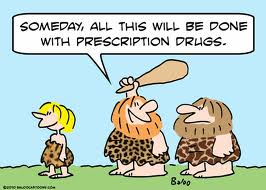
Sooner or later there will be a drug for everything. No problem self-made or genetic will be without its own medication.
And we will all be worse for it.
I have a very cynical view of the pharmaceutical industry. I don’t believe what they are telling us about how they are giving children with poor concentration a quality of life they wouldn’t ordinarily have. Maybe I should buy in to it, but I don’t. Instead, I believe that they are replacing one problem with the threat of a much bigger problem. The effect of drugs on a child isn’t fully known yet. I fear that when we do have comprehensive data on the effects of drugs such as Ritalin on young children, we won’t like what we see.
The latest drug to concocted is a truancy drug. That’s right, a drug for not wanting to go to school! It is recommended that no child under 18 take it, but whoops, that rules out school aged children! Not much point making a truancy drug for adults.
SCHOOL truants as young as 11 are being given a powerful ADHD and antidepressant drug in a controversial trial.
The drug, Lovan, is not recommended for anyone under the age of 18 but is being prescribed for children as part of a School Refusal Program being led by Professor Bruce Tonge.
Prof Tonge is chairman of a federal government committee setting new guidelines for the treatment of attention deficit hyperactivity disorder.
But the side-effects are minimal, right? Nope.
Prof Tonge said the children on the trial and their parents had been warned of potential side-effects of Lovan, including suicidal tendencies.
The question I am bursting to ask is, why do we need a drug for something which is a product of factors likely to be unrelated to the child’s mental state.
But asking that questions will show me up as a pharmaceutical non-believer. Because logic isn’t important here. What is important is that every problem must have its own approved drug.
I’d love to write more on this issue but I’ve got to take my pills now. I’m trialling a new drug for people who don’t enjoy paying bank fees.
A mother not associated with my school told me of her concerns regarding her 3-year old child. The 3-year old is much shorter than others in her age bracket and the comments about her childs’ height have started to make the child self-conscious. The mother is worried that the stigma of being much shorter than her peers may deeply erode the child’s self-confidence. Doctor’s have recommended starting the child on growth hormones to alleviate some of the height discrepancy. The mother is extremely dedicated and loving, and refuses to take that option as she doesn’t see it in the best interests of her child.
This example highlights a problem that keeps getting bigger and more difficult to deal with. Why are young children more self-conscious about their body now than ever before? What are we doing about it?
It seems as if the problem is getting worse and we are becoming less able to respond to it.
Pre-teens have never been so obsessed with their looks and so insecure about their imperfections. I read an article that points to a recent study in the UK where almost 600 children below the age of 13 have been treated in hospital for eating disorders in the past three years.
Many point to the advertising industry. They blame magazine covers and their gaunt models for creating an unrealistic perception of the average body size and type.
But isn’t advertising just a mirror of our own hopes and dreams? If they put more meat on Barbie’s unhealthily skinny body, wouldn’t sales be adversely affected?
What bothers me is that parents face an uphill battle with empowering their children to be content with their own looks. No matter how much time and energy they put into trying to make their children feel secure and attractive, peers and others in society tend to tear them down.
Has the problem gone too far to remedy? Is blaming the advertisers and media really worth the trouble? How much power do parents have in helping their children overcome societies unhealthy and unrealistic obsession with body image and beauty?
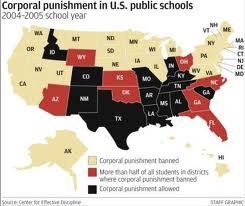
You shouldn’t need a study to tell you that corporal punishment is not a legitimate and ethical means of classroom discipline. Yet, as I write this, 19 American States still allow corporal punishment.
It’s time they stopped!
Hitting misbehaving kids with sticks might result in immediate obedience, but new research suggests it does more damage than good in the long term.
A new study compared kindergarten and Grade 1 students in two West African private schools. In most ways, the kids were similar. They came from the same urban neighbourhood, and their parents were mostly civil servants, professionals and merchants.
The difference was in how their schools doled out discipline. One school beat disobedient kids with sticks, slapped them on the head or pinched them. These punishments were administered for a wide range of offences, from forgetting to bring a pencil to class to disrupting lessons.
The other school favoured non-physical punishment, with teachers issuing time-outs or verbal reprimands for bad behaviour.
Researchers gave students from both schools “executive functioning” tests, measuring their ability to plan, think in the abstract and delay gratification. While test results for the kindergarten kids were similar across the board, the Grade 1 students from the school with corporal punishment performed significantly worse.
The study’s authors, who hail from the University of Toronto, McGill University in Montreal and the University of Minnesota, say the results are consistent with previous research that showed kids will immediately cease bad behaviour after getting physically punished, but they fail to internalize the morals or rules behind the punishment.
What this means, the authors note, is these kids aren’t really learning the difference between right or wrong, and are likely to re-offend.
“This study demonstrates that corporal punishment does not teach children how to behave or improve their learning,” said Victoria Talwar of McGill University.
“In the short term, it may not have any negative effects; but if relied upon over time it does not support children’s problem-solving skills, or their abilities to inhibit inappropriate behaviour or to learn.”
When we were young climbing was a great adrenaline rush. I remember the enjoyment I had climbing trees with my friends. Nowadays, climbing trees have been deemed too unsafe and even the basic play equipment has been watered down to avoid accidents, and in turn, fun.
Current safety standards veer public playgrounds towards the benign realm of soft and cushy: sharp edges are covered, jungle gyms and monkey bars are miniaturized to reduce the height children can climb and the whole things are placed on shock-absorbent wood chips or rubber mats to cushion the blow when children inevitably fall.
But are we really doing our children any favors by taking all the risk out of playtime? Some pediatric experts are saying no — in the pursuit of protection for our children, we have stunted their ability to fend for themselves.
In a recent paper published in the journal Evolutionary Psychology, Norwegian psychologists Ellen Sandseter of Queen Maud University in Norway and Leif Kennair of the Norwegian University for Science and Technology write that “risky play” among young children is a necessary experience that helps children learn to master their environments. Protecting children from any risks in their playtime could breed children that are more likely to be anxious and afraid of danger.
“An exaggerated safety focus of children’s play is problematic because while on the one hand children should avoid injuries, on the other hand they might need challenges and varied stimulation to develop normally, both physically and mentally,” the authors write. “Paradoxically, we posit that our fear of children being harmed by mostly harmless injuries may result in more fearful children and increased levels of psychopathology,” they add. “We might need to provide more stimulating environments for children, rather than hamper their development.”
Dr. Gary Smith, director of the Center for Injury Research and Policy at Nationwide Children’s Hospital, says the slow disappearance of more traditional “risky” playground toys has more to do with litigation than with proven safety issues.
Let kids be kids. Grazes and bruises use to be worth it for the sheer enjoyment of the great outdoors.








 Topical Teaching