Food companies wouldn’t be “conning” well-meaning parents, would they?
CHILDREN are being conned by food companies who are making fatty and sugary foods appear to be healthy, a study suggests.
Some of Australia’s most popular brands, including Kellogg’s and Nestle, have been accused of making food that appeals to children look healthier than it actually is, the Flinders University study shows.
Researchers, led by lecturer Kaye Mehte, found 157 products on a major supermarket chain’s shelves with packaging designed to appeal to children through cartoons, competitions and give-aways.
More than three-quarters of these products were deemed to be unhealthy, primarily because they are high in fat and sugar.
But more than half of them had prominent nutrition claims on the packaging, boasting that the product is, for example, “99 per cent fat free”, “high in calcium” or has “no artificial colours”, they found.
“This has the potential to mislead and confuse children as well as parents who would be more inclined to purchase products carrying claims about health and nutrition,” Dr Mehte said.
Jane Martin, executive manager of the Obesity Policy Coalition said using the techniques to attract children to unhealthy food was “simply unethical”.
There is so many rewarding aspects of being a parent. There is a myriad of wonderful surprises associated with being a dad – I absolutely recommend it! One such benefit that I never knew about is resistance against getting a cold:
Being a parent reduces your risk of catching a cold—possibly because of unknown “psychological or behavioral differences between parents and nonparents,” according to a study in the July issue of Psychosomatic Medicine, the official journal of the American Psychosomatic Society. The journal is published by Lippincott Williams & Wilkins, a part of Wolters Kluwer Health.
The risk of becoming ill after exposure to cold viruses is reduced by about half in parents compared to nonparents, regardless of pre-existing immunity, according to research led by Rodlescia S. Sneed, MPH, and Sheldon Cohen, PhD of Carnegie Mellon University, Pittsburgh. The study suggests that other, yet unknown factors related to being a parent may affect susceptibility to illness. The researchers analyzed data on 795 adults from three previous studies of stress and social factors affecting susceptibility to the common cold. In those studies, healthy volunteers were given nose drops containing cold-causing rhinovirus or influenza viruses.
After virus exposure, about one-third of volunteers developed clinical colds—typical symptoms of a cold plus confirmed infection with one of the study viruses. The analysis focused on whether being a parent affected the risk of developing a cold, with adjustment for other factors.
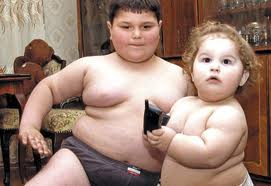
I am of the opinion that one shouldn’t need to discuss ‘weight’ with issues with your children. I prefer a more positive approach where healthy food and exercise is promoted rather than “negative talk” which is likely to make the child even more self-conscious.
A new report says parents are concerned that talking to their child about their weight will lead to an eating disorder.
This figure rises to 65% of parents who identify their child as being overweight or obese.
More than 1,000 parents with a child aged 5-16 responded to the Let’s talk about weight survey on Netmums and shared how they feel about bringing up the topic of weight with their child.
I do understand that the problem is more complicated than just advocating health over weight loss. I also realise that children are too smart not to realise that healthy lifestyle measures are a result of their weight issues.
What is your opinion? How should parents discuss weight issues with their children?
The problem with being a credible hulk is no matter how credible the story, he’s still a hulk.
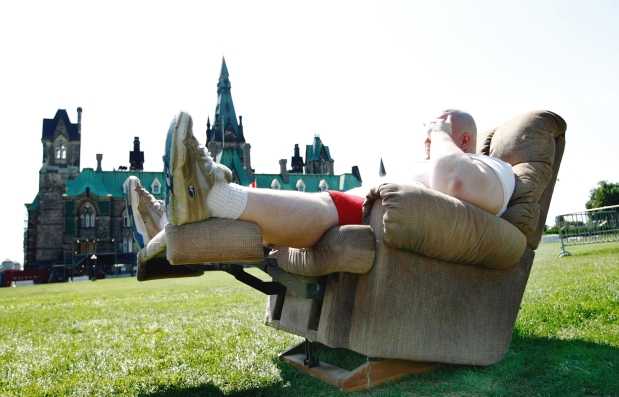
Such is the hard truth for an obese Ottawa dad deemed too fat to keep his kids.
We’ll call him Dad because he can’t be named or identified.
Dad, 38, claims there’s no adequate oversight of Children’s Aid judgements in this province.
His two sons – age 5 and 6 – have been put up for adoption. He’s not been granted custody because – among other things – he’s 360 lbs and has been as much as 525 lbs.
It appears the judge used Dad’s obesity as a major reason as to why he can’t have custody of his kids. That’s created a lot of chatter and created a debate about whether obese people make good parents.
The judge may have some good reasons for not allowing this man to be with his children but his obesity should not be a factor.
It has been labelled “heartbreaking” and one of the most effective anti-smoking advertisements ever.
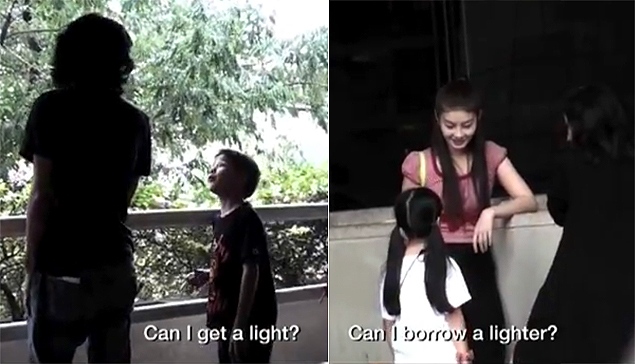
The new public service announcement from Thailand shows two small children approaching adults who are smoking and asking them for a light.
Not one of the adults shown in the ad gives the children what they ask for.
Instead the adults — who have no idea they are being set up — begin giving the children earnest lectures on why smoking is so bad for them.
“If you smoke you die faster,” one man tells a little boy.
“Don’t you want to live and play?”
“When you smoke you suffer from lung cancer, emphysema and strokes,” another says.
The children then reveal their trump card, a brochure they hand the adults which reads: “You worry about me. But why not about yourself?”
The video, produced by the agency Ogilvy Thailand on behalf of the Thai Health Promotion Foundation, was uploaded to YouTube a week ago and has since gone viral, attracting more than 350,000 views.
The foundation has reported a 40 percent increase in the number of calls it has received about how to stop smoking.
It seems that we have given up on promoting healthy lifestyles and educating our students about nutrition. It’s now all about avoiding obesity:
The American Medical Association on Wednesday put its weight behind requiring yearly instruction aimed at preventing obesity for public schoolchildren and teens.
The nation’s largest physicians group agreed to support legislation that would require classes in causes, consequences and prevention of obesity for first through 12th graders. Doctors will be encouraged to volunteer their time to help with that under the new policy adopted on the final day of the AMA’s annual policymaking meeting.
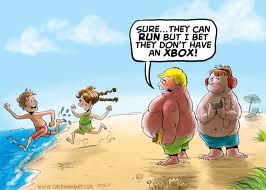
I heard a very surprising fact on the radio the other week. A nutritionist asked the listeners what they thought the leading cause of death was. Like most, I thought the answer was something like heart disease, obesity or cancer. It was none of the above. Apparently, the leading cause of death is inactivity.
That’s why it is so vital that we help our children to become more active. Here are some helpful hints by Steve Ettinger, a children’s fitness expert and author:
Be creative
Whether you live in an urban, suburban or rural environment, use the space, time and resources you have to find ways to exercise. For example, if you live in the city and don’t have access to outdoor space, find indoor activities. Ettinger also says if kids are sitting in front of the TV, challenge them to exercise in short spurts during commercials. It is a far better solution than having them get up to snack on junk food.
Schedule time to exercise
Writing down time to exercise makes it much more likely that you will do it. Even if it’s just playing at the park, schedule that time in your calendar.
Ettinger also says children who eat poorly will naturally not have as much energy and as high of an activity level as children who eat nutritiously.
Get involved as a family
One of the best ways to get children to exercise is for the family to participate together. Find something that everyone enjoys doing, such as bike riding or going for a walk around the neighborhood, and do it together. That way, there are fewer safety concerns because kids aren’t out by themselves, and everyone in the family – including yourself – gets to benefit from moving around.
Find something your kids enjoy
One reason kids stop exercising is that they are forced into activities they don’t enjoy. If your child doesn’t like a particular activity or organized sport, be patient and take the time to explore different options. Ettinger says if kids find activities fun, they will usually stick with them. He also says it’s best to find an activity for children before age 10 – otherwise, inertia will become a habit.
Educate yourself
Modeling proper nutrition and exercise is the best way to teach your kids about maintaining a proper weight and a healthy lifestyle. Ettinger says he is amazed by the number of parents who have misconceptions about proper nutrition. Seek out resources so you can learn the basics and incorporate these lessons into your own life.
A big thank you must go out for all overprescribing doctors who are doing their bit to have children improve their grades. Thanks to your desire to see children succeed and your devotion to health, you have made amphetamine readily available to all those in need (and even for those not in need).
He steered into the high school parking lot, clicked off the ignition and scanned the scraps of his recent weeks. Crinkled chip bags on the dashboard. Soda cups at his feet. And on the passenger seat, a rumpled SAT practice book whose owner had been told since fourth grade he was headed to the Ivy League. Pencils up in 20 minutes.
“No one seems to think that it’s a real thing — adults on the outside looking in. The other kids in rehab thought we weren’t addicts because Adderall wasn’t a real drug. It’s so underestimated,” said a recent graduate of McLean High School in Virginia, who was given a diagnosis of A.D.H.D. and was prescribed Adderall.
Adderall and similar drugs are not hard to obtain at high school, many students say. They can also be found online.
The boy exhaled. Before opening the car door, he recalled recently, he twisted open a capsule of orange powder and arranged it in a neat line on the armrest. He leaned over, closed one nostril and snorted it.
Throughout the parking lot, he said, eight of his friends did the same thing.
The drug was not cocaine or heroin, but Adderall, an amphetamine prescribed for attention deficit hyperactivity disorder that the boy said he and his friends routinely shared to study late into the night, focus during tests and ultimately get the grades worthy of their prestigious high school in an affluent suburb of New York City. The drug did more than just jolt them awake for the 8 a.m. SAT; it gave them a tunnel focus tailor-made for the marathon of tests long known to make or break college applications.
“Everyone in school either has a prescription or has a friend who does,” the boy said.
At high schools across the United States, pressure over grades and competition for college admissions are encouraging students to abuse prescription stimulants, according to interviews with students, parents and doctors. Pills that have been a staple in some college and graduate school circles are going from rare to routine in many academically competitive high schools, where teenagers say they get them from friends, buy them from student dealers or fake symptoms to their parents and doctors to get prescriptions.
Of the more than 200 students, school officials, parents and others contacted for this article, about 40 agreed to share their experiences. Most students spoke on the condition that they be identified by only a first or middle name, or not at all, out of concern for their college prospects or their school systems’ reputations — and their own.
“It’s throughout all the private schools here,” said DeAnsin Parker, a New York psychologist who treats many adolescents from affluent neighborhoods like the Upper East Side. “It’s not as if there is one school where this is the culture. This is the culture.”
Thank you doctors! What would the educational fraternity do without you?
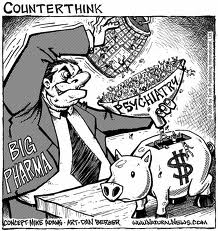
Some doctors seem to relish the opportunity to prescribe psychiatric drugs. After all, from the perspective of a passive observer, prescriptions of such medication are becoming all too frequent. I wonder if it will get to the stage when those not on drugs will feel left out and marginalised because of it:
PRESCRIPTIONS of antipsychotic drugs given to children have doubled in only five years, data obtained under freedom of information laws shows.
Antidepressant prescriptions have also risen, bucking international trends to reduce the use of the drugs after they were linked to children developing suicidal thoughts.
A psychiatry professor at the University of Adelaide, Jon Jureidini, said he was concerned antidepressant medication use was increasing despite warnings about suicide risks.
He said antidepressants should almost never be used in children.
After the US drug regulator issued a warning about the risk of suicide in children and teenagers taking antidepressants, there was a 58 per cent drop in the use of the drugs.
Yet between 2007 and 2011 in Australia antidepressant prescriptions increased from nearly 22 prescriptions per 1000 children aged below 16 to nearly 27, data provided to the Herald by the Department of Human Services under freedom of information laws shows.
Last year there were about 14 antipsychotic prescriptions for every 1000 children, compared with seven in 2007.
Professor Jureidini said it was likely the increase in the prescription of antipsychotics could be explained by doctors prescribing the drugs for behavioural problems, or by conditions such as personality disorder being reclassified as bipolar disorder and then treated with antipsychotics.
”There has been a very significant increase in the prescription of antipsychotic drugs and we can be pretty confident there has not been an increase in psychosis,” he said.
Antipsychotics are recommended for the treatment of children with conditions such as bipolar disorder, in some cases. National Health and Medical Research Council guidelines say doctors can consider prescribing an antidepressant for childhood depression in the short term, where psychological therapy has not been effective or has been refused.
Professor Jureidini said more monitoring of the drugs and their side effects was needed, along with training for GPs on non-pharmacological treatments.
A clinical adviser to the National Prescribing Service, Philippa Binns, said those who were prescribing antipsychotics and antidepressants to children should be specialists in children’s psychiatric problems.
I plead to doctors worldwide to please resist from writing a prescription for drugs unless you have tried all other options which have turned out to be unsuccessful.






 Topical Teaching
