Posts Tagged ‘Family’
October 29, 2011
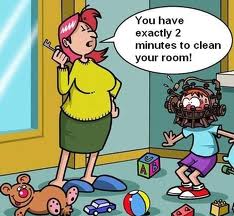
Even the best parents and teachers struggle to get kids doing menial tasks on a consistent basis. From making their beds to putting their lunchboxs back in their bag, it’s amazing how difficult it is to get children to be responsible for small yet important tasks.
That is, until an app was designed to assist desperate and exhausted parents:
You may find this shocking, but getting my 11- and 9-year-olds to do household chores is like pulling teeth. Rotten kids!
That may change now that I’ve got You Rules Chores on my iPhone. This clever new app turns household chores into a game, rewarding each kid a designated number of coins for each completed job. Whoever finishes the week’s chores first is the winner. (Of course, we all know who the real winners are: mom and dad.)
The app features cute graphics and music, and after a parent gets set up as the “referee,” each kid gets to choose an avatar (from only six available, alas).
Tags:App, Applications, Apps, Children, Chores, Education, Family, Games, Gaming, i-Pad, i-Phone, kids, life, News, Parenting, Rick Broida, technology, You Rules Chores
Posted in Parenting | 2 Comments »
October 18, 2011
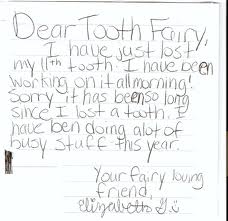
I read a brilliant article in The National about the lies we tell our children and when is the right time to confess that the Easter Bunny they are so fond of isn’t real.
Below is just an excerpt of the article. I strongly encourage you to read the entire piece by following this link.
The world is a confusing place for small children, particularly as they only learn to distinguish between reality and fantasy between the ages of three and five. Jacqueline Woolley, a psychology professor at the University of Texas in the US, found that by the age of four, children learn to use the context in which new information is presented to distinguish between fact and fiction. So, before long, your little one will be figuring out that the tooth fairy isn’t who you said she is. Which begs the question: at what age should we tell our children that their beloved magical characters aren’t real? Or, should we even claim that they’re real in the first place?
Last Christmas I witnessed the most heated debate I’d ever come across on Facebook. It didn’t involve politics, religion or money. No; it was Santa Claus who caused the divide. One friend posed the question: “Should I tell Sophie Father Christmas is real?” What followed was a polarised debate between those who wanted their children to enjoy a magical gift-giving time and those who believed that perpetuating the story of Santa was being dishonest with their offspring. “I was devastated when I found out it was my mum, not Santa, who hung the stocking on the end of my bed,” admitted one father. Whereas others regretted never having the chance to believe in Santa because older siblings had spoilt it for them.
“I make a point of always being honest with my daughter and now she has turned six I’m feeling increasingly uncomfortable with perpetuating the lie of Santa Claus,” admitted Rosie Cuffley, a mother of two.
According to Carmen Benton, a parenting educator and educational consultant at LifeWorks, Dubai, Rosie shouldn’t worry. “Sharing the world of fantasy characters with our children is not a lie, but rather a playful way of storytelling and connecting as a family to fun events. Think about the joy and excitement that thoughts of characters such as Santa Claus can induce. You have the power to create a magical world of dreams, wishes and storytelling for your kids and I believe these are part of being a playful parent.”
It’s a different scenario when children ask directly whether Santa Claus, for example, is real. Most psychologists agree that children need to know they can trust their parents to tell them the truth, even about magical characters. “The majority of children will let go of a fantasy after the age of eight, and most would be happy for the years of the imaginary world they had been able to enjoy,” says Benton.
I feel terrible that my daughter still believes in the Tooth Fairy. I don’t like perpetuating a lie (especially one I know will be uncovered sometime soon). I have a feeling, irrational or otherwise, that when she does find out, her first thought will be, “What else is he lying to me about?”

Tags:Carmen Benton, Child Development, Children, Christmas, Dr Laura Markham, Easter Bunny, Education, facebook, Family, Honesty, Jacqueline Woolley, kids, life, LifeWorks, lying, Parenting, Psychology, Santa, Tooth Fairy, University of Texas
Posted in Child Development, Parenting | 2 Comments »
October 9, 2011

The same laws that seek to protect children are being severely undermined by a total lack of common sense.
Australia has a sexual offender registry which was designed to assist the government authorities to keep track of the residence and activities of sex offenders. You don’t have to be Einstein to realise that being on that list is detrimental to that person’s ability to get a job, loan, sense of freedom and quality of life.
The registry is a vital tool in dealing with pedophiles. That is why I was astounded to read that children caught ‘sexting’ photos of themselves or friends have been put on this very list:
HUNDREDS of teenagers have been charged over producing or distributing child pornography amid growing concern that “sexting” has reached epidemic levels.
In the past three years, more than 450 child pornography charges have been laid against youths between the ages of 10 and 17, including 113 charges of “making child exploitation material”.
More than 160 charges were laid in 2010 alone – 26 more than in 2008.
Parents and communities continue to grapple with the issue of “sexting”, where sexual images are exchanged via SMS.
Teens who engage in sexting not only risk child pornography charges, but can also be listed alongside serial pedophiles and rapists on sexual offender lists.
Police confirmed that some juvenile offenders appear on Queensland’s sex offender registry.
Child psychologist Michael Carr-Gregg said “a lack of parental supervision” was a key factor.
“They’re ignorant of the law and no one’s ever sat them down and said ‘When you take a picture of yourself and send it, that’s child pornography’,” he said.
Dr Carr-Gregg said a conviction would have a “catastrophic” effect on a teenager’s future.
“If a young person is put on the sex offenders registry, they have to notify police every time they change their hair colour and wouldn’t easily get visas to places overseas, and it’s going to make employment difficult,” he said.
Don’t get me wrong, I am totally against the practice of “sexting”. I don’t like it one bit. But these kids are not sex offenders. One of the reasons children shouldn’t be ‘sexting’ in the first place is to make sure those images don’t get in the hands of a real sex offender.
The application of this law does 2 very serious things.
1. It paints children wrongly as sex offenders. This may have dire consequences down the track; and
2. Having ‘phony’ sex offenders on a sex offender registry completely undermines the registry in the first place. This is a very serious list, dedicated to sick and evil people. It shouldn’t be undermined by including silly kids who made poor choices.
It is time the Government stepped in and amended the law so common sense can be restored.
Tags:child pornography, Children, Courts, Crime, Education, Family, Law, Michael Carr-Gregg, News, Parenting, pedophiles, Police, Politics, rapists, Sex Offenders, Sexting, sexual offender registry, SMS, Teenagers, Texting
Posted in Child Welfare | Leave a Comment »
October 4, 2011

Nearly every day there is some expert quoting some study about how important it is to talk about sex with your children. Whilst I have no problem with the message, I wonder why it is constantly being regurgitated.
Why is it always, “teach your children about sex”? What about teaching your children about manners, selflessness, hard work and respect for others? Why aren’t these messages seen as important as the “birds and the bees”?
Now they’re telling parents they should talk to their 5-year olds about sex. My child is 6 and she just discovered that the fish you eat is the same as the fish that swim. Is this really the time to be discussing sex?
CHILDREN have sex for the first time between the ages of 14 and 15 says a new study, which also suggests that parents should talk to them about their sexuality from as early as the age of five.
I think I will shelve plans of having the “sex” talk for the time being. I’ve got more pressing problems to tend to – like getting my daughter to eat fish again!
Tags:Children, Education, Family, Human Sciences Research Council, kids, life, News, Parenting, Save the Children, Sex, Sex-Ed, Sexuality
Posted in Child Development, Parenting | 3 Comments »
September 5, 2011

There is no doubt that social workers are unheralded and deserve much credit for the work that they do. But having said that, I can’t hide my displeasure at their willingness to break up families in the name of raising thinner kids.
It bothers me that people think they know what is best for someone elses children. It disturbs me that people can justify taking children from their flawed but loving parents and subject them to foster homes and estrangement from their flesh and blood all in the name of helping them to lose weight.
What about what the children want? Has it ever occurred to them that some children are prepared to deal with the consequences of being severely overweight if it means they can remain with their parents? Since when did physically healthy foster kids have it much better than obese kids enjoying the closeness of their parents and siblings?
And don’t tell me that parents that raise obese kids are ‘cruel’. Yes, they have made poor parental decisions and yes their poor decisions may have all kinds of serious consequences for their kids. But parenting, like weight loss, is not an easy job. It is unfair to taint parents as ‘cruel’ and ‘unfit to parent’ just because they are not succeeding in breaking bad habits. No parents wants to see their child suffer. Some just need a lot more support than others to break bad habits.
Four obese children are on the brink of being permanently removed from their family by social workers after their parents failed to bring their weight under control.
In the first case of its kind, their mother and father now face what they call the ‘unbearable’ likelihood of never seeing them again.
Their three daughters, aged 11, seven and one, and five-year-old son, will either be ‘fostered without contact’ or adopted.
Either way, the family’s only hope of being reunited will be if the children attempt to track down their parents when they become adults.
In an emotional interview, the 42-year-old mother said: ‘We might not be the perfect parents, but we love our children with all our hearts. To face a future where we will never see them again is unbearable.
‘They picked on us because of our size to start with and they just haven’t let go, despite the fact we’ve done everything to lose weight and meet their demands. We’re going to fight this to the bitter end. It feels like even prisoners have more human rights than we do.’
The bullying and stand over tactics by the social workers and courts were deplorable. Making them send their kids to dance and sport lessons is not sensible at all. Why wouldn’t the courts give the children a say about whether or not they wanted to go to dance and football? Ask a young girl suffering from obesity whether or not she would take up dancing, she would invariably say, “Over my dead body.” Clocking in and out to satisfy court imposed curfews and having social workers stand in corners taking notes at dinnertime just added to the lunacy.
Society is too harsh on parents. Parenting is a difficult job. Instead of judging or punishing parents for bad choices, would it be too much trouble to offer real support and encouragement? Has this couple ever once been offered free appointments with dieticians or councillors?
Soon we are going to get to the stage where it is socially acceptable to classify any parent with even a slightly overweight child as a reckless and sub-standard parent.
Outrageous!
Tags:Childhood Obesity, Dundee, Education, Family, Fat, Health, kids, life, News, Obesity, Parenting, social services, Social Work, Weight
Posted in Childhood Obesity, Parenting | 6 Comments »
August 28, 2011

I stumbled on a very useful article by Amy Kuras, giving advice for standing up to bullies. I hope you find these suggestions very useful.
DO victim-proof your child. Kids who are different in some way tend to be targets, whether they have trouble learning, look goofy, or even are seen as being “stuck up.” It’s a fine line to walk between not stifling their individuality and making them feel like there’s something wrong with them. Help them develop social skills and enough confidence to deflect the bullies. If your child has a learning problem, enlist the school to help you help him. A counselor can teach better social skills. And if your child is kind of funny-looking, remember that everyone spends part of childhood in an “awkward phase.” Remind your kids of this if anyone picks on them for their appearance — and don’t forget to say you think they are perfect-looking the way they are!
DON’T mistake normal ebbs and flows of friendship for bullying. Bullying is behavior that is intentional, repetitive, hurtful, and comes from an imbalance of power between two kids or groups of kids. Someone not inviting your child to a birthday party isn’t necessarily bullying; someone announcing to the whole class who they invited and didn’t invite may be.
DO teach them assertive behavior. Teach your child how to take calming breaths, look the bully in the eye, say, “Stop doing that,” and walk away — or maybe they can turn it around on the bully and laugh, as if their behavior is just too ridiculous to be taken seriously. Bullies expect their victims to just roll over and take it; most won’t keep it going if they face resistance.
DON’T tell them to fight back. This is likely to backfire on your child in a big way … a classic bully move is to goad someone until they lash out, at which point the bully goes running to the nearest authority figure and plays the wounded party. As satisfying as it would be to punch that mean kid right in the nose, it’s just going to make things worse and will bring your child down to the bully’s level. And, um, this goes for you too, Mom.
DO encourage them to seek help from others. Make sure they know you’re proud of them for telling you about it. It takes a lot of courage for a kid to admit he’s being victimized. Talk to the teacher, the principal, and/or a school counselor. Most have finally gotten the message to take bullying seriously. It might also help your child to “buddy up” with a friend in the hall, the lunchroom, or the bus; if the bullying has isolated them to the point that they are socially radioactive with their peers, ask an older kid not involved in the drama to keep an eye on them. And stay on school administrators if you’re not getting satisfying results.
DON’T tell them to just ignore it. Saying this is like saying to them that you plan to ignore it too. And if your child could ignore the bullies, he would. Bullies want a reaction and will escalate their behavior until they get it.
DO talk to your child about bullying before it starts. Even if your kid never is victimized and never picks on someone, the bystander has an important role to play by letting the bully know that behavior is not okay. Encourage your child to stand up to bullies, even if he doesn’t like the kid being victimized. After all, bullies make life harder for everyone.
Most importantly, DO make sure your home is a place where your children can feel loved and accepted for who they are. Encourage them to pursue their passions through after-school activities that can help them meet more like-minded kids, boost their self-esteem, and gain confidence. That’s the best way to stop your kid turning into a bully’s OR victim.
Click on the link to read my post about the mistreatment of a girl who stood up to bullies.
Tags:Amy Kuras, Bullying, Children, Education, Family, kids, life, Parenting, Resillience
Posted in Bullying | 4 Comments »
August 23, 2011

I resist criticising parents, because as one myself, I know that it’s not an easy job. Parents make mistakes, it’s just a fact of life. But some mistakes, parents just can’t afford to make. Shaming a ten year-old in the way that this mother does, takes a small problem and turns it into much larger one:
A Townsville mother has punished her son by making him sit in public wearing a sign that read, “Do not trust me. I will steal from you as I am a thief”.
The boy, who was also wearing a pair of Shrek ears and writing lines, spent almost an hour near a waterpark on Sunday while his family ate lunch nearby, the Townsville Bulletin reported.
Diane Mayers told the Bulletin that she was so “horrified” when she saw the boy, thought to be about 10, that she alerted Child Safety Services.
The former Child Safety Services worker said the long-term effects of the public humiliation would be greater than any form of physical abuse.
“A lot of people walked past and were laughing at him, including boys who would have been his age,” she said.
She said the parents had clearly put a lot of work into the punishment, with the boy wearing laminated signs on both his back and his front.
Ms Mayers told the Bulletin the boy took the Shrek ears off at one point when her daughter overheard the boy’s mother say, ‘Put them back on or I’ll smack your head in’.
That boy may never steal again, but does the punishment really fit the crime? Not even close.
Tags:Bulletin, Child Safety Services, Children, Crime, Diane Mayers, Education, Family, kids, life, News, Parenting, Psychology, Shaming, Shrek ears, Thief, Townsville
Posted in Parenting | Leave a Comment »
August 22, 2011
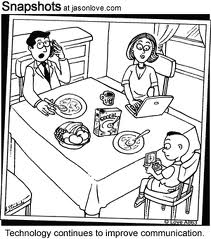
Remember when quality time with another involved talking? Remember when a family dinner was a daily not twice yearly occasion? Well, times have changed and some think that the lack of real conversation between family and friends is quite acceptable and just a new feature in the era we live in.
That may be so, but it just doesn’t feel right. The notion that smartphones and video games are bringing families closer together doesn’t sit at all well with me:
Four in five parents described playing video games with their children as “quality time”, while 32 per cent of parents play computer games with their kids every day.
Many grandparents revealed that they play video games with their tech-savvy grandchildren, in a bid to get closer to them.
Dr Tomas Chamorro-Premuzic, Reader in Psychology at Goldsmiths said: “These findings are important because they highlight the social benefits of playing videogames.
“Previous research has tended to look only at the individual effects of video games, but in the era of social networking games appear to play a vital role in enhancing social relationships. The fact that both parents and grandparents are using games to connect with their children and grandchildren, and quite successfully, suggests that video games can improve social skills and make a key contribution to both effective parenting and child development.
The social benefits of playing video games? Are you a doctor of psychology or a rep for Nintendo? Just because parents are resorting to these lengths in a bid to connect with their kids doesn’t mean that it’s the best way to communicate with them. You can spend hours every night playing Mario Bros. with your child and never begin to understand how they are feeling, what their troubles are and what excites them etc.
Imagine if dates consisted of smartphone operations and video game playing instead of dinner and romantic walks? How would that work? The answer is it wouldn’t, because people need to actually converse in order to connect.
Why should it be any different with kids?
Tags:Communication, Conversation, Dr Tomas Chamorro-Premuzic, Education, Family, life, Parenting, Reader in Psychology at Goldsmiths, Relationships, Smart Phones, Social-networking, Video Games
Posted in Parenting | 3 Comments »
August 16, 2011

Being a father of a young girl with a nut allergy, I really hope that schools work hard to reduce the stigma of a child with anaphylaxis. It would be a shame if she was ostracised or treated differently because of the allergy. I personally am in awe of how she can deal with eating differently from her peers without so much as a whimper. She just accepts her lot and doesn’t let it get her down.
I hope she never gets bullied because of it:
Children with potentially deadly nut allergies are being bullied for being different, say researchers.
And their parents are stigmatised as ‘neurotic and attention-seeking’ by other parents, they found.
Relatives of some victims of the condition are even suspected of deliberately giving a child nuts to check they really are allergic.
Overall, the impact of a nut allergy is so great that it could be considered a disability, the Leicester University researchers found.They interviewed 26 families from the Leicester area about their experiences.
Some children told how they were bullied by classmates, who taunted them about their allergy and threatened to trigger it.
What loving family member in their right mind would feed nuts to a child with a severe nut allergy to check if they are really allergic? And for those parents that think we are “too neurotic” about ensuring that our children are safe and not exposed to substances that can kill them, take a long walk down a short pier.
Tags:Anaphylaxis, Bullying, Children, Disabilities, Education, Family, Health, kids, Leicester University, life, Nuts, Parenting, Professor Mary Dixon-Woods
Posted in Anaphylaxis | 6 Comments »
August 9, 2011

Another reminder of the severity of falling victim to cyber bullying:
The inability to escape from the 24 hour online world and the public nature of threats posted on the internet make being bullied electronically more intense, it was claimed.
Addressing the American Psychological Association’s Annual Convention, Elizabeth Carll said: “Increasingly, stalkers use modern technology to monitor and torment their victims, and one in four victims report some form of cyberstalking, such as threatening emails or instant messaging.”
Victims may feel stress, anxiety, fear and nightmares, as well as enduring eating and sleeping difficulties, she said.
Dr Carll, of the APA Media Psychology Division, “It is my observation that the symptoms related to cyberstalking and e-harassment may be more intense than in-person harassment, as the impact is more devastating due to the 24/7 nature of online communication, inability to escape to a safe place, and global access of the information.”
Tags:Anxiety, Cyberbullying, Cybersafety, cyberstalking, Education, Elizabeth Carll, facebook, Family, Internet, life, Parenting, Stress
Posted in Cyber Bullying, Cyber Safety | 1 Comment »






 Topical Teaching