Posts Tagged ‘Education’

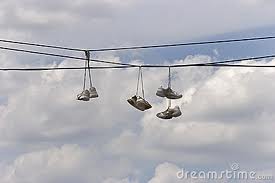
If the Shoe Fits …

August 15, 2012

I am all for enforcing rules and protecting students from violent gangs, but suspending 100 kids on the first day of school is a recipe for disaster.

This sends the wrong message. The footwear may not be ideal, but the punishment is likely to cause even more harm:

The principal at Canton High School doesn’t know what caused the disconnect that led to students violating the uniform policy on the first day of school Wednesday.

Shirley Sanders said every year students and parents receive an information packet that includes the dress code policy. The packet is given out on registration days.

Some 100 students received in-school suspension for wearing neon-colored shoes, neon shoe strings and other “gang related” colors, Sanders said. Students were allowed to call their parents to bring them proper attire.

“That’s unusually high,” Sanders said of the number of violations. On Thursday, some students did the same thing but the number was “significantly lower.”

Canton High School has a dress code – in place for several years now – requiring students to wear navy shirts, khaki pants or skirts, and black or dark-colored shoes or white tennis shoes.

For the first offense, parents are notified and can bring an acceptable pair of shoes to school, and the student receives an in-school suspension for the day. The second offense brings two days of in-school suspension. The third offense requires a parent conference with the principal, and the fourth offense brings a three-day out-of-school suspension.

Click on the link to read Only Closed-Minded Schools Block YouTube

Click on the link to read Does Getting Children to Pledge Allegiance Make them Patriotic

Click on the link to read Proof You Can Be Suspended for Anything

The Perfect Way to Start off a School Year

August 15, 2012

There is nothing better than a teacher flash mob to ease the apprehensions and anxieties of a first day at school. I love it when teachers stop playing the authority card and instead invest in connecting with their students through fun and positivity:

Teachers at Hancock High School in Mississippi went into the first day of the 2012-13 school year with what can only be described as an unconventional lesson plan.

Instead of the usual icebreaker sessions and syllabus distribution, the faculty gathered students in the gymnasium, where they performed a flash mob to Carly Rae Jepsen’s “Call Me Maybe.”

Click on the link to read Brilliant Clip of a Head Teacher Dancing

Click on the link to read Who Said Grammar Isn’t Important?

Click on the link to read Misplaced Lego is Often Found in the Strangest Places

Inspirational Dad Competes In Triathlon With Daughter Who Has Cerebral Palsy

August 14, 2012

What a fantastic story!

A Michigan man who participated in a local triathlon over the weekend has been called the “father of the century” by some because of the devotion he has shown for his child.

Rick van Beek of Byron Center, Mich., took part in the Sanford and Sun sprint triathlon this Saturday with his 13-year-old daughter, Madison, the Midland Daily News reports.

The teenager couldn’t take part in the event alone, so her heroic dad pulled and pushed her along with him, taking every stride and stroke together toward the finish line.

Maddy, as she is affectionately known, has cerebral palsy. The teen can neither walk nor talk, and her dad says he isn’t even sure that she can see.

But what van Beek does know is that Maddy loves the outdoors.

“She functions like a 3-month-old, and one of the very few things that we know she enjoys is being outside, being in the water, feeling the breeze in her hair and in her face,” van Beek, 39, told Midland Daily News.

So, in 2008, van Beek — then terribly out of shape and a heavy smoker — decided he would start training for outdoor races.

 In his blog, van Beek admits that getting into shape was initially extremely difficult.

However, he was determined to live a healthier life for Maddy and to share the fruits of that labor with her.

“I run for and with my daughter,” he wrote in 2010.

Click on the link to read Lessons Learned From Maddy

Click on the link to read 20 Tips to Ensuring Your Kids Find You Embarrassing

Click on the link to read It’s Not Spying on Your Children, It’s Called Parenting

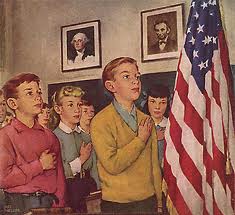
Does Getting Children to Pledge Allegiance Make them Patriotic

August 14, 2012


I have no problem with a law that makes it mandatory for schools to set time for pledging allegiance but does it really work? My school recites the Australian National Anthem every week and for every gathering and assembly. I often wonder whether this practice has any affect on the students that sing it:

The Nebraska Board of Education on Friday unanimously voted to approve a rule change that will make it mandatory for the state’s public schools to set aside time daily for the Pledge of Allegiance.

The change in question applies to Rule 10, which governs all Nebraska schools and districts. Failure to comply with the new requirement could put districts at risk of losing their accreditation and therefore state funds, the Sioux City Journal reports.

Students will not be forced to recite the Pledge of Allegiance under the new rule, as they will have the option of standing or sitting quietly, provided they respect peers who do participate. However, schools will be required to allocate time for the Pledge.

According to the Sioux City Journal, state board candidate Bob Van Valkenburg proposed an amendment Friday that would require flags be present in every classroom, and that all students stand during the recitation of the pledge even if they elect not to join in. Van Valkenburg also championed requiring students who do not recite the pledge to write a 50-word essay on what it means to be an American.

50 word essay? Sounds like a punishment to me.

Click on the link to read Kids Don’t Need Gold Stars

Click on the link to read Only Closed-Minded Schools Block YouTube

Click on the link to read Experts Push for Kids to Start Driving at 12

Click on the link to read Kids as Young as 3 are Getting Tutors

Maths is a Very Poorly Taught Subject

August 13, 2012

Out of all the subjects offered in Primary school, maths strikes me as easily the worst taught. This is for two main reasons:

1. Teachers are almost uniformly from arts and humanities backgrounds rather than maths and science backgrounds. It is staggering to compare those that went down the humanities path in late high school or in their first degree compared to those that have completed major maths units.

2. Maths is often taught in a boring, unimaginative way. Mindless worksheets and excessive reliance on rote knowledge and algorithms are the standard fare in a typical maths classroom.

What many students seem to lose from maths is the practical nature of the subject. We need maths to do the most basic activities in our lives; from counting change, organising our bedroom furniture, telling time, following a map and cooking a meal. This message does not get through to children sick to death of yet another worksheet.

It is the practical reality of maths that provides this truly underrated subject with enourmous scope for creativity. Just take a lesson I invented called “Mission Impossible Maths“, for example.

But as much as I can try to refocus educators about maths, the future looks dire. Policy makers who have invented the killer punch to authentic learning, commonly referred to as standardised testing, are more interested in grades on a formalised test than they are practical knowledge, problem solving and inquiry.

That’s why they continue to push the rote line:

A campaign group promoting maths has attacked plans to overhaul maths teaching in primary schools in England as “undeliverable”.

In a letter to the Education Secretary, Michael Gove, National Numeracy says the draft curriculum is “overloaded” and relies too much on rote learning.

The curriculum, due to come into force in 2014, expects children to know up to the 12-times table by the age of nine.

A government spokesman responded: “It is high time rigour is restored.”

National Numeracy says the plans are “seriously flawed” because they rely too much on rote learning.

The group says that rather than raising standards the new curriculum could in practice prevent pupils from developing a strong underlying understanding of mathematics or from having the confidence to apply mathematical theory to everyday problems.

Click on the link to read The Obstacle Course that is Teaching Maths

Click on the link to read Girls and Maths

Click on the link to read Putting Your Children to Sleep With Math


The Pros and Cons of iPads in the Classroom

August 13, 2012

Teacher and blogger David Andrews charts reasons for and against introducing i-Pads into the classroom.

In my mind these were the pros:

• Ease and speed of use and accessibility: The touch interface and app system on the iPad makes it easy to access learning tools. On a laptop you have to open the lid, turn it on, wait for it to load, log in to your account and then wait for the operating system to load.
• Audio visual (AV) tools: The iPad has extremely easy access to AV tools (camera, video and voice recorder) which can be used creatively across countless number of apps. The laptop does have built-in cameras and microphones but they are so much more difficult to use and could require an additional piece of hardware to be connected and installed.
• Books: iPads are great for reading. iBooks allow the user to annotate, highlight and look up the meaning of words.
• Creativity: The in-built AV tools means that the iPad has endless possibilities to be used creatively in any subject in the school curriculum, it just need imagination. For example there are apps for drawing, editing photos, creating movies, ebooks, animations and photo stories, composing music, writing graphical novels and other useful creative apps. In addition, many of these apps have the option to publish work to larger audiences online, increasing the incentive for the children to produce quality pieces of work. The laptop doesn’t have the same efficiency and ease of use that the iPad has and the touch interface just makes it more fun and interactive.

And here are the cons:

• Adobe’s Flash and Javascript: One of the biggest criticisms of the iPad is its inability to work with Adobe Flash and Javascript. A lot of content in schools is dominated by Flash. Despite this, it could be argued that the iPad easily makes up for this restriction with a huge selection of apps.
• Multitasking: A drawback with the iPads is the fact that multiple ‘windows’ or files cannot be kept open, side-by-side unlike on computers, although there are apps that allow multiple pages to be open side by side.
• Word processing: The iPad is quite limited as a device that you would use regularly to word process on. I much prefer to type lengthy documents on my computer, where I can switch quickly between browser, word processing and email. Despite this I still use the iPad regularly for light writing such as emails and Twitter.

Click on the link to read The Top 50 Best Apps for Children
Click on the link to read How do you Assess a Student Who Knows More Than You Do?

Click on the link to read There is Still Some Love for the Forgotten Class Whiteboard

Lessons Children Can Learn from the London Olympics

August 13, 2012

1. It is never over until it’s over. Don’t drop your shoulders and certainly don’t give up. It isn’t over until the final siren has rung.

2. Natural talent isn’t enough. Dedication and practice is vital to performance.

3. It is preferable to choose mascots that don’t give children nightmares.

4. Jamaican’s are pretty fast!

5. The difference between winning and losing is sometimes only properly understood with a knowledge of decimals.

6. Handling disappointment is part of the test of a true athlete.

7. The equestrian sport known as “dressage” is best viewed in very short doses.

8. One day we will be making “most embarrassing parent in the grandstand” an Olympic sport.

9. You don’t need to have legs to be an Olympic sprinter.

10. If you are going to throw a bottle onto a sporting field make sure you’re not sitting next to an Olympic medalist in Judo.

Click on the link to read Teaching Children to Deal with Embarrassment

Click on the link to read Misplaced Lego is Often Found in the Strangest Places

Click on the link to read Explaining the Colorado Movie Theater Shooting to Children

Click on the link to read A Class Full of Class Captains

How do you Assess a Student Who Knows More Than You Do?

August 12, 2012

I have a student who is more confident and knowledgeable when it comes to IT. I am more than adept myself, but I am no match for him. The funny part of that is that I have to assess and report on a child who knows more than I do.

I am sure I am not alone. Experts are warning that our children are becoming far more tech savvy that we are:

SCHOOLS should be braced for the next generation of tech-savvy children, experts warn.

RMIT lecturer in the school of education, Nicky Carr, said most children aged 1-4 were adept at tablet technology and smart phones.

“They are very quick to pick up how to make it do what they want it to do,” Ms Carr said.

“These devices are actually really fun and a small child enjoys the instant results that come from brushing their finger across a screen. You don’t need to be able to read or understand language to get something to happen on these devices.”

“It’s a challenge for schools to know how to build on that literacy.

“It’s a financial consideration for them how to equip the school with the devices and then how do they use the devices in ways that are educational?”

Click on the link to read The Top 50 Best Apps for Children
Click on the link to read The Cell Phone will be the New Pencil Case

Click on the link to read There is Still Some Love for the Forgotten Class Whiteboard

Male Teachers Beware!

August 10, 2012


What message does this send to male teachers?

Virgin Australia has been accused of treating male passengers like paedophiles after it made a man swap seats because he was beside two unaccompanied minors.

The company has defended the policy as in the interests of children.

Sydney fireman Johnny McGirr, 33, said he was flying home from Brisbane in April when he took his seat next to two boys he estimated to be between 8 and 10 years old.

He was assigned the window seat but sat in the aisle seat so the two boys could look out the window.

However, a flight attendant approached him just as passengers were asked to put on their seatbelts, asking him to move.

Mr McGirr said when he asked why, he was told, “Well you can’t sit next to two unaccompanied minors.”

“She said it was the policy and I said, ‘Well, that’s pretty sexist and discriminatory. You can’t just say because I’m a man I can’t sit there,’ and she just apologised and said that was the policy.

“By this stage everyone around me had started looking.”

Mr McGirr said the attendant then asked a fellow female passenger, “Can you please sit in this seat because he is not allowed to sit next to minors.”

“After that I got really embarrassed because she didn’t even explain. I just got up and shook my head a little, trying to get some dignity out of the situation,” he said.

Click here to read my post about the absence of male teachers in public schools

Teaching Children to Deal with Embarrassment

August 10, 2012

It is dubbed the “Worst Olympic Dive” ever seen.

Stephan Feck probably didn’t plan on finishing last in the men’s 3-meter springboard diving preliminaries, but he most certainly did not plan on his dive becoming an Internet viral sensation, earning the title of “Worst Olympic Dive.”

Feck’s embarrassing performance at the Aquatics Centre will likely go down as one of the worst flops of the 2012 London Olympics.

Embarrassment happens to all of us (though it’s not usually broadcast all around the world). The following are tips that can be shared with children to help them overcome the effects of public embarrassment:


Don’t show it

Hiding your feelings in order to save face can be the best way of defusing an embarrassing situation.

Acknowledging feelings of humiliation will only make the people around you feel awkward. It is an awareness of this that prompts people to jump up from painful falls, slips and stumbles as if nothing has happened. While it is difficult to mask some physical indications of embarrassment, such as blushing, stammering and sweating, keeping your head held high, your back straight, and maintaining eye contact will help you to look confident.

Don’t beat yourself up

Even if something utterly mortifying happens to you, see it for what it is – an isolated embarrassing incident. While it is natural to feel a wave of shame pass over you, don’t drown in it. It is also important not to let one humiliation feed into a negative thought process – spilling coffee down your shirt before an important business meeting or making a terrible joke in front of someone you fancy does not make you an unlovable mess, for example.

Avoid reliving it

No good can come of thinking over past embarrassments. The mind has masochistic tendencies and, left unchecked, often embellishes humiliating escapades until they become much worse than they actually were. Unlike celebrities, whose embarrassments are routinely recorded for posterity, we civilians can – and should – forget any cringe-making moments.

Laugh it off

A good way of taking the sting out of things is to laugh at ourselves. When we are humiliated, it is usually because something has stripped away our away our pride and pretensions, revealing the bumbling human beneath. While no-one wants to live in a continual state of mortification, this occasional humbling stops us taking ourselves too seriously.

Click on the link to read Children Saved Lives in Milwaukee Sikh Temple Shooting

Click on the link to read Insensitive ‘Parent Bashers’ Take Aim at Grieving Colorado Parents

Click on the link to read Explaining the Colorado Movie Theater Shooting to Children

Click on the link to read The Unexpected Rewards of Parenting