Posts Tagged ‘Drugs’

The Meth Lab that Doubled as a Playroom

July 31, 2012

The moral of the story is never let your children play in your illegal drug lab:

Five children, the youngest just two years old, have tested positive for illegal drugs after playing in their father’s kitchen lab, a court has heard.

The man, who cannot be named, is the first person in Australia to face court for the offence of exposing an individual under 14 years to danger from unlawful manufacturing.

He pleaded guilty on Tuesday in the Supreme Court in Brisbane to five counts of the offence, and will be sentenced on Wednesday.

He faces a maximum sentence of nine years in jail.

The court heard the man, 32, ran a drug lab at his home at Loganlea, south of Brisbane.

When police raided the address in April 2010 they found him in the kitchen using caustic soda to extract ephedrine from cold and flu tablets.

The court heard his five children, aged between two and eight, were at home at the time and were not prevented from entering the kitchen.

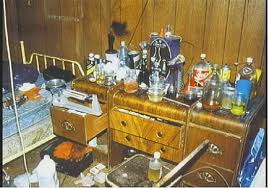
Police found chemicals on the floor next to one of the children’s teddy bears and discovered acids were stored on low shelves within reach of small hands.

The five children had samples of their hair analysed and all tested positive for methylamphetamine, the court was told.

Click on the link to read The Most Effective Anti-Smoking Ad Ever Conceived

Click on the link to read Middle-Class Children and Alcohol

Click on the link to read Student Finds a Bag of Cocaine in Her Amazon Textbook Order

The Drug Companies Are at it Again!

July 23, 2012

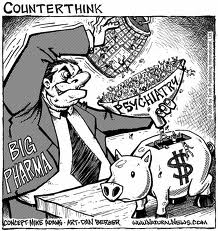
The drug companies are ruthless. Here they are again peddling any opportunity they can to get more children on medication:

Should all U.S. children get tested for high cholesterol? Doctors are still debating that question months after a government-appointed panel recommended widespread screening that would lead to prescribing medicine for some kids.

Fresh criticism was published online Monday in Pediatrics by researchers at one university who say the guidelines are too aggressive and were influenced by panel members’ financial ties to drugmakers.

Eight of the 14 guidelines panel members reported industry ties and disclosed that when their advice was published in December. They contend in a rebuttal article in Pediatrics that company payments covered costs of evaluating whether the drugs are safe and effective but did not influence the recommendations.

It also is not uncommon for experts in their fields to have received some consulting fees from drug companies.

‘Experts’ or lackeys for the drug companies?

Click Here to read Doctors Create a New Normal by Over-Prescribing Drugs

Click here to read ADHD Diagnosis a “Convenient Out For Lazy Teachers”: Dunham

US ‘Supermum’ reveals ADHD addiction

June 27, 2012

With an explosion of ADHD medications prescribed I imagine that medication sharing and misuse will become an everyday reality:

A US suburban “supermum” has revealed how she became addicted to her son’s ADHD medication to help her do housework.

The woman is one of the growing number of mothers turning to prescription drugs to help them deal with their daily parenting responsibilities, the US ABC Network reports.

Betsy Degree, from suburban Minneapolis, said she started taking prescription medicine to deal up with the demands of being a mother-of-four.

“I grew up in a house where my mom was very neat,” she said.

“Everything was really clean, beautiful dinners every night and that didn’t come naturally for me.”

A few years ago after stealing one of her son’s Adderall pills she found she was able to be the mother she wanted to be.

“I was able to get all the stuff done around the house,” Ms Degree said.

“I was able to cook the dinner and have everything perfect.”

Many will argue that upkeep isn’t a sufficient reason for taking ADHD medication.  I would argue that if maintaining concentration is a good enough reason to prescribe drugs to children why wouldn’t it be a good enough for adults who need help in getting stuff done around the house? Why is one problem so much more urgent than the other?

Another thing that interests me is this quote by addiction treatment facility Hazelden chief medical officer Dr Marvin Seppala:

Dr Marvin Seppala told ABC News the rising incidence of addiction was a “significant problem”.

Compare that with this from the National Institute of Drug Abuse:

Research thus far suggests that individuals with ADHD do not become addicted to their stimulant medications when taken in the form and dosage prescribed by their doctors.

I am deeply concerned that this is an addictive drug with or without prescription, whether it be taken by child or adult, homemaker or student, ‘supermum’ or naughty child.

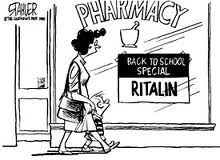
Click here to read my post ‘Get Your Kids on Ritalin Before Their Grades Suffer‘.

Teaching Children How to Argue

June 19, 2012

I noticed while teaching students about persuasive writing how difficult they find it to form opinions of their own. It is almost as if children today do what they have learned to do without ever reflecting on the reasons why. This poses a significant problem when it comes to peer pressure. If you don’t have the tools to work out right from wrong, positive from negative, you can be very easily lead.

This unfortunate consequence was part of the findings of a recent study undertaken by the University of Virginia:

WHILE parents have been teaching their kids not to argue with adults for generations, new research shows it may have its benefits.

A study by the University of Virginia shows that young teenagers who are taught to argue effectively are more likely to resist peer pressure to use drugs or alcohol later in adolescence.

“It turns out that what goes on in the family is actually a training ground for teens in terms of how to negotiate with other people,” said Joseph Allen, psychology professor and lead author of the study, results of which were published in a recent edition of the journal Child Development.

Prof Allen said that parents are often “scared to death about peer pressure” but also frustrated by argumentative children.

“What we’re finding is there’s a surprising connection between the two,” he said.

Prof Allen said that teens “learn they can be taken seriously” through interactions with their parents.

“Sometimes, it can be counterintuitive to tell parents to let their teens argue with them,” said Joanna Chango, a clinical psychology graduate student who worked on the study.

In fact, learning effective argumentation skills can help teenagers learn to “assert themselves and establish a sense of autonomy”, she said.

I don’t agree with the assertion that we should encourage our children to argue with us. Instead, teachers and parents alike, should encourage students to question everything, to feel confident to form their own opinions and not to follow a crowd just for the sake of safety in numbers.
Click on the link to read my post on beating peer pressure.

It is Doctors Not Teachers Who Are Helping Children Get Good Grades

June 12, 2012

A big thank you must go out for all overprescribing doctors who are doing their bit to have children improve their grades. Thanks to your desire to see children succeed and your devotion to health, you have made amphetamine readily available to all those in need (and even for those not in need).

He steered into the high school parking lot, clicked off the ignition and scanned the scraps of his recent weeks. Crinkled chip bags on the dashboard. Soda cups at his feet. And on the passenger seat, a rumpled SAT practice book whose owner had been told since fourth grade he was headed to the Ivy League. Pencils up in 20 minutes.

“No one seems to think that it’s a real thing — adults on the outside looking in. The other kids in rehab thought we weren’t addicts because Adderall wasn’t a real drug. It’s so underestimated,” said a recent graduate of McLean High School in Virginia, who was given a diagnosis of A.D.H.D. and was prescribed Adderall.

Adderall and similar drugs are not hard to obtain at high school, many students say. They can also be found online.

The boy exhaled. Before opening the car door, he recalled recently, he twisted open a capsule of orange powder and arranged it in a neat line on the armrest. He leaned over, closed one nostril and snorted it.

Throughout the parking lot, he said, eight of his friends did the same thing.

The drug was not cocaine or heroin, but Adderall, an amphetamine prescribed for attention deficit hyperactivity disorder that the boy said he and his friends routinely shared to study late into the night, focus during tests and ultimately get the grades worthy of their prestigious high school in an affluent suburb of New York City. The drug did more than just jolt them awake for the 8 a.m. SAT; it gave them a tunnel focus tailor-made for the marathon of tests long known to make or break college applications.

“Everyone in school either has a prescription or has a friend who does,” the boy said.

At high schools across the United States, pressure over grades and competition for college admissions are encouraging students to abuse prescription stimulants, according to interviews with students, parents and doctors. Pills that have been a staple in some college and graduate school circles are going from rare to routine in many academically competitive high schools, where teenagers say they get them from friends, buy them from student dealers or fake symptoms to their parents and doctors to get prescriptions.

Of the more than 200 students, school officials, parents and others contacted for this article, about 40 agreed to share their experiences. Most students spoke on the condition that they be identified by only a first or middle name, or not at all, out of concern for their college prospects or their school systems’ reputations — and their own.

“It’s throughout all the private schools here,” said DeAnsin Parker, a New York psychologist who treats many adolescents from affluent neighborhoods like the Upper East Side. “It’s not as if there is one school where this is the culture. This is the culture.”

Thank you doctors! What would the educational fraternity do without you?

Doctors Create a New Normal by Over-Prescribing Drugs

June 10, 2012

Some doctors seem to relish the opportunity to prescribe psychiatric drugs. After all, from the perspective of a passive observer, prescriptions of such medication are becoming all too frequent. I wonder if it will get to the stage when those not on drugs will feel left out and marginalised because of it:

PRESCRIPTIONS of antipsychotic drugs given to children have doubled in only five years, data obtained under freedom of information laws shows.

Antidepressant prescriptions have also risen, bucking international trends to reduce the use of the drugs after they were linked to children developing suicidal thoughts.

A psychiatry professor at the University of Adelaide, Jon Jureidini, said he was concerned antidepressant medication use was increasing despite warnings about suicide risks.

He said antidepressants should almost never be used in children.

After the US drug regulator issued a warning about the risk of suicide in children and teenagers taking antidepressants, there was a 58 per cent drop in the use of the drugs.

Yet between 2007 and 2011 in Australia antidepressant prescriptions increased from nearly 22 prescriptions per 1000 children aged below 16 to nearly 27, data provided to the Herald by the Department of Human Services under freedom of information laws shows.

Last year there were about 14 antipsychotic prescriptions for every 1000 children, compared with seven in 2007.

Professor Jureidini said it was likely the increase in the prescription of antipsychotics could be explained by doctors prescribing the drugs for behavioural problems, or by conditions such as personality disorder being reclassified as bipolar disorder and then treated with antipsychotics.

”There has been a very significant increase in the prescription of antipsychotic drugs and we can be pretty confident there has not been an increase in psychosis,” he said.

Antipsychotics are recommended for the treatment of children with conditions such as bipolar disorder, in some cases. National Health and Medical Research Council guidelines say doctors can consider prescribing an antidepressant for childhood depression in the short term, where psychological therapy has not been effective or has been refused.

Professor Jureidini said more monitoring of the drugs and their side effects was needed, along with training for GPs on non-pharmacological treatments.

A clinical adviser to the National Prescribing Service, Philippa Binns, said those who were prescribing antipsychotics and antidepressants to children should be specialists in children’s psychiatric problems.

I plead to doctors worldwide to please resist from writing a prescription for drugs unless you have tried all  other options which have turned out to be unsuccessful.

ADHD Diagnosis a “Convenient Out For Lazy Teachers”: Dunham

May 1, 2012

I commend for her courageous piece on the rising rates of ADD and ADHD diagnosis. Ms, Durham refuses to pull punches, raising a view I have been quite vocal about – the dubious role of teachers in the diagnosis process. Deborah suggests that teachers may be taking the lazy approach instead of the responsible one. She also raises strong arguments about the lack of research about the long-term ramifications of taking Ritalin, the contribution of diet to a child’s mental state and the lack of engagement and stimulation in school.

I’m starting to wonder if it’s possible for doctors, teachers and parents to diagnose kids with anything other than  Attention Deficit Disorder? According to a new study, the rate that kids are diagnosed continues to increase by 5.5% each year, but are there really that many more kids with ADD and ADHD? It seems like this has become a convenient “out” for many lazy teachers, doctors and parents who don’t know what to do with kids who don’t fit the “mold”.

The rates of ADHD diagnosis in the developed world increased annually by an average of 3% from 1997 to 2006 and 5.5% from 2003 to 2007 in the U.S. But researchers wanted to know–as did we–how accurate these diagnoses really are.

Led by a team of researchers at the University of Basel’s Katrin Bruchmueller, 473 child and adolescent psychotherapists and psychiatrists across Germany were surveyed on how they diagnose people with ADD or ADHD. In three out of the four cases, the described symptoms and circumstances did not fulfill ADHD diagnostic criteria. In fact, many mental health practitioners were found to base their decisions on unclear standards.

For example, male patients were more readily diagnosed when they displayed symptoms such as impulsiveness, motoric restlessness and lack of concentration–all things that can be perfectly normal when growing up. Boys were more likely to be diagnosed than girls, and on the same note, male doctors tended to diagnose ADHD more frequently than their female counterparts.

In short, what the researchers found what that ADHD is over-diagnosed because doctors rely too much on their intuition and not on a defined set of criteria.

All of this is troubling because it means that kids are the ones who are suffering as a result. Instead of taking the time to accurately diagnose them (if there is even anything at all wrong besides just being a “kid”), they are put on brain-altering drugs which is risky for anyone, especially someone who is still young and developing.

More than three million kids in the U.S. take drugs for their supposed difficulty focusing. In 30 years there has been a twentyfold increase in the consumption of these. And while medications like Ritalin may help increase concentration in the short term, not enough is known about the long-term health consequences–although some say drugs like this can stunt a child’s growth, other speculate that they can cause heart problems and even sudden death.

But is it really possible that three million kids in our country really suffer from ADD or ADHD, or has this just become a catch-all diagnosis by lazy doctors, parents and teachers?

We know that an unhealthy diet, sugar, processed foods, stress and a lack of sleep and exercise can all contribute to someone’s mental state. So, it’s entirely possible that our society has become so unhealthy that we are the ones creating these problems in our kids. And it’s not always synthetic drugs that are the answer.

The other issue that could be a major factor here is that kids are not engaged and stimulated in school enough. Taking millions of kids who all have different learning styles and trying to force them to comply and fit into one method of learning does not work. No one can possibly be expected to sit at a tiny, uncomfortable desk for eight hours a day in a classroom with florescent lights and the blinds drawn on the windows. Yet, when a child doesn’t conform, they are thought to have ADD.

Perhaps instead of jumping to conclusions and forcing our kids to swallow mind-altering drugs in order to fit our ideals of how they should behave, all of us–parents, teachers and doctors–should take more time to fully evaluate the unique learning style and personality that each child has and then alter how we interact with them accordingly. That’s not to say that everyone is lazy (because they aren’t) and there aren’t some legitimate cases of ADD (because there certainly are), but research like this points to the fact that we need to take more time and better understand how to consistently diagnose this disorder.
School Gets Tough on Misbehaviour and the Parents Vent

April 22, 2012

Whatever used to work when it comes to behaviour management methods (including the awful practice of corporal punishment) no longer does. Suspensions are distributed like handouts and are becoming increasingly meaningless. Detentions have never successfully changed attitudes or reformed students.

I have argued for a while that schools need to address their culture. They need to become more interested in the types of offences their student body commits both within and outside of school. They need to work with the parents and support them, even when the problem is not considered a school responsibility. This shows that the school really does care about the welfare of its students and has a desire to see that its children are making healthy lifestyle choices at school and at home.

It is sad that when a school does take these steps, they are often met with a “a tsunami’’ of outrage:

A new school policy that would hold students accountable for their actions year-round has generated a storm of opposition, according to Dedham officials, and has been put on ice until it can be reviewed and possibly rewritten by a newly established subcommittee.

The policy, which was approved in late March by a majority of Dedham School Committee members, spells out school penalties for violence and drug or alcohol use, even if the actions occur off school property when school is not in session.

It also calls for punishing youths who are at the scene of, but not participating in, such activities. Selectman Paul Reynolds said his board was in the dark about that aspect of the new policy until selectmen were overwhelmed by “a tsunami’’ of outrage.

“I sympathize with these parents,’’ said Reynolds, who will sit on the subcommittee that examines the document with Selectman Carmen Dello Iaccono, Police Chief Michael d’Entremont, and several School Committee members.

“Holding a club over kids’ heads 52 weeks a year with increasingly punitive sanctions sends the message that we suspect the worst of them, instead of expecting the very best from them,’’ said Reynolds.

Actually, I think it’s the parents that try to block this sensible policy that are sending the message that they suspect the worst of their children, instead of expecting the very best from them.

Middle-Class Children and Alcohol

April 15, 2012


Long thought to be a largely lower socio-economic problem, alcohol abuse seems very much alive and well among middle-class children. This presents a very gloomy picture for what the future has to offer.

More than one in three of those born in professional households had downed a full glass before reaching their teenage years, the statistics show.

The 35 per cent figure among the middle classes is almost twice the level found among 12-year-olds across all economic groups.

Experts said that most children who had drunk alcohol at such a young age were getting it from their own homes.

While some were secretly raiding well-stocked drinks cabinets, many more were being allowed to drink by parents who believed that it would help them to develop more mature attitudes towards alcohol.

The Ipsos Mori poll for charity Drinkaware, which is funded by the alcohol industry to promote sensible drinking, surveyed more than 500 parents from the social groups ABC1 and their children, aged between 10 and 17.

This also reminds us that we are not doing nearly enough to remedy the problem.

Student Finds a Bag of Cocaine in Her Amazon Textbook Order

January 29, 2012

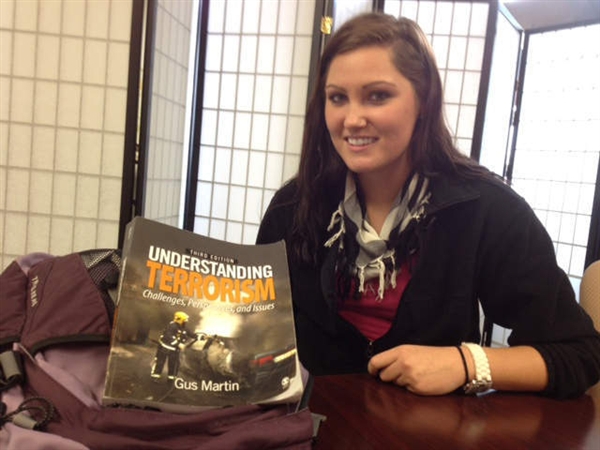
Cocaine isn’t something you’d expect to find in your Amazon textbook order. For one unsuspecting customer, a university textbook about terrorism isn’t the only thing she received in the mail.

Any university student who has ever purchased a used textbook knows that there are sometimes strange surprises hiding between those pages. Usually they come in the form of messy scribbles or perhaps even a forgotten piece of gum, but in one student’s case the unexpected (and unwanted) gift-with-a-textbook-purchase was a bag of cocaine.

WPTV reports that Sophia Stockton — a junior at Mid-America Nazarene University in Olathe, Kansas — recently ordered a textbook from an independent retailer through the Amazon online storefront. The book was intended for a spring course on terrorism and is called “Understanding Terrorism: Challenges, Perspectives and Issues.”

When Stockton flipped through the textbook, she “discovered a bag of white powder had fallen to the ground.” According to WPTV, Stockton feared that the bag contained anthrax and took it to the local police department the next day:

“I told them white powder was in my terrorism textbook and so I put it on the table and they’re like, ‘oh, okay,’ And so he went back and tested it,” Stockton recalls. “ He comes back and says, ‘you didn’t happen to order some cocaine with your textbook, did you?’ And I was like, no!”

This is certainly not the best method of getting disillusioned kids back into reading.