Posts Tagged ‘Children’

Disrespected Teens Become Angry Adults

November 3, 2011

Whilst it may not come as a surprise to learn that British society casts negative views about the way children behave, the level of disrespect and animosity doesn’t bode well for the future.  To liken children as ‘feral animals’ may well be an accurate description for many, but I can’t help thinking whether such criticisms results in a stronger us vs them mentality.

Almost half of Britons think children are violent and starting to behave like animals, a Barnardo’s survey suggests.

The children’s charity says the research suggests society holds a negative view towards children despite the majority being well behaved.

Of the more than 2,000 people questioned by ICM Research, 44% said young people were becoming feral.

Barnado’s chief executive Anne Marie Carrie said it was “depressing” so many were ready to give up on children.

The survey revealed that:

  • 49% agreed children are beginning to behave like animals
  • Almost 47% thought youngsters were angry, violent and abusive
  • One in four said those who behaved badly were beyond help by the age of 10
  • Whilst 36% thought children who get into trouble need help, 38% disagreed

Writing off our young is not a good move.  We just can’t stand by and blindly judge.  We must do what we can to ensure that the next generation of adults feel empowered to make a positive contribution to society.

However uneasy people are feeling about the state of children in today’s world, it is up to us to straighten things out.  As it is, I am unhappy by the way my generation virtually ignores the contributions and sacrifices made by our elders.  I hate to think how badly the younger generations will treat us.

Parents Helping Their Children Lie To Get On Facebook

November 2, 2011

To those parents who are contemplating assisting their underage children to get on Facebook, I strongly suggest you reconsider.  The age requirements for Facebook is necessary, as Facebook has a clear downside.  From cybersafety issues to cyberbullying, Facebook is clearly not designed for pre-teens.

Almost all parents of ten-year-olds signing up for the site – 95 percent – were aware of what their children were doing, and 78 percent of those helped them do it.

“Although many sites restrict access to children, our data show that many parents knowingly allow their children to lie about their age — in fact, often help them to do so — in order to gain access to age–restricted sites in violation of those sites’ ToS,” the authors write.

“This is especially true for general–audience social media sites and communication services such as Facebook, Gmail, and Skype, which allow children to connect with peers, classmates, and family members for educational, social, or familial reasons.”

The survey found that 55 percent of 12-year-olds, 32 percent of 11-year-olds and 19 percent of 10-year-olds were active Facebook members.

The authors suggest that the COPPA rules may need re-examination, given that they appear only to be encouraging parents to lie. Universal, rather than age-based, privacy protecitons might make more sense, they say.

The full report is here.

Summer Born Children Are Disadvantaged

November 1, 2011

I have seen first hand how the youngest children in the class are often among the most behind.  Some clearly aren’t as mature as the others.

That’s why I was not surprised to read that children born in the summer may need more help to come up to the same academic standard as their older classmates.

Children born at the start of the academic year achieve better exam results, on average, than children born at the end of the academic year.

This matters because educational attainment has long-term consequences for a range of adult outcomes. But it is not only educational attainment that has long-lasting effects: other skills and behaviours affect adult outcomes too, and can also matter for children’s current wellbeing.

In line with previous research, our report shows that there are large and significant differences between August- and September-born children in terms of their cognitive skills, whether measured using national achievement tests or alternative indicators such as the British Ability Scales; these gaps are particularly pronounced when using teacher reports of children’s performance.

Those born in August are also significantly more likely to take vocational qualifications after leaving compulsory schooling and slightly less likely to attend a Russell Group university.

I was one of the youngest in my class and really struggled to keep in touch with my classmates.  I was slow to mature, and in hindsight I probably should have stayed down a year to maximise my academic potential.

Having said that, I believe that parents can get fixated with their children being among the youngest and can use it as an excuse. This then filters down to the child who rationalises their performance by making the same excuse.

The New App that Gets Kids To Do Their Chores

October 29, 2011

Even the best parents and teachers struggle to get kids doing menial tasks on a consistent basis.  From making their beds to putting their lunchboxs back in their bag, it’s amazing how difficult it is to get children to be responsible for small yet important tasks.

That is, until an app was designed to assist desperate and exhausted parents:

You may find this shocking, but getting my 11- and 9-year-olds to do household chores is like pulling teeth. Rotten kids!

That may change now that I’ve got You Rules Chores on my iPhone. This clever new app turns household chores into a game, rewarding each kid a designated number of coins for each completed job. Whoever finishes the week’s chores first is the winner. (Of course, we all know who the real winners are: mom and dad.)

The app features cute graphics and music, and after a parent gets set up as the “referee,” each kid gets to choose an avatar (from only six available, alas).

Meet the Parents Who Named Their Kids “Adolph Hitler” and “Aryan Nation”

October 27, 2011

How sick and utterly selfish do you have to be to name your beautiful children “Adolph Hitler” and “Aryan Nation”?  What an absolute disgrace!  These parents can’t understand why their children were taken away from them.  It’s  a shame that they haven’t as yet worked out that by naming their children after despicable tyrants and murderous regimes they are in fact scarring their children for life.

Is this not a clear case of child abuse?

A COUPLE who named one of their children after Adolf Hitler should not regain custody of their three children, an appeals court has ruled.

Heath and Deborah Campbell’s three small children were removed from their home in Phillipsburg, New Jersey, by the state in January 2009, myFOXphilly.com reported.

The family drew world-wide attention after a store refused to decorate a birthday cake for their son, Adolf Hitler Campbell.

Adolf and siblings JoyceLynn Aryan Nation and Honszlynn Hinler Jeannie have been in foster care since then.

The appeals court ruled last week that sufficient evidence of abuse or neglect existed because of domestic violence in the home. The court sent the case back to family court for further reconsideration.

A gag order remains in place and the parties refused to discuss the decision.

In January 2009, the Campbells told myFOXphilly.com that Adolf Hitler Campbell was just like any other three-year-old boy.

“It’s not like he’s growing up to be a killer or nothing like that,” said mother Deborah Campbell.

How dare they do this to their beautiful children!  Sure, it is claimed that the children have been taken out of their parents’ custody because of domestic abuse and not because of their names, but what if there was no other reasons?  Should the names be enough to warrant a claim of child abuse.

If these people want to continue rearing their precious children they better smarten their act.  This includes thinking of more appropriate names for their kids … quick smart!

Internet Addiction and our Children

October 26, 2011

We all love our internet connections and mobile phones and would find it extremely difficult to live without them.  However, addictions are still addictions, and there is no doubt that our children have grown a deep addiction to the internet.  So bad is the problem, that children have become more addicted to the internet than to TV:

Just 18% of children would miss TV most, compared to mobile (28%) and Internet (25%), finds Ofcom research

A new research by communications watchdog Ofcom has revealed that more young British teenagers can do without TV but not without mobile and the Internet.

Ofcom research found that just 18% of children aged 12 to 15 would miss TV most, compared to mobile (28%) and the Internet (25%). However, the research suggests that the teenagers are also watching more TV than ever before, with viewing figures increasing by 2 hours since 2007.

In 2010, children aged 4-15 watched an average of 17 hours and 34 minutes of TV per week, compared with 15 hours and 37 minutes in 2007. Nearly one third (31%) of children aged 5-15 who use the Internet are watching TV via an online catch-up service such as the BBC iPlayer or ITV Player, said Ofcom.

Ofcom’s research said that 95% of 12-15 year olds now have Internet access at home through a PC or laptop, up from 89% in 2010 and 77% in 2007.

Social networking is still one of the most popular uses of the Internet amongst 12-15s. Ofcom said that children are visiting social network sites more often on their mobiles. Half (50%) of 12-15s with a smartphone visit them weekly compared with 33% in 2010.

Children aged between 8-11 are more likely to use Internet for gaming, with 51% saying they play games online on a weekly basis, up from 44% in 2010. 8-11s are also spending more time playing on games players/ consoles compared with 2010 (9 hours 48 minutes – an increase of nearly 2 hours), said Ofcom.

In my school days television addiction was a problem.  Now we have another addiction which comes with the same side-effects.  It creates tired students who have been up so late they can’t concentrate.  It has compromised our children’s capacity to have healthy social interaction.  Playing with a friend has now become messaging a friend.  It’s just not the same.

As soon as people go from the moderate to the obsessive, they lose control of themselves.  Children today are certainly showing the signs of a lack of control, to the point where they are smuggling mobiles in their bags so they can reply to Facebook messages as soon as they receive them.

Kids require rules for their internet usage.  Rules that outline when, how and where they can use it.


Law Requiring Schools to Weigh Students Must Be Repealed

October 24, 2011

You have got to be kidding me!  How can so-called intelligent adults pass a law so downright cruel?  Sometimes I think adults take advantage of the resilience of children.  They think they can impose great humiliation on poor, naive children, without any long-term cost.

Well I have news for you – children, like adults, don’t like being made to feel ugly, different or unworthy.  So why on earth would you pass a law that mandates schools to weigh children so that their weight can be compared with others?

A state law requiring schools to measure a child’s height and weight to find out how they stack up against their peers has generated plenty of controversy, but not a lot of local participation.

School officials say the law’s aim to combat childhood obesity is a worthy cause, but its approach is questionable.

The law measures body mass index, which is calculated from height and weight and given as a percentile. It’s generally a snapshot of a person’s overall body fat, but many argue it doesn’t take into account individual body types or other health risks.

Schools are required to take those measurements for students in kindergarten, third, fifth and ninth grades, then report that data to the Ohio Department of Health and mail the results to parents.

State education officials say similar health screenings, such as hearing and vision tests, have been done for many years with the results kept private.

What if the law was to include Ohio politicians?  What if they were forced to step on the scale in front of their peers and were measured for all to see?

Yes, privacy might be assured, but children aren’t stupid.  They know why they are being measured, and the humiliation of the procedure will not be lost on the overweight.

This plan is doomed to failure.

My wish, as idealistic as it sounds, is to make our children comfortable with who they are, regardless of their weight.  Whilst I strongly advocate educating children about healthy eating choices and encouraging active lifestyles, I am even more concerned about the inner wellbeing of the child.  To me, the tragedy is not that there are obese children, but that there are children who feel unworthy, ugly and hopeless because of their weight.

It’s time to get rid of the scales and let our children know that their worth is not the sum total of what they weigh, but rather, who they are and how they treat others.

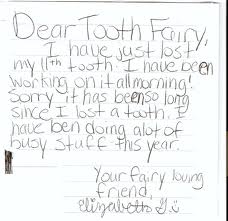
When Do I Admit That the Tooth Fairy Doesn’t Exist?

October 18, 2011

I read a brilliant article in The National about the lies we tell our children and when is the right time to confess that the Easter Bunny they are so fond of isn’t real.

Below is just an excerpt of the article.  I strongly encourage you to read the entire piece by following this link.

The world is a confusing place for small children, particularly as they only learn to distinguish between reality and fantasy between the ages of three and five. Jacqueline Woolley, a psychology professor at the University of Texas in the US, found that by the age of four, children learn to use the context in which new information is presented to distinguish between fact and fiction. So, before long, your little one will be figuring out that the tooth fairy isn’t who you said she is. Which begs the question: at what age should we tell our children that their beloved magical characters aren’t real? Or, should we even claim that they’re real in the first place?

Last Christmas I witnessed the most heated debate I’d ever come across on Facebook. It didn’t involve politics, religion or money. No; it was Santa Claus who caused the divide. One friend posed the question: “Should I tell Sophie Father Christmas is real?” What followed was a polarised debate between those who wanted their children to enjoy a magical gift-giving time and those who believed that perpetuating the story of Santa was being dishonest with their offspring. “I was devastated when I found out it was my mum, not Santa, who hung the stocking on the end of my bed,” admitted one father. Whereas others regretted never having the chance to believe in Santa because older siblings had spoilt it for them.

“I make a point of always being honest with my daughter and now she has turned six I’m feeling increasingly uncomfortable with perpetuating the lie of Santa Claus,” admitted Rosie Cuffley, a mother of two.

According to Carmen Benton, a parenting educator and educational consultant at LifeWorks, Dubai, Rosie shouldn’t worry. “Sharing the world of fantasy characters with our children is not a lie, but rather a playful way of storytelling and connecting as a family to fun events. Think about the joy and excitement that thoughts of characters such as Santa Claus can induce. You have the power to create a magical world of dreams, wishes and storytelling for your kids and I believe these are part of being a playful parent.”

It’s a different scenario when children ask directly whether Santa Claus, for example, is real. Most psychologists agree that children need to know they can trust their parents to tell them the truth, even about magical characters. “The majority of children will let go of a fantasy after the age of eight, and most would be happy for the years of the imaginary world they had been able to enjoy,” says Benton.

I feel terrible that my daughter still believes in the Tooth Fairy.  I don’t like perpetuating a lie (especially one I know will be uncovered sometime soon).  I have a feeling, irrational or otherwise, that when she does find out, her first thought will be, “What else is he lying to me about?”

Prescribing ADHD Drugs to 4-Year Olds Seems Irresponsible

October 17, 2011

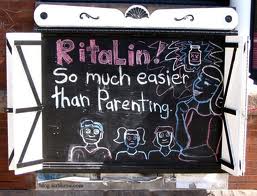
I am not a doctor, so I do not have the expertise to comment on the ADHD diagnosis becoming a regular feature of classrooms across the globe.  But I can’t help but get agitated as kids younger and younger are being given these drugs.  The cynic in me suspects that this has more to do with pharmaceutical profits and less to do with responsible medicine.

Children as young as 4 years old may now be treated with medications such as Novartis AG (NOVN)’s Ritalin for attention deficit hyperactivity disorder, under new guidelines from the American Academy of Pediatrics.

The recommendations, the first in a decade, expand the age range of kids who may be prescribed the drugs from preschoolers through 18-year-olds. Earlier guidelines included children ages 6 to 12. ADHD affects about 8 percent of children and youth and is the most common neurobehavioral disorder in kids, according to the American Academy of Pediatrics.

Expanding the age range will help ensure more children get the appropriate therapy, according to the guidelines. Treating preschoolers may increase their chances of succeeding in school and targeting teens recognizes that ADHD is a long-term condition that may even extend into adulthood.

“Because of greater awareness about ADHD and better ways of diagnosing and treating this disorder, more children are being helped,” said Mark Wolraich, lead author of the report and a professor of pediatrics at the University of Oklahoma College of Medicine in Oklahoma City, in a statement.

For preschoolers with the disorder, it’s recommended that parents and teachers first try to manage children with behavior therapy that uses a system of rewards and consequences. If that doesn’t work, then doctors can prescribe medications, according to the recommendations being presented today at the American Academy of Pediatrics National Conference and Exhibition in Boston.

I have three major issues with the last paragraph in particular.

1.  I don’t believe you can determine such a disorder at such a young age with such confidence as to justify prescribing a Ritalin-like drug to them.

2. The idea that some “behaviour therapy” is all that is tried before a child gets a prescription is just shocking.  There should be many steps before a child warrants a prescription.  Prescribing drugs to a child should be the last resort.  And who checks whether the behaviour therapy was properly administered?  How many teachers say they have tried everything, when you know they haven’t even come close?

3.  This leads me to my third point.  Teachers should not have such a big say in the decision to prescribe drugs to a child.  Teachers are often too easily motivated by the need to teach a civil and restrained class.  Their need to see students calm and manageable often gets in the way of a more considered approach when it comes to the question of ADHD drugs.

Four year olds on ADHD drugs!  Do we really want this to become the norm?

The Tragic Loss of a Student

October 12, 2011

I recently read a very sad blog post written by notswallowedinthesea.

I never imagined this could happen to me… Especially so early on in my teaching career!

But yesterday, first day of Term 4, and in all my excitement, I went back to the school where I teach music part time, excited to see my students and teaching them all the great things I have planned for them – only to be whisked into the staffroom and briefed by social workers on “how to deal with a death in school.” I looked around confused before the assistant principal came up to me and whispered in my ear that one of our prep kids was hit by a truck during the holidays in front of his mum and older sister (who is in Grade 2).

The AP told me the name of the student but it went past my head. I asked for the name again but it didn’t ring a bell. AP tried to describe him: “little blonde one”. There are so many “little blonde ones”. Which one? When I realized I did not recognize the name I sighed in relief, but only for a second. Because then I shuddered at the thought of not knowing the student. How on earth could I NOT know? I kicked myself for not learning the names of all my students soon enough. I felt an overwhelming sense of guilt and couldn’t wait to break away from the staff room to locate the class list and photo so I can put a face to the name of the student. I have 14 music classes and about 20-28 in each class, so yes, I still don’t know the names of all the students! As the social worker was briefing us, I went through the faces of all my prep kids, trying in vain to remember Rex. Rex, the name is very familiar but I couldn’t put a face to it!

When the briefing was over, I spoke to the school counselor who gave me a bit more details about the accident, and pointed to me a picture of Rex. There he was, the little blonde one. Immediately I knew who he was! He was in my Top 5 students in the final class before the holidays! Sweet smiling Rex. Suddenly the memories overwhelmed me and I felt everything from grief to guilt. Grief because I had lost a student through the worst circumstance, and grief because I wished we could have spent more time together – or that I would have remembered him! It pains me that I couldn’t remember him in the first instant! Why didn’t God give us more time together? Why was he taken away so suddenly? Why hadn’t I paid more attention to him? Why couldn’t I remember him?!

It was awful. I wanted to cry but I couldn’t because my first class came in. I tried my best to hide my tears and answered questions about Rex as honest as I could without breaking down. I had never been in such a situation before, and I found it extremely difficult replying to students who have questions such as : “Why did it happen?” and “Where is he now?”

I know for a fact, because of my faith, that God is taking care of him, that things happen for a reason and that God is in control. But I cannot say this to my kids as I am not teaching in a Catholic school and I don’t want to cross any lines or upset any parents. How can I answer questions like these? I ended up avoiding them as much as I could!

The last class yesterday was Rex’s class, and I knew the moment the students came in that they were itching to tell me about Rex, about why he wasn’t in class and why he was never going to come back. But I went straight into my lesson, avoiding any questions, claiming I do not have time and that we had a lot to get through.

I had a lot to get through… a lot of emotions to get through. At lunch time I stumbled across Rex’s music book, I noticed his work for the first time. 2 weeks ago it was just a book belonging to one of the preps, just a book among the statistics, with scribbly drawings and terrible colouring techniques. Now, it is the precious work of a child no longer here on earth, and the horrifying truth that the child has had only 5 years in this world… not enough to learn how to colour in the lines, not enough to learn to write his name properly… not enough! Not enough!

I don’t know if I am angry. I am definitely not bitter. I know these things happen, and tragedies occur throughout the world. Who am I to complain and pound heaven for an answer? But the fact that it happened, TO ME, at this time has made me realize immensely how precious life is, how precious teaching is, and how fragile we human beings are.

While singing with the Preps yesterday I found myself staring into each student’s eyes, trying to take in as much of them as possible, drinking in their personalities and hoping that they will all come back again next week. I do not want anyone else to leave! I do not want any of them to get hurt!

But I cannot save them all… and I did not save Rex. Rex is gone. My class of 21 preps is now down to 20. He was hit by a truck, and died at the scene. Rex, who only 2 weeks ago I had given a piece of chocolate cake for making it into the Top 5 because he sat patiently for his book while others were shouting for it. Little blonde Rex.

I find myself looking towards the right everytime I pass his classroom to go to the staffroom or toilets. I keep looking because I still see his photo in the class wall, on the class door, on his table, his book shelf, his bag shelf, his music book…

I am only in my first year of teaching, and already I have had to deal with a student’s death. I wonder how much more will come? How much more can I take?

I was wondering if you have experienced something similar?  If so, what advice do you have for this teacher to help her get through this emotionally traumatic experience.