Posts Tagged ‘Child Welfare’

The Bid to Make Barbie Bald

January 13, 2012

I am not a big fan of Barbie. However, I think the initiative to get Mattel to include a cancer suffering “Bald Barbie” has plenty of merit:

Most kids in America recognize Barbie immediately.

She’s tall, she’s thin, and she’s…bald?

Rebecca Sypin is one of the people behind this Facebook campaign urging Mattel to create a bald Barbie, one she says children battling cancer and other diseases that cause hair loss can relate to.

“When you go to the supermarket, sometimes you have little kids who’ve never seen it before, staring, and I think it would make it much more mainstream and more normal for kids to see that,” said Sypin.

Sypin knows about children and cancer all too well. Her daughter, Kin Inich, is battling leukemia.

“Everybody else has hair, even a boy has hair and you don’t. So it would make you feel like you’re Barbie, you would be the glamorous girl with the big lifestyle and everything now,” said Kin.

The Beautiful and Bald Barbie Facebook page has been up and running for less than a month, and already has more than 65,000 friends.

But despite that support, Sypin says the bald Barbie idea has gotten a cool reception from Mattel, saying that the company has told her they do not take unsolicited Barbie doll suggestions from outside sources.

A bald Barbie may still be a possibility though. Mattel released a written statement Thursday saying the company is honored that so many people are looking to Barbie as the face of such an important cause.

“We receive hundreds of passionate requests for various dolls to be added to our collection,” the statement reads. “We take all of them seriously and are constantly exploring new and different dolls to be added to our line.”

Let’s face it. The reason that Mattel seem less than enthusiastic about the idea, is that it would almost certainly make a loss. That, and the fact that the Barbie name is synonymous with looks and dimensions that lack realism and are deliberately out of proportion. A doll that humanises the Barbie name and presents her as flawed and vulnerable is not what they are setting out to do.

I will be watching closely to see whether or not Mattel has the conviction to bypass profits for this extremely noteworthy cause. If they don’t, it will only serve to reaffirm my current dislike of the product.


Issues Relating to Kids and Video Games

January 3, 2012


Excessive video game use and high rates of video game addiction lead to much anguish from concerned parents. Many parents never saw the addictive pull of video games as an issue when they bought consoles for their kids or allowed them to have a computer in their bedrooms. I read a very interesting piece by writer, Scott Steinberg, on the major issues relating to children and video games.

He examines some of the most common concerns parents have about video games:

– Amount of Play Time
– Age Appropriateness
– Health and Obesity
– Addiction
– Safety Concerns
– Violence, Aggression and Misbehavior

The issue of particular interest to me was the video game addiction section. Video game addiction is not a term we hear very often, but I’m afraid it will be widely familiar in the next few years.

  • Addiction– For some kids, there is a real danger of becoming too involved in playing games, or even in living too much of their lives in the virtual world of the Internet. In rare cases, true symptoms of addiction can develop, and such kids can require direct help from their parents, peers, and professionals to have a healthy, balanced life. While a change of environment and routine can sometimes be enough to break kids out of an addictive mindset, the reality is that it’s hard to prohibit kids from using technology on a regular basis, since it’s such an integral part of daily life. Many experts encourage parents to become more engaged in the addictive activity in an effort to better understand the problem and prospective solutions. They also encourage families to seek out professional help should children exhibit warning signs of addiction. Several of these warning signs, according to the Search Institute, an independent non-profit organization dedicated to creating healthy communities, and other sources, include:
  • Playing for increasing amounts of time
  • Lying to family and friends about video game usage
  • Thinking about gaming during other activities
  • Using video games to escape from real-life problems or bad feelings, as well as anxiety or depression
  • Becoming restless or irritable when attempting to stop playing video games
  • Skipping homework in order to play video games
  • Doing poorly on a school assignment or test because of time spent playing video games

I urge parents to spot the signs before the addiction gets completely out of hand. It may even be worth reading Mr. Steinberg’s book, “The Modern Parent’s Guide to Kids and Video Games,” which will be free to download at www.ParentsGuideBooks.com in February 2012.

Parents’ Stress Damaging the Development of Their Children

December 22, 2011

Author David Code goes beyond warning parents about the effect their stress has on the lives of his children. He even blames their stress for “damaging their development and altering their DNA, because of crushing worry and anxiety.”

“Stress is highly contagious,” says David Code, an Episcopal minister and author of Kids Pick Up on Everything: How Parental Stress is Toxic to Kids. “Parental stress can weaken the development of a child’s brain or immune system, increasing the risk of allergies, obesity, or mental disorders.”

So calm down and socialize more. Resolve to start the new year with peace on hearth – it’s not only good for your health but your children’s physical and mental health too.

If you really want to make your kids happier, forgo the Xbox or iPad and invite friends over. The greatest gift you can give your children is your own, healthy relationships with other adults, Code says.

“That Xbox or iPad will placate the kids for a while, but soon they’ll demand even more. Far better to take the kids over to your friend’s house – you and your friend can relax with a drink while both sets of kids entertain each other. That means better social skills for your children, and lower stress levels for you as you ‘scratch that primal itch’ to bond, which reduces your stress,” he adds.

According to Code, research shows children can catch their parents’ stress just like they catch a virus. “Children are like little sponges, soaking up the free-floating stress in today’s anxious households until their developing nervous systems hit overload, at which point they act out, or develop symptoms of mental or physical illness.”

The mind-body connection strongly factors into almost every child’s behaviour –the parent’s mind affects their child’s body “through a kind of emotional pipeline,” Code says. The more stress a kid picks up from the parent, the more ill health – even if the parent is unaware of his or her own anxiety.

Personally I think Code goes over the top with the prognostications of DNA damage but I agree with his main contention. There is no doubt that stress from parents has effects on their offspring.

Code offers the following advice:

Steps to raise healthier kids, according to author David Code:

• Set up a no-screens-after-5 p.m. night: Turn off all screens, big and small and socialize.

• Socialize more with other parents while your kids play together. “If I could wave my magic wand and reduce the stress of today’s parents, I would give them a glass of wine, a friend, and an Italian village square to go socialize in every evening.”

• Bring on the potluck: Once a week dine with friends. “Since you have to make dinner anyway, a weekly potluck doesn’t suck that much time away from your current schedule.”

• Exercise with your spouse. Build muscle and your marriage too. “It’s easier to discuss tough topics and get emotional when you’re side by side on the treadmill or jogging down the street. It’s easier to be emotional in motion.” Even a short evening stroll together is great marital maintenance.

• Take a vacation every three months for a complete change of pace and a healthier family.

• Practice the daily vacation – lunch hour. “Instead of building stress over eight hours, you’ll start over again after lunch and not get so wound up by quitting time.”

• Establish the one-minute instant intimacy builder with your spouse. “When you both get home from work, while changing or preparing dinner, share your highlight and ‘lowlight’ of the day. Try to focus on one moment in time,” he says, adding that sharing one specific lowlight each day builds bonds because we won’t feel so alone in our suffering.

Scaring Our Children Senseless

November 9, 2011

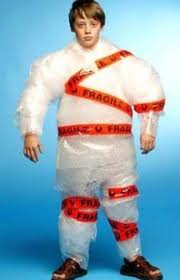
It is the responsibility of parents and teachers to protect children and educate them on the dangers that exist in the ‘real world’.  However, in attempting to prepare children for incidents and scenarios that are unlikely to happen we have seemingly created a fear and paranoia that has proven quite destructive to the same children we are trying to protect.

A surge in reports of men acting suspiciously near schoolchildren has triggered urgent talks between schools and police, who fear the ‘‘stranger danger’’ message has gone into overdrive.

Police say heightened fears of children being stalked on Gold Coast streets are unfounded, and the increase in reports is the result of people jumping at shadows after a rash of incorrect media stories.

Regional Crime Coordinator Dave Hutchinson says some incidents are made up, and others are cases of children taking fright for no good reason.

I am a bit concerened at how scared and anxious our children are becoming, and teachers are slightly to blame.  Besides stranger danger and other programes that inhabit fear in students, many teachers in Australia have been scaring children with doom and gloom predictions about global warming.  No matter what your position is on this issue, it is important that teachers instruct, educate and empower children, instead of frighten or demoralise them.

There is a huge difference between helping students become perceptive, instinctive and responsible and helping them to  become fearful and paranoid.

At the end of the day, the importance of the message is lost when it inspires an irrational and overpowering fear.

Sexual Harassment Rampant in Schools

November 7, 2011

Just when you thought that respect for girls and women was on the marked improve comes yet another reminder that things are not what they seem:

During the 2010-11 school year, 48 percent of students in grades 7-12 experienced some form of sexual harassment in person or electronically via texting, email and social media, according to a major national survey being released Monday by the American Association of University Women.

 The harassers often thought they were being funny, but the consequences for their targets can be wrenching, according to the survey. Nearly a third of the victims said the harassment made them feel sick to their stomach, affected their study habits or fueled reluctance to go to school at all.

The survey, conducted in May and June, asked 1,002 girls and 963 boys from public and private schools nationwide whether they had experienced any of various forms of sexual harassment. These included having someone make unwelcome sexual comments about them, being called gay or lesbian in a negative way, being touched in an unwelcome sexual way, being shown sexual pictures they didn’t want to see, and being the subject of unwelcome sexual rumors.

The survey quoted one ninth-grade girl as saying she was called a whore “because I have many friends that are boys.” A 12th-grade boy said schoolmates circulated an image showing his face attached to an animal having sex.

In all, 56 percent of the girls and 40 percent of the boys said they had experienced at least one incident of sexual harassment during the school year.

After being harassed, half of the targeted students did nothing about it. Of the rest, some talked to parents or friends, but only 9 percent reported the incident to a teacher, guidance counselor or other adult at school, according to the survey.

In my view there are two main reasons for this disturbing set of figures:

1.  Schools have become hamstrung when it comes to access to appropriate and effective consequences for infringements such as bullying and harassment.  Call the parents?  No big deal.  They gave up long ago.  Suspensions?  Nowadays you get a suspension for talking out of turn.  Suspensions have lost their impact because they are metered out out too readily.  In the end, no punishment given seems to come close to matching the crime.

2.  Schools have been notorious at turning a blind eye to incidents.  I am not talking about all schools, yet in truth, plenty goes under this category.  Teachers have been taught not to get emotionally involved with their students.  The result being, an emotional distance which inhibits the teachers capacity to pick up on these things,  Teachers must have enough of a connection with their students (within the obvious professional parameters of course), as to notice when things are not right with their them.  They are intrusted to look after their students and must do so by being proactive.  Kids are told from an early age not to dob on a classmate.  If teachers wait around for things to get reported to them, they will miss the opportunity to intervene and change a potentially abusive situation.

We must expect schools to be proactive with harassment.  They must be able to use tough and uncompromising punishments and show enough of an interest in students as to detect a problem before it gets completely out of hand.

Meet the Parents Who Named Their Kids “Adolph Hitler” and “Aryan Nation”

October 27, 2011

How sick and utterly selfish do you have to be to name your beautiful children “Adolph Hitler” and “Aryan Nation”?  What an absolute disgrace!  These parents can’t understand why their children were taken away from them.  It’s  a shame that they haven’t as yet worked out that by naming their children after despicable tyrants and murderous regimes they are in fact scarring their children for life.

Is this not a clear case of child abuse?

A COUPLE who named one of their children after Adolf Hitler should not regain custody of their three children, an appeals court has ruled.

Heath and Deborah Campbell’s three small children were removed from their home in Phillipsburg, New Jersey, by the state in January 2009, myFOXphilly.com reported.

The family drew world-wide attention after a store refused to decorate a birthday cake for their son, Adolf Hitler Campbell.

Adolf and siblings JoyceLynn Aryan Nation and Honszlynn Hinler Jeannie have been in foster care since then.

The appeals court ruled last week that sufficient evidence of abuse or neglect existed because of domestic violence in the home. The court sent the case back to family court for further reconsideration.

A gag order remains in place and the parties refused to discuss the decision.

In January 2009, the Campbells told myFOXphilly.com that Adolf Hitler Campbell was just like any other three-year-old boy.

“It’s not like he’s growing up to be a killer or nothing like that,” said mother Deborah Campbell.

How dare they do this to their beautiful children!  Sure, it is claimed that the children have been taken out of their parents’ custody because of domestic abuse and not because of their names, but what if there was no other reasons?  Should the names be enough to warrant a claim of child abuse.

If these people want to continue rearing their precious children they better smarten their act.  This includes thinking of more appropriate names for their kids … quick smart!

Protecting Kids From Living Freely

October 10, 2011

I am an over-protective father and proud of it.  I am hesitant when my daughter takes any risks and hate to see her in discomfort.  Yet, at the same time, I realise that cuts and grazes are part of life and growing up.  You can’t shadow your child in the playground to prevent them from tripping and you can’t ban them from low-risk activities on the off-chance that something might occur.

That is why I am so opposed to the persistent interference by Governments and local councils in banning everyday activities.  It is not their place to decide what toy my child should play with.  They may choose to advise me about the risks and encourage me to supervise my child with graet care, but the constant banning is taking things too far.

It is such a shame that we live in an age where children are being banned from blowing balloons and playing with whistles:

The EU toy safety directive, agreed and implemented by Government, states that balloons must not be blown up by unsupervised children under the age of eight, in case they accidentally swallow them and choke.

Despite having been popular favourites for generations of children, party games including whistles and magnetic fishing games are to be banned because their small parts or chemicals used in making them are decreed to be too risky.

Apparently harmless toys that children have enjoyed for decades are now regarded by EU regulators as posing an unacceptable safety risk.

Whistle blowers, that scroll out into a long coloured paper tongue when sounded – a party favourite at family Christmas meals – are now classed as unsafe for all children under 14.

As well as new rules for balloons and party whistles, the EU legislation will impose restrictions on how noisy toys, including rattles or musical instruments, are allowed to be.

All teddy bears meant for children under the age of three will now have to be fully washable because EU regulators are concerned that dirty cuddly toys could spread disease and infection.

The EU and other Government bodies will continue to come up with irrational and overbearing legislation, but no matter how hard they try they will never be my child’s parent.


Woman Tries to Sell Her Kids on eBay

July 17, 2011

Whether it was a legitimate attempt or just a joke, it is a very sad and sorry look at the inherent selfishness in some parts of our society.

A VICTORIAN woman is being investigated after offering her two young children for sale to the highest bidder on internet auction site eBay.

The woman, in her early 30s, lives near Geelong. She wrote a “lengthy sales pitch” that included photographs of her son and daughter, both aged under 10.

Several people placed bids on the sickening auction, which has alarmed authorities.

Detectives from the Sexual Offences and Child Abuse unit were alerted to the internet page by a horrified member of the public.

The page has been taken down and the woman’s children could be taken into permanent care.

Victoria Police has decided not to press charges against the mum, who claims the act was a joke.

However, police sources told the Sunday Herald Sun they were disturbed by the incident and in particular the genuine bidders who tried to obtain the children.

Officers continue to probe the people who bid on the children and the Department of Human Services is continuing its investigation into the family.


Injecting Botox into Children Should Be a Crminal Offence

May 15, 2011

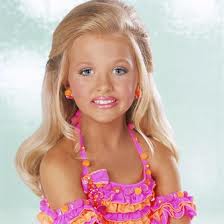
This is no joke.  This should not be treated like a one-off case by an unstable parent.  These awful child beauty pageants, which contribute not even an ounce of worth or purpose to this world, are responsible for the flagrant abuse of children.  They must be shut down!  They are horrendous excuses for entertainment and the practices they espouse from parents borders on the criminal.

Take the case of the mother that readily admits to injecting her poor child with  Botox to eliminate any possibility of a wrinkle:

How sick is that?  How do we allow these pageants to continue when they provide us with nothing and instead encourage parents to treat their kids like circus animals!  I totally agree with John Kass:

… when I think of little-girl beauty pageants — after the story last week about Kerry Campbell, the idiotic mom injecting Botox into the face of her 8-year-old daughter Britney — all I can think of are three little words:

Shut them down.

Shut all those kiddie pageants down.

It’s easy for us to slam one ignorant parent who lives vicariously through her daughter, or slam a few parents who treat their children as if they’re painted dolls. We pronounce such parents fools and think we’ve won a great victory.

But this really isn’t about isolated cases, or even the entire, weird little-girl pageant scene. The larger story is how we Americans feel about ourselves, how we define beauty in the age of facial injections and lip shots and tummy tucks and liposuction and breast implants and hair transplants.

And as millions endure all that poking and prodding and tying and cutting, can’t you hear America groaning, begging: Desire Me, Want Me, Please Want Me Forever.

We put all that pressure on women to be young and cute into their old age, until even an 8-year-old isn’t young enough or cute enough, if her name is Britney, getting Botoxed.

It all starts with those little girls painted with lipstick, sprayed with tanning powder, with big hair and heels. They strut down those runways with that JonBenet Ramsey pout, training to become princess victims.

And the parents cheer as their young are sexualized.

In today’s age. how do we let these blasted things continue?

Poor Children Coming to School Tired and Hungry

April 15, 2011

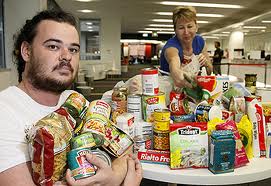
This is a universal problem that requires a lot more attention.  Teachers are not given enough credit for their role in supporting kids that come to school with inadequate food or no lunch at all.  It is not widely known that teachers often spend out of their own pocket to ensure that their poorer students have what to eat.  But the problem still exists, and it must be addressed.

A concerted campaign from schools by working with charity groups to ensure that meals are provided for students of poor families should ensure that heartbreaking articles like this one will be a thing of the past:

Teachers are reporting a rise in pupils entering the classroom feeling tired, hungry and dressed in worn-out clothes.

A study by the Association of Teachers and Lecturers found almost eight-in-10 staff had pupils living below the poverty line and a quarter believed numbers had increased since the start of the recession.

One teacher from Nottingham told of a sixth-former who had not eaten for three days as her “mother had no money at all until pay day”.

A teaching assistant from a West Midlands comprehensive told researchers that some pupils had “infected toes due to feet squashed into shoes way too small”, while another member from Halifax reported a boy who was ridiculed in the PE changing room because his family could not afford to buy him any underpants.

Some teachers told how pupils were consistently late for lessons as parents could not cover the bus fare to school. Other children from middle to lower income families have been forced to cut out school tips because money is so tight, it was claimed.

The disclosure follows the publication of figures showing a rise in the number of pupils eligible for free school meals as families struggle to stay above the breadline in the recession.

Almost 1.2 million five- to 16-year-olds claimed free lunches last year – a rise of more than 83,000 in just 12 months.

Mary Bousted, ATL general secretary, claimed that problems would escalate further because of Government funding cuts – putting the Coalition’s social mobility drive in jeopardy.

“It is appalling that in 2011 so many children in the UK are severely disadvantaged by their circumstances and fail to achieve their potential,” she said.

“What message does this government think it is sending young people when it is cutting funding for Sure Start centres, cutting the Education Maintenance Allowance, raising tuition fees and making it harder for local authorities to provide health and social services.

“The Government should forget empty rhetoric about social mobility and concentrate on tackling the causes of deprivation and barriers to attainment that lock so many young people into a cycle of poverty.”

It is time that we made the most crucial issues in education our first priority and main focus.  As important as debate over class size, ICT, male teacher numbers are for improved educational outcomes, such discussion often takes over.  We need to get back to basics.  The basic requirement for a school is to look after the welfare of its students.  That makes health and bullying among the most important priorities in my book.Here’s an opportunity for schools and charity groups to work together to tackle a problem that shouldn’t even exist in the forst place.