Posts Tagged ‘Books’

The Benefits of Reading to Your Kids

March 4, 2013

read

If you aren’t already reading to your kids, I highly recommend that you do:

MELBOURNE researchers have proven what parents have intuitively known all along – the more often you read to your children from an early age, the greater the positive effect on their reading and thinking skills.

The Melbourne Institute of Applied Economic and Social Research has not only proven a causal effect between the frequency of reading to a child and his or her development, but have also for the first time measured the benefits.

Children four to five years old who are read to three to five times a week have the same reading ability as children six months older (who are read to only twice or less a week).

Reading to children six to seven days a week puts them almost a year ahead of those who are not being read to. It was also found that reading to small children has a positive effect on the development of numeracy skills.

”It does appear to be the case that children who are read to more often keep doing better as they age than other children,” said Professor Guyonne Kalb, director of the institute’s Labour Economics and Social Policy Program, and co-author of the study.


Click on the link to read Why Spelling is Important at Starbucks

Click on the link to read The Ability to Spell is a Prerequisite for Getting a Tattoo (Photos)

Click on the link to read This is What Happens When You Rely on Spell Check

Click on the link to read Hilarious Menu Items Lost in Translation

Click on the link to read The 15 Most Commonly Misspelled Words in the English Language

Click on the link to read Who Said Grammar Isn’t Important?


Should a Children’s Book Celebrating Anti-Vaccination be Banned?

January 10, 2013

mel

I don’t believe in banning material just because I find it misleading or insulting. In a true democracy people should have the right to voice their opinion on a range of issues, whether they are right or wrong is immaterial:

A BOOK promoting the “marvellous” health benefits of potentially fatal measles should be taken off the shelves, doctors say.

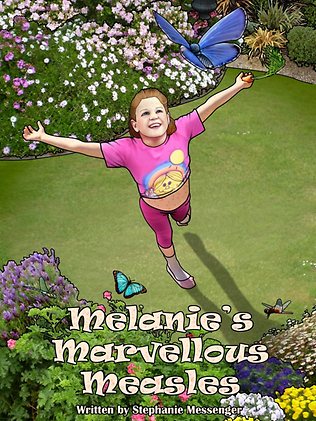
Melanie’s Marvelous Measles is an anti-vaccination book aimed at children. It claims – despite evidence that measles can kill and cause brain damage – that it’s a “good thing” to have.

The Australian Medical Association said the suggestion was wrong and misleading and that publishers “should be ashamed of themselves”.

On the cover of the book ‘Melanie’ is happily playing in the garden and showing off a rash on her belly. In the story, she is home with measles and her friend Tina is worried – but her mother reassures her.

“Firstly Tina, measles don’t run and catch you or hurt you… for most children it is a good thing to get measles,” she says.

“Many wise people believe measles make the body stronger and more mature for the future.”

Tina then asks if she can go and catch measles from Melanie. “That sounds like a great idea,” her mother responds, and suggests some carrot juice and melon might help Melanie recover.

AMA President Steve Hambleton said only the “crazies” thought that it would be better to get a disease than be vaccinated.

“They should be ashamed of themselves,” he said.

Click on the link to read This New Craze Proves that Adults are Just Bigger Versions of Children

Best Children’s Books of 2012

December 31, 2012

these hands


As nominated by the Association for Library Service to Children (ALSC):

All the Water in the World. By George Ella Lyon, Illus. by Katherine Tillotson, Atheneum Books for Young Readers.

From deserts to the kitchen sink, the water cycle is lyrically yet economically described in Lyon’s poem emphasizing the importance of water conservation. Katherine Tillotson’s digital paintings splash, surge and drip off the page.

A Ball for Daisy. By Chris Raschka, Illus. by the author, Schwartz & Wade Books,

A wordless tale of an irrepressible little dog whose most prized possession is accidently destroyed. A buoyant tale of loss, recovery, and friendship. (2012 Caldecott Medal Book)

Blackout. By John Rocco, Illus. by the author. Disney/Hyperion Books.

A summer power outage draws an urban family up to their building’s roof and then down to the street for an impromptu block party. (A 2012 Caldecott Honor Book)

Bring on the Birds. By Susan Stockdale, Illus. by the author. Peachtree.

Rhyming couplets and clear, identifiable illustrations remind readers that birds vary in many ways, but all have feathers and are hatched from eggs. Colorful acrylics help provide just the right of information for preschool ornithologists.

The Cazuela that the Farm Maiden Stirred. By Samantha R. Vamos, Illus. by Rafael López. Charlesbridge.

Nothing is better than a delicious bowl of arroz con leche unless, of course, a host of farm animals have a hand in the preparation! (A 2012 Belpré Illustrator Honor Book)

Chirchir Is Singing. By Kelly Cunnane, Illus. by Jude Daly. Schwartz & Wade Books.

In this cumulative story set in Kenya, Chirchir sings as she tries to help with family chores.  Acrylic folk art highlights the activities of daily life in this rural setting.

Do You Know Which Ones Will Grow?, By Susan A. Shea, Illus. by Tom Slaughter. Blue Apple Books.

This book playfully challenges children’s concepts of the growth capacity of living vs. non-living things in a fun and engaging way.

Dot. By Patricia Intriago, Illus. by the author. Farrar Straus Giroux.

To a child’s delight, bright dots and brief rhyming verses cleverly demonstrate antonyms and synonyms in this clever picture book.

Goodnight, Goodnight, Construction Site. By Sherri Duskey Rinker, Illus. by Tom Lichtenheld. Chronicle Books.

Truck-loving toddlers will be willingly tucked into bed along with the vehicles in this superbly constructed goodnight poem.

Grandpa Green. By Lane Smith, Illus. by the author. Roaring Brook Press.

Elaborate topiary sculptures give visual form to memories in a wildly fanciful garden tended by a child and his beloved great-grandfather. (A 2012 Caldecott Honor Book)

Harry and Hopper. By Margaret Wild, Illus. by Freya Blackwood. Feiwel & Friends.

A poignant depiction of grief and acceptance at the loss of a beloved pet is relayed in this quietly moving story whose illustrations add emotional depth.

I Broke My Trunk. By Mo Willems. Illus. by the author. Hyperion Books for Children.

Piggie is very concerned about his best friend, Gerald the Elephant, who has broken his trunk, and Gerald tells him a long, rambling story about how it happened. (A 2012 Geisel Honor Book)

I Want My Hat Back. By Jon Klassen, Illus. by the author. Candlewick Press.

After losing his hat, Bear politely and patiently questions his fellow forest dwellers as to the whereabouts of his “red pointy hat.” (A 2012 Geisel Honor Book)

King Jack and the Dragon. By Peter Bently, Illus. by Helen Oxenbury. Dial Books for Young Readers.

Enhanced by whimsical illustrations, this story of the wonders and terrors created by a child’s imagination, shows the power of playtime and the magic of make-believe.

Little Treasures: Endearments from Around the World. By Jacqueline K. Ogburn. Illus. by Chris Raschka. Houghton Mifflin.

Raschka’s pictures give distinct personalities to the subjects of these endearments and the book is a reminder of how much children are loved in every language and culture. Translations and pronunciation guides are included.

Little White Rabbit. By Kevin Henkes, Illus. by the author. Greenwillow Books.

Little white rabbit explores the springtime world wondering what it would be like to be different – green, tall, solid, or able to fly  – but when he comes home he knows who loves him.

Me…Jane. By Patrick McDonnell, Illus. by the author. Little, Brown.

Watching birds and squirrels in her yard, a young girl discovers the joy and wonder of nature. A glimpse of the childhood of renowned primatologist Jane Goodall. (A 2012 Caldecott Honor Book)

Mouse & Lion. By Rand Burkert, Illus. by Nancy Ekholm Burkert. di Capua/Scholastic.

Mouse is the center of this retelling of a familiar Aesop’s fable.  Elegant illustrations place the story solidly in the natural world of Africa.

Naamah and the Ark at Night. By Susan Campbell Bartoletti, Illus. by Holly Meade. Candlewick Press.

As the waters rage, this lullaby reveals Noah’s wife as a nurturer of diverse creatures aboard the ark. Watercolor and collage illustrations amplify the text, a form of lyrical Arabic poetry, called ghazal.

A New Year’s Reunion: A Chinese Story. By Yu Li-Qiong, Illus. by Zhu Cheng-Liang, Candlewick Press.

Vibrant illustrations highlight a young girl’s joy when her father makes his annual visit for Chinese New Year in this tender story.

Over and Under the Snow. By Kate Messner, Illus. by Christopher Silas Neal. Chronicle Books.

While skiing cross-country with her father, a girl envisions the “secret kingdom” under the snow, where small forest animals shelter in winter. Neal’s bright, snowy landscapes contrast with his depictions of shadowed, subterranean nests.

Prudence Wants a Pet. By Cathleen Daly, Illus. by Stephen Michael King. Roaring Brook Press.

In this quietly humorous picture book illustrated in soft colors, Prudence tries out a branch, a twig, a shoe, her little brother, a tire, and sea buddies until her parents finally give her a kitten as a pet.

See Me Run. By Paul Meisel, Illus. by the author. Holiday House.

Dogs and more dogs are everywhere: running, sliding, jumping, splashing, and having fun. (A 2012 Geisel Honor Book)

Should I Share My Ice Cream?  By Mo Willems, Illus. by the author. Hyperion Books for Children.

A common human problem is posed and solved with Willems’ minimal illustration and graceful humor.

Stars. By Mary Lyn Ray, Illus. by Marla Frazee. Beach Lane Books.

A duet of spare, poetic observations and ethereal illustrations explore the realities and possibilities of many kinds of stars, embracing the immediacy of a child’s experiences. A great read aloud.

Tales for Very Picky Eaters. By Josh Schneider, Illus. by the author, Clarion Books.

Five chapters recount James’ refusal to eat yet another disgusting, smelly, repulsive, lumpy, or slimy food. (2012 Geisel Medal Book)

Tell Me the Day Backwards. By Albert Lamb, Illus. by David McPhail, Candlewick Press.

Mama bear and child reflect on the day, recounting its events in reverse order.  Gentle and reassuring, this book wonderfully illustrates a sometimes difficult concept: the flow of time.

Ten Little Caterpillars. By Bill Martin, Jr., Illus. by Lois Ehlert. Beach Lane Books.

Ten different caterpillars inch their ways across vibrantly-illustrated environs in this newly-illustrated, rhyming story. Supplemental facts widen the book’s appeal and usefulness. Ehlert’s watercolor collages are remarkably entomologically accurate.

These Hands. By Margaret H. Mason, Illus. by Floyd Cooper. Houghton Mifflin Harcourt.

Both an affirmation of a nurturing relationship between grandfather and grandson and an explanation of one reason labor unions fought for workers’ rights, the brief text and warm illustrations tell an uplifting American story.

Tìa Isa Wants a Car. By Meg Medina, Illus. by Claudio Muñoz. Candlewick Press.

Using a cheerful positive tone, Medina depicts a warm relationship between Tia Isa and her niece and shows the strength of community as a life-long dream is realized.

Where’s Walrus?  By Stephen Savage, Illus. by the author. Scholastic.

Walrus escapes from the zoo and cleverly disguises himself around the city; the zoopkeeper and the children reading the book search for him on each bold, bright page of this wordless book.

Who Has What?: All About Girls’ Bodies and Boys’ Bodies. By Robie H. Harris, Illus. by Nadine Bernard Westcott. Candlewick Press.

In a cheerful, easy tone, Harris explains who’s got what body parts, their similarities of differences. Girls,  boys and adults of many ethnicities – even animals – are included in the loose-lined illustrations depicting the “bare” facts.
 

Click on the link to read Illustrator Quentin Blake Turns 80 and is Given a Knighthood

Click on the link to read Hilarious Menu Items Lost in Translation

Click on the link to read The 15 Most Commonly Misspelled Words in the English Language

Click on the link to read Who Said Grammar Isn’t Important?

Click on the link to read Why Spelling is Important

Illustrator Quentin Blake Turns 80 and is Given a Knighthood

December 29, 2012

blake2

Recently I taught a unit on Charlie and the Chocolate Factory. I formed my wonderful Grade 3’s in a circle and we each took turns reading from this masterpiece. Using the novel as inspiration, we completed the following activities:

  1. I got the students to write and design their own Golden Tickets.
  2. I gave out a piece of bubble gum to each student and got them to blow bubbles. Then, in conjunction with our writing genre focus, procedural writing, the students wrote a procedure as to how to blow bubbles in step by step form.
  3. We watched both films and analysed the faithfulness of each adaptation.
  4. Again, in keeping with our procedural writing genre focus I got the students to look up a simple chocolate recipes. They wrote the recipe down using a procedural proforma and then cooked/baked their recipe for an end of year chocolate party. The recipes would then be collated as a cook book for the students to take home.

blake 3

Whilst Roald Dahl is to be acknowledged for providing joy to my students and many others worldwide, so too must his incredibly talented and distinctive illustrator, Quentin Blake who turns 80 years old.

Thank you on behalf of my class and all those who have had the good fortune to enjoy your fine illustrations. Happy Birthday Sir Quentin!

Click on the link to read Hilarious Menu Items Lost in Translation

Click on the link to read This is What Happens When You Rely on Spell Check

Click on the link to read The 15 Most Commonly Misspelled Words in the English Language

Click on the link to read Who Said Grammar Isn’t Important?

Click on the link to read Why Spelling is Important

Instead of Teaching a Baby to Read, Teach it to Smile

December 13, 2012

read

What is the rush? So your child reads when he/she is developmentally ready instead of when they’re a baby? So what?

Reading is not the greatest gift you can give a young baby. Love, optimism, hope and friendship are much more important to a baby’s development that the ability to read:

John Wilkey was just four days old when his mother Dana set about teaching him how to read. The fact that newborns can’t focus on anything more than a few inches away — let alone understand words in any form — did not deter her.

Dana, 39, an events organiser who lives in Chelsea, West London, is so passionate in her view that it’s never too early to make your child brilliant, she used to run through a set of ten flashcards with her son twice a day. ‘I would show John words like “milk”, give him my breast, and then show him the baby sign language for milk,’ she says. ‘I did it morning and evening.’

Baby sign language, for those not familiar with modern  parenting, is something ‘Tiger parents’ like Dana are well versed in. It works on the theory that children want to communicate long before they develop speech and can be taught little hand signals to communicate their needs and thoughts.

When he was nine months, Dana says John — her only child — was pointing and using basic baby sign language to show he could recognise up to 20 words and phrases, including ‘I love you’, ‘nose’, ‘ear’ and ‘arms-up’.

From there, Dana says his vocabulary grew at break-neck speed. A video of John at 20 months shows him sitting in his high-chair using a chubby finger to trace underneath the words ‘eyes’, ‘clap’ and ‘book’ from left to right.

Dana, who lived in the U.S. with John’s father before they separated, now lives with her fiance, Philip, in an £3.5 million London townhouse, once owned by a well-known footballer.

She is now one of a growing number of mothers convinced that getting children reading before they are potty-trained will help them get ahead in later life.

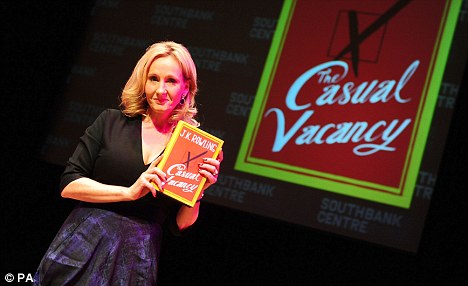
JK. Rowling in Body Image Controversy

October 2, 2012


JK Rowling deserves a bit of slack for this latest controversy. Whilst the reference to a ‘mustachioed’ girl is regrettable, Rowling has done amazing things for children with glasses and scars and has inspired orphans to rise above their situation:

Now it appears the book, called The Casual Vacancy, has also angered religious leaders in India because of its portrayal of a Sikh girl  as ‘mustachioed, yet large-mammaried.’

The book, about social tensions in a small village in South West England, features a Sikh family, including female student Sukhvinder.

One of the characters, Fats, describes Sukhvinder, his classmate, as ‘mustachioed, yet large-mammaried’, adding that ‘scientists remain baffled by the contradictions of the hairy man-woman’.

Sikh believers are forbidden from shaving or trimming their hair, and the passage was condemned by India’s Shiromani Gurdwara Parbandhak Committee (SGPC), which manages places of worship in India.

Sikh leaders are now closely scrutinising the novel with a view to having the offending passages removed from Indian editions.

SGPC chief Avtar Singh Makkar described Miss Rowling’s choice of words as ‘a slur on the Sikh community’, adding: ‘Even if the author had chosen to describe the female Sikh character’s physical traits, there was no need for her to use provocative language, questioning her gender. This is condemnable.’

He added: ‘If anything is written against the Sikh maryada (dignity), we will write to [India’s] prime minister Manmohan Singh and urge him to take up the matter with the government in the United Kingdom for action against Rowling.

Click on the link to read Charity Pays for Teen’s Plastic Surgery to Help Stop Bullying

Click on the link to read From 0 to 100 in 150 Seconds

Click on the link to read It’s Time to Get New Role Models

Four-in-10 Children Have Trouble Reading Basic Words

September 27, 2012

This is what happens when you overcrowd the curriculum, stop teaching phonics and word attack strategies and administer mindlessly boring drivel dressed as literature:

Figures published for the first time show that 42 per cent of pupils – almost 250,000 – fail to achieve the expected standard in reading after a year of school.

Data from the Department for Education – based on a new-style test sat this summer – revealed that boys are already slipping far behind girls in terms of their ability to accurately decode a list of 40 words.

White British boys from the poorest backgrounds officially performed worse than any group, other than those from gypsy and traveller families. Just 37 per cent of these children reached the standard expected of their age group.

The disclosure will raise concerns that some groups of children – particularly boys – are being failed in the early years.

It comes just a week after Sats results showed that more than 20,000 boys finished primary school this summer with the reading age of a seven-year-old or worse.

To win this battle we need to promote reading, not just teach it. This can only be done by replacing ‘take-home leveled readers’ with rich, engaging texts. It is essential that our students see the benefits of reading, grow an appreciation for words and word sounds and most of all, come to the conclusion that their teacher is passionate about reading too.


Click on the link to read Who Corrects Our Spelling Mistakes?

Click on the link to read This is What Happens When You Rely on Spell Check

Click on the link to read The 15 Most Commonly Misspelled Words in the English Language

Click on the link to read Who Said Grammar Isn’t Important?

Click on the link to read Why Spelling is Important

Different Professions, Same Experiences

September 5, 2012


It’s interesting how teachers often complain as if their problems and challenges are completely unique.

Some point out that they take their work home unlike many other professions.

Others talk about the low wages and hostile work environment.

Many talk about the troubles they have from bullying parents.

In truth, there are a myriad of different professions that struggle with similar problems to that of a teacher. They may not be similar occupations on the surface, but they can have almost identical constraints.

I recently had the pleasure of reading Vadim Chelom’s brilliant new book, Vet Bites Dog. Vadim is a veterinarian and fellow blogger who has a keen interest in educational affairs. He used his expertise to design a program for teachers to help instruct children about dog safety practices. In Vet Bites Dog, a book about his experiences working at a not-for-profit animal clinic, Chelom writes the following:

I take another deep breath. 8PM is just around the corner. People often say that being a veterinarian must be hard because our patients can’t talk to us. The truth is, it’s not our patients which make our work a challenge. More often than not it’s the animal on the other end of the lead. Learning to treat pets is easy. Learning to ‘treat’ their owners is what takes years of practice, boundless patience and expert negotiation skills.

Sounds familiar to the plight of a teacher?

I think it’s important to realise that teaching has it’s unique issues and challenges, but essentially all job with deadlines, paperwork, bosses, expectations and key performance indicators are distinctly similar in many ways.

I urge you to grab a copy of Dr. Chelom’s book. It’s hilarious, revealing and brilliantly written. You may, like me, realise you have much more in common with a vet than had previously thought.

Click on the link to read If Teachers Were Paid More I Wouldn’t Have Become One

Why are Teachers so Threatened by Phonics?

September 4, 2012

I am on record as saying that I find teaching phonics to be a challenge because it can be so dry and tedious to students. However, I can clearly see the benefits of the method.

There is a clear campaign from teacher’s unions and academics against phonics. This campaign is heated and vitriolic and makes absolutely no sense to me. Why would an organisation which is entrusted to help children to read, write and spell condemn a method which has a favourable track record? Even if you believed in other approaches (I like to incorporate other approaches too), it makes no logical sense to rant and rave about strategies that others support such as phonics.

Surely, as our students learn in different ways, it is incumbent on us as teachers to teach skills using a variety of different methods:

Nearly nine out of 10 teachers said they practised nonsense words in the run up to the test.

Words like spron, fape and thazz were included in the test designed to check pupils’ abilities to decode using phonics.

And four out of 10 admitted drilling phonics in the week prior to the test.

One Year one teacher said: “Some able readers failed and some non-fluent, less-able readers passed! What does that prove?

“It proves synthetic phonics is only part of a variety of strategies used in learning to read.”

Another teacher said: “I was willing to try it to see if it helped the children and if it helped inform my planning and assessment.

“It was a waste of time and money – (I had to have) a supply teacher to cover me – and had a negative effect on several of the children in my class.”

A Year One teacher said: “Many children made mistakes trying to turn the pseudo words into real words – ‘strom’ became ‘storm’.”

Some 86% of those polled believed the screening check should not be continued.

Perhaps the test needs some improving, but educators can’t be too tough on phonics as a method. After all, many of us can attribute being able to read by phonics.

Click on the link to read Who Said Grammar Isn’t Important?

Click on the link to read The Resistance Against Teaching Grammar

Click on the link to read Captain Phonics to the Rescue!

Click on the link to read the Phonics debate.

The Most Unlikely Children’s Author Yet

August 1, 2012

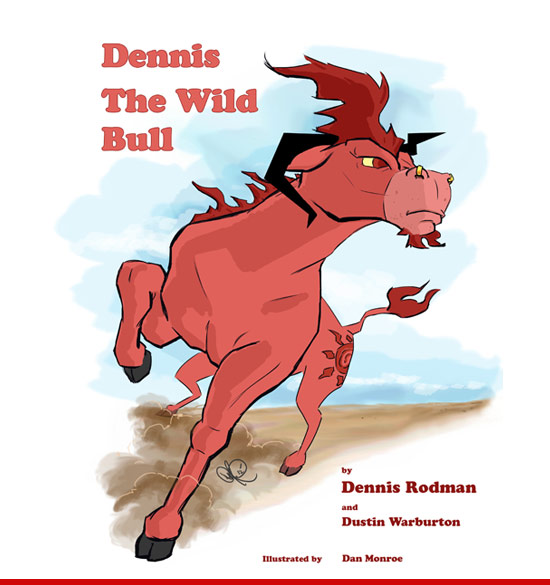
I would never have predicted that former basketballer Dennis Rodman would even contemplate becoming a writer of children’s books:

What do Katie Couric, Gloria Estefan, Jamie Lee Curits and Dennis Rodman all have in common? If you said “They’ve all been photographed in a wedding dress!” … you’re correct. But we also would have accepted … they have all written children’s books.

That’s right … the NBA Hall of Famer and occasional crossdresser is releasing his own book for kids called “Dennis The Wild Bull” … set to be released sometime later this year.

Dennis and his people are tight-lipped about the premise, but the book’s website says it will “convey good lessons to children based on Dennis’ own experiences as a world class athlete while overcoming obstacles as a child.”

Dennis recently reconnected with his father … and we’re told he’s been re-motivated to strengthen his relationship with his own children … and believes this book will help the process.

Click on the link to read Who Said Grammar Isn’t Important?

Click on the link to read Using Spam Emails in Your Literacy Lessons

Click on the link to read It’s Not the Right Time to Put Age Classifications on Kids Books