Congratulations to Facebook for actively banning kids who are lying about their age. Age requirements are important, because young students are often prone to making bad choices with social media and fail to use the recommended privacy settings:
Social networking giant Facebook is banning 20,000 children every day because they have lied about their age to join the site.
The company admitted it had to do more to stop young people using Facebook, as it revealed about a third of Australia’s population uses the site every day, the Herald Sun reported.
At a parliamentary inquiry into cyber-bullying, other social networking and online companies called for campaigns to highlight the dangers of the internet.
And there have been calls for an overhaul of the Australian school curriculum to include more effective cyber-danger classes.
The chief privacy adviser of Facebook, Mozelle Thompson, said many Australian children under the age of 13 were trying to access the site by lying about their age.
“It’s something that happens on a regular basis,” Mr Thompson said.
Globally, about seven million children who lie about their age are blocked from the site each year.
For those parents/teachers unaware of the problem of cyber-saftey or if you have children or students that don’t use the privacy settings option, I urge you to watch this clip with them.
How sad this story is. The only good thing to come out of this story, is that it sends a clear message to schools that they need to be more proactive in stamping out bullying of all kinds. Below is Casey’s A Current Affair interview and Ritchard Gale’s unfortunate lack of remorse in his Channel 7 interview.
I was hoping the backlash would have taught Ritchard a lesson. I hoped it would make him reflect on his past actions and help to bring changes to his approach and attitude. It is very disappointing to see that he remain unrepentant for his part in this incident.
I have no doubt that Gale has had it tough. But he could have come out of this a champion of reform. It would have been so powerful to hear him admit wrongdoing instead of painting himself as a victim.
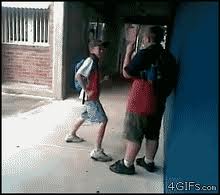
Last week I wrote a post about Casey Heynes, the Australian boy who was caught on tape defending himself against a bully. In a graphic show of what seems to be a completely unprovoked attack, the bully is seen striking Casey with a fist to the jaw. Casey then responds with the now infamous body slam. I devoted the post to criticising the school’s response to the incident (It turns out that the child that filmed the video did in fact get suspended too).
So big was the news, and so divided was people’s reaction to Casey’s show of self-defense, that A Current Affair got a 1-on-1 interview with Casey:
The schoolboy who’s become an internet sensation after turning the tables on a bully has told how he snapped after years of cruel taunts about his weight.
Casey Heynes, 16, says he has been bullied nearly every day at his school, Chifley College, at St Marys, but could take no more when Year 7 student Ritchard Gale tormented and attacked him last Monday.
“All I was doing was defending myself. I’ve never had so much support,” he said during an interview with A Current Affair.
Casey reveals he’d been targeted by a new group of Year 7 boys who had started picking on him and teasing him about two weeks prior to the fight.
The Year 10 student said he was surrounded by the students when he went to get a school timetable before class.
As Ritchard backed him against the wall and started throwing punches, Casey said he felt scared and worried that others in the group would also start hitting him.
Eventually, he snapped, picking Ritchard up over his shoulder and throwing him to the ground.
The brawl was recorded on the mobile phone of another student who later posted the video online where he has earned “hero” status.
Asked if he was a superhero, he laughed and said: “No I wish I was.”
The video, which was taken off YouTube on Tuesday, has gone viral worldwide spawning dozens of websites and facebook pages congratulating Casey for fighting back.
It also sparked a media storm with St Marys residents claiming television stations were offering up to $1000 for information about the fight.
Yesterday, Ritchard was unrepentant. Asked whether he was sorry for attacking Casey, he bluntly replied: “No.”
The issue has divided the western Sydney community.
“Good on him. I was so happy to see a bully finally getting what he deserved,” one St Marys resident said.
“I don’t condone violence but when kids stage an attack like that and record it to humiliate the victim it’s wrong.”
But another resident Jayne Saunders said: “He could have broken that little kid’s neck.”
Casey said his outburst was a “build-up” of more than three years of being attacked verbally and physically by other students.
“They used to slap me on the back of the head and said I was a fatty and to lose some weight.
“I’ve been duct taped to a pole before as well. They target me because I don’t retaliate.
“I’ve never reacted that way before but everything built up inside me for three years…I just had enough. All I wanted is for it to stop.”
I am very disappointed that the bully is unrepentant. I would have thought that this saga would have taught him the lesson he needed to learn. Whilst I in no way condone violence of any kind, what rational human person can blame Casey for snapping? Yes Ritchard’s injury could have been a lot worse, and there is a concern that there will be copycat incidents because of the hype around this case. But I can’t help but go back to my original argument.
What is a child supposed to do when they are being taped to polls and there doesn’t seem to be anything done to protect them? I am glad that Casey feels more confident as a result of his new-found fame. But perhaps, the real story is not about Casey. Perhaps the real story is about all those kids who continue to be bullied without adequate intervention by their schools.
It’s time to correct the mistakes of my generation by ensuring that our children aren’t given the same misleading message. For too long society has fed our young a big, destructive lie. For too long that lie has been allowed to take over our lives, muddy our relationships and bring out the worst in people.
It’s time to revisit the following question and change the answer:
What is success?
Success in Not Dependant on Money – For too long we have been programmed to look at wealthy people as successful. This is simply unfair. No matter how you structure a democratic society, there will always be a very small percentage of wealthy people. Are we saying that only 5% of our population are going to be successful? Surely success is something obtainable to a broader group of people? We have seen how easily wealthy people lose their wealth. We have also seen how dishonestly some wealthy people obtain their wealth. Is this the trademark of success? Surely not. We must tell our young that a wealthy person is someone who can feed and clothe their family. Not someone with cars they don’t drive and a holiday home only lived in for a few weeks during the summer.
Success is Not Dependant on Appearance – This one really upsets me. It is a sentiment which allows the advertising agency to take control of our self-esteem, flog us products that don’t work and make perfectly “normal” and healthy people feel ugly. By setting up a model of beauty that is impossible for 95% of society to ever achieve is tragic! The current model of how we should look goes against the natural aging and metabolic process of the body. It says that if you have wrinkles, freckles, dimples, big ears, a bent nose, cellulite, small breast or a certain complexion you are not beautiful. Gone are the days where we can even say “Beauty is in the Eyes of the Beholder”, because this model of beauty has infiltrated and brainwashed the beholder. Is it alright to look your best? Sure. Is it beneficial to look after yourself? Absolutely! But an obsession with looks, like every other obsession is destructive. Even those that are blessed with such looks soon find out that it doesn’t last forever, and when it goes, they often haven’t developed other parts to their character to fall back on. I personally, don’t believe in forcing the media and advertisers to change their policy. I believe in advocating a change of perspective starting from parents and supported by teachers. We must redefine beauty and then show our children that our appearance has nothing at all to do with success.
Success is Not Dependant on a Title – Not everyone can win an Oscar or become a President, and nor should they to feel successful. For too long society has peddled the belief that doctors and lawyers are successful while taxi drivers and house painters are not. A taxi cab driver might not sound like a successful profession on face value. But that same taxi driver has a crucial role to play. They help the disabled and the aged, are crucial in keeping intoxicated people off the roads and protect vulnerable people from walking the streets and taking the trains late at night. A house painter may seem like an ordinary profession, but have you ever looked at the difference a bright, well-painted room makes to a persons mood and outlook? All jobs have a critical role to play in making life more enjoyable regardless of the pay involved. We must tell our children and students that it’s not what you do that determines your success it’s how you do it.
So what is the measure of success? If it has nothing to do with a person’s level of wealth, appearance or job description, what does success look like? I prescribe to the following checklist:
Are you a good person? Do you treat others with respect and show empathy and concern? Do you avoid speaking disparagingly about others (particularly behind people s backs)? Do you refrain from spreading rumours about others?
Are you patient? Do you allow others to have different views and opinions?
Do you follow the law? Are you truthful? Are you fair in business?
Are you a good parent? Do you put your children first? Do you spend enough time with them and take an interest in their passions?
Are you a good husband/wife/partner? Do you accept your spouse for who they are? Do you avoid putting down or heaping guilty on your partner?
My checklist isn’t dependant on characteristics that are only obtainable by a miniscule proportion of society. Instead it reinforces my belief that all of society can be successful regardless of background or job description. That’s why I think that an educator has an even more important job than simply covering the curriculum. We get the chance to instill in our students a sense of self, what they can achieve, and how they can use their unique qualities and skills to positively affect the world.
I usually don’t impart my personal beliefs on my students. I believe that teachers should allow their students the opportunity to form their own beliefs. But on this subject, I gladly make an exception.
I will not hear it that only some of my students can achieve success. While I have them, I will continue to fight for their right to a self-esteem, an opportunity to claim “real success” and a an awareness of society’s lie about what success is.
Whilst anti-bullying programs and policies have their place, the epidemic known as schoolyard bullying is on the rise, and the measures for counteracting it is pathetic at best. Schools must take responsibility for their culture and must ensure that the safety of their students is paramount. I can’t believe that incidents like the infamous NSW “body slam” incident, which has now become an internet sensation is allowed to take place at our schools.
THERE are only so many times you can try to turn the other cheek.
A Sydney schoolboy has become an internet sensation after video emerged of him body-slamming another student during a verbal and physical attack.
The year 10 boy – who pleaded with his tormenter to leave him alone – picked up his attacker and slammed him to the ground.
The teenager, said to have been bullied all his school life, was taunted and punched by a younger, smaller boy.
The victim took a hit to the face and then more blows as the year 7 boy goaded him to fight.
Suddenly the boy had had enough. He launched himself at his attacker, picked him up and threw him to the ground.
The younger boy staggered away, stunned and hurt.
Both students were suspended for four days after the incident which took place on Monday.
How can you justify punishing the victim with the very same punishment as the bully?
How can you let the kids filming and commentating from the sidelines go unpunished? Talk about enablers!
How can the school not accept some of the blame for the lack of adequate supervision and providing an environment where such bullying exists. If the film hadn’t been shot, there probably wouldn’t have been any punishments. How can this happen in an age where there is a higher level of bullying awareness?
Below is the link to the video. I must warn you it is not for the squeamish.
Below is an article from Michael Grose’s Insight on how we can help our children cope with Natural disasters. After last week’s catastrophe in Japan, the earthquake in Christchurch and the floods in Australia, I thought it was timely to make educators aware of it.
Help your children make sense of natural disasters
By Michael Grose
The Queensland floods and the Victorian bushfires continue to wreak incredible havoc on so many people’s lives and will no doubt leave an indelible imprint on our collective psyches. These two natural disasters will be brought into our living rooms via the media over the coming days and weeks.
As adults we all want our children to live carefree lives and keep them from the pain and even horror of tragedies such as natural disasters. In reality we can’t do this.
So what is a parent, teacher, or other caring adult to do when the natural disasters fills the airwaves and the consciousness of society? Here are some ideas:
Reassure children that they are safe. The consistency of the images can be frightening for young children who don’t understand the notion of distance and have difficulty distinguishing between reality and fiction. Let them know that while this event is indeed happening it will not affect them directly.
Be available and ‘askable’. Let kids know that it is okay to talk about the unpleasant events. Listen to what they think and feel. By listening, you can find out if they have misunderstandings, and you can learn more about the support that they need. You do not need to explain more than they are ready to hear, but be willing to answer their questions.
Help children process what they see and hear, particularly through television. Children are good observers but can be poor interpreters of events that are out of their level of understanding. Sit with them. Ask them questions to ascertain their understanding.
Support children’s concerns for others. They may have genuine concerns for the suffering that will occur and they may need an outlet for those concerns. It is heart-warming to see this empathy in children for the concerns of others.
Let them explore feelings beyond fear. Many children may feel sad or even angry with these events so let them express the full range of emotions. They may feel sadder for the loss of wildlife, than for loss of human life, which is impersonal for them.
Help children and young people find a legitimate course of action if they wish. Action is a great antidote to stress and anxiety so finding simple ways to help, including donating some pocket money can assist kids to cope and teaches them to contribute.
Avoid keeping the television on all the time. The visual nature of the media means that images are repeated over and over, which can be both distressing to some and desensitizing to others.
Be aware of your own actions. Children will take their cues from you and if they see you focusing on it in an unhealthy way then they will focus on it too. Let them know that it is happening but it should not dominate their lives.
Take action yourself. Children who know their parents, teachers, or other significant caregivers are working to make a difference feel hope. They feel safer and more positive about the future. So do something. It will make you feel more hopeful, too. And hope is one of the most valuable gifts we can give children and ourselves.
Children’s worlds can be affected in ways that we can’t even conceive of so adults need to be both sensitive to children’s needs and mindful of what they say and how they act in front of children.
In difficult times, it is worth remembering what adults and children need most are each other.
There’s only one thing worse than leaving your kids, and that’ s writing a book that encourages others to do the same. Rahna Reiko Rizzuto may be a good writer, but her words, as eloquent as they may be, are bound to do far more harm than good.
Rahna Reiko Rizzuto left her home in New York and traveled to Hiroshima, Japan, in search of her war-torn heritage in June 2001. Rizzuto had received a fellowship to spend six months interviewing the few survivors of the atomic bomb.
Four months into her fellowship, Rizzuto received a visit from her husband and children, and she had a revelation: She didn’t want to be a mother.
Without a strong marriage to support me, after four months alone and in a new country I had grown to love but was only just beginning to understand how to navigate, I had no idea what to do with these bouncing balls of energy. Even feeding them, finding them a bathroom, was a challenge.
Rizzuto realized that motherhood was an all-encompassing responsibility and she didn’t want to be swallowed up by it.
When Rizzuto returned to New York, she ended her marriage with her high school sweetheart and handed him the reins to the children. She gave him primary custody.
Her choice is out-of-the-ordinary; less than 4 percent of children live with their father only and in most cases its because a mother has passed away.
Rizzuto lost many friends who viewed her decision as selfish.
Her children were 3 and 5 years-old at the time. Of course she was selfish! But that isn’t what makes me so upset. It’s the fact she feels this decision is so positive, that she wants to reach out to other mothers who are struggling with the same feeling of entrapment.
People are entitled to make bad decisions, and in my opinion Rizzuto has made a shocking decision. But what disturbs me more is that she wants to encourage others to do the same. When a man or woman decides to make a family they must choose to make their family their number one priority. Is it selfish to leave your kids for no other reason than you are not enjoying the role of parent.
I heard her interviewed on The View this afternoon. One of the panelists made the point that if Rizzuto was a man, this story wouldn’t have received so much publicity. To that assertion I make the following points:
Does that make it right. No father should ever put the children they helped bring into this world second. No father should ever tell their kids they don’t love being a father so they’ve decided to live down the street. That is unacceptable and downright selfish!
Rizzuto wants publicity. She seems to be having the time of her life appearing on all kids of media and flogging her book.
What if a man wrote a book encouraging other men to leave their children in favour of a more free lifestyle? How do you think that will go down?
Today, Rizzuto is an author and faculty member at Goddard College in Vermont, and she’s creating her own sort of motherhood that challenges our culture’s definition of what a mother should be. She lives down the street from her ex-husband and her children. The boys are teenagers and come to her house for dinner but they always return to Dad’s house to sleep.
I don’t think it is “motherhood” she is creating. Let’s not let a selfish decision gets confused with a new style of parenting. And why can’t she have them over for the night? Is it going to remind her for a fleeting moment that she is their mother?
She says that leaving her children improved rather than hurt her relationship with them. “I had to leave my children to find them,” she writes on Salon.
How can she assess that? They were 5 and 3 when she left them! Surely they were too young for a before and after comparison! And this isn’t about how good her relationship is with them, it’s about the quality of care they get from their mother. The fact that her kids have a good relationship is more of an indication of her children’s strength of character than it is a validation of her decision to leave them.
And that line, “I had to leave my children to find them”, is just appalling. This isn’t about you. This is about your two kids under five that didn’t ask to be born and then left with their father because their mother didn’t want to look after them.
People make decisions. Some of them are right and some wrong. What I don’t approve of is turning a decision which affects children in a negative manner into a new movement claiming to be about choice and freedom.
I’d love to read her kids’ book one day. Perhaps they wouldn’t endorse the “new style of parenting” as much as their mother does.
Please join me on my mission to eradicate legalised corporal punishment from our classrooms. In Australia a teacher is not allowed to hit, beat or physically handle a student. It is against the law, and so it should be. The fact that some other countries don’t practice the same policy mistifies me. A teacher should never be given the permission to physically discipline their students. Such an allowance gives bad teachers the right to lash out at any student that gives them a hard time. That is hardly what you would call “quality education.”
Picture this. It’s 10am in a classroom at a primary school and a teacher is handing out science test marks to the pupils. Among the children sits a 13-year-old boy who is an excellent student and an athlete, generally a boy who could be classified “a good child”.
But he has failed this particular test. The teacher tells him to stay behind after class.
His heart lurches and he gets a knot in his stomach because he knows what that means. He’s going to get a beating. Before spanking him, the teacher tells the pupil, “My daddy beat me and I beat my children, so I’m going to beat you.”
The boy walks away with not only a bruised bottom, but a bruised ego and tears in his eyes.
This scene is not from a school in some small village in “backward Africa”. Nope, this happened in a school in Alabama.
According to the US Department of Education, more than 200,000 school kids encounter corporal punishment every year across the US. And those are just the ones the department knows about. Some cases go unreported. Testimony at congressional hearings has revealed that up to 20,000 kids a year request medical treatment, mostly for bruising and broken blood vessels after being physically punished in school.
That is an awful statistic. How can this be allowed anywhere, let alone in the United States? How can teacher’s get away with bruising their students? For every medical practitioner that is called on to treat a victim of corporal punishment, a policeman should be called on to put the offending teacher away!
But based on the current state of play, that scenario is a long way off for some states:
Corporal punishment in schools by teachers with a paddle (a wooden board), belt or strap is legal in 20 states. While 28 states have outlawed it outright, the US Supreme Court has ruled it legal.
The majority of the states that still allow teachers to spank kids are in the mid-west and in the south of the country. States such as Missouri, Kentucky, Texas, Oklahoma, Arkansas, Louisiana, Mississippi, Alabama, Georgia, South Carolina, North Carolina, Tennessee and, to my surprise, Florida, are said to use corporal punishment more frequently than others.
The mother of the Alabama boy is suing the superintendent of schools and the teacher for her son’s spanking. She’s angry because, by law, you can’t hit a dog and you can’t hit a prisoner, but you are allowed to spank children.
There are guidelines for how teachers can spank kids, which is more than I can say for when I started school in the ’80s, but there are bound to be some teachers who will do whatever they like.
Of course there are teachers that exploit this situation. Whilst I would like to believe that all teachers care about their students there are enough out there that grow resentful and irrational over the years. These teachers can not be trusted to make decisions in the best interests of their students.
And to those that think that fear of such a punishment brings out the best in students, I say this. Fear doesn’t bring out the best in anyone! If a teacher can’t control their class, they can approach an expert for advice or quit. If they feel they have to burst their students’ blood vessels to gain law and order, they ought to feel completely and utterly ashamed of themselves.
It’s 2011! Time to wear our belts, consign paddles to PE lessons and throw away the straps in the bin!
I think that schools should implement suicide prevention programs and should certainly train teachers in how to deal with students at risk of self harm and suicide. However, often these programs are nothing more than scapegoats for schools with poor cultures to pretend they are dealing with the problem responsibly when they aren’t.
Dr Martin Harris, who is on the board of Suicide Prevention Australia, says a suicide prevention program should be considered as part of the new national curriculum.
“I think it ought not to be the prevail of a particular teacher, but it ought to be a program which is embraced in a robust way by a school when they think they’re ready to do it,” he said.
Mr Harris says mental health experts could prepare teachers on how to broach the subject in schools.
“I think for us to be saying, ‘well, it’s not my problem’, increases the risk of it being isolated and for it to be stigmatised,” he said.
“I think it’s high time the community took off the blinkers and looked more carefully about what they can and can’t do.”
But Dr Michael Carr-Gregg, a child and adolescent psychologist, has dismissed calls for a suicide prevention program in schools.
“We’ve adopted a policy for as long as I can remember, that basically says let’s talk about suicide in terms of what leads up to it, which of course is by and large mental health problems; so suicide is the outcome of what happens when you don’t treat it,” he said.
“My view has been that we’ve been doing that very successfully for the last 15 years or so – the suicide rate’s come down. I see no reason at all why we should change our policy and I would urge schools to stick to their original idea and ignore the advice from Suicide Prevention Australia.”
My worry is that every time there is a glaring problem facing school aged children, somebody develops a school program to counteract it. The advantage of a problem is that it creates awareness in students and encourages students to talk candidly and openly about important topics. The disadvantage is that often all it ever amounts to is a lot of talk and very little real substance.
Suicide is indeed an issue facing our students. Many of the reasons for suicide and suicide attempts relate to problems faced at school such as social pressures, bullying and academic pressures. Schools claim to be safe, caring environments, but we know that many aren’t. It can be argued that many schools come across cold, distant and out of touch with the issues facing their students. Such schools should not be allowed to hide behind programs. They should be pressured into changing their culture by spending as much time investing in connecting with their students as they do covering themselves legally.
In my view school’s must do a lot more than take on programs. They must do everything in their powers to support and nurture their students. They must fight for their students’ self esteem, help them find a sense of self and give them every chance to leave school with a positive attitude and real purpose.
If you think what I’m saying is just “airy fairy”, then you’d probably be in the majority. Meanwhile programs come and go and problems still remain.
Pupils in an overcrowded classroom at Quarry Heights primary school interact with their teacher.
This story may well stop me from complaining ever again about class size. I have always been of the opinion that the optimal class size is somewhere between 15 and 25. Anything less than 15 provides the students with a lack of social opportunities, whilst anything more than 25 prevents the teacher from having sufficient 1-on-1 time with struggling and advanced students.
To think that classrooms exist with up to 150 students is just staggering!
One hundred and fifty Grade 1 pupils crammed into one classroom is the reality of Quarry Heights Primary School near Newlands East in Durban.
The 14 staff members battle to teach the pupils, virtually packed on top of each other, some of whom pass out because of heat exhaustion.
The school – which is made up of seven prefabricated buildings – caters for children mostly from disadvantaged backgrounds. It has only two taps for the 564 pupils, with no electricity, books or stationery.
The school’s governing body secretary and spokesman, Thami Nzama, said that the school lacked basic necessities and received little funding as it was a “no-fee school”, meaning that pupils did not pay school fees.
“The school was built for the poorer people of the community. We have a staff of 14. The Grade 2 class has 78 pupils; the Grade 3, 57; Grade 4, 70 pupils, and we have a joint class of grade six and sevens with 140 children.
“The other pupils are in Grade R. We have one building for a security guard who stays on the property and another that we use as a kitchen, but it does not have running water,” Nzama said.
He added that the staff did not have a staff room in which to meet and organise their work .
“Our staff room will be anywhere we find shade during the day, whether it be under a tree or prefab veranda.”
Teachers at Quarry Heights primary school marking exam scripts outside because they don’t have a staff room.
I can’t imagine teaching 150 six-year olds all day in the one classroom without even having a private staff room to retire to at lunch time. I love teaching very much, but those conditions would push my level of job satisfaction to the limit. The amazing part of this story is that the teachers involved are loving the experience.
Credit goes out to the dedicated teachers who work in such an environment. You are a credit to your profession, students and community. May you continue to inspire us fellow teachers, to make every post a winner and overcome all challenges with a quiet resolve and an ever present smile.