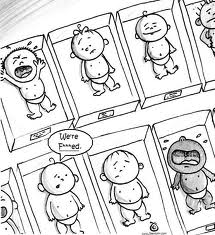
Woman Tries to Sell Her Kids on eBay

July 17, 2011

Whether it was a legitimate attempt or just a joke, it is a very sad and sorry look at the inherent selfishness in some parts of our society.

A VICTORIAN woman is being investigated after offering her two young children for sale to the highest bidder on internet auction site eBay.

The woman, in her early 30s, lives near Geelong. She wrote a “lengthy sales pitch” that included photographs of her son and daughter, both aged under 10.

Several people placed bids on the sickening auction, which has alarmed authorities.

Detectives from the Sexual Offences and Child Abuse unit were alerted to the internet page by a horrified member of the public.

The page has been taken down and the woman’s children could be taken into permanent care.

Victoria Police has decided not to press charges against the mum, who claims the act was a joke.

However, police sources told the Sunday Herald Sun they were disturbed by the incident and in particular the genuine bidders who tried to obtain the children.

Officers continue to probe the people who bid on the children and the Department of Human Services is continuing its investigation into the family.


Father Goes to Great Lengths To Ensure Daughter is Cyber-Safe

July 15, 2011

Father and computer expert, Bill Ramsey sets a good example for other parents concerned about what their children get up to online:

“The internet has really changed the way that children interact with the world and not always for good,” said Bill Ramsey.  He’s owns The Bill Guy Technology Solutions and is a dad.  He says you have to know who your kids are chatting with on places like Facebook.  “There are so many parents that say I don’t care that they put that stuff up there and I tell them they should.  You should care,” he said.

He cares so much, he requires his 15-year-old step daughter provide her passwords so he can access everything, including text messages.  He says she doesn’t like it but knows if she breaks the rules she’ll lose her computer privileges.  By checking her email recently, he found emails from a guy who asked she send pictures of herself.  She didn’t do it, but he says she also didn’t understand why it was a big deal.  “So what this is a person I’ll never see.  But you don’t know this.  You don’t know who this is,” he said.

Ramsey was able to find the boy who lived in Arkansas and called his parents.  He says that also shows how easy it is to track people down with information posted on-line.  The National Center for Exploited and Missing Children say one in seven youth between the ages of 10 and 17 have received a sexual solicitation on the internet.  Ramsey says that’s enough to know what your kids are up to.  “It’s not an invasion of their privacy,” he said.

Obviously Ramsey is good with computers and has an easier time keeping track on his child’s on-line activity.  But he says it’s not difficult if you put in some effort.  He says having passwords is the most helpful but it’s also good just to visit their Facebook page.  If getting a password won’t work, he says there are several software programs that offer various amounts of protection and some at a cost. 

He recommends checking out, http://www.webwatchernow.com, http://www.netnanny.com and http://www.cyberpatrol.com

Parents Join Facebook to Spy on Their Kids

July 15, 2011

Parents are clearly concerned about what their kids do on Facebook:

A survey has revealed that fully 30 per cent of British parents’ Facebook “friend” requests to their children get rejected, and that many then resort to using other people’s login details in order to keep track of their offspring’s Web-2.0 activities.

This sad commentary on the number of parents who feel able to speak to their kids as opposed to interacting with them primarily online – it would seem normal to know in advance whether a friend request to one’s nipper would be rejected, for instance – came among the results of a survey of 2,000 online Brits.

The survey revealed that among today’s digital British some 5 per cent of parents would like to monitor their kids on Facebook but don’t know how, and 55 per cent do stalk their kids online. No less than 11 per cent reported that the only reason they had a Facebook account was to keep an eye on their nippers, suggesting that in some age groups, up to a fifth of Facebook users have no real interest in the service’s putative benefits and are only there because they worry about its effects on their kids.

Indeed in many cases a Facebook user who signed up for positive reasons is not actually that person – it is a friend of theirs borrowing their login to keep tabs on their kids. Some 13 per cent of digital parents reported having done this, presumably because they couldn’t be bothered creating an account just for this purpose.

Altogether then, it would appear that 24 per cent of online Brit parents consider that the only reason to use Facebook is worry about their children. Perhaps it’s just as well that the company’s founder Mark Zuckerberg says he no longer cares about new signups.

“These figures are initially quite surprising, but since certain malicious third parties have been known to prey on unsuspecting or over trusting individuals online, it does seem as though many could have legitimate concerns,” commented Claus Villumsen of security firm Bullguard, which commissioned the survey.

I wonder if Mark Zukerberg and his Facebook team can do more to help concerned parents.

Calls To Allow Teachers To Use “Reasonable Force” on Students

July 13, 2011

Students should never be physically disciplined under any circumstances.  Whilst a majority of teachers care very much for the wellbeing of their students, there are teachers around who are more concerned with quiet compliant classrooms than the needs of their pupils.  Giving these teachers the opportunity to use force is asking for trouble.

Telegraph journalist, Bertie O’Brien disagrees:

Here’s hoping that the Government’s plans to allow teachers to use “reasonable force” to control disorderly pupils in the classroom is the beginning of a turnaround in our society. The culture of child protectionism – developed in tandem with health and safety and political correctness – is preventing children from entering the professional world as well-developed adults.

It’s about time teachers were lawfully allowed to regain control over pupils. Let’s get back to the purpose of being young: becoming a well-rounded adult, not having a good laugh or being “empowered”. Young people have to learn to lose out sometimes, and to follow orders. It is necessary that they learn to live in a world which won’t continue to worship them when they do grow up.

What does “reasonable force” mean anyway?  What is reasonable for one teacher may not be reasonable for other sections of society.

The argument that corporal punishment will help students become well-rounded adults is plain wrong.  Teachers help their students become well-rounded by understanding, connecting and appreciating their students, by setting a good example and high but fair expectations, imposing fair and consistent consequences, making their lessons engaging, fostering their students’ talents, creativity, critical thinking and independence as well as offering support and guidance.

I bet any teacher wishing to inflict corporal punishment on their students has in fact failed their students.  I would encourage them to spend less time worrying about using reasonable force and instead concentrate on their own performance.

Losing Custody of Your Kids Because of Obesity is a Disgusting Thought

July 13, 2011

Shame on you David Ludwig for making a conclusion that belies all common sense and sensitivity.  How can you justify the idea of taking children away from their parents because of their obesity?  How is such a move in the best interest of the child?

Should parents lose custody of their kids if they get too fat?

A commentary in Wednesday’s Journal of the American Medical Association says yes.

Harvard obesity specialist David Ludwig says putting children in temporary foster care can be more ethical than providing weight-loss surgery – but only in extreme cases.

Ludwig says the point is not to punish the parents – but to act in the child’s best interest, and provide care that the parents do not or cannot provide.

Ludwig says the goal is to get those kids back to their parents as soon as possible – and for parents to learn the proper ways to prevent future obesity.

There have previous calls for government intervention, in cases where parents either neglect or refuse proper efforts to control a child’s extreme weight.

A doctor from London cited a Wisconsin case from 2009 in which a 440-pound 16-year-old almost died at UW Hospital in Madison.

Doctors had talked about reporting the parents for neglect – but they didn’t have to, because the girl later lost 100 pounds with her family’s help.

The Journal article comes a week after an annual study reported that 27-percent of Wisconsin adults are obese.

This method will further punish a child with enough to contend with as it is.  No parent wants their child to be obese.  Yes, some do more than others to avoid obesity, but that doesn’t mean that they are not loving and caring parents.  Many of them, as reported, suffer from obesity themselves.

As a society we must learn to support rather than threaten.  The child’s welfare does not rely on just a loss of weight but also the continued love and support from their parents.  We must not fingerpoint or punish parents for obesity.  It won’t help one bit.  Instead we must offer as much support, education and guidance as we can to ensure that families are able to pass up cheap calorie laden products for the more expensive, yet far more healthy alternatives.


Tips for Adjusting to a New School

July 12, 2011

Below is an excerpt of a book dealing with tips for making the transition between schools more manageable:

Michele Borba, author of “The Big Book of Parenting Solutions,” says moving to an upper-level school is a severe change for kids. Here are Borba’s tips for helping guide your kids through each school transition.

Middle school

Going from elementary to middle school is a big change for kids because they generally go from having one teacher to several. Borba says it’s important that kids find at least one buddy in each of their classes so they have someone to turn to in case they have questions on an assignment or are absent.

She urges parents to walk through the school with their children before the first day so they know how to get from class to class. They should also know how to get to the bathrooms, the cafeteria and the school office.

Organization is important at this stage, since kids will have different classes and teachers. Make sure your kids have a binder with different-colored folders for each class and know where to write their homework assignments.

High school

Once kids reach high school, they won’t want you to walk the school with them before the year starts. What Borba suggests, though, is that you print out a map of the school, and show your children where their classes are and how to get to them. Then have them walk the halls with a buddy before the first day.

Now that they’ll have six or seven classes a day, students will have to be even more organized than in middle school.

In terms of social issues, bullying is a big concern. Borba says the No. 1 place where bullying occurs is in the cafeteria, so make sure your high schooler has at least one friend who has lunch at the same time so he can sit with that person and not feel alone.

School Using Bomb As Bell

July 12, 2011

It’s ironic that administrators are banning football and cartwheels in some playgrounds whilst schools on the other side of the world are playing with bombs during recess.

A mine awareness team in Uganda were horrified to find an unexploded bomb being used as a bell when they visited a school to teach children how to spot bombs, a local newspaper reported.

The Anti-Mine Network organisation saw teachers banging the bomb with stones to call children to lessons in a 700-pupil school in a rural area, the Daily Monitor said.

“Its head was still active, which means that if it is hit by a stronger force, it would explode instantly and cause untold destruction in the area,” Wilson Bwambale, coordinator of the organisation, told the newspaper.

Mr Bwambale said they would explode it in a cordoned-off area.

The Ugandan military has fought two rebel insurgencies over the last two decades and mines and bombs still litter former battlefields around the country.

This is the second bomb that the Anti-Mine Network have found in a Ugandan school in the last six months.

Another was found being used by children at lunchtime as a toy and put away in a storeroom during lessons.

Thankfully no one was hurt.  Football in the playground doesn’t seem so bad now.  Not that it ever did ….

The Atlanta Cheating Scandal and Those Blasted Tests

July 12, 2011

There is no excuse for teachers or officials to cheat.  We are there to provide a moral example for our students, and cheating of any kind is clearly unacceptable.

But we must not leave the matter at that point.  There’s a reason why some teachers have cheated on standardised tests.  Those tests  are anti-education.  They measure success through pressurised outcomes rather than authentic teaching and learning.  They expose teachers to unfair stress and scrutiny and force them the teach to the test, rather than teach to enrich and engage.

Officials in Atlanta deserve the condemnation they are receiving.

Officials and parents here are reeling after revelations of one of the largest school cheating scandals in history.

Last week, Georgia Gov. Nathan Deal released a report showing that officials at nearly 80 percent of 56 Atlanta elementary and middle schools examined cheated on annual student-performance tests, called Criterion-Referenced Competency Tests.

Former Superintendent Beverly Hall, who was named National Superintendent of the Year in 2009 and retired last month as head of the 48,000-student district, is accused of creating a culture of fear, pressuring faculty and administrators into accepting ever-increasing targets of achievement and turning a blind eye to the way those goals were achieved.

For a decade, teachers and principals changed answers on state tests.

But we must reflect on the merits of standardised state and national tests.

In Australia we have the NAPLAN test.  The NAPLAN test like other National tests around the globe have an important function.  Their job is to give information to parents about their childs’ progress, which includes a comparison against all others taking the test in that age group.

But what it also does is set up the teacher.  The teacher carries the blame for the results.  It is the teacher that is the first port of call when parents seek an explanation – it is the teacher that is labelled as insufficient when the school analyses the data.

Such pressures lead teachers to teach for the test rather than the typical authentic adherence to the curriculum.  This is not the way teachers are supposed to teach.  It also puts more pressure on teachers.  Teachers are already under significant strain.  We must be mindful that this system puts them in a situation where their performance is scrutinised like never before.  And finally, a test is just a guide.  It is not a perfect form of assessment.  Many factors can cloud and effect the conclusions made by the data such as student anxiety, outliers etc.

Cheating is wrong, and teachers and officials that cheat deserve to be punished.  But somehow, I feel that by administering national tests, teachers are getting punished regardless.

Some Principals Seem to Be Ignorant About Bullying

July 11, 2011

Pricipals are concerned that parents use the “bully” label too quickly, without properly understanding what a “bully” is.  They believe that parents often get “bratty” behaviours mixed up with bullying ones.

BRATTY students are being unfairly branded bullies by parents and teachers who do not know the meaning of the word, according to a Victorian educator.

Peter Hockey, head of Beaconhills College junior school, said the word “bully” was overused and victims of schoolyard nastiness should harden up.

“Rather than just say, ‘Well that person is a bully and that person is a victim’, we need to empower children to stand up and confront these people who are being nasty,” Mr Hockey said.

“I don’t like to say ‘toughen up’, but they need to be taught to argue back or stand up for what they believe is right, explain themselves more fully or use humour or whatever other skills they have.”

Sure, resilience is a valuable skill and one worth advocating, but Mr. Hockey’s approach sounds defeatist to me.  Harassed students shouldn’t need to stand up for themselves, they should have support from teachers and school administrators (including Principals).  Students will naturally “toughen up” when they have the support of others.  When they’re left on their own, they often fail to properly assert themselves.


The veteran educator said the correct definition of a bully was “a person who is habitually cruel to others who are weaker”.

Mr Hockey said he had only encountered a handful of bullies in his 36 years of teaching.

“I have taught many children who have been nasty to others, but these children are not bullies,” Mr Hockey said.

“They are very often simply being nasty because they have been hurt by a situation, or they are being selfish or are responding to an earlier problem.”

He said most “nasty” children could be taught to be nice, while bullies were born bad.

That’s just nonsense Mr. Hockey.  “Born bad”?  Bullies don’t need to be born bad, they just need to harass, torment or seek to undermine others.


“To label a child a bully who has made the mistake of being nasty is wrong,” Mr Hockey said.

“Nasty and naughty behaviour is fixable and we must educate all not to engage in this sort of behaviour.”

Are you saying that “bullies” are not “fixable”?


At the end of the day, these labels are irrelevant.  What really matters is that those students who are negatively affected by others are given the support they need and those that recklessly hurt others get the consequences they deserve.


 

Education on Climate Change, Not Scare Tactics

July 10, 2011

No matter how strongly teachers may feel on the subject of climate change, there is no place for scare tactics in a Primary classroom.

PRIMARY school children are being terrified by lessons claiming climate change will bring “death, injury and destruction” to the world unless they take action.

On the eve of Prime Minister Julia Gillard’s carbon tax package announcement, psychologists and scientists said the lessons were alarmist, created unneeded anxiety among school children and endangered their mental health.

Climate change as a “Doomsday scenario” is being taught in classrooms across Australia.

Resource material produced by the Gillard government for primary school teachers and students states climate change will cause “devastating disasters”.

Australian National University’s Centre for the Public Awareness of Science director Dr Sue Stocklmayer said climate change had been portrayed as “Doomsday scenarios with no way out”.

The fear campaign must stop.  It is a manipulative and immature tactic by a desperate Government.  Our job as educators is to empower and motivate not scare our students senseless.

I refuse to teach Government resource material that has the potential to frighten my students.