Archive for the ‘Uncategorized’ Category

Tips for Making Co-Teaching Work

October 27, 2015

team-teaching

I don’t enjoy co-teaching. Perhaps it’s because my style is different, perhaps it’s because I’ve never found the right partner, but my preference is to go it alone.

However, if I was to go down that path, I could do a lot worse than follow these steps courtesy of educator Natalie Marston:


1. Establish rapport.

The first step that you (the regular classroom teacher and the special education teacher) need to take is to establish a relationship — even before the students enter the building. Get to know each other on a personal level. After all you will be together the entire year. What things do you have in common? Are you married? Children? Hobbies? Where did you grow up?

When the two of you have a comfortable relationship and rapport with each other, the children feel more comfortable in the classroom. Students can sense tension as well as harmony within the learning environment. A positive relationship will help minimize misunderstandings and motivate you to resolve problems before they escalate.

2. Identify your teaching styles and use them to create a cohesive classroom.

Are you a hands-on teacher who loves doing experiments and using manipulatives, never to open a textbook? While your co-teacher needs to use the textbooks first and then supplement with experiments and manipulatives?

How do you manage behaviors? What are your discipline styles?

Instructional and discipline styles are just two factors you need to examine so that you can combine the best of both of your styles to create a cohesive classroom. You need to find a balance that makes everyone comfortable.

When you plan lessons together, you can use your two styles to complement one another and thus enhance the lessons and the delivery of instruction. You create a cohesive classroom with consistent expectations when both of you are on the same page with instruction and discipline styles.

3. Discuss strengths and weaknesses.

How can you utilize each instructor’s strengths and weaknesses? A good way to do this is to have each of you make a list of strengths, weaknesses, likes, and dislikes. Then take the lists and compare them and highlight the strengths that are dominant for one teacher and allow that person to be the lead teacher in those areas. By using these strengths, you can differentiate your instruction to meet the needs of a larger group more frequently within the classroom as well as allowing for individualized instruction.

4. Discuss Individualized Education Plans and regular education goals.

To create Individualized Education Plans (IEPs), the special educator needs to involve the regular educator in the special education process. Students in special education belong to both educators, so the general educator must be informed about the IEP for each child. Otherwise, the two of you cannot effectively execute the plans. It’s difficult to educate a child if you are unaware of his or her special needs. It is important to discuss the modifications and accommodations as well as the goals and objectives to ensure student success in the classroom. The special and regular education teacher can then work together in meeting the student’s goals and ensuring adequate progress.

In the same way, the regular education teacher should discuss with the special education teacher his or her goals for the regular students, as the regular education students belong to the special education teacher as well. Both educators should be addressing the goals, objectives, and mandatory curriculum for that grade level.

5. Formulate a plan of action and act as a unified team.

You have to make decisions constantly throughout the year, so if you formulate a plan of action in the beginning of the year, disruptions will be minimal.

Consider the following items in your plan of action:

  • Scheduling
  • Expected classroom behaviors
  • Classroom procedures, such as class work and homework policies, turning in work
  • Consequences of not following rules and procedures
  • Grading
  • Communication between home and school

Talk about what you will tolerate as well as how you will respond to actions that are not acceptable. Be consistent when dealing with parents, and meet as a team for conferences with them. Determine your roles in advance so that you do not contradict each other or foster misunderstandings during the meeting.

6. Take risks and grow.

A wonderful aspect of co-teaching is that it allows you to take risks, learn from each other, and grow as professionals.

Co-teaching provides a safety net when you take risks in your instruction. When you try something new and it doesn’t work, you have another teacher in the room who can step in with another technique or lesson that works, or point out the area of difficulty, or assist in redirecting the lesson. When you are the only teacher in the room and a lesson bombs, you often have to stop and move on and then analyze later why the lesson fell apart — without the assistance of someone else in the room observing the lesson.


Click on the link to read What Type of Teacher Are You?

Click on the link to read The Making of a Great Teacher

Click on the link to read The Perfect Teacher According to Students

Click on the link to read How to Praise Students Properly

Teacher Recreates Harry Potter Experience in Her Classroom

August 25, 2015

harry-potter-classroom

It’s all about getting your students to see their classroom in a more positive and exciting way. I just love it!


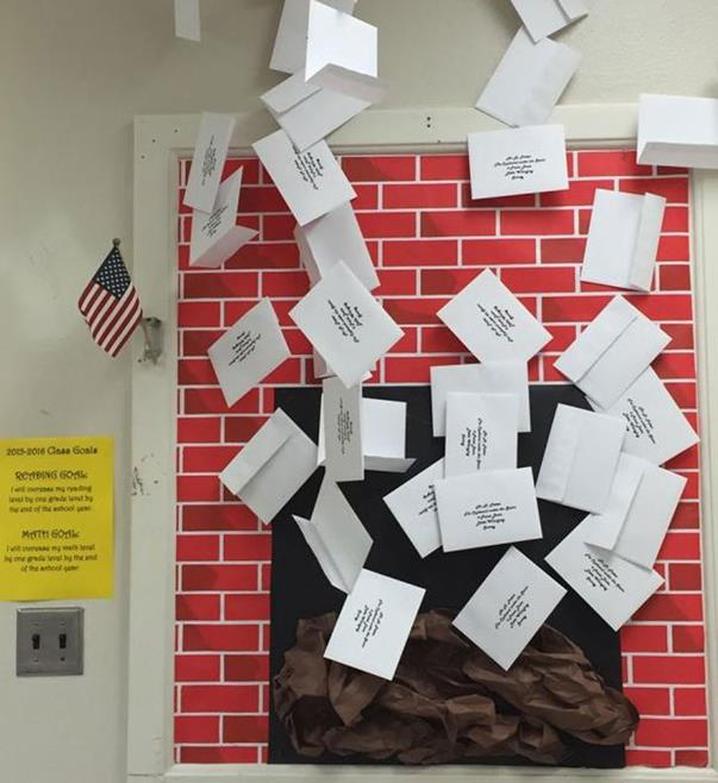
A US school teacher has brought a little extra magic to the classroom, decorating it like Hogwarts School  of Witchcraft and Wizardry from the Harry Potter series.

Stephanie Stephens from James L Capps Middle School in Oklahoma City told ABC News America it was always tough to instil a love of reading in students.

“This year, I chose to go with a Harry Potter theme because if I am excited and enthusiastic, students tend to follow suit,” Ms Stephens explained.

“My goal is to help students find at least one book or genre that they can find exciting and be as enthusiastic about as I am regarding Harry Potter.”


hogwats classroom


hogwarts-class


Click on the link to read Students Love it When Their Teacher Dares to be Outrageous

Click on the link to read The Questions that Great Teachers Ask Every Day

Click on the link to read Learning as an Experience

Educators Leading Children to Where Predators Hide

July 22, 2015

is-safe-schools-hub-safe

The website recommended to teachers to encourage their students to feel safe from bullying has been revealed as a magnet for predators.

We must stop promoting the Safe Schools Hub, because by the sounds of it, it’s anything but safe:


Schoolchildren are running the risk of exposure to predators though a website run by the federal Department of Education and Training.

In what must be a cruel twist of irony, the starting point for this is none other than the Safe Schools Hub, which is intended to protect children from bullying and other forms of harm.  

Although the Safe Schools Hub has as one of its “Guiding Principles” that schools must “accept responsibility for developing and sustaining safe and supportive learning and teaching communities that also fulfil the school’s child protection responsibilities”, it is failing to do so itself.

Because it is run by the federal government, the Safe Schools Hub is used as a resource by many primary and secondary schools across the country.  The original intention of the site was to prevent bullying in schools, and it attempts to stamp out discrimination on the basis of religion, ethnicity, gender and the like.  These are all good things, but when it comes to protecting students, things go badly awry.


Click on the link to read How Vulnerable are Your Students to Online Predators?

Click on the link to read The Truth About Those Internet Safety Myths

Click on the link to read Shaming Students is Never the Answer

Click on the link to read The Perfect Cyber Safety Clip for Parents to Watch With Their Kids

The Dawn of a New Punctuation Mark

July 2, 2015

exclamation-comma

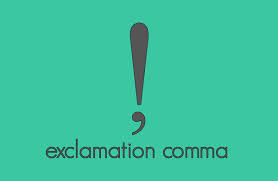
Meet the exclamation comma!


World, meet the exclamation comma — the punctuation mark you didn’t know existed, but that you almost certainly need in your life.

The exclamation comma is, as its name suggests, a symbol that looks like an exclamation point, only with a comma instead of a period at its base. As the Grammarly blog noted this week, it’s used just like an exclamation mark “to denote excitement, add flourish, and generally lend a statement a certain degree of emotion and emphasis,” but it’s to be placed within sentences rather than at the end of them.

For example:

“That velociraptor is so scary [insert exclamation comma] but don’t worry, he’s not going to eat you.”

“I’d love to use a new punctuation mark [insert exclamation comma] yet the others might get jealous.”


The exclamation comma was reportedly created by American inventors Leonard Storch, Haagen Ernst Van and Sigmund Silber in 1992, who also lobbied for its widespread adoption. However, their patent for the symbol lapsed in 1995, and their effort to popularize it ultimately failed.

Interest in the exclamation comma has surged this week after the Grammarly blog’s post on it, but it’s not the only obscure punctuation mark that deserves attention.

For instance, there’s the question comma (the exclamation comma’s inquisitive cousin), the SarcMark (short for “sarcasm mark”), the irony mark and the wonderfully-named Interrobang (which looks like what would happen if an exclamation point and a question mark jumped into bed together).


Click on the link to read Meet the UK Classroom Where Every Student Speaks English as a Second Language

Click on the link to read Feminist Icons in Children’s and Teen Books

Click on the link to read Long Lost Dr. Seuss Book Set for Release

Click on the link to read The Oscars for Children’s Writing Has Been Announced

Los Angeles: Why Is Rafe Esquith in Teacher Jail?

June 24, 2015

dianeravitch's avatarDiane Ravitch's blog

Rafe Esquith is one of the nation’s most celebrated teachers. He teaches fifth grade in Los Angeles. Each year, his class produces a complete play by Shakespeare. They are known as the Hobart Shakespeareans.

Esquith was suspended for making a joke. Here is the story. Unbelievable.

View original post

Lessons We Can Learn From the Rafe Esquith Suspension

June 21, 2015

stand-by-rafe

The most highly decorated and dedicated teacher in America has been sitting in his lounge room for the past 2 months. He has been stripped of his right to do what he does best, because a colleague dobbed him in to the authorities for a politically incorrect joke.

Since hearing of his suspension I have been in a state of shock. Who would want to take the best teacher out of the classroom? Shouldn’t they be working on getting more Rafe’s instead of finding absurd ways of removing them from classrooms?

After days of soul searching I have come up with some lessons I have learned from this saga:


1. It Could be You – If Rafe can be barred from the classroom, anyone can. Next it could be you.

2. Leave Your Sense of Humour at the Door – Don’t even think of cracking a joke. It could cost you your job. The classroom is not a place for humour. It should be a joyless, lifeless, cold and bitter place. If you want to see kids laugh, become a party clown!

3. A Good Record Counts for Nothing – Teacher of the Year! Who cares? When a jealous co-worker dobs you in to the authorities, a lifelong reputation of excellence and integrity counts for nothing. Leave your references at the door. Educational bureaucrats with an ego the size of Greece’s debt aren’t in the mood to excuse a trivial comment, even if your name is Mother Theresa.

4. Teaching is a Dog Eat Dog Profession – Yes, I am generalizing, but don’t tell me you’ve never experienced it. Why do teachers feel the need to compete with one another? Aren’t the children supposed to be the emphasis. That teacher who snitched on Rafe has a lot of explaining to do. If as I presume, he/she did it out of jealousy, it is yet another example of teachers hurting their own. Our job is difficult enough as it is, why do we need to constantly compete against and judge one another? We should be supporting, not reporting each other!

5. Who wants to be a Male Primary Teacher? – C’mon, you know I’m right. It’s the elephant in the room. Had a female teacher made the same joke as Rafe did (a joke I don’t endorse), would she have been suspended? Absolutely not. You want more male teachers in the younger years? Start by treating us equally.

6. It’s not Just about Rafe’s Reputation, It’s a Reflection on Our Profession – Here was a teacher that absolutely adores what he does. He is a true inspiration. And what do the authorities do to acknowledge his outstanding work? Ban him from the classroom. What message does this send to perspective teachers. Perhaps it’s easier working at Walmart. I’m sure the pay isn’t all that different.

7. Teach at a Private School if You Can – By working at a public school, Rafe’s reputation was greatly enhanced. He was seen as a champion for the downtrodden, the under privileged. But the problem with public schools is that they are often run in a chaotic and cold-hearted fashion. Private schools personally select and invest in you. They choose you because they believe in you, and unless there is ample proof that they were completely wrong about you, they will give you the benefit of every doubt. Public schools on the other hand treat you like a number. Had Rafe made that comment in a private school, his Principal would have backed him all the way. Perhaps, at worst, he would have had to issue an apology, but nothing more than that. It’s great to teach those who need you the most, but not at the expense of your reputation.


Click on the link to read #StandByRafe

Click on the link to read The Teacher I Most Look Up To, Removed from the Classroom

Click on the link to read Teachers Don’t Get Any Better Than This!

Teacher Lets Bullied Student Shave Her Head as a Show of Solidarity

May 21, 2015

teacher-shave

A wonderful gesture. I hope it has just as much impact on the teaser than it has on her teased student:


Teachers routinely go above and beyond expectations. They arrive at school early, stay late and often pay for supplies from their own pocket book, among many other things. But few would let their students shave their heads.

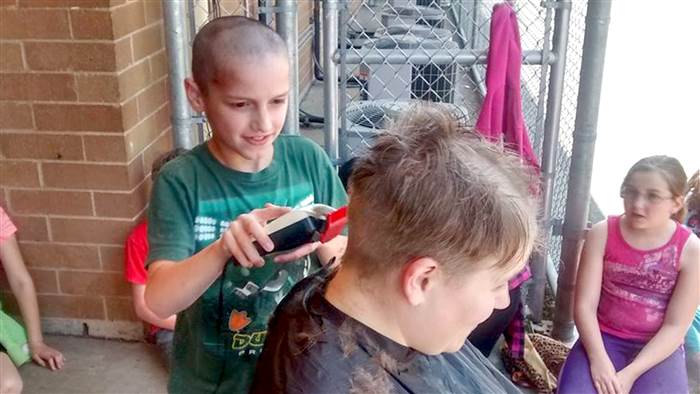
On Monday, Tori Nelson struck a deal with one of her fourth-grade students in Winlock, Washington: He could shear off her short, blonde locks but only if he would take off his hat, which the school prohibited, and finally come to class.


Click on the link to read Inspiring Act by Professor Goes Viral

Click on the link to read Is There Anything More Important Than ‘Knowing’ Your Students?

Click on the link to read Could this be the Most Inspiring Teacher Working Today?

Click on the link to read There Are Some Teachers That Just Love What They Do

Is Technology Making Our Kids Less Empathetic?

May 4, 2015

technology-autism

Blaming technology for making our kids show signs of “autism” seems insensitive to those with legitimate cases 0f autism and unfair on kids for enjoying the same gadgets we adults do:


A UK psychiatrist and former literary scholar at Oxford University has claimed the ubiquity of technology is making young children borderline “autistic”, compared to previous generations.

Dr Iain McGilchrist believes the significant time many young kids are spending with smartphones and tablet devices has resulted in children as young as five struggling to read others’ emotions and being less empathetic.

Speaking to The Telegraph, Dr McGilchrist said he had a growing awareness of teachers needing to explain to their students how to make sense of human faces.

Kids are “increasingly finding it difficult to communicate at an emotional level in what appears to be features of autism,” he said.

“Children spend more time engaging with machines and with virtual reality than they used to in the past where they don’t have to face the consequences of real life,” he told The Telegraph.

In Australia, the debate has raged over the appropriate age to give children smartphones and how much time they should spend using them each day.

Research released by Telstra this year showed that more than two thirds (68 per cent) of Aussie children aged three to 17 own a smartphone and spend an average of 21 hours and 48 minutes per week on the devices.

Sydney-based family researcher and father of six Dr Justin Coulson recommends a minimum age of 12 or 13 for children to be given a phone. “And then make it a dumb one. Smart parents give their kids dumb phones,” he said.

That’s exactly what Victorian woman and mother of three, Laura Marchese did. She bought a “dumb” phone for her 10-year-old son to carry when he walks home from school.

“I don’t want him to have the world at his fingertips; a phone is in your pocket and he’s more likely to get it out and use it all the time,” she told the Herald Sunlast month.


Click on the link to read 5 Apps You May Not Want Your Kids Using

Click on the link to read 11 Valuable Digital Media Tips for Students

Click on the link to read The 10 Best Educational Apps for Children

Click on the link to read The Must Have iPad Apps for the Classroom

The Horrible New Trend Known as “Lunch Shaming”

May 2, 2015


lunch-shaming

Schools should stick to their core responsibilities and refrain from shaming the very stakeholders they should be working together with:


A busy mum who ran out of fruits and vegetables was sent a “strongly worded note” for packing Oreos for her daughter in her lunch box. The school felt that it was reminding the parent about the nutritional practices, but many feel that it was an over the top reaction.

Colorado mum Leeza Pearson had packed a routine lunch box for her daughter which included string cheese and a sandwich. Since she had run out of fruits and vegetables, she packed in Oreos for her daughter Natalie. But the pre-schooler returned home without eating her snack and brought home a note from the teacher advising parents of the importance of eating healthy.

According to ABC news, the school did not allow the pre-schooler to eat her lunch, sending the mum an advisory note instead. The note said “this is a public school setting and all children are required to bring in fruits, vegetables and a healthy snack along with milk. Lunchables, chips, peanut butter and snacks are not considered healthy.” This reaction has been considered by many as “over the top.” Pearson told ABC news that she had packed in a vegetable sandwich along with cheese in the lunch box and this was also ignored.

The spokeswoman for Aurora Public Schools, Patty Moon, (via 9News) said that the note sent out was not a standard practice and should be viewed as an advisory. The Director of Children’s Academy, where Pearson’s daughter is a student, also added that it would conduct a thorough investigation and acknowledged that the note should not have been sent to a parent. Pearson, on the other hand, said that the school was not consistent about its policies. She said that the school had asked students to bring in candy for Easter celebrations and provided students with jelly beans during after-care.

Lunch Shaming the parents has got the fancy of social media with tweets supporting the mum coming in. In USA, there is a strong movement for healthy school lunches. First Lady Michelle Obama has been a vocal supporter of campaigns for eating healthy.


Click on the link to read Healthy Easter Treat Options for Kids

Click on the link to read How School Lunches Compare Around the World

Click on the link to read Tips to Get Kids to Eat More Fruit

Click on the link to read 6 Year Old Suspended for 4 Days Because of Cheese in his Lunchbox

When Bad Teaching Meets Bad Student Behaviour (Video)

April 30, 2015

I tell my students that nearly every argument has two or more parties sharing responsibility. It is rare to find a completely innocent victim in a large scale incident.

This video captures an all too frequent scenario. A teacher who isn’t short on insults and is too frustrated and disheartened to make clear and sensible decisions, and a student who is so rude and abrasive that even the best teacher would struggle to maintain their calm.

There are no victims in this video. Just bad teaching, a completely disrespectful student and a class full of unhelpful bystanders.

Please note that this clip features some unsavoury language. If curse words offends you, you may want to avoid watching it.

Edit: The video seems to have removed but can still be accessible on this site.

Click on the link to read Teachers Should be Able to File a Complaint Against Complaint Addicted Parents

Click on the link to read Where Are All the Teachers Who Promote Teaching as a Career?

Click on the link to read 20 Primary School Students a Day Sent Home for Violence Against a Teacher

Click on the link to read The Difficult Challenge that is Starting Your Teaching Career