Archive for the ‘School Rules’ Category

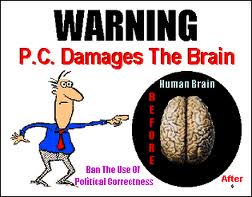
Political Correctness is a Failed Philosophy

April 20, 2011

For all its good intentions, I am not a fan of political correctness.  My school just invested in new blinds for the classrooms, only weeks before a dictate from the Education Department stipulating how many bolts must be present in classroom blinds.  My school now has to find the money to put extra bolts in, even though the current setup is more than sufficient.  Whilst I agree that students welfare and safety is of vital importance, sometimes bureaucracy goes too far.

In the past few months, I have written numerous posts about political correctness gone wrong. I wrote of a farcical primary school law that banned young children from hugging.  Then there was the school that banned football in the playground and another that banned socialising in groups bigger than three.  These are examples of political correctness working against the students, not for the students.

It was so good to hear the British Prime Minister speak out against the bureaucracy trying to ban street parties in honour of Prince William and Kate Middleton wedding.

If only our Education Minister had the presence of mind to do the same.

Banning Home-Made Lunches is a Dreadful Policy

April 15, 2011

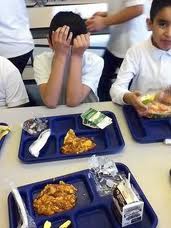
Of all the things to ban at school, who was responsible for this terrible idea? How can you ban children from bringing a home-made lunch to school? How can you force parents into spending money for their child’s lunch when they could provide their own for less cost?  This is another case of we don’t trust parents and their children, so we’ll intervene.  Whilst this philosophy is often generated from good intentions, it seldom leads to good results.

The days of brown bagging it are over for students in a Chicago school. In an effort to encourage healthy eating, their principal banned lunches brought from home.

Elsa Carmona, principal of Little Village Academy on Chicago’s West Side, forbade students from bringing food from home (except those students with a medical excuse) after she noticed kids eating “flaming hot” chips and drinking soda at lunchtime. “It’s milk versus Coke,” she said.

While the goal of healthy eating is a positive one, parents are understandably upset about the Carmona dictating what their kids can and cannot eat for lunch. Not to mention the fact that some parents may be able to send their kids to lunch with a meal that costs less (and one that could be even healthier) than the school’s offerings.

The kids are upset, too. When the Tribune reporter visited the school, one seventh grader led students in a chant of “We should bring our own lunch! We should bring our own lunch!” Students say the school’s food tastes bad. Bad-tasting food, parents say, often means that kids throw away the school lunch and go hungry.

It’s also worth noting, as reported by the Tribune, that the school district receives money from the federal government for each free or reduced-price lunch it serves, meaning that in banning homemade lunches could potentially put more money in the pockets of both the district and the school district’s food provider.

But Carmona maintains her school’s policy is simply about helping students make healthy choices. “Nutrition-wise,” she told the Tribune, “it’s better for the children to eat at the school. It’s about nutrition and the excellent quality food that they are able to serve (in the lunchroom).”

Is anyone surprised that this scheme looks very much like a money-making venture disguised as a realistic attempt in tackling childhood obesity?  What happens to a child who is caught bringing in a lunch from home that is more healthy and nutritious than what the school offers?  Does that child get punished?  What happens if the students hate the menu?  Why should they be forced to eat what they don’t like?

I am all for reducing the amount of junk that students have in their lunch boxes. But at the end of the day, I urge school’s to stop mirroring prisons.  Yes discipline is important, as is routine.  And yes, at times intervention is required.  But why do those involved in forming school policy show a lack of regard for making their students’ time at school a happy, comfortable or at the very least bearable experience?

How about forcing those involved in making stupid rules like this one to eat from the school cafeteria?  How about making them lead my example and banning them from eating a home-made lunch?

And you wonder why there is such a lack of respect from students nowadays?


Stop Banning Our Kids From Being Kids

April 7, 2011

Society pretends it isn’t so, but let’s face it – school is not a natural environment for the growing child. Kids have to sit in an often uncomfortable seat for hours on end, have no say who they can sit next to, can not talk unless spoken to, can not go to the toilet without permission and often cannot choose for themselves what they would like to wear.

As a teacher, I devote so much of my time to help maximise my students’ enjoyment for learning and appreciation for the positive aspects of school such as positive social interactions and self growth.  I am drawn to this profession because I can see that it is possible to create joy from the school experience. That kids who have only seen school as a negative can be turned around quite quickly.

That is why I get frustrated with the constant barrage of regulations and bans that lessen the students’ opportunity for enjoyment of school.

Take this unfortunate case for example:

Children at Pope Paul Catholic Primary School, in Baker Street, have been barred from playing the national sport over concerns there could be accidents.

An angry parent of a year five child contacted the Potters Bar Edition to say he thought “the world has gone mad” over the 
ball game ban.

The whistleblower did not wish to be named as he feared the school would “bear grudges” against his child.

He said: “I’m just rather fed up of the health and safety coming out of the school.

“Break times are time to let off some energy and relate with other kids.”

He also pointed to football’s ability to teach valuable life lessons like winning and losing and the importance of teamwork.

And speaking about the injury fears, he added: “Boys might fall over and hurt their leg, but you just get up, wipe it off and carry on.”

Headteacher Helen Lines said: “The children aren’t allowed to play football on the playground during the winter months because there isn’t enough room.”

She added: “Many of the children want their own game and there’s no room to do anything else.

“In the summer there are plenty of ball games on the field, but it’s too muddy in the winter.”

Despite the weather picking up as spring has sprung, Mrs Lines said pupils were still banned from playing football.

She said: “We’ve tried a rota system but it’s too tempting for others not to join in.

“We’ve got lots of people trying to play a very active sport like football, there are going to be accidents.

“There are lots of children who don’t want to play football.”

She added playing the sport in the confines of the playground was too “dangerous”.

Ms. Lines rationale makes no sense at all.  On the one hand she says there isn’t enough room because of the great demand for multiple soccer games and on the other hand she claims that there are children who don’t want to play, thereby intimating that their stance wont affect too many.

There’s a reason why kids like to play active sports during recess – they are kids!  Not only that, they are sitting down for hours on end.  Let them run!  Let them enjoy their recess!  Don’t even bother investigating why boys aren’t thriving at school when you want to ban the very activity that gives them an outlet for their restlessness and something to look forward to.

Ultimately, it’s not entirely the fault of schools.  They are entitled to cover their backs in the fear of being sued.

Here is an idea:  How about Governments passing legislation that makes it much harder for parents to sue schools for run of the mill accidents?

And how far will this go?  If you ban soccer, you have to ban monkey bars, slides, basketballs, cartwheels, running, bunsen burners, scissors and sharp pencils etc.

School is already a less than perfect place for our children.  Why make it so much worse?
Be Careful How Much Power You Give Schools

February 14, 2011

Multiple choice time:

You have a 6-year old boy suffering from separation anxiety because his father, an Army commander, is leaving for Iraq.  The boy is found drawing zombies and writes underneath the drawings that he wants to die.

As a school administrator, do you:

a. Take the child aside and offer help, sympathy and a listening ear.

b. Call his mother to set up a plan for how to join forces and help the child during this tough period of his life.

c. Refer the situation to a counsellor or recommend that the mother take the child to a psychologist to get expert help.

d. Call an ambulance and get that child to a psychiatric ward, so he can be committed to a 72-hour psychiatric hold.

If you answered “d” you are probably from Los Angeles, the home of mystifying school decisions.

A mother has criticised school authorities for committing her six-year-old son to a psychiatric ward against her wishes because of a picture he drew in class.

Jack Dorman was pulled out of his elementary school classroom after he sketched a drawing of zombies and stick figures and wrote that he wanted to die.

But the boy’s furious mother, Syndi, said her son was simply upset that his soldier father was being deployed to Iraq.

She said the way Los Angeles school officials treated her son ’was right up there with my worst nightmare.’

Mrs Dorman added: ‘They said they were concerned about a picture he drew. I said he plays video games and it’s a picture from a video game.’

She claims Jack suffers from separation anxiety and was particularly upset on the day he drew the disturbing picture after learning his father, an Army commander, was leaving for Iraq on Thursday.

‘I explained to them what was happening, that my husband was being deployed to Iraq, that he was upset when he came to school today, that he wanted to be at home,’ she said.

‘I’m saying, “I will deal with it, that we have a therapist and that we’ll make sure he’s seen today”.’

‘They said it was out of my hands. They said they were in control and they could do this and had already called an ambulance.

‘I said, “Can you do this?” and they’re like, “Yeah”, Mrs Dorman said in an interview with NBC. ‘I’m just like, “What? Can I get a lawyer? How is this happening?”.’

Mrs Dorman said the ambulance ride was terrifying for her son, who was already seeing a therapist because he became anxious when he was separated from his family.

‘I was trying to reassure him that it would be okay and he asked if I’d come back for him and I said of course I am going to come back for you,’ added Mrs Dorman.

Jack was released after 48 hours, but his mother fears the ordeal has traumatised her son.

‘My son doesn’t want to go back to school. He’s afraid they are going to take him away again,’ she said.

In a statement, Los Angeles Unified School District Superintendent Ramon Cortines insisted his staff took the appropriate action.

‘We did the right thing here,’ he said. ‘I can unequivocally state that correct procedures and protocols were followed, including contacting the parents and accessing community resources such as the Los Angeles County Psychiatric Mobile Response Team.

‘When any student indicates a desire to take his or her own life, the LAUSD is required to follow strict protocols to ensure the safety of the student. The safety of LAUSD students is paramount,’ he added.

Where is the common sense in this story?  The boy is 6-years old!  A 6-year old boy with a father being sent off to war who threatens his life on the back of a drawing needs care and support from his school.  He needs the school to be sensitive and compassionate.  So what do they do to this poor kid?  They send him off to a psychiatric ward!  The person that was responsible for calling the ambulance is a more suitable candidate for the ward!  What were they thinking?

The unfortunate modern reality of living in a litigious world, in my opinion,  is that school’s care more about being sued than for the rights of the children.  It is for this reason, we need to be mindful that in all kinds of sensitive circumstances, school’s are likely to put their interests ahead of the child’s.  We must be careful how much power we give them.  This includes teacher’s being given authority to greatly influence the decision of a doctor in prescribing powerful medications to a child.

And it isn’t just the school that is to blame.  It’s the regulations which were instituted with one massive, gaping hole in it – the common sense clause. Even with the best of intentions, a law that ignores common sense, is a terrible law!

And notice the lack of apology.  No, they are still defending their decision!  Shame on you!

Time to change the law folks

Meet The Free-Range School

December 28, 2010

I’m not sure a “school with no rules” would work for everyone.  But for any criticism one could come up with for schools like Currambena, one thing is true.  Schools like this one are the result of an education system that puts results ahead of student welfare and arcane rules and regulations in the place of building an environment in which children can thrive.

Currambena works very differently to the typical school:

There’s no morning bell to signal the start of the school day, either. Children simply gravitate towards classrooms when ‘inside time’ begins. Some stay digging in the vegie patch and if, for some reason, a child wants to spend the day doing maths in the tree fort, so be it. There are no room numbers or official grades, no tests, no lining up, no homework.

For a start, if children aren’t forced to sit in class and finish their maths, how do parents know whether they’ll bother at all?  Rachel Turner, who sends her kids to the school, recalls how it worked for her: “I took school very seriously and was incredibly involved in it. I was never tempted to shirk, because learning was fun.

“As long as teachers know the children are participating – that nobody is being left behind – the kids have the freedom to do what they need,” she adds. “Teachers make sure everyone is reading and writing, of course, but if a child is consumed in one activity, why shouldn’t they be allowed to continue it?”

I’m not sure that schools like this one will become the norm.  I can’t see this style of school appealing to more than a certain niche.  However, it does remind us that schools are too cold and out of touch.

There are far more people out there who have had terrible experiences through school compared to those that reflect on their school days in glowing terms.  This is simply not good enough.  We spend the best part of our youth at school and the argument that “it is what it is” doesn’t wash with me.

Perhaps we don’t need something as revolutionary and extreme as a free-range school, but certainly not what we have at the moment.

What Are We Doing to Our Kids?

November 19, 2010

It’s unbelievable how political correctness has infiltrated our schools. The intentions may be noble, but the results are sure to be disastrous. Yesterday, I wrote of the incredibly stupid hugging ban at a Gold Coast primary school. Today, I was informed of another shocking school rule at Mt Martha’s Osbourne Primary School in Victoria.

The primary school principal of Osbourne has banned students from being in groups of more than three while at school in a radical plan to combat anti-social behaviour.

Principal Liz Klein said the ban was a short-term measure to tackle anti-social behaviour around the schoolyard.

But Ms Klein denied the school, with more than 600 students, had a bullying problem.

“This is not about bullying, it’s about silly, annoying behaviour at the hands of a select few,” Ms Klein said.

But that’s not all!  Two months ago a Queensland school principal was under pressure to perform a policy backflip after he banned students from doing cartwheels and hand stands in the playground.

This is just wrong!  School is tough enough as it is.  We should be investing more time and energy into making school a far more friendly and inviting place.  Draconian rules like these are so counter-productive.

What’s next?  Outlawing monkey bars?  Bunsen burners?  Sharp pencils?  Scissors?  Smiling?

Get a grip!  If you want to make schools safe, let go of political correctness and instead change your culture!

Political Correctness at School

November 18, 2010

I realise schools try to avoid controversy wherever possible, but what was William Duncan State School in Nerang doing?  Banning primary school aged kids from hugging?

Reports indicate that the children at the William Duncan State School are being punished with detention for hugging or touching their friend.

Parent Ross Kouimanis’s whose daughter Emily was given a warning for hugging her best friend calls it “Political correctness gone mad.”

”They are making something so innocent seem dirty or wrong. It’s just normal”, he said.

So what is the reason for this new policy?

Education Queensland South Coast Regional director Glen Hoppner said there was no EQ policy banning hugging in schools.

”William Duncan State School has determined that unwanted or unnecessary physical contact, which in some circumstances can include hugging, is inappropriate playground behaviour,” Mr Hoppner said.

”The school is mindful of protecting their right to not be touched in an unwanted or inappropriate way.”

Why are we making schools, which you could already mount an argument, isn’t the most natural surrounding for a child, into a cold and gloomy place?  Whilst teachers all around the world struggle to keep kids engaged, happy and motivated at school, bureacrats work hard at making school as difficult a proposition for our children as possible.

School should be as fun and exciting as possible.  We should focus our students to get on, co-operate, care for each other and thrive.

Less rules!  Less political correctness!