Most adults will have fond memories of reading of the adventures of Winnie the Pooh in the Hundred Acre Wood as a child, but few will realize that it was banned because the animals spoke.
The much-loved book by A.A. Milne is among several popular children’s books and a dictionary that have been banned in the U.S. over the years for being anti-Christian, too sexual or damaging to industry.
Important works of literature such as The Diary of a Young Girl by Anne Frank, praised for its insight into the impact of the Second World War on children, was banned by a Virginia school over the ‘sexual content and homosexual themes’ when the definitive edition was released in 2010.
Other schools tried to ban it from reading lists because it was too depressing and last month a Michigan mother complained about its ‘pornographic tendencies’ over passages where Anne describes going through puberty.
Alice in Wonderland came in for similar criticism, with it being shelved in New Hampshire in 1900 for alleged references to sexual fantasies and masturbation. It has also been seen as promoting drug use.
Two books – Shel Silverstein’s The Giving Tree and Dr Seuss’s The Lorax – were both criticized for damaging the foresting industry.
A Colorado library barred the Giving Tree for being sexist in 1988 and in 1989 a Californian school district banned The Lorax incase it put children off a career in the logging industry.
One of the most popular Dr Seuss books, Green Eggs and Ham, was not allowed in parts of California because of suggestions of ‘homosexual seduction’, according to Buzzfeed.
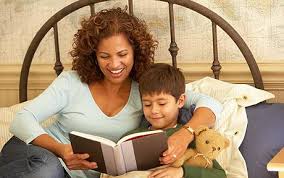
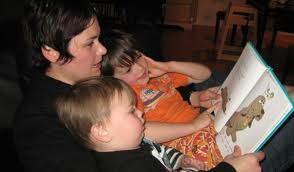
1. It’s time spent together. Reading time is time when you’re focusing on no one else and nothing else but them. It’s impossible to read to your kid and look at your smartphone or watch TV at the same time. I read to each of my children separately before bed. This lets me spend quality time with them individually. It makes for a longer bedtime ritual, but I don’t care because I love it.
2. It’s a conversation starter. Books always give us a reason to talk with each other, even if we don’t feel like we have anything to talk about. It keeps communication open.
3. It’s a great way to talk about emotional health. We talk about the things that happen in the stories, how we would feel if they happened to us, and how we might deal with such events the same or differently. Books have helped me broach topics that I might not have thought to raise if it weren’t for the subject matter in the story.
4. It’s a great way to honor the individuality in your children. I read different things to my daughter than I do to my son. We go to the bookstore and they pick out books about topics about which they are interested. Through paying attention to what they want to read, I can learn more about what their likes and dislikes are, including what they might want to be when they grow up.
The pajamas cost $25 each and are available for both boys and girls aged 1 to 8.
But Mashable also cautioned users on using smartphones before bed, saying they can affect the body’s sleep cycle.
Smart PJs described itself as “an innovative company with the distinction of creating the ‘Worlds first and only interactive Pajamas!”
“We have children ourselves and understand how important a bedtime story is for kids, and how important a quality pair of pajamas is for parents, so we have combined them both into one EASY and FUN to use product that every kid and parent will LOVE!” it said.
Isn’t is wonderful to see a child respecting authority? Most 12-year-olds would have created a stink if they spelled a word during a spelling bee correctly only to be told by a judge that it was incorrect. But this young girl showed dignity and respect by accepting the verdict of the judge:
Spelling savvy runs in Sierra Shoemaker’s family — the 12-year-old’s mom competed in spelling bees as a girl, according to Fox News. But Friday’s bee at Sierra’s California school district almost put the youngster out of the running this year, all due to a judging gaffe.
As KMPH reports, when Sierra spelled “braille,” she knew she had it right. The judges, however, claimed the word only had one “l” in it because that incorrect spelling appeared on their answer sheet at the Selma School District spelling bee.
Sierra said even the audience caught the error, but she knew better than to make a stink about it in competition, even if it meant elimination.
“I didn’t want to say anything, because… if the word master tells you [that] you got a word wrong, you don’t really argue with him,” Sierra told KMPH.
If you aren’t already reading to your kids, I highly recommend that you do:
MELBOURNE researchers have proven what parents have intuitively known all along – the more often you read to your children from an early age, the greater the positive effect on their reading and thinking skills.
The Melbourne Institute of Applied Economic and Social Research has not only proven a causal effect between the frequency of reading to a child and his or her development, but have also for the first time measured the benefits.
Children four to five years old who are read to three to five times a week have the same reading ability as children six months older (who are read to only twice or less a week).
Reading to children six to seven days a week puts them almost a year ahead of those who are not being read to. It was also found that reading to small children has a positive effect on the development of numeracy skills.
”It does appear to be the case that children who are read to more often keep doing better as they age than other children,” said Professor Guyonne Kalb, director of the institute’s Labour Economics and Social Policy Program, and co-author of the study.
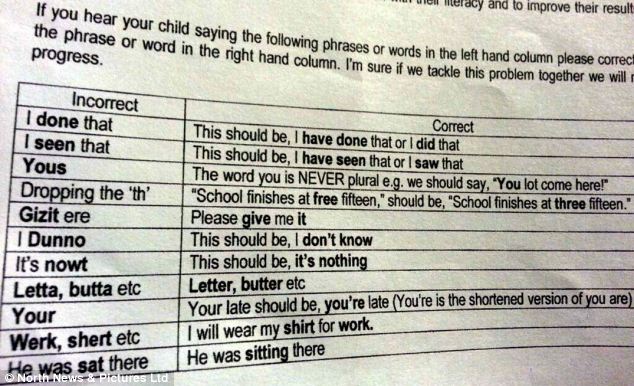
Parents have been sent letters from a school urging them to stop their children using phrases such as ‘it’s nowt’ and ‘gizit ere’.
Sacred Heart Primary School, a Roman Catholic Voluntary Aided school, warned against ‘problem’ phrases and criticised children using pronunciations, such as ‘free’ and ‘butta’ instead of ‘three’ and ‘butter’.
The letter spells out 11 ‘incorrect’ phrases. ‘I done that’ and ‘I seen that’ were blacklisted, and parents were reminded that ‘yous’ should not be permitted because ‘you is never a plural’.
Carol Walker, Sacred Heart’s headteacher, defended the letter, saying: ‘We would like to equip our children to go into the world of work and not be disadvantaged.
‘We need the children to know there is a difference between dialect, accent and standard English.
‘The literacy framework asks children to write in standard English.
‘I am not asking the children to change their dialect or accent but I don’t want them to enter the world of work without knowing about standard English.’
Parents seemed broadly in favour of the language initiative, though they were taken aback to receive the letter.
Cheryl Fortune, 35, a school escort for Middlesbrough Council and parent at Sacred Heart, said: ‘When I saw it I was a bit shocked. I thought my kids are only eight and five, so it is a bit extreme.‘If I am honest though my eldest son said “yeah” last night and my youngest said “it’s yes”, so he corrected him. I can understand why the school has done it, to encourage people to speak properly.’
Carol Walker, the headteacher at Sacred Heart, who is focusing on her pupils’ competitiveness in the workplace
Another parent, engineer Chris Allinson, 31, hadn’t seen the letter but thought it was a good idea.
He said: ‘I try to correct my daughter Jasmine’s speech if she says things wrongly. I want her to get the best start in life.’
Sacred Heart is not the only school where accent is an issue.
Essex school children at the Cherry Tree Primary School in Basildon are being offered elocution lessons after teachers complained that the accent was affecting their grammar and spelling.














 Topical Teaching