Trainee teachers are to be coached to use their voices and body language to control disruptive pupils.
The Government’s school behaviour tsar is concerned that troublemakers scent weakness and start playing up when teachers lack an authoritative presence in the classroom.
Charlie Taylor, who advises ministers on tackling indiscipline, says that teachers’ voices often become high-pitched when they are tense and agitated, giving away their nerves.
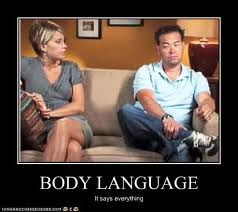
Many also underestimate the importance of body language and posture and instead hunch their shoulders or fidget.
I can just hear them boast now:
“If it wasn’t for my improved posture I wouldn’t have been able to handle children who throw objects and make threats. Thank you so much for the body language lessons!”
Then again, even if the skill isn’t useful in the classroom, they may improve your poker game.
When it comes to disciplining students who are continually getting into trouble, Principals suffer from an extreme case of memory loss. The standard punishment of granting suspensions hasn’t worked and is unlikely to work in the future.
So what is the standard reaction to students that continue to offend? Suspend them again!
THE state’s worst students are being suspended at least once every three weeks.
Data reveals 90 misbehaving students were sent home from school 16 or more times in 2011 and another 16 were suspended between 11 and 15 times throughout the year.
The Education Department said the primary and secondary school children were sent home for between one and 10 days.
State School Teachers Union president Anne Gisborne said mainstream schools did not have the resources to cope with recidivist students.
“We do have a number of children within our system who are obviously stretching the capacity of the school to respond to their needs,” she said.
The number of suspensions issued for “negative behaviour”, such as disrupting lessons or back-chatting a teacher, have surged almost 50 per cent in five years. Just more than 1600 suspensions were handed out for such behaviour last year, compared to 1082 in 2007.
Suspensions for breaking school rules, such as not wearing a uniform or using a mobile phone in class rose 30 per cent. More than 7100 were issued last year, compared to 5453 in 2007.
Some of my fondest memories and proudest moments in teaching have been related to working with children with extreme behavioural issues. Sure, I could have blamed the home situation of these students, but how is that going to fix the problem? In teaching, one has to expect that they will encounter many students who have violent tendencies and flawed parents.
A growing number of primary school children are too violent and disruptive to be in school, the Government’s behaviour tsar said today.
Charlie Taylor, the former headteacher who advises ministers on discipline, said; “There is a group of children showing very extreme behaviour, very difficult, challenging, violent behaviour – often quite young children. There is an increase in those kind of children.”
They would often resorting to kicking or biting fellow pupils in the classroom, MPs on the Commons select committee for education were told..
He said a school could be “a good school” in terms of the discipline it promoted but still find itself unable to deal with such children
Mr Taylor’s comments follow claims from headteachers’ leaders that children often arrive at primary school — lacking in personal skills and ill-equipped to communicate with their fellow pupils.
They have put the blame on parents who fail to communicate with them – and allow them to remain in front of computer screens or TVs for the most part of the day.
We teachers need to stop blaming others and accept that we have a difficult job to do that requires doing. If we are the only stable presence in a child’s life, so be it. If we invest the time and energy into kids who are difficult and self-destructive, we have a realistic chance to make small but crucial changes to their self-esteem.
Education achievement in the U.S. has fallen to the middle of the pack among developed nations, according to the 2009 Program for International Student Assessment (PISA) report, which ranked the knowledge of 15-year-olds in 70 countries. The U.S. ranked 14th in reading, 17th in science, and 25th in mathematics.
Is the American style worth implementing in my own classroom? Do American teachers even know what the “American style” is?
When I was a child there was no punishment more feared than a suspension from school. The idea that the Principal could at any moment call your parents to pick you up and take you home was enough to make any child think before breaking a rule. But times have changed and suspensions have lost their effectiveness. This is partly due to it being metered out for minor offenses such as answering back and rudeness and partly due to a change in parenting styles.
If my parents were given the call to pick me up early they would have been furious. They would have immediately sided with the school and grounded me at home. Nowadays, parents take their children’s side and embrace them rather than berate them. When the child returns to school after their suspension, it is common to hear them boast about being taken out for a coffee and spending the afternoon playing video games.
SUSPENDING students from school for bad behaviour is counterproductive, with students who have been suspended twice as likely to be excluded again in the next 12 months.
Research by Australian Catholic University professor Sheryl Hemphill found about 6 per cent of students in Years 6-8 have been suspended, rising to 12 per cent of Year 10 students.
“Kids who are suspended just keep getting suspended. It doesn’t stop the behaviour that resulted in the suspension, it almost sets them on a pathway more likely to lead to suspension,” she said. “The risk for students who are having trouble maintaining engagement and staying at school is that suspension starts to help them move out of school.”
As part of a series of reports on problems in our nation’s schools, The Australian has found that suspended students were 50 per cent more likely to engage in antisocial behaviour and 70 per cent more likely to commit a violent act in the next 12 months.
Professor Hemphill said the policy of excluding students from school as punishment for bad behaviour sent a mixed message: every child must attend school, except on some occasions.
“It’s so contradictory to everything else we’re trying to do,” she said. “We’re trying to keep kids in school longer, we know the positive benefits of keeping them connected to further study and training for employment.
“Suspension doesn’t fit with the current policy environment, a lot of which promotes connection with education, because suspension is potentially a way of cutting off students.”
The problem with scrapping suspensions is that it leaves teachers with fewer options in dealing with class discipline issues.
If you are finding your job quite challenging lately and you are at a loss to work out how to restore order in the classroom, I hope these tips will prove useful:
1. You Have Nothing to be Ashamed of: Even the best of teachers often struggle to keep control of a classroom. You should not feel deflated if your current crop of children are making your life difficult and testing your patience. This is nothing unusual. Make sure you keep a positive front. Children do not tend to feel empathy for a defeated teacher. On the flip side, they have respect for a teacher that can overcome difficult moments and stay positive, enthusiastic and show a willingness to intoduce new ideas to make things work.
2. What you Teach is not as Important as who you Teach: As much as it can frustrate when you have a lot to cover and so little time to cover it, it is important to note that the most important aspect of your job is to look after the wellbeing of your students. It is perfectly alright to interrupt a maths class for a discussion on bullying or respect. It is also important to realise that whilst Timmy may frustrate you and come to class with a poor attitude, the best thing you can do for him is to plant a seed of positivity. He may leave your class without the skills you have taught, but at least you have let him know that you believe in him and are there for him regardless.
3. If They are not Listening, Perhaps you Should Stop Talking: Teachers often complain about the lack of concentration among their students. This is commonplace, but not always entirely the students’ fault. Teachers often talk too much. From laboured mat sessions to interminable board work, teachers have got to realise that the more they talk, the more the students program themselves to daydream. Teachers have got to spend less time talking to the class and more time going from individual to individual. This is less threatening, more effective and better for charting individual progress. Other ideas include: Group work, games and interactive programs.
4. Stop Threatening: Detentions, suspensions and other punishments are important tools in a teachers toolbox, but boy they can get overused! A teacher’s attitude sets the tone for the classroom. If the “go-to” response is always to threaten and punish, the classroom will be a negative place. If the teacher instead put a privilege on the board (such as extra computer time) and during the class add under the privellege according to behaviour, attitude and work ethic, it sets a very different mood. Instead of feeling watched and judged, the students feel empowered to earn the teacher’s respect and motivated to win the reward.
5. Small Changes Make a Big Difference: When you are in a rut, the desperate part of you wants to change the world in a day. This is impossible. A better approach would be to isolate a goal or two such as; working on an orderly line-up, getting the students to raise hands before asking questions or getting the students to reflect on how they treat each other. These goals may seem insufficient in the grader scheme of an uncontrolled classroom but I assure you small goals can make big changes to the classroom dynamic.
I hope these tips are of use. We all struggle at times to teach effectively. You are not alone!
There is simply no excuse for denigrating your students. Whether they are unruly or not is completely irrelevant. It doesn’t matter how much they fidget, answer back, disturb or waste time, there is no place for a teacher to put down his/her students.
Teachers found breaking that rule repeatedly (or at least more than once), should be forced to tender their resignations. No school or classroom of students deserves such a teacher. Teachers have to wake up to the fact that if they choose to teach children, that’s exactly what they are going to be faced with – a room full of children. Children misbehave. That is reality.
If teachers can’t handle the constant disturbances and the rudeness, they have options:
1, Seek the support of their Principal, colleagues or even the parents of the unruly children.
2. Change their style of teaching (because whatever they are doing quite clearly isn’t working).
3. Find a different job.
I fear it may be too late for Mr. Griffin to take option one or two, and for good reason:
A primary school teacher branded his pupils ‘pests, idiots, clowns and buffoons’ a disciplinary panel heard yesterday.
Roger Griffin, 66, denied that the terms were derogatory and insisted that he had used ‘apt and appropriate language’ to describe the eight and nine-year-old pupils who he also labelled ‘miscreants’.
The now-retired teacher also stands accused of playing piano in the school hall for an entire day after he was not asked to come to work during an Ofsted inspection at Beechview School in High Wycombe, Buckinghamshire.
A panel heard that Mr Griffin’s behaviour at the school was called in to question by acting assistant head Beatriz Melero, who had been called in as a trouble-shooter to boost the ailing primary’s fortunes after the previous headteacher was absent on a long-term basis.
She told the hearing that Mr Griffin – who worked at the school for nine years – had been ‘unduly punitive’ when he put three children in detention and listed the reason as ‘fidgeting’.
Representing himself at a Teaching Agency conduct hearing held in Coventry, West Midlands, Mr Griffin told a disciplinary panel that his conduct had been ‘appropriate’.
Presenting Officer Melinka Berridge said he had penned a letter to the school after complaints were made about his language towards children.
It read: ‘Persistent miscreants who act like delinquents can expect to be treated as such.
‘If they don’t like being called idiots, fools, clowns, buffoons or any similar epithet, there is a very simple solution: don’t act like one.’
Mr Griffin later told the hearing he had only used the terms in reference to ‘the small minority who are disturbing the learning opportunities of everybody else.’
Mr Griffin said one allegation against him, that he shouted at a young boy and called him an ‘idiot’, omitted to mention that the boy had been ‘cavorting’ around his classroom for some time before he reprimanded him.
He said: ‘How do you describe that sort of behaviour without using that sort of language? There is no other way, is there?’
Mr Griffin faces two charges of serious misconduct towards staff and pupils between December 2007 and May 2008.
He is also accused of disregarding directions given to him by acting head Miss Melero, and for failing to follow the National Curriculum in his music lessons.
But Mr Griffin said it was ‘total rubbish’ that his lessons did not adhere to the National Curriculum but he was ‘very pleased’ to admit that he had not used Qualifications and Curriculums Authority (QCA) work schemes when planning lessons because they contained a mistake.
He said: ‘I made it quite clear that I never will follow the QCA schemes of work as they contain an error and I will not teach an error.
He went on to claim that work schemes he devised himself were superior to those created by the national body.
‘My scheme of work is much better than the QCA scheme of work,’ he said. ‘My work supports the National Curriculum to levels that by itself the National Curriculum can’t reach.’
Whatever used to work when it comes to behaviour management methods (including the awful practice of corporal punishment) no longer does. Suspensions are distributed like handouts and are becoming increasingly meaningless. Detentions have never successfully changed attitudes or reformed students.
I have argued for a while that schools need to address their culture. They need to become more interested in the types of offences their student body commits both within and outside of school. They need to work with the parents and support them, even when the problem is not considered a school responsibility. This shows that the school really does care about the welfare of its students and has a desire to see that its children are making healthy lifestyle choices at school and at home.
A new school policy that would hold students accountable for their actions year-round has generated a storm of opposition, according to Dedham officials, and has been put on ice until it can be reviewed and possibly rewritten by a newly established subcommittee.
The policy, which was approved in late March by a majority of Dedham School Committee members, spells out school penalties for violence and drug or alcohol use, even if the actions occur off school property when school is not in session.
It also calls for punishing youths who are at the scene of, but not participating in, such activities. Selectman Paul Reynolds said his board was in the dark about that aspect of the new policy until selectmen were overwhelmed by “a tsunami’’ of outrage.
“I sympathize with these parents,’’ said Reynolds, who will sit on the subcommittee that examines the document with Selectman Carmen Dello Iaccono, Police Chief Michael d’Entremont, and several School Committee members.
“Holding a club over kids’ heads 52 weeks a year with increasingly punitive sanctions sends the message that we suspect the worst of them, instead of expecting the very best from them,’’ said Reynolds.
Actually, I think it’s the parents that try to block this sensible policy that are sending the message that they suspect the worst of their children, instead of expecting the very best from them.
I wasn’t there so I should be careful not to be too critical, but I can’t help but wonder how calling the police on a 6-year old having a severe tantrum is the right way to go. I feel this drastic step is a very bad look for the school. It gives the message that all is not right at the place where parents trust that their child is safe and well cared for. When a 6-year old presents such a risk that police are required, it doesn’t say a great deal about the school’s capacity to deal with problem students, especially older ones.
Police in Georgia defended their decision Tuesday to handcuff and arrest a 6-year-old elementary student after the school called to report a juvenile had assaulted a principal and was damaging school property.
Milledgeville police said they were called to Creekside Elementary School on Friday for an unruly juvenile, who was allegedly throwing a tantrum.
According to their report, when the officer arrived, he observed kindergartner Salecia Johnson on the floor of the principal’s office screaming and crying.
The officer stated in the report that he noticed damage to school property and tried numerous times to calm the girl, who eventually “pulled away and began actively resisting and fighting with me.”
“The child was then placed in handcuffs for her safety and the officer proceeded to bring her down to the police station,” said Chief Dray Swicord.
Despite the girl’s behavior, her family said police should not have been involved.
“I don’t think she misbehaved to the point where she should have been handcuffed and taken downtown to the police department,” Johnson’s aunt, Candace Ruff, told CNN affiliate WMAZ.
The girl was released to Ruff after numerous attempts to reach her parents failed, the police report said.
Swicord said his department still has not heard from the girl’s mother or father.
But the parents have spoken to reporters.
“Call the police? Is that the first step?” Johnson’s mother, Constance Ruff, asked.
Johnson’s mother said she wondered if there was “any other kind of intervention” the school could have used to help her daughter.
“They don’t have no business calling the police and handcuffing my child,” said Salecia’s father, Earnest Johnson.
I also wonder why the school couldn’t have dealt with this in-house, or at least call a family member before resorting to getting the police involved.
Having said that, I feel that the parents should have declined interviews and resisted finger-pointing, and instead focussed on the behaviour of their child. That child needs to know that her behaviour was unacceptable and dangerous. By focussing on the school’s handling of the incident, the parents seem to be sending the message that this behaviour was somehow excusable.
I am also quite comfortable with the police’s handling of the situation. Once called, they have every right to use handcuff should they deem it necessary to subdue the child.
There are millions of loving parents out there with often a lack of choice when it comes to the schools their child can go to. They need to have the confidence that if an incident erupts the school has the wherewithal to deal with the problem in a calm and thorough manner.
By calling the police on a 6-year old, I wonder what message that sends to parents who have no choice but to trust that their child’s school is capable of looking after its students.
They’re kids. Kids aren’t perfect. I call the name of the student who is disrupting the class, and I say, “That’s one.” Most of the time, that’s all the student needs to straighten up.
2. Don’t try and teach over the noise.
A lot of the student teachers I’ve had are guilty of this. I was guilty of this also when I first started teaching. You have a plan that you have to get through. You see a few students actually paying attention to you, so you don’t want to stop, even though you know the kids in the back are doing something other than listening to you. You can’t go on. You have to stop and either wait till you have all their attention or you have to deal with the students who are taking attention from you.
3. Don’t raise your voice. Stay in control.
When you yell at the students, you give up control, and the students win.
4. Don’t humiliate a student, especially in front of his/her friends.
It’s never a good idea to humiliate a student. Sometimes, when you call their name in front of the class for making noise, it becomes an embarrassing moment. Do your best to make it as short a moment as possible. Don’t go into a long lecture on proper behavior in front of the class. First of all, you may lose any hopes for future success with that student, and you might cause that student to become defensive and belligerent. Some students will risk everything to save face in front of their friends.
5. Spend time on your lesson plan.
My toughest days are when my plan is the weakest. A detailed lesson plan will go a long way to reduce your class disruptions. You can’t just “wing it,” and expect the class to run smoothly.
6. Be consistent.
If one day you give a consequence for poor behavior, and tomorrow you don’t, it’s sends a bad message.
7. Have a discipline ladder.
What is the consequence for the first offence? Second? Make sure the kids know what will happen at each level. Also, make it a short ladder. One = warning; Two = detention; Three = referral to the office, etc.
8. Forget yesterday’s poor behavior.
Make every day a new day, especially for those students who really made you mad yesterday.
9. Praise and remember good behavior.
It’s good to remind your students of how great they did yesterday or last week.
10. Don’t be afraid to contact parents.
Many times, the parents can help you reinforce your rules. Notice I didn’t say “All the times?” Some parents won’t do anything.
I hope these tips will make life easier for you in the classroom. If you have other strategies that have worked for you, please feel free to share them with us.