Archive for the ‘Classroom Management’ Category

Police Handcuff a 6-Year Old Student

April 18, 2012

I wasn’t there so I should be careful not to be too critical, but I can’t help but wonder how calling the police on a 6-year old having a severe tantrum is the right way to go. I feel this drastic step is a very bad look for the school. It gives the message that all is not right at the place where parents trust that their child is safe and well cared for. When a 6-year old presents such a risk that police are required, it doesn’t say a great deal about the school’s capacity to deal with problem students, especially older ones.

Police in Georgia defended their decision Tuesday to handcuff and arrest a 6-year-old elementary student after the school called to report a juvenile had assaulted a principal and was damaging school property.

Milledgeville police said they were called to Creekside Elementary School on Friday for an unruly juvenile, who was allegedly throwing a tantrum.

According to their report, when the officer arrived, he observed kindergartner Salecia Johnson on the floor of the principal’s office screaming and crying.

The officer stated in the report that he noticed damage to school property and tried numerous times to calm the girl, who eventually “pulled away and began actively resisting and fighting with me.”

“The child was then placed in handcuffs for her safety and the officer proceeded to bring her down to the police station,” said Chief Dray Swicord.

Despite the girl’s behavior, her family said police should not have been involved.

“I don’t think she misbehaved to the point where she should have been handcuffed and taken downtown to the police department,” Johnson’s aunt, Candace Ruff, told CNN affiliate WMAZ.

The girl was released to Ruff after numerous attempts to reach her parents failed, the police report said.

Swicord said his department still has not heard from the girl’s mother or father.

But the parents have spoken to reporters.

“Call the police? Is that the first step?” Johnson’s mother, Constance Ruff, asked.

Johnson’s mother said she wondered if there was “any other kind of intervention” the school could have used to help her daughter.

“They don’t have no business calling the police and handcuffing my child,” said Salecia’s father, Earnest Johnson.

I also wonder why the school couldn’t have dealt with this in-house, or at least call a family member before resorting to getting the police involved.

Having said that, I feel that the parents should have declined interviews and resisted finger-pointing, and instead focussed on the behaviour of their child. That child needs to know that her behaviour was unacceptable and dangerous. By focussing on the school’s handling of the incident, the parents seem to be sending the message that this behaviour was somehow excusable.

I am also quite comfortable with the police’s handling of the situation. Once called, they have every right to use handcuff should they deem it necessary to subdue the child.

There are millions of loving parents out there with often a lack of choice when it comes to the schools their child can go to. They need to have the confidence that if an incident erupts the school has the wherewithal to deal with the problem in a calm and thorough manner.

By calling the police on a 6-year old, I wonder what message that sends to parents who have no choice but to trust that their child’s school is capable of looking after its students.
Ten Useful Tips for Improving Classroom Management

March 7, 2012

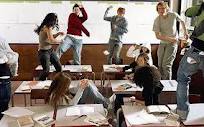
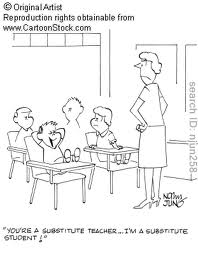
Every teacher has moments when they struggle to gain the attention, if not respect, of their class.

successintheclassroom.com has provided 10 useful strategies for improved classroom management.

1. Give at least one warning.

They’re kids. Kids aren’t perfect. I call the name of the student who is disrupting the class, and I say, “That’s one.” Most of the time, that’s all the student needs to straighten up.

2. Don’t try and teach over the noise.

A lot of the student teachers I’ve had are guilty of this. I was guilty of this also when I first started teaching. You have a plan that you have to get through. You see a few students actually paying attention to you, so you don’t want to stop, even though you know the kids in the back are doing something other than listening to you. You can’t go on. You have to stop and either wait till you have all their attention or you have to deal with the students who are taking attention from you.

3. Don’t raise your voice. Stay in control.

When you yell at the students, you give up control, and the students win.

4. Don’t humiliate a student, especially in front of his/her friends.

It’s never a good idea to humiliate a student. Sometimes, when you call their name in front of the class for making noise, it becomes an embarrassing moment. Do your best to make it as short a moment as possible. Don’t go into a long lecture on proper behavior in front of the class. First of all, you may lose any hopes for future success with that student, and you might cause that student to become defensive and belligerent. Some students will risk everything to save face in front of their friends.

5. Spend time on your lesson plan.

My toughest days are when my plan is the weakest. A detailed lesson plan will go a long way to reduce your class disruptions. You can’t just “wing it,” and expect the class to run smoothly.

6. Be consistent.

If one day you give a consequence for poor behavior, and tomorrow you don’t, it’s sends a bad message.

7. Have a discipline ladder.

What is the consequence for the first offence? Second? Make sure the kids know what will happen at each level. Also, make it a short ladder. One = warning; Two = detention; Three = referral to the office, etc.

8. Forget yesterday’s poor behavior.

Make every day a new day, especially for those students who really made you mad yesterday.

9. Praise and remember good behavior.

It’s good to remind your students of how great they did yesterday or last week.

10. Don’t be afraid to contact parents.

Many times, the parents can help you reinforce your rules. Notice I didn’t say “All the times?” Some parents won’t do anything.

I hope these tips will make life easier for you in the classroom. If you have other strategies that have worked for you, please feel free to share them with us.

A Teacher Spits on a Student and I Lay Blame on the Student

February 21, 2012

Teachers that spit on their students should be punished accordingly. It is unprofessional, unhygienic and completely unacceptable behaviour. But there is more to the story of maths teacher David Pecoraro, who was caught on camera spitting at a boy and has since been relegated to administrative duties as a result of his moment of madness.

The video shows clearly a teacher pushed to the edge of sanity. A student trying to attach his used gum on the teachers rear is rightly put in his place by the teacher. Teachers, especially male teachers, are extremely sensitive with the dangers of being accused of inappropriate behaviour. Students that purposely touch a male teacher’s backside are putting that teacher in a very uncomfortable position.

The video also shows the lack of respect he was getting from his other students. As he screams “I want to teach you maths”, we see a student sleeping and others laughing and goading the defiant, foul-mouthed, gum chewing student.

A teacher was secretly filmed on a cell phone struggling with a male student before appearing to spit in the boy’s face.

David Pecoraro, a high school math teacher, is now working in ‘administration’, after the footage was uploaded to YouTube.

Pecoraro, who taught at Beach Channel High School in Queens, New York, has a row with the student for a few minutes before the confrontation turns physical.

Pecoraro is being investigated on allegations of corporal punishment.

The teacher, who has been in the profession for 19 years, can be heard saying in the clip: ‘You can’t make contact with me, that’s illegal.’

He then tries to explain a math problem to the student who is ignoring the lesson and covering his head with a jacket.

At one point, the student, whose identity isn’t revealed, appears to try to hit the teacher.

Pecoraro then tells the teenager: ‘You’re going to go to jail, you don’t touch me… I want to teach you math.’

The altercation is witnessed by a few other students in the class – along with one boy in front of the camera who is asleep with his head on the desk.

The row continues until the teacher appears to spit at the student who then spits back at him.

The grainy film cuts out after Pecoraro can be seen dragging the student out of his seat.

As bad a this teacher’s actions was, the behaviour of the class was absolutely deplorable. This video should be enough to implicate at least two students with some fairly serious breaches of protocol. First there was the student who should be expelled for inappropriate touching and insubordinate behaviour. Then there is the student who filmed the incident. I don’t care how juicy the footage is, any student filming class and uploading the footage on YouTube deserves to be punished.

Instead, I fear that the only person punished was the one who wanted nothing more than the ability to do his job without being touched, mocked or harassed. If those two other students got off without punishment, it reinforces their despicable behaviour, and allows them to continue their bloodsport.

I pity the replacement maths teacher. I fear they are mere fodder for the next potential YouTube hit.

Disruptive Children Learn Better By Shouting Answers in Class

February 2, 2012

A recent study indicates that ADHD students would greatly benefit from shouting their answers in class.

Durham University experts who analysed test results across more than 500 English schools found that, among children with Attention Deficit Hyperactivity Disorder (ADHD), those who shouted out answers scored better results than their peers who remained quiet.

Louder youngsters were about nine months ahead of quieter classmates in reading and maths, researchers from Durham’s Centre for Evaluation and Monitoring discovered. The experts say their findings raise questions about how best to teach youngsters with ADHD.

Professor Peter Tymms, a renowned education expert and the report’s lead author, said: “Managing and responding to pupils’ different needs and abilities within a class is a challenge for teachers.

“We’re not suggesting that classrooms become free-for-all shouting matches but if this positive learning relationship can be harnessed, it could help teachers and learners.”

I really don’t know what to do with these findings. Whilst it is important to accommodate all students according to their learning styles, allowing some to shout could completely alter the tone and civil nature of one’s classroom. Although classrooms should never be treated like libraries, shouting students do have an effect on the way the rest of the class act.

There are times when studies recommend something and teachers are forced to either dismiss them, or in this case, try to find ways where it may work. For example, I wouldn’t be surprised if a study looking into whether or not an ADHD child learns better if they stand on a table, finds that there is a clear improvement when they do. But would a teacher ever consider allowing a student to stand on a table during the lesson? I think not.

As much as I am determined to cater for all children, there are some recommendations that are not easy to integrate into a classroom setting. This one is worth considering, but I’m not sure how I would go about implementing it without disrupting the rest of the class.

The Practice of Sending Troubled Kids to the “Scream” Room

January 12, 2012

The “scream” room could be quite useful if used differently. At present, some schools are using “scream” rooms as a way to provide disobedient students with a place to vent their anger.

I have an alternate use for them.

I believe the “scream” room should instead be reserved for teachers who have no control over their class.

And for teachers who have outgrown this room and who are so devoid of answers that they are at their wit’s end, I suggest using a “panic room.”

In all seriousness, the problem that I have with a “timeout” area is that students are often sent there without a proper understanding of what they did wrong and without the skills to manage further impulses. It becomes a very temporary band-aid solution to an often far greater problem.

In this case, the problem is further compounded by a seeming lack of supervision. Children should never be sent out of the classroom unsupervised. That is just poor management.

Parents, many of whom have children at Farm Hill Elementary School in Middletown, Conn., are outraged about the way the school is dealing with misbehaving students.

Teachers and staff put the children, including those with special needs, in what parents call “scream rooms.”

“My 1st grader is there and is not learning because there are so many behavioral problems at that school,” Tricia Belin said.

One parent described the rooms as, “scream closets, where kids bang their heads off of concrete walls.”

“The building custodians had to go in and clean blood off the walls and clean urination off the floors,” the parent said.

At a Board of Education meeting on Tuesday night, many parents questioned the use of the rooms that the district calls “timeout rooms.”

“I learned last year from my daughter that she was put in a closet that had holes in the walls and no windows and (was) locked in there,” one mother said.

My advise to the students currently sent to a “scream room”, is to please evacuate and give us poor teachers a chance to scream and  head bang.

Autistic Child Put in Duffel Bag as “Therapy”

December 28, 2011

If you ever wanted a reason why teachers should never be given permission to inflict corporal punishment on children, just reflect on this sickening case. An autistic child who threw a ball across the classroom instead of putting it down as instructed, was subjected to a most unorthodox form of punishment. He was put in a duffel bag with the drawstring pulled tight.

The mother of a nine-year-old autistic boy who was placed in a duffel bag with the drawstring pulled tight has called for the teacher responsible to be dismissed and for the practice to be banned.

Sandra Baker, from Harrodsburg, Kentucky, said that her son, Christopher, has been withdrawn and uncommunicative since the incident at Mercer County Intermediate School two weeks ago.

Baker, who was told her son had been placed in the bag as “therapy” for his autism, in a practice that has been used on other students, said she has had no apology or further communication with the school, despite promises to the contrary.

She said: “You do not put a child in a bag like that for any reason. If I did that to him, I’d be put in jail. We have not heard anything from the superintendent and we have not had an apology.”

What kind of barbaric form of “therapy” is this school handing out? Name me one medical practitioner that suggests time in a duffel bag is the perfect fix for insubordinate behaviour.

And don’t get me started with the schools response (or lack thereof). In these litigious times a school cannot even apologise to rightly disgruntled parents, without the apology seen as a possible green light for a lawsuit.

Even with the apology it seems as though the school hasn’t broken any laws:

Kentucky is one of several states in which no laws exist preventing the use of restraint or seclusion in public schools, according to a document on the Department of Education website.

If we give the teachers the permission to metre out punishments of a physical nature we will see abuse all the time. When teachers (or in this case aides) are capable of this type of ham-fisted reaction, who knows what they will come up with should the parameters widen.

Teacher Writes “Stupid” on Student’s Forehead

December 16, 2011

There is no doubt that teachers have a responsibility to maintain their calm and not give in to difficult and challenging students. Whilst this is harder than it sounds, teachers cannot afford to vent at their students.

When people ask me what are some of the most important skills required to be a good teacher, I always mention patience. To me, patience is an essential skill for every teacher. But patience doesn’t come straight away. It often requires years of practise and hard work.

That is why I think it is important to note that the teacher that wrote the word “stupid” on the child’s forehead was in his first year. Yes, he wrong to do what he did. Yes, he deserves to be sacked. But I hope he is not lost to teaching permanently just because of what he did.

A Tennessee teacher’s first year on the job could be his last. He could lose his job for something he did in the classroom.

It’s a simple school supply, but when a teacher, Alex Boles, used a permanent marker to write the word “stupid” on a student’s forehead, the director of Overton County Schools took immediate action.

“One word can break a child I mean I’ve got three children and I wouldn’t want it done to mine,” said Matt Eldridge, Director of Schools.

It happened last week at Allons Elementary. The K-8 school only has a few hundred students just outside Livingston, Tennessee.

One student had a question, and Boles responded and wrote the word on the student’s forehead in front of his classmates.

“The teacher said I was trying to joke with him and of course I’ve tried to talk to him and told him that’s not the way you joke with anyone,” said Eldridge.

Until last week, Boles taught math at Allons Elementary. He was new to the job, he just started this fall, and what many consider his lapse in judgment could cost him in the long haul.

“It’s kind of one of those mistakes that’s hard to correct,” said Eldridge.

The district will allow the teacher due process, but the director said he will insist that Boles lose his job. A big price to pay for a single significant mistake.

I still hold out hope that Mr. Boles has potential to be a very good teacher. It would be great if he was given the support to learn from his mistakes and is given a second chance in another school.  I also hope he apologises profusely to the child involved, as well as the child’s parents.

Is Bribing a Worthwhile Teaching Method?

December 15, 2011

I am not a fan of bribing. Even though such a practice usually has some positive effects, I think the students can see right through it. It paints the teacher as desperate and devalues skills that should be developed without the incentive offered.

In 1995, the classroom drama Dangerous Minds became a box-office hit. It depicted a former marine played by Michelle Pfeiffer struggling to control a class full of stereotypical lower class misfits. Her plan, neither ingenious nor responsible was to bribe them. Some may have left the cinema hailing her as a genius. I thought it was lazy scriptwriting and left us with no realistic answers for our own classroom management issues.

A recent study seems to come to a different conclusion on the bribing issue:

If your preschoolers turn up their noses at carrots or celery, a small reward like a sticker for taking even a taste may help get them to eat previously shunned foods, a UK study said.

Though it might seem obvious that a reward could tempt young children to eat their vegetables, the idea is actually controversial, researchers wrote in the American Journal of Clinical Nutrition.

That’s because some studies have shown that rewards can backfire and cause children to lose interest in foods they already liked, said Jane Wardle, a researcher at University College London who worked on the study.

Verbal praise, such as “Brilliant! You’re a great vegetable taster,” did not work as well.

“We would recommend that parents consider using small non-food rewards, given daily for tasting tiny pieces of the food — smaller than half a little finger nail,” Wardle said in an email.

The study found that when parents gave their three- and four-year-olds a sticker each time they took a “tiny taste” of a disliked vegetable, it gradually changed the children’s attitudes.

Over a couple of weeks, children rewarded this way were giving higher ratings to vegetables, with the foods moving up the scale from between 1 and 2 — somewhere between “yucky” and “just okay” — to between 2 and 3, or “just okay” and “yummy.”

The children were also willing to eat more of the vegetables — either carrots, celery, cucumber, red pepper, cabbage or sugar snap peas — in laboratory taste tests, the study said.

Surely such bribes can’t work in the long-term. Stickers become boring, star charts get tired, lollies are hardly responsible rewards and prizes are expensive.

If the only way to get a child to do what they should be doing anyway is to bribe them, have you really done your job properly?

Does Getting Students to Apologise Really Achieve Anything?

November 18, 2011

Last week I wrote about the difficulties teachers face in finding punishments that work. Probably the most popular consequence for breaking a school law is the “apology”.  Teachers have traditionally required students to apologise to them or a classmate before that child can reclaim their privileges.

My problem with this, is it’s very rarely an honest, authentic apology.  Usually it is said under duress and the child has no alternative but give the teacher what they want to hear.

It’s just like the fight we used to have with our siblings when growing up:

“Go on!  Apologise to your sister!”

How many times did we actually mean it when we said sorry?

And that’s what teachers face on a daily basis.  It’s like pulling teeth!

“Sorry …”

“What are you sorry for?”

“I don’t know.”

“Well you can’t say you’re sorry and not know what you’re sorry about.”

For even worse infringements the apology is ramped up to a public apology.  This is when the student is made a spectacle over so as to show the others that there is a penalty to be paid for overstepping the mark.  Again, is it really worthwhile if the student’s apology isn’t genuine?

Sometimes I feel like we impose the apology so we can close the chapter and get on with life. The chid has made the apology, I dealt with it and now we can move on. It’s more about seeming to do something rather than actually doing something.

The problem with this is that mistakes that haven’t been learnt from get repeated. Chances are, the apology will not mean much weeks later when the child breaks the same rule again.

Whilst I understand the “apology method” and have personally subscribed to it more times than I feel comfortable admitting to, perhaps it should be the last step in a more extensive response.

For example, in the case of an argument between two students, perhaps we should spend more time mediating the kids and letting them exchange view and clearing the air. Some do this already, others are reluctant to use the time (and go for a quick apology instead).  Only when it seems that both sides can appreciate the other’s point of view, should we request the apology.  That way it will be genuine and longer lasting.

Elton John once sang that “Sorry seems to be the hardest word.”

It’s only hard when the person saying it, actually means it.

Teachers Stripped of the Ability to Give Punishments That Work

November 11, 2011

We are currently living in the age of “the hamstrung teacher’. Never has it been so hard for teachers to gain control, receive respect and maintain some semblance of authority.

Blogs and staff rooms are replete with dispirited and powerless teachers struggling with unruly and defiant students. It wasn’t long ago that teachers were able to meter out tough and effective consequences for bad behaviour. Unfortunately, it is so much harder now than it ever was to find the right penalty for inappropriate and insubordinate behaviour.

Why not send them to the Principal?

The Principal used to be an imposing figure. – someone you didn’t want to meet, even to get a certificate or compliment. Students used to avoid the Principal like a plague. Principal’s used to concern themselves with discipline issues and take charge when students overstepped the mark.  But nowadays a visit to the Principal’s office is not all that dissimilar to a trip to the fun park. A Principal’s job now is to keep parents and students happy and leave the real disciplining to the teachers.

“Next time try not calling the teacher those names.”

What about suspending them?

Nine hundred students are suspended every day in England. In Australia it is 100 per day. Being suspended used to be a humiliation. It would involve notifying the students’ parents, who would be none too happy to receive the phone call. Now suspensions presents just another opportunity to get back to the Playstation or X-Box. Parents often reassure their kids and allow them to go home and vegetate. Hardly a real punishment!

What about taking away their recess?

Don’t tell the civil libertarians about this mode of punishment! According to law, students can only be kept in for some of recess, not the entire playtime. And anyway, why should the teacher be punished? Teachers rely on their lunch breaks to recharge and re-energize. Monitoring detention just isn’t fair.

What about ringing the parents?

Parents used to be on the side of the teacher. When a teacher called a parent, that parent would take stock of what the teacher was saying and become partners in helping manage the problem. Nowadays, parents are likely to become defensive, make excuses and become unwitting enablers for their children’s poor behaviour.

Please note, that I am not tainting all parents. On the contrary, the parents I work with have been incredibly open and supportive. I am merely pointing out that trends are changing and punishments that used to make students squirm and think twice before acting, are now no longer a deterrent.

It is also important to note that most teachers are not trigger happy when it comes to punishments. We don’t like punishing students. We try to command respect rather than demand it. But there are times when all semblance of control is lost and students are purposely trying to sabotage the class and undermine their teacher.

In those cases, the teacher is often left to raise their arms skyward and ponder what it is they can do to remedy the situation.