Pupils should not be subjected to full classroom tuition until the age of six to off-set the effects of premature “adultification”, it was claimed.
Dr Richard House, a senior lecturer at Roehampton University’s Research Centre for Therapeutic Education, said gifted pupils from relatively affluent backgrounds suffered the most from being pushed “too far, too fast”.
He quoted a major US study – carried out over eight decades – that showed children’s “run-away intellect” actually benefited from being slowed down in the early years, allowing them to develop naturally.
Many bright children can grow up in an “intellectually unbalanced way”, suffering lifelong negative health effects and even premature death, after being pushed into formal schooling too quickly, he said.
Most British schoolchildren already start classes earlier than their peers in many other European nations. Children are normally expected to be in lessons by five, although most are enrolled in reception classes aged four.
I agree with the main principles of his argument, I just think the premature death theory is a bit of an exaggeration.
A dull, dormant life can not be fully responsible for the rise of the infamous “choking game” played largely amongst kids, but it surely must be a contributing factor. The constrictive and restrictive nature of school, regulations, non-active lifestyles and anti-socialised extra-curricula activities must be factored into the increased popularity of this dangerous game.
Although the choking game is not new, very little research has been done to investigate how often it happens or which kids are more likely to try it. But the new study published today in the journal Pediatrics gives a snapshot of who is engaging in this risky activity.
Researchers surveyed nearly 5,400 Oregon eighth graders, and 6.1 percent reported playing the choking game at least once in their lives. Among those who had played, 64 percent had played more than once and 27 percent had done it more than five times. Boys and girls were equally likely to have participated.
The researchers found that kids who participated in the game commonly engaged in other risky health behaviors. About 16 percent of boys and 13 percent of girls who reported using alcohol, tobacco or marijuana on the health survey also reported playing the choking game. Girls who reported being sexually active were four times as likely to participate in the choking game as those who had never had sex.
Robert Nystrom, adolescent health manager at the Oregon Public Health Division and one of the study’s authors, said it’s significant that kids who play the choking game are also experimenting with alcohol, drugs and sex.
“Risk-taking is a part of normal adolescent development. The fact that a lot of adolescents are participating in these behaviors shouldn’t surprise us,” Nystrom said. “What we want to do is prevent it.”
Nystrom noted that the choking game is different from autoerotic asphyxiation, where the goal of near-strangulation is sexual gratification. In the choking game, kids simply seek the rush that comes from passing out.
Before adults become hysterical about this growing trend, I ask them to consider the life of a standard teenager and reflect on what we can do to help them appreciate the real thrills that life has to offer.
More than one in three of those born in professional households had downed a full glass before reaching their teenage years, the statistics show.
The 35 per cent figure among the middle classes is almost twice the level found among 12-year-olds across all economic groups.
Experts said that most children who had drunk alcohol at such a young age were getting it from their own homes.
While some were secretly raiding well-stocked drinks cabinets, many more were being allowed to drink by parents who believed that it would help them to develop more mature attitudes towards alcohol.
The Ipsos Mori poll for charity Drinkaware, which is funded by the alcohol industry to promote sensible drinking, surveyed more than 500 parents from the social groups ABC1 and their children, aged between 10 and 17.
This also reminds us that we are not doing nearly enough to remedy the problem.
Whenever teachers dispense parenting advice, the outcome is almost never a positive one. As much as I agree that children who are exposed to violent movies and video games are worse for it, I think it is essential that teachers spend less time judging parents and more time concentrating on the curriculum.
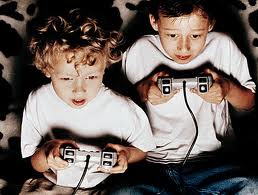
School pupils are being allowed to stay up until the early hours of the morning playing games that are inappropriate for their age, said Mary Bousted, general secretary of the Association of Teachers and Lecturers.
She said many parents were failing to adhere to age-restrictions on the most violent games, raising concerns that children are growing up desensitised to aggression and bloodshed.
It was also claimed that over-exposure to screen-based entertainment was robbing children of valuable time interacting with friends or playing outdoors – harming their education and long term development.
It follows repeated concerns from psychologists that watching violent films and playing games such as Grand Theft Auto, Mortal Kombat and Modern Warfare makes youngsters more prone to violence.
Speaking yesterday, Dr Bousted said: “I think what we are talking about, first of all, is the amount of time children spend locked in their room. The fact that children spend hours locked in their rooms playing computer games, which means they’re not interacting, they’re not playing and not taking exercise.”
Some of these games were “very violent”, she said, and risk having a major effect on “tender young minds of children and young people.”
Dr Bousted said that many teachers fear parents are ignoring age restrictions on computer games, which often ban their sale to children aged below 18.
“The watershed tends to work quite well, but with online TV and video children and young people are probably watching inappropriate content over a range of media,” she said.
It would be great to share criticisms with parents without fear of reprisal. But, in my experience, the importance of having parents on side means that these criticisms can interfere with a healthy parent/teacher partnership.
Whilst I can’t understand why a teacher wouldn’t have spotted their students performing oral sex in the classroom, I don’t think that the teacher’s role in this story is the critical one. What I want to know is how on earth do 8 year olds end up behaving like that in the first place?
An unnamed teacher at Tallulah Elementary School in Tallulah, Louisiana has been fired from her job as a teacher for not noticing two third graders engaged in oral sex underneath a table, according to the local News Star.
District Superintendent Lisa Wilmore made it clear to the paper that the teacher was fired because the incident occurred on her watch.
Wilmore said, according to the News-Star,
“The principal felt that she was not monitoring the classroom adequately. The principal made a decision, and I supported the principal. We have to make sure we have people in these classrooms who are monitoring our students.”
The district of Tallulah has been dealing with several problems this year. Recently another teacher was placed on leave for a substance abuse problem.
The School District also announced that while the two children are going through counseling they are not going to be disciplined or have their studies hurt.
Both teacher dismissals were part of what Wilmore is calling her program of “Changing the culture” in the school district.
It doesn’t matter how many teachers that school fires, they won’t come close to changing the culture of the school without investigating the behaviour of their students. What are these children exposed to at home? Are these kids exposed to pornographic material? Did they now what they were doing? What are their parents’ role in this incident?
It is not enough to focus on the teacher. Yes, the teacher could have prevented it from happening by being more alert. Yes, teachers who don’t notice major incidents under their watch have some serious questions to answer. But that should never prevent the school from investigating the reasons behind the incident and find out what caused their students to act that way.
Sacking teachers in the name of an improved school culture is useless when third grade children feel the need to engage in sex acts and seemingly nothing is done about it.
One has to wonder what level of outside supervision schools have if it overlooks a game involving “dry humping”. For this to be stopped only after a complaint from a parent suggests that some teachers should put down their mugs of coffee and actually observe the children during yard duty.
A disturbing playground activity has parents riled over what is going on during recess at an elementary school.
Washington Elementary School in New Ulm, Minnesota, is at the centre of controversy as it was learned fifth grade students had played ‘rape tag’ during recess.
The game is very similar to freeze tag, except to unfreeze someone, a student would have to simulate a sex act on the frozen person.
A parent reported the incident to school officials after finding their child was talking about the game on Facebook.
So what flimsy excuse does the Principal give for something that should have been banned minutes after it was first trialled in the playground?
The school’s principal, Bill Sprung, told KEYC-TV: ‘This age level of kids – 10, 11, 12—is a time when kids start to mature; start to experiment.
He added: ‘Part of that experimentation is that they do things we wish they wouldn’t have done.’
There is a great level of trust that parents bestow to teachers and schools. They expect, amongst other things, that respect for women and girls is inherent in all activities both inside and outside of the classroom. These parents have been justifiably let down by a school that overlooked the obvious and acted reactively rather than proactively.
Parenting is a difficult job, and as much as I am not in favour of smacking, I think it inappropriate for me as a loving yet imperfect parent to impose restrictions on other parents. How they choose to discipline their children should not be up to me or our politicians.
I believe that smacking does little good in the long-term and can potentially do a disservice to the child. Yet, I was smacked by my parents and have nothing but respect for the way they reared me. They clearly disciplined me out of love and an unwavering determination to enforce healthy routines and boundaries, not out of frustration.
I realise that smacking can escalate into worse cases of abuse, and I naturally abhor the abuse of children. I must say, that I also dislike the spoiling of children and the indifference of some parents in setting boundaries and enforcing consequences for their childs’ unruly behaviour.
Advocate good parenting skills and practices by all means, but don’t stop parents from doing what they feel is right for their own children.
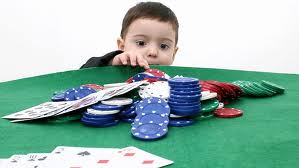
CHILDREN are being offered free food as an enticement for their parents to play pokies, in what is being labelled as a gambling loophole.
The gambling watchdog is investigating as inducements for gamblers are banned in South Australia.
In one instance, Cafe 540 – on Port Rd, Allenby Gardens is offering the food to children of gamblers playing nearby poker machines at Tavern 540.
A spokesman for Cafe 540 said the business was a separate entity from Tavern 540 but acknowledged it was “under the same roof”.
He said the free food was served in an area totally separated from the gaming machines of Tavern 540 and was not an enticement to gamble. The Advertiser investigated the issue after a reader complained that the school holiday free food deal was offered “all day every day”.
Last week I wrote a post on the challenges of teaching shy students. I gave an account of my struggles with one particularly shy student and the strategy I used to get him to talk. I have great empathy for the child that is too afraid to speak and understand the frustrations involved when teaching such a student.
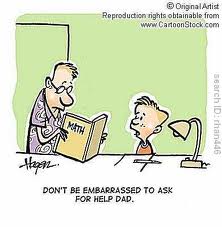
The Courier-Mail reports new research from Southern Cross University has found strong benefits for the use of Twitter by students too embarrassed or uncomfortable to ask teachers questions in the time-honoured raised-hand method.
Southern Cross business lecturer Jeremy Novak, along with Central Queensland University’s Dr Michael Cowling, studied the use of Twitter among university students as a method for asking questions and gaining feedback without having to stand the stares and scrutiny of fellow students.
The positive feedback from students, particularly international students, has convinced the research team the use of Twitter technology could also be embraced by classrooms at high school and even primary school level.
In my opinion, shyness is not a genetic disease or impenetrable condition. To me, shyness is a result of a lack of self-esteem. Shy children act that way because they don’t feel valued. Instead, they feel judged, ostracised or labelled.
A teacher can do one of two things. They can either enable the shy student by using Twitter, or they can actually attempt to help that student find their feet and feel good about themselves.
“But who has the time for that? We have the curriculum to cover!”
This line sums up my frustrations with current educational thinking (as perpetuated through teacher training programs). In my opinion, it is every bit as important for a teacher to assist their students in matters of self-confidence as it is for them to teach them the curriculum. In fact, I would suggest that it is more important. Facts are learnt and forgotten. The average person on the street has long forgotten calculus and how many chemical elements make up the periodic table. What they wouldn’t have forgotten is how they were treated and how their experiences at school have changed them for the better or worse.
Why placate a shy person when you can change a shy person? Why play the game when you can show them that they have a voice and it’s special and unique and something to be proud of.
And besides, receiving Tweets in class is so unprofessional.What, am I supposed to stop my class so I can check my phone for a Tweet?
Trust me, as good a feeling as it is to teach children new skills or concepts, helping a child discover that they are important and that their thoughts and opinions matter is so much more rewarding.
I am not a big fan of Barbie. However, I think the initiative to get Mattel to include a cancer suffering “Bald Barbie” has plenty of merit:
Most kids in America recognize Barbie immediately.
She’s tall, she’s thin, and she’s…bald?
Rebecca Sypin is one of the people behind this Facebook campaign urging Mattel to create a bald Barbie, one she says children battling cancer and other diseases that cause hair loss can relate to.
“When you go to the supermarket, sometimes you have little kids who’ve never seen it before, staring, and I think it would make it much more mainstream and more normal for kids to see that,” said Sypin.
Sypin knows about children and cancer all too well. Her daughter, Kin Inich, is battling leukemia.
“Everybody else has hair, even a boy has hair and you don’t. So it would make you feel like you’re Barbie, you would be the glamorous girl with the big lifestyle and everything now,” said Kin.
The Beautiful and Bald Barbie Facebook page has been up and running for less than a month, and already has more than 65,000 friends.
But despite that support, Sypin says the bald Barbie idea has gotten a cool reception from Mattel, saying that the company has told her they do not take unsolicited Barbie doll suggestions from outside sources.
A bald Barbie may still be a possibility though. Mattel released a written statement Thursday saying the company is honored that so many people are looking to Barbie as the face of such an important cause.
“We receive hundreds of passionate requests for various dolls to be added to our collection,” the statement reads. “We take all of them seriously and are constantly exploring new and different dolls to be added to our line.”
Let’s face it. The reason that Mattel seem less than enthusiastic about the idea, is that it would almost certainly make a loss. That, and the fact that the Barbie name is synonymous with looks and dimensions that lack realism and are deliberately out of proportion. A doll that humanises the Barbie name and presents her as flawed and vulnerable is not what they are setting out to do.
I will be watching closely to see whether or not Mattel has the conviction to bypass profits for this extremely noteworthy cause. If they don’t, it will only serve to reaffirm my current dislike of the product.







 Topical Teaching
