
Archive for the ‘Child Development’ Category

Things Middle School Students Wish We Knew

December 15, 2014

middle

Courtesy of weareteachers.com via  :


1. I was not trying to get attention by falling off the chair. I am approximately infinity inches bigger than I was yesterday and I just lost track of how to balance. I felt like an idiot so I made falling into a joke. Crying was the other choice. And I’d rather cut off my arm than cry in school.

2. I did that homework. I am almost positive I did it. Getting it from done to folder to backpack to school to you is like seven extra homeworks. That is too many. It’s also possible I forgot to do the homework. I honestly have no idea where my planner is. Or maybe the homework was completely confusing and if I asked for help people might think I am stupid now when that used to be my best subject.

3. That time I called you Mom was the most humiliating moment of my life. It’s one thing in second grade but middle school? Ugh. How does this stuff still happen to me?

4. When you force us to get up—do stuff, act it out, test our ideas—it wakes us up and makes the lesson so much more fun and easy to remember.

5. Sometimes I just can’t focus. I’m buzzy, jumpy, pumped with electricity. Somebody suddenly looks distractingly attractive, across the room, which is fully that other person’s fault, not mine. Or I don’t get what we’re discussing and the pain of not understanding is so excruciating I just have to take a break from paying attention.

6. It feels awesome when you notice something special about me. When you value a skill or interest of mine, you give me a route in to subjects I didn’t think I’d like—and make me feel like I have something worth sharing.

7. What you tell me about myself matters way more than I hope you know. When you tell me I am something—smart, brave, kind, stupid, a trouble-maker, creative, a writer, a mathematician, funny, hard-working—I believe you.

8. I like it when you’re sarcastic but not when you’re harsh. When you say something ironically and I get it, I feel smart and mature. But when you’re mocking in a sharper way, it feels mean and a little scary.

9. Respect me. There are lots of things I already know about myself. Some I want to talk about, A LOT, and it means so much to me when you find time to include me (and it) in class. But lots of other things about me, I’m not ready to discuss, and especially not in class.

10. If you call on me and I am flat-out wrong, please don’t humiliate me. I’m already praying for a hole to open up in the floor and swallow me. It’s hard for me to believe that not knowing isn’t shameful but is instead a good starting point for learning. Help me.

And one bonus extra thing: You are suddenly one of the most important adults in my whole world. How you respond to me affects everything. Please be tough. Please be gentle. Especially when I am neither.


Click on the link to read Watch a Classic Argument in Action (Video)

Click on the link to read 7 Things a Quiet Student Wishes Their Teacher Knew

Click on the link to read Skills That Aren’t Taught But Should Be: #1 People Skills

Click on the link to read Top 10 Most Unusual School Bans

Click on the link to read Rules that Restrict the Teacher and Enslave the Student

Watch a Classic Argument in Action (Video)

September 29, 2014

https://www.youtube.com/watch?v=3sKdDyyanGk


One child claims it’s sprinkling another that’s it’s raining. Both refuse to concede. My favourite is the girl in the middle that does her best to stay impartial and act as peacemaker.


Click on the link to read 7 Things a Quiet Student Wishes Their Teacher Knew

Click on the link to read Skills That Aren’t Taught But Should Be: #1 People Skills

Click on the link to read Top 10 Most Unusual School Bans

Click on the link to read Rules that Restrict the Teacher and Enslave the Student

Click on the link to read This is What I Think of the No Hugging Rule at Schools

7 Things a Quiet Student Wishes Their Teacher Knew

August 26, 2014

quiet

A brilliant list courtesy of the extraordinarily talented teenager. Marsha Pinto:


1. Being quiet doesn’t make us any less smart

Teachers don’t understand how frustrating it can get reading the comment, ” _____ is a great student but he/she doesn’t participate in class.”

Remember that still waters run deep. I know that some teachers like to base grades on participation, but if you could only hear all the great ideas we have inside our head, you’d learn that we have some great ideas to share. In fact, we are practically masters of brainstorming.

However, it’s difficult for us to master the art of jumping in to a conversation or interrupting. We may not raise our hands as quickly as you want us to or say as much as you wanted us to, but honestly we just like to take our time to process our ideas. Does it even make a difference if we write more than we speak?

2. We are not a problem that you need to solve.

So, we may not have participated on the first day, or the second day or the first three months of school but please don’t keep pestering us about when we’re going to talk. Sometimes there isn’t a reason why we are so quiet, it’s just part of who we are. Many people tend to assume that quiet people are stuck in this quiet prison and need to be rescued so that we can enjoy life. I can assure that this is not always the case. We quiet students are quite content with the way we are… until you start pointing out our faults. We often do not need the “help” you are suggesting, we just need your patience and understanding.

3. The feeling that comes with the hearing the phrase, “Speak up! I can’t hear you.”

It was daunting enough when you caught us off-guard and put us on the spot to answer that question in front of the entire class, so please don’t embarrass us any further. We wish you only knew how much effort we put into taking the initiative to speak up.

If you can’t hear something we said please help us out, come closer and listen carefully to what we are trying to say. Please don’t belittle us in front of a crowd of people because that will do more harm than help.

4. Group projects can get really stressful for us:

Sometimes we’re in a class where we don’t have any friends and other times you assign us to a group of people whom we do not even know. There’s nothing wrong with group work and the benefits are no doubt important for our future, however quiet students are often taken advantage of in group projects. To prevent this from happening, teachers need to assign each person in the group a role, rather than allowing students to assign each other’s role.

5. We are not going to speak when we have nothing to say.

Teachers don’t understand that quiet students believe that it’s not necessary to talk when you have nothing to say. No we are not being rude, it’s just that we believe that there’s no need to force out a couple of words just for the sake of doing so. You have no idea how much time we spend trying to formulate our speech before we actually say it out loud.

We like taking our time to formulate our thoughts rather than rushing to speak. We hope someday you will understand this.

6. We have a personality.

Teachers, we know you don’t see us as the quote and quote ideal student, but if you really came to look beyond our quiet ways you’d come to realize that there’s much more to us than meets the eye. We are writers, dreamers, creators and a lot of other things you may think we never could be. We’d like to love ourselves for who we are and not grow-up to hate ourselves. Do not treat us any differently. We’re normally people who laugh, cry, have crazy obsessions, dislikes and embarrassing moments. Who knows? Maybe we even have more in common with you than you think.

7. Just because we’re quiet, doesn’t’ mean you have to give up on us.

Teachers often assume that it’s not worth talking to or getting to know the quiet students because they don’t have anything to say hence they don’t have potential. However, there are a few teachers, who will take those few extra steps to the back of the classroom to connect with the quiet student rather than judge them from a distance. We quiet students may not say much at first, but trust me we do appreciate you taking the effort.

Teachers and students may not see eye to eye when it comes to most things, but what both sides don’t realize is that they could learn a lot from each other. You may ask yourself, ” What can I learn from someone who hardly speaks?”

Well, you can learn the importance of active listening. A quality slowly going instinct when so many distractions keep us from being in the moment and truly listening to what someone has to say.

Quiet students hope that someday teachers everywhere will be able to appreciate the uniqueness we bring to the classroom and not make assumptions without really getting to know us.

The word “teacher” is a verb, not a noun. Hence this year, I encourage all teachers to break the barriers that separate them and their students and to create an inviting atmosphere where no student should hold back being themselves for fear of rejection. Teachers should aim to bring an accommodating atmosphere to the classroom where both extroverts and introverts can share their ideas and reach their potential without feeling pressurized. Your students might not thank you in- person, or write it in a card or note, but some day they may express their gratitude in an acceptance speech and thank you for giving the wallflower a chance to shine.


Click on the link to read Skills That Aren’t Taught But Should Be: #1 People Skills

Click on the link to read Top 10 Most Unusual School Bans

Click on the link to read Rules that Restrict the Teacher and Enslave the Student

Click on the link to read This is What I Think of the No Hugging Rule at Schools

Click on the link to read Political Correctness at School

Click on the link to read What Are We Doing to Our Kids?

Skills That Aren’t Taught But Should Be: #1 People Skills

August 19, 2014

crash


Is it just me or are people afraid of human interaction nowadays? It’s almost as if people go around with an invisible shell that protects them from the outside world.

There was once a time where it was considered rude if you didn’t make an effort to get to know your next door neighbors. Now it’s hardly novel for people to admit that they have never once uttered a word to those living next door.

Today I visited my local supermarket. I make a point of avoiding the self service checkout and go to a regular register instead. I feel bad that machines are taking the place of people and make sure I support the check-out personnel, even if it involves a longer wait. This afternoon I noticed that the regular aisles were empty but the self-service area was banked up. I can understand that people use the self-service machines for convenience, but it seems they also like it because it gives them yet another opportunity to avoid human interaction.

I remember in my early days of teaching, I was having a general discussion with my Grade 3 students. They were talking about the size of their homes. One pointed out that she has 2 homes because her parents are divorced. Her friends were in shock.

“I didn’t know your parents were divorced” one of the said. “So are mine.”

“Really?”

“Mine are too” said another

“So are mine” said another.

Now I know that children are reluctant to freely open up about such things, but it surprised me that classmates would take 3-5 years of being around each other on a daily basis before finding that out.

There is often reports in the media of a religion or culture that claims to be misunderstood or isolated, and you can understand why. There just isn’t enough effort on the part of society to leave the cocoon and start interacting with others. Especially those who are seemingly different from them. It’s just like in the brilliant Academy Award winning movie, Crash – people only deal with others when they literally crash into them. And of course by then, the interaction is never going to be healthy.

You would think that the schoolyard is the best place to address this issue. After all, schools don’t play favourites, they don’t seek to isolate and they try to encourage positive social interactions.

Or, maybe not ….

Some of the playground rules I have covered over the past few years do anything but that which I have just expressed. Take the school which has banned its students from having best friends. That’s right, banning best friends! In other words, to teach children not to exclude the school steps in and excludes for them.

And then there are the schools following this insane trend of outlawing touching. This includes not just hugging and holding hands but also high-fiving.  Just crazy!

So the very institution that can set a strong and purposeful platform for inclusion, unity and human interaction is actually, at least in some cases, preaching the opposite. They would rather see each child on their own instead of in friendship groups embracing one another.

I feel like we are missing an extraordinarily important opportunity. I see it as vital that we help our students to break the shackles and help them to want to connect with others in a meaningful way.


Click on the link to read Top 10 Most Unusual School Bans

Click on the link to read Rules that Restrict the Teacher and Enslave the Student
Click on the link to read This is What I Think of the No Hugging Rule at Schools

Click on the link to read Political Correctness at School

Click on the link to read What Are We Doing to Our Kids?

Click on the link to read Stop Banning Our Kids From Being Kids

This is What a Real Classroom Should Look Like (Video)

July 5, 2014


Comedian Shawn Harris posted this beautiful clip featuring his son returning to school after a week away with a stomach ailment.


Click on the link to read Smartphones and Tablets Blamed for Stunting Our Kids’ Speech

Click on the link to read A Preschooler’s Most Memorable Graduation Speech (Video)

Click on the link to read Is “Bubble Wrapping” Your Child Really Worthwhile?

Click on the link to read The Ease in Which Our Children Can be Brainwashed (Video)

Click on the link to read Teaching Young Children the 3Rs Could be Damaging: Psychologist

Click on the link to read 7 Ways To Teach Kids Self-Awareness

Smartphones and Tablets Blamed for Stunting Our Kids’ Speech

June 23, 2014


tablet

I find it ironic that some of the best speech pathologists use smartphone and tablet apps as a central plank of their clinical treatment. It seems that these devises are also blamed for creating the problem in the first place.

My view is that the best way to enhance a child’s vocabulary is to speak to them regularly. Unfortunately, many parents don’t have the same time with their kids that previous generations have had. The modern working family often relies on child care, which is not always the best place for kids to get regular conversations.

MORE children are starting school with serious speech problems because parents relying on smartphones and iPads as “babysitting” tools are allowing excessive use, education leaders have warned.

Up to one in eight children in some preschool and Reception classes need speech therapy because they have been starved of conversation and not read to enough at home.

School leaders want more access to speech pathologists to tackle growing numbers of students struggling to make basic phonetic sounds.

Some parents are resorting to private therapy even before their children begin kindergarten.

SA Primary Principals Association president Pam Kent said digital devices were “a fantastic tool” but “they should not be a babysitting device”.

“It’s not that we’re sledging parents but all these (electronic) activities need to be monitored in moderation. They are quite addictive and children can become quite obsessive about them,” she said.

I would like to see teachers modify their expectation of preschool language standards and instead of farming under performing children to speech pathologists, show a greater preparedness to fast track them from within the classroom.

Let’s just assume that children have less than ideal skills in areas such as speech and build a curriculum that meets these challenges rather than sticks up the white flag and reaches for the nearest specialist.


Click on the link to read A Preschooler’s Most Memorable Graduation Speech (Video)

Click on the link to read Is “Bubble Wrapping” Your Child Really Worthwhile?

Click on the link to read The Ease in Which Our Children Can be Brainwashed (Video)

Click on the link to read Teaching Young Children the 3Rs Could be Damaging: Psychologist

Click on the link to read 7 Ways To Teach Kids Self-Awareness

Click on the link to read Kids Explain the Meaning of Happiness

A Preschooler’s Most Memorable Graduation Speech (Video)

June 1, 2014

https://www.youtube.com/watch?v=A-3DZZJ74CI%5B/embed


Click on the link to read Is “Bubble Wrapping” Your Child Really Worthwhile?

Click on the link to read The Ease in Which Our Children Can be Brainwashed (Video)

Click on the link to read Teaching Young Children the 3Rs Could be Damaging: Psychologist

Click on the link to read 7 Ways To Teach Kids Self-Awareness

Click on the link to read Kids Explain the Meaning of Happiness

Is “Bubble Wrapping” Your Child Really Worthwhile?

May 25, 2014


bubble

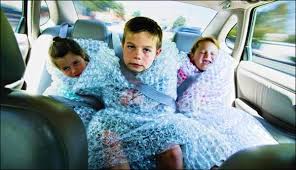
We all do it. Too afraid to risk a serious injury to your precious child we say, “Steer clear of that” or “Get off that ledge”. Nobody wants to see their child break a bone or scream in pain.

As a stay-at-home father I take my son to a park almost ever single day. The idea is to let him run around and enjoy the fresh air. But let’s face it, the average park is a great disappointment.  The equipment is designed to seem fun, but when tested is severely underwhelming. The slides are slow, the climbing apparatus is hardly off the ground and the greatest element of danger is being accidentally bumped into by another eager child. Park designers are simply afraid of potential lawsuits, so they design a layout high on colour and style and low on substance.

I read the following opinion piece in an online Canadian newspaper. I couldn’t agree with it more:


Imagine spending childhood outdoors, running, playing and even, heaven forbid, getting dirty.

Not only does it sound like a lot more fun than a play date booked three weeks in advance at an indoor gym under the protective watch of parents, but it’s also healthier.

And, unfortunately, it’s something that fewer and fewer Canadian children get to do, putting them at risk of growing overweight or just out of shape and, frankly, unadventurous.

As the Star’s Diana Zlomislic reported this past week, the first global report card to measure childhood physical activity gives Canadian youngsters an embarrassing D-minus score, behind top-rated countries like New Zealand, Mexico and even benighted Mozambique.

Leave aside the pointless comparison with a desperately poor country where kids do physical domestic chores like collecting water and walk to school as a matter of course. Ranked beside comparable countries, Canada still looks bad. Parents here may spend significant sums on structured activities but only 4 per cent of young people aged 12 to 17 get an hour of high cardio activity each day, according to a report by Active Healthy Kids Canada.

While it’s long been known that children are devoted to video games and parents stuck in gridlock run out of time to go outside with their kids and play, it’s fair to suggest that a little extra effort is needed.

Release those youngsters from the parental “bubblewrap,” as Healthy Kids’ researchers rightly suggest, and give them the freedom to play. Outdoor, unstructured play can provide kids with better exercise than the expensive programming.

As Healthy Kids’ chief scientific officer Dr. Mark Tremblay says, “We need to stop treating physical activity like a vitamin, something you take once a day.”


The Ease in Which Our Children Can be Brainwashed (Video)

May 10, 2014


I am posting this video as an example of how easily our children can be lead. It is for this reason that teachers must make a concerted effort to resist divulging their own political views or preferences. It is not for our students to be puppets for our agendas. It is vital that they be given the opportunity and basic analysis skills to make up their own minds up regarding topical issues.


Click on the link to read Teaching Young Children the 3Rs Could be Damaging: Psychologist

Click on the link to read 7 Ways To Teach Kids Self-Awareness

Click on the link to read Kids Explain the Meaning of Happiness

Click on the link to read 5 Reasons Why It’s Healthy to Encourage Children to Play

Click on the link to read Allowing Children to Stand Out From the Pack

Teaching Young Children the 3Rs Could be Damaging: Psychologist

April 24, 2014


reading

Teaching young children the 3Rs may not be the only skills a teacher or parent should be imparting to their young students, but it is hardly damaging. A considerate, patient and skilled person can teach all kind of skills without causing the distress alarmist psychologists make us believe occurs:


Cambridge University lecturer David Whitebread said it was important for parents to play with their children, as these youngsters were more likely to enjoy solving problems, and better equipped to cope with failure.

Former primary school teacher Mr Whitebread also claimed the government was overly concerned with getting children to learn the 3Rs at an ever decreasing age, and said younger children were better off learning to cook alongside their parents.

Mr Whitebread, a developmental cognitive psychologist, said that although learning to read was an important skill, teaching reading, writing and arithmatic to toddlers was a waste of government money and the child’s time.

Mr Whitebread said that learning to read at to young an age could even be damaging for a child.

‘Instead the parent can share something they love, such as making cakes, or tinkering with engines, the key is partly sharing the enthusiasm but mainly the conversations you have with the child while doing it.’


Click on the link to read 7 Ways To Teach Kids Self-Awareness

Click on the link to read Kids Explain the Meaning of Happiness

Click on the link to read 5 Reasons Why It’s Healthy to Encourage Children to Play

Click on the link to read Allowing Children to Stand Out From the Pack

Click on the link to read Hilarious Examples of Kids Telling It As It Is