Posts Tagged ‘Writing’

The ‘100 Greatest Books for Kids’ is Released

February 16, 2012

Scholastic Parent & Child magazine have gone to the trouble of ranking the 100 “Greatest Books for Kids.” There are some great titles among the list and some notable omissions. I am a tad disappointed “The Cat in the Hat” didn’t make the list. I suppose you can’t please everybody.

Below is the list:

1. Charlotte’s Web by E.B. White

2. Goodnight Moon by Margaret Wise Brown

3. A Wrinkle in Time by Madeleine L’Engle

4. The Snowy Day by Ezra Jacks Keats

5. Where the Wild Things Are by Maurice Sendak

6. Harry Potter and the Sorcerer’s Stone by J.K. Rowling

7. Green Eggs and Ham by Dr. Seuss

8. The Diary of a Young Girl by Anne Frank

9. The Giving Tree by Shel Silverstein

10. Frog and Toad Are Friends by Arnold Lobel

11. Anne of Green Gables by L.M. Montgomery

12. The Very Hungry Caterpillar by Eric Carle

13. Madeline by Ludwig Bemelmans

14. The Wind in the Willows by Kenneth Grahame

15. The Dot by Peter H. Reynolds

16. Tuck Everlasting by Natalie Babbitt

17. Pat the Bunny by Dorothy Kunhardt

18. When Marian Sang by Pam Munoz Ryan

19. Knuffle Bunny: A Cautionary Tale by Mo Willems

20. Where the Sidewalk Ends by Shel Silverstein

21. Bud, Not Buddy by Christopher Paul Curtis

22. Corduroy by Don Freeman

23. The Phantom Tollbooth by Norton Juster

24. The Little Engine That Could by Watty Piper

25. The Giver by Lois Lowry

26. Where the Mountain Meets the Moon by Grace Lin

27. Black on White by Tana Hoban

28. Don’t Let the Pigeon Drive the Bus! by Mo Willems

29. Are You There God? It’s Me, Margaret. by Judy Blume

30. My Rotten Redheaded Older Brother by Patricia Polacco

31. The Mitten by Jan Brett

32. The Runaway Bunny by Margaret Wise Brown

33. The Hunger Games by Suzanne Collins

34. Swimmy by Leo Lionni

35. Freight Train by Donald Crews

36. The Secret Garden by Frances Hodgson Burnett

37. The Little Mouse, the Red Ripe Strawberry, and the Big Hungry Bear by Don & Audrey Wood

38. Diary of a Wimpy Kid by Jeff Kinney

39. Zen Shorts by John J. Muth

40. Moo, Baa, La La La! by Sandra Boynton

41. Matilda by Roald Dahl

42. What Do People Do All Day? by Richard Scarry

43. The Lion, the Witch and the Wardrobe by C.S. Lewis

44. Good Night, Gorilla by Peggy Rathmann

45. The Composition by Antonio Skarmeta

46. Not a Box by Antoinette Portis

47. Brown Bear, Brown Bear, What Do You See? by Bill Martin Jr. and Eric Carle

48. Hatchet by Gary Paulsen

49. Martin’s Big Words by Doreen Rappaport

50. Sarah, Plain and Tall by Patricia MacLachlan

51. Sylvia Long’s Mother Goose by Sylvia Long

52. The Lightning Thief by Rick Riordan

53. The House at Pooh Corner by A.A. Milne

54. Through My Eyes by Ruby Bridges

55. Smile! by Roberta Grobel Intrater

56. Living Sunlight by Molly Bang & Penny Chisholm

57. The Bad Beginning by Lemony Snicket

58. Harvesting Hope: The Story of Cesar Chavez by Kathleen Krull

59. Dear Juno by Soyung Pak

60. Head, Shoulders, Knees, and Toes… by Annie Kubler

61. The Lion and the Mouse by Jerry Pinkney

62. Diary of a Worm by Doreen Cronin

63. The Invention of Hugo Cabret by Brian Selznick

64. My Truck Is Stuck! by Kevin Lewis

65. Birds by Kevin Henkes

66. The Maze of Bones by Rick Riordan

67. Esperanza Rising by Pam Munoz Ryan

68. Counting Kisses: A Kiss & Read Book by Karen Katz

69. The Magic School Bus at the Waterworks by Joanna Cole

70. Blackout by John Rocco

71. Bridge to Terabithia by Katherine Paterson

72. Are You My Mother? by P.D. Eastman

73. Tea With Milk by Allen Say

74. Owl Moon by Jane Yolen

75. Holes by Louis Sachar

76. Peek-a Who? by Nina Laden

77. Hi! Fly Guy by Tedd Arnold

78. Mrs. Frisby and the Rats of NIMH by Robert C. O’Brien

79. Llama Llama Red Pajama by Anna Dewdney

80. What Do You Do With a Tail Like This? by Steve Jenkins & Robin Page

81. Lincoln: A Photobiography by Russell Freedman

82. Ivy + Bean by Annie Barrows

83. Yoko by Rosemary Wells

84. No No Yes Yes by Leslie Patricelli

85. Tales of a Fourth Grade Nothing by Judy Blume

86. Interrupting Chicken by David Ezra Stein

87. Rules by Cynthia Lord

88. Grumpy Bird by Jeremy Tankard

89. An Egg Is Quiet by Dianna Hutts Aston

90. Puss in Boots by Charles Perrault

91. Team Moon: How 400,000 People Landed Apollo 11 on the Moon by Catherine Thimmesh

92. What Shall We Do With the Boo Hoo Baby? by Cressida Cowell

93. We the Kids: The Preamble to the Constitution of the United States by David Catrow

94. I Took the Moon for a Walk by Carolyn Curtis

95. A Single Shard by Linda Sue Park

96. Gossie by Olivier Dunrea

97. The Adventures of Captain Underpants by Dav Pilkey

98. First Words by Roger Priddy

99. Joyful Noise: Poems for Two Voices by Paul Fleischman

100. Animalia by Graeme Base
The Unique Challange of Teaching Boys

January 31, 2012

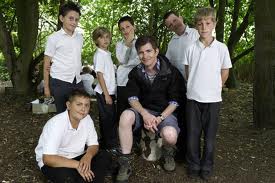
There is no doubt in my mind that teaching boys is a more difficult proposition than teaching girls. It is also clear to me that boys have suffered from a traditional classroom setup which has proven far less successful in engaging them than it has for girls.

Currently in Australia, local television station ABC1 is showing a brilliant series entitled, Gareth Malone’s Extraordinary School For Boys. Gareth is a choir master and isn’t qualified to teach, but takes on an 8 week trial with a group of underperforming boys in an attempt to improve their literacy skills.

Mr. Malone draws on his three rules for teaching boys:

1. Make the work feel like play.

2. Have a real sense of competition

3. Have a real sense of risk.

I have just finished watching the first episode and fell in love with his unique and creative style. I also enjoyed watching his colleagues putting down his methods, clearly a byproduct of feeling threatened by this novice.

Below is episode 1 in its entirety. All episodes are available on YouTube.

Top 10 Best Children’s Books of 2011

December 18, 2011

Liz Rosenberg of the Boston Globe recently released her Top 10 children’s books of 2011.


“Little Owl’s Night’’ by Divya Srinivasan (Viking, ages 3-7)

This is the most visually and verbally gorgeous picture book of the year. Owl loves the beautiful night and hearing about mysterious daybreak when “[d]ewdrops sparkle on leaves and grass like tiny stars come down . . . the sky brightens from black to blue, blue to red, red to gold.’’ Simple, dazzling – and simply dazzling.

“E-mergency!’’ by Tom Lichtenheld and Ezra Fields-Meyer (Chronicle, ages 5 and up)

What happens when the letter “E’’ has an accident and slides out of the language? Sheer madness, enhanced by Lichtenheld and Fields-Meyers’s unceasingly witty, manic visual, and verbal jokes. “O’’ does most of the hard work; the reading is easy for children and their adults.

“Wonderstruck’’ by Brian Selznick (Scholastic, ages 9 and up)

A worthy follow-up to his Caldecott Medal-winning “The Invention of Hugo Cabret,’’ here Selznick creates a fast-paced illustrated novel full of mystery, pathos, beauty, and, yes, wonder. Whatever book you miss this year, do not miss this one. The twists and turns of plot are breathtaking, Selznick’s use of graphics nothing less than stunning.

“Jim Henson: The Guy Who Played With Puppets’’ by Kathleen Krull, illustrated by Lou Fancher and Steve Johnson (Random House, ages 4-10)

This tribute to the creator of the now iconic Muppets is among the year’s best children’s picture book biographies, alongside my next pick.

“The Watcher: Jane Goodall’s Life with the Chimps’’ by Jeanette Winter (Schwartz and Wade, ages 4 and up)

Both the Henson book and this one about anthropologist Jane Goodall celebrate the eccentricity and passion that drove these two very different characters to become pioneers in their fields.

“The Flint Heart’’ by Kathleen and John Patterson, illustrated by John Rocco (Candlewick, ages 7 and up)

Almost nothing is tougher to do well than a classic middle-grade fantasy novel. The Pattersons have created an inventive confection full of literary allusions, eccentric heroes and heroines, wild adventures, and oddities worthy of a new Alice. Not for the timid, but for adventure lovers with a sense of humor. Great read-aloud.

“The Romeo and Juliet Code’’ by Phoebe Stone (Arthur A. Levine, ages 9 and up)

Phoebe Stone introduced us all to the most irresistible 11-year-old British children’s hero since the inimitable Harry Potter. Felicity “Fliss’’ Bathburn Budwig is no wizard, but an ordinary, touching, witty girl who ferrets out the secrets of her family’s past and present. The prose simply sings.

“Okay for Now’’ by Gary D. Schmidt (Clarion, ages 10 and up.)

“Okay for Now’’ manages to juggle themes of family, bullying, abandonment, greed, art, friendship, and – believe it or not – John James Audubon, all in one remarkable novel. Gripping, hilarious, realistic, the perfect book both for avid and reluctant readers, “Okay for Now’’ should win some major prizes.

“The Barefoot Books World Atlas’’ by Nick Crane, illustrated by David Dean (Barefoot, ages 8 and up)

This atlas does more than simply provide a vivid and up-to-date view of the world -though it does that, too. It shows cultures and connections between countries, bringing a truly global perspective to children in eye-popping color. An altogether invaluable resource.

“What We Keep is not Always What Will Stay’’ by Amanda Cockrell (Flux, ages 12 and up)

When the stone statue of St. Felix comes to life, 15-year-old Angie wonders about more than miracles. Add Jesse to the mix, a troubled Afghanistan veteran with post-traumatic stress disorder. Cockrell balances on the knife’s edge between comedy and tragedy. The depth and darkness of her themes makes an absorbing read for older young adults.


Education vs Self-Expression

September 21, 2011

Last week, my colleague and I taught the most wonderful creative writing lesson.  My colleague wrote the beggining of a sentence on the board  – “As the ball bounced higher and higher …” and we told the students that they had 10 minutes to write a story of their choosing starting with the words on the board.  We told them that we weren’t going to correct spelling, grammar, paragraphing etc.  We just wanted them to have a go and let their imaginations steer them in the right direction.

Everly child bar none wrote frantically.  Those that lack certainty, didn’t.  Those that struggle with composing letters and information reports lapped up the lack of protocols and structure that this activity offered.  Why was this simple lesson such a success?  Because it allowed the students to express themselves.

Curriculums and educational trends have made it harder for teachers to help students find themselves.  It has continued to downplay the importance of The Arts in favour of skills and concepts that many of our children will never use.  The Fibonacci Sequence might be fascinating, but who decides that this is more important than a clay modelling session?  Since when did single-celled organisms have a greater importance in a child’s life than the chance to perform to an audience?

Nowadays the emphasis is on memorising facts, studying for standardised tests and rote learning.  Even when the system purports to be encouraging self-expression it’s often a sham.  The system dictates what literature the students study, how they should think and what they should be feeling.

I remember telling my teacher when I was a student that I was bored by Robinson Crusoe.  You should have seen the look on his face!  He asked me how I could be bored with such a classic.  I told him that I wasn’t interested in reading page after page about details.  I wanted tangible feelings I could connect with.  My teacher was astounded.  He reminded me that Robinson Crusoe was one of the most popular books of all time.  I wanted to reply that Jurassic Park was one of the most popular films of all time, but thought better of it.

There are a multitude of kids who are simply not adjusting to the style of education offered.  So what do we do?  We tell them to smarten up and pull their finger out.  We remind them that if they don’t adjust their potential will be wasted and their career prospects will be hampered.  What if it isn’t the “spoilt” children’s fault they are not thriving at school?  What if it’s actually the narrow-mindedness of the system?

The fact that the writing session was 10 minutes and no longer was key to the success of the lesson.  According to my colleague when they are given more time their work suffers.  It reminded me of a great scene from the film Six Degrees of Separation.  Donald Sutherland recounts how whilst the Grade 1 and Grade 3 teachers at his childs’ school weren’t able to extract great artwork from the students, the Grade 2 teacher was responsible for a classroom of art geniuses.  He confronted the teacher to ask her what her secret is, and she replied that she knows when to take the brushes out of their hands.

The reason why we need to take the pencils out of their hands after only 10 minutes, is that up until that point they haven’t had the time to think beyond their natural instincts.  If we let them continue they would slowly stop writing out of instinct and start writing to please their teacher.  They would consider the structure that teachers have been duty bound to impart to their students (such as containing a problem, resolution and foci).  This very structure leads to boring, formulaic writing.

Our students are crying out for some structure and routine in their lives, but by the same token, they are also crying out for an opportunity to express themselves.  We are all different and sometimes society doesn’t give us the freedom to express it.

It’s time to take the brushes out of our students’ hands and let them show us what they’re really about!

The Cheapening of Children’s Literature

June 12, 2011

Young children are not reading, and if that’s not sad enough, the methods used to get them back into books don’t make the grade.  I wish a more concerted effort could be made to reinvigorate and re-engage young readers through authentic and well written books.

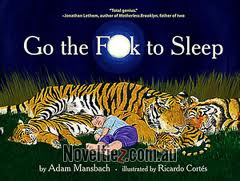
Unfortunately, fecal matter and toilet humour is the order of the day. Take this book featuring expletives on every page:

A book full of foul language is tonight generating debate over whether it should be sold in New Zealand.

Anti-family violence campaigners are up-in-arms over the imminent release of the offensive parody of a children’s bedtime book.

The book, entitled Go the F*** to Sleep, looks and sounds like an ordinary kids’ book, but has swear words on every page.

“The book features a father trying to get his young child to sleep – a common experience of parents. It is littered with offensive language, but most disturbingly, looks and sounds just like a children’s book,” said Family First director Bob McCoskrie.

Go the F*** to Sleep by Adam Mansbach was written as a spoof, based on the author’s experience as a Dad.

“It started with some sleepless nights and a Facebook post where I jokingly said I was going to write, I said ‘look out for my forthcoming children’s book, go the F*** to sleep’. And a couple of weeks later actually sat down and wrote it,” Mansbach told the Today Show.

The book is due for release in the US next week, after being available online for months, and a leaked PDF has gone viral via websites like Facebook.

Now, it is Amazon’s bestseller on pre-orders alone, and turned the American author into an overnight sensation.

McCoskrie understands the book is now about to hit shelves in New Zealand.

“I think it sends all the wrong messages,” he told ONE News.

The advocacy group are worried about the effects it may have on dysfunctional parents, and are now calling on bookstores to ban its sale.

“While in an adult context, the book may be harmless and even amusing, we have grave concerns about its effect on aggressive and dysfunctional parents, and also on children who are attracted to the book,” said McCoskrie.

McCoskrie said it trivialises verbal abuse and intolerance of children at a time when New Zealand is battling family violence.

“We’d rather parents spent their hard earned money on a book on quality parenting, or a book that they can enjoy reading to their child.”

He said he is already written to two book distributors, Booksellers Association and Paper Plus New Zealand, urging them not to stock it.

But book sellers say it will be on shelves in a month.

Wellington’s Unity Books has already ordered ten copies for its parenting section.

“It’s a de-stress, at the end of the day, or at the end of the night – have a laugh, sit down together. The idea that someone would take all of it to heart, and abuse their children because of it is a bit hard to imagine really,” said Unity’s Cameron Hyland.

As for the book ending up in the wrong hands – the kids.

“We trust the parents will know, this goes on a high shelf!” said Mansbach.

McCoskrie said Family First is now considering a complaint to the Censor’s Office.

I am certainly not in favour of banning books and I believe that much of this story is driven from conservative alarmist, but I do lament the lack of interest kids have in reading and the methods used to re-engage them.  Young people will read this book and fall instantly in love with iot whether it was intended for them or not.  Just when we needed more imaginative and well written alternatives …

Girls Performing Much Better in the Classroom

May 1, 2011

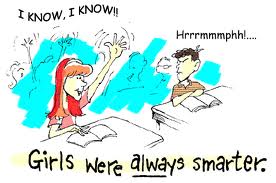
It is no surprise that girls are out doing boys in the classroom.  This has been the trend for quite some time.  But it should focus our energies on how we can teach boys in a more effective manner.

Girls are teaching their male classmates a lesson, blitzing them in almost every subject in Victoria’s classrooms.

Details of NAPLAN tests conducted last May also show Melbourne students narrowly outscore their country cousins, while those with highly educated or professional parents get the best marks.

Girls scored better than boys in 19 of the 20 categories measured in Years 3, 5, 7 and 9.

Nationwide, boys fell behind in almost all categories. Overall, Victoria’s students placed second in half the categories and lead the nation in three.

Year 9 boys were cause for the most worry – 15 per cent failed to meet the writing standard. However, their struggles matched those across Australia, meaning Victoria was still the best in the subject.

There are matters I would like to raise on this topic:

1.  We must do more to engage our boys.  Whether it’s a lack of male teachers or a teaching style that doesn’t work as well with boys, we must get to the heart of the problem and help mend the disparity.

2.  It is absolutely mind-boggling that in todays age we do not have more women in high positions and on multi-national company boards.  It is insane that we even need to talk about employing a quota system to get more female C.E.O’s.  Whilst it isn’t always the choice of women to sacrifice other aspects of their lives for a time-consuming and stressful career, there are many who are keen to get as far as they can go up the corporate ladder.  The argument that positions should be filled by those who are most qualified and capable is true.  However, that should result in females overtaking males in these leadership positions, because they are proving how much better they are in critical areas of learning and thinking.  Unfortunately, I suspect competency has nothing to do with it.

50 Books Every Child Should Read

March 24, 2011

I stumbled on a wonderful piece by the Independent entitled The 50 Books Every Child Should Read. It was written in response to Michael Gove’s recommendation that children read 50 books a year.  They asked three of Britain’s leading children’s authors and two of their in-house book experts to each pick 10 books, suitable for Year 7 students.”

Below is the list:

Philip Pullman

* Alice’s Adventures in Wonderland and Through the Looking Glass by Lewis Carroll. Indispensable. The great classic beginning of English children’s literature.

* Pinocchio by Carlo Collodi. What effortless invention looks like.

* Emil and the Detectives by Erich Kastner. A great political story: democracy in action.

* Swallows and Amazons by Arthur Ransome. As clear and pure as Mozart.

* Black Hearts in Battersea by Joan Aiken. If Ransome was Mozart, Aiken was Rossini. Unforced effervescence.

* The Owl Service by Alan Garner. Showed how children’s literature could sound dark and troubling chords.

* The Phantom Tollbooth by Norton Juster. Superb wit and vigorous invention.

* Moominsummer Madness by Tove Jansson. Any of the Moomin books would supply the same strange light Nordic magic.

* A Hundred Million Francs by Paul Berna. A particular favourite of mine, as much for Richard Kennedy’s delicate illustrations (in the English edition) as for the story.

* The Castafiore Emerald by Hergé. Three generations of this family have loved Tintin. Perfect timing, perfect narrative tact and command, blissfully funny.

Michael Morpurgo

* The Star of Kazan by Eva Ibbotson.

The heroine is blessed with such wonderful friends who help her through the twists and turns of this incredible journey.

* A Christmas Carol by Charles Dickens. The first few pages were so engaging, Marley’s ghostly face on the knocker of Scrooge’s door still gives me the shivers.

* Just William books by Richmal Crompton. These are a must for every child.

* The Happy Prince by Oscar Wilde. This was the first story, I think, that ever made me cry and it still has the power to make me cry.

* The Elephant’s Child From The Just So Stories by Rudyard Kipling. The story my mother used to read me most often, because I asked for it again and again. I loved the sheer fun of it, the music and the rhythm of the words. It was subversive too. Still my favourite story.

* Treasure Island by R.L. Stevenson This was the first real book I read for myself. I lived this book as I read it.

* The Old Man and the Sea by Ernest Hemingway. A classic tale of man versus nature. I wish I’d written this.

* The Man Who Planted Trees by Jean Giono. A book for children from 8 to 80. I love the humanity of this story and how one man’s efforts can change the future for so many.

* The Singing Tree by Kate Seredy The story of two children who go to find their father who has been listed missing in the trenches of the First World War.

* The Secret Garden by Frances Hodgson-Burnett. I love this story of a girl’s life being changed by nature.

Katy Guest, literary editor for The Independent on Sunday

* Refugee Boy by Benjamin Zephaniah. Story of a young Ethiopian boy, whose parents abandon him in London to save his life.

* Finn Family Moomintroll (and the other Moomin books) by Tove Jansson.

A fantasy series for small children that introduces bigger ones to ideas of adventure, dealing with fear, understanding character and tolerating difference.

* Diary of a Wimpy Kid by Jeff Kinney. It’s rude, it’s funny and it will chime with every 11-year-old who’s ever started a new school.

* I Capture the Castle by Dodie Smith. Written for a teenage audience but fun at any age.

* The Hobbit and The Lord of the Rings by JRR Tolkein. Be warned, these tales of hobbits, elves and Middle Earth are dangerously addictive.

* The Tygrine Cat (and The Tygrine Cat on the Run) by Inbali Iserles. If your parents keep going on at you to read Tarka the Otter, The Sheep-Pig and other animal fantasies, do – they’re great books – also try Iserles’ stories about a cat seeking his destiny.

* Carry On, Jeeves by PG Wodehouse. A grown-up book – but not that grown-up.

* When Hitler Stole Pink Rabbit by Judith Kerr. Judith Kerr’s semi-autobiographical story of a family fleeing the Nazis in 1933.

* Moving Pictures by Terry Pratchett. Elaborate mythological imagery and a background based in real science. If you like this, the Discworld series offers plenty more.

* The Story of Tracy Beaker by Jacqueline Wilson. The pinnacle of the wonderful Jacqueline Wilson’s brilliant and enormous output.

John Walsh, author and Independent columnist

* The Adventures of Sherlock Holmes by Sir Arthur Conan Doyle. Irresistible puzzle-solving tales of the chilly Victorian master-sleuth and his dim medical sidekick.

* The Curious Incident of the Dog in the Night-Time by Mark Haddon. Age-transcending tale, both funny and sad.

* Mistress Masham’s Repose by TH White. Magical story of 10-year-old Maria, living in a derelict stately home, shy, lonely and under threat from both her governess and her rascally guardian.

* Little Women by Louisa May Alcott. Inexplicably evergreen, trend and taste-defying 1868 classic.

* How to be Topp by Geoffrey Willams and Ronald Searle. Side-splitting satire on skool, oiks, teechers, fules, bulies, swots.

* Stormbreaker by Anthony Horowitz. First of the action-packed adventures with 14-year-old Alex Rider.

* Private Peaceful by Michael Morpurgo. “Dulce et Decorum Est” for pre-teens.

* Artemis Fowl by Eoin Colfer. Lively, amoral, wildly imaginative debut (six more followed) about the money-grabbing master-criminal Artemis, 12. The author called it “Die Hard with fairies”.

* The Silver Sword by Ian Serraillier. Inspiring wartime story of the Balicki family in Warsaw.

* Animal Farm by George Orwell. Smart 11-year-olds won’t need any pre-knowledge of Marx, Lenin, Trotsky and 1917 to appreciate this brilliantly-told fable.

Michael Rosen

* Skellig by David Almond. Brings magical realism to working-class North-east England.

* Red Cherry Red by Jackie Kay. A book of poems that reaches deep into our hidden thoughts but also talks in a joyous voice exploring the everyday.

* Talkin Turkeys by Benjamin Zephaniah. A book of poems that demands to be read aloud, performed and thought about.

* Greek myths by Geraldine McCaughrean. Superheroes battle with demons, gods intervene in our pleasures and fears – a bit like the spectres in our minds going through daily life, really – beautifully retold here.

* People Might Hear You by Robin Klein. A profound, suspenseful story about sects, freedom and the rights of all young people – especially girls.

* Noughts and Crosses by Malory Blackman. A book that dared to go where no one thought you could with young audiences because it raises tough stuff to do with race.

* Einstein’s Underpants and How They Saved the World by Anthony McGowan. A crazy adventure set amongst the kids you don’t want to know but who this book makes you really, really care about.

* After the First Death by Robert Cormier. Cormier is never afraid of handling how the personal meets the political all within the framework of a thriller.

* The London Eye Mystery by Siobhan Dowd. A book that allows difference to be part of the plot and not a point in itself.

* Beano Annual. A cornucopia of nutty, bad, silly ideas, tricks, situations and plots.

Top Ten Lists are fun.  What books would you recommend for a Year 7 child?

There’s Only One Thing Worse Than Leaving Your Kids

March 15, 2011

There’s only one thing worse than leaving your kids, and that’ s writing a book that encourages others to do the same.  Rahna Reiko Rizzuto may be a good writer, but her words, as eloquent as they may be, are bound to do far more harm than good.

Rahna Reiko Rizzuto left her home in New York and traveled to Hiroshima, Japan, in search of her war-torn heritage in June 2001. Rizzuto had received a fellowship to spend six months interviewing the few survivors of the atomic bomb.

Four months into her fellowship, Rizzuto received a visit from her husband and children, and she had a revelation: She didn’t want to be a mother.

In an essay for Salon, Rizzuto writes:

Without a strong marriage to support me, after four months alone and in a new country I had grown to love but was only just beginning to understand how to navigate, I had no idea what to do with these bouncing balls of energy. Even feeding them, finding them a bathroom, was a challenge.

Rizzuto realized that motherhood was an all-encompassing responsibility and she didn’t want to be swallowed up by it.

When Rizzuto returned to New York, she ended her marriage with her high school sweetheart and handed him the reins to the children. She gave him primary custody.

Her choice is out-of-the-ordinary; less than 4 percent of children live with their father only and in most cases its because a mother has passed away.

Rizzuto lost many friends who viewed her decision as selfish.

Her children were 3 and 5 years-old at the time.  Of course she was selfish!  But that isn’t what makes me so upset.  It’s the fact she feels this decision is so positive, that she wants to reach out to other mothers who are struggling with the same feeling of entrapment.

People are entitled to make bad decisions, and in my opinion Rizzuto has made a shocking decision.  But what disturbs me more is that she wants to encourage others to do the same.  When a man or woman decides to make a family they must choose to make their family their number one priority.  Is it selfish to leave your kids for no other reason than you are not enjoying the role of parent.

I heard her interviewed on The View this afternoon.  One of the panelists made the point that if Rizzuto was a man, this story wouldn’t have received so much publicity.  To that assertion I make the following points:

  1. Does that make it right.  No father should ever put the children they helped bring into this world second.  No father should ever tell their kids they don’t love being a father so they’ve decided to live down the street.  That is unacceptable and downright selfish!
  2. Rizzuto wants publicity.  She seems to be having the time of her life appearing on all kids of media and flogging her book.
  3. What if a man wrote a book encouraging other men to leave their children in favour of a more free lifestyle?  How do you think that will go down?


The following quotes from an article about her really upset me:

Today, Rizzuto is an author and faculty member at Goddard College in Vermont, and she’s creating her own sort of motherhood that challenges our culture’s definition of what a mother should be. She lives down the street from her ex-husband and her children. The boys are teenagers and come to her house for dinner but they always return to Dad’s house to sleep.

I don’t think it is “motherhood” she is creating.  Let’s not let a selfish decision gets confused with a new style of parenting.  And why can’t she have them over for the night?  Is it going to remind her for a fleeting moment that she is their mother?

She says that leaving her children improved rather than hurt her relationship with them. “I had to leave my children to find them,” she writes on Salon.

How can she assess that?  They were 5 and 3 when she left them!  Surely they were too young for a before and after comparison!  And this isn’t about how good her relationship is with them, it’s about the quality of care they get from their mother.  The fact that her kids have a good relationship is more of an indication of her children’s strength of character than it is a validation of her decision to leave them.
And that line,  “I had to leave my children to find them”, is just appalling.  This isn’t about you.  This is about your two kids under five that didn’t ask to be born and then left with their father because their mother didn’t want to look after them.
People make decisions.  Some of them are right and some wrong.  What I don’t approve of is turning a decision which affects children in a negative manner into a new movement claiming to be about choice and freedom.
I’d love to read her kids’ book one day.  Perhaps they wouldn’t endorse the “new style of parenting” as much as their mother does.

An Obsession With Success Leads Tiger Mother to Failure

January 26, 2011

As a teacher, it is my policy not to judge parents on their parenting styles.  I do this for three reasons:

  1. It is rude to judge another person when you haven’t walked in their shoes.
  2. Negative judgements against parents would inevitably cause me to lose focus on my responsibilities to the child; and
  3. Parenting is extremely difficult. I know this because I am a parent.  It is so hard to find the right balance for your child.  Judging others would distract me from improvements I need to make to my own parenting skills.

But every so often you find you have no choice but to make an exception to your rule.  My exception is  Amy Chua, the so-called “Tiger Mother”.

When a person writes a book about parenting they open themselves up to public criticism.  After reading her essay in the Wall Street Journal (I will not be rushing out to buy the entire book) and finding myself cringing all the way through it, I feel that it is the right time to dismiss my “no judgements policy” and respond to her disappointing advice.

The Tiger Mother’s methods are particularly extreme. Swapping one set of extreme methods (The Western methods) for another is unworkable.  Why does everything have to be so extreme these days?  The Education System operates like this.  One day the trend will be all about Teacher Centred Learning, and when that strategy falls flat, the answer then becomes Child Centred Learning.   And back and forward we go between the two very extreme strategies.   The same applies here.  Yes, Western style parenting features some methods which leaves a lot to be desired, but the answer is not its polar opposite.

Why not find “balance?”  That’s right, neither far left or right.  Why not try to focus on what works in different styles of parenting and mould them together?  Surely that’s preferable to going in the extreme opposite direction.  In truth, extremism comes about from insecurity.  The  Tiger Mother’s methods of parenting is both extreme and riddled with insecurity.

By not letting your child go on play dates and taking part in school plays, you are preventing the child from being involved in healthy social activities.  The fact that the stereotypical Asian parents see mingling as a waste of time is very sad indeed.

Pushing a child to not only achieve, but achieve beyond the rest of the class is such a terrible goal for your child.  It forces the child to see their friends as threats and rivals instead of human beings.  It emphasises selfishness and makes it difficult for the child to relate or empathise with others.  Her policy of not letting her kids be anything less that number 1 in their class is quite distressing.

“Chinese parents believe their kids owe them everything.”  This line stunned me.  Why would kids owe their parents everything?  Because their parents sacrificed for them?  Well, what are parents for?  Would it be alright for Amy’s child to approach her and say, ”Mum, how about we make a deal?  I’ll let you enjoy life a bit, and in return, you can let me live a less restrictive existence”?

Amy’s husband is spot on when he said, “Children don’t choose their parents.”  Her response to this more than reasonable point was, “This strikes me as a terrible deal for the Western parent.”  Whilst I think that parents are owed respect and honour, in return, I believe parents owe their children love and support.  I’m not looking for a better deal than that.

Whilst I don’t agree with the Tiger Mother’s approach, I understand that there are people out there looking for strategies that will improve their parenting.  However, when she happily recounted the time she called her daughter “garbage”, I couldn’t help but worry about the effect this book was going to have on others.

Amy’s father once referred to her as “garbage”, and although upset by it, she understood where he was coming from and the point he was trying to make.  That is why she had no qualms with repeating the dose on her poor daughter.   So comfortable was she about referring to her daughter by this term, she goes on to recount how she upset people at a dinner party by frankly discussing how she called her daughter by this name.

Amy, a professor at Yale Law School, should know better.  “Garbage” refers to something that is both useless and worthless.  Calling your child useless and worthless is just not acceptable!  How can a parent be proud of calling their child by such a terrible name?  I don’t care if that type of putdown turns the kid into a Nobel Prize winning scientist, it is not acceptable.

What the Tiger Mother’s  of this world have all wrong is their definition of success.  Success isn’t outdoing people, becoming famous, obtaining wealth or becoming a prodigy.  A successful person in my opinion is somebody who lives with integrity, cares and empathises with others and uses their gifts and qualities to help improve the lives of other people.  Anyone can be successful. Receiving  an A or a C for a maths quiz is not a determining factor.

The Tiger mentality is an extreme one, that combats poor aspects of Western parenting with another equally dismal style of parenting.  What you are left with is a maths whizz that may never enjoy maths, a musical prodigy that never got to enjoy music or properly express themselves through music, a person who thinks parenting is about entitlement rather than love and who is brought up to believe that a friend is anybody that doesn’t dare perform at their level.

It’s time that we preached balance and perspective rather than extremism, we dispensed with “dog eat dog” in favour of “dog support  dog”, and motivate our children without the use of put downs.

My Students Write Like Doctors

December 7, 2010


And it’s all my fault!  I wouldn’t know the first thing about teaching handwriting.  Whatever I learnt as a kid, I have over time replaced with a legible but decidedly mediocre blend of joined and block writing.  I wasn’t trained how to teach handwriting because my University didn’t think it was important.  The new Australian Curriculum has decided to make handwriting a priority (but cannot decide on what style of script to adopt).  I wouldn’t know where to start teaching handwriting.  Heck, I’ll need to learn it myself.

As a result, my students’ handwriting is shabby.  I’m supposed to be giving out pen licenses next year, but at this rate, my ten-year old students are more likely to get their drivers licenses first.

I recently read and article with a quote condemning the lack of formal handwriting teaching in classrooms.

Have you noticed the decline in handwriting? I recently gave a birthday gift to a 13-year-old boy, and got back a thank-you note written in chicken scratches. He had attended the public schools of an affluent suburban community.

I’ve seen handwriting books around the school which basically get kids to copy a given letter multiple time all the way down the page.  It looks so boring.  How do I go about teaching a skill which seems so mundane when I am trying to engage the students and make them excited by learning?

I’m interested in your experiences in teaching handwriting?  Do you teach handwriting?  How do the students respond?