Posts Tagged ‘Teaching’

I’m Glad I’m a Teacher and Not a Parking Inspector

October 31, 2011

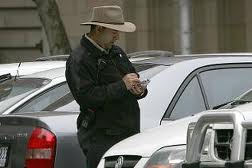
Today I was fined by a parking officer for parking in a permit zone. I had only left my car for a few minutes, and clearly that’s all it takes.

On my way back from the shops I noticed a parking inspector processing a ticket by my car. I asked him what I did wrong. I pointed out the 1 hour parking sign. He pointed to another small sign among others that notified those with good eyesight that the spot was a permit zone on weekends but fine during the week.

I told him that I was only gone for a second and that I had made an innocent mistake. He didn’t pay attention. My daughter cried sensing something was wrong and becoming unsettled by the man’s presence. The man ignored her and kept on typing.

$75 – that’s what the tiny mistake cost me!

I realise that the man was doing his job. He probably has a wife and family to take care of and bills to pay. I don’t blame him for his actions or diminish his right to take on this job.

But ultimately, I’m so glad that I am a teacher and not a parking officer.

Parking officers serve no real value to the community. They are employed by council workers who should have enough revenue to waste through our overpriced rates. But no, through parking infringements, they have another steam of revenue they can waste in good measure.

Nobody is glad to see a parking inspector walking around. Nobody goes to lengths to welcome them or engage in small talk. Their job is to prey on people’s mistake and slug for an inordinate amount of money.

Teaching can be so much more than that. We can represent all that’s positive about this world. We can be mentors and role models. We can help children grow to reach their potential.

Unfortunately, we can also do a lot of damage. If we are not good at our job or our heart isn’t in it, we can be the manifestation of what is wrong with this world.

That’s the great challenge for teachers. To be the polar opposite of a parking inspector.

The Teacher Blame Game Isn’t Fair

October 28, 2011

It seems to be more fashionable than ever to knock teachers.  Teachers are being dubbed as lazy and inept.

In truth it is easy to criticise teachers but very hard to be one.

We need more articles like this one by Patricia McGuire to defend teachers and set the record straight.

Yes, teachers should certainly be held accountable for excellence in teaching and for measurable results in the progress their students make each day. Teachers are on the front line of student learning assessment, since they really do know better than anyone else what makes a child successful or lackadaisical, engaged or detached in class. Standardized tests rarely measure the real progress that teachers make with some of the most challenging pupils whose learning styles are far off the normed curves.

The current fashion in education reform treats teachers as lazy slugs who care little about whether their students are learning anything. The assumption behind using standardized testing for teacher evaluation is that the only way to make teachers care about learning is to embarrass them publicly when their students do not perform according to someone else’s idea of norms. This assumption is what is truly preposterous!

For teachers who choose to devote their life’s work to some of the most difficult classrooms in America, such as here in the District of Columbia, the testing imperative becomes a monumental disincentive to stay in the classroom for any length of time, since the opportunities for sustained superior results on standardized tests are rare, while the risks of frequent subpar results are very high. It’s no secret that the widely-hailed Teach for America program has ingrained two-year turnover in its teaching corps. TFA teachers rarely stay to wrestle through the down years, which are frequent among students in marginalized communities.

Governments are so busy trying to find a negatively geared incentive for teachers and a scale that compares their effectiveness that they have lost sight of the most important pieces of the Education reform puzzle:

1.  Revolutionise teacher training programs to focus on the practical instead of the theoretical.

2. Have measures in place that allow all teachers (especially new teachers) the support they need.

3.  Spend more time critiquing schools with questionable cultures of bullying and harrasment.  Give these school’s the support they need to better handle their affairs.

What a Year For Teachers!

October 24, 2011

Today, my blog Topical Teaching, celebrates its very first birthday.

In the past 12 months I have witnessed probably the most difficult period for teachers in recent memory.  From layoffs, to debates over tenure vs skilled teachers, it has been a period of great uncertainty.  Teachers are facing great negativity by those that are looking for an easy target to blame.

Whilst there are a premium of poor teachers out there, there are also brilliant teachers in great supply.  Teachers are not to blame for the state of our education system.  There are other stakeholders that must lift their game as well.

In the past year the Facebook phenomenon has uncovered a potential danger for teachers.  It is clear that teachers on Facebook must be extra careful to avoid controversy, as some have made very poor judgement calls that have cost them dearly in the end.

Teachers are also faced with an ever-growing bullying problem.  From the classroom to cyberbullying, teachers have the important task of limiting incidences of bullying as best they can.

The rigours of standardised testing has also been a hot topic throughout the year.  From cheating scandals to stressed out teachers the blasted tests are here to stay and the question is, are our students better for it?

Thank you to those of you who clicked on and contributed to my blog.  I have really enjoyed sharing ideas and interacting with you.  A special thank you to regular contributors, Margaret, Carl and Anthony for their loyalty and insight.

I hope, as I continue writing this blog, teachers get the break they so richly deserve.  Teaching is a profession that attracts people who want to make a difference.  We aren’t in it for the money or prestige, just the opportunity to help the students of today become the role models of tomorrow.

Thank you for a wonderful year!

Teacher Evaluations Are Doomed to Fail

October 22, 2011

Notionally, I have no problem with being evaluated.  I suppose it is a good way for me to get objective advice from an impartial other.  This could then potentially have a positive effect on my future teaching.

But I have been evaluated before.  All Australian student-teachers are put through a series of evaluations before qualifying for their teaching degrees.  My evaluations proved a heart-rendering, confidence sapping, irritating, period of despair.  The feedback I got was that “the students liked me too much”, that they “behaved for me rather than because of me”, that I “teach too much like a male teacher” (what does that even mean?) and that I “need to be more emotionally distant” ….

One of the main reasons that I decided to become a teacher was so that I could offer my students an alternative from the garbage I got dished up when I was a child.  The sad thing is, if I get evaluated, there is a great chance it will be by the very type of educator I am trying not to be.

Bill and Melinda Gates touch on it in their brilliant piece in The Wall Street Journal:

It may surprise you—it was certainly surprising to us—but the field of education doesn’t know very much at all about effective teaching. We have all known terrific teachers. You watch them at work for 10 minutes and you can tell how thoroughly they’ve mastered the craft. But nobody has been able to identify what, precisely, makes them so outstanding.

This ignorance has serious ramifications. We can’t give teachers the right kind of support because there’s no way to distinguish the right kind from the wrong kind. We can’t evaluate teaching because we are not consistent in what we’re looking for. We can’t spread best practices because we can’t capture them in the first place.

Our Education System is so flawed at the moment that I am not sure effective teaching can be properly measured.  There are plenty of teachers like me (most are far better) that want to buck the trend because we want something different for our students. We want to try new things, we want to engage our students, and against the advice of some we do not want to practice ’emotional distance’ from our students.  If we were evaluated we may be judged poorly, but our students love our classes and their parents are satisfied with our performance and that should be all that matters.

And why just evaluate the teachers?  Who is evaluating the Principals?  What about the school culture?

It’s like evaluating the pasta in a pasta dish.  Sure the pasta is the most important ingredient, but if the sauce and other ingredients tastes bad, no matter how good the quality of pasta is, the dish will be a failure.

Until we have a better measure for judging good teaching and until we evaluate all stakeholders and elements of education together, the results will be tainted and ‘unique’ teachers will be forced to follow the herd.

The Humiliation of Standing Up in Front of the Class

October 19, 2011

Critics of the way our generation of parents rear children tell us that we spoil kids senseless.  They say that we go out of our way to protect our children from failure.  They admonish us for not allowing children to deal with disappointment, a crucial life skill in the real world.

But as much as I agree with these critics, I can’t help but sympathise for children that are not ready for the battering that can come about from being singled out amongst their peers.

When I was studying to become a teacher, my Art lecturer made us do a sketch of a fellow classmate, who was made to pose leaning against a ladder.  I can’t draw for my life.  Even my stick figures look shabby!  At the end of the activity, the students wandered from drawing to drawing, inspecting the works of art that our creative class had accomplished.  Then there was mine.  An absolutely horrendous, ghastly mess, that looked nothing like the poor subject.  I wanted to crawl into the art supplies cupboard and remain there for at least thirty years!

When we were expecting our first child, we attended parenting classes.  On one of our weekly lessons, the instructor got all the fathers up in front of the class to do a demonstration of how cloth nappies/diapers are applied to a newborn.  We were each given a cloth nappy and a doll and were given quick instructions before being put to work.  I have never been great with verbal instructions.  I am a visual person, relying on generous amounts of time and clear descriptive pictures before I can follow even the simplest of instructions.  Needless to say, my nappy ended up looking more like a paper airplane.

And I’m an adult with relatively good self-esteem.  Imagine how kids feel?

Imagine how uncoordinated and unfit children feel during physical education classes.  Imagine how traumatic it is for a child who finds maths difficult to demonstrate an answer on the board in front of the class.

I totally agree that these are problems children should be able to deal with, as they are problems that exist in the real world.

I’m just not sure I’m emotionally ready to teach it to them.

The Steve Jobs Education Model: Rupert Murdoch

October 16, 2011

Rupert Murdoch’s criticisms of Education today and his vision for the future are worth reading.  At the same time, I can’t help feel that he is advocating consumerism rather than giving us a sustainable Educational model.

Using the popular and much-loved Steve Jobs as a front for views belonging squarely to the unpopular Murdoch is smart thinking, but I do not share his vision.  To me, technology assists good teaching, it doesn’t revolutionise good teaching.  You can invest in all the latest gadgets and interactive devices, and without a smart , dynamic and creative teacher behind it, the results will fall short of the mark every time.

Rupert Murdoch disagrees:

Three decades ago, the Department of Education released a report noting that if an unfriendly foreign power had imposed our mediocre education system on us, “we might well have viewed it as an act of war.” In the three decades since, per-pupil spending on K-12 education has doubled—while achievement scores have been flat.

That’s where technology comes in. Just as the iPod compelled the music industry to accommodate its customers, we can use technology to force the education system to meet the needs of the individual student.

For example, say I was trying to teach a 10-year-old about Bernoulli’s principle. According to this principle, when speed is high, pressure is low. Sounds dry and abstract.

But what if I could bring this lesson alive by linking it to the soccer star Roberto Carlos—showing students a video clip that illustrates how his famous curved shot is an example of Bernoulli’s principle in action. Then suppose I followed up with an engineer from Boeing—who explained why this same principle is critical in aviation and introduced an app that could help students master the concept through playing a game. Finally, assessment tools would give teachers instant feedback about how well their students had mastered the material.

Textbooks aren’t the only area for savings. Rocketship charter schools in San Jose, Calif., use a model that combines traditional classroom learning with tutor-led small groups and individualized instruction through online technology. So far the mix has brought higher performance with lower costs—savings that can be used to pay teachers more, hire tutors, and so on.

Let’s be clear: Technology is never going to replace teachers. What technology can do is give teachers closer, more human and more rewarding interactions with their students. It can give children lesson plans tailored to their pace and needs. And it can give school districts a way to improve performance in the classroom while saving their taxpayers money.

Everything we need to do is possible now. But the investments the private sector needs to make will not happen until we have a clear answer to a basic question: What is the core body of knowledge our children need to know?

I don’t pretend to be an expert on academic standards. But as a business leader, I do know something about how common standards unlock investment and unleash innovation. For example, once we established standards for MP3 and Wi-Fi, innovators had every incentive to invest their brains and capital in building the very best products compatible with those standards.

We are now seeing the same thing happening in education. Over the last few years, leaders and educators in more than 40 states have come together to reach agreement on what their students should know and be able to do in math and English—and by what grades.

Call me sceptical or old-fashioned but I believe Mr. Murdoch’s intentions is to get schools to open their chequebooks.  The more schools invest in SmartBoards and iPads the more they realise that whilst they are extremely useful, they are far from the answer.

The Tragic Loss of a Student

October 12, 2011

I recently read a very sad blog post written by notswallowedinthesea.

I never imagined this could happen to me… Especially so early on in my teaching career!

But yesterday, first day of Term 4, and in all my excitement, I went back to the school where I teach music part time, excited to see my students and teaching them all the great things I have planned for them – only to be whisked into the staffroom and briefed by social workers on “how to deal with a death in school.” I looked around confused before the assistant principal came up to me and whispered in my ear that one of our prep kids was hit by a truck during the holidays in front of his mum and older sister (who is in Grade 2).

The AP told me the name of the student but it went past my head. I asked for the name again but it didn’t ring a bell. AP tried to describe him: “little blonde one”. There are so many “little blonde ones”. Which one? When I realized I did not recognize the name I sighed in relief, but only for a second. Because then I shuddered at the thought of not knowing the student. How on earth could I NOT know? I kicked myself for not learning the names of all my students soon enough. I felt an overwhelming sense of guilt and couldn’t wait to break away from the staff room to locate the class list and photo so I can put a face to the name of the student. I have 14 music classes and about 20-28 in each class, so yes, I still don’t know the names of all the students! As the social worker was briefing us, I went through the faces of all my prep kids, trying in vain to remember Rex. Rex, the name is very familiar but I couldn’t put a face to it!

When the briefing was over, I spoke to the school counselor who gave me a bit more details about the accident, and pointed to me a picture of Rex. There he was, the little blonde one. Immediately I knew who he was! He was in my Top 5 students in the final class before the holidays! Sweet smiling Rex. Suddenly the memories overwhelmed me and I felt everything from grief to guilt. Grief because I had lost a student through the worst circumstance, and grief because I wished we could have spent more time together – or that I would have remembered him! It pains me that I couldn’t remember him in the first instant! Why didn’t God give us more time together? Why was he taken away so suddenly? Why hadn’t I paid more attention to him? Why couldn’t I remember him?!

It was awful. I wanted to cry but I couldn’t because my first class came in. I tried my best to hide my tears and answered questions about Rex as honest as I could without breaking down. I had never been in such a situation before, and I found it extremely difficult replying to students who have questions such as : “Why did it happen?” and “Where is he now?”

I know for a fact, because of my faith, that God is taking care of him, that things happen for a reason and that God is in control. But I cannot say this to my kids as I am not teaching in a Catholic school and I don’t want to cross any lines or upset any parents. How can I answer questions like these? I ended up avoiding them as much as I could!

The last class yesterday was Rex’s class, and I knew the moment the students came in that they were itching to tell me about Rex, about why he wasn’t in class and why he was never going to come back. But I went straight into my lesson, avoiding any questions, claiming I do not have time and that we had a lot to get through.

I had a lot to get through… a lot of emotions to get through. At lunch time I stumbled across Rex’s music book, I noticed his work for the first time. 2 weeks ago it was just a book belonging to one of the preps, just a book among the statistics, with scribbly drawings and terrible colouring techniques. Now, it is the precious work of a child no longer here on earth, and the horrifying truth that the child has had only 5 years in this world… not enough to learn how to colour in the lines, not enough to learn to write his name properly… not enough! Not enough!

I don’t know if I am angry. I am definitely not bitter. I know these things happen, and tragedies occur throughout the world. Who am I to complain and pound heaven for an answer? But the fact that it happened, TO ME, at this time has made me realize immensely how precious life is, how precious teaching is, and how fragile we human beings are.

While singing with the Preps yesterday I found myself staring into each student’s eyes, trying to take in as much of them as possible, drinking in their personalities and hoping that they will all come back again next week. I do not want anyone else to leave! I do not want any of them to get hurt!

But I cannot save them all… and I did not save Rex. Rex is gone. My class of 21 preps is now down to 20. He was hit by a truck, and died at the scene. Rex, who only 2 weeks ago I had given a piece of chocolate cake for making it into the Top 5 because he sat patiently for his book while others were shouting for it. Little blonde Rex.

I find myself looking towards the right everytime I pass his classroom to go to the staffroom or toilets. I keep looking because I still see his photo in the class wall, on the class door, on his table, his book shelf, his bag shelf, his music book…

I am only in my first year of teaching, and already I have had to deal with a student’s death. I wonder how much more will come? How much more can I take?

I was wondering if you have experienced something similar?  If so, what advice do you have for this teacher to help her get through this emotionally traumatic experience.
The Motivation of a Bully

October 11, 2011

Recently I wrote about a cyberbully’s motivation.  The same can be true of a conventional bully:

It is my belief that cyber-bullying is often based on “dominance” and “popularity” rather than “hate”.  I don’t think most cyberbullies hate their victims.  Instead, I think they see them as stepping-stones to wider acceptance from their peer group.  Often the victims are minorities or outcasts.  The pressure to be in the “in group” has always been high.  For an “in group” to exist there needs to be a clearly defined “out group”.  It is often seen as a sort of right of passage for someone seeking popularity to kick the easy target.

This view seems to be backed up by a recent study conducted by CNN’s “Anderson Cooper 360°”:

A new study commissioned by CNN’s “Anderson Cooper 360°” found that the stereotype of the schoolyard bully preying on the weak doesn’t reflect reality in schools.

Instead, the research shows that many students are involved in “social combat” — a constant verbal, physical and cyber fight to the top of the school social hierarchy.

“Kids are caught up in patterns of cruelty and aggression that have to do with jockeying for status,” explains Robert Faris, a sociologist whom “Anderson Cooper 360°” partnered with for the pilot study. “It’s really not the kids that are psychologically troubled, who are on the margins or the fringes of the school’s social life. It’s the kids right in the middle, at the heart of things … often, typically highly, well-liked popular kids who are engaging in these behaviors.”

Faris, along with the co-author of the study, Diane Felmlee, also found that bullies, whom they call aggressors, and victims are not defined roles, but in many cases, they can be the same person. The higher students rise on the social ladder, the more they bully other students, and the more other students bully them.

“When kids increase in their status, on average, they tend to have a higher risk of victimization as well as a higher risk of becoming aggressive,” Faris says.

The study was conducted this spring at The Wheatley School, a nationally top-ranked high school on Long Island, New York. More than 700 students at the school were given a survey with 28 questions on aggressive behavior four separate times throughout the semester. They were also given a roster of the entire school in which every student had an identification number and kids were asked to write down specifically who did what.

This is part of the reason why I am so critical of the way bullies are handled at some schools.  So often the emphasis is on the actions of the bully and not on the social environment that encourages bullying behaviour in the first place.  That is why so much of  my energy is devoted to changing the social fabric of my class.

After all, bullying isn’t a priority – it is THE PRIORITY.  As a teacher, I am entrusted not with people’s money or belongings but with the most important and precious things they have – their children.  It is my responsibility to ensure that they are safe and secure.  Sure, I have to teach them and help them grow academically, but even more so, I have to do my best to make sure that the child they dropped off at my classroom is going to come back in as good if not better emotional shape than when they arrived.

When I speak to my class at the beginning of the year, I tell them there is a sure-fire way for them to have to repeat the year a second time.  It’s not if they find the work difficult or are struggling to pass assessments – it’s if they are not treating their classmates with respect.  Because if they are not ready to treat others with respect, they are not emotionally ready to go up a year level.

I’m not joking.  I really do mean it.

There is a lot of talk about ‘child centered learning’ vs ‘teacher centered learning’.  I prescribe to neither.  Instead, I believe in what I call “class centred learning”.  The main focus of my teaching is that everyone in the class must respect each other.  It is the fundamental rule for assessing my own performance.  They don’t have to be best of friends, but they absolutely must respect each other.  And ultimately, it is my duty to empower the class and create an environment of closeness and mutual respect.

Does it mean that there is no bullying in my classroom?  Absolutely not.  I wish.  I’m only an ordinary teacher.  What it means is, I take more interest in the welfare of my class than any other consideration.

On the topic of bullying, I again strongly recommend (not for the last time) this most brilliant anti-bullying film developed by young students in their own free time.  It is the best of its kind by a long, long way!


Do Suspensions Really Work?

October 7, 2011

I have been reading about the dramatic increases in suspensions as a response to schoolyard violence and unruly behaviour.  A few months ago I wrote about the 900 British students reportedly suspended per day.

Today I noticed that more than 100 students in Australia are being suspended on a daily basis:

VIOLENT schoolyard attacks have marred the start of Term 4 as figures show more than 100 suspensions were handed out every school day last year for physical misconduct.

One student was stabbed in the head and four others bashed with a baseball bat in separate schoolyard incidents this week.

A 14-year-old girl was hospitalised at Tara, west of Dalby, on Wednesday after she was stabbed in the head allegedly by another student, 14, with a steak knife during a lunchtime scuffle.

Tara Shire State College went into lockdown shortly after 1.30pm and police were called.

A 14-year-old girl has been charged and will be dealt with under the Youth Justices Act. She has also been suspended. The injured student required stitches.

The question has to be asked: Are suspensions working?

In my day the threat of a suspension was extremely effective in moderating our behaviour.  But with so many seemingly disregarding the inevitable consequences of violent or unruly behaviour, I am of the opinion that suspensions are not working.  It seems an opportune time to consider an alternate form of action.

What has been your experience with suspensions?  Do they work in your school?


Birbalsingh: Children Think Winston Chruchill is a TV Dog

October 7, 2011

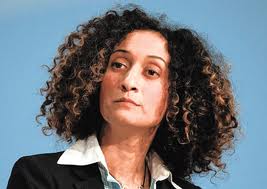
Whilst I don’t agree with everything Katherine Birbalsingh preaches, I think it would be irresponsible not to listen and absorb her frustrations with what is a failing Education system.

She is right that you cannot have students busy doing activities all day without giving them some background knowledge.  But I think she is wrong to dismiss the issues raised from the traditional style of teaching which she espouses.  The “Boredom Factor” is a huge stumbling block when teaching kids.  One may have gotten away with endless rote learning and long mat sessions in my day, but the kids wont let you get away with it today.

Below are some of the views she raised in a recent speech:

In a major speech on Wednesday evening, she told of children who failed to understand that Paris was the capital of France and other pupils who believe Winston Churchill is “that dog off the insurance advert”.

“Teaching historical facts or lists of vocab which rely on memory skills is considered old-fashioned,” she said.

“Instead, we think it better to inspire children to be creative through group discussion and project work. But background knowledge is absolutely essential to enable children to absorb new ideas.”

“Teachers are not meant to stand in front of the class, but instead move amongst children who are all busy doing something. The idea here is that ‘doing’ is more interesting than ‘listening’.

“That might very well be true. But the problem comes when we think that ‘doing’ needs to happen most of the time.

“This means that the teacher, traditionally a source of knowledge, almost becomes redundant as a fountain of knowledge and instead, becomes something of a referee.”

“Ordinary people don’t realise just how little some of our kids know. What we also forget is that the very thing that got us to where we are now, was the kind of education that we had – our teachers teaching us knowledge, so that we know the difference between Paris and France, even if it sometimes meant being bored in lessons and learning the discipline to struggle through.

“How many people in business clinch a deal because they know the soft skills of being polite, or know how to sit through a boring lecture, and concentrate enough to still pick up what is necessary to impress the client?

“Soft skills cannot be taught in a vacuum, independent of content or knowledge.”

I don’t take in much at all from a boring lecture.  Why is it always a choice between two extreme philosophies (this time, the progressive and the traditional)?  Why can’t a teacher borrow from both approaches and teach in a way that suits the needs and learning styles of their class?  Why take on a boring style of teaching which may command basic concentration when you can take on a more engaging style and shoot much higher?

The problem with our system is more complicated than the shortcomings of a progressive style.  In part, the problem is a result of rigid and extreme philosophies, instead of a more flexible approach that can be tinkered with to suit the makeup of the teacher’s class.

That’s right – not all students are the same!  Therefore a teacher cannot afford to be a one-trick pony.  They have to adopt a style that can be tinkered with and amended all the time.