Posts Tagged ‘Teachers’

Scaring Our Children Senseless

November 9, 2011

It is the responsibility of parents and teachers to protect children and educate them on the dangers that exist in the ‘real world’.  However, in attempting to prepare children for incidents and scenarios that are unlikely to happen we have seemingly created a fear and paranoia that has proven quite destructive to the same children we are trying to protect.

A surge in reports of men acting suspiciously near schoolchildren has triggered urgent talks between schools and police, who fear the ‘‘stranger danger’’ message has gone into overdrive.

Police say heightened fears of children being stalked on Gold Coast streets are unfounded, and the increase in reports is the result of people jumping at shadows after a rash of incorrect media stories.

Regional Crime Coordinator Dave Hutchinson says some incidents are made up, and others are cases of children taking fright for no good reason.

I am a bit concerened at how scared and anxious our children are becoming, and teachers are slightly to blame.  Besides stranger danger and other programes that inhabit fear in students, many teachers in Australia have been scaring children with doom and gloom predictions about global warming.  No matter what your position is on this issue, it is important that teachers instruct, educate and empower children, instead of frighten or demoralise them.

There is a huge difference between helping students become perceptive, instinctive and responsible and helping them to  become fearful and paranoid.

At the end of the day, the importance of the message is lost when it inspires an irrational and overpowering fear.

Addressing Teacher Burnout

November 4, 2011

Teacher burnout is a significant problem that strike even the very best of teachers.  Even the most passionate and dedicated of teachers struggle to see out a term out without getting sick or feeling extremely fatigued.

The question is, how do we address this problem?

Research shows the teaching profession has the highest burnout rate of any public service job. What can we do to keep the best and the brightest teachers in the classroom?

In April, the American Federation of Teachers (AFT) and the American Institutes for Research (AIR) released the report, “Workplaces That Support High-Performing Teaching and Learning: Insights From Generation Y Teachers.”Gen Y teachers—that is, those under 30 years of age—account for at least one in five teachers in US classrooms today. They start out intending to make teaching a lifelong profession. However, according to the report, young teachers leave the profession at a rate 51 percent higher than older teachers and transfer to a different school at a rate 91 percent higher than their older colleagues. Studies also show that the national teacher-turnover rate costs school districts approximately $7 billion annually.

In the AFT/AIR report, young teachers say they want:

  • Feedback on their performance and to be evaluated in a fair way
  • Time to collaborate with their colleagues
  • Differentiated pay for high performance
  • Technology to provide engaging and effective lessons, as well as to support collaboration with other teachers through, for instance, videos and conferencing technology.

I agree with every point, but have a problem with the third one.  Whilst I believe Governments should look into a differentiated model of pay for high performers, I don’t believe such an initiative would have any bearing on cases of teacher burnout.

The list of proposed changes by young teachers above is most fair and reasonable.  If responded to, the outcomes could be quite positive all around.  It’s certainly time to better address teacher burnout.  It’s an issue that cannot be dismissed and will not go away.

Study: Teachers Are Overpaid

November 3, 2011

I am not writing this in the guise of a victim.  I did not become a teacher for the money, nor do I ever expect to be paid a great deal more than I am currently getting.  But let’s not fool ourselves here.  Teachers are not overpaid.  To call them overpaid
is absolutely ludicrous!

Despite the public perception that public school teachers in general are underpaid, Jason Richwine, senior policy analyst at the Heritage Foundation and co-author of “Assessing the Compensation of Public-School Teachers,” says “the reality is that it’s just not true. There’s no way to look at the data and conclude that they are underpaid. They are certainly paid more than they can get if they work in the private sector…” In fact, Richwine found that “public-school teachers receive compensation about 52% higher than their skills would otherwise garner in the private sector.”

When working out how much a teacher is making an hour the following assumptions are normally made:

  • Teachers work a 9 to 5 job – This is certainly not true.  Unlike many professions a teacher’s job is not done at the end of the workday.  We have to take our essays and tests home with us.  We have to write reports.  We are also required to do our planning in our own time.
  • Teachers get generous holidays – Whilst this is essentially true, many fail to realise the amount of work we do during the holidays.  From setting up the classroom, attending handover meetings and planning, much of my vacation time is dedicated to preparing for the following term or year.  In the holidays, I write-up yearly planners, term planners, literacy planners, numeracy planners and integrated unit planners.  Most professionals would hate to do any job related work over their vacation time.  We have no choice.
  • Teaching is a fairly undemanding profession – Teaching is known to be an exceptionally stressful job with the highest reported rate of bullying of any profession.  Teachers can be bullied by a number of sources; from parents, students, bosses, administrators to fellow colleagues.

You can’t afford to give us a pay rise? Fine.  But don’t you dare call us overpaid!

Summer Born Children Are Disadvantaged

November 1, 2011

I have seen first hand how the youngest children in the class are often among the most behind.  Some clearly aren’t as mature as the others.

That’s why I was not surprised to read that children born in the summer may need more help to come up to the same academic standard as their older classmates.

Children born at the start of the academic year achieve better exam results, on average, than children born at the end of the academic year.

This matters because educational attainment has long-term consequences for a range of adult outcomes. But it is not only educational attainment that has long-lasting effects: other skills and behaviours affect adult outcomes too, and can also matter for children’s current wellbeing.

In line with previous research, our report shows that there are large and significant differences between August- and September-born children in terms of their cognitive skills, whether measured using national achievement tests or alternative indicators such as the British Ability Scales; these gaps are particularly pronounced when using teacher reports of children’s performance.

Those born in August are also significantly more likely to take vocational qualifications after leaving compulsory schooling and slightly less likely to attend a Russell Group university.

I was one of the youngest in my class and really struggled to keep in touch with my classmates.  I was slow to mature, and in hindsight I probably should have stayed down a year to maximise my academic potential.

Having said that, I believe that parents can get fixated with their children being among the youngest and can use it as an excuse. This then filters down to the child who rationalises their performance by making the same excuse.

The Reason Why New Teachers Often Struggle

October 31, 2011

Ofsted is wrong. Teacher training doesn’t need to be tougher, it needs to be smarter. The reason why our new teachers find it so hard is not because they cruised through their training but because their training didn’t prepare them for the classroom.

Tougher teacher training is not going to achieve anything:

Tougher training should be given to teachers in a bid to raise standards in the classroom, an education watchdog has proposed.

The guidelines, drawn up by Ofsted and published on Monday, would see a greater emphasis on teachers’ behavioural management and ability to teach pupils to read, including those with special educational needs.

The ways in which trainee teachers are currently assessed would also change; inspectors will rate trainees’ effectiveness in few categories but according to a tougher criteria. The inspection will include an increased focus on trainees’ subject knowledge and the quality of training.

My University course was as tough as they come, but it was too steeped in the theoretical.  I needed far more exposure to classrooms than 5 weeks in year one and 9 in the second and final year of my degree.  I needed to see how different teachers and different schools operated. I needed to be in touch with resources that was shown to work and methods that I could employ later on.

Instead, I was treated to mindless theory and useless advice.  It was an extremely tough course, but one that offered me precious little in terms of real experience and practical insight.

The Teacher Blame Game Isn’t Fair

October 28, 2011

It seems to be more fashionable than ever to knock teachers.  Teachers are being dubbed as lazy and inept.

In truth it is easy to criticise teachers but very hard to be one.

We need more articles like this one by Patricia McGuire to defend teachers and set the record straight.

Yes, teachers should certainly be held accountable for excellence in teaching and for measurable results in the progress their students make each day. Teachers are on the front line of student learning assessment, since they really do know better than anyone else what makes a child successful or lackadaisical, engaged or detached in class. Standardized tests rarely measure the real progress that teachers make with some of the most challenging pupils whose learning styles are far off the normed curves.

The current fashion in education reform treats teachers as lazy slugs who care little about whether their students are learning anything. The assumption behind using standardized testing for teacher evaluation is that the only way to make teachers care about learning is to embarrass them publicly when their students do not perform according to someone else’s idea of norms. This assumption is what is truly preposterous!

For teachers who choose to devote their life’s work to some of the most difficult classrooms in America, such as here in the District of Columbia, the testing imperative becomes a monumental disincentive to stay in the classroom for any length of time, since the opportunities for sustained superior results on standardized tests are rare, while the risks of frequent subpar results are very high. It’s no secret that the widely-hailed Teach for America program has ingrained two-year turnover in its teaching corps. TFA teachers rarely stay to wrestle through the down years, which are frequent among students in marginalized communities.

Governments are so busy trying to find a negatively geared incentive for teachers and a scale that compares their effectiveness that they have lost sight of the most important pieces of the Education reform puzzle:

1.  Revolutionise teacher training programs to focus on the practical instead of the theoretical.

2. Have measures in place that allow all teachers (especially new teachers) the support they need.

3.  Spend more time critiquing schools with questionable cultures of bullying and harrasment.  Give these school’s the support they need to better handle their affairs.

What About Parents that Bully Teachers Online?

October 25, 2011

Unfortunately, teachers and Facebook aren’t always a match made in heaven.  Whilst the vast majority of teachers on Facebook are responsible and mature enough to stay out of trouble, there’s always a news story popping up about tasteless comments a teacher made against students or minority groups.  This month it is Viki Knox, a Special Education teacher who was rightly condemned for her anti-gay comments on Facebook.

The media storm resulting from the Knox case and others like it serve as a timely reminder to teachers on Facebook that they must be extremely careful not to offend (something which shouldn’t be hard to do).

But what about the myriad of incidents of parents and students ganging up on and bullying teachers?

More than one in seven teachers has been the victim of cyberbullying by pupils or parents, and almost half know a colleague who has been targeted, according to a survey published today.

Students have set up “hate” groups on social networking sites calling for specific teachers to be sacked and have even created fake profiles in their names containing defamatory information.

Schools must make clear to pupils that such behaviour will lead to punishment, the Association of Teachers and Lecturers (ATL) said.

Schools seem to be increasingly soft on parents that bully teachers.  Turning a blind-eye to Facebook campaigns and insulting comments against teachers is not acceptable.  Teachers so often feel isolated and powerless against taunts from parents.

Who do they turn to for support?

When schools claim to have a “zero tolerance for bullying”, they ought to include bullying of teachers by parents.  Any parent caught bullying a teacher online should be subjected to the same penalty as a teacher.  They should be told to take their child and find another school.

If you think that’s harsh, try being a bullied teacher.  I’m glad I’ve never been bullied, because I guarantee you, it’s not easy!

What a Year For Teachers!

October 24, 2011

Today, my blog Topical Teaching, celebrates its very first birthday.

In the past 12 months I have witnessed probably the most difficult period for teachers in recent memory.  From layoffs, to debates over tenure vs skilled teachers, it has been a period of great uncertainty.  Teachers are facing great negativity by those that are looking for an easy target to blame.

Whilst there are a premium of poor teachers out there, there are also brilliant teachers in great supply.  Teachers are not to blame for the state of our education system.  There are other stakeholders that must lift their game as well.

In the past year the Facebook phenomenon has uncovered a potential danger for teachers.  It is clear that teachers on Facebook must be extra careful to avoid controversy, as some have made very poor judgement calls that have cost them dearly in the end.

Teachers are also faced with an ever-growing bullying problem.  From the classroom to cyberbullying, teachers have the important task of limiting incidences of bullying as best they can.

The rigours of standardised testing has also been a hot topic throughout the year.  From cheating scandals to stressed out teachers the blasted tests are here to stay and the question is, are our students better for it?

Thank you to those of you who clicked on and contributed to my blog.  I have really enjoyed sharing ideas and interacting with you.  A special thank you to regular contributors, Margaret, Carl and Anthony for their loyalty and insight.

I hope, as I continue writing this blog, teachers get the break they so richly deserve.  Teaching is a profession that attracts people who want to make a difference.  We aren’t in it for the money or prestige, just the opportunity to help the students of today become the role models of tomorrow.

Thank you for a wonderful year!

Teacher Evaluations Are Doomed to Fail

October 22, 2011

Notionally, I have no problem with being evaluated.  I suppose it is a good way for me to get objective advice from an impartial other.  This could then potentially have a positive effect on my future teaching.

But I have been evaluated before.  All Australian student-teachers are put through a series of evaluations before qualifying for their teaching degrees.  My evaluations proved a heart-rendering, confidence sapping, irritating, period of despair.  The feedback I got was that “the students liked me too much”, that they “behaved for me rather than because of me”, that I “teach too much like a male teacher” (what does that even mean?) and that I “need to be more emotionally distant” ….

One of the main reasons that I decided to become a teacher was so that I could offer my students an alternative from the garbage I got dished up when I was a child.  The sad thing is, if I get evaluated, there is a great chance it will be by the very type of educator I am trying not to be.

Bill and Melinda Gates touch on it in their brilliant piece in The Wall Street Journal:

It may surprise you—it was certainly surprising to us—but the field of education doesn’t know very much at all about effective teaching. We have all known terrific teachers. You watch them at work for 10 minutes and you can tell how thoroughly they’ve mastered the craft. But nobody has been able to identify what, precisely, makes them so outstanding.

This ignorance has serious ramifications. We can’t give teachers the right kind of support because there’s no way to distinguish the right kind from the wrong kind. We can’t evaluate teaching because we are not consistent in what we’re looking for. We can’t spread best practices because we can’t capture them in the first place.

Our Education System is so flawed at the moment that I am not sure effective teaching can be properly measured.  There are plenty of teachers like me (most are far better) that want to buck the trend because we want something different for our students. We want to try new things, we want to engage our students, and against the advice of some we do not want to practice ’emotional distance’ from our students.  If we were evaluated we may be judged poorly, but our students love our classes and their parents are satisfied with our performance and that should be all that matters.

And why just evaluate the teachers?  Who is evaluating the Principals?  What about the school culture?

It’s like evaluating the pasta in a pasta dish.  Sure the pasta is the most important ingredient, but if the sauce and other ingredients tastes bad, no matter how good the quality of pasta is, the dish will be a failure.

Until we have a better measure for judging good teaching and until we evaluate all stakeholders and elements of education together, the results will be tainted and ‘unique’ teachers will be forced to follow the herd.

The Steve Jobs Education Model: Rupert Murdoch

October 16, 2011

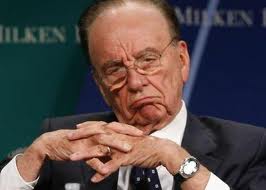
Rupert Murdoch’s criticisms of Education today and his vision for the future are worth reading.  At the same time, I can’t help feel that he is advocating consumerism rather than giving us a sustainable Educational model.

Using the popular and much-loved Steve Jobs as a front for views belonging squarely to the unpopular Murdoch is smart thinking, but I do not share his vision.  To me, technology assists good teaching, it doesn’t revolutionise good teaching.  You can invest in all the latest gadgets and interactive devices, and without a smart , dynamic and creative teacher behind it, the results will fall short of the mark every time.

Rupert Murdoch disagrees:

Three decades ago, the Department of Education released a report noting that if an unfriendly foreign power had imposed our mediocre education system on us, “we might well have viewed it as an act of war.” In the three decades since, per-pupil spending on K-12 education has doubled—while achievement scores have been flat.

That’s where technology comes in. Just as the iPod compelled the music industry to accommodate its customers, we can use technology to force the education system to meet the needs of the individual student.

For example, say I was trying to teach a 10-year-old about Bernoulli’s principle. According to this principle, when speed is high, pressure is low. Sounds dry and abstract.

But what if I could bring this lesson alive by linking it to the soccer star Roberto Carlos—showing students a video clip that illustrates how his famous curved shot is an example of Bernoulli’s principle in action. Then suppose I followed up with an engineer from Boeing—who explained why this same principle is critical in aviation and introduced an app that could help students master the concept through playing a game. Finally, assessment tools would give teachers instant feedback about how well their students had mastered the material.

Textbooks aren’t the only area for savings. Rocketship charter schools in San Jose, Calif., use a model that combines traditional classroom learning with tutor-led small groups and individualized instruction through online technology. So far the mix has brought higher performance with lower costs—savings that can be used to pay teachers more, hire tutors, and so on.

Let’s be clear: Technology is never going to replace teachers. What technology can do is give teachers closer, more human and more rewarding interactions with their students. It can give children lesson plans tailored to their pace and needs. And it can give school districts a way to improve performance in the classroom while saving their taxpayers money.

Everything we need to do is possible now. But the investments the private sector needs to make will not happen until we have a clear answer to a basic question: What is the core body of knowledge our children need to know?

I don’t pretend to be an expert on academic standards. But as a business leader, I do know something about how common standards unlock investment and unleash innovation. For example, once we established standards for MP3 and Wi-Fi, innovators had every incentive to invest their brains and capital in building the very best products compatible with those standards.

We are now seeing the same thing happening in education. Over the last few years, leaders and educators in more than 40 states have come together to reach agreement on what their students should know and be able to do in math and English—and by what grades.

Call me sceptical or old-fashioned but I believe Mr. Murdoch’s intentions is to get schools to open their chequebooks.  The more schools invest in SmartBoards and iPads the more they realise that whilst they are extremely useful, they are far from the answer.