Posts Tagged ‘Students’

Sexual Harassment Rampant in Schools

November 7, 2011

Just when you thought that respect for girls and women was on the marked improve comes yet another reminder that things are not what they seem:

During the 2010-11 school year, 48 percent of students in grades 7-12 experienced some form of sexual harassment in person or electronically via texting, email and social media, according to a major national survey being released Monday by the American Association of University Women.

 The harassers often thought they were being funny, but the consequences for their targets can be wrenching, according to the survey. Nearly a third of the victims said the harassment made them feel sick to their stomach, affected their study habits or fueled reluctance to go to school at all.

The survey, conducted in May and June, asked 1,002 girls and 963 boys from public and private schools nationwide whether they had experienced any of various forms of sexual harassment. These included having someone make unwelcome sexual comments about them, being called gay or lesbian in a negative way, being touched in an unwelcome sexual way, being shown sexual pictures they didn’t want to see, and being the subject of unwelcome sexual rumors.

The survey quoted one ninth-grade girl as saying she was called a whore “because I have many friends that are boys.” A 12th-grade boy said schoolmates circulated an image showing his face attached to an animal having sex.

In all, 56 percent of the girls and 40 percent of the boys said they had experienced at least one incident of sexual harassment during the school year.

After being harassed, half of the targeted students did nothing about it. Of the rest, some talked to parents or friends, but only 9 percent reported the incident to a teacher, guidance counselor or other adult at school, according to the survey.

In my view there are two main reasons for this disturbing set of figures:

1.  Schools have become hamstrung when it comes to access to appropriate and effective consequences for infringements such as bullying and harassment.  Call the parents?  No big deal.  They gave up long ago.  Suspensions?  Nowadays you get a suspension for talking out of turn.  Suspensions have lost their impact because they are metered out out too readily.  In the end, no punishment given seems to come close to matching the crime.

2.  Schools have been notorious at turning a blind eye to incidents.  I am not talking about all schools, yet in truth, plenty goes under this category.  Teachers have been taught not to get emotionally involved with their students.  The result being, an emotional distance which inhibits the teachers capacity to pick up on these things,  Teachers must have enough of a connection with their students (within the obvious professional parameters of course), as to notice when things are not right with their them.  They are intrusted to look after their students and must do so by being proactive.  Kids are told from an early age not to dob on a classmate.  If teachers wait around for things to get reported to them, they will miss the opportunity to intervene and change a potentially abusive situation.

We must expect schools to be proactive with harassment.  They must be able to use tough and uncompromising punishments and show enough of an interest in students as to detect a problem before it gets completely out of hand.
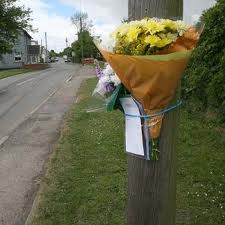
The Tragic Loss of a Student

October 12, 2011

I recently read a very sad blog post written by notswallowedinthesea.

I never imagined this could happen to me… Especially so early on in my teaching career!

But yesterday, first day of Term 4, and in all my excitement, I went back to the school where I teach music part time, excited to see my students and teaching them all the great things I have planned for them – only to be whisked into the staffroom and briefed by social workers on “how to deal with a death in school.” I looked around confused before the assistant principal came up to me and whispered in my ear that one of our prep kids was hit by a truck during the holidays in front of his mum and older sister (who is in Grade 2).

The AP told me the name of the student but it went past my head. I asked for the name again but it didn’t ring a bell. AP tried to describe him: “little blonde one”. There are so many “little blonde ones”. Which one? When I realized I did not recognize the name I sighed in relief, but only for a second. Because then I shuddered at the thought of not knowing the student. How on earth could I NOT know? I kicked myself for not learning the names of all my students soon enough. I felt an overwhelming sense of guilt and couldn’t wait to break away from the staff room to locate the class list and photo so I can put a face to the name of the student. I have 14 music classes and about 20-28 in each class, so yes, I still don’t know the names of all the students! As the social worker was briefing us, I went through the faces of all my prep kids, trying in vain to remember Rex. Rex, the name is very familiar but I couldn’t put a face to it!

When the briefing was over, I spoke to the school counselor who gave me a bit more details about the accident, and pointed to me a picture of Rex. There he was, the little blonde one. Immediately I knew who he was! He was in my Top 5 students in the final class before the holidays! Sweet smiling Rex. Suddenly the memories overwhelmed me and I felt everything from grief to guilt. Grief because I had lost a student through the worst circumstance, and grief because I wished we could have spent more time together – or that I would have remembered him! It pains me that I couldn’t remember him in the first instant! Why didn’t God give us more time together? Why was he taken away so suddenly? Why hadn’t I paid more attention to him? Why couldn’t I remember him?!

It was awful. I wanted to cry but I couldn’t because my first class came in. I tried my best to hide my tears and answered questions about Rex as honest as I could without breaking down. I had never been in such a situation before, and I found it extremely difficult replying to students who have questions such as : “Why did it happen?” and “Where is he now?”

I know for a fact, because of my faith, that God is taking care of him, that things happen for a reason and that God is in control. But I cannot say this to my kids as I am not teaching in a Catholic school and I don’t want to cross any lines or upset any parents. How can I answer questions like these? I ended up avoiding them as much as I could!

The last class yesterday was Rex’s class, and I knew the moment the students came in that they were itching to tell me about Rex, about why he wasn’t in class and why he was never going to come back. But I went straight into my lesson, avoiding any questions, claiming I do not have time and that we had a lot to get through.

I had a lot to get through… a lot of emotions to get through. At lunch time I stumbled across Rex’s music book, I noticed his work for the first time. 2 weeks ago it was just a book belonging to one of the preps, just a book among the statistics, with scribbly drawings and terrible colouring techniques. Now, it is the precious work of a child no longer here on earth, and the horrifying truth that the child has had only 5 years in this world… not enough to learn how to colour in the lines, not enough to learn to write his name properly… not enough! Not enough!

I don’t know if I am angry. I am definitely not bitter. I know these things happen, and tragedies occur throughout the world. Who am I to complain and pound heaven for an answer? But the fact that it happened, TO ME, at this time has made me realize immensely how precious life is, how precious teaching is, and how fragile we human beings are.

While singing with the Preps yesterday I found myself staring into each student’s eyes, trying to take in as much of them as possible, drinking in their personalities and hoping that they will all come back again next week. I do not want anyone else to leave! I do not want any of them to get hurt!

But I cannot save them all… and I did not save Rex. Rex is gone. My class of 21 preps is now down to 20. He was hit by a truck, and died at the scene. Rex, who only 2 weeks ago I had given a piece of chocolate cake for making it into the Top 5 because he sat patiently for his book while others were shouting for it. Little blonde Rex.

I find myself looking towards the right everytime I pass his classroom to go to the staffroom or toilets. I keep looking because I still see his photo in the class wall, on the class door, on his table, his book shelf, his bag shelf, his music book…

I am only in my first year of teaching, and already I have had to deal with a student’s death. I wonder how much more will come? How much more can I take?

I was wondering if you have experienced something similar?  If so, what advice do you have for this teacher to help her get through this emotionally traumatic experience.

Court Ruling Forces Teachers to Act Like Police Officers

October 6, 2011

Why is it that Government and now the courts think it’s appropriate to constantly change our role and responsibilities?  Why can’t we do the job we have been doing for centuries without having to take on new unfamiliar duties?

A 14-Year old was acquitted for holding up a service station and stabbing the attendant because the teacher he confided in reported it rather than caution him.  Apparently, the teacher had a duty to warn the student about his legal rights.  Because the teacher failed to have that discussion, the child got off.

TEACHERS could be forced to warn students as young as 10 about their legal rights before counselling them after a remarkable court decision.

A 14-year-old boy who confessed to his teacher that he robbed a service station and stabbed the attendant with a knife, has been acquitted after the District Court refused to allow the teacher’s statement into evidence because he had not “cautioned” the boy.

It could change the way teachers and students relate to each other, NSW Teachers Federation President Bob Lipscombe said yesterday.

“This is potentially very serious for teachers,” Mr Lipscombe said.

“Teachers are expected to provide advice, assistance and counselling to young people on a daily basis and during the course of that, many things are disclosed to teachers.

“Most are fairly insignificant but often there are matters disclosed that are quite significant and in such cases teachers have never been advised that they can only act on information if they have previously cautioned the student,” Mr Lipscombe said.

The federation was taking urgent legal advice, he said.

“No teacher in the course of their work would caution students in the way this case states,” he said.

“Clearly this teacher did think he was doing the right thing and acting responsibly.”

Last time I checked teachers were neither police officers or lawyers, so why should we be expected to act like them?  Surely this teacher acted responsibly, first for consulting his/her superior and then for reporting the matter.

What do they mean by giving a caution anyway?

“Next time, I recommend you not stab the person.  He may get hurt.”

Yet another ridiculous and insane development for Australian teachers.

Ban on Raising Hands Gets ‘Thumbs Up’ From Me

October 4, 2011

I remember how frustrating it was to have to raise my hand before I could speak in class.  The teacher took what felt like an eternity to pick me.

First I would go for the conventional right arm raised high, complete with perfect posture and enthusiastic eye contact.  But then my arm grew tired.

Plan B was to swap arms, this time using the left, but with the same steely determination to get chosen.  But after a while, my arm would again become tired.

Finally I would go for the two arm job.  My right arm would be raised with my left used as support behind the elbow, propping it up in the hope that I could last until my name would eventually get the call.

And then, after all that, I would remain overlooked and reluctantly gave up the fight and threw in the towel.

And that was just to ask permission to go to the bathroom …

As you may have guessed I’m not a fan of raised hands.  It amazed me at Uni during tutorials how civil a lesson can be when raising hands was replaced by two simple unspoken rules – wait your turn and don’t interject.

That’s why I’m dumbfounded that a simple change like replacing hand raising with the far less strenuous “thumbs-up” motion, could me met with so much criticism:

Pupils at Burlington Junior School in Bridlington, East Yorks, have been asked to adopt the new hand signal to create a more relaxed classroom.

The children – aged eight and nine – have now been told to get the teachers attention by giving a thumbs up while cupping their hand.

But parents at the 360-pupil school have blasted the decision as “daft” after it was introduced at the beginning of this school year and say the clidren look like The Fonz, from the television comedy Happy Days.

Dad-of-three Dave Campleman, 44, who has two children at the school, said: “I thought it was a joke at first. It’s daft. I can’t see the logic in it.

“Fair enough if it was across the board, but I’ve not heard of any other schools doing it.

The driving instructor added: “I think it’s a bit pointless, it’s not benefiting their education – they could focus on other things.

“Kids are used to putting their hands up, it is natural for them. Being told to do something different just confuses them.

“I am just bemused by it. I think they should go back to the old way of putting your hand up in class.”

And teachers at the pupil school have even taken to putting up signs to discourage kids from raising their hand.

In one poster campaign plastered on the walls of classrooms, a thick red cross can be seen through an image of a raised arm to discourage children from using the old method.

Next to it is an image of a pupil doing a thumbs up aimed at helping pupils get to grips with the change.

Another parent, who has a son in the class but didn’t want to be named, said: “It is going to make the class look like they are all imitating the Fonz from Happy Days.

“On a serious note when these kids go up to secondary school next year they could be a laughing stock because all the other children will be putting up their hands.

“I think there should have been more consultation from the school with the parents over this and perhaps a trial first before an outright ban.

“I can’t really see it making the classroom more relaxed – they are young, excitable kids and putting up your thumb instead of your arm isn’t going to change that.”

It’s amazing how a simple change can create such angst.  I think the signs are a light-hearted send up of the stereotypical rigid school rule.  It’s not as if children are going to be punished for accidentally raising their hands.

As for the kids becoming a laughing-stock in High School, one might be surprised to know that children aren’t stupid.  Treat them like mature young adults and you may be in for a pleasant surprise.


Teaching Perfectionists

August 5, 2011

I recall a lesson when I was fresh out of University, when I was  substitute teaching in school in Newcastle.  I was to give out colouring-in sheets to a Grade 1 class.  The teacher had supplied me with only 2 or 3 spare sheets for those that made an error.  Colouring-in sheets, whilst not of any obvious educational value, is a great babysitting device.  Most kids love them because they do not involve any thinking or grading and most teachers appreciate the fact that students can do them both quietly and independently.

On this occasion one of the girls came up to me and asked me for a replacement sheet.

“What’s the matter?” I asked.

“Can I have another sheet?  I messed up this one.”

She presented the sheet to me and I was immediately struck by how beautiful it looked.  Her worked showed striking attention to detail and great care for staying within the lines.

“But what’s wrong with this picture? It looks fabulous to me.”

“It’s terrible.  I made a big mistake.  Look, I went out on the lines.”

Even with her pointing to the spot where she trespassed the line I had to squint to see the infringement.

“You don’t need another sheet.  This is fine.  I wouldn’t even call that a mistake.”

“But I never go out of the lines.  Mum told me never to colour out of the lines.”

I don’t know what got into me, but I instinctively gave her a new sheet and asked her to go out of the lines multiple times – this time on purpose.

You should have seen the horror in her eyes.

Then I turned to the class and announced that the class do the same thing.  I said I was looking for work that featured colouring out of the lines. The class just stared out in confusion.

“C’mon it’ll be fun.  Let’s colour out of the lines!

And all of a sudden they started doing as I suggested.  And they loved it!  They laughed, coloured with energy and abandon and enjoyed comparing their imperfect work with others.

The girl in question saw her classmates having so much fun making mistakes, she too went back to her desk and revelled in this weird but cathartic exercise.  We even sang a colouring out of the lines song.

I don’t know whether I did something constructive or destructive, but I can report that the class looked so much more relaxed and happier when mistakes were acceptable and perfection was bypassed.

Teachers tend to allow the perfectionist to continue their habits.  This is because perfectionists are a pleasure to have in the classroom.  They take their studies seriously, try their best at all times and listen attentively to instructions.

But the problem is perfectionism is extremely unhealthy.  Parents often laugh it off and say, “She get’s that from me.  I’m a bit like that too.”  But is it really a joke?  Perfectionists are on a hiding to nothing because the goal they aim for is impossible to reach.  The inevitable consequences of perfectionism is that they never get the satisfaction of their efforts or accept people’s praise because all they can see is what they didn’t get right.

I am all for studious, hardworking students, but not at the expense of their right to enjoy the fruits of their hard work and the joy of basking in their achievements.

Teaching 150 Students in the One Classroom!

March 11, 2011

pupils

Pupils in an overcrowded classroom at Quarry Heights primary school interact with their teacher.


This story may well stop me from complaining ever again about class size.  I have always been of the opinion that the optimal class size is somewhere between 15 and 25.  Anything less than 15 provides the students with a lack of social opportunities, whilst anything more than 25 prevents the teacher from having sufficient 1-on-1 time with struggling and advanced students.

To think that classrooms exist with up to 150 students is just staggering!

One hundred and fifty Grade 1 pupils crammed into one classroom is the reality of Quarry Heights Primary School near Newlands East in Durban.

The 14 staff members battle to teach the pupils, virtually packed on top of each other, some of whom pass out because of heat exhaustion.

The school – which is made up of seven prefabricated buildings – caters for children mostly from disadvantaged backgrounds. It has only two taps for the 564 pupils, with no electricity, books or stationery.

The school’s governing body secretary and spokesman, Thami Nzama, said that the school lacked basic necessities and received little funding as it was a “no-fee school”, meaning that pupils did not pay school fees.

“The school was built for the poorer people of the community. We have a staff of 14. The Grade 2 class has 78 pupils; the Grade 3, 57; Grade 4, 70 pupils, and we have a joint class of grade six and sevens with 140 children.

“The other pupils are in Grade R. We have one building for a security guard who stays on the property and another that we use as a kitchen, but it does not have running water,” Nzama said.

He added that the staff did not have a staff room in which to meet and organise their work .

“Our staff room will be anywhere we find shade during the day, whether it be under a tree or prefab veranda.”

pupils 1

Teachers at Quarry Heights primary school marking exam scripts outside because they don’t have a staff room.


I can’t imagine teaching 150 six-year olds all day in the one classroom without even having a private staff room to retire to at lunch time.  I love teaching very much, but those conditions would push my level of job satisfaction to the limit. The amazing part of this story is that the teachers involved are loving the experience.

Credit goes out to the dedicated teachers who work in such an environment.  You are a credit to your profession, students and community.  May you continue to inspire us fellow teachers, to make every post a winner and overcome all challenges with a quiet resolve and an ever present smile.

The Heroic Life of a Selfless Teacher

March 4, 2011

If there is something one can get out of the absolutely tragic story of a teacher who drowns in trying to rescue his students, it is the selflessness of teachers, heroically displayed by maths and science teacher Paul Simpson.

A schoolteacher has drowned in an apparent attempt to save his students from a rip at the notorious Bells Beach.

The man, believed to be aged in his 30s, died yesterday while supervising a group of Year 11 and 12 students from Shelford Girls Grammar, in Melbourne’s east.

The girls, aged about 15 years, had been snorkelling at 4.30pm when wild surf and a rip tide turned conditions dangerous.

The group of 19 students and three adults had been walking in knee- to waist-deep water on a reef when a wave knocked them off their feet and into deeper water, Ambulance Victoria spokesman John Mullen said.

Police said it was believed the teacher had been trying to rescue the girls before he drowned.

Paramedics tried unsuccessfully to resuscitate him on the shore of the surf beach near Torquay, 105km southeast of Melbourne.

Several teenagers had to be rescued from the water. One received treatment for an asthma attack. Others had minor injuries.

The distressed students, who were in shock, had to be helped to make their way back up the beach to a car park to be taken back to their camp at Torquay.

The teacher is question works at a school within walking distance of my home.  His bravery and unflinching desperation to rescue his students shows us what sacrifices a brilliant teacher can make for the safety and security of his students.  I extend my condolences to his family, friends, colleagues and students.  May his brief but meaningful life inspire others to strive to make selfless decisions whilst looking out for others.

If you have some time I encourage you to read tributes written by his former students on a special Facebook page dedicated to the memory of this incredible person.