Posts Tagged ‘Parenting’

Youth Violence Blamed on Lack of Male Teachers

June 24, 2011

This one wins “The Long Bow Award” for the most absurd theory in education.

A Decline in the number of male teachers is being blamed for rising youth violence.

Adolescent psychologist Michael Carr-Gregg said the lack of male teachers was a major problem.

“We know males give something different to the developing boy than what female teachers give. To some extent we have lost that male narrative and left it to Hollywood to teach boys about masculinity,” he said.

The article is right though in suggesting there are very real reasons why males are not finding teaching an attractive career path:

Low pay, a perception that teaching is “women’s work”, and fears of being labelled a pedophile have been blamed for the reluctance of young men to teach.

As long as males don’t find this career path appealing, we are wrong in believing that we even have a shortage of male teachers to begin with.  There’s nothing worse than a teacher that doesn’t enjoy what he/she does.

I wonder if this frenzy to have more male teachers will inspire a new kind of sexual equality.  I wonder if the following methods will be employed to get potential male teachers interested:

– Pay them more than female teachers

– Offer a university fees rebate for male teachers

– Create quota systems for males in schools and universities.

I believe all these measures would be a mistake.  Essentially what we are looking for are good teachers not male teachers.  Whilst I hope men come to discover what a wonderful profession this is, I wouldn’t push it.

As for the lack of male teachers being blamed for youth violence, I very much doubt it.  Male teachers can have a very strong effect on male students in particular, but the theory is outrageous at best.

The Disappointing Response to the Schoolgirl Fight Saga

June 22, 2011

Yesterday, Australians were horrified when footage surfaced of a fight between Melbourne schoolgirls.  The clip was a reminder at just how ugly bullying can be, from the violent actions of the perpetrators to the feeble and gutless innaction of the bystanders.

To watch the clip please follow this link.

To add salt to the wounds, the response by professionals, ministers and educators have been extremely disappointing.  Take this uninspiring comment from State Education Minister, Martin Dixon:

He said the department also has a zero-tolerance approach to bullying.

All schools are required to have anti-bullying and cyber bullying policies in place that students are made aware of and expected to adhere to.

This extends to appropriate mobile phone use, he said.

Government ministers often coin the expression “zero-tolerance” because it sounds good.  But what does it really mean?  I looked up the department’s so-called “zero tolerance” approach on their website.  This is what it said:

All Victorian government schools are required to include anti-bullying strategies in their Student Engagement Policy (or their Student Code of Conduct).

Schools have a duty of care to take reasonable measures to prevent foreseeable risks of injury to their students.

Does that sound like “zero-tolerance” to you?

And the standard line of schools requiring anti-bullying policies is predictable, but ultimately, it’s just pure spin.  An anti-bullying policy, as I’ve argued here countless times, is just a piece of paper designed to ward off lawsuits.  It’s to show that schools have a plan.  The plan is usually quite vague, so as to avoid instances where they might be caught out not following their plan.  It is also useless in cases where teachers and principals are unaware that bullying is taking place.  Recent incidents have shown how blind schools have been to the bullying that pervades within its walls.

And if that’s not bad enough, psychologists and the media have decided to blame Facebook for this incident. But Facebook doesn’t pull a girls hair or drag them on the ground.  Bullies create bullying behaviours, not social media.  The medium is not the real issue here.  The real issue is that bullying exists, it is absolutely unnaceptable and must be seriously dealt with.  Not by programs or policies, but by a change of mindset and culture.

The very worst response we could have garnered from this awful exhibition of bullying is, “Oh, that’s just because of Facebook.”, or “That’s as a result of an ineffective anti-bullying policy.”

How many more incidents do we need to watch before we dispense with the spin and blame game and start to see this for what it is – a complex and delicate problem that requires much more attention.


Too Many Struggling Students Lack Support

June 20, 2011

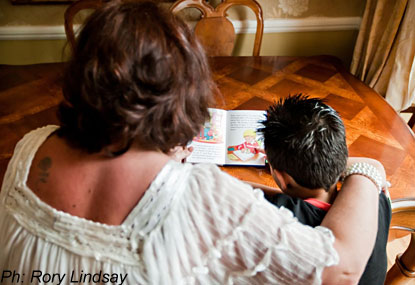
I read a disturbing article about a young boy who struggles with dyslexia, and the trauma his mother has gone through as his school makes little to no effort to assist him.  It is a difficult article for a teacher to read, but a very important one.  There are too many students that fall between the cracks.  Too many that don’t get the attention and support that they so desperately need.  As teachers, we must fight for the social, emotional and academic wellbeing of all our students, whilst ensuring that they are all, without exception, getting the care and attention they need.

Below is an excerpt of the article.  I truly recommend that you read the whole story,

David is an artistically gifted boy with a photographic memory. The 10-year-old’s dining-room table is full of intricately designed Lego battleships, his art displays such originality that his teacher calls him “the next Picasso”, and he has an extraordinary ability to recall facts from the History Channel documentaries he watches on TV.

“The other day,” his 41-year-old mother Margaret recalled, “we were driving along and he said, ‘mummy, you were born in the year the first man landed on the moon’.”

But there is one big problem with David that overshadows his life. He cannot read. He has been assessed as “severely dyslexic” and “having the reading age of a child aged four years and four months”. His schooling has been a disaster and according to educational psychologist reports seen by the Standard, he has progressed “just one month in five years”.

You might assume that David attends a failing, inner-city school, but you would be wrong. His south London state primary is rated “good” by Ofsted, attended almost exclusively by white British-born pupils, and is located in a street of £3million houses. He is also well behaved.

Yet David, his mother said, has been “catastrophically let down by everyone: by his teachers, by the school and by the council”, all of whom failed to give him the specialised help he needs.

Margaret said: “At school the other kids call him ‘odd’ and ‘weirdo’ and he often comes home crying. He is still reading flashcards and has not progressed beyond words like ‘cat’ and ‘dog’. He has no real friends – how can he? He doesn’t get their jokes or their games. To the other kids, he is a misfit who doesn’t understand anything that’s going on because he can’t read.”

“My son was nine and he still couldn’t read a word,” said Margaret. “What were they waiting for? Why didn’t they do something?” 

Finally the school arranged for David to have some specialist teaching – three hours a week at a nearby literacy centre at a cost to the school of £1,000 a term – as well as 15 hours a week one-on-one with the teacher assistant. For the first time he made a glimmer of progress, improving by “one month in a year”. Margaret says the teacher assistant and the literacy centre are not experts in teaching severely dyslexic children.

There is a growing tendency to allow students to pass the year, regardless of their level of skill or maturity.  The reason for this is quite sensible.  Holding a child back can have strong emotional repercussions.  But because such a system exists, not enough questions are asked of students who are languishing.

I am not suggesting for a second that young David should have been kept down.  I am simply suggesting that since teachers no longer have to explain why a child is ready to be promoted, there is less incentive to put the time and energy into children like David.

It is time that we looked into the issue of students being promoted without the basic skills, and ensure that teachers are made accountable for the progress of their students.  David was allowed to fall into the gaps and starved of the support he needed because there isn’t enough pressure on teachers to reach benchmarks.

The story of David breaks my heart because he is a victim to poor teaching, an inept education system and a misnomer that dyslexia renders one academically incapable.


Ten Rules for Getting Kids Fit

June 20, 2011

I found a useful article that gives ten rules for keeping your kid active.  The ten rules are as follows:

Rule #1: Don’t Rely on Organized Sports

Rule #2: Keep Play Fun

Rule #3: Turn off the TV…

Rule #4: …Unless You’re Playing Wii

Rule #5: Never Reward Kids with Food

Rule #6: Instruct by Showing, Not Telling

Rule #7: Know When to Praise

Rule #8: Make a Play Date with Friends

Rule #9: But Don’t Compare Your Kids with Others

Rule #10: Give Them Your Blessing

For an explanation of what each rule means, click on the link at the top of the post.


Lazy Parents Blamed for Kids Falling Behind at School

June 19, 2011

It is a gross simplification to blame parents for their children’s slow academic development.  Last time I looked, a large part of a child’s day is spent at school.  It is simply unfair to blame parents when the failings of the education system is so apparent.  Blame should be shared between all key stakeholders.

It is also unfair to blame parents as lazy.  Often these same parents that don’t play enough games with their children work multiple jobs and long hours to put their children into good schools.  I play games and practice reading with my daughter every night, but by the time I sit down with her she is exhausted from a long day at school.  If I can’t rely on her school in keeping up their end of the bargain, then even my best efforts may not be enough.

Whilst I do not in any way condone putting a child in front of a television, I believe that the school system should be able to make up any developmental lag as a result of misspent toddler time.  If the school system can’t help overturn a 4-year old’s slow development with 7 hours a day of school instruction, then it says a lot about the failings of our school system.

Neuro-psychologist, Sally Goddard Blythe, disagrees:

LAZY parenting is resulting in children starting school developmentally disadvantaged because they watch too much TV instead of playing and being read to.

A neuro-psychologist in the UK, Sally Goddard Blythe, researched the link between children who missed out on simple childhood activities and those who started school with learning problems.

She found many toddlers were watching 4.5 hours of TV a day instead of playing, and went on to start school with poor emotional development and motor skills.

Dr Marc de Rosnay, an early childhood development expert from the University of Sydney’s school of psychology, said children were put in front of a television screen too often.

“We are living in a world where there are lots of opportunities for a child to be engaged with no one for an extended time,” he said. “There is some decent research that shows that motor skills develop when kids are out and about and experiencing the physical world … as a nation (we now have) more children growing up with low levels of activity.

“There are government recommendations about how much TV kids should be watching, and it’s not much.”

While he stopped short of saying that parents who did not read to their children or interact with them were “neglectful”, Dr de Rosnay said there were developmental consequences for children who missed out on that nurturing.

“It’s fair to say that children who miss out on interacting with their parents, peers and siblings will find themselves at a disadvantage compared with children who have had that interaction,” he said.

But he added that using play to develop a bond and trust between parents and child was more important than teaching a child to read at a young age.

“We live in a world now where children are meant to be numerate and have the first steps of letter recognition before they start kindergarten,” he said. “We used to live in a world where kindergarten was the place that was done.”

Dr de Rosnay said there was no evidence that if a child started school unable to read and write it would affect their long-term learning.

Ms Goddard Blythe found that almost half of all UK five-year-olds who started school only had the motor skills of a baby, including the inability to hold a pencil. The cause, she said, was because parents had not spent enough time playing with their children or letting them play with others.

Ms Goddard-Blythe also argued that when children missed out on being read fairy tales, it impacted on their ability to understand “moral behaviour” and how to deal with emotions.

Instead of putting all the blame on parents, the educational system should get with reality.  They should prepare for the fact that students may not have motor skills that enable them to properly grip a pencil etc.  Instead of complaining that students show a lack of understanding of proper moral behaviour due to a lack of exposure to fairy tales, ensure that fairy tales is part of the early years curriculum.

Anyone that thinks a 5-year old can’t radically improve in motor skills and the ability to make moral choices has never been in a classroom.

Parents should always do their best to help their kids.  But they are not the only stakeholders in the education of our children.

Kids Fined $500 for Lemonade Stand

June 19, 2011

Kids get criticised so much nowadays for not showing enough initiative, taking their luxuries for granted and being selfish.  You’d think that when kids show some drive and vision they’d be applauded for it.

Well, that’s not always the case I’m afraid.

When a group of children get together to raise money for pediatric cancer research, only to have their lemonade stand shut-down and  slapped with a $500 fine, you know that there is something very wrong with the message we send kids.

After life dealt these kids a $500 fine, they kept making lemonade.

Four 10-year-olds who set up a lemonade stand a front yard near Congressional Country Club golf course, site of this year’s U.S. Open, were warned by Montgomery County officials to shut down their lemonade stand on Thursday.

On Friday, in a compromise, parents say the county agreed to let the stand stay open, just a few feet away from its original location.

Neighborhood kids set up a pop-up tent at the corner of Country Club Drive and Persimmon Tree Road.  Thirsty golf fans had a chance to buy lemonade or other cold drinks for $2 a pop.  The kids and their parents said that half the proceeds would go to a children’s charity.

The Montgomery County Department of Permitting said they were obstructing pedestrian and vehicle traffic, and wrote up the lemonade stand for operating without a license.  The offense carries a $500 fine.

“What happened to the entrepreneurial spirit of this country,” one angry parent told NBC4’s John Schriffen on Thursday, “this is the American dream.”

Parents resolved not to move the stand, and to donate 100 percent of the sales to charity.

On Friday, parents said the county government relented, and allowed the stand to stay open. In a compromise, the tent got moved 100 feet down the road, away from the intersection.

“We’re really happy today because the kids are thrilled to be back in business,” said one of the mothers, “and the county said last night that they would not in their words ‘hassle the kids’ this weekend if they would just move their lemonade stand 100 feet down still on private property.”

The kids and their parents planned on giving the money to a race to benefit pediatric cancer research.

Suer a media backlash caused the fine to be waived and a compromise to be hatched up, but there shouldn’t have been a fine or a compromise.  Adults must encourage kids to do things for others and get them to think beyond their own metrialistic vices.  But when children do something that is selfless and sincere, it sends such a terrible message to try and undermine or interfere with their passion for wanting to make a real difference.

Why be content with the next generation simply following in our footsteps, when they are capable of so much more?  Let’s support and encourage them to lean and improve upon both our strengths and weaknesses.

Teachers Banned From Communicating With Students on Facebook

June 17, 2011

Imposing bans is never ideal, because you would like to think that grown adults will always act with maturity, integrity and professionalism.  But recent events have shown that Facebook and Twitter can be the undoing of a person if they are not careful.  I’m sure teachers have used both forms of social media to make themselves more approachable to their students, and assist them with their studies when required.

However, in the current climate, I agree with the ruling handed down that teachers can’t communicate with their students in this way:

Pinellas County teachers can’t communication with students through Facebook, Twitter or other private media.

That’s the ruling from the Pinellas County School Board, whch unanimously passed a policy today that forbids it.

Pinellas County School Board members sought to address the possibility of impropriety as a result of that ease of access.

“I don’t know what information is being transmitted,” said school board attorney Jim Robinson of private communication with students.

While electronic media outlets such as Facebook and Twitter leave a “cyberprint” that have led to countless teacher investigations, it also puts faculty at a new and dangerous risk. 

The policy states: “Such communication could cause the appearance of inappropriate association with students.”

Pinellas and Florida are not alone. In Missouri similar legislation is awaiting a signature from Gov. Jay Nixon.  School and government officials recognize the need for such cautionary measures, but are also concerned that their legislation does not allow for exceptions.

After the recent tornados in Joplin, many students were located through social media websites when cell phone signals were down.

Pinellas Schools board members made certain to take exceptions into account.  The policy also states “staff shall utilize School Board resources in all electronic communications with students regarding school matters. Provided, however, private electronic media, such as a cell phone, may be used when District resources are not available, when such use is in the best interest of all concerned”.

On Facebook Pinellas Park High School has a Fan Page, while the presence of Northeast High and St. Petersburg High School are limited to community pages of standard information.

I’m not doubting for a second that teachers can’t use social media for the good of their students.  But I am also aware that on any given day you can Google News the term “teacher”, and instead of stories about inspiring teachers with brilliant methods, you get one horrific story of abuse after another.

Essentially, it is in our teacher’s best interests to avoid communicating with students on Facebook and Twitter.  It’s just the reality of the world we live in.

Report Writing Can Be So Dispiriting

June 14, 2011

Remember the day when teachers actually got to speak their mind?  When they were able to put an evaluation of a child in writing without fear of a lawsuit?  I’m afraid those days are long gone.

Report writing is as bigger chore now as it has ever been.  Required to complete at least 2 a year, I stay up nights on end in the lead up to my report writing deadline, typing away, without any idea why reports need to be so long and arduous.

The following are 5 frustrating features of a modern-day school report:

1.  It is often written in technical language that makes no sense at all to parents.  This is a ploy by the teacher to use up as much space as possible, make themselves look extra professional and write in such a way that parents have no idea what they are talking about (so they wont have what to complain about).  I feel sorry for parents that genuinely try to read their child’s report, only to be left totally confused by the experience.

2.  The Government is scared that put in the hands of teachers, reports would be too short and wouldn’t include enough detail.  That is why they have directed teachers to write about every detail about the child, down to how neat his/her desk is and how clearly he/she speaks in public.  That means Primary school teachers must write over 1000 characters each in four sections (General Comment, Maths, English and Unit of Inquiry).  Added to that the teachers need to isolate skills yet learnt and pinpoint how they are going to help the students catch up in these areas.  It’s just too long!

3. Similarly, the Government wanted students to be graded according to an insane scale.  The letter grade “B” means the child is a semester ahead, “C” refers to where the child should be, and “D” means the child is a semester behind.  There is “A” and “E”, but teachers are advised not to go there because it makes the school look bad.  In other words, if your student is going well, you give them a “C” – go figure!

4.  The report tell you nothing of real substance!  The threat of lawsuit is too great.  It’s designed to say a lot without saying anything at all!

5.  Teachers are so exhausted from writing these blasted reports that they come to school tired and emotionally drained.  Their planning time has been compromised, so often their lessons are less engaging.

I am as happy with my reports as the constraints lets me be.  I feel as though I’ve written in “plain speak”, demonstrated that I know my students and have shown an understanding of where they are at academically and socially.

But I am so drained!

Why does it have to be like this?

Tackling Bullying Shouldn’t Lead to Stupidity

June 14, 2011

The purpose of clamping down on bullying is to allow all students the right to feel safe and secure in their school environment.  But steps taken to negate bullying shouldn’t need to be radical or expensive.  For example, the rule that students should not socialise in groups larger than 3 may be well-intentioned, but in reality it reinforces what a sad and sorry place a badly run school can be.

That’s why I am saddened to hear of the latest over the top anti-bullying measure – Unisex toilets!

Tasmania’s Education Department is calling for calm over unisex toilets in some new primary schools.

The individual, self-contained toilets have been installed at two Burnie schools in efforts to reduce bullying in toilet blocks.

Parents have raised concerns about the shared toilets, and say they weren’t consulted.

It baffles me that this idea has received so much attention.  The idea may make the toilets a less attractive meeting place for bullies, but it won’t make bullying less attractive.  Tackling bullying isn’t about toilets it’s about the culture of the school.  Instead of designing toilet blocks to tackle bullying, how about keeping the message simple and clear?

1.  Our school does not tolerate bullying of any kind.

2.  Consequences will be metered out to those found bullying as well as any passive bystanders who could have alerted a teacher or diffused the situation.

3.  We will fight for the rights of all our students, and do our best to ensure that our children leave school with their self-esteems’ elevated rather than diminished.

Is that so hard?

Woman Re-Mortagages Her House To Feed School Kids

June 13, 2011

How about this for a story of selflessness and generosity.

A businesswoman in east London re-mortagaged her home to establish a breakfast club after learning that one-fourth of Britain’s primary pupils were too hungry to learn.

Today, Carmel McConnell’s breakfast club – Magic Breakfast – feeds 6,000 chidren every day, Daily Express reported.

At 200 of the most deprived schools, Magic Breakfast gives children a healthy start of juice, bagels and cereal or toast for just 23 pence, with many often having not eaten since the previous school lunch.

Carmel said: ‘My work was advising big business on building trusted brands. I ended up going into schools to research a book on corporate activism and found that many of the teachers were having a whip-round and bringing food into school each morning so they could give their pupils something to eat.

‘Without food, the youngsters are unable to concentrate, behave properly or to learn. I immediately bought a whole load of loaves and dropped them off at our local schools in Hackney (in east London) where the teachers had expressed a real need.

‘I then re-mortgaged the house when I realised just how widespread this problem was and how little it would take to put it right.’

Valerie Figaro, head of Randall Cremer Primary School, east London, said Magic Breakfast transformed the lives of many of her pupils.

‘When children get up they won’t have eaten for 10 to 12 hours and we are asking them to expend energy by using their brains without any fuel,’ said Figaro.

Carmel, who draws support from large corporations, hopes to advise schools on raising funds themselves for breakfast clubs.

I love stories about the unsung heroes of education.  Ms. McConnell can be contacted at carmelmcconnell@btinternet.com