Posts Tagged ‘Parenting’
November 10, 2011

A recent study into bullying may have fond that online bullying isn’t as prevalent as regular bullying, but it is still early days.
A new study entitled Teens, Kindness and Cruelty on Social Networks confirms much of what we already know about cyberbullying. Most kids aren’t bullied and most kids don’t bully either online or off.
In fact, the study–conducted by the Pew Internet & American Life Project for the Family Online Safety Institute and Cable in the Classroom–concluded that “[m]ost American teens who use social media say that in their experience, people their age are mostly kind to one another on social network sites.” Nearly seven in ten (69 percent) of teens said that peers are mostly kind while 20 percent said peers are mostly unkind with 11 percent saying, “it depends.”
Fifteen percent of teens say they have been the “target of online meanness.” When you include in-person encounters, 19 percent say they’ve been “bullied” in the past year.
These numbers track very closely with previous scientific surveys on bullying and cyberbullying. The largest source of bullying (12 percent) was in person, followed by text messaging (9 percent). Eight percent said they had been bullied via email, a social networking site or instant messaging and 7 percent were bullied via voice calls on the phone. Girls are more likely to have experienced what we typically call “cyberbullying,” while boys and girls are roughly equal when it comes to in person bullying.
Online bullying may be less prevalent but it is arguably more damaging. It is generally accepted that since online bullying invades the victim’s home (traditionally a place of comfort and safety), it has a much more powerful effect. Another reason that online bullying is potentially more oppressive is that there can be many more bystanders and participants online. Facebook bullying can be shared between hundreds rather than just handful of kids in the schoolyard.
And let’s not kid ourselves. Bullies don’t discriminate between mediums. A bully doesn’t throw their weight around in person and then become an angel online. Bullying is bullying, no matter what the medium. The experts are telling us online bullying is not the major form of bullying that some believe it to be.
That may be true, but it’s early days …
Tags:Boys, Bullying, Cyber Bullying, Cyberbullying, Education, Family Online Safety Institute and Cable in the Classroom, Girls, Kindness and Cruelty on Social Networks, life, News, Online Bullying, Parenting, Pew Internet & American Life Project, Phone, Race, Study, Teenagers, Teens, Text Message, Texting
Posted in Bullying, Cyber Bullying | Leave a Comment »
November 9, 2011

It is the responsibility of parents and teachers to protect children and educate them on the dangers that exist in the ‘real world’. However, in attempting to prepare children for incidents and scenarios that are unlikely to happen we have seemingly created a fear and paranoia that has proven quite destructive to the same children we are trying to protect.
A surge in reports of men acting suspiciously near schoolchildren has triggered urgent talks between schools and police, who fear the ‘‘stranger danger’’ message has gone into overdrive.
Police say heightened fears of children being stalked on Gold Coast streets are unfounded, and the increase in reports is the result of people jumping at shadows after a rash of incorrect media stories.
Regional Crime Coordinator Dave Hutchinson says some incidents are made up, and others are cases of children taking fright for no good reason.
I am a bit concerened at how scared and anxious our children are becoming, and teachers are slightly to blame. Besides stranger danger and other programes that inhabit fear in students, many teachers in Australia have been scaring children with doom and gloom predictions about global warming. No matter what your position is on this issue, it is important that teachers instruct, educate and empower children, instead of frighten or demoralise them.
There is a huge difference between helping students become perceptive, instinctive and responsible and helping them to become fearful and paranoid.
At the end of the day, the importance of the message is lost when it inspires an irrational and overpowering fear.
Tags:Anxiety, Carbon, Child Welfare, Children, Climate Change, Crime, Dave Hutchinson, Education, Fear, Global Warming, kids, life, Parenting, Police, Psychology, Schools, Stranger Danger, Strangers, Teachers, Teaching
Posted in Child Welfare | 3 Comments »
November 8, 2011

I was hoping that since there hasn’t been a great deal of coverage about childhood eating disorders recently, that the numbers suffering this serious disease had dwindled.
It turns out that I was mistaken:
Doctors at the Westmead Children’s Hospital in NSW have told the ABC that child admissions for eating disorders, particularly anorexia, have tripled in the past decade.
Children as young as eight are being admitted, some of whose lives are at risk.
Like other articles on childhood anorexia, fingers are pointed to the media when it comes to metering out the blame:
The head of the hospital’s adolescent medicine department, Susan Towns, suspects the media is to blame.
“Media portrayal can affect the development of body image in young people and this can happen at a stage and an age where children and adolescents aren’t able to conceptualise things in a complex and abstract way and they can take these messages in a very concrete way,” she said.
Whilst I don’t like blaming the media for everything. I couldn’t help but reflect on the damning study conducted in Fiji, where they found that within three years of introducing television cases of eating disorders among children rose significantly.
The Harvard Medical School visited Fiji to evaluate the effect of the introduction of television on body satisfaction and disordered eating in adolescent girls.
In 1995, television arrived and within three years the percentage of girls demonstrating body dissatisfaction rose from 12.7 per cent to 29.2 per cent.
Dieting among teenagers who watched TV increased dramatically to two in every three girls and the rate of self-induced vomiting leapt from zero to 11.3 per cent.
Tags:Adolescents, Anorexia, Body Image, Children, Dieting, Dr Sloane Madden, Eating Disorders, Education, Fiji, life, media, News, Parenting, Susan Towns, Teenagers, television, The Harvard Medical School, Westmead Children's Hospital
Posted in Body Image | 3 Comments »
November 7, 2011

Just when you thought that respect for girls and women was on the marked improve comes yet another reminder that things are not what they seem:
During the 2010-11 school year, 48 percent of students in grades 7-12 experienced some form of sexual harassment in person or electronically via texting, email and social media, according to a major national survey being released Monday by the American Association of University Women.
The harassers often thought they were being funny, but the consequences for their targets can be wrenching, according to the survey. Nearly a third of the victims said the harassment made them feel sick to their stomach, affected their study habits or fueled reluctance to go to school at all.
The survey, conducted in May and June, asked 1,002 girls and 963 boys from public and private schools nationwide whether they had experienced any of various forms of sexual harassment. These included having someone make unwelcome sexual comments about them, being called gay or lesbian in a negative way, being touched in an unwelcome sexual way, being shown sexual pictures they didn’t want to see, and being the subject of unwelcome sexual rumors.
The survey quoted one ninth-grade girl as saying she was called a whore “because I have many friends that are boys.” A 12th-grade boy said schoolmates circulated an image showing his face attached to an animal having sex.
In all, 56 percent of the girls and 40 percent of the boys said they had experienced at least one incident of sexual harassment during the school year.
After being harassed, half of the targeted students did nothing about it. Of the rest, some talked to parents or friends, but only 9 percent reported the incident to a teacher, guidance counselor or other adult at school, according to the survey.
In my view there are two main reasons for this disturbing set of figures:
1. Schools have become hamstrung when it comes to access to appropriate and effective consequences for infringements such as bullying and harassment. Call the parents? No big deal. They gave up long ago. Suspensions? Nowadays you get a suspension for talking out of turn. Suspensions have lost their impact because they are metered out out too readily. In the end, no punishment given seems to come close to matching the crime.
2. Schools have been notorious at turning a blind eye to incidents. I am not talking about all schools, yet in truth, plenty goes under this category. Teachers have been taught not to get emotionally involved with their students. The result being, an emotional distance which inhibits the teachers capacity to pick up on these things, Teachers must have enough of a connection with their students (within the obvious professional parameters of course), as to notice when things are not right with their them. They are intrusted to look after their students and must do so by being proactive. Kids are told from an early age not to dob on a classmate. If teachers wait around for things to get reported to them, they will miss the opportunity to intervene and change a potentially abusive situation.
We must expect schools to be proactive with harassment. They must be able to use tough and uncompromising punishments and show enough of an interest in students as to detect a problem before it gets completely out of hand.
Tags:AAUW, American Association of University Women, Catherine Hill, Child Welfare, Education, Email, facebook, Fatima Goss Graves, Knowledge Networks, life, National Women's Law Center, News, Niobe Way, Parenting, Psychology, Sexting, sexual harassment, social media, Students, Survey, Texting
Posted in Child Welfare | 3 Comments »
November 4, 2011

There is a huge difference between hugging someone because they are your friend and sexual harassment. It is not hard to distinguish one from the other.
Friends hugging innocently in the playground in no way prevents schools from punishing children for sexual harassment.
A 14-year-old Florida student who hugged his friend was suspended as a result of his middle school’s zero-tolerance no-hugging policy.
Nick Martinez said he gave a quick hug to his best friend, a female student, between classes, WKMG-TV reported.
The public display of affection was spotted by the principal of Palm Bay’s Southwest Middle School, which is 120km south-east of Orlando. While the principal told WKMG-TV he believed the hug was innocent, he brought the two students to the school’s dean, who penalised them with in-school suspensions.
According to the Southwest Middle School’s student handbook, students can receive a one-day out-of-school suspension for kissing, while students caught hugging or hand-holding are penalised with a dean’s detention or suspension.
The school’s strict policy stipulates that there is no difference between an unwanted hug, or sexual harassment, and a hug between friends, WKMG-TV reported.
What measures like this do, is transform schools which are already unnatural places for children and make them even more dreary and dictatorial. The irony is, that while bullying continues to be a major problem, you would have though that acts of friendship would be encouraged, not outlawed.
What’s next – banning students from complimenting each other?
It’s about time we started matching school bans on children by imposing bans on schools. I would love to ban schools from implementing rules inspired by political correctness gone wrong!
Tags:Education, florida, life, News, Nick Martinez, Palm Bay's Southwest Middle School, Parenting, Political Correctness, sexual harassment, Suspension, Suspensions, WKMG-TV
Posted in Political Correctness | 1 Comment »
November 3, 2011
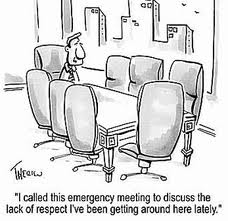
Whilst it may not come as a surprise to learn that British society casts negative views about the way children behave, the level of disrespect and animosity doesn’t bode well for the future. To liken children as ‘feral animals’ may well be an accurate description for many, but I can’t help thinking whether such criticisms results in a stronger us vs them mentality.
Almost half of Britons think children are violent and starting to behave like animals, a Barnardo’s survey suggests.
The children’s charity says the research suggests society holds a negative view towards children despite the majority being well behaved.
Of the more than 2,000 people questioned by ICM Research, 44% said young people were becoming feral.
Barnado’s chief executive Anne Marie Carrie said it was “depressing” so many were ready to give up on children.
The survey revealed that:
- 49% agreed children are beginning to behave like animals
- Almost 47% thought youngsters were angry, violent and abusive
- One in four said those who behaved badly were beyond help by the age of 10
- Whilst 36% thought children who get into trouble need help, 38% disagreed
Writing off our young is not a good move. We just can’t stand by and blindly judge. We must do what we can to ensure that the next generation of adults feel empowered to make a positive contribution to society.
However uneasy people are feeling about the state of children in today’s world, it is up to us to straighten things out. As it is, I am unhappy by the way my generation virtually ignores the contributions and sacrifices made by our elders. I hate to think how badly the younger generations will treat us.
Tags:Animals, Anne Marie Carrie, Barnardo survey, Barnardo's survey, Charity, Child Development, Children, Education, Feral, ICM Research, Natasha Cripps, Parenting
Posted in Child Development | 2 Comments »
November 2, 2011

To those parents who are contemplating assisting their underage children to get on Facebook, I strongly suggest you reconsider. The age requirements for Facebook is necessary, as Facebook has a clear downside. From cybersafety issues to cyberbullying, Facebook is clearly not designed for pre-teens.
Almost all parents of ten-year-olds signing up for the site – 95 percent – were aware of what their children were doing, and 78 percent of those helped them do it.
“Although many sites restrict access to children, our data show that many parents knowingly allow their children to lie about their age — in fact, often help them to do so — in order to gain access to age–restricted sites in violation of those sites’ ToS,” the authors write.
“This is especially true for general–audience social media sites and communication services such as Facebook, Gmail, and Skype, which allow children to connect with peers, classmates, and family members for educational, social, or familial reasons.”
The survey found that 55 percent of 12-year-olds, 32 percent of 11-year-olds and 19 percent of 10-year-olds were active Facebook members.
The authors suggest that the COPPA rules may need re-examination, given that they appear only to be encouraging parents to lie. Universal, rather than age-based, privacy protecitons might make more sense, they say.
The full report is here.
Tags:Berkman Center for Internet & Society, Children, Children's Online Privacy Protection Act, COPPA, Cyberbullying, Cybersafety, facebook, kids, Lie, lying, Mozelle Thompson, Parenting, social media, Survey, Underage, Why Parents Help Their Children Lie to Facebook About Age
Posted in Social Media | 1 Comment »
November 1, 2011
I have seen first hand how the youngest children in the class are often among the most behind. Some clearly aren’t as mature as the others.
That’s why I was not surprised to read that children born in the summer may need more help to come up to the same academic standard as their older classmates.
Children born at the start of the academic year achieve better exam results, on average, than children born at the end of the academic year.
This matters because educational attainment has long-term consequences for a range of adult outcomes. But it is not only educational attainment that has long-lasting effects: other skills and behaviours affect adult outcomes too, and can also matter for children’s current wellbeing.
In line with previous research, our report shows that there are large and significant differences between August- and September-born children in terms of their cognitive skills, whether measured using national achievement tests or alternative indicators such as the British Ability Scales; these gaps are particularly pronounced when using teacher reports of children’s performance.
Those born in August are also significantly more likely to take vocational qualifications after leaving compulsory schooling and slightly less likely to attend a Russell Group university.
I was one of the youngest in my class and really struggled to keep in touch with my classmates. I was slow to mature, and in hindsight I probably should have stayed down a year to maximise my academic potential.
Having said that, I believe that parents can get fixated with their children being among the youngest and can use it as an excuse. This then filters down to the child who rationalises their performance by making the same excuse.
Tags:August-born children, Children, Claire Crawford, Education, Government, IFS, Institute of Fiscal Studies, kids, Parenting, Russell Group, Teachers
Posted in Child Development | 1 Comment »
October 30, 2011

Below are some useful pointers for parents attending parent-teacher conferences courtesy of educator and writer, Susan Schaefer.
- Be punctual — Teachers are on a tight schedule so if you are late you might get bumped to stand-by.
- Come with a list of questions — Avoid wasting time by jotting down your most important concerns before the conference. If you have a question that requires a lengthy response, schedule a follow-up time to speak with the teacher.
- Focus on academics — The primary focus of school is academics so ask questions about how your child is doing and how you may help your child improve if necessary.
- Be open-minded — The teacher may have some observations you do not see at home. Our kids bring out our most basic emotions, but try to opt out of defensive mode and listen to what the teacher has to say.
- Ask for clarification — If the teacher says your child is “chatty” or “plays roughly” ask specifically what that means or ask for examples when he or she displayed that behavior.
- Don’t complain about other kids — However, suggesting she not sit your child with another child is fine. If there have been specific incidents you feel the teacher should know about, go ahead and share. The teacher will listen and handle it, she just can’t comment on other kids.
- Treat the teacher with respect — It’s sad that I even need to say that. Teachers are professionals with the education and experience necessary to competently teach your child. You would not appreciate other people that are not in your profession telling you how to do your job and either do they.
- Do not stay past allotted time — Understand that the teacher is not trying to rush you but there is only so much time and others are probably peering in the door for any sign you are about to wrap it up.
I agree with all of them except for the one about keeping the focus on the academic. I believe that parents should be able to focus on any matter or topic that concerns or interests them. I also believe that the social welfare of a child is every bit as important as their academic progress.
Tags:Academics, Education, Meetings, Parenting, Paret-Teacher Conferences, Punctuality, Respect, Susan Schaefer
Posted in Parenting | 3 Comments »
October 29, 2011
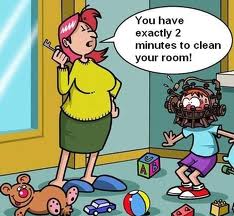
Even the best parents and teachers struggle to get kids doing menial tasks on a consistent basis. From making their beds to putting their lunchboxs back in their bag, it’s amazing how difficult it is to get children to be responsible for small yet important tasks.
That is, until an app was designed to assist desperate and exhausted parents:
You may find this shocking, but getting my 11- and 9-year-olds to do household chores is like pulling teeth. Rotten kids!
That may change now that I’ve got You Rules Chores on my iPhone. This clever new app turns household chores into a game, rewarding each kid a designated number of coins for each completed job. Whoever finishes the week’s chores first is the winner. (Of course, we all know who the real winners are: mom and dad.)
The app features cute graphics and music, and after a parent gets set up as the “referee,” each kid gets to choose an avatar (from only six available, alas).
Tags:App, Applications, Apps, Children, Chores, Education, Family, Games, Gaming, i-Pad, i-Phone, kids, life, News, Parenting, Rick Broida, technology, You Rules Chores
Posted in Parenting | 2 Comments »








 Topical Teaching
