Posts Tagged ‘Parenting’
November 22, 2011

Some fads are just harmless fun. Many would argue that the Sneaky Hat craze falls under that category. Sneaky Hat, which refers to the practice of taking a photo of yourself naked with nothing more than a hat to cover your private parts, is not “harmless”. Kids that take part in it are not just stupid and foolish. They are reckless in the extreme:
The Sneaky Hat trend has been branded a ”paedophile’s paradise” and involves mostly young people posing in nothing but a hat covering their genitals.
Countless Facebook pages and other sites, open for anyone to see, have sprung up showing male and female teens in provocative poses after reportedly originating at a Queensland Highschool.
Cyber safety campaigner Susan Mclean said contributors to the fad were not only staining their futures but risking child pornography charges.
”It’s no use saying its just fun, it’s harmless fun, the consequences can be quite severe,” she said.
”It is going to end in tears and those pictures – it’s not like sending it on your phone to your boyfriend who may or may not send it on – this is on www (world wide web).
“They’re on public sites, anyone can see them and people are posting them with their names, they’re proud of the photos,” Ms Mclean, founder of Cyber Safety Solutions said.
A Queensland Police spokesperson said they were monitoring the trend but a Victoria Police spokesperson said there had been no reports they knew of in Victoria.
Parents, please do want you can to make sure your children don’t entertain the idea of sharing their hats with the world.
Tags:Cyber Safety, Cybersafety, Dr Michael Carr-Greg, Education, facebook, life, News, paedophile, Parenting, Queensland, Sneaky Hat, Sneaky Hat Brisbane, social media, Susan Mclean, Teens
Posted in Cyber Safety | Leave a Comment »
November 18, 2011
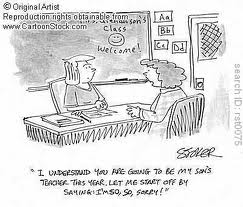
Last week I wrote about the difficulties teachers face in finding punishments that work. Probably the most popular consequence for breaking a school law is the “apology”. Teachers have traditionally required students to apologise to them or a classmate before that child can reclaim their privileges.
My problem with this, is it’s very rarely an honest, authentic apology. Usually it is said under duress and the child has no alternative but give the teacher what they want to hear.
It’s just like the fight we used to have with our siblings when growing up:
“Go on! Apologise to your sister!”
How many times did we actually mean it when we said sorry?
And that’s what teachers face on a daily basis. It’s like pulling teeth!
“Sorry …”
“What are you sorry for?”
“I don’t know.”
“Well you can’t say you’re sorry and not know what you’re sorry about.”
For even worse infringements the apology is ramped up to a public apology. This is when the student is made a spectacle over so as to show the others that there is a penalty to be paid for overstepping the mark. Again, is it really worthwhile if the student’s apology isn’t genuine?
Sometimes I feel like we impose the apology so we can close the chapter and get on with life. The chid has made the apology, I dealt with it and now we can move on. It’s more about seeming to do something rather than actually doing something.
The problem with this is that mistakes that haven’t been learnt from get repeated. Chances are, the apology will not mean much weeks later when the child breaks the same rule again.
Whilst I understand the “apology method” and have personally subscribed to it more times than I feel comfortable admitting to, perhaps it should be the last step in a more extensive response.
For example, in the case of an argument between two students, perhaps we should spend more time mediating the kids and letting them exchange view and clearing the air. Some do this already, others are reluctant to use the time (and go for a quick apology instead). Only when it seems that both sides can appreciate the other’s point of view, should we request the apology. That way it will be genuine and longer lasting.
Elton John once sang that “Sorry seems to be the hardest word.”
It’s only hard when the person saying it, actually means it.
Tags:Apology, Classroom Management, Consequences, Education, Elton John, Parenting, Punishments, School Rules, Teachers, Teaching
Posted in Classroom Management | 3 Comments »
November 18, 2011

I can’t stand knee-jerk reactions that result in banning something which enriches the lives and experiences of many. Banning balls from the schoolyard is a sure-fire way of taking the one thing most children enjoy doing at school and expecting them to just go along with it. When you take away a child’s right to let off some steam at recess through the healthy pursuit of a football game, you are potentially ruining that child’s day.
I sympathise with teachers and parents that have been hit by a stray ball. I was once hit so hard that I was on all fours during yard duty. It is an extremely unpleasant experience. But it’s still not a good reason for banning balls:
Earl Beatty Public School’s decision to ban the use of hard balls on their playground because of safety concerns has prompted an outcry from the little people in the line of fire.
Students who wish to play games like soccer and football are having to make due with foam substitutes, and they don’t like it. Some in this elementary school near Coxwell and Danforth have gone as far as creating signs and petitions to express their frustration.
“I think it’s great. They absolutely see the ridiculousness of this situation – it’s straight from the heart,” said parent Diana Symonds, who has three children in grades 4 and 5.
“It’s like kicking around a sponge,” said Joey McDermott, a Grade 8 student. “They’re expecting all the little kids to get hurt. We got hurt when we were younger and we’re fine now.”
Foam balls are no substitute. They squash under your feet and cannot be played with if the ground is even slightly wet. I know we live in a litigious society and schools are afraid of lawsuits.
That’s why I think politicians should step in and legislate to allow schools to look after their students without the fear of having to go to court because of it.
Tags:Alicia Fernandez, Balls, Ban, Bans, Coxwell, Danforth, Earl Beatty Public School, Education, hard balls, life, News, Parenting, Playground, Safety, School Rules, Sport
Posted in School Rules | 3 Comments »
November 16, 2011

Can you imagine the distress that the students must have felt when they discovered the novel they prepared for wasn’t actually covered in the exam? What do they do? Try and write about novels they haven’t read? Can you imagine the teacher’s embarrassment when he/she was informed of the huge error?
SHOCKED students from a private school in Melbourne’s southeast were unable to complete a VCE exam because they had been taught the wrong text.
Authorities have launched an investigation after eight pupils from Lighthouse Christian College in Keysborough spent a year studying a novel not on the prescribed reading list.
The error was discovered last Thursday afternoon – when the year 12 students could not find Julia Leigh’s The Hunter on their literature exam paper.
The VCE English exam is a 3-hr exam. Unlike all other subjects, it is not an elective. Every Year 12 student in the State sits for it. To study a text, night and day, only to find out during the exam that it wasn’t on the prescribed reading list would have been an earth shattering revelation for the students involved. If it was me, I would have panicked. It would have ruined the whole exam for me.
Mistakes happen, but this was a big one!
Tags:Avril Howard, Books, Education, English, Error, Exam, Julia Leigh, Keysborough, life, Lighthouse Christian College, Mistake, News, Novel Read, Parenting, Teacher, The Hunter, VCE
Posted in Education Matters | 4 Comments »
November 15, 2011

There have been a lot of studies recently where the findings were so obvious you wondered how they managed to get a research grant for it in the first place.But every so often you stumble upon a study where the findings were not as you might have predicted.
A recent study that found that clever children are more likely to use drugs surprised me greatly:
Intelligent girls and boys are much more likely than average to take illegal drugs like cocaine, cannabis and ecstasy when they grow up, a study has found.
Scientists think they do so in part as a “coping strategy” to avoid bullying from their peers, and partially because they find life boring.
The effect is more pronounced in girls than boys, with those exhibiting high IQs as children more than twice as likely to have tried cocaine or cannabis by the age of 30, as those of lower intelligence.
The effect in boys with high IQs is also marked, with them being around 50 per cent more likely to have done so by that age as their less intelligent former classmates.
A team at Cardiff University analysed data from almost 8,000 people born in one week in April 1970, who were enrolled at birth in the ongoing British Cohort Study, which follows participants through life. All these children had their IQs tested between the age of five and 10.
Drug use, as reported by the participants themselves, was then recorded at 16 and 30 years of age.
At 16, 7.0 per cent of boys and 6.3 per cent of girls had used cannabis. This minority had “statistically significant higher mean childhood IQ scores” than non-users, according to the authors of the report, published in the Journal of Epidemiology and Community Health.
The authors noted: “Across most drugs (except amphetamine in men), men and women who reported using in the past 12 months had a significantly higher childhood IQ score than those who reported no use.”
They concluded: “High childhood IQ may increase the risk of substance abuse in early adulthood.”
Well that explains it – no wonder why I’ve never taken drugs!
Tags:Boys, British Cohort Study, Bullying, cannabis, Cardiff University, Children, Clever, cocaine, Dr James White, Drugs, ecstasy, Education, Girls, I.Q., Journal of Epidemiology and Community Health., kids, life, News, Parenting, Scientists, Study
Posted in Drugs | Leave a Comment »
November 14, 2011
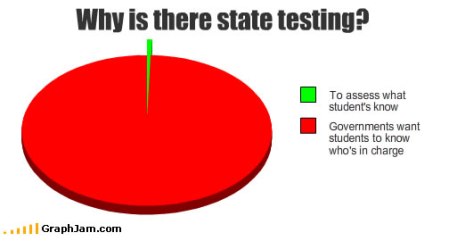
Students across Australia, and dare I say it worldwide, are sick of constantly being graded. Gone are the days when a child can learn to love a given subject through observation, experience, discussion and self-evaluation. Now every learning focus leads to the ultimate test of nerve – a test.
Standardised tests have absolutely ruined the enjoyment of learning. They reinforce a pecking order which is not beneficial for children. The constant grading of children make kids who try hard but struggle to perform, feel dumb and useless. It has taken over classrooms, with teachers too worried about the implications of their class doing badly to teach the curriculum the way it was designed to be taught. Instead, they are forced to teach to the tests. This involves months of practice exams. How inspiring!
Our children deserve better. They deserve to go to school without having to constantly sit for preparation tests followed by real tests followed by another set of preparation tests etc. They deserve to have their education untainted by political point scorers.
I love the backflip contained in the first paragraph of a recent editorial in the L.A. Times:
The high-stakes measurement of student progress through annual standardized tests has, in many classrooms, restricted creativity, innovation and individuality. It has emphasized the skills involved in taking multiple-choice tests over those of researching, analyzing, experimenting and writing, the tools that students are more likely to need to be great thinkers, excellent university students and valued employees. But, by pressuring schools to raise achievement, it also has ensured that more students reach high school able to read books more sophisticated than those by Dr. Seuss — which, sad to say, was a major problem a decade ago — and tackle algebra by ninth grade.
Once you have taken the “creativity, innovation and individuality” out of education there is no “but”. There is no good way of rationalising those vital missing ingredients.
Sure it’s good to have data on the quality of teaching and learning in our classrooms. Of course, assessments are a staple of education. But these dry, monotonous, pressure-ridden tests can get too much for kids looking for more enjoyable ways of learning.
If these tests have as I suspect, a negative effect on our students’ enjoyment of learning and self-esteem, is it really worth persevering with?
Tags:Education, Gov. Jerry Brown, Learning, No Child Left Behind Act, Parenting, Standardised Testing, Standardized Testing, Students, Teaching, Tests, veto message
Posted in Standardised Testing | 6 Comments »
November 13, 2011

Occupational Health and Safety have gone mad! They have decided to take control of school monkey bar wrung by monkey bar wrung. They have hatched a plan so conniving and out of control, that Principals have reached out for their white flags in despair (only to find out that white flags are a violation of OH&S, because someone might get poked in the eye by the stick).
Below are 5 nonsensical examples quoted in today’s paper of health and safety gone mad:
1. Teachers are expected to put on masks, surgical gloves and gown to apply Band-Aids to students!
2. Schools must have 5 different types of first-aid kits. These kits must be regularly monitored.
3. Staff must undergo regular hearing tests and the results are recorded on their files.
4. Schools must identify all sources of ultra-violet light radiation.
5. Students are banned from bringing their own liquid paper or sunscreen to school.
And don’t get me started with these new boring playground designs, custom-made so that children wont even get a scratch. They are dull and absolutely unfair to children who instinctively want to climb and swing at recess. No one wants to see a child hurt themselves, but get over it – it happens!
If we provide an environment without risk, we are essentially providing an environment without reward. Schools will flourish when the best interests of kids, teachers and parents are paramount and the fear of lawsuits isn’t a stumbling block for a vibrant and fun-filled educational experience.
Tags:Anne-Maree Kliman, Barbara Champion, Children, Education, Education Policy, First-Aid, Gabrielle Leigh, Hearing, kids, life, Liquid Paper, monkey bars, News, Occupational Health and Safet, OH&S, Parenting, Play Australia, Playgrounds, Political Correctness, Principals, Safety, St Albans East Primary School, Sunscreen, Teachers, The Victorian Principals Association
Posted in Education Policy, Political Correctness | Leave a Comment »
November 13, 2011

How bad do you have to be as a parent to even entertain trying to get a hold of a lollypop laced with the chicken pox disease? What in the world is going on with some parents nowadays?
A federal prosecutor is warning parents against trading chicken pox-laced lollipops by mail in what authorities describe as misguided attempts to expose their children to the virus to build immunity later in life.
The warning came after media reports surfaced about a multi-state ring of parents, wary of vaccinations that prevent the disease, who were swapping lollipops licked by a sick child in a modern day incarnation of a chicken pox party.
In those so-called parties, parents purposely put sick children together with healthy children in order to spread the ailment and build immunity without having the children vaccinated. This new form of party shares the disease anonymously and long-distance.
“Sending a virus or disease through the U.S. mail (and private carriers) is illegal. It doesn’t matter if it crosses state lines,” said David Boling, public information officer for the Attorney in Nashville.
“Also, it is against federal law to adulterate or tamper with consumer products, such as candy.”
The “Pox Parties” are a sick invention. To purposely drag your child to a party of strangers suffering a contagious disease in the hope your child gets it too, is unfathomable if not downright dangerous.
But this lollipop idea is even more demented!
Parents that want to infect their kids with chicken pox so much that they are willing to buy lollipops licked by a sick child, have got to be sick themselves.
Perhaps they have already bought and tried lollipops laced with a cocktail of stupidity and foolishness, which have been licked by a host of hopeless parents.
Tags:Candy, Centers for Disease Control, Chicken pox disease, Chicken Pox-Infected Lollipop, Children, David Boling, Dr. Rafael Harpaz, Dr. Tim Jones, epidemiologist, Family, Find a Pox Party in Your Area, Health, Illegal, kids, Nashville, Parenting, POX PARTIES, U.S. mail, vaccinations, Virus
Posted in Parenting | 4 Comments »
November 12, 2011

There will be many supporters of the concept of online classrooms. People will see it as cheap, engaging and an opportunity for children who haven’t been able to acclimatise to the classroom to find a workable alternative.
But do we really want our children living through their computers? Is real human interaction being permanently dismantled in favour of communication via the computer screen?
The online classroom takes the social media age a step further:
In a radical rethinking of what it means to go to school, states and districts nationwide are launching online public schools that let students from kindergarten to 12th grade take some—or all—of their classes from their bedrooms, living rooms and kitchens. Other states and districts are bringing students into brick-and-mortar schools for instruction that is largely computer-based and self-directed.
In just the past few months, Virginia has authorized 13 new online schools. Florida began requiring all public-high-school students to take at least one class online, partly to prepare them for college cybercourses. Idaho soon will require two. In Georgia, a new app lets high-school students take full course loads on their iPhones and BlackBerrys. Thirty states now let students take all of their courses online.
Nationwide, an estimated 250,000 students are enrolled in full-time virtual schools, up 40% in the last three years, according to Evergreen Education Group, a consulting firm that works with online schools. More than two million pupils take at least one class online, according to the International Association for K-12 Online Learning, a trade group.
It’s all part of a burst of experimentation in public education, fueled in part by mounting budgetary pressures, by parental dissatisfaction with their kids’ schools and by the failure of even top-performing students to keep up with their peers in other industrialized countries. In the nation’s largest cities, half of all high-school students will never graduate.
Advocates say that online schooling can save states money, offer curricula customized to each student and give parents more choice in education.
In my opinion, some of the biggest advantages of the conventional school system is that it provides children with the exposure to help, guidance, leadership opportunities, social interactions and a taste of the challenges that they will meet in the real world.
None of these advantages are addressed by a i-Pad.

Tags:BlackBerrys, Child Development, cybercourses, Education, Engaging Students, iPhones, Online Education, Parenting, Rocketship Education, social media, technology, Technology in the Classroom, vergreen Education Group, Virtual Classrooms
Posted in Social Media, Technology in the Classroom | 3 Comments »
November 11, 2011

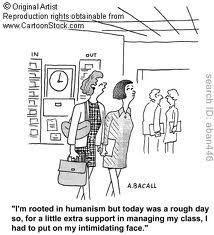
We are currently living in the age of “the hamstrung teacher’. Never has it been so hard for teachers to gain control, receive respect and maintain some semblance of authority.
Blogs and staff rooms are replete with dispirited and powerless teachers struggling with unruly and defiant students. It wasn’t long ago that teachers were able to meter out tough and effective consequences for bad behaviour. Unfortunately, it is so much harder now than it ever was to find the right penalty for inappropriate and insubordinate behaviour.
Why not send them to the Principal?
The Principal used to be an imposing figure. – someone you didn’t want to meet, even to get a certificate or compliment. Students used to avoid the Principal like a plague. Principal’s used to concern themselves with discipline issues and take charge when students overstepped the mark. But nowadays a visit to the Principal’s office is not all that dissimilar to a trip to the fun park. A Principal’s job now is to keep parents and students happy and leave the real disciplining to the teachers.
“Next time try not calling the teacher those names.”
What about suspending them?
Nine hundred students are suspended every day in England. In Australia it is 100 per day. Being suspended used to be a humiliation. It would involve notifying the students’ parents, who would be none too happy to receive the phone call. Now suspensions presents just another opportunity to get back to the Playstation or X-Box. Parents often reassure their kids and allow them to go home and vegetate. Hardly a real punishment!
What about taking away their recess?
Don’t tell the civil libertarians about this mode of punishment! According to law, students can only be kept in for some of recess, not the entire playtime. And anyway, why should the teacher be punished? Teachers rely on their lunch breaks to recharge and re-energize. Monitoring detention just isn’t fair.
What about ringing the parents?
Parents used to be on the side of the teacher. When a teacher called a parent, that parent would take stock of what the teacher was saying and become partners in helping manage the problem. Nowadays, parents are likely to become defensive, make excuses and become unwitting enablers for their children’s poor behaviour.
Please note, that I am not tainting all parents. On the contrary, the parents I work with have been incredibly open and supportive. I am merely pointing out that trends are changing and punishments that used to make students squirm and think twice before acting, are now no longer a deterrent.
It is also important to note that most teachers are not trigger happy when it comes to punishments. We don’t like punishing students. We try to command respect rather than demand it. But there are times when all semblance of control is lost and students are purposely trying to sabotage the class and undermine their teacher.
In those cases, the teacher is often left to raise their arms skyward and ponder what it is they can do to remedy the situation.
Tags:Classroom Management, Consequences, Control, Detentions, Education, Education Policy, life, Parenting, Principals, Psychology, Punishments, Suspensions, Teacher Welfare, Teachers
Posted in Classroom Management, Teacher Welfare | 4 Comments »


 Topical Teaching