Posts Tagged ‘News’

You Don’t Get Elite Teachers with Elitism

February 4, 2011

In my opinion, one of the biggest factors concerning the current failures of our educational system is the inadequate and substandard teacher training programs offered by our Universities.  Not just the minnow Universities but also the elite ones.

The idea proposed by Lord Adonis that every secondary school should have teachers who attended elite universities is not only unworkable but costly and simplistic.

Addressing the Independent Academies Association (IAA) conference in central London, Lord Adonis said: “You need a good mix of teachers, of course, at any successful school, but you cannot be a successful school unless you at least have a certain proportion of your teachers who have themselves come from leading universities in to which you intend to send your best students.”

Lord Adonis warned delegates it would not be possible to transform admissions to top universities “unless you can develop a cadre of teachers in your own schools that have that background themselves.”

I attended one of Australia’s elite Universities and I can tell you without a shadow of a doubt that there was precious little that I was taught that was of value to me in the classroom.  From my experience the training of teachers needs an overhaul.  Teaching theory is all well and good but it needs to be complemented with proper practical instruction.  I’ve seen teachers who are more academic  and have sharper intellects than I do, who floundered in the classroom because sometimes all the knowledge in the world on the right and left brain and metacognition can’t help you get through to a hostile or challenging class.

My lecturers were mostly former teachers who left the classroom because they couldn’t manage anymore.  They were a fountain of knowledge when it came to theory, but clearly relieved to be out of the classroom.  Their pearls of wisdom included “Use them or lose them”, concerning the number of paid sick days available to teachers.  Sure, it can be seen as good advice to cash in on your paid sick leave, but it isn’t the positive and responsible message to be sending to future teachers.

Lord Adonis may be right.  Perhaps it is easier to get pupils, particularly those from poorer areas, into top universities when their teachers have studied at those institutions too.  But for my daughter, I am satisfied with a teacher that is caring, dedicated, and prepared to challenge educational norms by experimenting and taking responsible risks.

You don’t need an elite University to educate, prepare and nature an elite teacher.

Bullying a Teacher is not Free Speech!

February 4, 2011

There is appropriate behaviour and then there is inappropriate behaviour.  Bullying a teacher is inappropriate – full stop!  It doesn’t matter if it is in the classroom, the schoolyard or on Facebook – it’s not on.  Students must refrain from slurring the reputation of their teachers.  Is that so difficult to live with?

When a student calls his teacher a “douche bag” and “fat ass” on Facebook, and then gets suspended from school as result, you would think that the matter has been dealt with and all can move on.  But that wasn’t the case when a grade 10 student in California referred to his teacher as a “fat ass who should stop eating fast food, and is a douche bag” in a Facebook post – apparently in reaction to getting a large pile of homework

Such a story should never have made the headlines or been discussed in the media.

Enter the ACLU – a U.S. charity that promotes free speech (and spends most of its time being a general nuisance).  The ACLU couldn’t let the school get away with protecting its teacher from being verbally insulted online.

After learning about the incident, ACLU attorney Linda Lye wrote a letter to the school, asking it to reverse its decision to suspend the student.

She argued that the student’s post did not constitute cyberbullying because it did not “materially or substantially [disrupt] the school environment.” Also, he posted the status update from home during non-school hours.

Didn’t disrupt the school environment?  Who do you think is responsible for establishing and maintaining the school environment? Teachers, Ms. Lye – teachers!  What kind of school environment do you have where it’s considered acceptable to say nasty things about a teacher on Facebook?

And so what if the offence took place out of school.  Does this mean a student can voice their displeasure about their teacher on talkback radio or graffiti insults at the local train station without any punishment?  Let’s just hope our students don’t know any skywriters!

But there’s more:

“Schools have an obligation to provide a safe school environment,” wrote Lye. But “petty comments, insults, ordinary personality conflicts … don’t rise to the level of harassment.”

You see that’s the problem.  Those insults were not petty, they were harmful.  I am sure if Ms. Lye was the subject of similar comments on Facebook she wouldn’t find them so petty.

Of course ACLU were successful with the suspension subsequently erased from the student’s record.

Freedom of speech is not supposed to allow students to insult their teachers on Facebook.  Teachers work every day to keep their credibility and authority intact.  If we allow students to undermine their teachers without consequences, we are sending a terrible message that will have potentially severe ramifications for our education system.

Modern Educational Thinking: Comedy or Tragedy?

January 31, 2011

Most of us acknowledge that school systems worldwide are deeply flawed and require fresh, new and innovative ideas to get them kickstarted again.  What we don’t need, however, are bizarre, extreme and non-sensical ideas that do more harm than good.

Last week I wrote about the Nebraskan senator trying to pass a bill that would allow teachers and administrators to carry concealed weapons for protection.

This week it’s Florida’s turn to create headlines for putting forward horrendous educational policy:

As lawmakers continue to debate education reform, Florida Rep. Kelli Stargel has a new idea: give teachers a break and grade parents instead.

Stargel has submitted a bill that would let teachers grade parent performance along with student outcomes, reports CNN.

Stargel said that parents should be just as involved in the education process as the students themselves.

“We have student accountability, we have teacher accountability, and we have administration accountability. This was the missing link, which was, look at the parent and making sure the parents are held accountable.”

The bill would give the option of grading parents as “satisfactory,” “unsatisfactory” or “needs improvement.”

Grading parents?  Are you kidding?  Is this some candid camera trick?

Because Stargel so evidently has failed to do her homework, I feel obliged to fill her in on some important points:

1.  Teachers should never judge parents.  It is the teacher’s job to co-operate with parents and assist them, not to assess them.  Unless a parent is abusing the child or engaged in any other form of criminal activity, it is not the business of a teacher to make judgements on parental skills.

2.  Yes, there are parents that do not involve themselves with their child’s education.  Teacher’s should see this as an opportunity rather than an excuse.  The child that doesn’t have actively engaged parents relies even more heavily on their teacher.  This scenario should be seen as a fabulous opportunity to inspire, influence and reinvigorate the child.  Stargel’s idea takes what some teacher’s see as a great opportunity to make a real difference and asks us to see it only as a negative.

3.  By calling on teachers to grade parents, you are turning two crucial stakeholders in a child’s education against each other.  Education is best administered when all major stakeholders are on the same page, or at least can work together harmoniously.  To muddy the waters with negative ideas and forced judgments, Stargel has overlooked the most important ingredients to successful teaching.

In one week we have seen two law makers come up with insane ideas that deal with important issues in a simplistic and scattershot way.  What is it with politicians?  How can such seemingly intelligent people come up such lousy ideas?

There is Something Seriously Wrong Happening Here!

January 28, 2011

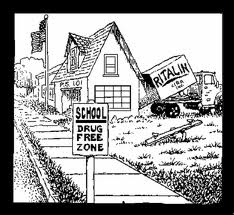
I am no expert and don’t pretend to be one, but I can’t help being quite disturbed by the incredible amount of young children being prescribed medication.  As a teacher and parent, it hurts to know that kids all over the world are being prescribed these drugs in vast numbers.

I realise that there are children that legitimately require medication – but surely we are prescribing these drugs far too easily and haphazardly.  This is not Aspirin!  These are powerful drugs.  Surely, a global body needs to be set up to review the practice of mass prescriptions and to further tighten the regulations.  I am scared for the next generations of children.  I never want to live in a society where prescribing powerful drugs to kids is seen as normal or standard practice.

In the past week alone I have read countless articles on this issue.  The article below from the UK claims drugs are being prescribed for ‘normal’ reasons, such as shyness:

Children are being prescribed mind-altering “chemical cosh” drugs for conditions such as shyness and mild social anxiety, behaviour experts have warned.

Young people are routinely being given medication to treat normal childhood conditions, it was claimed, despite fears over their long-term health.

The disclosure came as it emerged that the number of eight- to 13-year-olds on drugs such as Ritalin has soared seven-fold since 1997.

But Dave Traxson, a senior educational psychologist who works in schools in the West Midlands, warned that children were increasingly prescribed drugs for “normal” conditions.

“I feel very strongly that the time is right to challenge the growing practice of medicating our children for displaying behaviours and thought processes that until recently would have fallen within the normal range,” he said.

There was this article along the same lines from Australia:

THE use of stimulant drugs to treat attention deficit hyperactivity disorder (ADHD) is soaring, with data showing prescriptions for some medications grew by 300 per cent over seven years.

Prescription of the stimulant drugs rose by 87 per cent between 2002 and 2009, Australian researchers have found. Use of one drug commonly sold as Ritalin, methylphenidate, increased by 300 per cent.

Most studies of stimulant medication only tested its effects for between six and 12 weeks, and there was no evidence it improved educational or life outcomes, Associate Professor Jureidini said.

This description from the US site defending the use of Ritalin and other such drugs:

Stimulants are safe and effective for most children, helping them to focus their thoughts and control their behavior. In some children, these medications may cause mild side effects, such as decreased appetite, weight loss, stomachaches, sleep problems, headaches and jitteriness. Rarely, there may be more serious side effects, such as dizziness, stuttering, tics or increased blood pressure.

This article was printed in a Malaysian newspaper:

ALMOST one million children in the United States are potentially misdiagnosed with Attention Deficit-Hyperactivity Disorder (ADHD) because they were the youngest and least mature in their kindergarten classes, a US study found.

And finally, another damning article from the US:

While stimulant drugs have long been known to help children with ADHD alleviate symptoms, new studies have shown the opposite effects.

Many experts recommend prescription of a stimulant drug in severe cases, and often believe ADHD symptoms can be treated by using methods other than medication.

One dangerous possible side-effect of Ritalin is the potential alteration of personality. Some individuals have explained that when medication is stopped, the actions, thoughts, and feelings are vastly different than when taking the medication.

Whilst ADHD no doubt exists, and is often best treated with drugs, I am still of the opinion that we are drastically overprescribing these drugs.  I may not be an expert, but I still feel sufficiently concerned to speak up about it.

As teachers have a part in the decision as to whether or not a child is prescribed medication, I make the following request.  Please don’t take the decision lightly.  Don’t let an easier classroom experience ever taint your objectivity.

The Latest Sport: Degrading Our Teachers

January 27, 2011

Don’t get me wrong, I am extremely positive about President Obama’s passion for education.  It is great to hear him talk of the virtues of this great profession:

“Let’s also remember that after parents, the biggest impact on a child’s success comes from the man or woman at the front of the classroom. In South Korea, teachers are known as “nation builders.” Here in America, it’s time we treated the people who educate our children with the same level of respect. (Applause.) We want to reward good teachers and stop making excuses for bad ones. (Applause.) And over the next 10 years, with so many baby boomers retiring from our classrooms, we want to prepare 100,000 new teachers in the fields of science and technology and engineering and math.” (Applause.)

“In fact, to every young person listening tonight who’s contemplating their career choice: If you want to make a difference in the life of our nation; if you want to make a difference in the life of a child — become a teacher. Your country needs you.” (Applause.)

But if the US really needed good teachers, why does it treat its current ones so badly?  Why does it constantly refer to disposing of bad teachers instead of offering support to improve teacher performance?  It may be “time we treated the people who educate our children with respect,” but until you do, I’ll take it as words rather than substance.

I am referring to three examples which highlight the lack of respect of American teachers.

1. The recent decision by a New York State Judge to release the performance ratings of thousands of New York teachers to the media:

The judge, Cynthia Kern of the Supreme Court of the state of New York, wrote in a nine-page decision that the UFT’s argument “is without merit,” adding that the court of appeals “has clearly held that there is no requirement that data be reliable for it to be disclosed.”

The data attempt to measure the progress made by students in fourth through eighth grades under specific teachers by comparing their state test scores in math and English in a given year with the previous year.

The Department of Education has such data applying to 12,000 teachers; overall, there are nearly 80,000 teachers in New York City.

2. The  “Last In, First Out” (LIFO) sham of a policy:

This policy dictates that when there are layoffs, the most recently hired teachers in the system are the first to be fired. These decisions are based solely on seniority, without regard for teacher effectiveness.  The policy has three major negative impacts: first, it removes many high-performing tenured and non-tenured teachers from the   classroom, while retaining those that are less effective but have more years in the system; second, it causes a higher number of layoffs, since junior teachers are paid the least; and finally, it disproportionately impacts the lowest performing schools, which have the largest number of new teachers.

3. The Teacher Bashing Website, RateMyTeachers.com:

This website invites parents and teachers to rate and comment on their teachers.  The comments are public and often extremely slanderous.  Whilst being a US website, teachers from all around the world, including my country, Australia, can be rated and commented on.  Each teacher’s comments and rating can then be shared through Facebook by clicking a button on the site.  This is absolutely disgraceful, and while the authorities know about it, they have decided not to intervene.

President Obama, I absolutely love your passion for education.  You most certainly have a vision and an expectation that things improve.  But for your words to ring true and your wishes to come to fruition there is a lot more you and your Government can do for teachers.

Let’s start by offering support to your current teachers instead of giving up on them in favour of new blood.  Let’s give good teachers the opportunity to feel secure in their job.  And finally, let’s consider the impact websites like RateMyTeachers.com have on teacher morale.

If you really want teachers to get the respect they deserve, the respect needs to come from your administration first and foremost.

An Obsession With Success Leads Tiger Mother to Failure

January 26, 2011

As a teacher, it is my policy not to judge parents on their parenting styles.  I do this for three reasons:

  1. It is rude to judge another person when you haven’t walked in their shoes.
  2. Negative judgements against parents would inevitably cause me to lose focus on my responsibilities to the child; and
  3. Parenting is extremely difficult. I know this because I am a parent.  It is so hard to find the right balance for your child.  Judging others would distract me from improvements I need to make to my own parenting skills.

But every so often you find you have no choice but to make an exception to your rule.  My exception is  Amy Chua, the so-called “Tiger Mother”.

When a person writes a book about parenting they open themselves up to public criticism.  After reading her essay in the Wall Street Journal (I will not be rushing out to buy the entire book) and finding myself cringing all the way through it, I feel that it is the right time to dismiss my “no judgements policy” and respond to her disappointing advice.

The Tiger Mother’s methods are particularly extreme. Swapping one set of extreme methods (The Western methods) for another is unworkable.  Why does everything have to be so extreme these days?  The Education System operates like this.  One day the trend will be all about Teacher Centred Learning, and when that strategy falls flat, the answer then becomes Child Centred Learning.   And back and forward we go between the two very extreme strategies.   The same applies here.  Yes, Western style parenting features some methods which leaves a lot to be desired, but the answer is not its polar opposite.

Why not find “balance?”  That’s right, neither far left or right.  Why not try to focus on what works in different styles of parenting and mould them together?  Surely that’s preferable to going in the extreme opposite direction.  In truth, extremism comes about from insecurity.  The  Tiger Mother’s methods of parenting is both extreme and riddled with insecurity.

By not letting your child go on play dates and taking part in school plays, you are preventing the child from being involved in healthy social activities.  The fact that the stereotypical Asian parents see mingling as a waste of time is very sad indeed.

Pushing a child to not only achieve, but achieve beyond the rest of the class is such a terrible goal for your child.  It forces the child to see their friends as threats and rivals instead of human beings.  It emphasises selfishness and makes it difficult for the child to relate or empathise with others.  Her policy of not letting her kids be anything less that number 1 in their class is quite distressing.

“Chinese parents believe their kids owe them everything.”  This line stunned me.  Why would kids owe their parents everything?  Because their parents sacrificed for them?  Well, what are parents for?  Would it be alright for Amy’s child to approach her and say, ”Mum, how about we make a deal?  I’ll let you enjoy life a bit, and in return, you can let me live a less restrictive existence”?

Amy’s husband is spot on when he said, “Children don’t choose their parents.”  Her response to this more than reasonable point was, “This strikes me as a terrible deal for the Western parent.”  Whilst I think that parents are owed respect and honour, in return, I believe parents owe their children love and support.  I’m not looking for a better deal than that.

Whilst I don’t agree with the Tiger Mother’s approach, I understand that there are people out there looking for strategies that will improve their parenting.  However, when she happily recounted the time she called her daughter “garbage”, I couldn’t help but worry about the effect this book was going to have on others.

Amy’s father once referred to her as “garbage”, and although upset by it, she understood where he was coming from and the point he was trying to make.  That is why she had no qualms with repeating the dose on her poor daughter.   So comfortable was she about referring to her daughter by this term, she goes on to recount how she upset people at a dinner party by frankly discussing how she called her daughter by this name.

Amy, a professor at Yale Law School, should know better.  “Garbage” refers to something that is both useless and worthless.  Calling your child useless and worthless is just not acceptable!  How can a parent be proud of calling their child by such a terrible name?  I don’t care if that type of putdown turns the kid into a Nobel Prize winning scientist, it is not acceptable.

What the Tiger Mother’s  of this world have all wrong is their definition of success.  Success isn’t outdoing people, becoming famous, obtaining wealth or becoming a prodigy.  A successful person in my opinion is somebody who lives with integrity, cares and empathises with others and uses their gifts and qualities to help improve the lives of other people.  Anyone can be successful. Receiving  an A or a C for a maths quiz is not a determining factor.

The Tiger mentality is an extreme one, that combats poor aspects of Western parenting with another equally dismal style of parenting.  What you are left with is a maths whizz that may never enjoy maths, a musical prodigy that never got to enjoy music or properly express themselves through music, a person who thinks parenting is about entitlement rather than love and who is brought up to believe that a friend is anybody that doesn’t dare perform at their level.

It’s time that we preached balance and perspective rather than extremism, we dispensed with “dog eat dog” in favour of “dog support  dog”, and motivate our children without the use of put downs.

Teachers With Guns

January 21, 2011

If it wasn’t in print, you would have thought it was pure satire.  A Nebraskan senator wants to pass a bill that would allow teachers and administrators to carry concealed weapons for protection.

And that will achieve what?

Sen. Christensen explains his proposal: “I think it’s a local decision, but I think it’s important if you think about a situation that opens up where someone gets shot, that particular individual can continue shooting until police arrive. Or, you could have a security guard armed or administration—whatever you would choose to do locally to defend the situation. It would probably take care of it quickly,” he said.

The notion that the higher the proportion of people carrying guns the lower the rate of shootings is false and utterly preposterous.  Teachers in certain schools face shamefully bad conditions.  School shootings do occur and should never be underplayed.  But arming the caregiver, is the worst possible response to the problem.

Schools have to deal with the issue through constructive strategies and the safety of teachers  must be considered at all times.  But teachers are there to model positive behaviour and good decisions.  They must be there for their students.  A teacher that carries around a gun is distancing himself from all his students.  The gun becomes a representation of an “us vs them” mentality which regardless of the teacher’s school or environment, does not belong in our great profession.

Meanwhile, Christensen is convinced he’s on to a winner:

Christensen doesn’t think giving people guns can become a problem.

“I’ve never seen a gun escalate a situation,” said Christensen, “Guns don’t kill people, people do. You’ve gotta have an individual that’s out of control and at that point in time, you can have someone be shot.”

Here’s my advice for any teacher hoping to one day bring a concealed weapon into their classroom.  Find another profession … quickly!


Stop Pretending and Start Acting!

January 20, 2011

Parents looking for a school for their kids must hate reading the same line that tends to pop up in all the school’s brochures.  It’s the line that Principal’s claim they pride themselves on.  I bet if I asked you to guess what the line is, you’d come close.

“We provide a warm, safe and secure environment for our students.”

Heard it before?  Have you ever been convinced that it’s true?

A recent poll of parents of Primary school aged kids were asked about their greatest concerns regarding sending their kids to school.

The results were not surprising:

Bullying is the biggest worry parents have when they send their children back to school.

Three quarters of parents fear their child will be bullied – at school and online – a survey has found.

In a sign of their concern, 89 per cent plan to monitor their children’s online activities closely.

Australian parents are also concerned about the costs associated with sending a child back to school, with one in three nominating money as an issue.

A national poll of 1000 parents of primary school age children found almost half believed a passionate and caring teacher, and a fun learning environment, were critical to their child’s success at school.

Curbing bullying is not just a priority – it is the number one priority.  Yes, more important than academic performance.  And why shouldn’t it be the case?  Parents who invest everything they have towards their child’s health and happiness deserve the right to feel confident the school will do its utmost to provide a safe environment for their child.

Don’t just say you are.  Prove it.  Because parents obviously don’t buy it.

And speaking of parents, I couldn’t disagree with this quote from Parenting Victoria’s Elaine Crowle more strongly:

“The best way to prevent bullying is for parents and schools to work together to build resilience within your child.”

No, the best way to prevent bullying is not simply to fortify the victim – it is to stop the perpetrator.  Resilience often means not reacting when being bullied and instead soaking it up.  That is not a remedy against bullying.  Schools must invest a great deal more into curbing bullying than resiliency programs.

It’s time schools were stripped of their right to boast about their so-called safe and secure environment until they adequately prove that this is actually the case.

How Do They Come Up With These Ideas?

January 18, 2011

The latest response to fighting truancy is a full out assault against the parents.  The reasoning is clear.  It is the parents responsibility to ensure that their children attend school.  So bad must be the problem and so unable are authorities to motivate the parents to take a more diligent and proactive role, that a range of strategies, including some very weird ideas are being floated around to punish the parents.

Take this one for example:

Sen. Erik Wells wants to give parents an ultimatum: Send your kids to school, or lose your driver’s license.

The Kanawha County Democrat said Friday he plans to introduce a bill that would revoke a parent’s driving privileges if their child has 10 or more unexcused absences.

“We have to get to a point where we send a serious message to parents,” Wells told reporters at The Associated Press’ annual Legislative Lookahead conference in South Charleston.

Then there is a fine or jail time in California:

As of the new year, California parents face prosecution, fines up to $2,000, and even jail time if they don’t make sure their kids attend school regularly. The new state law took effect on January 1 and was signed into law last September by former Gov Arnold Schwarzenegger.

It’s a strict law, which holds three designations for kids who chronically miss school. A truant is any student who is 30 or more minutes late to class on more than three school days, a chronic truant any student who misses more than 10 percent of school days without a valid excuse. A habitual truant is a truant who continues to miss class even after school officials attempt to reach out to the student. Parents of kids who are chronically truant can be found guilty of a misdemeanor and face a series of fines and punishments, starting with a $100 fine for the first conviction and ending with a year of incarceration and up to $2000 for parents of chronic truants.

The UK have taken a softer approach whilst proudly dubbing it “cutting edge”:

A School in the Peterborough area is introducing cutting-edge technology in its fight against truancy.

Casterton Business and Enterprise College, in Stamford, is attempting to tackle students skipping lessons with Truancy Call, a scheme which allows the school to contact parents of absent children by e-mail, text message or telephone as soon as a child is absent.

Once registration of the schoool’s 800 pupils has been completed, the Truancy Call system automatically calls, texts or emails parents until a response is received.

Once a response is received from the parents any further calls that day are stopped automatically. The school has an attendance rate of more than 95 per cent.

This one is my favourite:

Schools are bribing parents to make sure their children attend classes with the promise of cheap foreign holidays.

Families are being offered a discount if pupils turn up for ­lessons every day next term.

Education chiefs have joined forces with a travel company to offer the holiday discount scheme, which is aimed at slashing truancy.

Please tell me they are putting just as much time and effort into conceiving ways in which to make school a more inviting and accepting place for our children.

The Education Version of Groundhog Day

January 14, 2011

In the classic 1993 Bill Murray film Groundhog Day, Murray was forced to relive the same day over and over again until he learnt from his mistakes.  Whilst only a light-hearted comedy on the surface, Groundhog Day was a timely reminder that mistakes and there consequences are repeated over and over again until they are learnt from.

Every time the curriculum changes I think of Groundhog Day.  I’ve only been a teacher for a short time, yet already I have seen the curriculum change 3 times.  First it was the CSF, then it became the CSF 2, followed soon after by VELS. And the curriculum is about to change yet again!

Why do they do it to us?  Just when you get used to one curriculum, they change it from another.

The cynic in me says the Government is bereft of ideas.  They know that education outcomes are underwhelming, that there isn’t much satisfaction in the quality of schools and performance indicators are not painting a rosy picture.  Yet, they don’t have a clue what to do about it.  They neither have the money, vision or gumption to make any real change, so they go for the obvious alternative – perceived change.

When asked to reflect on their achievements in Education, the Government will proudly point to overhauling the curriculum.  In Australia’s case, they will triumphantly declare that by introducing a national curriculum, they have been able to do what previous administrations couldn’t.

But they will know the truth all along – you can’t change the fortunes of a countries academic performance by altering and renaming a curriculum.  In fact, from my experience you can’t expect any change at all.

Even if my cynical take is wrong, and there is some good intention behind this new curriculum, it wasn’t evident in the released draft, which like its predecessors, didn’t seem to be adding anything of substance.  A bit more grammar, a deeper focus on handwriting and a greater emphasis on history sounds good.  But when it comes down to it, it is just like my boss said both this time and last time, “Don’t worry. It is going to be very similar to our current curriculum.”

From reports the states don’t want their current curriculums meddled with. Critics like Chris Berg from the Sydney Morning Herald have slammed the draft curriculum:

The plan was to have the curriculum rolled out in the 2011 school year, but only the ACT will meet that deadline.

New South Wales and Western Australia have decided to delay the curriculum to 2013. The Victorian government announced recently it would do the same. But there are problems with what’s in the curriculum too. //

Take, for example, the history syllabus. After a full quota of compulsory schooling, Australian students will be none the wiser about the origins and central tenets of liberalism: the basics of individual rights, representative democracy and the market economy, and the importance of civil society.

Not to put too fine a point on it, but these are the absolute fundamentals of Western civilisation. And they are missing from the national curriculum.

One need look no further than how the curriculum purports to teach ”struggles for freedom and rights”, a ”depth study” for year 10 students.

The struggle for liberty against tyranny is one of the most important themes of the history of the past 500 years. From the English Civil War to the American and French revolutions, the proclamation of the rights of individuals has given us a rich inheritance of liberalism and civil liberties. That, at least, is how you’d think it would be taught.

But according to the national curriculum, the struggle for individual liberty started in 1945. Because that’s when the United Nations was founded.

To hinge the next generation’s understanding of individual rights on such a discredited institution is inexcusable. And it says a lot about the ideology of the curriculum’s compilers: as if individual rights were given to us by bureaucrats devising international treaties in committee.

At the end of the day, all we are really left with is a bad case of Groundhog Day.  The results wont change, yet the same mistakes are being made over and over and over again …