Posts Tagged ‘Literacy’

The Cheapening of Children’s Literature

June 12, 2011

Young children are not reading, and if that’s not sad enough, the methods used to get them back into books don’t make the grade.  I wish a more concerted effort could be made to reinvigorate and re-engage young readers through authentic and well written books.

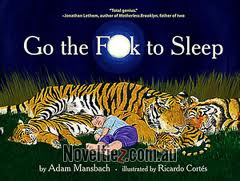
Unfortunately, fecal matter and toilet humour is the order of the day. Take this book featuring expletives on every page:

A book full of foul language is tonight generating debate over whether it should be sold in New Zealand.

Anti-family violence campaigners are up-in-arms over the imminent release of the offensive parody of a children’s bedtime book.

The book, entitled Go the F*** to Sleep, looks and sounds like an ordinary kids’ book, but has swear words on every page.

“The book features a father trying to get his young child to sleep – a common experience of parents. It is littered with offensive language, but most disturbingly, looks and sounds just like a children’s book,” said Family First director Bob McCoskrie.

Go the F*** to Sleep by Adam Mansbach was written as a spoof, based on the author’s experience as a Dad.

“It started with some sleepless nights and a Facebook post where I jokingly said I was going to write, I said ‘look out for my forthcoming children’s book, go the F*** to sleep’. And a couple of weeks later actually sat down and wrote it,” Mansbach told the Today Show.

The book is due for release in the US next week, after being available online for months, and a leaked PDF has gone viral via websites like Facebook.

Now, it is Amazon’s bestseller on pre-orders alone, and turned the American author into an overnight sensation.

McCoskrie understands the book is now about to hit shelves in New Zealand.

“I think it sends all the wrong messages,” he told ONE News.

The advocacy group are worried about the effects it may have on dysfunctional parents, and are now calling on bookstores to ban its sale.

“While in an adult context, the book may be harmless and even amusing, we have grave concerns about its effect on aggressive and dysfunctional parents, and also on children who are attracted to the book,” said McCoskrie.

McCoskrie said it trivialises verbal abuse and intolerance of children at a time when New Zealand is battling family violence.

“We’d rather parents spent their hard earned money on a book on quality parenting, or a book that they can enjoy reading to their child.”

He said he is already written to two book distributors, Booksellers Association and Paper Plus New Zealand, urging them not to stock it.

But book sellers say it will be on shelves in a month.

Wellington’s Unity Books has already ordered ten copies for its parenting section.

“It’s a de-stress, at the end of the day, or at the end of the night – have a laugh, sit down together. The idea that someone would take all of it to heart, and abuse their children because of it is a bit hard to imagine really,” said Unity’s Cameron Hyland.

As for the book ending up in the wrong hands – the kids.

“We trust the parents will know, this goes on a high shelf!” said Mansbach.

McCoskrie said Family First is now considering a complaint to the Censor’s Office.

I am certainly not in favour of banning books and I believe that much of this story is driven from conservative alarmist, but I do lament the lack of interest kids have in reading and the methods used to re-engage them.  Young people will read this book and fall instantly in love with iot whether it was intended for them or not.  Just when we needed more imaginative and well written alternatives …

Boys and Reading: The Constant Struggle

May 18, 2011

The results of a recent survey found that boys don’t enjoy reading and fail to get past 100 pages of a classroom text.  Should we be surprised?  Boys have been disconnected from reading for years, and the question has to be asked – what have we done about it.

The findings are an indictment on how inflexible we are at altering the way we teach:

Many secondary school boys do not have the stamina to read beyond the 100th page of a book, research suggests.

Teachers also revealed that classics of English literature, such as those by Jane Austen, are putting boys off reading.

Some 70% of the 500 teachers surveyed for publishers Pearson said boys had switched off by the 100 page mark.

This is leading many teachers to ditch longer novels in favour of shorter books, it adds.

Teachers were asked to identify points where boys would switch off in class when novels were being read.

A quarter said that the interest cut-off point happened within the first few pages of a book.

A further 22% said interest waned within the first 50 pages, while a further quarter identified the 100 page mark.

Nearly a third of the teachers questioned said boys were put off before the book had even been opened, if they saw it had more than 200 pages.

According to the research, Shakespeare plays including The Tempest, Macbeth and A Midsummer’s Night Dream were particularly unpopular, as was Steinbeck’s 1930s classic, Of Mice and Men.

The reluctance to read could partly explain the achievement gap between boys and girls.

Last year 85% of 11-year-old girls reached the expected level in English for their age compared to 76% of boys. In reading, the gender gap was even more stark at 79% for girls and 64% for boys.

According to children’s organisation Unesco, the biggest single indicator of a child’s future success at school is whether they read for pleasure.

The research is timed to coincide with the launch of a new series of books called Heroes aimed at secondary school pupils which aims to switch boys back on to reading and get them past the crucial 100-page mark.

Best-selling author Frank Cottrell Boyce, consultant editor on the series, said: “Pleasure can’t be taught. Pleasure can only be shared.”

He added that boys should be started on shorter books.

Jonathan Douglas, director of the National Literacy Trust, said its research showed that boys lag behind girls not just in literacy skills, but in the amount they read and in the extent to which they enjoy reading.

“This gets worse as children get older. This is a vital issue and one the National Literacy Trust is working hard to address. More needs to be done to engage boys’ and building on their own interests.”

He added that publishers had a crucial role to play in this.

On the subject of publishers, an author who recently read my yet to be published manuscript, commented that had I made my main character a girl instead of a boy, I would have an easier time convincing publishers to publish the book.  She said that since boys don’t read, a girl would have been a more appropriate choice. The comment shocked me.  At no stage did I ever envisage the book to be strictly a book for boys.  I always thought it would be of universal appeal.  But apparently publishing companies don’t see it that way.

Shakespeare and Steinbeck are wonderful, but were never intended to be ones first foray into literature.  Is it so wrong to choose something of lesser literary acclaim for something more contemporary?  The sad reality is, teachers tend not to gravitate to Steinbeck and Shakespeare for their own leisure reading and don’t have strong connection to the texts the curriculum requires them to teach.  For a teacher to effectively inspire their students to love reading, they must love reading.  For students to read beyond page 100, the teacher needs to do more than set reading homework – they need to show the class how enjoyable and meaningful the book is to them.

When I read my manuscript to kids, I am overwhelmed by how much they enjoy the characters and situations.  I love how they connect with the main character and his issues and are able to relate to what he is going through.  Somebody once asked whether the kids enjoy it, not so much for the quality of the writing, but because the author, who has such a deep connection to the material, reads it out with such enthusiasm and joy.

Maybe so.  But isn’t that the key?  For boys to enjoy reading, they must see that their teacher enjoying it too.  If that means dispense with the classics and let the teacher decide what texts to introduce to the classroom – so be it.

National Testing Leads to Bad Teaching

May 10, 2011

Today school students all around Australia are going to be sitting the dreaded NAPLAN tests – a National test covering language, literacy and numeracy.  A test many children don’t take all that seriously, leaving their teachers to explain disappointing results and unmet expectations.  The students will often sit for the test without ever finding out how they went afterwards.  Why should they?  For all they know, this test is nothing more than a hurdle requirement that seems to stress the teacher out far more than themselves.

And that’s where these tests fail.  The pressure placed on the teacher forces them to teach to the test.  Weeks out from the NAPLAN date, teachers forgo their best laid plans, and instead force their students to undergo countless practice tests and mindboggingly boring skills sessions.  The students don’t know what hit them!  All of a sudden, they are bombarded with these tedious, non-interactive lessons, where the teacher often loses his/her temper in a state of panic and utter desperation.

“Guys, if you don’t listen, you wont know what to do come NAPLAN time.”

This argument is futile.  They know that if they don’t understand how to answer a question, all they have to do is leave it out, or better yet, guess.  No need to lose sleep over it!

For teachers, these tests are becoming even more important, now that test results are connected with teacher bonuses:

TEACHERS are continuing to “teach to” national literacy and numeracy tests, despite warnings from education authorities.

The first of three days of NAPLAN testing begins for year 3, 5, 7 and 9 students across the country today.

But educators warned the pressure being put on schools to perform well was having unintended consequences.

And the weight placed on NAPLAN results will increase today when the Government links them to financial bonuses for the country’s best teachers.

Today’s Budget is expected to commit $425 million to provide bonuses of up to $8100 to the top 10 per cent of teachers.

Victorian Association of State Secondary Principals president Frank Sal said that some schools were already under pressure to post high NAPLAN scores, even before they were linked to teacher bonuses.

While many schools have been doing practice exams to prepare for this week’s tests, parents have been told they can do nothing to boost their children’s performance.

Australian Curriculum, Assessment and Reporting Authority chair Prof Barry McGaw said regular learning was the best preparation for students: “NAPLAN is not a test students can prepare for, because it is not a test of content.”

Gone are the days where good teaching meant innovative and engaging lessons.  Gone are the days when teachers were valued for new, fresh approaches to developing skills and nurturing the collective sel-esteem of the class.  No, nowadays teaching is about meticulously preparing for a test that comes every 2 years in a student’s life and ultimately doesn’t truly capture what they know and what they are truly capable of.

These lessons can be monotonous, lack opportunities for critical discussion and go against the grain of authentic teaching, but as long as you persist, there may be a bonus in it for you.

The Phonics Debate

April 18, 2011

It is far too simplistic to be blaming a whole language approach instead of a phonics approach for the poor results in our children’s reading.  If it was only as easy as reinstalling a national phonics program, we would have done it ages ago.  The issue here is not about phonics like some are professing:

 
OLD-school ways of teaching children to read should be re-introduced in Victoria, experts say, urging a return to phonics.

Academics and primary education specialists say Victorian children are paying the price for the Education Department’s failure to heed a federal literacy taskforce’s calls for a return to structured phonics-based teaching.

RMIT childhood psychology expert Kerry Hempenstall said the current approach – where children are taught to recognise whole words instead of learning to sound them out – had failed.

“Whole language has been around for 30 years and since then the Government has spent billions on literacy programs and reducing class sizes and, despite that investment, literacy has not improved,” Dr Hempenstall said.

The Education Department told the Sunday Herald Sun it had no way of knowing whether the reading standard had improved under the whole language “experiment” because it could not compare the two different approaches.

Spokeswoman Megan McNaught said figures showed there were more grade 3 students meeting minimum reading standards today than 10 years ago.

The National Inquiry into Teaching of Literacy recommended in 2005 that educators should provide “systematic, direct and explicit phonics instruction” to help children master “alphabetic code-breaking skills” needed for reading.

But Dr Hempenstall said Victoria had ignored the advice to the detriment of its little learners.

“Teachers today have not been taught to teach phonics in a systematic way,” Dr Hempenstall said.

“They don’t receive that training in their teacher education, so it doesn’t matter whether or not people are saying, ‘We do teach phonics’, they need to have that training for it to have an impact.”

Anyone that thinks that reverting to a phonics program will fix the problem is in fantasy land.  The problem concerning poor reading rests with two major factors.

1.  People are reading less.  We live in a modern world where people are getting their entertainment and news from the digital media.  Children are not being exposed to literature at home like they used to.  Adults are not modelling good reading habits in the same way that they used to.  There is something quite powerful about reading around your kids. 

2.  Both systems of teaching literacy are deeply flawed because they don’t easily convey the joys of reading.  Both systems can be taught well, but often come across in  a turgid and uninspiring way.  Whatever system teachers are instructed to take on must be engaging and relay the joys of reading to our kids.

When something isn’t working, there is always a call top go back in history.  Only trouble is, things change for a reason.  If it was working so well back then, it never would have been overhauled in the first place. 

Inspiring Teacher Who Taught Herself To Read

April 3, 2011

Below is an excerpt of an article about the inspiring teacher, Patty Gillespie, who was given passage through school without ever knowing how to read or write.  The article chronicles her struggle from an illiterate youth to her prominence as a brilliant teacher and devotee of helping instill a love of reading in kids:

Teaching comes naturally to Gillespie, a small woman who wears dresses to school, smiles a lot and waves her hands when she talks.

So does giving. Gillespie, whose favorite book is Shel Silverstein’s “The Giving Tree,” gives away hundreds of donated books at school each year.

Being a student wasn’t as easy.

Gillespie, who grew up in Massachusetts, loved to play “school” before she was old enough to go. By first grade, she couldn’t keep up with her classmates in reading lessons. It would be years before learning disabilities were diagnosed.

“You could show me pictures of apples and say the short ‘a,’ and I heard ‘uh,’ ” she said. “To just hear the isolated sounds didn’t work.”

Help was hard to come by in an era when special education was for severely disabled children. Private tutors used the same phonics lessons that teachers did, so they read Gillespie’s schoolbooks to her instead.

Gillespie, a popular student, carefully hid her problems from classmates. She raised her hand to answer questions only when everybody else did; when she was called on, she told teachers she’d forgotten what to say.

By high school, her English teachers asked the same question each year: How did you get here without knowing how to read or write?

“It may have been wrong, but I think teachers continued to pass me because I tried so hard,” she said.

Gillespie also made it into Westfield State College in 1971, despite low scores on the SAT college entrance exam.

Gillespie’s parents knew she struggled. Still, for her they wanted the education they’d never had.

Her father, an insurance salesman, had turned down a scholarship to the University of Pennsylvania so he could support his family. “I just said, ‘Hey, without the degree you won’t get very far in life,’ ” said Gillespie’s father, Bob Watson, 89.

Gillespie lived at home and drove to campus for classes. She was just as lost there as she had been in high school. This time, she found little sympathy from teachers.

The closer Gillespie got to academic probation – she says she was two-tenths of a point away her first semester – the more she wanted to walk away from her college education.

She changed her mind after a stern warning from her father: If that’s what you want to do, then quit. But remember you’ll always be a quitter.

“That really changed my life,” she said. “I wasn’t going to let him down.”

Gillespie started with vowels, using the pronunciation key of a dictionary and pictures instead of sounds.

For short “a,” she envisioned a black cat; an ape for long “a.”

She studied in her bedroom, between classes, up to eight hours a day for a year. In the beginning, it took two hours to get through three paragraphs of a textbook. Gillespie wouldn’t let herself turn the page until she understood what she’d read.

Not once did she want to quit.

“I knew I could do it,” she said. “That was the first time in my life.”

The full article is slightly longer.  I strongly recommend you read the full piece.  What a teacher!  What a story!

50 Books Every Child Should Read

March 24, 2011

I stumbled on a wonderful piece by the Independent entitled The 50 Books Every Child Should Read. It was written in response to Michael Gove’s recommendation that children read 50 books a year.  They asked three of Britain’s leading children’s authors and two of their in-house book experts to each pick 10 books, suitable for Year 7 students.”

Below is the list:

Philip Pullman

* Alice’s Adventures in Wonderland and Through the Looking Glass by Lewis Carroll. Indispensable. The great classic beginning of English children’s literature.

* Pinocchio by Carlo Collodi. What effortless invention looks like.

* Emil and the Detectives by Erich Kastner. A great political story: democracy in action.

* Swallows and Amazons by Arthur Ransome. As clear and pure as Mozart.

* Black Hearts in Battersea by Joan Aiken. If Ransome was Mozart, Aiken was Rossini. Unforced effervescence.

* The Owl Service by Alan Garner. Showed how children’s literature could sound dark and troubling chords.

* The Phantom Tollbooth by Norton Juster. Superb wit and vigorous invention.

* Moominsummer Madness by Tove Jansson. Any of the Moomin books would supply the same strange light Nordic magic.

* A Hundred Million Francs by Paul Berna. A particular favourite of mine, as much for Richard Kennedy’s delicate illustrations (in the English edition) as for the story.

* The Castafiore Emerald by Hergé. Three generations of this family have loved Tintin. Perfect timing, perfect narrative tact and command, blissfully funny.

Michael Morpurgo

* The Star of Kazan by Eva Ibbotson.

The heroine is blessed with such wonderful friends who help her through the twists and turns of this incredible journey.

* A Christmas Carol by Charles Dickens. The first few pages were so engaging, Marley’s ghostly face on the knocker of Scrooge’s door still gives me the shivers.

* Just William books by Richmal Crompton. These are a must for every child.

* The Happy Prince by Oscar Wilde. This was the first story, I think, that ever made me cry and it still has the power to make me cry.

* The Elephant’s Child From The Just So Stories by Rudyard Kipling. The story my mother used to read me most often, because I asked for it again and again. I loved the sheer fun of it, the music and the rhythm of the words. It was subversive too. Still my favourite story.

* Treasure Island by R.L. Stevenson This was the first real book I read for myself. I lived this book as I read it.

* The Old Man and the Sea by Ernest Hemingway. A classic tale of man versus nature. I wish I’d written this.

* The Man Who Planted Trees by Jean Giono. A book for children from 8 to 80. I love the humanity of this story and how one man’s efforts can change the future for so many.

* The Singing Tree by Kate Seredy The story of two children who go to find their father who has been listed missing in the trenches of the First World War.

* The Secret Garden by Frances Hodgson-Burnett. I love this story of a girl’s life being changed by nature.

Katy Guest, literary editor for The Independent on Sunday

* Refugee Boy by Benjamin Zephaniah. Story of a young Ethiopian boy, whose parents abandon him in London to save his life.

* Finn Family Moomintroll (and the other Moomin books) by Tove Jansson.

A fantasy series for small children that introduces bigger ones to ideas of adventure, dealing with fear, understanding character and tolerating difference.

* Diary of a Wimpy Kid by Jeff Kinney. It’s rude, it’s funny and it will chime with every 11-year-old who’s ever started a new school.

* I Capture the Castle by Dodie Smith. Written for a teenage audience but fun at any age.

* The Hobbit and The Lord of the Rings by JRR Tolkein. Be warned, these tales of hobbits, elves and Middle Earth are dangerously addictive.

* The Tygrine Cat (and The Tygrine Cat on the Run) by Inbali Iserles. If your parents keep going on at you to read Tarka the Otter, The Sheep-Pig and other animal fantasies, do – they’re great books – also try Iserles’ stories about a cat seeking his destiny.

* Carry On, Jeeves by PG Wodehouse. A grown-up book – but not that grown-up.

* When Hitler Stole Pink Rabbit by Judith Kerr. Judith Kerr’s semi-autobiographical story of a family fleeing the Nazis in 1933.

* Moving Pictures by Terry Pratchett. Elaborate mythological imagery and a background based in real science. If you like this, the Discworld series offers plenty more.

* The Story of Tracy Beaker by Jacqueline Wilson. The pinnacle of the wonderful Jacqueline Wilson’s brilliant and enormous output.

John Walsh, author and Independent columnist

* The Adventures of Sherlock Holmes by Sir Arthur Conan Doyle. Irresistible puzzle-solving tales of the chilly Victorian master-sleuth and his dim medical sidekick.

* The Curious Incident of the Dog in the Night-Time by Mark Haddon. Age-transcending tale, both funny and sad.

* Mistress Masham’s Repose by TH White. Magical story of 10-year-old Maria, living in a derelict stately home, shy, lonely and under threat from both her governess and her rascally guardian.

* Little Women by Louisa May Alcott. Inexplicably evergreen, trend and taste-defying 1868 classic.

* How to be Topp by Geoffrey Willams and Ronald Searle. Side-splitting satire on skool, oiks, teechers, fules, bulies, swots.

* Stormbreaker by Anthony Horowitz. First of the action-packed adventures with 14-year-old Alex Rider.

* Private Peaceful by Michael Morpurgo. “Dulce et Decorum Est” for pre-teens.

* Artemis Fowl by Eoin Colfer. Lively, amoral, wildly imaginative debut (six more followed) about the money-grabbing master-criminal Artemis, 12. The author called it “Die Hard with fairies”.

* The Silver Sword by Ian Serraillier. Inspiring wartime story of the Balicki family in Warsaw.

* Animal Farm by George Orwell. Smart 11-year-olds won’t need any pre-knowledge of Marx, Lenin, Trotsky and 1917 to appreciate this brilliantly-told fable.

Michael Rosen

* Skellig by David Almond. Brings magical realism to working-class North-east England.

* Red Cherry Red by Jackie Kay. A book of poems that reaches deep into our hidden thoughts but also talks in a joyous voice exploring the everyday.

* Talkin Turkeys by Benjamin Zephaniah. A book of poems that demands to be read aloud, performed and thought about.

* Greek myths by Geraldine McCaughrean. Superheroes battle with demons, gods intervene in our pleasures and fears – a bit like the spectres in our minds going through daily life, really – beautifully retold here.

* People Might Hear You by Robin Klein. A profound, suspenseful story about sects, freedom and the rights of all young people – especially girls.

* Noughts and Crosses by Malory Blackman. A book that dared to go where no one thought you could with young audiences because it raises tough stuff to do with race.

* Einstein’s Underpants and How They Saved the World by Anthony McGowan. A crazy adventure set amongst the kids you don’t want to know but who this book makes you really, really care about.

* After the First Death by Robert Cormier. Cormier is never afraid of handling how the personal meets the political all within the framework of a thriller.

* The London Eye Mystery by Siobhan Dowd. A book that allows difference to be part of the plot and not a point in itself.

* Beano Annual. A cornucopia of nutty, bad, silly ideas, tricks, situations and plots.

Top Ten Lists are fun.  What books would you recommend for a Year 7 child?
Does the NAPLAN Have Any Friends?

November 1, 2010

Professor Brian Caldwell, a former dean of education at the University of Melbourne, is the latest epert to criticise the NAPLAN testing.  Speaking to a Senate inquiry into National Assessment Program – Literacy and Numeracy (NAPLAN), he said that the program, and website, should be phased out.

“Essentially, I propose a sunset on current approaches to NAPLAN and My School and adoption of benchmark practice.”

Professor Caldwell proposed that a survey based on a sample of students would be enough to yield national information, rather than testing all students.

As a teacher, I believe that while it is important to monitor schools against a set of national benchmarks, the NAPLAN tests works against the natural instincts of the standard harworking teacher.  Principals instruct their teachers, not to teach for learnings sake, but rather to teach the skills and content covered in the tests.  So even though I taught a unit on persuasive writing in Term 2, my school wants me to cover it again in Term 4 because they heard it was the writing genre selected for the NAPLAN.

Shouldn’t the NAPLAN promte real teaching instead of depriving teachers from going about their jobs the way they should?