Posts Tagged ‘life’

Anti-Bullying Programs Not Working

December 31, 2010

The sad reality is that whilst schools all over the world are becoming increasingly aware and proactive on the issue of bullying, the programs and structures put into place to address the problem are simply not working.

An example of this is Seattle’s bold and noteworthy decision to adopt a Norwegian program that seemed to reduce incidents by up to 50%.  The program included the formation of committees, parent and teacher tutorials, and regular student meetings.

Yet a rigorous scientific analysis, after three years, showed the program had no overall effect.

“When we have big problems like bullying we are desperate. We want to do something,’’ said Paula Lozano, a University of Washington professor of pediatrics and a coauthor of the Seattle study. “Doing something feels better than not doing anything.’’

Research suggests that despite good intentions and feverish competition to pinpoint a solution, antibullying programs have shown, at best, mixed results, and what has worked in one school has not always worked in another.

Among the most authoritative and wide-ranging evaluations of antibullying programs is a 2009 study by Cambridge University researchers. The pair unearthed hundreds of scientific evaluations of individual programs, a number of which they ignored because the studies had not used acceptable methods. Of the 44 they deemed reliable, just 19 showed significant reductions in bullying.

I personally feel that schools should be congratulated for finally taking the issue seriously.  I however feel that fighting bullying requires more than peripheral programs, but also an inner focus on the culture of the school and its community.  I have developed my own set of principles for tackling bullying in my classroom.  Feel free to read my earlier post which explains what my model is and how it has worked for me.

Think Before You Medicate Our Children!

December 30, 2010

Dear Medical Profession,

Whilst I am no expert and don’t pretend to be, I am bewildered at the rate in which kids are being prescribed medication in the US especially.  I read the Wall Street Journal article about prescription drug use among children and teenagers in the US, and I just shook my head in disbelief.

Below are some of the passages from the article that disturbed me:

These days, the medicine cabinet is truly a family affair. More than a quarter of U.S. kids and teens are taking a medication on a chronic basis, according to Medco Health Solutions Inc., the biggest U.S. pharmacy-benefit manager with around 65 million members. Nearly 7% are on two or more such drugs, based on the company’s database figures for 2009.

Doctors and parents warn that prescribing medications to children can be problematic. There is limited research available about many drugs’ effects in kids. And health-care providers and families need to be vigilant to assess the medicines’ impact, both intended and not. Although the effects of some medications, like cholesterol-lowering statins, have been extensively researched in adults, the consequences of using such drugs for the bulk of a patient’s lifespan are little understood.

But children and teens are also taking a wide variety of other medications once considered only to be for adults, from statins to diabetes pills and sleep drugs, according to figures provided to The Wall Street Journal by IMS Health, a research firm. Prescriptions for antihypertensives in people age 19 and younger could hit 5.5 million this year if the trend though September continues, according to IMS. That would be up 17% from 2007, the earliest year available.

So, one-quarter of kids in the US are on medication.  Is this acceptable?  Is this not far too high?  Is it going to get higher in the future?  Are we going to have half of our kids on medication?  Why don’t we put all kids on meds?  That’s where we are going, aren’t we?

As I stated, I am no expert.  I just find it hard to believe that so many kids rely on medication.  It doesn’t sit well with me.  Am I just behind the times, or is this generation of medical professionals comfortable with prescribing medication to kids in such high numbers without adequate research?

Yours sincerely,


MICHAEL

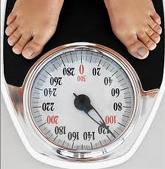
Are We Obsessed With Obesity?

December 29, 2010


Sarah McMahon, a specialist on the subject of eating disorders, claims that our obsession with obesity has resulted in increased cases of eating disorders.

“Children are being given maths assignments where they have to count calories,” she said.

“Education is helpful for some people but for some with certain personality characteristics, it can tip them over into a disorder.”

Eating disorder support group Butterfly Foundation chief executive officer Christine Morgan said most anti-obesity messages had a high focus on dieting.

This could lead to disordered eating including binge eating and possibly bulimia or anorexia.

I agree that we may be a little obsessed with the term obesity, but I just don’t see the link between obesity and eating disorders.  I imagine that kids are worried about being larger than their ideal size, sometimes much larger, but I don’t think kids are worried about obesity.  I’m no expert, but I don’t think obesity takes up much of our kids head space.  I think they are worried about not being thin enough to be considered attractive or feel pressured to lose weight to fit in.  But obesity?  I can’t see the link.

Regardless, kids should not be hounded by horror stories on the dangers of obesity or made to count calories.  Instead they should be given the reassurance they need to be comfortable in their own skin, the education they need to make healthy choices and the support they need to be self-assured, confident and happy.

Meet The Free-Range School

December 28, 2010

I’m not sure a “school with no rules” would work for everyone.  But for any criticism one could come up with for schools like Currambena, one thing is true.  Schools like this one are the result of an education system that puts results ahead of student welfare and arcane rules and regulations in the place of building an environment in which children can thrive.

Currambena works very differently to the typical school:

There’s no morning bell to signal the start of the school day, either. Children simply gravitate towards classrooms when ‘inside time’ begins. Some stay digging in the vegie patch and if, for some reason, a child wants to spend the day doing maths in the tree fort, so be it. There are no room numbers or official grades, no tests, no lining up, no homework.

For a start, if children aren’t forced to sit in class and finish their maths, how do parents know whether they’ll bother at all?  Rachel Turner, who sends her kids to the school, recalls how it worked for her: “I took school very seriously and was incredibly involved in it. I was never tempted to shirk, because learning was fun.

“As long as teachers know the children are participating – that nobody is being left behind – the kids have the freedom to do what they need,” she adds. “Teachers make sure everyone is reading and writing, of course, but if a child is consumed in one activity, why shouldn’t they be allowed to continue it?”

I’m not sure that schools like this one will become the norm.  I can’t see this style of school appealing to more than a certain niche.  However, it does remind us that schools are too cold and out of touch.

There are far more people out there who have had terrible experiences through school compared to those that reflect on their school days in glowing terms.  This is simply not good enough.  We spend the best part of our youth at school and the argument that “it is what it is” doesn’t wash with me.

Perhaps we don’t need something as revolutionary and extreme as a free-range school, but certainly not what we have at the moment.

The Christmas Film That Inspired Me To Become a Teacher

December 26, 2010

christmas-kranks

Ok. Confession time. The above picture is highly misleading.

I was in the first year of an Arts degree, and like many teenagers, wasn’t exactly sure what I wanted to do.  I hadn’t even given teaching a moments thought.  Too many bad memories from my own school days to give teaching a single speck of consideration.  But then one night I happened to watch the Jimmy Stewart classic, “It’s a Wonderful Life” and within hours that all changed.

The movie portrayed a character on the edge of his tether who attempts suicide when he realises he is worth more dead than alive.  Enter an angel named Clarence who shows him how he, without even realising it, touched the lives of the people around him.  Everyone wants to leave the world having achieved something – having made the lives of others more enjoyable and secure.  I started thinking about what I could do to make a contribution to society and in what area is there a need for someone with my limited talents.  Within two hours I went from never coming close to considering teaching to having the burning desire to teach.  This desire kept intensifying throughout the rest of my Arts degree and the Teaching degree that followed.  My passion has never cooled.  Actually, I love teaching more every day.

I’m interested to find out what inspired you to become a teacher.  Was it due to a brilliant teacher you had growing up?  Was it out of a love for a subject like Maths or Music?  Did you just want to offer the next generations something better than you had growing up?

Michael Grossman is the author of the hilarious new children’s book, My Favourite Comedian. You can buy a copy by clicking on this link. Thankfully, he has nothing to do with the utter disaster that is Christmas with the Kranks.

The Primary Students that Plotted to Kill Their Teacher

December 24, 2010

I don’t know what is more disappointing, the students actions or the feeble response from this poor teacher’s school.

A primary school where over 200 youngsters plotted the assassination of their math’s teacher over Facebook is considering disciplinary measures against the students.

Tatjana Landsman, principal of the school in the northern town of Bjelovar, said she would be meeting with parents and the class council to discuss the matter.

“I am not certain what sorts of measures should be imposed, but the most important thing is that this case is seen as a warning, and that parents finally realise that children must be controlled in their use of internet and social networks,” Landsman said.

Oh really?  Let’s blame the internet! It’s not the kids fault – it’s the internet!

Acknowledging the gravity of the situation, state secretary Zelimir Janjic visited the school and offered assistance

“We always react in such situations because we do not wish to leave the school alone to deal with these problems,” said Janjic.

That’s nice.  So how are you reacting to the problem?

He added that several concrete steps has already been arranged, including workshops for parents organised in cooperation with Zagreb’s Institute for Protection of Children.

Janjic said that he would also advocate that schools get a psychologist in addition to having a pedagogue and a special education teacher, in order to have a team that could deal with such problems.

So let’s get this straight.  Two hundred students ganged up on their teacher and plotted the teacher’s assassination, and what was the consequence?  A workshop on better internet usage and a chance to consider getting a psychologist.

Hmmm…..

Our Duty to Stop Bullying Websites

December 23, 2010

It was disappointing, yet not at all surprising, to hear of the new smash-hit website entitled LittleGossip.com, which promotes bullying behaviour online.

A new website that encourages schoolchildren to write anonymous gossip about their peers, which is then rated as ‘true’ or ‘false’ by other users of the site, has exploded in popularity among Britain’s pupils in the past month.
Many of the comments on Little­Gossip.com are obscene, while others are homophobic or threatening.

In one post, a student at Eton made the following barely literate contribution about a peer: ‘mate your a ******* wannabe, u spend all of dads cash on your drug addiction.’

Another pupil at Emanuel School in Battersea, South London, wrote of a girl at the school: ‘****** is working her way through the boys, but unfortunately hasn’t made any girl friends along the way, what will she do when she runs out of boys? And who is her next target?’

In my opinion, even if this site gets closed down, it’s only a matter of time before copycat sites appear all over the place.  While it is integral that parents and teachers are proactive in curbing bullying the problem is far too great to have confidence that such measures is going to be near sufficient.  Instead, it’s up to the online community to ensure that all such sites get closed down.  There is absolutely nothing of benefit for sites like this to exist.  We must ensure that we do all we can to stop the proliferation of online bullying.  It is one of the worst types of bullying.  Shame on the creators and users of this horrendous website!

My Take on the “Lunchbox Wars”

December 22, 2010

It is my opinion that schools not only have a right but a duty to look after the welfare of their students.  Schools are well within their rights to impose sanctions on what foods are allowed and not allowed to be included in the children’s lunch boxes.  Yes, there are those who believe that being in a free country should give parents the freedom to do as they please.  I agree with that theory in part.  I think parents should be able to feed their kids whatever they want – in their own home.  At school, there is nothing wrong with imposing restrictions on sugary foods.  On the contrary, it’s commendable.

I am writing this in defense of Clifton Park Primary School, who are embroiled in a “Lunchbox War” with some parents over such a ruling:

A LOCAL school’s decision to monitor the contents of their students’ lunchboxes has sparked heated debate within the Bunbury community.

In last week’s edition of the Bunbury Mail, the mother of a Clifton Park Primary School student was outraged to learn her five-year-old son’s lunchbox snacks were being confiscated due to their sugar content.

The Bunbury Mail office was flooded with letters and Facebook posts from residents voicing their opinion.

Joy Whysall’s letter said it was an example of the world gone crazy.

“What gives others the right to choose what we eat?” she said.

“This is a disgraceful state of affairs when a teacher can go into a child’s lunchbox and take out what they feel is unsuitable for the child.”

I am sorry to disappoint the irate parents of Bunbury, but when they send their kids to a school, they are getting a lot more than a child minding service.  We teachers not only educate your kids, but we care for them and about them.  We educators strive to give your kids a safe, positive learning environment in which they can thrive.  Instead of seeing this as a violation of privacy, see this as a show of care and dedication.

I hope this exhibition of anger does not intimidate other schools from following Clifton Park’s fine example.

Breast-Feeding Benefits Academic Achievement

December 21, 2010

Findings from a recent study in the journal ‘Pediatrics’, show that breast-feeding infants for at least six months appears to give kids’ an advantage in school.

This is not a new finding in itself.  However, what was of particular interest, was that boys appeared to benefit the most.

The researchers, from the University of Western Australia in Perth, have followed 2,868 children since the early ’90s. The study showed that, at age 10, boys who were breast-fed for six months or longer scored higher in math, reading and spelling compared with boys who were breast-fed for less than six months. Girls who were breast-fed for at least six months showed a small improvement in reading. The researchers controlled for other factors that could influence school performance, such as family income and education and how often the child was read to.

There were two reasons given for the link between breast-fed babies and academic performance:

1.  Breast milk is rich in long-chain, polyunsaturated fatty acids that are critical to brain development. It’s not clear why boys showed the largest gains from being breast-fed, but the authors explain that male babies are known to be more vulnerable in infancy than females. They speculate that breast-feeding “accelerates the rate of maturation in boys.
2.  Boys may also benefit more from the mother-child relationship facilitated by breast-feeding. “A number of studies have revealed that male infants are more reliant than female infants on maternal attention and encouragement for the acquisition of cognitive and language skills,” the authors wrote.

We Can Do More!

December 20, 2010

Teaching boys especially, requires greater investment and further innovation on the part of the teacher.  Boys are falling way behind, and there is no point sitting on our hands.  We can’t let it get any worse.

According to figures obtained by the BBC’s Today programme, one in 11 boys begin secondary school with the reading skills of an average seven-year-old.

Educational experts point out that once children reach secondary school age, it can be very difficult for them to catch up to the reading levels of their peers.

Speaking to the BBC, education secretary Michael Gove said it is “unacceptable” that children leave primary school without adequate reading skills.

“We want to ensure that those schools where children are not being taught to read are tackled,” he stressed.

Teaching kids to read is a fundamental role of the Primary teacher.  Since I joined the blogosphere, I have encountered brilliant blogs from all around the world that has informed me, shared ideas and strategies and opened my eyes to new technologies to introduce to the classroom.  This kind of collaboration has such a profound effect on teaching and learning and has helped me become a better educator.

That’s why I think we can address issues such as those quoted above together.

Let’s work cooperatively in trying to improve literacy and numeracy, allow our students the opportunity to express themselves and think creatively and let us ensure that both girls and boys are achieving.