Posts Tagged ‘life’

The Heroic Life of a Selfless Teacher

March 4, 2011

If there is something one can get out of the absolutely tragic story of a teacher who drowns in trying to rescue his students, it is the selflessness of teachers, heroically displayed by maths and science teacher Paul Simpson.

A schoolteacher has drowned in an apparent attempt to save his students from a rip at the notorious Bells Beach.

The man, believed to be aged in his 30s, died yesterday while supervising a group of Year 11 and 12 students from Shelford Girls Grammar, in Melbourne’s east.

The girls, aged about 15 years, had been snorkelling at 4.30pm when wild surf and a rip tide turned conditions dangerous.

The group of 19 students and three adults had been walking in knee- to waist-deep water on a reef when a wave knocked them off their feet and into deeper water, Ambulance Victoria spokesman John Mullen said.

Police said it was believed the teacher had been trying to rescue the girls before he drowned.

Paramedics tried unsuccessfully to resuscitate him on the shore of the surf beach near Torquay, 105km southeast of Melbourne.

Several teenagers had to be rescued from the water. One received treatment for an asthma attack. Others had minor injuries.

The distressed students, who were in shock, had to be helped to make their way back up the beach to a car park to be taken back to their camp at Torquay.

The teacher is question works at a school within walking distance of my home.  His bravery and unflinching desperation to rescue his students shows us what sacrifices a brilliant teacher can make for the safety and security of his students.  I extend my condolences to his family, friends, colleagues and students.  May his brief but meaningful life inspire others to strive to make selfless decisions whilst looking out for others.

If you have some time I encourage you to read tributes written by his former students on a special Facebook page dedicated to the memory of this incredible person.


Standing Up For Our Fellow Teachers

March 3, 2011

Never has it been more important to support our fellow teachers.  Unfortunately, for various reasons, none of them rational, teacher’s have been getting some horrible press lately.  They seem to be the scapegoat for a system that isn’t working well.  Meanwhile administrators and politicians are avoiding the heat and leaving the blame for the teachers.

That’s why letters like this, printed in the Edmonton Journal, are refreshing and important:

Many people say teachers are overpaid and underworked. Others sing their praises and tell the world that teachers have one of the most rewarding and responsible vocations. Those who agree say teachers cannot be paid enough for the work they do with our most precious commodity, our children.

This is why the headline, “Teachers gain, students lose,”caused such an emotional reaction within me. Perhaps The Journal thinks teachers should work for free. Maybe The Journal forgets that teachers accepted a five-year contract they didn’t really want, but it was one of the few reasonable alternatives offered to them.

No matter what, teachers will continue to go forth into the future, doing what they always do: making the best of a system that basically works, in a media climate that negates all the hard work they do.

The one thing teachers do not do is bash other people’s professions. I wonder why so many people feel it is OK to denounce teachers and yet, every day, entrust the care of their children and grandchildren to the same.

Linda Klym, Sherwood Park

Well done Linda!  You are spot on!  Teacher’s don’t criticise other professions, yet for some reason get criticised from all quarters.  It’s good to read such an eloquent and well articulated reply to more anti-teacher media propaganda.

Teacher Assistants Now Come in Human and Dog Variety

March 1, 2011

I love this story!  Like yesterdays post, education is at it’s best when interesting and unorthodox ideas are devised to help improve the standard of learning and teaching.  To get kids to read to dogs is just zany enough of an idea to work.  Who needs teachers when you can employ dogs to do the same job?

A “LISTENING” dog has become Staffordshire’s latest teaching assistant – so he can help children improve their reading skills.

Primary school-age pupils will be reading stories to Danny the greyhound to build their confidence and overcome their fears of reading aloud.

Staffordshire County Council is only the second local authority in England to trial the idea and was due to be enlisting the help of its new four-legged recruit today.

The mild-mannered pooch was going to be working with about 30 youngsters at a library in Tamworth.

If successful, the project could be rolled out to other libraries this autumn to benefit schoolchildren across the county.

Danny and his owner, Tony Nevett, are part of the Reading Education Assistance Dogs (READ) programme, which has already proved a huge hit in the U.S.

Tony said: “He loves being read to and loves people.

“He will just be laying there on the floor while children are reading to him.

“Some children even show him the pictures in the books. Danny doesn’t judge them and he doesn’t criticise.

“For children who don’t like standing up in class, it can be a real help.

“We’ve had some fantastic results.”

Therapy dogs are already used to help people recover from illnesses or to befriend the elderly, which is where the idea to use them to aid literacy skills came from.

“It’s called animal-assisted therapy,” said 50-year-old Tony, who is based in Northamptonshire and has a degree in this line of therapy.

“When people stroke a dog, it’s been proven to lower their blood pressure.

“One of the reasons we use a greyhound is their temperament. They don’t bark.

“They are also the only type of dog with one coat of hair, so they are less likely to trigger allergies.”

The listening dog sessions can work in a variety of ways.

Sixteen-month-old Danny might listen to a child read on a one-to-one basis, or work with youngsters in small groups.

Pupils with special needs, such as autism, can draw particular benefits from working with Danny, although Tony is quick to point out that any child can enjoy working with a dog.

The books can tie in with the reading schemes they are using at school.

Staffordshire is following the lead of Kent County Council, which piloted the READ programme last year.

The approach in Staffordshire is especially innovative, because it involves running the sessions in a library.

Councillor Pat Corfield, cabinet member for culture, communities and customers, said: “This may seem like a shaggy dog story, but it has a serious purpose.

“The idea is that children will lose their fear of reading aloud, because the dog is a non-judgmental, friendly audience.”

Despite only being a young dog himself, Danny already has a wealth of experience working with children.

He has a sideline as a ‘Blue Cross’ dog, where he goes into schools to help teach pupils about responsible pet ownership.

There’s an old joke often attributed to teachers that if you pay peanuts, you get monkeys.  Seems that joke can be altered from peanuts to shank bones now.

This is What Teaching is All About!

February 28, 2011

There is so much anti-teacher propaganda in the news at the moment, it is refreshing to come across a story which gives us an example of teaching at its very best.  We’ve all had students that appear shy and struggle to find a voice in the classroom.  Some teachers ignore the problem and allow the student to fall under the radar, others berate the child for not contributing to classroom discussions and activities.  And then there’s this rather unorthodox method:

A 10-year-old student has shaved off his teacher’s hair after completing a dare to overcome his shyness.

Taewoong Jeong, from Korea, could barely speak in front of his classmates at Gems World Academy. His Grade 5 teacher, William Clark, said his bashful nature was holding him back.

“I thought it was perhaps a lack of English language skills,” said Clark. “But then I found out that wasn’t the case because he is a good writer.

“It later dawned on me that the child had a fear of public speaking.”

His classmates came up with a solution. “It began as a joke,” said Mr Clark. “They said, ‘If Taewoong sings in assembly, you should get your head shaved, Mr C’.”

Mr Clark agreed, and the dare was set. If Taewoong worked up the courage to stand up in front of a school assembly and sing the national anthem, he would be allowed to shave off his teacher’s hair.

The Taewoong Project, as it came to be known, included posters plastered around the school, urging Taewoong to go through with the dare.

Mr Clark recalls: “Every Thursday I would ask him, ‘Is today the day Taewoong?’. We could see that every week he would muster up a little more courage for it.

“His classmates would constantly motivate him too.”

“What he did last week, though, has made him my hero.”

It took three months, but last week Taewoong overcame his fears and got up in front of the school.

“I just did it,” said Taewoong. “I definitely feel more confident and think I can do it again.”

True to his word, Mr Clark brought out the shaver for Taewoong. “I told him, this is a life long deal.  If you cannot do it during your time at school, send me a video of your achievement from wherever you are and even if I am in Antarctica, I will send across a video with my head shaved off.”

For Taewoong this was the fun part: “I felt really happy and weird at the same time.”

Mr Clark believes this experience will help Taewoong get through other difficult situations.

“Noting will be that hard for him anymore,” he said. “Whenever he is faced with an audience and fear grips him, he will have to memory to help him through.”

Taewoong’s father, Simon Jeong, said he appreciates the effort put in by his class teacher: “It was a unique style adopted by Mr Clark where my son was pushed to taking a risk. I think it will make Taewoong a go-getter.”

I just love this story.  It goes to show that the best way to deal with challenges in the classroom is to think outside the box, build your students up, instill a support group feel amongst the group and build a fun and lively atmosphere. Whilst I’m not sure I have it in me to have my hair shaved off, this story inspires me to work even harder to ensure that no child is left out, ignored or unsupported.

Homeschooling is Not the Enemy

February 25, 2011

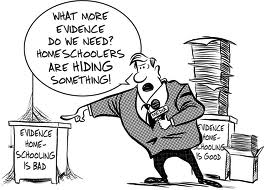
Whilst I am not a proponent of homeschooling and I see the virtues of the traditional school system, I am very frustrated by the lack of tolerance given to parents who decide that homeschooling is their prefered option.  To knock homeschooling is to ignore the many serious flaws inherent in the traditional school system.  Even though I think these flaws can be corrected and better practice can be implemented, until that is the case, parents will always look at their options.

That’s why I was particularly disappointed to read a recent article regarding the 12,000 children, aged 16 or under who are classed as “missing” from school in England.

The figures prompted warnings about the safety of those allowed to slip through the net. Children allowed to drop out of school could be at “serious risk” of physical, sexual or mental harm, charities said.

A Commons Education Select Committee inquiry in October reported that thousands of children as young as 11 who were “lost” to the education system may be turning to lives of crime, drugs and prostitution.

At this pont of the article I was naturally concerned about these kids who are so young, yet are not receiving education.  Then I read the following sentence:

Children may go “missing” due to being forced to wait for a school place or being kept at home by their parents…

How are those scenarios considered “missing?”  What if a child is being homeschooled?  Are they missing then?  Surely children waiting for a school place and being kept home by their parents aren’t necessarily “missing”.

Luckily I read another article which focussed on ending home-school stereotypes:

Despite successes with the ACT, spelling bees and math contests, home-schooled children battle a stereotype that they’re social misfits leading sheltered lives that fail to prepare them for the real world. Or worse yet, home schooling is depicted as brainwashing by parents pursuing a narrow political or religious agenda.

Nebraska law is friendly to home-schoolers, requiring basically that parents submit a form affirming their intent to home-school and provide a copy of their curriculum. The state doesn’t require state testing or home visits by state personnel.

Several parents interviewed said they cope with public misconceptions about home schooling even as the Internet and creative teaching arrangements give parents new ways to broaden their children’s education and further challenge the stereotypes.

Home-schooled students play on Little League teams, join Boy Scouts, perform in public school bands, participate in cooperative academic classes and, when necessary, take classes at local high schools and colleges, parents say. Students participate live in classes via the Internet.

Mike and Tricia Croushorn of Omaha home-schooled their children, Abi, 22, Tyler, 20, and Sam, 16, to give them a well-rounded education that included a religious component.

The Croushorns got interested after getting to know parents who home-schooled.

“We would meet these other children and they were always polite and respectful, and they could carry on a conversation with adults,” Tricia Croushorn said.

Homeschooling is not the enemy of education.  Bad teaching and poorly run schools are the enemy of education.  Until traditional schools really do offer the kind of support, care and safety that they claim to, then loving parents will always explore their options.  Because ultimately it’s not about tradition, it’s about the best needs of our children.  The only people who should be making that call are the parents.

I love being a school teacher and I see great value and potential in traditional school education, but I admire the selflessness and sacrifice that homeschooling parents make and the intentions behind their decision.  Instead of picking on the unconventional, make the conventional much better than it currently is.

Losing the Control of Your Class and Sanity

February 25, 2011

One of the most important qualities of a good teacher is patience.  Teachers, no matter how experienced or adept they may be, struggle at times with behaviour management issues in the classroom.  The loss of control at the hands of cheeky and disobedient students happens to the best of us.  It’s just a matter of how well we deal with it.

The trick is to keep your emotions settled, think calmly and find an appropriate way to address the issue as well as administer a consequence that fits the infringement.  Unfortunately, for some, all clarity and common sense goes out the window when faced with classroom management stresses.  Take this unfortunate case for example:

A TEACHER at a primary school was sacked after ordering pupils to wear a picture of a child with a noose around its neck as a punishment.

Ama Bankah, 31, had been working as a supply teacher in class of children – many with special educational needs – at Shaw Primary School, South Ockendon, Essex, England, when the practice came to light.

The General Teaching Council‘s professional conduct committee heard Ms Bankah claimed the placard was used as a “behaviour management technique”.

Every time she rang a bell, all the children had to sit quietly and those who didn’t would be “caught” by the “hangman” which was the name of the picture on the placard.

The GTC heard the image on the placard was of a child dressed in the colours of the school uniform. When Ms Bankah did this to one of the boys on February 1, 2008 he burst into tears and the matter was brought to the attention of the headteacher Linzi Roberts-Egan.

She then quizzed Ms Bankah, who had been in the post for three months, before asking her leave the school.

“Ms Bankah’s behaviour on 21 February 2008 was demeaning to the pupil concerned, caused him some harm, and had the potential to harm other pupils,” GTC committee chair Sashi Sivaloganathan said.

The committee also heard that some parents were so concerned about what had happened that they considered taking their children out of the school.

Whilst a story like this illustrates a teacher using terribly bad judgement, I can’t help but consider the difficulties she must have been facing to come up with such a desperate and inappropriate response.  Teaching is a difficult profession, and no formal training prepares you for unruly and disrespectful students.

Structures need to be put in place to support the teacher well and truly before they lose their mind and make terrible judgement calls like this one.

Bizarre Ideas in Education

February 24, 2011

I’ve written about this before, but I still can’t believe that this insane idea is gaining momentum.  Yes, it’s true that teachers often get frustrated by what they believe is negligent parenting of their students.  Does that give them the right to formally assess their perceived incompetence?

The idea of giving teachers the responsibility to write report cards about their students’ parents is ridiculous.  Yet, the idea is not going away:

Legislation from a Florida lawmaker has parents pondering how they’d be graded on their involvement in their child’s education: satisfactory, unsatisfactory or needs improvement?

Public school teachers in Florida would be required to grade the parents of students in kindergarten through the third grade, under a bill introduced by Rep. Kelli Stargel, R-Lakeland.

The bill has gotten the married mother of five national attention because there’s been so much emphasis on tying teacher salaries and advancement to student performance.

“We have student accountability, we have teacher accountability, and we have administration accountability,” CNN.com quotes Stargel as saying, “This was the missing link, which was, look at the parent and making sure the parents are held accountable.”

The grading system is based on three criteria that Stargel wrote in the legislation:

• A child should be at school on time, prepared to learn after a good night’s sleep, and have eaten a meal.
• A child should have the homework done and prepared for examinations.
• There should be regular communication between the parent and teacher.

Unbelievable!  Is it not the child’s responsibility to take ownership over their own homework? Did I just read that a child should have eaten a meal?  If a teacher is aware that their student isn’t being fed, the teacher has a responsibility to notify child protection authorities, not mess around with assessment forms!

Sure there are bad parents out there, but what is a report card going to achieve anyway?  How is a report going to change the error of their ways?

“Thanks teacher.  I needed that. I had no idea I was a bad parent.  I feel so much better now!”

I suppose, teachers needn’t worry.  A policy as silly as this will never be seriously contemplated.  Well, at least I hope not ….

The Cost of Sedating Our Boys

February 20, 2011

I recently came across an interesting opinion piece by Elizabeth Farrelly in the Sydney Morning Herald.  Whilst I wouldn’t go as far as to connect the lack of representation of male teachers to the number of boys on Ritalin, some of her points do resonate.  There is no doubt that Ritalin does have a place, but with the numbers of children (boys in particular) taking the drug climbing markedly from year to year, it is more than fair to raise some strong concerns.  Ms. Farrelly certainly does just that:

The Ritalin wars are usually treated as just another tussle between the pharmaceutical companies and the rest, but is there something else going on here as well? Is it part of a more generalised, covert war on boyhood? //

Thirty years ago Australian primary schools employed five male teachers for every four females. By 2006 there was one male teacher for every four females. This overwhelming feminisation of primary education, and of culture generally, has made boy-type behaviour stuff to frown upon. Are we in danger of seeing boyhood itself as a disorder?

When Christopher Lane, author of Shyness: How Normal Behaviour Became a Sickness, quoted a psychoanalyst saying “We used to have a word for sufferers of ADHD; we called them boys”, he probably did not expect it to become the most famous line of his book.

What was once introversion is now “avoidant personality disorder”, nervousness is “social anxiety disorder” (SAD) or dating anxiety disorder (DAD) and so on. It’s not that these disorders don’t exist, says Lane, a Guggenheim fellow studying the ethics of psychopharmacology, but that our definitions are so broad that the entire mysterious subconscious is reduced to chemical balance, and any deviation looks like disease.

Why, he asks, is ADHD so commonly diagnosed in boys? Is it new behaviour? Or just a new attitude to that behaviour?

But why the gender imbalance, and why now? We know that boys tend to be late maturers anyway, but Scott concedes there are also social and perceptual factors at play. Teachers with “less structured” teaching style and “more distracting” classroom environments, he says, yield many more of his clients than their more disciplined (my word) colleagues.

Whereas ADHD girls “sit quietly in a corner”, the boys are more disruptive and more noticed, more referred, more medicated. And although much the same is true of ”normal” boys and girls, the upshot is that ”girl” is a norm to which boys are expected to strive. Scott sees it as “an unintended consequence of how society operates”.

But consequences this important should be either clearly intentional, if girlifying boys is really what we want, or remedied. Personally, I reckon the crazily creative are types we’ll need more of, rather than fewer of, in the future, even if they are male.

The above are just some snippets from this very thought-provoking opinion piece.  It has never sat well with me that such a large proportion of children taking Ritalin are boys.  Whilst I wouldn’t go as far as to blame it on few male teachers, it does make you wonder whether we are getting it right.

It seems like society may be letting boys down very badly.

The Drug Companies Are Winning at Our Children’s Expense

February 17, 2011

I have a confession to make.  I hate drug companies.  No, worse, I despise drug companies.

I may not be a doctor, pharmacist or  expert, so you can discount my views as just ramblings from an ignorant blogger if you like, but that isn’t going to change my position.

It is my belief that the drug companies have a vision.  That vision is to see children being given medication as if it were candy.  Last month I wrote about the fact that more than a quarter of kids in the US are on medication, with almost 7% on two or more prescription drugs.  The drug companies probably see that figure as merely a good start, with plenty of room for improvement.

And as much as I wish we could see through what they are doing, I’m afraid, they continue to prevail.

I was really disappointed to hear that a lice drug called Natroba,  has been approved by the U.S. Food and Drug Administration for use on children ages 4 and older.

A lice drug?  So let me get this straight.  You give your child a drug that goes into the bloodstream to fight a problem which is external to the body.  How on earth does that work?

The product — which is applied to dry scalp and hair, then left on for 10 minutes — contains spinosad, a compound that excites the central nervous system of head lice. The bugs, which are most common in children ages 3 to 12, become paralyzed and die.

And what about the “known” side-effects?

Common side effects of Natroba include redness or irritation of the eyes and skin.Because it contains benzyl alcohol, which can be harmful to newborns and low-birth-weight infants, the drug should not be used on children younger than 6 months.

6 months?  Why would you give a prescription drug to a baby suffering from lice?

The sad part of this is that we live in the age of the quick fix.  The solution to every problem must come at the click of a finger.  No matter how many of these drugs get released, there will always be doctors happy to endorse and prescribe them and parents only too happy to avoid the time and energy used to treat their children in the traditional way.

If this keeps up, soon it will be rare to find a child not on medication.  What a tragedy!

How is Hitting Students Still Legal?

February 15, 2011

I don’t know if it was naivety on my part or just the fact that I’m from Australia, but I had no idea that corporal punishment was still legal in 20 US states.  A third-world country maybe – but the US?  In Australia it is absolutely illegal to strike a student, and so it should be.  I just assumed that the America had the same protocols.  Turns out I was wrong.

In response to the dreadful story of the elementary teacher charged with assault for allegedly choking and punching 8 first grade students, the Washington Post recently wrote an expose on the issue of legalised corporal punishment:

In June, Rep. Carolyn McCarthy (D-N.Y.) introduced the Ending Corporal Punishment in Schools Act, which would ban corporal punishment as a form of punishment or way to modify undesirable behavior at all public and private schools with students that receive federal services.

Congress apparently had other things to do. The bill was sent to a committee but never made it further in the legislative process.

Last year a congressional committee had a hearing on the issue. The panel learned that:

  • School officials, including teachers, administered corporal punishment to 223,190 schoolchildren across the nation during the 2006-07 school year (according to conservative government estimates, the latest year for which national statistics were available).
  • As a result of that punishment, 10,000 to 20,000 students requested medical treatment.
  • Students are typically hit on their buttocks with a wooden paddle, about 15 inches long, two to four inches wide and a half-inch thick, with a six-inch handle at one end.
  • Most students are paddled for minor infractions, such as violating a dress code, being late for school, talking in class or in the hallway, or being “disrespectful.”
  • Almost 40 percent of all the cases of corporal punishment occur in Texas and Mississippi.
  • Current studies indicate that physical punishment is most common in kindergarten through eighth grade, in rural schools, in boys, and in disadvantaged and nonwhite children.
  • African American students are 17 percent of all public school students in the United States but are 36 percent of those who are victims of corporal punishment, more than twice the rate of white students.

Supporters of corporal punishment will defend the method as being effective in dealing with unruly behaviour.  In my opinion, it is a lazy option that should never be allowed.  As much as I wish it weren’t the case, not all teachers care deeply about their students.  Many get disenchanted, flustered and resentful.  While a vast majority of teachers want nothing more than to see their students thrive, others will surely exploit any means possible to shut them up.

Australia and the United States have a close relationship and share many of the same values and ideals.  But corporal punishment isn’t one of them.  How can 20 States continue to allow such an extreme form of punishment in today’s age?  Please don’t wait for more horrible stories about unprofessional and violent teachers before doing something about this.

No matter how badly behaved they may be, kids deserve better than this!