Posts Tagged ‘life’

Teachers Are Not Their Students’ Parents

July 3, 2011

A teacher defends kissing, cuddling and touching the behind of a female student by claiming that is the way he treats his own children.  And how did the authorities respond to this pathetic defense of an indefensible action?  They bought it hook, line and sinker.

A TEACHER who kissed and cuddled a schoolgirl defended himself by saying that was how he treated his own children. Jeffrey Cave, who taught at Willows Primary School, in Basildon, also pulled a boy’s hair and then told him that was how “teachers used to handle misbehaving pupils”.

He was found guilty of unacceptable professional conduct and has been reprimanded by the General Teaching Council.

Mr Cave touched a girl pupil on her bottom over her clothing, allowed her to sit on his lap, kissed her head and cuddled her.

Mr Cave admitted in his witness statement kissing her head and cuddling her, but said that was the same way he showed affection to his own children.

He said during police interview he stroked the pupil’s bottom over clothing in a downwards motion to test if her trousers were dry.

The hearing heard Cave. who has had a clean professional history for 26 years. was going through a period of personal stress at the time of the incidents, and his actions were not sexually motivated.

I have no doubt that the soft “reprimand” response came about from his defense.  Their soft ruling sends a very bad message.  The public must be reasuured that teachers can not in any way show affection to students in the same way as parents do.  I am a parent too, but I have no right to treat my students like my children.

My message to all male teachers is to avoid being in a room alone with a student, act with professionalism and integrity at all times and keep your hands to yourself.

They are not your children, they are someone elses.


Our Kids Are the Digital Revolution!

June 29, 2011

It’s a very different childhood to the one we experienced.

SEVEN in 10 Australian households have access to the internet at home, one in five of us want to work less and the most popular physical activity is walking, the latest data on social trends shows.

Four out of every five children aged 5-14 use the internet, making them the digital generation, and 86 per cent of households with children aged under 15 have access to the internet at home, the latest Australian social trends study from the Australian Bureau of Statistics shows.

Eighty five per cent of children used the internet for educational activities, 69 per cent played online games, 47 per cent used the internet to download music and 22 per cent used it for social networking.

Only two out of three households without children had access to the internet at home, the study found.

Middle Children More Likely to Become Bullies

June 28, 2011

A recent study has explored the so-called “Middle Child Syndrome”, and came to the conclusion that being a middle child increases your likelihood of becoming a bully.

CHILDREN with both older and younger siblings have a higher chance of becoming bullies, according to research.

The Institute for Social and Economic Research at the University of Essex and the University of Warwick conducted the study covering some 40,000 British households.

It was traditionally assumed that the oldest child is likely to dominate or use violence against his or her siblings. However, it turned out that those in between had a higher chance of being involved in physical conflict while striving for parents’ attention, as well as competing for power among siblings.

The study also showed that children who received corporal punishment are more likely to bully siblings or their peers. Of the about 2,000 children researched, about 42 per cent of those who experienced physical punishment resorted to bullying.

‘We know from experience that sibling bullying increases the risk of involvement in bullying at school,’ Professor Dieter Wolke, the co-author of the study told a local media.

‘Children involved in bullying are 14 times more likely to suffer behavioural and emotional problems; they have no place that is safe for them.’ It is known that the manner of bullying at home showed no relationship to the education or economic level of households.

I am surprised by the findings.  I can see how being the oldest or youngest child can draw one into bullying habits, but I am surprised that it is the middle child who is most likely to become a bully.

The Classroom Can Be So Unnatural

June 26, 2011

It mystified me how in the modern era that we live in, we still haven’t properly addressed some fundamental issues effecting the comfort of our students.  The following are three examples:

1.  The Mat – The mat serves a clear purpose.  There are times when the mat is ideal for teaching a new concept or skill or for giving opportunities for students to present their work to the class.  But it must be used in short spurts because it is so uncomfortable.  Sitting in a confined space, without a back rest is not fun at all.  Once, whilst teaching a mat session, I tried it.  I sat on the floor with the kids/ In no time, I’d had enough.  Teachers who use the mat for long, drawn out periods of time should not be frustrated at the child that can’t sit still.  It is to be expected that a naturally restless person will find the challenge just too difficult.

2.  The Chair – Even sitting in a chair for long periods of time is too much to expect.  Why is education often so dormant?  Surely the best forms of teaching allow students to move around.

3.  Lack of Engagement – Currently, there is a strong push to bring back traditional teaching.  This involves lines of handwriting practise, together with pages of maths algorithms followed by reading with comprehension questions.  There are always going to be certain students who will enjoy the safe, predictable, routine side to rote learning.  But on the whole, this methods is nothing short of tedious.  It lacks creativity, energy and critical thinking.  It is unimaginative, noninteractive and downright boring.

I hear teachers complain all the time about how poor attention spans are nowadays.  It makes me wonder whether teachers realise that we are partly to blame.  I can’t concentrate unless I’m engaged  and comfortable in my chair.  I need time to move and stretch and I need to feel as if I am able to express myself.

Why should my students feel any differently?


Woman Re-Mortagages Her House To Feed School Kids

June 13, 2011

How about this for a story of selflessness and generosity.

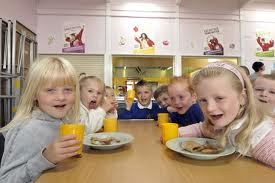
A businesswoman in east London re-mortagaged her home to establish a breakfast club after learning that one-fourth of Britain’s primary pupils were too hungry to learn.

Today, Carmel McConnell’s breakfast club – Magic Breakfast – feeds 6,000 chidren every day, Daily Express reported.

At 200 of the most deprived schools, Magic Breakfast gives children a healthy start of juice, bagels and cereal or toast for just 23 pence, with many often having not eaten since the previous school lunch.

Carmel said: ‘My work was advising big business on building trusted brands. I ended up going into schools to research a book on corporate activism and found that many of the teachers were having a whip-round and bringing food into school each morning so they could give their pupils something to eat.

‘Without food, the youngsters are unable to concentrate, behave properly or to learn. I immediately bought a whole load of loaves and dropped them off at our local schools in Hackney (in east London) where the teachers had expressed a real need.

‘I then re-mortgaged the house when I realised just how widespread this problem was and how little it would take to put it right.’

Valerie Figaro, head of Randall Cremer Primary School, east London, said Magic Breakfast transformed the lives of many of her pupils.

‘When children get up they won’t have eaten for 10 to 12 hours and we are asking them to expend energy by using their brains without any fuel,’ said Figaro.

Carmel, who draws support from large corporations, hopes to advise schools on raising funds themselves for breakfast clubs.

I love stories about the unsung heroes of education.  Ms. McConnell can be contacted at carmelmcconnell@btinternet.com

Should Primary Students Get Homework?

June 12, 2011

I have dwelled on this very question throughout my career thus far.  At the moment I am ‘for’ homework with the following conditions:

  1. It be no longer than 15 minutes a night
  2. That it not be new work but rather revision of class work
  3. That students have time to read questions and see me if they need clarification rather than go straight to their parents in a panic
  4. That it not be given in busy or stressful weeks such as the week of National Testing

Why am I “for’ homework?  Whilst ideally my homework would be to help set the table or to share the days learning with a parent, in reality it is not for me to prescribe domestic chores or family interactions.  I then have to weigh up what is better for the child – the opportunity to fit in a bit of revision or the inevitability that most students will go home and vegetate in front of the computer or TV.

Child psychologist Michael Carr-Gregg disagrees with me:

HOMEWORK in primary school is needless, does not contribute to academic performance and adds unnecessary stress to families, child development experts say.

“It’s hijacking family life, it’s bound to cause arguments and it’s turning kids into couch potatoes,” said prominent child psychologist Michael Carr-Gregg.

Most studies show homework either has a negative impact or no impact on the achievements of primary school students, he said.

“The whole thing is a farce, it is modern-day cod liver oil; people think it’s good for them but it’s not.” 

In a study, soon to be published in the journal Economics of Education Review, US researchers assessed 25,000 Grade 8 children and discovered only maths homework had a significant improvement on test scores.

Helen Walton, president of the Federation of Parents and Citizens’ Association, said homework, which is set by individual schools, was a source of ongoing family stress.

“Our position is we don’t like the ‘must do’ attitude about it, that if kids don’t do it there will be consequences. It should be optional. Homework is a stressful time for parents because kids are tired and hungry and distracted and it becomes a struggle.”

Educational consultant Dr Ian Lillico said homework for primary school children was a major contributor to childhood obesity.

The founder of the Boys Forward Institute and author of The Homework Grid, said homework should consist of interactive learning opportunities like a game of Scrabble with parents or a visit to the theatre.

Dr Shelly Hyman said daughter Samsara, 8, has too much homework: “The tears and the argument that go on, especially because my daughter goes to after-school care, where is the free time?”

What is your take on homework?  Is it responsible for creating stress at home?

Are We Setting Up Our Children?

June 10, 2011

I personally don’t agree with closing down establishments that offer facials to kids under 13, as I feel that while it may be in poor taste, it is hardly outrageous.

What I do believe is that there far too much focus put on appearance. We are setting up our kids for failure if we continue to peddle the lie that:

a. You are happy if you look a certain way

b. You are ugly if you don’t look a certain way

c. That appearance is more important than character and integrity.

Still, as long as we allow our kids to stop acting their age and instead obsess about their appearance, cases like this will emerge:

Do children need a facial?

That question is actually being considered by some parents in Britain, where a salon that caters exclusively to children recently opened.

The salon, which opened earlier this week in the county of Essex, Britain’s answer to Jersey Shore, offers services such as manicures, pedicures, facials and hair styling to children under 13. The salon, called Trendy Monkeys also offers “princess parties” for groups of children, which comes with pink limousine service to and from the salon.

News of the salon has created an uproar in Britain, where child psychologists and advocates say that type of business promotes the sexualization of young girls and robs them of their childhood.

Owner Michelle Devine has defended her business, saying that daughters want to be like their mothers and that she is simply offering a service that many want.

“This shop will be specifically aimed at children and will cater to their need to feel good about themselves and take pride in their appearance in a fun-filled environment,” Ms. Devine told The Independent.

Critics disagree. A child protection consultant named Shy Keenan told the Daily Mail, “This is outrageous – it is giving children a complex about the way they look from the age of one.”

She might be onto something. Cosmetics companies and beauty businesses looking to widen their customer base have been increasingly courting the I-still-have-baby-teeth group in recent years.

A 2008 New York Times article detailed how a growing number of salons aimed at children as young as five were popping up, while retail giant Walmart came under fire earlier this year after news emerged it planned to sell anti-aging skin care products aimed at children 8 to 12, according to CBS local news in Pittsburgh.

While many parents may see nothing wrong with letting their child play dress-up or try on lipstick at home, a growing number of critics argue that marketing salon services and cosmetics to children is just plain wrong.

Whether that has any impact on business is another story. The business’ Facebook page (where, incidentally, photos of children who have visited the salon are accessible to anyone with an Internet connection) posted a message on Thursday expressing thanks for all of the attention it has received, apparently in belief that any publicity is good publicity.

You hear adults defend this practice by saying, “I spend a great deal of time focussing on my appearance, it’s natural.”

My response is, “How is that working for you?”

Do we want our kids to be spending inordinate amounts of time at salons, in front of the mirror and on the scales?  Do we want their appearance to guide their self-worth?  Do we want them to spend more time working out what to wear than how they can help others?

Is it not possible that we are setting up our children to take on the mindless anxieties that have so deeply tarnished our self-worth and affected our capacity to feel good about who we are and what we have achieved?

How Can Handcuffing Students Ever Be Legal?

June 9, 2011

In Australia, if a school Prinicipal was seen to be authorising the handcuffing of students to polls, all hell would break loose!  The Principal would be sacked immediately, and the school would be faced with closure.  In America, it seems that it’s more complicated than that.

A recent school alleged to have shackled its students for hours at a time needs to have been proven contravene a rule that allows handcuffing of kids in certain instances, before legal action  can be imposed.

US civil rights activists have filed a lawsuit against a school they claim shackled children to railings and poles to punish misbehaviour.

Five pupils at Capital City Alternative School in Jackson, Mississippi, claim staff there handcuffed by their wrists, and sometimes the ankles too, for up to six hours at a time.

Some say they were forced to eat lunch while handcuffed, and had to shout to be released to use the bathroom, sometimes unsuccessfully.

They allege school principals often ordered the shackling, WLBT reported.

The Southern Poverty Law Centre filed a lawsuit naming Jackson Public Schools and Capital City Alternative School officials and seeking class-action status on behalf of all the school’s students.

The complaint says the alleged punishments violate the US Constitution and school board policy.

The centre’s director, attorney Jody Evans, said that the policy states students can only be handcuffed if they present a danger to themselves or others, or if they are destroying property.

‘In these instances, none of these occurred. Students were simply (saying) I forgot my belt today, have the wrong shoes on. They were handcuffed,’ he said, according to WLBT.

Critics of the Capital City Alternative School in Jackson say the allegedly excessive punishment makes students more likely to drop out of school – and commit crimes later in life.

The school admits pupils in grades 4-12 who have been suspended or expelled from Jackson Public Schools for 10 days or longer.

School district officials said the agency takes the allegations seriously and will respond through legal channels.

It deeply upsets me that schools should ever have the authority to handcuff students.  That’s the job of the police.  Misissippi needs to change their education policy quickly.  It is not acceptable for this practice to be allowed in any form.

Breakfast Club a Huge Hit!

June 7, 2011

Breakfast is such a crucial meal.  I am a big supporter of the Breakfast Club program, and am delighted to here it is working well.

YEARS of public campaigns to persuade children to eat breakfast are paying off, with the number of children consuming a morning meal rising in the past decade. A national study by the University of Sydney has found primary and secondary school students are more likely to eat breakfast. Thousands of schoolchildren from years 2 to 12 were surveyed in 2000 and 2006. A follow-up study is planned for next year.

Researchers found high school students in particular were now more likely to eat breakfast.

University of Sydney nutritionist Jennifer O’Dea credited public campaigns and school ”breakfast clubs” for the improvement.

”It’s such a simple thing but it feeds the child’s brain, it improves their behaviour and reduces their risk of overweight and obesity,” she said.

The number of high school boys missing breakfast fell from 19.9 per cent to 12.1 per cent and the number of high school girls fell from 27.7 per cent to 18.7 per cent.

In primary school, the number of boys who did not eat breakfast fell from 9.4 per cent to 6 per cent, while the number of girls fell from 9.6 per cent to 6 per cent.

Dr O’Dea expects to see greater improvements when surveys are conducted again next year.

The nutritional quality of breakfast affects a child’s concentration and learning ability, Dr O’Dea found in separate research in 2008.

Congratulations to all schools that have invested their time and energy into Breakfast Club.  May it continue to assist students in desperate need of a nutritious meal.

Newsflash: Bullying Was Around Before Facebook

June 5, 2011

I’ve maintained frequently on this blog that cyber bullying is a major concern.  The rise of social networking sites like Facebook has meant that bullying is more rampant and invasive now than it’s ever been. But let’s not forget that cyber bullying is a manifestation of conventional bullying – and that cannot be blamed on Facebook.

That’s why I find then following article troubling:

CHILDREN as young as eight are being treated for anxiety problems triggered by social-networking sites.

Psychologists say modern technology is producing a growing number of children needing therapy to deal with distress arising from posts on Facebook and other sites.

Darryl Cross, a clinical psychologist from Crossways Consulting, said anxiety caused by technology was a growing concern.

“Modern-day technologies and social-networking sites are contributing significantly to child and adolescent anxiety,” he said.

“It is an international phenomenon.”

Although anxiety was an established disorder, more modern triggers were lead to more distressed teenagers, Dr Cross said.

“But also, it’s the ability to be in contact 24/7.”

“In previous generations, you had the telephone and if you were lucky, mum and dad let you make a call after you got home from school. But now, primary school children, not to mention adolescents, have mobiles, which means they are constantly in touch via text messages and Facebook.”

Dr Cross said children used networking sites to determine their identity and form a view of what society thought of them.

Clinical psychologist at The Children’s Psychology Clinic, Dr Elizabeth Seeley-Wait, said she was seeing kids suffering anxiety about “being out of touch or out of the loop” if they had their mobile phone taken away.

Adults are also falling victim to insecurities.

Equilibrium Psychology’s Gemma Cribb said Facebook came up in couples’ therapy. “Someone will check their partner’s Facebook and questions will come up such as ‘Where did you meet this friend?’ ” she said.

Whilst I am very weary of children having a Facebook page, especially under the age of 13, I think it’s important to note that the bullying itself is more important than the medium.  Whilst mediums change, what doesn’t seem to change are the bullies.

What is being done about it?

Sure school’s will give you their standard assortment of “P” words, like ‘policies’, ‘programs’ and ‘procedures’, to reassure you that they are taking decisive action, but these provisions are just there to avoid lawsuits.  The effect of policies and programs are minimal at best, and if there really was stringent consequences handed out, would there be such a huge problem?

Here’s some “P” words of my own – we need a more solid partnership between Principals, Parents and Practitioners.  We need schools to be as concerned about their culture and as passionate about the safety of their students as they are about their numbers, finances and academic reputation.  We need parents to be aware of how their children treat others and raise them to respect others rather than undermine, bully or belittle them.  And we need teachers to continue to fight for their students.

We have a choice, we can blame it all on the juggernaut that is Facebook, or we can fight bullying at its source whilst standing up for the rights of those who are victimised and powerless.