Posts Tagged ‘Language’

The Best Phonics Apps for iPads

April 15, 2013

The apps, courtesy of readingrockets.org, assist with reading, writing and spelling.

Interactive Alphabet

Interactive Alphabet icon

Price: $2.99
Grade Level: Pre-K-2nd
Device: iPad, iPhone, iPod Touch

Interactive Alphabet offers alphabet matching for babies, toddlers, and preschoolers. Your child can hear words, letters and phonics sounds. This app also includes a “Baby Mode.” It auto advances every 15 seconds. This interactive game also teaches upper and lower case letters.

iSpy Phonics

iSpy Phonics iconPrice: $1.99
Device: iPad, iPhone, iPod Touch

Match phonic sounds with letters, through colorful illustrations, pictures and accurate pronunciation, while playing the age old game of I Spy. It provides a fun and highly interactive way to help children learn to recognize letters and their phonic sounds. iSpy Phonics allows children to match phonic sounds with letters, through illustrations, pictures, and accurate pronunciation while playing the game of I Spy.

ABC Expedition

ABC Expedition iconPrice: $2.99
Device: iPad only

ABC Expedition is an app designed to help children with their alphabet. However, this app not only helps kids with their alphabet; it also helps children learn various animals too. This is promised to be a fun app for both parents and kids.

Alphabytes

Alphabytes iconPrice: $1.99
Device: iPad only

Alphabytes is an educational app that helps kids learn their letters, the sounds letters make, how to write both upper and lower case letters, and how to spell a few words. The game has four sections: Alphabet, Trace, Spell, and Play. Trace teaches kids how to print both upper and lower case letters. The play section of the app has a memory game where kids match letters with the picture of an item that begins with that letter.

Simplex Spelling with Reverse Phonics: Lite

Simplex Spelling Lite iconPrice: Free
Grade Level: Pre-K-and Up
Device: iPad, iPhone, iPod Touch

Simplex Spelling Lite is designed to improve spelling and reading skills in a fun and interactive way by using “reverse phonics.” Simplex Spelling Lite contains over 50 high frequency English words; it also enables students to build on each word, which goes above and beyond the sheer memorization of words. Simplex Spelling Lite enhances understanding in a variety of students as it appeals to audio, visual and tactile learners. It is a great tool to have for kids learning to spell, remedial students, or those learning English as a second language.

Word Wizard: Talking Movable Alphabet & Spelling Test for Kids

Word Wizard iconPrice: $2.99
Device: iPad, iPhone, iPod Touch

Word Wizard is the first educational app that utilizes natural sounding text-to-speech voices to help kids learn word building and spelling. Movable Alphabet help kids hear the text they wrote, as well as verify spelling using the built-in spell checker. This app has the ability to turn whatever words kids create — even words that do not exist — into spoken words. This app also consists of the most frequently used words, body parts, and family members — just to name a few.

Word Wagon by Duck Duck Moose

Word Wagon iconPrice: $1.99
Grade Level: Pre-K and Up
Device: iPad, iPhone, iPod Touch

Word Wagon helps kids learn about letters, phonics, and spelling with Word Wagon. Parents and kids can set it to one of four progressively harder levels: letters, phonics, and spelling of short and long words and also to display either upper- or lowercase letters. In the first two levels, kids can match the letters to form the words; in the latter two levels, there is no visual cue, and kids have to arrange the spelling of the word on their own. There is also a nice variety of word topics such as animals and food to choose from. The level of customization makes Word Wagon a good fit for kids at different skill levels.

FirstWords Deluxe

FirstWords Deluxe iconPrice: $4.99
Grade Level: Pre-K and Up
Device: iPad, iPhone, iPod Touch

FirstWords Deluxe helps kids learn to spell words in five categories with FirstWords Deluxe: Animals, At Home, Colors, Shapes, and Vehicles. Parents can add more categories with in-app purchases. Touching the picture reveals the name of the object. As kids drag and drop letters into boxes to spell the object featured, they can practice sounding out letters with the phonics feature or hear the actual letter names as they’re placed — or go all out and turn off the sound. Kids get good spelling practice while working on listening skills and building their vocabulary.


Click on the link to read Should Teachers be able to Text Students?

Click on the link to read 50 Ways To Use Skype In Your Classroom

Click on the link to read Top 10 Educational i-Pad Apps

Click on the link to read Top 10 Math Apps for Children

Click on the link to read The Pros and Cons of iPads in the Classroom
It’s Time That Teachers Get Trained Properly

September 28, 2011

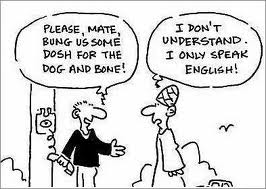
It’s just bewildering how unprepared our system seems to be in dealing with students who turn up to school without basic language skill.

When a person fronts up to a doctor with an ailment that came about from unhealthy eating habits and reckless behaviour, the doctor doesn’t throw his/her hands up in the air and tell them that they can’t properly help them because of their inability to look after themselves.

When a plumber gets called to a house to inspect a toilet that has been clogged due to the owners stupidity and laziness the plumber doesn’t refuse to take the job citing that they can’t fix a problem that wouldn’t have existed had the owner stuck to flushing toilet paper only.

There are professionals that are prepared to take on all kinds of cases regardless of the negligence or challenges involved.  And then there’s teachers …

Traditionally, teachers seem to crumble when presented with students who haven’t acquired basic skills at home.  I am glad to hear that our wonderful profession is taking more positive steps in dealing with this problem:

In socially deprived areas more than 50% of children begin school without the ability to speak in long sentences, which experts say can lead to problems in later life. Schools across England are taking part in a day without pens to tackle this speech deficit.

It took the whole class of five and six-year-olds six attempts to reassemble these jumbled words into a coherent sentence: “Past the walked we shops.”

Partly it was the noise in the classroom which made listening difficult.

Partly it was the distracting presence of a man from the BBC with a microphone.

But mostly it was unfamiliarity with the basic rules of English, their first language, which made the exercise so long winded.

The children, from Baguley Hall Primary School in Wythenshawe, south Manchester, are bright and normal children.

But they have had few opportunities to develop conversation skills.

It is a poor area with high unemployment and a large proportion of children living in lone parent households.

 Family discussions do not happen very often.
Of course I am making a generalisation  (and I am not comparing a child with a clogged toilet!). There are plenty of teachers fully equipped at dealing with this issue.  But there are too many that aren’t.
For me this has little to do with effective teaching and more to do with effective teacher training.  Teachers are not fully prepared for the child that doesn’t know how to carry a conversation because practical skills aren’t properly covered in a Teaching degree.
Whilst it would be nice for parents to ensure their children turn up to school with basic language skills this just can’t be relied upon.  Teachers need to be prepared for all types of scenarios.
Unfortunately, they are not prepared at all!

Girls Performing Much Better in the Classroom

May 1, 2011

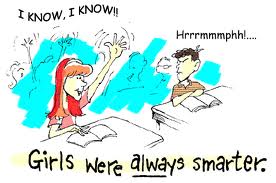
It is no surprise that girls are out doing boys in the classroom.  This has been the trend for quite some time.  But it should focus our energies on how we can teach boys in a more effective manner.

Girls are teaching their male classmates a lesson, blitzing them in almost every subject in Victoria’s classrooms.

Details of NAPLAN tests conducted last May also show Melbourne students narrowly outscore their country cousins, while those with highly educated or professional parents get the best marks.

Girls scored better than boys in 19 of the 20 categories measured in Years 3, 5, 7 and 9.

Nationwide, boys fell behind in almost all categories. Overall, Victoria’s students placed second in half the categories and lead the nation in three.

Year 9 boys were cause for the most worry – 15 per cent failed to meet the writing standard. However, their struggles matched those across Australia, meaning Victoria was still the best in the subject.

There are matters I would like to raise on this topic:

1.  We must do more to engage our boys.  Whether it’s a lack of male teachers or a teaching style that doesn’t work as well with boys, we must get to the heart of the problem and help mend the disparity.

2.  It is absolutely mind-boggling that in todays age we do not have more women in high positions and on multi-national company boards.  It is insane that we even need to talk about employing a quota system to get more female C.E.O’s.  Whilst it isn’t always the choice of women to sacrifice other aspects of their lives for a time-consuming and stressful career, there are many who are keen to get as far as they can go up the corporate ladder.  The argument that positions should be filled by those who are most qualified and capable is true.  However, that should result in females overtaking males in these leadership positions, because they are proving how much better they are in critical areas of learning and thinking.  Unfortunately, I suspect competency has nothing to do with it.