Posts Tagged ‘kids’

An Obsession With Success Leads Tiger Mother to Failure

January 26, 2011

As a teacher, it is my policy not to judge parents on their parenting styles.  I do this for three reasons:

  1. It is rude to judge another person when you haven’t walked in their shoes.
  2. Negative judgements against parents would inevitably cause me to lose focus on my responsibilities to the child; and
  3. Parenting is extremely difficult. I know this because I am a parent.  It is so hard to find the right balance for your child.  Judging others would distract me from improvements I need to make to my own parenting skills.

But every so often you find you have no choice but to make an exception to your rule.  My exception is  Amy Chua, the so-called “Tiger Mother”.

When a person writes a book about parenting they open themselves up to public criticism.  After reading her essay in the Wall Street Journal (I will not be rushing out to buy the entire book) and finding myself cringing all the way through it, I feel that it is the right time to dismiss my “no judgements policy” and respond to her disappointing advice.

The Tiger Mother’s methods are particularly extreme. Swapping one set of extreme methods (The Western methods) for another is unworkable.  Why does everything have to be so extreme these days?  The Education System operates like this.  One day the trend will be all about Teacher Centred Learning, and when that strategy falls flat, the answer then becomes Child Centred Learning.   And back and forward we go between the two very extreme strategies.   The same applies here.  Yes, Western style parenting features some methods which leaves a lot to be desired, but the answer is not its polar opposite.

Why not find “balance?”  That’s right, neither far left or right.  Why not try to focus on what works in different styles of parenting and mould them together?  Surely that’s preferable to going in the extreme opposite direction.  In truth, extremism comes about from insecurity.  The  Tiger Mother’s methods of parenting is both extreme and riddled with insecurity.

By not letting your child go on play dates and taking part in school plays, you are preventing the child from being involved in healthy social activities.  The fact that the stereotypical Asian parents see mingling as a waste of time is very sad indeed.

Pushing a child to not only achieve, but achieve beyond the rest of the class is such a terrible goal for your child.  It forces the child to see their friends as threats and rivals instead of human beings.  It emphasises selfishness and makes it difficult for the child to relate or empathise with others.  Her policy of not letting her kids be anything less that number 1 in their class is quite distressing.

“Chinese parents believe their kids owe them everything.”  This line stunned me.  Why would kids owe their parents everything?  Because their parents sacrificed for them?  Well, what are parents for?  Would it be alright for Amy’s child to approach her and say, ”Mum, how about we make a deal?  I’ll let you enjoy life a bit, and in return, you can let me live a less restrictive existence”?

Amy’s husband is spot on when he said, “Children don’t choose their parents.”  Her response to this more than reasonable point was, “This strikes me as a terrible deal for the Western parent.”  Whilst I think that parents are owed respect and honour, in return, I believe parents owe their children love and support.  I’m not looking for a better deal than that.

Whilst I don’t agree with the Tiger Mother’s approach, I understand that there are people out there looking for strategies that will improve their parenting.  However, when she happily recounted the time she called her daughter “garbage”, I couldn’t help but worry about the effect this book was going to have on others.

Amy’s father once referred to her as “garbage”, and although upset by it, she understood where he was coming from and the point he was trying to make.  That is why she had no qualms with repeating the dose on her poor daughter.   So comfortable was she about referring to her daughter by this term, she goes on to recount how she upset people at a dinner party by frankly discussing how she called her daughter by this name.

Amy, a professor at Yale Law School, should know better.  “Garbage” refers to something that is both useless and worthless.  Calling your child useless and worthless is just not acceptable!  How can a parent be proud of calling their child by such a terrible name?  I don’t care if that type of putdown turns the kid into a Nobel Prize winning scientist, it is not acceptable.

What the Tiger Mother’s  of this world have all wrong is their definition of success.  Success isn’t outdoing people, becoming famous, obtaining wealth or becoming a prodigy.  A successful person in my opinion is somebody who lives with integrity, cares and empathises with others and uses their gifts and qualities to help improve the lives of other people.  Anyone can be successful. Receiving  an A or a C for a maths quiz is not a determining factor.

The Tiger mentality is an extreme one, that combats poor aspects of Western parenting with another equally dismal style of parenting.  What you are left with is a maths whizz that may never enjoy maths, a musical prodigy that never got to enjoy music or properly express themselves through music, a person who thinks parenting is about entitlement rather than love and who is brought up to believe that a friend is anybody that doesn’t dare perform at their level.

It’s time that we preached balance and perspective rather than extremism, we dispensed with “dog eat dog” in favour of “dog support  dog”, and motivate our children without the use of put downs.

Maths and Primary Teachers Don’t Always Go Together

January 25, 2011

A school principal once said something to me which really stuck.  He said that if you look at a primary teacher’s academic background, you see a clear trend.  Most teachers come from a humanities background.  They studied Arts, Literature, Politics, History etc.  He said, only rarely do you find a primary school teacher with a maths background.  The unfortunate truth of the matter, he concluded, is that many primary school teachers are uncomfortable with teaching maths.  Many have limited skills and are simply not adept at effectively explaining maths concepts to their students.

I think there is a lot in what he said.  Whilst spending a year as a substitute teacher, I witnessed many schools and observed many teachers.  It is very rare to find a primary teacher that doesn’t possess an interest in literature and social studies.  It isn’t rare however, to find a teacher who groans at the prospect of teaching fractions or who becomes impatient when a student doesn’t seem to be taking in the method for solving an equation.

Early last year an article was printed in The Australian about the deficiencies of Australia’s education system to deliver acceptable maths outcomes. Even though it was written about Australia, I think it may well apply to many other countries as well.

A groundbreaking review of the mathematics and statistics disciplines at school and university by the Go8 found “the state of the mathematical sciences and related quantitative disciplines in Australia has deteriorated to a dangerous level, and continues to deteriorate.”

The review was compiled by a committee of the nation’s senior mathematicians headed by former University of Sydney vice-chancellor Gavin Brown.

It found that in 2003 the percentage of Australian students graduating with a major in mathematics or statistics was 0.4 per cent, compared with an OECD average of 1 per cent.

Between 2001-2007 the number of mathematics major enrolments in Australian universities fell by approximately 15 per cent.

I also came from a humanities background.  Before completing my degree in teaching, I studies Arts, majoring in English Literature and History.  I, like other teachers was terrible at maths during school.  Our school used to give high pressured maths tests all throughout the year.  I studied for them long and hard, yet managed to fail just about every single one of them.  One day I was so distraught at not being able to work out the answers, I secretly threw my test in the rubbish bin.  A week later my teacher approached me apologetically to tell me she somehow misplaced my test.

The interesting part of it was I actually liked maths.  Whilst it never came easy to me and was taught in a pressurised and negative way, I still managed to enjoy the subject.  In Year 12, I decided I wanted to do maths as one of my final year subjects.  The teacher, Principal and Vice-Principal thought I was crazy and tried to talk me out of it.  They were worried that my inevitably poor results on the three major assessment tasks would drag the class’ score down and tried to persuade me to take up economics instead.  I stubbornly refused.

As it turns out, I did quite well in the end, including earning an A on one of the assessments.  The same Maths teacher that didn’t want me in her class later told me I was her favourite student.  Not because I was the best behaved or the smartest, but because I was determined.  She was impressed that I chose to fight my maths demons rather than take the better grades on offer from doing economics.

Now as a maths teacher (I teach all general subjects), I can relate to the student that doesn’t get it.  I enjoy teaching maths in a style that I would have profited from as a child.  The creative scope for teaching elementary maths is almost limitless.  I like to set up maths role-plays in my class.  In teaching place value I set up a situation where the students are spies trying to break codes in order to thwart an evil plan.  For measurement I get the students to build towers and design tracksuits for Australia’s National sporting teams.

It’s always going to be hard for primary teachers to excel in teaching something they may have never excelled at when they were students.  But that can be a blessing in disguise.  Sometimes a rustiness in the subject helps you relate to the struggles of some of your students and encourages you to be more creative in the way you teach.

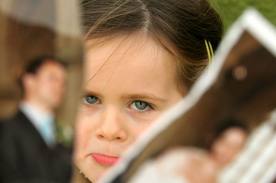
Don’t Dismiss the Effect of Divorce on a Child

January 24, 2011

Unfortunately, divorce is a fact of life. Teachers often have multiple students from broken homes in their classrooms.  It is absolutely imperative that these students get the support they need.

Because it’s so common it may be easy to overlook a child whose parents just became separated or divorced.  The teacher may be of the opinion that the child in today’s age should adjust, and with time, move on from the initial shock and uncertainty.  They may rationalise that since others in the class have been through the same situation, there is a peer support system there for the child, and no further intervention is required.

Whilst I understand that rationale, I do not agree with it.

Firstly, I need to make 2 things clear:

1.  It is not a teachers place to pry, make judgements and involve themselves in the personal decisions of their students’ parents.

2.  The support that I am talking about is one of keeping the child in a positive frame of mind, not asking personal questions or initiating dialogue about sensitive issues.

It is my opinion that while divorce is a fact of life and that in most cases there is nobody to blame, it is quite distressful for the child.  The fact that it is common and has also effected other classmates provides next to no comfort for the child.  I believe that when a child’s parents separate the teacher must refer the matter to the school councillor (if the school has one), and spend more time with child building their confidence and displaying patience when the child plays up or has difficulty completing a task.  It is not sufficient to wait until the child shows signs of anxiety or rebellion.  The time to initiate support is straight away.

There are a number of school-related changes that the child may undergo that is worth considering.  Below are just a few:

  • The child will have 2 homes.  Meaning he/she may have to bring an overnight bag to school.  It is best to have a discreet place to put the bag.  The bag, I have found becomes a sort of symbol of the separation, and the child is often bashful about it.  A special spot for the bag often reduces some of the anxiety of bringing it.
  • The child often receives 2 newsletters, notices and reports.  For the first few months (if not indefinitely), discretely handing out these notices is the best policy.
  • It is best to have both parents at the Parent/Teacher meeting, if possible, at the same time.  This can be a tense session and involve the former partners engaging in point scoring and blaming. It is in these sessions however, that the teacher has an opportunity to address the importance of co-operation and inclusion when it comes to matters concerning the child.
  • Homework, books and uniforms are often left at mum’s or dad’s.
  • When the child fails to bring money for school photos, camps or excursions it is often because one parent refuses to pay half the cost and the other refuses to pay for the entire cost.  In this event, for the child’s sake, I have paid the cost out of my own pocket (without telling anyone) and have on occasion approached my boss in a bid to get the school to wave the cost.

I read an article which discussed the link with children of divorce to higher levels of suicidal thoughts. I suppose this is not surprising at all, but it does back up what I have been discussing.  Some interesting findings from the Canadian survey that inspired the article include:

Researchers from the University of Toronto said Wednesday that they had studied 6,647 adults, including almost 700 who had been under the age of 18 when their parents divorced and found men from divorced families were three times more likely to have seriously considered suicide than adult males whose parents had not divorced.

Women whose parents had divorced were twice as likely to have thought about taking their own lives, according to the research published in the journal Psychiatry Research.

I recently completed a children’s novel about a boy struggling with the separation of his parents.  As a guide to see if the manuscript was good enough to engage an audience, I used to read it to my students (without mentioning that I wrote it).  I was always worried that the passages describing the separation may be too confronting for children who have experienced separation and divorce in real life.  I was staggered to find that the opposite was true.  They were the ones that connected most strongly to the story.

It provided them with a voice.  A voice that is buried somewhere beneath the surface.  A voice that shouldn’t be dismissed, ignored or taken for granted.

Stop Pretending and Start Acting!

January 20, 2011

Parents looking for a school for their kids must hate reading the same line that tends to pop up in all the school’s brochures.  It’s the line that Principal’s claim they pride themselves on.  I bet if I asked you to guess what the line is, you’d come close.

“We provide a warm, safe and secure environment for our students.”

Heard it before?  Have you ever been convinced that it’s true?

A recent poll of parents of Primary school aged kids were asked about their greatest concerns regarding sending their kids to school.

The results were not surprising:

Bullying is the biggest worry parents have when they send their children back to school.

Three quarters of parents fear their child will be bullied – at school and online – a survey has found.

In a sign of their concern, 89 per cent plan to monitor their children’s online activities closely.

Australian parents are also concerned about the costs associated with sending a child back to school, with one in three nominating money as an issue.

A national poll of 1000 parents of primary school age children found almost half believed a passionate and caring teacher, and a fun learning environment, were critical to their child’s success at school.

Curbing bullying is not just a priority – it is the number one priority.  Yes, more important than academic performance.  And why shouldn’t it be the case?  Parents who invest everything they have towards their child’s health and happiness deserve the right to feel confident the school will do its utmost to provide a safe environment for their child.

Don’t just say you are.  Prove it.  Because parents obviously don’t buy it.

And speaking of parents, I couldn’t disagree with this quote from Parenting Victoria’s Elaine Crowle more strongly:

“The best way to prevent bullying is for parents and schools to work together to build resilience within your child.”

No, the best way to prevent bullying is not simply to fortify the victim – it is to stop the perpetrator.  Resilience often means not reacting when being bullied and instead soaking it up.  That is not a remedy against bullying.  Schools must invest a great deal more into curbing bullying than resiliency programs.

It’s time schools were stripped of their right to boast about their so-called safe and secure environment until they adequately prove that this is actually the case.

Think Before You Medicate Our Children!

December 30, 2010

Dear Medical Profession,

Whilst I am no expert and don’t pretend to be, I am bewildered at the rate in which kids are being prescribed medication in the US especially.  I read the Wall Street Journal article about prescription drug use among children and teenagers in the US, and I just shook my head in disbelief.

Below are some of the passages from the article that disturbed me:

These days, the medicine cabinet is truly a family affair. More than a quarter of U.S. kids and teens are taking a medication on a chronic basis, according to Medco Health Solutions Inc., the biggest U.S. pharmacy-benefit manager with around 65 million members. Nearly 7% are on two or more such drugs, based on the company’s database figures for 2009.

Doctors and parents warn that prescribing medications to children can be problematic. There is limited research available about many drugs’ effects in kids. And health-care providers and families need to be vigilant to assess the medicines’ impact, both intended and not. Although the effects of some medications, like cholesterol-lowering statins, have been extensively researched in adults, the consequences of using such drugs for the bulk of a patient’s lifespan are little understood.

But children and teens are also taking a wide variety of other medications once considered only to be for adults, from statins to diabetes pills and sleep drugs, according to figures provided to The Wall Street Journal by IMS Health, a research firm. Prescriptions for antihypertensives in people age 19 and younger could hit 5.5 million this year if the trend though September continues, according to IMS. That would be up 17% from 2007, the earliest year available.

So, one-quarter of kids in the US are on medication.  Is this acceptable?  Is this not far too high?  Is it going to get higher in the future?  Are we going to have half of our kids on medication?  Why don’t we put all kids on meds?  That’s where we are going, aren’t we?

As I stated, I am no expert.  I just find it hard to believe that so many kids rely on medication.  It doesn’t sit well with me.  Am I just behind the times, or is this generation of medical professionals comfortable with prescribing medication to kids in such high numbers without adequate research?

Yours sincerely,


MICHAEL

Meet The Free-Range School

December 28, 2010

I’m not sure a “school with no rules” would work for everyone.  But for any criticism one could come up with for schools like Currambena, one thing is true.  Schools like this one are the result of an education system that puts results ahead of student welfare and arcane rules and regulations in the place of building an environment in which children can thrive.

Currambena works very differently to the typical school:

There’s no morning bell to signal the start of the school day, either. Children simply gravitate towards classrooms when ‘inside time’ begins. Some stay digging in the vegie patch and if, for some reason, a child wants to spend the day doing maths in the tree fort, so be it. There are no room numbers or official grades, no tests, no lining up, no homework.

For a start, if children aren’t forced to sit in class and finish their maths, how do parents know whether they’ll bother at all?  Rachel Turner, who sends her kids to the school, recalls how it worked for her: “I took school very seriously and was incredibly involved in it. I was never tempted to shirk, because learning was fun.

“As long as teachers know the children are participating – that nobody is being left behind – the kids have the freedom to do what they need,” she adds. “Teachers make sure everyone is reading and writing, of course, but if a child is consumed in one activity, why shouldn’t they be allowed to continue it?”

I’m not sure that schools like this one will become the norm.  I can’t see this style of school appealing to more than a certain niche.  However, it does remind us that schools are too cold and out of touch.

There are far more people out there who have had terrible experiences through school compared to those that reflect on their school days in glowing terms.  This is simply not good enough.  We spend the best part of our youth at school and the argument that “it is what it is” doesn’t wash with me.

Perhaps we don’t need something as revolutionary and extreme as a free-range school, but certainly not what we have at the moment.

Are Our Kids Growing Too Fast?

December 19, 2010

Is our Education system too harsh on our kids?  Is it structured to hinder natural growth?

According to the feedback from parents and Principals in WA, children are rushed to adapt to situations and environment before they are ready.  They feel that children are not ready to start high school in Year 7.

The survey by the WA Primary Principals Association also shows 85 per cent of parents do not want Year 7 moved from primary to high school at public institutions.

WAPPA president Stephen Breen said parents feared their children would grow up too quickly if forced to attend a high school so young.

I had no idea that Year 7 is still considered primary school in WA.  In Victoria it is high school.  As for the argument that children are too young to make the transition from primary to high school at the end of Grade 6 – I think it has some merit.  ‘They are young and the transition is a big one.  I do, however, believe that it is incumbent on the Grade 6 teacher to help build up their students’ maturity levels to a point where they can thrive in their first year of high school.

I wonder if the same type of issue applies to education systems around the world.  Is this the case?

Positive Images and Our Kids

December 13, 2010

Schools must do all they can to integrate the teaching of healthy foods into their curriculums.  There is nothing more powerful for a class full of impressionable kids, than to see their friends chomping away happily on fruits or vegetables.  A program, that engages and gives kids cooking and food tasting experiences whilst also teaching them about healthy eating is pivotal to curbing morbid obesity later in life.

Whilst peer pressure is usually a negative thing, watching a classmate take part in healthy behaviour has a profoundly positive result on a child.  That’s why a program such as Food for Thought trialled in New Zealand schools looks a winner.

The initiative will see schools in the district implementing new, interactive health and nutritional education courses that aim to improve the health of the community.

Qualified nutritionists teach children the importance of a balanced diet, reading and understanding nutritional information panels and how to prepare healthy meals.

Children are given the opportunity to visit the supermarket to buy ingredients for a healthy class lunch, which they make back in the classroom.

I hope programs like this one spread universally. 

Worst Examples of Teacher Discipline

December 10, 2010

After reading about two recent cases of discipline gone wrong, I couldn’t help but reflect on some terrible instances of terrible disciplinary methods inflicted on me by my teachers.

A few weeks ago I wrote a post about an Australian teacher who was accused of sticky-taping some of her students lips together as a response to their unruly behaviour.

Unfortunately, it gets worse.

Today I read about the British teacher given a 3-year suspension for forcing autistic pupils to run on a high-speed treadmill as a punishment.

Glenda Partridge, 35, was also alleged to have taken food away from youngsters if they misbehaved and dragged them across the floor by their collars.

Whilst I never experienced anything as horrific as that, it did bring back some memories from my youth – three incidents in particular:
1.  I was caught chewing gum and was forced to sit in front of the class  with my hands in the payer position, chewing gum firmly entrenched between my palms.  It took hours for the chewing gum to wash off.
2.  After being caught speaking out of turn, the teacher coloured in a circle on the board and made me stand at the chalkboard, with my nose placed on the circle.
3.  I got caught writing lines in class for another teacher.  My teacher spotted me and approached me angrily.  I went to put the lines away, and in doing so dropped them on the floor.  As I attempted to pick it up my teacher slapped me on the back of the head.
I was wrong on all three occasions, but the punishments were a bit too excessive.  I was actually a very well-behaved child, so these incidents really stood out in my memory.
What was the worst examples of student discipline handed out to you?

We Are Losing the Fight Against Bullying

November 24, 2010

This is a point made very clear in a recent article entitled, Why we’re losing the fight against bullying.  The article suggests that school policies are flawed or just simply ineffective and bullying continues to be as rampant as ever.  Before I discuss my approach to the issue, I want to point out some interesting points made in the article:

“Some parents, I am sad to say, are not at all bothered if their child is a bully. In fact, they can be quite proud of it,” explains Ken Rigby, a bullying expert in Australia.

Schools can post warm and fuzzy messages about tolerance in the hallways, and hand out good-citizen awards at assemblies – both well-meaning, and necessary – but that strategy speaks loudest to students who wouldn’t bully in the first place, and many of those who do (between 10 and 20 per cent) don’t necessarily see their behaviour that way.

Schools can post warm and fuzzy messages about tolerance in the hallways, and hand out good-citizen awards at assemblies – both well-meaning, and necessary – but that strategy speaks loudest to students who wouldn’t bully in the first place, and many of those who do (between 10 and 20 per cent) don’t necessarily see their behaviour that way.

Zero-tolerance policies on fighting, as cases in Canada have shown, do not solve the problem either, often leading to punishment without investigation, and little follow-up.

I have very strong views on bullying and anti-bullying policy formulation.  It is my opinion that we have our emphasis wrong.  Bullying isn’t a priority – it is THE PRIORITY.  As a teacher, I am entrusted not with people’s money or belongings but with the most important and precious things they have – their children.  It is my responsibility to ensure that they are safe and secure.  Sure, I have to teach them and help them grow academically, but even more so, I have to do my best to make sure that the child they dropped off at my classroom is going to come back in as good if not better emotional shape than when they arrived.

When I speak to my class at the beginning of the year, I tell them there is a sure-fire way for them to have to repeat the year a second time.  It’s not if they find the work difficult or are struggling to pass assessments – it’s if they are not treating their classmates with respect.  Because if they are not ready to treat others with respect, they are not emotionally ready to go up a year level. 

I’m not joking.  I really do mean it.

There is a lot of talk about child centered learning vs teacher centered learning.  I prescribe to neither.  Instead, I believe in what I call “class centred learning”.  The main focus of my teaching is that everyone in the class must respect each other.  It is the fundamental rule for assessing my own performance.  They don’t have to like each other.  But they absolutely must respect each other.  And ultimately, it is my duty to empower the class and create an environment of closeness and mutual respect.

Does it mean that there is no bullying in my classroom?  Absolutely not.  I wish.  I’m only an average teacher.  What it means is, I take more interest in the welfare of my class than any other consideration.

So that means your actual “teaching” suffers?  Absolutely not.  In fact, if there is tension, poor self-esteem, bullying and disharmony in the classroom, there is no way a teacher is going to get the class to work at their potential.  Think about how hard it is for us adults to operate at work with colleagues that don’t respect us.

I think of it this way.  If my students go home still unsure about a maths problem, I can fix that up the following day.  But, if my students go home victimised by fellow classmates due to my inaction – then I may have caused potential damage.