Posts Tagged ‘kids’

Valuable Advice for Bystanders of School Bullying

March 27, 2011

One of the underreported aspects of the Casey Heynes/Ritchard Gale bullying incident, was the role of the onlookers in inflaming the situation (or at least failing to intervene).  Not enough of the ensuing conversation focussed on the importance of intervening and diffusing a bullying situation.  Many media outlets omitted the fact that the child filming the incident was suspended, and few columnists even bothered to see it as an issue.

Whilst it is easy to blame bystanders of a bullying incident for their inaction, intervening in such a heated situation is quite a difficult assignment.  That’s why I was so thrilled to stumble on a wonderful article by Rosalind Wiseman, which detailes strategies that bystanders can employ:

Recently I’ve taken a hard look at the advice we give to kids who are being bullied and challenged all of us who work on this issue to do better. Now I want to question the common advice we give bystanders. This is critical for two reasons; we rarely admit the complex role bystanders play in bullying and I’ve never seen us publicly acknowledge that often the reason bystanders don’t come forward is because they don’t have confidence in the adults to do what’s right.

Being a bystander:

It’s not like any of us look forward to the opportunity of confronting a bully, as we saw in the recent Dateline special. Ironically, it can often be harder to confront a bully we’re close to than someone we don’t know or don’t like. And no matter how you feel about the bully or the target, it can be easy to stay silent because you don’t want the abuse directed at you.

But here are three inescapable facts:

  • Almost all of us will be in a situation at some point of our lives where we see someone bully someone else.
  • Bystanders often decide to get involved based on their feelings toward the bully and/or the target. If you like the bully then you are more likely to excuse the behavior. If you think the target is annoying, then you’ll more easily believe the target was asking for it. But a bystander’s decision to get involved should be based on the merits of the problem, not on their relationship to the people.
  • In that moment, we will have three choices. 1. Reinforce the abuse of power by supporting the bully; 2. Stay neutral — which looks like you’re either intimidated by the bully yourself or you support their actions; 3. Act in some way that confronts the bully’s abuse of power.

In the face of seeing someone bullied, here are some common reactions:

  • Deny it’s going on.
  • Distract yourself so it looks like you don’t know what’s going on. And if you don’t know then you have no obligation to do stop it.
  • Remove yourself from the situation.
  • Laugh to try to convince yourself that what’s going on isn’t serious.
  • Join in the bullying, because it’s safer to be on the side of the person with the most power.
  • Ignore it in the hope that it will go away.

What do you do if you are a bystander?

Even if you aren’t proud of how you handled the bullying when it occurred, it’s important to recognize how hard it is to know what to do in the moment. But that fact doesn’t mean it’s too late now to speak out. Especially if you are friends with the bully, reaching out to them is actually the ultimate sign of your friendship.

Supporting someone who’s been bullied.

Say, “I’m sorry that happened to you, do you want to tell me about it?”

Don’t tell them what they should have done or what you would have done. Listen and help them think through how to address the problem effectively. And if they ask you to back them up the next time it happens, ask them what that looks like to them. If it means upholding their right to be treated with dignity and not getting revenge on the bully, then do it.

Supporting someone who is being the bully.

In your own words say something like, “This is uncomfortable to talk about but yesterday when you sent that picture of Dave you know that really embarrassed him. And I know I laughed and I know he can be annoying but it’s still wrong. If you do it again I’m not going to back you up.”

Yes the bully is going to push back, make you uncomfortable, try to get you on their side but remember what happened and why you feel like the bully’s actions were wrong.

Why are bystanders so reluctant to come forward?

Let’s move away from the bystanders and focus on the adults. The prevailing explanation of why kids won’t come forward is because there’s a code of silence that forbids them. No one wants to be a snitch. While there’s some truth in that — I think just as powerful a reason for kids’ silence is because the adults haven’t created an environment where kids think reporting will make the problem better instead of worse. Yet, the most common advice we give to bystanders is to is tell an adult. Like it or not, the truth is it’s not good enough to tell kids to tell an adult.

Telling an adult won’t magically solve the problem. What far too many kids know and experience on a daily basis but we deny is that far too many adults are ill-equipped to respond effectively and often only cause the child to give up on adults entirely. Furthermore, the very way a lot of adults treat young people — in a condescending or dominant (i.e. “bullying”) manner — makes it impossible for children to have any confidence in our ability to be effective advocates.

While there are many effective counselors, even the suggestion to “talk to your counselor” may not be realistic. The child may have no idea who the counselor is — let alone a strong enough relationship with them to take this leap of faith. Recent budget cuts have led many school districts to cut back on their counselors or eliminate them completely. And it has always been the case that kids tend to form strong relationships with their teachers and coaches. It’s these people who bystanders will more likely tell what’s going on. Especially for a bystander that could easily think that since the bullying isn’t technically happening to them, reporting to a counselor is too extreme.

That’s why teachers need to know what to do. Instead of, “That person just needs to get a tougher skin”, “It can’t be that bad, can it?” they need to respond with “I’m really sorry this is happening. Thanks for telling me. I know it can be hard to come forward about things like this and I really respect the fact that you did. Let’s think about what we can do about it.”

Let’s be clear: beyond the peer pressure not to snitch and adolescent cynicism, adults matter. If our kids see us treat people with dignity, if we are outspoken about our respect for people who come forward, if we are honest with how scary reporting can be but assure them that we will be with them throughout the process, I guarantee our kids will find the courage to speak out.

Ms. Wiseman can be contacted through her Twitter account on: www.twitter.com/rosalindwiseman
50 Books Every Child Should Read

March 24, 2011

I stumbled on a wonderful piece by the Independent entitled The 50 Books Every Child Should Read. It was written in response to Michael Gove’s recommendation that children read 50 books a year.  They asked three of Britain’s leading children’s authors and two of their in-house book experts to each pick 10 books, suitable for Year 7 students.”

Below is the list:

Philip Pullman

* Alice’s Adventures in Wonderland and Through the Looking Glass by Lewis Carroll. Indispensable. The great classic beginning of English children’s literature.

* Pinocchio by Carlo Collodi. What effortless invention looks like.

* Emil and the Detectives by Erich Kastner. A great political story: democracy in action.

* Swallows and Amazons by Arthur Ransome. As clear and pure as Mozart.

* Black Hearts in Battersea by Joan Aiken. If Ransome was Mozart, Aiken was Rossini. Unforced effervescence.

* The Owl Service by Alan Garner. Showed how children’s literature could sound dark and troubling chords.

* The Phantom Tollbooth by Norton Juster. Superb wit and vigorous invention.

* Moominsummer Madness by Tove Jansson. Any of the Moomin books would supply the same strange light Nordic magic.

* A Hundred Million Francs by Paul Berna. A particular favourite of mine, as much for Richard Kennedy’s delicate illustrations (in the English edition) as for the story.

* The Castafiore Emerald by Hergé. Three generations of this family have loved Tintin. Perfect timing, perfect narrative tact and command, blissfully funny.

Michael Morpurgo

* The Star of Kazan by Eva Ibbotson.

The heroine is blessed with such wonderful friends who help her through the twists and turns of this incredible journey.

* A Christmas Carol by Charles Dickens. The first few pages were so engaging, Marley’s ghostly face on the knocker of Scrooge’s door still gives me the shivers.

* Just William books by Richmal Crompton. These are a must for every child.

* The Happy Prince by Oscar Wilde. This was the first story, I think, that ever made me cry and it still has the power to make me cry.

* The Elephant’s Child From The Just So Stories by Rudyard Kipling. The story my mother used to read me most often, because I asked for it again and again. I loved the sheer fun of it, the music and the rhythm of the words. It was subversive too. Still my favourite story.

* Treasure Island by R.L. Stevenson This was the first real book I read for myself. I lived this book as I read it.

* The Old Man and the Sea by Ernest Hemingway. A classic tale of man versus nature. I wish I’d written this.

* The Man Who Planted Trees by Jean Giono. A book for children from 8 to 80. I love the humanity of this story and how one man’s efforts can change the future for so many.

* The Singing Tree by Kate Seredy The story of two children who go to find their father who has been listed missing in the trenches of the First World War.

* The Secret Garden by Frances Hodgson-Burnett. I love this story of a girl’s life being changed by nature.

Katy Guest, literary editor for The Independent on Sunday

* Refugee Boy by Benjamin Zephaniah. Story of a young Ethiopian boy, whose parents abandon him in London to save his life.

* Finn Family Moomintroll (and the other Moomin books) by Tove Jansson.

A fantasy series for small children that introduces bigger ones to ideas of adventure, dealing with fear, understanding character and tolerating difference.

* Diary of a Wimpy Kid by Jeff Kinney. It’s rude, it’s funny and it will chime with every 11-year-old who’s ever started a new school.

* I Capture the Castle by Dodie Smith. Written for a teenage audience but fun at any age.

* The Hobbit and The Lord of the Rings by JRR Tolkein. Be warned, these tales of hobbits, elves and Middle Earth are dangerously addictive.

* The Tygrine Cat (and The Tygrine Cat on the Run) by Inbali Iserles. If your parents keep going on at you to read Tarka the Otter, The Sheep-Pig and other animal fantasies, do – they’re great books – also try Iserles’ stories about a cat seeking his destiny.

* Carry On, Jeeves by PG Wodehouse. A grown-up book – but not that grown-up.

* When Hitler Stole Pink Rabbit by Judith Kerr. Judith Kerr’s semi-autobiographical story of a family fleeing the Nazis in 1933.

* Moving Pictures by Terry Pratchett. Elaborate mythological imagery and a background based in real science. If you like this, the Discworld series offers plenty more.

* The Story of Tracy Beaker by Jacqueline Wilson. The pinnacle of the wonderful Jacqueline Wilson’s brilliant and enormous output.

John Walsh, author and Independent columnist

* The Adventures of Sherlock Holmes by Sir Arthur Conan Doyle. Irresistible puzzle-solving tales of the chilly Victorian master-sleuth and his dim medical sidekick.

* The Curious Incident of the Dog in the Night-Time by Mark Haddon. Age-transcending tale, both funny and sad.

* Mistress Masham’s Repose by TH White. Magical story of 10-year-old Maria, living in a derelict stately home, shy, lonely and under threat from both her governess and her rascally guardian.

* Little Women by Louisa May Alcott. Inexplicably evergreen, trend and taste-defying 1868 classic.

* How to be Topp by Geoffrey Willams and Ronald Searle. Side-splitting satire on skool, oiks, teechers, fules, bulies, swots.

* Stormbreaker by Anthony Horowitz. First of the action-packed adventures with 14-year-old Alex Rider.

* Private Peaceful by Michael Morpurgo. “Dulce et Decorum Est” for pre-teens.

* Artemis Fowl by Eoin Colfer. Lively, amoral, wildly imaginative debut (six more followed) about the money-grabbing master-criminal Artemis, 12. The author called it “Die Hard with fairies”.

* The Silver Sword by Ian Serraillier. Inspiring wartime story of the Balicki family in Warsaw.

* Animal Farm by George Orwell. Smart 11-year-olds won’t need any pre-knowledge of Marx, Lenin, Trotsky and 1917 to appreciate this brilliantly-told fable.

Michael Rosen

* Skellig by David Almond. Brings magical realism to working-class North-east England.

* Red Cherry Red by Jackie Kay. A book of poems that reaches deep into our hidden thoughts but also talks in a joyous voice exploring the everyday.

* Talkin Turkeys by Benjamin Zephaniah. A book of poems that demands to be read aloud, performed and thought about.

* Greek myths by Geraldine McCaughrean. Superheroes battle with demons, gods intervene in our pleasures and fears – a bit like the spectres in our minds going through daily life, really – beautifully retold here.

* People Might Hear You by Robin Klein. A profound, suspenseful story about sects, freedom and the rights of all young people – especially girls.

* Noughts and Crosses by Malory Blackman. A book that dared to go where no one thought you could with young audiences because it raises tough stuff to do with race.

* Einstein’s Underpants and How They Saved the World by Anthony McGowan. A crazy adventure set amongst the kids you don’t want to know but who this book makes you really, really care about.

* After the First Death by Robert Cormier. Cormier is never afraid of handling how the personal meets the political all within the framework of a thriller.

* The London Eye Mystery by Siobhan Dowd. A book that allows difference to be part of the plot and not a point in itself.

* Beano Annual. A cornucopia of nutty, bad, silly ideas, tricks, situations and plots.

Top Ten Lists are fun.  What books would you recommend for a Year 7 child?

Facebook Banning Children For Lying About Age

March 23, 2011

Congratulations to Facebook for actively banning kids who are lying about their age. Age requirements are important, because young students are often prone to making bad choices with social media and fail to use the recommended privacy settings:

Social networking giant Facebook is banning 20,000 children every day because they have lied about their age to join the site.

The company admitted it had to do more to stop young people using Facebook, as it revealed about a third of Australia’s population uses the site every day, the Herald Sun reported.

At a parliamentary inquiry into cyber-bullying, other social networking and online companies called for campaigns to highlight the dangers of the internet.

And there have been calls for an overhaul of the Australian school curriculum to include more effective cyber-danger classes.

The chief privacy adviser of Facebook, Mozelle Thompson, said many Australian children under the age of 13 were trying to access the site by lying about their age.

“It’s something that happens on a regular basis,” Mr Thompson said.

Globally, about seven million children who lie about their age are blocked from the site each year.

For those parents/teachers unaware of the problem of cyber-saftey or if you have children or students that don’t use the privacy settings option, I urge you to watch this clip with them.

Fighting for Our Kids’ Self-Esteem

March 4, 2011

There’s a reason why kids are suffering from body image related problems in greater numbers than ever before.  We let them.  Society has a responsibility to ensure that the same dreadful affliction that has had diabolical effects on our generation, doesn’t torment the next.  We have made the mistake of valuing people for all the wrong reasons, putting too high a price on weight, shade and form and too little emphasis on character, personality and integrity.  We place celebrities on pedestal so high, we barely notice that we don’t know anything about them.

Our young notice our insecurities and base a world view on them.  They see the pressures their parents feel about appearance and weight and base their own self-worth on precisely these factors.  Before you know it, you’ve got kids as young as five with eating disorders:

Children are suffering from eating disorders at younger and younger ages according to disturbing new research.

Media consumption, peer pressure and negative messages from parents are all contributing to the problem of poor self-image in children, which can trigger eating disorders such as anorexia, bulimia and binge eating. According to the Eating Disorder Resource Centre of Ireland, children as young as five are displaying signs of poor body image – and some seven and eight year olds have developed eating disorders.

Experts are stressing that such disorders are not confined to girls, with little boys also being susceptible. Psychologist and author Deirdre Ryan told TheJournal.ie that parents can unthinkingly pass on negative messages to their children: “I was speaking with a six-year-old boy who said that he wanted to lose weight – when I asked him why he said: ‘I have a wedding coming up’. That message was more than likely passed on by a parent,” she said, “Parents have to be aware of what they are saying, even in front of boys, and not engage in ‘fat talk’. Children of this age are hypersensitive.”

Parents need to be more aware of their relationship with their own bodies as well, Ryan said: “It is starting younger and younger – but it is also affecting people who are older – spreading across the life span. Now, there is an expectation that even if you’re in your 60s you should conform to a certain image. It’s very damaging.”

Our generation has already let ourselves down by buying in to the media driven lie about what a person should aspire to be like.  We have been fooled into believing that life is about striving to beat aging, keeping a toned figure and withstanding lines and wrinkles.  The beauty industry has made a bundle out of us, and all we are left with in return is confusion, pressure, anxiety and in many cases a battered self-image.  Is this what we want for our children?

It’s great to invest in one’s health and appearance, but it is important that these things don’t take over.  Our children need to see that we place more value in perfecting our character than our figure.  That we consider integrity, honesty, empathy and loyalty on a higher level than six packs or breast size.

As a teacher, there is only so much I can do.  As a parent, I have a big job ahead of me.

Never Too Young To Learn the Value of a Buck

March 2, 2011

The importance of teaching kids from a young age about the importance of spending money wisely cannot be underestimated:

It’s not easy for us as individuals to do much about financial problems in Washington, but we do have a lot to say about the money that goes through our own bank accounts.

Times of financial stress throw the spotlight on weaknesses in our money management, as many of us are finding out. There’s no time like the present to make the tough decisions that will put us in a better fiscal position in the future.

If we want our children to avoid some of the pitfalls we’ve experienced, we had better start early.

According to a survey by TD Ameritrade, about 45 percent of the people between the ages of 21 and 45 who responded to a survey said they learned about managing money before they were 12.

Only about a third of the older adults who responded to the survey said they learned about money that young.

A TD Ameritrade spokesman speculated that parents may be learning from their financial mistakes, and trying to give their kids a stronger financial foundation.

If that’s the truth, then some good will come from the current tough times.

Kids tend to be very materialistic and cavalier with their money.  In my day, we had very little money at our disposal until we were old enough to earn it ourselves.  Nowadays it’s a different story.  Kids tend to be given a lot of money, without enough interest taken to ensure that it’s used wisely.

I commend any program that teaches kids the value of a dollar and how to  save and spend wisely.

Homeschooling is Not the Enemy

February 25, 2011

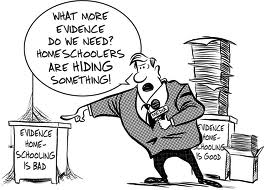
Whilst I am not a proponent of homeschooling and I see the virtues of the traditional school system, I am very frustrated by the lack of tolerance given to parents who decide that homeschooling is their prefered option.  To knock homeschooling is to ignore the many serious flaws inherent in the traditional school system.  Even though I think these flaws can be corrected and better practice can be implemented, until that is the case, parents will always look at their options.

That’s why I was particularly disappointed to read a recent article regarding the 12,000 children, aged 16 or under who are classed as “missing” from school in England.

The figures prompted warnings about the safety of those allowed to slip through the net. Children allowed to drop out of school could be at “serious risk” of physical, sexual or mental harm, charities said.

A Commons Education Select Committee inquiry in October reported that thousands of children as young as 11 who were “lost” to the education system may be turning to lives of crime, drugs and prostitution.

At this pont of the article I was naturally concerned about these kids who are so young, yet are not receiving education.  Then I read the following sentence:

Children may go “missing” due to being forced to wait for a school place or being kept at home by their parents…

How are those scenarios considered “missing?”  What if a child is being homeschooled?  Are they missing then?  Surely children waiting for a school place and being kept home by their parents aren’t necessarily “missing”.

Luckily I read another article which focussed on ending home-school stereotypes:

Despite successes with the ACT, spelling bees and math contests, home-schooled children battle a stereotype that they’re social misfits leading sheltered lives that fail to prepare them for the real world. Or worse yet, home schooling is depicted as brainwashing by parents pursuing a narrow political or religious agenda.

Nebraska law is friendly to home-schoolers, requiring basically that parents submit a form affirming their intent to home-school and provide a copy of their curriculum. The state doesn’t require state testing or home visits by state personnel.

Several parents interviewed said they cope with public misconceptions about home schooling even as the Internet and creative teaching arrangements give parents new ways to broaden their children’s education and further challenge the stereotypes.

Home-schooled students play on Little League teams, join Boy Scouts, perform in public school bands, participate in cooperative academic classes and, when necessary, take classes at local high schools and colleges, parents say. Students participate live in classes via the Internet.

Mike and Tricia Croushorn of Omaha home-schooled their children, Abi, 22, Tyler, 20, and Sam, 16, to give them a well-rounded education that included a religious component.

The Croushorns got interested after getting to know parents who home-schooled.

“We would meet these other children and they were always polite and respectful, and they could carry on a conversation with adults,” Tricia Croushorn said.

Homeschooling is not the enemy of education.  Bad teaching and poorly run schools are the enemy of education.  Until traditional schools really do offer the kind of support, care and safety that they claim to, then loving parents will always explore their options.  Because ultimately it’s not about tradition, it’s about the best needs of our children.  The only people who should be making that call are the parents.

I love being a school teacher and I see great value and potential in traditional school education, but I admire the selflessness and sacrifice that homeschooling parents make and the intentions behind their decision.  Instead of picking on the unconventional, make the conventional much better than it currently is.

The Drug Companies Are Winning at Our Children’s Expense

February 17, 2011

I have a confession to make.  I hate drug companies.  No, worse, I despise drug companies.

I may not be a doctor, pharmacist or  expert, so you can discount my views as just ramblings from an ignorant blogger if you like, but that isn’t going to change my position.

It is my belief that the drug companies have a vision.  That vision is to see children being given medication as if it were candy.  Last month I wrote about the fact that more than a quarter of kids in the US are on medication, with almost 7% on two or more prescription drugs.  The drug companies probably see that figure as merely a good start, with plenty of room for improvement.

And as much as I wish we could see through what they are doing, I’m afraid, they continue to prevail.

I was really disappointed to hear that a lice drug called Natroba,  has been approved by the U.S. Food and Drug Administration for use on children ages 4 and older.

A lice drug?  So let me get this straight.  You give your child a drug that goes into the bloodstream to fight a problem which is external to the body.  How on earth does that work?

The product — which is applied to dry scalp and hair, then left on for 10 minutes — contains spinosad, a compound that excites the central nervous system of head lice. The bugs, which are most common in children ages 3 to 12, become paralyzed and die.

And what about the “known” side-effects?

Common side effects of Natroba include redness or irritation of the eyes and skin.Because it contains benzyl alcohol, which can be harmful to newborns and low-birth-weight infants, the drug should not be used on children younger than 6 months.

6 months?  Why would you give a prescription drug to a baby suffering from lice?

The sad part of this is that we live in the age of the quick fix.  The solution to every problem must come at the click of a finger.  No matter how many of these drugs get released, there will always be doctors happy to endorse and prescribe them and parents only too happy to avoid the time and energy used to treat their children in the traditional way.

If this keeps up, soon it will be rare to find a child not on medication.  What a tragedy!

Why Students Misbehave

February 16, 2011

There are many reasons given for poorly behaved students:

  • The teacher doesn’t enforce discipline
  • The students are spoilt
  • The students are not parented properly
  • Kids are rude nowadays, and haven’t been properly taught manners.

All these reasons are decent explanations for an unruly child or class.  But there is one glaring omission from this list, which doesn’t get nearly the amount of coverage as other reasons – the students are bored!

My experience with unruly behaviour, is that it is more prevalent in a classroom that is taught in a bland style.  I have observed some brilliantly dedicated and hard-working teachers, who spend countless hours planning their lessons using the latest graphic organisers and programs, only to watch their hard work fizzle before their very eyes.  The most thorough preparation can go out the window when it results in a unsipiring lesson.

So much of today’s educational resources concentrates on breaking skills down, organising thoughts and following scientific trends.  What they fail to do is assist teachers in delivering fun, enjoyable lessons.

The latest trend in Australian education is direct instruction.  Direct instruction involves reading from a script.  In Australia this is how many schools teach their maths and spelling.  The class teacher is presented with a manual and asked to read from a script (the script even tells you when to pint at the board and when to pause!).  The students job is to listen, repeat after the teacher, and answer questions in their workbooks.  No hands are answered, no discussion takes place.  It’s just the teacher talking and the students responding.

The strengths of this style of teaching are worth noting.  The program is comprehensive, it fixes gaps in student learning, it helps improve the student’s listening skills, it makes for a quiet classroom and cuts planning time.  But among the weaknesses for such a program is the fact that it is so boring, firstly for the teacher, and also for the student.

Boring classes often leads to disruptive behaviour.

Have you ever watched the behaviour of teachers during a boring PD or staff room meeting?  And that’s adults!  We can control our behaviour far better than our students.  It’s just that when you are bored, it’s not so easy to maintain focus and avoid distraction.

In my own teaching, I find that my most difficult classes come as a result of an inability to properly engage my students.  Because I am not a strict or authoritative teacher, I rely very much on the strength of my lessons to maintain decorum in the classroom.

Among the many questions we teachers must ask ourselves when we reflect on behavior management in our classrooms is, what are my lessons like?  Could they be more relevant to the interests and life experiences of my students?


The Obstacle Course that is Teaching Maths

February 9, 2011

Below is the second maths lesson in a series of original maths lessons I have devised over the years:


Maths Obstacle Course

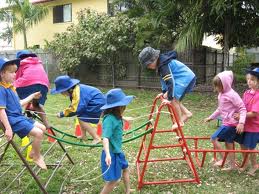
I devise a simple obstacle course using whatever playground equipment the school has.  Slides, monkey bars, polls, ladders and bridges are all useful.  The obstacle course doesn’t need to be intricate, long or complex.  Students should be able to finish it within half a minute maximum.

I take the students out to the playground.  They have no idea what we are doing.  They may ask me, but my reply is “You’ll see.”  The reason why I don’t tell them it’s a maths lesson is because maths has a stigma, and just the mention of it will deflate some students’ expectations.

Usually outdoor lessons require pencils, worksheets and clipboards.  The students are relieved when they find out that none of these implements are required.

With the students congregating around the playground equipment, I tell them that they are going to be doing an obstacle course.  I show them the route they need to take and tell them that each individual will be timed while doing the course.  Each student gets one attempt only, with their personal time written down.  On completion, I order the times privately while the students get a drink of water.

Only the 5 quickest times are read out, so as not to upset or demoralise any of the slower performing students.  Of course, if other students request to know their time, I tell them.  At this point we walk back to the classroom.

On arrival, I write the times in random order on the board.  Using the times, students will take part in some of the activities below, depending on their age and maths proficiency:

Activity 1:  Order the times from quickest to slowest;

Activity 2:   Round the times to the nearest second, tenth of a second etc;

Activity 3:  Work out the total time taken cumulatively over the entire class;

Activity 4:  Work out the average time for the entire class;

Activity 5: Chart the times using Excel and create a chart such as a column graph which presents the data in graphical form; and

Activity 5: Students estimate what time they think they would get should they be given a second attempt.  They will also be asked to give reasons for their answer (e.g. it could be faster the second time around due to a greater awareness of the route, or an improved strategy, yet it could be slower due to fatigue or the pressure to perform).

Even though the main chunk of the lesson is spent doing something that can hardly be called maths, it serves as a basis for engaging the students.  The skills covered in the lesson include measuring time, adding decimals, ordering number, rounding, IT, graphing, averaging and predicting.

It’s a great feeling watching the students get a shock when they find out that the PE lesson they thought they were taking part in, ends up being referred to as a maths lesson.

And ultimately, that’s the point.  Maths is in everything – even the things that give the students pleasure.

Making Maths Fun is Not Mission Impossible

February 2, 2011


I’m no teaching guru – just an ordinary teacher that loves his job. I am a primary level generalist teacher, which means I teach all major subjects such as Maths, English, Social Studies and Science. As much as I love teaching all subjects, I find Maths most exciting.

Is it because I have a background in Maths? Absolutely not. I have an Arts degree.

Is it because I am good at Maths? On the contrary. As a student I would frustrate my teachers no end. As a kid, I had as much chance of passing a maths test as Homer Simpson has of suffering from dandruff!

The reason I love teaching maths is that I find it an untapped and underrated subject for injecting creativity and role-play. Last week I wrote about how primary teachers often struggle to teach maths, as they mostly come from a humanities background.

Commenting on that post, loyal reader and frequent contributor Margaret Reyes Dempsey, wrote, “I’d love to read a post about some of the ways you approach math in the classroom.”

Every week I will endeavour to describe an innovative Maths lesson I have concocted.


Lesson 1: Mission Impossible Maths (Place Value)

I get the students to bring a pair of sunglasses to school for homework. The students invariably ask me what the glasses are for. I tell them it’s a surprise. They automatically think science, perhaps an activity out in the sun. The truth is, the sunglasses are nearly irrelevant, only there to raise curiosity and engagement.

On the day of the lesson I take the kids to our small but homely hall. I carry a briefcase and have on my own pair of “spy” glasses. The kids have no idea what is in the briefcase, and have no clue what is happening. I sit them down on the floor and tell them that there is a problem. There is a mansion close by. In that mansion there is a suitcase. In the suitcase there is a key. The key, in the hands of evil would change the world as we know it. It would give them the power to ban all music except for the golden oldies and make sure that nothing but news is on TV. The kids groan at the prospect. Lucky you are here, I tell them. You are the best spies in the world, and your mission is to break in to the mansion and get the key before they do. I call their names out, adding their secret spy name e.g. Sammy “The Drummer” Smith. The spy name is just another opportunity for me to connect with the interests and skills of my students. I split them into groups based on ability, as the lesson will involve maths problems ranging from basic to more complex.
I take them outside and show what they have to do to break into the mansion. I show them the slide which I call “The Tunnel of Terror.” Getting through the tunnel will be tricky, as a wrong turn would send out the crocodiles. To get through the tunnel without being eaten, group 1 has to work together to order a sheet of 5 digit numbers from lowest to highest number.

I then take the class to the school door, or “Dynamite Door”. To gain access to the mansion, Group 2 has to order a sheet of 5-digit numbers, this time from highest to lowest, otherwise the door will explode.

I show the class the door that leads to the hall, or as I call it “The DNA door.” To gain access to the room in which the suitcase is kept, Group 3 has to bypass the special DNA sensitive handle. To do that, they are given 6-digit numbers to order.

Group 4 has to get past the infra red sensors to get to the suitcase. This involves making as many 4-digit numbers from, for example, 4, 3, 1, 8. Once they have gotten past all 4 obstacles they will face one more test (to be revealed at the time) before being able to open the briefcase. They are told they have 45 minutes and the time starts now …
I distribute the sheets to each group, watching them feverishly try to solve the problems without making a mistake. Each group appoints a checker, to check for a careless error that would complicate this dangerous mission. If a group finishes early, they are quiet, because they rely on the proficiency of the other groups. When all groups are done we go back to the slide. The clock is still running.

The first member of group 1 reads the first part of the answer and when I confirm that it’s right goes down the slide. The other members do the same until they have all slid down the slide. Members of group 2 read out their answers. On getting the right answer each member is allowed access through the door until they are all inside the building. The same for Group 3 with their door and Group 4 with the sensors.

The final challenge involves a representative from each group stepping forward to help break the suitcase code. I tell the 4 representatives that the code number is between 3,500 and 3,600, and they have to guess it right. All I can tell them is whether their guess is higher, lower or spot on.

Once the final code has been broken, the person that correctly broke it gets to open the case and take out the key. They usually get the key with only a few minutes left to spare. You should see the cheers and hugs that come about from unearthing the key. It is such a great bonding experience.

I do this lesson in the second week of the school year. At that stage my students almost uniformly claim they hate maths with a passion. It is only after the lesson that I spill the beans that they had just taken part in a maths activity. In reality, it was nothing more than a set of dry worksheets with a bit of imagination and wackiness added on.

If you feel that this lesson would be suitable for your kids, I’d love to know how it goes.