It is disgusting how some sections of society treat overweight kids. As if the stigma of being overweight in a “body beautiful” obsessed world isn’t hard enough. I am sick to death of reading negative ideas when trying to solve childhood obesity. The latest negative idea, which seeks to reward slim kids by giving them extra marks for no other reason than their body mass index readings, not only compromises the fairness of the exam process but makes children already suffering from feeling neglected and judged, feel like dirt.
Pierre Dukan, the nutritionist behind the popular but controversial Dukan diet, has suggested that France tackle child obesity by giving extra exam marks for slimness.
Dukan, who has sold 8 million copies of his diet book worldwide, made the proposal in a 250-page book called ‘An Open Letter to the Future President’, which he sent out on Tuesday to 16 candidates for France’s presidential election.
The plan calls for high school students to be allowed to take a so-called “ideal weight” option in their final year exams, the “baccalaureat”, under which they would earn extra points if they kept a body mass index (BMI) of between 18 and 25.
Those already overweight at the start of the two-year course would score double points if they managed to slim down over a period of two years.
“It’s a fantastic motivator,” Dukan told Reuters.
When we even consider adopting methods like Dukan’s we do a monumental disservice to kids struggling with their weight. These kids are often well-mannered, generous, talented and caring individuals. These are traits we should be focussing on, not weight! You will never see a suggestion that caring, empathetic, selfless and considerate kids get extra marks. These qualities pale into insignificance compared to a person’s weight.
When we employ negative inducements to entice children to lose weight, we not only make it harder for them to succeed but we also make them feel not good enough.
My view (as espoused in my novel) is that whilst I hope our overweight children are successful in losing their excess kilos, either way, let’s not let weight distract us from the qualities and unique characteristics of the person.
Whilst childhood obesity isn’t ideal, ignoring who the child is and concentrating on how much they weigh, is infinitely worse.
Excessive video game use and high rates of video game addiction lead to much anguish from concerned parents. Many parents never saw the addictive pull of video games as an issue when they bought consoles for their kids or allowed them to have a computer in their bedrooms. I read a very interesting piece by writer, Scott Steinberg, on the major issues relating to children and video games.
– Amount of Play Time
– Age Appropriateness
– Health and Obesity
– Addiction
– Safety Concerns
– Violence, Aggression and Misbehavior
The issue of particular interest to me was the video game addiction section. Video game addiction is not a term we hear very often, but I’m afraid it will be widely familiar in the next few years.
Addiction– For some kids, there is a real danger of becoming too involved in playing games, or even in living too much of their lives in the virtual world of the Internet. In rare cases, true symptoms of addiction can develop, and such kids can require direct help from their parents, peers, and professionals to have a healthy, balanced life. While a change of environment and routine can sometimes be enough to break kids out of an addictive mindset, the reality is that it’s hard to prohibit kids from using technology on a regular basis, since it’s such an integral part of daily life. Many experts encourage parents to become more engaged in the addictive activity in an effort to better understand the problem and prospective solutions. They also encourage families to seek out professional help should children exhibit warning signs of addiction. Several of these warning signs, according to the Search Institute, an independent non-profit organization dedicated to creating healthy communities, and other sources, include:
Playing for increasing amounts of time
Lying to family and friends about video game usage
Thinking about gaming during other activities
Using video games to escape from real-life problems or bad feelings, as well as anxiety or depression
Becoming restless or irritable when attempting to stop playing video games
Skipping homework in order to play video games
Doing poorly on a school assignment or test because of time spent playing video games
I urge parents to spot the signs before the addiction gets completely out of hand. It may even be worth reading Mr. Steinberg’s book, “The Modern Parent’s Guide to Kids and Video Games,” which will be free to download at www.ParentsGuideBooks.com in February 2012.
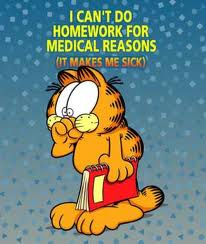
I was once strongly opposed to homework, but I have since softened my approach. It’s not that I believe homework is a good thing, it’s just that I have observed what children do withn the extra time and I can’t say it’s productive. Quite apart from playing in the backyard or walking the dog, kids are more likely to spend their waking hours on the computer or watching television.
Whilst experts believe abolishing homework will free up time for healthy activities, the truth is that it will only result in more time in front of a screen.
CHILDREN are spending too much time “sitting around”, looking at screens and doing homework, when they should be outside playing.
New Deakin University research suggests parents should encourage children to play the old-fashioned way outside with mates rather than nagging them to complete homework or allowing them to watch TV or use computers, the Geelong Advertiser reports.
Associate head of research at Deakin’s School of Exercise and Nutrition Sciences, Professor Jo Salmon, yesterday said pushing kids outdoors to play would help improve the health and happiness of children.
Parents needed to set rules around the amount of screen time children were allowed every day, and enforce a limit of two hours in total, Professor Salmon said.
They should also try not to place too much academic pressure on their kids and recognise that playing outside and being active was probably better for children than sitting inside practising spelling or sums.
While previous generations of children would come home from school, have a quick snack and then head straight outside to play until dinner time, most children now came home from school and propped on the couch, their bed or at a desk, she said.
Recently named one Australia’s top child health researchers by the National Health and Medical Research Council, Professor Salmon said while she was an optimist by nature, she was concerned for the future health of Australian children.
I was once an optimist too. I hoped that instead of homework, my students could help wash dishes or take on some other household duties. I hoped they could go to the library and borrow books. But that is not what happens in reality.
So I am now faced with a choice. Do I prescribe homework that serves as revision for skills taught during the week in class or do I just let them use the extra time for more television and video games?
I got this helpful and informative list from BullyingUK:
Signs to watch out for… You may be unsure if your child is being bullied. If you suspect that he or she is then look out for signs of bullying.
They may include the following:
bruises
broken or missing possessions
your child is withdrawn
changes in eating habits
sleeping badly
complaints of headaches or stomach aches
bedwetting
worrying about going to school.
But there could be other reasons for these symptoms, so try to avoid jumping to conclusions. Ask yourself the following questions:
Is there anything else bothering your child?
Have there been changes in your family like a new baby, or divorce or separation?
These are signs that both teachers and parents must learn to detect and follow-up on. A child can turn from open and honest about things that are bothering them, to closed and insular very quickly. The best course of action is to take an interest, be supportive and when the symptoms are there, be proactive.
I am not one to use therm “addiction” lightly. Many would dismiss video game addiction as merely a bad habit or a product of an anti-scocial personality, but it is very real.
Video game addiction can take over a child’s life and deeply affect their relationships, schoolwork and daily routine. With role-playing games such as World of Warcraft now in vogue, the video game addiction has become far more serious. Because these games have no designated end point, the game goes on indefinitely. This means that kids struggle to put the controller down in order to eat, sleep or even go to the toilet!
In fact, in 2007, a Harris poll found that 8.5% of youths between the ages of 8 – 18 in the United States could be classified as video game addicts.
“The excitement, the thrill and the challenge, for some people gets greater and greater, and then it takes on a life of its own.” Dr. Anna Bacher, a therapist in Sarasota, treats patients with addictions — including those who have a hard time putting down the controller. “It can go to the extreme, where they stop sleeping, they stop eating, the person becomes irritable, lethargic, depressed, highly anxious and very difficult to be around.”
It is absolutely essential that parents are aware of the consequences of an addicted child before the odd game of World of Warcraft and games of its type, become an obsession. Parents should not feel that copious hours in front of the computer amounts to innocent fun.
Yes, gaming addiction is better than drugs. But not as much as some parents may think.
How bad do you have to be as a parent to even entertain trying to get a hold of a lollypop laced with the chicken pox disease? What in the world is going on with some parents nowadays?
A federal prosecutor is warning parents against trading chicken pox-laced lollipops by mail in what authorities describe as misguided attempts to expose their children to the virus to build immunity later in life.
The warning came after media reports surfaced about a multi-state ring of parents, wary of vaccinations that prevent the disease, who were swapping lollipops licked by a sick child in a modern day incarnation of a chicken pox party.
In those so-called parties, parents purposely put sick children together with healthy children in order to spread the ailment and build immunity without having the children vaccinated. This new form of party shares the disease anonymously and long-distance.
“Sending a virus or disease through the U.S. mail (and private carriers) is illegal. It doesn’t matter if it crosses state lines,” said David Boling, public information officer for the Attorney in Nashville.
“Also, it is against federal law to adulterate or tamper with consumer products, such as candy.”
The “Pox Parties” are a sick invention. To purposely drag your child to a party of strangers suffering a contagious disease in the hope your child gets it too, is unfathomable if not downright dangerous.
But this lollipop idea is even more demented!
Parents that want to infect their kids with chicken pox so much that they are willing to buy lollipops licked by a sick child, have got to be sick themselves.
Perhaps they have already bought and tried lollipops laced with a cocktail of stupidity and foolishness, which have been licked by a host of hopeless parents.
We all love our internet connections and mobile phones and would find it extremely difficult to live without them. However, addictions are still addictions, and there is no doubt that our children have grown a deep addiction to the internet. So bad is the problem, that children have become more addicted to the internet than to TV:
Just 18% of children would miss TV most, compared to mobile (28%) and Internet (25%), finds Ofcom research
A new research by communications watchdog Ofcom has revealed that more young British teenagers can do without TV but not without mobile and the Internet.
Ofcom research found that just 18% of children aged 12 to 15 would miss TV most, compared to mobile (28%) and the Internet (25%). However, the research suggests that the teenagers are also watching more TV than ever before, with viewing figures increasing by 2 hours since 2007.
In 2010, children aged 4-15 watched an average of 17 hours and 34 minutes of TV per week, compared with 15 hours and 37 minutes in 2007. Nearly one third (31%) of children aged 5-15 who use the Internet are watching TV via an online catch-up service such as the BBC iPlayer or ITV Player, said Ofcom.
Ofcom’s research said that 95% of 12-15 year olds now have Internet access at home through a PC or laptop, up from 89% in 2010 and 77% in 2007.
Social networking is still one of the most popular uses of the Internet amongst 12-15s. Ofcom said that children are visiting social network sites more often on their mobiles. Half (50%) of 12-15s with a smartphone visit them weekly compared with 33% in 2010.
Children aged between 8-11 are more likely to use Internet for gaming, with 51% saying they play games online on a weekly basis, up from 44% in 2010. 8-11s are also spending more time playing on games players/ consoles compared with 2010 (9 hours 48 minutes – an increase of nearly 2 hours), said Ofcom.
In my school days television addiction was a problem. Now we have another addiction which comes with the same side-effects. It creates tired students who have been up so late they can’t concentrate. It has compromised our children’s capacity to have healthy social interaction. Playing with a friend has now become messaging a friend. It’s just not the same.
As soon as people go from the moderate to the obsessive, they lose control of themselves. Children today are certainly showing the signs of a lack of control, to the point where they are smuggling mobiles in their bags so they can reply to Facebook messages as soon as they receive them.
Kids require rules for their internet usage. Rules that outline when, how and where they can use it.
You have got to be kidding me! How can so-called intelligent adults pass a law so downright cruel? Sometimes I think adults take advantage of the resilience of children. They think they can impose great humiliation on poor, naive children, without any long-term cost.
Well I have news for you – children, like adults, don’t like being made to feel ugly, different or unworthy. So why on earth would you pass a law that mandates schools to weigh children so that their weight can be compared with others?
A state law requiring schools to measure a child’s height and weight to find out how they stack up against their peers has generated plenty of controversy, but not a lot of local participation.
School officials say the law’s aim to combat childhood obesity is a worthy cause, but its approach is questionable.
The law measures body mass index, which is calculated from height and weight and given as a percentile. It’s generally a snapshot of a person’s overall body fat, but many argue it doesn’t take into account individual body types or other health risks.
Schools are required to take those measurements for students in kindergarten, third, fifth and ninth grades, then report that data to the Ohio Department of Health and mail the results to parents.
State education officials say similar health screenings, such as hearing and vision tests, have been done for many years with the results kept private.
What if the law was to include Ohio politicians? What if they were forced to step on the scale in front of their peers and were measured for all to see?
Yes, privacy might be assured, but children aren’t stupid. They know why they are being measured, and the humiliation of the procedure will not be lost on the overweight.
This plan is doomed to failure.
My wish, as idealistic as it sounds, is to make our children comfortable with who they are, regardless of their weight. Whilst I strongly advocate educating children about healthy eating choices and encouraging active lifestyles, I am even more concerned about the inner wellbeing of the child. To me, the tragedy is not that there are obese children, but that there are children who feel unworthy, ugly and hopeless because of their weight.
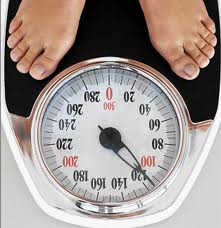
It’s time to get rid of the scales and let our children know that their worth is not the sum total of what they weigh, but rather, who they are and how they treat others.
Whilst I don’t for a second advocate giving coffee to a child, I applaud Christie Haskel for trying to find an alternative to the drugs doctors prescribe. As I was watching the abc report on this mother I felt like the reporter was trying to manipulate me into thinking that this woman acted irresponsibly and recklessly by treating her child without consulting a doctor.
But I didn’t fall for the manipulation. Good on her for resisting Ritalin. She has every right to find an alternative to a drug many parents are weary of. Below are some issues I had with the reporting of this story.
1. The story quotes that “experts say there is no proof it works.”
Well actually I am of the opinion that if it works for some people, as it has worked for this mother it “can” work. No more proof required.
2. The piece lists the “potentially dangerous side-effects of caffeine.”
A meta analysis of the literature concluded that methylphenidate quickly and effectively reduces the signs and symptoms of ADHD in children under the age of 18 in the short term but found that this conclusion may be biased due to the high number of low quality clinical trials in the literature. There have been no placebo controlled trials investigating the long term effectiveness of methylphenidate beyond 4 weeks thus the long term effectiveness of methylphenidate has not been scientifically demonstrated. Serious concerns of publication bias regarding the use of methylphenidate for ADHD has also been noted. A diagnosis of ADHD must be confirmed and the benefits and risks and proper use of stimulants as well as alternative treatments should be discussed with the parent before stimulants are prescribed.
4. The question is asked how does the mother know that by solving this one problem she isn’t creating several new ones:
It was documented in 2000, by Zito “that at least 1.5% of children between the ages of two and four are medicated with stimulants, anti-depressants and anti-psychotic drugs, despite the paucity of controlled scientific trials confirming safety and long-term effects with preschool children.”
It is ludicrous to attack a mother for trying to find alternatives to a drug that comes with known side-effects, has stark similarities to cocaine and amphetamines and hasn’t convincingly proven the case against dependency or long-term side-effects.
Coffee isn’t something you’d want to be giving a child but neither is Ritalin. I know which one I would rather give my child.
There is no doubt that social workers are unheralded and deserve much credit for the work that they do. But having said that, I can’t hide my displeasure at their willingness to break up families in the name of raising thinner kids.
It bothers me that people think they know what is best for someone elses children. It disturbs me that people can justify taking children from their flawed but loving parents and subject them to foster homes and estrangement from their flesh and blood all in the name of helping them to lose weight.
What about what the children want? Has it ever occurred to them that some children are prepared to deal with the consequences of being severely overweight if it means they can remain with their parents? Since when did physically healthy foster kids have it much better than obese kids enjoying the closeness of their parents and siblings?
And don’t tell me that parents that raise obese kids are ‘cruel’. Yes, they have made poor parental decisions and yes their poor decisions may have all kinds of serious consequences for their kids. But parenting, like weight loss, is not an easy job. It is unfair to taint parents as ‘cruel’ and ‘unfit to parent’ just because they are not succeeding in breaking bad habits. No parents wants to see their child suffer. Some just need a lot more support than others to break bad habits.
Four obese children are on the brink of being permanently removed from their family by social workers after their parents failed to bring their weight under control.
In the first case of its kind, their mother and father now face what they call the ‘unbearable’ likelihood of never seeing them again.
Their three daughters, aged 11, seven and one, and five-year-old son, will either be ‘fostered without contact’ or adopted.
Either way, the family’s only hope of being reunited will be if the children attempt to track down their parents when they become adults.
In an emotional interview, the 42-year-old mother said: ‘We might not be the perfect parents, but we love our children with all our hearts. To face a future where we will never see them again is unbearable.
‘They picked on us because of our size to start with and they just haven’t let go, despite the fact we’ve done everything to lose weight and meet their demands. We’re going to fight this to the bitter end. It feels like even prisoners have more human rights than we do.’
The bullying and stand over tactics by the social workers and courts were deplorable. Making them send their kids to dance and sport lessons is not sensible at all. Why wouldn’t the courts give the children a say about whether or not they wanted to go to dance and football? Ask a young girl suffering from obesity whether or not she would take up dancing, she would invariably say, “Over my dead body.” Clocking in and out to satisfy court imposed curfews and having social workers stand in corners taking notes at dinnertime just added to the lunacy.
Society is too harsh on parents. Parenting is a difficult job. Instead of judging or punishing parents for bad choices, would it be too much trouble to offer real support and encouragement? Has this couple ever once been offered free appointments with dieticians or councillors?
Soon we are going to get to the stage where it is socially acceptable to classify any parent with even a slightly overweight child as a reckless and sub-standard parent.









 Topical Teaching