Posts Tagged ‘food’

Brilliant Intiative for Supporting Hungry Students

October 29, 2012


What a fabulous idea. I hope this initiative takes off:

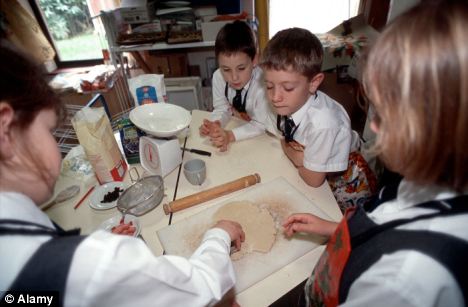
Hungry children from families too poor to eat are being taught cookery at school on Fridays so they have food to take home for the weekend.

Shocking figures have also revealed the number of Britons relying on emergency food handouts has soared to record levels – with charities warning the grim situation is going to get worse.

One in seven children regularly go without a hot meal, according to the Unite union, and in Bradford, West Yorkshire, a handful of schools are getting pupils to cook a high-carbohydrate, nutritious meal before heading home for the weekends.

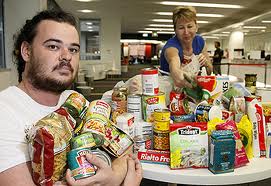
The Trussell Trust, which runs a nationwide network of 270 foodbanks, said nearly 110,000 people turned to it for help between April and September – compared to 128,697 over the last financial year.

The organisation is expecting to feed more than 200,000 hungry mouths by the end of this financial year, with food prices likely to rise further and fuel bills increase by nearly 10%.

Kids Deserve Some Credit for their Dietry Choices

September 5, 2012


There is a misnomer that children today eat worse today than than ever before. This is not my experience.

For starters, in my day it was unheard of for children to be drinking water of their own volition. It was always juice or soft drink. Water was for post sport hydration only. Children today happily drink water. My students are forever filling up their drink bottles. In my day drink bottles were for fitting on your bicycles for long rides in the summer time.

I only seldomly ate vegetables on their own. My vegies needed to be cooked, flavoured and magically reinvented before I would eat them. The thought of opening my lunch box and finding a container full of celery sticks was not something I wished to contemplate. Children today are only too happy to snack on carrot sticks and apple pieces. If you put a fruit and vegetable tray in front of 10-years-olds, you’d better have another tray in reserve. They would finish the contents in no time.

The key difference between then and know is exercise. I played on the street with my neighbours after school. My parents didn’t need to supervise. In those days kids were allowed to play outside without it being seen as dangerous or an example of poor parenting.

School cafeteria regulations and lunch policies can be extremely inflexible on our children. Sometimes I look at the example of our generation and wonder if we are not a bunch of hypocrites. Whilst teachers and office workers leave the premises to get a fast food option for lunch, children are left to eat food our generation would of refused to eat.

Whilst our kids are making the progress, many of us continue to indulge. Take this silly article for example:

Could you consume a giant burger comprising three beef patties, six bacon rashers, six slices of cheese and pulled pork in just 10 minutes?

This is exactly what one restaurant in London is challenging its diners to do.

At eight inches high, this gigantic burger is a real contender for the title of the UK’s tallest burger.

Weighing in with a gut-busting 3,000 calories – more than an entire daily intake of calories for a man – the burger is being sold as part of an eating challenge at the at the Red Dog Saloon in Hoxton.

To take part in the challenge, contestants in the Devastator Burge Challenge must eat the entire burger, with accompanying fries and milkshake in under ten minutes.

Those who manage to defeat the burger earn their photo on the wall of fame behind the restaurant’s bar area.

Not surprisingly, the challenge has taken down many of those who dare to take it on – just 5 per cent of people who attempted it have succeeded. Incredibly, one challenger managed to complete the entire meal in just six minutes.

There is no doubt that our children could improve their diet choices and become a lot more active. But considering the role-models we have out there, our kids are doing far better than the media has us believe.

Click on the link to read my post on A Long School Day With No Time to Eat

Click on the link to read my post on 6 Strategies for Promoting Healthy Food to Kids.

Click on the link to read 5 Ways to Get Kids Active

Click on the link to read Food Giants Marketing Unhealthy Kids Foods as Healthy

Click on the link to read Good Heavens! It’s the Lunch Box Police!


Popcorn Linked With Alheimer’s

August 9, 2012

Looks like the calories in movie popcorn isn’t the only reason to consider passing on the traditional cinema treat:

Movie popcorn has often been criticized for its high calorie count, but now the tasty treat may harm more than just your waistline.

A recent study has found that diacetyl, an ingredient in popcorn responsible for its buttery flavor and smell, may be linked to Alzheimer’s disease, UPI.com reported.

The scientists said they focused on the substance, because it has already been associated with respiratory and other health issues in workers at microwave popcorn and food-flavoring factories.  According to UPI.com, diacetyl is used in other products such as margarines, snacks and candies, baked goods and in some beers and chardonnay wine.

Click on the link to read The School Campaign Against Milk

Click on the link to read Teachers Should Stop Blaming Parents and Start Acting

Click on the link to read The Benefits of Reality TV on Kids

Click on the link to read Study Reveals Children Aren’t Selfish After All

6 Strategies for Promoting Healthy Food to Kids

April 19, 2012


It is very difficult task to ensure that your child is eating the right foods and is not overdosing on unhealthy, preservative ridden rubbish. It can make me feel quite despondent when my daughter’s lunchbox comes back with the chopped up vegetables and apple untouched.

I appreciated reading Casey Seidenberg’s tips for helping kids have a heathy relationship with food:

1 Food, especially unhealthful food, shouldn’t be used as a reward. The common incentive used by parents “Eat your vegetables so you can have dessert” clearly communicates to children that vegetables are to be avoided and desserts are to be desired.

2 Food should not be used as a punishment either. Taking away dessert as discipline teaches kids that dessert is the prize.

3 Labeling a food as “bad” can cause children to feel guilty or bad themselves when they eat it. Instead label unhealthful foods “sometimes foods,” as they really are the foods we should eat only sometimes.

4 Unhealthful foods shouldn’t be labeled “treats” either. Wouldn’t it be great if our kids perceived a delicious ripe peach or a slice of summer watermelon as a treat?

5 A child forced to eat may not learn what it feels like to be hungry or full, or how to listen to his body. Sometimes kids are not hungry. That’s okay. Don’t then force them to eat five more bites.

6 Teaching children that a holiday or celebration is about spending time with friends, participating in a fun activity or being active together, instead of simply consuming a lot of food and drink, is an important message. When our kids are teenagers and win a sports championship, or when they are adults and receive a promotion, we hope they will understand that celebrating does not need to be focused on excessive consumption of food and drink.

So as much as I’d love to tell my children that they should never eat at McDonald’s and always refuse soda and fluorescent food products, that’s not a healthy message. And knowing most kids, it might make them more determined to get their paws on those forbidden fruits!

So what is the right message to our kids?

The right message is that certain foods nourish our bodies, make us strong and help us feel good. We should fill our bodies with those foods when we are hungry at a meal. Other foods don’t do those wonderful things for us, so we should eat them on occasion. All food should be enjoyed.

Then, if you are like me, hide your grimaced face and keep your mouth shut when they dive into those Spider-Man snacks because “sometimes foods” are absolutely okay sometimes.

Seidenberg is the co-founder of Nourish Schools, a D.C.-based nutrition education company.

How to Get Kids to Eat From Their Packed Lunch

January 26, 2012

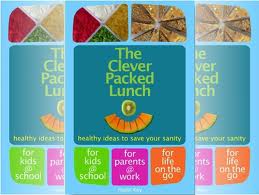
Hazel Keys, the author of The Clever Packed Lunch has come up with a system for getting kids to eat the contents of their lunchbox.

Below is a portion of an interview of Ms. Keys conducted by the Courier Mail:

Q: You’ve run a tuckshop – what’s your take on ensuring kids leave home each day with a properly packed lunchbox?

 A: It’s essential. A healthy nutritious lunch supports learning by allowing children to settle, focus and learn. Processed, refined and sugary foods have been shown to do the opposite.

Q: What motivated you to write The Clever Packed Lunch?
A: My many years of parenting and preparing school lunches resulted a system that I felt could benefit families and I wanted to share that.

Q: What are your three top tips when it comes to creating great packed school lunches?
1. Involve your kids in the preparation; listen to them and try to accommodate their preferences within the guidelines of health and balance.
2. Include plenty of fresh fruit and vegetables, preferably choosing in-season varieties.
3. Choose “whole” foods and ingredients that are as close to their natural state as possible, like seeds and whole grains.

Q: You suggest parents should try to get their children actively involved in making lunchbox choices – what are the benefits?
A: This is a great way to achieve a number of goals, so that:
• children feel empowered
• they’re far more likely to eat their lunch
• they’ll learn how to cook and feed themselves healthily in the process.

Q: Can you give us an example of a delicious and balanced lunchbox that could turn fussy eaters into fans?
A: Kids are attracted to “fast” food, there’s no doubt, and in my experience they love pizza. Pizza can definitely be healthy as long as you use quality ingredients like (some) wholemeal flour, olive oil and organic tomatoes. I serve it with salad, or the mixed potato wedges recipe from the book, which uses sweet potato, a highly nutritious food. And then there’s my healthy chocolate cake recipe!

Q: It’s Sunday night and the fridge is looking bare any lunch items that can be made up from simple pantry staples?
A: Yes! I always keep small tins of prepared salmon in the pantry, along with dried egg (not wheat) noodles, and frozen vegetables like corn and peas. The other items I always have on hand are a wide range of seeds. The noodles, once cooked, can be combined with the salmon, veggies and some sesame seeds, perhaps with a little sesame oil.

Q: Top three sandwich combos?
A: Ooh, yes! For kids I find the following are popular:
– sliced turkey breast, cranberry sauce and sliced green apple
– salmon, chopped gherkin, egg mayonnaise and cucumber
– grated cheddar, creamed corn and diced red capsicum toasted

Q: We automatically think of sandwiches when it comes to packed lunches? Can you suggest three options we could consider instead?
A: Yes, I’ve a recipe in the book I call “Sleeping Dogs”, which is a healthy version of hot dogs or sausage rolls. Home-made dips with wholegrain rice crackers or pappadams are a nutritious gluten-free choice. And my personal favourite, also from the book; the creamed corn puddings, which are rich in eggs and served with sour cream and guacamole. Yummy!

Q: How important is it to include a treat?
A: I think it’s important not to give “treat” foods too much attention, but to demonstrate flexibility by including them now and again, although not in the lunchbox unless the food has a nutritional benefit, like quality dark chocolate. That’s a real win-win treat!

Q: You suggest doubling up lunch box prep with dinner – can you give us a couple of examples to get us thinking on the right lines?
A: When making meatballs I double the quantity and shape some into patties instead. I serve them for dinner in a wholemeal or multi-grain roll with lots of salad. And when I make chicken and corn soup, I add the uncooked chicken to the stock. Chicken cooked this way is both moist and tender and adds flavour to the soup. So I often double the amount of chicken, and once cooked, remove half. Then I freeze it and use it for Asian dishes another day.

Q: What do you think are the main issues facing families in relation to providing healthy lunches for children at school, and what solutions can you offer?
A: It seems to me that families are finding themselves over-stretched, and lacking the time and money to provide really nutritious lunches. I’m convinced that this is contributing to the growing issue of child obesity. My answer is to move away from packaged and processed foods and choose fresh, simple, high quality foods instead. So much of our money goes straight into the bin wasted on fancy packaging and clever marketing, and the ingredients are often inferior. Feeding ourselves properly takes a little effort, but it’s absolutely worth it. Good food, like charity begins at home and offers an opportunity to develop in your children healthy eating habits that will last a lifetime. It’s one of the greatest gifts you can give them. And there are clever systems that can make the process fast and efficient too, such as the one outlined in my book.


The author can be contacted at hazel@lunchideasforschool.com
Introducing the Candy Diet!

June 30, 2011

Feeling guilty about the amount of candy you allow your children to eat?  Not anymore.  If anything, you aren’t feeding them enough!

Or, at least that’s what the research seems to suggest ….

Indulging a sweet tooth might not be anyone’s idea of a good weight-loss strategy. But in jaw-dropping new research, scientists say they’ve found something even more likely to be associated with unwanted weight gain in children and adolescents than eating candy:

Not eating candy.

For the study, published in Food & Nutrition Research, researchers at Louisiana State University tracked the health of more than 11,000 youngsters between the ages of two and 18 from 1999 to 2004. They found that children who ate sweets were 22 percent less likely to be overweight or obese than kids who shunned sweets. Adolescents? Those who ate candy were 26 percent less likely to be overweight or obese than their non-candy-eating counterparts.

And that wasn’t the only surprising finding. Researchers also found that the blood of candy-eating kids had lower levels of C-reactive protein. That’s a marker of inflammation in the body and a risk factor for cardiovascular disease and other chronic illnesses.

Who funds this research?  Could somebody please do a study that links the watching of televised sport to greater physical health?  I could do with some scientific evidence to persuade my wife that I’m not wasting my time

Poor Children Coming to School Tired and Hungry

April 15, 2011

This is a universal problem that requires a lot more attention.  Teachers are not given enough credit for their role in supporting kids that come to school with inadequate food or no lunch at all.  It is not widely known that teachers often spend out of their own pocket to ensure that their poorer students have what to eat.  But the problem still exists, and it must be addressed.

A concerted campaign from schools by working with charity groups to ensure that meals are provided for students of poor families should ensure that heartbreaking articles like this one will be a thing of the past:

Teachers are reporting a rise in pupils entering the classroom feeling tired, hungry and dressed in worn-out clothes.

A study by the Association of Teachers and Lecturers found almost eight-in-10 staff had pupils living below the poverty line and a quarter believed numbers had increased since the start of the recession.

One teacher from Nottingham told of a sixth-former who had not eaten for three days as her “mother had no money at all until pay day”.

A teaching assistant from a West Midlands comprehensive told researchers that some pupils had “infected toes due to feet squashed into shoes way too small”, while another member from Halifax reported a boy who was ridiculed in the PE changing room because his family could not afford to buy him any underpants.

Some teachers told how pupils were consistently late for lessons as parents could not cover the bus fare to school. Other children from middle to lower income families have been forced to cut out school tips because money is so tight, it was claimed.

The disclosure follows the publication of figures showing a rise in the number of pupils eligible for free school meals as families struggle to stay above the breadline in the recession.

Almost 1.2 million five- to 16-year-olds claimed free lunches last year – a rise of more than 83,000 in just 12 months.

Mary Bousted, ATL general secretary, claimed that problems would escalate further because of Government funding cuts – putting the Coalition’s social mobility drive in jeopardy.

“It is appalling that in 2011 so many children in the UK are severely disadvantaged by their circumstances and fail to achieve their potential,” she said.

“What message does this government think it is sending young people when it is cutting funding for Sure Start centres, cutting the Education Maintenance Allowance, raising tuition fees and making it harder for local authorities to provide health and social services.

“The Government should forget empty rhetoric about social mobility and concentrate on tackling the causes of deprivation and barriers to attainment that lock so many young people into a cycle of poverty.”

It is time that we made the most crucial issues in education our first priority and main focus.  As important as debate over class size, ICT, male teacher numbers are for improved educational outcomes, such discussion often takes over.  We need to get back to basics.  The basic requirement for a school is to look after the welfare of its students.  That makes health and bullying among the most important priorities in my book.Here’s an opportunity for schools and charity groups to work together to tackle a problem that shouldn’t even exist in the forst place.

My Take on the “Lunchbox Wars”

December 22, 2010

It is my opinion that schools not only have a right but a duty to look after the welfare of their students.  Schools are well within their rights to impose sanctions on what foods are allowed and not allowed to be included in the children’s lunch boxes.  Yes, there are those who believe that being in a free country should give parents the freedom to do as they please.  I agree with that theory in part.  I think parents should be able to feed their kids whatever they want – in their own home.  At school, there is nothing wrong with imposing restrictions on sugary foods.  On the contrary, it’s commendable.

I am writing this in defense of Clifton Park Primary School, who are embroiled in a “Lunchbox War” with some parents over such a ruling:

A LOCAL school’s decision to monitor the contents of their students’ lunchboxes has sparked heated debate within the Bunbury community.

In last week’s edition of the Bunbury Mail, the mother of a Clifton Park Primary School student was outraged to learn her five-year-old son’s lunchbox snacks were being confiscated due to their sugar content.

The Bunbury Mail office was flooded with letters and Facebook posts from residents voicing their opinion.

Joy Whysall’s letter said it was an example of the world gone crazy.

“What gives others the right to choose what we eat?” she said.

“This is a disgraceful state of affairs when a teacher can go into a child’s lunchbox and take out what they feel is unsuitable for the child.”

I am sorry to disappoint the irate parents of Bunbury, but when they send their kids to a school, they are getting a lot more than a child minding service.  We teachers not only educate your kids, but we care for them and about them.  We educators strive to give your kids a safe, positive learning environment in which they can thrive.  Instead of seeing this as a violation of privacy, see this as a show of care and dedication.

I hope this exhibition of anger does not intimidate other schools from following Clifton Park’s fine example.

A Quarter of 4-5 year-olds Obese!

December 19, 2010

Some very disturbing figures released recently in the UK show that 23.5% of four to five-year-olds are overweight or obese.

Unfortunately it only gets worse in the following years:

One in three (33.4 per cent) of children in their final year of primary school (aged 10 to 11).

In the 2009/10 reception year, 13.3 per cent of children were classed as overweight and 9.8 per cent as obese.

But in Year Six, the final year of primary school, 14.6 per cent were overweight and almost a fifth – 18.7 per cent – obese.

Slightly more boys than girls were either overweight or obese in both age groups.

It is easy to dismiss these figures as an outcome of poor parenting, but schools have the opportunity to become far more proactive.  Schools can intervene by educating both child and parent and offer healthy choices in cafeterias.

Positive Images and Our Kids

December 13, 2010

Schools must do all they can to integrate the teaching of healthy foods into their curriculums.  There is nothing more powerful for a class full of impressionable kids, than to see their friends chomping away happily on fruits or vegetables.  A program, that engages and gives kids cooking and food tasting experiences whilst also teaching them about healthy eating is pivotal to curbing morbid obesity later in life.

Whilst peer pressure is usually a negative thing, watching a classmate take part in healthy behaviour has a profoundly positive result on a child.  That’s why a program such as Food for Thought trialled in New Zealand schools looks a winner.

The initiative will see schools in the district implementing new, interactive health and nutritional education courses that aim to improve the health of the community.

Qualified nutritionists teach children the importance of a balanced diet, reading and understanding nutritional information panels and how to prepare healthy meals.

Children are given the opportunity to visit the supermarket to buy ingredients for a healthy class lunch, which they make back in the classroom.

I hope programs like this one spread universally.