Posts Tagged ‘Family’

What Are We Doing to Our Kids?

November 19, 2010

It’s unbelievable how political correctness has infiltrated our schools. The intentions may be noble, but the results are sure to be disastrous. Yesterday, I wrote of the incredibly stupid hugging ban at a Gold Coast primary school. Today, I was informed of another shocking school rule at Mt Martha’s Osbourne Primary School in Victoria.

The primary school principal of Osbourne has banned students from being in groups of more than three while at school in a radical plan to combat anti-social behaviour.

Principal Liz Klein said the ban was a short-term measure to tackle anti-social behaviour around the schoolyard.

But Ms Klein denied the school, with more than 600 students, had a bullying problem.

“This is not about bullying, it’s about silly, annoying behaviour at the hands of a select few,” Ms Klein said.

But that’s not all!  Two months ago a Queensland school principal was under pressure to perform a policy backflip after he banned students from doing cartwheels and hand stands in the playground.

This is just wrong!  School is tough enough as it is.  We should be investing more time and energy into making school a far more friendly and inviting place.  Draconian rules like these are so counter-productive.

What’s next?  Outlawing monkey bars?  Bunsen burners?  Sharp pencils?  Scissors?  Smiling?

Get a grip!  If you want to make schools safe, let go of political correctness and instead change your culture!

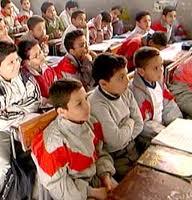
Political Correctness at School

November 18, 2010

I realise schools try to avoid controversy wherever possible, but what was William Duncan State School in Nerang doing?  Banning primary school aged kids from hugging?

Reports indicate that the children at the William Duncan State School are being punished with detention for hugging or touching their friend.

Parent Ross Kouimanis’s whose daughter Emily was given a warning for hugging her best friend calls it “Political correctness gone mad.”

”They are making something so innocent seem dirty or wrong. It’s just normal”, he said.

So what is the reason for this new policy?

Education Queensland South Coast Regional director Glen Hoppner said there was no EQ policy banning hugging in schools.

”William Duncan State School has determined that unwanted or unnecessary physical contact, which in some circumstances can include hugging, is inappropriate playground behaviour,” Mr Hoppner said.

”The school is mindful of protecting their right to not be touched in an unwanted or inappropriate way.”

Why are we making schools, which you could already mount an argument, isn’t the most natural surrounding for a child, into a cold and gloomy place?  Whilst teachers all around the world struggle to keep kids engaged, happy and motivated at school, bureacrats work hard at making school as difficult a proposition for our children as possible.

School should be as fun and exciting as possible.  We should focus our students to get on, co-operate, care for each other and thrive.

Less rules!  Less political correctness!

Nurturing the Inquiring Mind

November 16, 2010

One of the most important contributions a teacher can make to their students is the ability to get them to think for themselves.  Essentially that involves giving them the tools to ask the important questions and make their own conclusions.  Just simply filling students up with facts is hardly good enough.  For our students to thrive we have to nurture their inquiring minds.

Academy-award-winning film producer Lord David Puttnam is now a member of the British House of Lords, whose policy focus is on improving education standards.  In a recent television interview, Lord Puttnam called for teachers to make inquiry in the classroom a priority.

“The most important thing I think teachers can do for young people is to make them inquiring, is to ensure that they know how to gather information, that they check information and they take their information from a multiplicity of sources.

If you can get a child to do that and then become interested in the whole process of information gathering, you’re halfway towards becoming a learner. And once you’re a learner, you’re a learner for life. That’s certainly been my experience.”

It’s certainly something to consider when reflecting about how well we are teaching our kids.

Girls and Maths

November 15, 2010

At a time when so much time and effort is exerted into getting better academic results from the boys, I wonder if we’re doing enough, if anything at all, to make maths more appealing to girls.

A study to be presented at an education conference in Melbourne this month shows girls performing poorly compared with boys in areas of high achievement and enrolment trends in year 12 maths subjects.

Its findings show a clear pattern of male dominance among the Victorian students who achieved the top 2 per cent of the study score results in each of the maths subjects between 2007 and 2009. //

Boys were heavily over-represented among the top scorers, relative to their enrolment proportions in each maths subject.

Sure, boys may be wired to excel in maths, but should that stop us from rethinking the way we teach it to girls?

I love teaching maths.  As a Grade 4 teacher, I teach all general subjects, yet maths is my favourite.  I find that there is so much scope for teaching the subject in a creative fashion rather than rote memory skills and algorithms, which can be boring and off-putting to many.  In class we become top-secret spies, prisoners, fashion designers and architects.  Sometimes the class don’t even realise it’s a maths lesson!

A creative approach to maths, especially in the early years, is just the tonic to make the subject more exciting and accessible – especially to girls.

What is the Perfect Class Size?

November 15, 2010

A report came out recently by the Grattan Institute which claims that reducing class sizes does not necessarily improve schooling.

The study’s author, Dr Ben Jensen, says that while the drive to reduce class sizes is well intentioned, his research suggests that it has little impact on the quality of education for children. He says that more effective teachers would produce a better result.

But the Teachers Federation disagrees with his report, which is based on research carried out in the US state of Florida.

“Any parent given a choice between a large class or a smaller class will choose the smaller class because they know their child will get more teacher time and support,” federation vice president Joan Lemaire said in a statement.

Just because good teachers are a better indicator of success, doesn’t mean that our classrooms aren’t too crowded.  Whilst I appreciate that there is a big cost in cutting class sizes, you can not tell me for a second that a teacher is just as capable of teaching 27 as she/he is of teaching 17.  A good teacher will flourish in most environments and will rise to most pressures, but imagine how much more influential they would be in a smaller class.

I have 17 in class which would probably be the envy of many teachers.  I feel that 17 is a good number, and I wouldn’t ideally want to teach a class of 25 or more.

How many students do you have in your class and what do you think is the ideal (being realistic of course) amount?

Lessons to be Learnt from the Sticky Tape Incident

November 14, 2010

I was disturbed to read of the alleged incident involving a teacher accused of sticky taping students’ mouths shut in dealing with unruly students.  Whilst I am horrified at the alleged incident, and the teacher involved, if found guilty, will get a justifiably serious penalty for her actions, I think there are other issues worth considering in relation to the case:

The report says that, “the school has been aware of previous occasions where the teacher has struggled to manage her students.” If that is the case, what was done to support this teacher?  If a teacher is struggling to deal with the management of their class, it is up to the school community to support the teacher.  When a teacher struggles to manage their class, it can have a very negative effect on their self-esteem and can make them impatient and irrational.  Whilst that in no way excuses unprofessional behaviour, it is a sign that the teacher requires some assistance and support.

Teachers, more often than not, join the profession to make a difference to the lives of their students.  They often have the best of intentions and a selfless approach to their job.  However, they soon realise that it can be a very difficult and under-valued profession.

Studies often show that teaching is among the most stressful of occupations, with difficult parents, students, school boards and staff members all factors in pushing teachers to the limit.  While I again stipulate that there is no excuse for acts of aggression against students, it is important to have structures in place that help teachers that are suffering from some of the difficulties that come with the job.


Television and Body Image

November 12, 2010

It seems that television has an incredibly strong effect on our kids’ body image.  Television, especially advertisements, depict a world of wafer-like slim models that lead impressionable children to measure themselves against what they see on the screen.

A landmark study, recently brought to my attention, was conducted by Harvard Medical School focussing on Fiji.  Prior to the introduction of television in Fiji body weight was seen as sensual thing and hardly something to be anxious about.

The Harvard Medical School visited Fiji to evaluate the effect of the introduction of television on body satisfaction and disordered eating in adolescent girls.

In 1995, television arrived and within three years the percentage of girls demonstrating body dissatisfaction rose from 12.7 per cent to 29.2 per cent.  

Dieting among teenagers who watched TV increased dramatically to two in every three girls and the rate of self-induced vomiting leapt from zero to 11.3 per cent.

I am not advocating against the right for advertisers or television executives to sell products and make the kind of entertainment that sells.  I do however, request that wherever possible, all involved make responsible choices and consider the effect their content has on impressionable children.

Proper Reward for our Teachers

November 8, 2010

AUSTRALIA needs a more professional approach to evaluating and rewarding teachers than the promise of bonuses for just 10 per cent of staff in any year, according to a leading United States researcher on teacher performance.

Drew Gitomer, a director of Educational Testing Service in New Jersey, says policymakers should trust teachers to develop professional standards, rather than imposing standards and bonus schemes on them.

I’m not a big fan of bonus payments to teachers.  I prefer an across the board payment rise.  I think that the bonus system is flawed for the following reasons:

  1. It creates unnecessary competition amongst teachers.  Teachers are supposed to work together and collaborate, not compete against each other.
  2. What fair method can one possibly use to measure how good teachers are?
  3. Where did they come up with 10%?  What kind of message is that sending to the rest of the teaching fraternity?  Are they not worthy of extra pay for their time and dedication?

Teachers do a difficult job.  Many get burnt out.  Some leave because the pay is insufficient to meet cost of living expenses.  It’s time to stop using teachers as a scapegoat when dealing with the academic results of our children, and support them with a framework that helps them excel.


Downplaying Childhood Obesity

November 7, 2010

Dr Jennifer O’Dea from the University of Sydney claims that Australia’s childhood obesity problem is an “exaggeration”. An exaggeration?

Dr O’Dea also said the scale of this problem for Australian children has become increasingly overblown.  “People have to stop exaggerating the numbers about childhood obesity – that’s not to say that it is not an issue but you know, hysteria, fear campaigns and exaggeration are not very scientific … In children and teenagers, obesity has been stable really since the late 1990s … and around Australia, it is still about six per cent.”

Whilst I don’t subscribe to hysteria or fear campaigns it is my experience that obesity is still an area of deep concern.  Whilst the numbers may have stabilised in recent years it has not sufficiently decreased.  This isn’t about “blaming and shaming and finger pointing and focusing on how the parents have failed,” as Dr. O’Dea asserts, it’s about taking enough of an interest to help tackle the problem rather than sit on our hands.

I agree with Dr O’Dea that a junk food tax is not the answer, but I find that downplaying the problem beacause it isn’t getting worse is simply not responsible.