Posts Tagged ‘Family’

Stop Banning Our Kids From Being Kids

April 7, 2011

Society pretends it isn’t so, but let’s face it – school is not a natural environment for the growing child. Kids have to sit in an often uncomfortable seat for hours on end, have no say who they can sit next to, can not talk unless spoken to, can not go to the toilet without permission and often cannot choose for themselves what they would like to wear.

As a teacher, I devote so much of my time to help maximise my students’ enjoyment for learning and appreciation for the positive aspects of school such as positive social interactions and self growth.  I am drawn to this profession because I can see that it is possible to create joy from the school experience. That kids who have only seen school as a negative can be turned around quite quickly.

That is why I get frustrated with the constant barrage of regulations and bans that lessen the students’ opportunity for enjoyment of school.

Take this unfortunate case for example:

Children at Pope Paul Catholic Primary School, in Baker Street, have been barred from playing the national sport over concerns there could be accidents.

An angry parent of a year five child contacted the Potters Bar Edition to say he thought “the world has gone mad” over the 
ball game ban.

The whistleblower did not wish to be named as he feared the school would “bear grudges” against his child.

He said: “I’m just rather fed up of the health and safety coming out of the school.

“Break times are time to let off some energy and relate with other kids.”

He also pointed to football’s ability to teach valuable life lessons like winning and losing and the importance of teamwork.

And speaking about the injury fears, he added: “Boys might fall over and hurt their leg, but you just get up, wipe it off and carry on.”

Headteacher Helen Lines said: “The children aren’t allowed to play football on the playground during the winter months because there isn’t enough room.”

She added: “Many of the children want their own game and there’s no room to do anything else.

“In the summer there are plenty of ball games on the field, but it’s too muddy in the winter.”

Despite the weather picking up as spring has sprung, Mrs Lines said pupils were still banned from playing football.

She said: “We’ve tried a rota system but it’s too tempting for others not to join in.

“We’ve got lots of people trying to play a very active sport like football, there are going to be accidents.

“There are lots of children who don’t want to play football.”

She added playing the sport in the confines of the playground was too “dangerous”.

Ms. Lines rationale makes no sense at all.  On the one hand she says there isn’t enough room because of the great demand for multiple soccer games and on the other hand she claims that there are children who don’t want to play, thereby intimating that their stance wont affect too many.

There’s a reason why kids like to play active sports during recess – they are kids!  Not only that, they are sitting down for hours on end.  Let them run!  Let them enjoy their recess!  Don’t even bother investigating why boys aren’t thriving at school when you want to ban the very activity that gives them an outlet for their restlessness and something to look forward to.

Ultimately, it’s not entirely the fault of schools.  They are entitled to cover their backs in the fear of being sued.

Here is an idea:  How about Governments passing legislation that makes it much harder for parents to sue schools for run of the mill accidents?

And how far will this go?  If you ban soccer, you have to ban monkey bars, slides, basketballs, cartwheels, running, bunsen burners, scissors and sharp pencils etc.

School is already a less than perfect place for our children.  Why make it so much worse?

Our Children Must be Taught About Society’s Lie

March 18, 2011

It’s time to correct the mistakes of my generation by ensuring that our children aren’t given the same misleading message.  For too long society has fed our young a big, destructive lie.  For too long that lie has been allowed to take over our lives, muddy our relationships and bring out the worst in people.

It’s time to revisit the following question and change the answer:

What is success?

  • Success in Not Dependant on Money – For too long we have been programmed to look at wealthy people as successful.  This is simply unfair.  No matter how you structure a democratic society, there will always be a very small percentage of wealthy people.  Are we saying that only 5% of our population are going to be successful?  Surely success is something obtainable to a broader group of people?  We have seen how easily wealthy people lose their wealth.  We have also seen how dishonestly some wealthy people obtain their wealth.  Is this the trademark of success?  Surely not.  We must tell our young that a wealthy person is someone who can feed and clothe their family.  Not someone with cars they don’t drive and a holiday home only lived in for a few weeks during the summer.


  • Success is Not Dependant on Appearance – This one really upsets me.  It is a sentiment which allows the advertising agency to take control of our self-esteem, flog us products that don’t work and make perfectly “normal” and healthy people feel ugly.  By setting up a model of beauty that is impossible for 95% of society to ever achieve is tragic!  The current model of how we should look goes against the natural aging and metabolic process of the body.  It says that if you have wrinkles, freckles, dimples, big ears, a bent nose, cellulite, small breast or a certain complexion you are not beautiful.  Gone are the days where we can even say “Beauty is in the Eyes of the Beholder”, because this model of beauty has infiltrated and brainwashed the beholder.  Is it alright to look your best?  Sure.  Is it beneficial to look after yourself? Absolutely!  But an obsession with looks, like every other obsession is destructive.  Even those that are blessed with such looks soon find out that it doesn’t last forever, and when it goes, they often haven’t developed other parts to their character to fall back on.  I personally, don’t believe in forcing the media and advertisers to change their policy.  I believe in advocating a change of perspective starting from parents and supported by teachers.  We must redefine beauty and then show our children that our appearance has nothing at all to do with success.


  • Success is Not Dependant on a Title – Not everyone can win an Oscar or become a President, and nor should they to feel successful.  For too long society has peddled the belief that doctors and lawyers are successful while taxi drivers and house painters are not.  A taxi cab driver might not sound like a successful profession on face value.  But that same taxi driver has a crucial role to play.  They help the disabled and the aged, are crucial in keeping intoxicated people off the roads and protect vulnerable people from walking the streets and taking the trains late at night.  A house painter may seem like an ordinary profession, but have you ever looked at the difference a bright, well-painted room makes to a persons mood and outlook?  All jobs have a critical role to play in making life more enjoyable regardless of the pay involved.  We must tell our children and students that it’s not what you do that determines your success it’s how you do it.

So what is the measure of success?  If it has nothing to do with a person’s level of wealth, appearance or job description, what does success look like?  I prescribe to the following checklist:

Are you a good person?  Do you treat others with respect and show empathy and concern? Do you avoid speaking disparagingly about others (particularly behind people s backs)?  Do you refrain from spreading rumours about others?

Are you patient?  Do you allow others to have different views and opinions?

Do you follow the law? Are you truthful?  Are you fair in business?

Are you a good parent? Do you put your children first?  Do you spend enough time with them and take an interest in their passions?

Are you a good husband/wife/partner?  Do you accept your spouse for who they are?  Do you avoid putting down or heaping guilty on your partner?

My checklist isn’t dependant on characteristics that are only obtainable by a miniscule proportion of society.  Instead it reinforces my belief that all of society can be successful regardless of background or job description.  That’s why I think that an educator has an even more important job than simply covering the curriculum.  We get the chance to instill in our students a sense of self, what they can achieve, and how they can use their unique qualities and skills to positively affect the world.

I usually don’t impart my personal beliefs on my students.  I believe that teachers should allow their students the opportunity to form their own beliefs.  But on this subject, I gladly make an exception.

I will not hear it that only some of my students can achieve success. While I have them, I will continue to fight for their right to a self-esteem, an opportunity to claim “real success” and a an awareness of society’s lie about what success is.


Helping Our Children Make Sense of Natural Disasters

March 16, 2011

Below is an article from Michael Grose’s Insight on how we can help our children cope with Natural disasters. After last week’s catastrophe in Japan, the earthquake in Christchurch and the floods in Australia, I thought it was timely to make educators aware of it.

Help your children make sense of natural disasters

By Michael Grose

The Queensland floods and the Victorian bushfires continue to wreak incredible havoc on so many people’s lives and will no doubt leave an indelible imprint on our collective psyches. These two natural disasters will be brought into our living rooms via the media over the coming days and weeks.

As adults we all want our children to live carefree lives and keep them from the pain and even horror of tragedies such as natural disasters. In reality we can’t do this.

So what is a parent, teacher, or other caring adult to do when the natural disasters fills the airwaves and the consciousness of society? Here are some ideas:

  1. Reassure children that they are safe. The consistency of the images can be frightening for young children who don’t understand the notion of distance and have difficulty distinguishing between reality and fiction. Let them know that while this event is indeed happening it will not affect them directly.
  2. Be available and ‘askable’. Let kids know that it is okay to talk about the unpleasant events. Listen to what they think and feel. By listening, you can find out if they have misunderstandings, and you can learn more about the support that they need. You do not need to explain more than they are ready to hear, but be willing to answer their questions.
  3. Help children process what they see and hear, particularly through television. Children are good observers but can be poor interpreters of events that are out of their level of understanding. Sit with them. Ask them questions to ascertain their understanding.
  4. Support children’s concerns for others. They may have genuine concerns for the suffering that will occur and they may need an outlet for those concerns. It is heart-warming to see this empathy in children for the concerns of others.
  5. Let them explore feelings beyond fear. Many children may feel sad or even angry with these events so let them express the full range of emotions. They may feel sadder for the loss of wildlife, than for loss of human life, which is impersonal for them.
  6. Help children and young people find a legitimate course of action if they wish. Action is a great antidote to stress and anxiety so finding simple ways to help, including donating some pocket money can assist kids to cope and teaches them to contribute.
  7. Avoid keeping the television on all the time. The visual nature of the media means that images are repeated over and over, which can be both distressing to some and desensitizing to others.
  8. Be aware of your own actions. Children will take their cues from you and if they see you focusing on it in an unhealthy way then they will focus on it too. Let them know that it is happening but it should not dominate their lives.
  9. Take action yourself. Children who know their parents, teachers, or other significant caregivers are working to make a difference feel hope. They feel safer and more positive about the future. So do something. It will make you feel more hopeful, too. And hope is one of the most valuable gifts we can give children and ourselves.

Children’s worlds can be affected in ways that we can’t even conceive of so adults need to be both sensitive to children’s needs and mindful of what they say and how they act in front of children.

In difficult times, it is worth remembering what adults and children need most are each other.

There’s Only One Thing Worse Than Leaving Your Kids

March 15, 2011

There’s only one thing worse than leaving your kids, and that’ s writing a book that encourages others to do the same.  Rahna Reiko Rizzuto may be a good writer, but her words, as eloquent as they may be, are bound to do far more harm than good.

Rahna Reiko Rizzuto left her home in New York and traveled to Hiroshima, Japan, in search of her war-torn heritage in June 2001. Rizzuto had received a fellowship to spend six months interviewing the few survivors of the atomic bomb.

Four months into her fellowship, Rizzuto received a visit from her husband and children, and she had a revelation: She didn’t want to be a mother.

In an essay for Salon, Rizzuto writes:

Without a strong marriage to support me, after four months alone and in a new country I had grown to love but was only just beginning to understand how to navigate, I had no idea what to do with these bouncing balls of energy. Even feeding them, finding them a bathroom, was a challenge.

Rizzuto realized that motherhood was an all-encompassing responsibility and she didn’t want to be swallowed up by it.

When Rizzuto returned to New York, she ended her marriage with her high school sweetheart and handed him the reins to the children. She gave him primary custody.

Her choice is out-of-the-ordinary; less than 4 percent of children live with their father only and in most cases its because a mother has passed away.

Rizzuto lost many friends who viewed her decision as selfish.

Her children were 3 and 5 years-old at the time.  Of course she was selfish!  But that isn’t what makes me so upset.  It’s the fact she feels this decision is so positive, that she wants to reach out to other mothers who are struggling with the same feeling of entrapment.

People are entitled to make bad decisions, and in my opinion Rizzuto has made a shocking decision.  But what disturbs me more is that she wants to encourage others to do the same.  When a man or woman decides to make a family they must choose to make their family their number one priority.  Is it selfish to leave your kids for no other reason than you are not enjoying the role of parent.

I heard her interviewed on The View this afternoon.  One of the panelists made the point that if Rizzuto was a man, this story wouldn’t have received so much publicity.  To that assertion I make the following points:

  1. Does that make it right.  No father should ever put the children they helped bring into this world second.  No father should ever tell their kids they don’t love being a father so they’ve decided to live down the street.  That is unacceptable and downright selfish!
  2. Rizzuto wants publicity.  She seems to be having the time of her life appearing on all kids of media and flogging her book.
  3. What if a man wrote a book encouraging other men to leave their children in favour of a more free lifestyle?  How do you think that will go down?


The following quotes from an article about her really upset me:

Today, Rizzuto is an author and faculty member at Goddard College in Vermont, and she’s creating her own sort of motherhood that challenges our culture’s definition of what a mother should be. She lives down the street from her ex-husband and her children. The boys are teenagers and come to her house for dinner but they always return to Dad’s house to sleep.

I don’t think it is “motherhood” she is creating.  Let’s not let a selfish decision gets confused with a new style of parenting.  And why can’t she have them over for the night?  Is it going to remind her for a fleeting moment that she is their mother?

She says that leaving her children improved rather than hurt her relationship with them. “I had to leave my children to find them,” she writes on Salon.

How can she assess that?  They were 5 and 3 when she left them!  Surely they were too young for a before and after comparison!  And this isn’t about how good her relationship is with them, it’s about the quality of care they get from their mother.  The fact that her kids have a good relationship is more of an indication of her children’s strength of character than it is a validation of her decision to leave them.
And that line,  “I had to leave my children to find them”, is just appalling.  This isn’t about you.  This is about your two kids under five that didn’t ask to be born and then left with their father because their mother didn’t want to look after them.
People make decisions.  Some of them are right and some wrong.  What I don’t approve of is turning a decision which affects children in a negative manner into a new movement claiming to be about choice and freedom.
I’d love to read her kids’ book one day.  Perhaps they wouldn’t endorse the “new style of parenting” as much as their mother does.

Teachers Who Beat Kids Should Be Put Away!

March 14, 2011

Please join me on my mission to eradicate legalised corporal punishment from our classrooms.  In Australia a teacher is not allowed to hit, beat or physically handle a student.  It is against the law, and so it should be.  The fact that some other countries don’t practice the same policy mistifies me.  A teacher should never be given the permission to physically discipline their students.  Such an allowance gives bad teachers the right to lash out at any student that gives them a hard time.  That is hardly what you would call “quality education.”

Stories like this one sicken me:

Picture this. It’s 10am in a classroom at a primary school and a teacher is handing out science test marks to the pupils. Among the children sits a 13-year-old boy who is an excellent student and an athlete, generally a boy who could be classified “a good child”.

But he has failed this particular test. The teacher tells him to stay behind after class.

His heart lurches and he gets a knot in his stomach because he knows what that means. He’s going to get a beating. Before spanking him, the teacher tells the pupil, “My daddy beat me and I beat my children, so I’m going to beat you.”

The boy walks away with not only a bruised bottom, but a bruised ego and tears in his eyes.

This scene is not from a school in some small village in “backward Africa”. Nope, this happened in a school in Alabama.

According to the US Department of Education, more than 200,000 school kids encounter corporal punishment every year across the US. And those are just the ones the department knows about. Some cases go unreported. Testimony at congressional hearings has revealed that up to 20,000 kids a year request medical treatment, mostly for bruising and broken blood vessels after being physically punished in school.

That is an awful statistic.  How can this be allowed anywhere, let alone in the United States?  How can teacher’s get away with bruising their students?  For every medical practitioner that is called on to treat a victim of corporal punishment, a policeman should be called on to put the offending teacher away!

But based on the current state of play, that scenario is a long way off for some states:

Corporal punishment in schools by teachers with a paddle (a wooden board), belt or strap is legal in 20 states. While 28 states have outlawed it outright, the US Supreme Court has ruled it legal.

The majority of the states that still allow teachers to spank kids are in the mid-west and in the south of the country. States such as Missouri, Kentucky, Texas, Oklahoma, Arkansas, Louisiana, Mississippi, Alabama, Georgia, South Carolina, North Carolina, Tennessee and, to my surprise, Florida, are said to use corporal punishment more frequently than others.

The mother of the Alabama boy is suing the superintendent of schools and the teacher for her son’s spanking. She’s angry because, by law, you can’t hit a dog and you can’t hit a prisoner, but you are allowed to spank children.

There are guidelines for how teachers can spank kids, which is more than I can say for when I started school in the ’80s, but there are bound to be some teachers who will do whatever they like.

Of course there are teachers that exploit this situation.  Whilst I would like to believe that all teachers care about their students there are enough out there that grow resentful and irrational over the years.  These teachers can not be trusted to make decisions in the best interests of their students.

And to those that think that fear of such a punishment brings out the best in students, I say this.  Fear doesn’t bring out the best in anyone!  If a teacher can’t control their class, they can approach an expert for advice or quit.  If they feel they have to burst their students’ blood vessels to gain law and order, they ought to feel completely and utterly ashamed of themselves.

It’s 2011!  Time to wear our belts, consign paddles to PE lessons and throw away the straps in the bin!

Fighting for Our Kids’ Self-Esteem

March 4, 2011

There’s a reason why kids are suffering from body image related problems in greater numbers than ever before.  We let them.  Society has a responsibility to ensure that the same dreadful affliction that has had diabolical effects on our generation, doesn’t torment the next.  We have made the mistake of valuing people for all the wrong reasons, putting too high a price on weight, shade and form and too little emphasis on character, personality and integrity.  We place celebrities on pedestal so high, we barely notice that we don’t know anything about them.

Our young notice our insecurities and base a world view on them.  They see the pressures their parents feel about appearance and weight and base their own self-worth on precisely these factors.  Before you know it, you’ve got kids as young as five with eating disorders:

Children are suffering from eating disorders at younger and younger ages according to disturbing new research.

Media consumption, peer pressure and negative messages from parents are all contributing to the problem of poor self-image in children, which can trigger eating disorders such as anorexia, bulimia and binge eating. According to the Eating Disorder Resource Centre of Ireland, children as young as five are displaying signs of poor body image – and some seven and eight year olds have developed eating disorders.

Experts are stressing that such disorders are not confined to girls, with little boys also being susceptible. Psychologist and author Deirdre Ryan told TheJournal.ie that parents can unthinkingly pass on negative messages to their children: “I was speaking with a six-year-old boy who said that he wanted to lose weight – when I asked him why he said: ‘I have a wedding coming up’. That message was more than likely passed on by a parent,” she said, “Parents have to be aware of what they are saying, even in front of boys, and not engage in ‘fat talk’. Children of this age are hypersensitive.”

Parents need to be more aware of their relationship with their own bodies as well, Ryan said: “It is starting younger and younger – but it is also affecting people who are older – spreading across the life span. Now, there is an expectation that even if you’re in your 60s you should conform to a certain image. It’s very damaging.”

Our generation has already let ourselves down by buying in to the media driven lie about what a person should aspire to be like.  We have been fooled into believing that life is about striving to beat aging, keeping a toned figure and withstanding lines and wrinkles.  The beauty industry has made a bundle out of us, and all we are left with in return is confusion, pressure, anxiety and in many cases a battered self-image.  Is this what we want for our children?

It’s great to invest in one’s health and appearance, but it is important that these things don’t take over.  Our children need to see that we place more value in perfecting our character than our figure.  That we consider integrity, honesty, empathy and loyalty on a higher level than six packs or breast size.

As a teacher, there is only so much I can do.  As a parent, I have a big job ahead of me.

Never Too Young To Learn the Value of a Buck

March 2, 2011

The importance of teaching kids from a young age about the importance of spending money wisely cannot be underestimated:

It’s not easy for us as individuals to do much about financial problems in Washington, but we do have a lot to say about the money that goes through our own bank accounts.

Times of financial stress throw the spotlight on weaknesses in our money management, as many of us are finding out. There’s no time like the present to make the tough decisions that will put us in a better fiscal position in the future.

If we want our children to avoid some of the pitfalls we’ve experienced, we had better start early.

According to a survey by TD Ameritrade, about 45 percent of the people between the ages of 21 and 45 who responded to a survey said they learned about managing money before they were 12.

Only about a third of the older adults who responded to the survey said they learned about money that young.

A TD Ameritrade spokesman speculated that parents may be learning from their financial mistakes, and trying to give their kids a stronger financial foundation.

If that’s the truth, then some good will come from the current tough times.

Kids tend to be very materialistic and cavalier with their money.  In my day, we had very little money at our disposal until we were old enough to earn it ourselves.  Nowadays it’s a different story.  Kids tend to be given a lot of money, without enough interest taken to ensure that it’s used wisely.

I commend any program that teaches kids the value of a dollar and how to  save and spend wisely.

This is What Teaching is All About!

February 28, 2011

There is so much anti-teacher propaganda in the news at the moment, it is refreshing to come across a story which gives us an example of teaching at its very best.  We’ve all had students that appear shy and struggle to find a voice in the classroom.  Some teachers ignore the problem and allow the student to fall under the radar, others berate the child for not contributing to classroom discussions and activities.  And then there’s this rather unorthodox method:

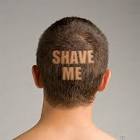
A 10-year-old student has shaved off his teacher’s hair after completing a dare to overcome his shyness.

Taewoong Jeong, from Korea, could barely speak in front of his classmates at Gems World Academy. His Grade 5 teacher, William Clark, said his bashful nature was holding him back.

“I thought it was perhaps a lack of English language skills,” said Clark. “But then I found out that wasn’t the case because he is a good writer.

“It later dawned on me that the child had a fear of public speaking.”

His classmates came up with a solution. “It began as a joke,” said Mr Clark. “They said, ‘If Taewoong sings in assembly, you should get your head shaved, Mr C’.”

Mr Clark agreed, and the dare was set. If Taewoong worked up the courage to stand up in front of a school assembly and sing the national anthem, he would be allowed to shave off his teacher’s hair.

The Taewoong Project, as it came to be known, included posters plastered around the school, urging Taewoong to go through with the dare.

Mr Clark recalls: “Every Thursday I would ask him, ‘Is today the day Taewoong?’. We could see that every week he would muster up a little more courage for it.

“His classmates would constantly motivate him too.”

“What he did last week, though, has made him my hero.”

It took three months, but last week Taewoong overcame his fears and got up in front of the school.

“I just did it,” said Taewoong. “I definitely feel more confident and think I can do it again.”

True to his word, Mr Clark brought out the shaver for Taewoong. “I told him, this is a life long deal.  If you cannot do it during your time at school, send me a video of your achievement from wherever you are and even if I am in Antarctica, I will send across a video with my head shaved off.”

For Taewoong this was the fun part: “I felt really happy and weird at the same time.”

Mr Clark believes this experience will help Taewoong get through other difficult situations.

“Noting will be that hard for him anymore,” he said. “Whenever he is faced with an audience and fear grips him, he will have to memory to help him through.”

Taewoong’s father, Simon Jeong, said he appreciates the effort put in by his class teacher: “It was a unique style adopted by Mr Clark where my son was pushed to taking a risk. I think it will make Taewoong a go-getter.”

I just love this story.  It goes to show that the best way to deal with challenges in the classroom is to think outside the box, build your students up, instill a support group feel amongst the group and build a fun and lively atmosphere. Whilst I’m not sure I have it in me to have my hair shaved off, this story inspires me to work even harder to ensure that no child is left out, ignored or unsupported.

Homeschooling is Not the Enemy

February 25, 2011

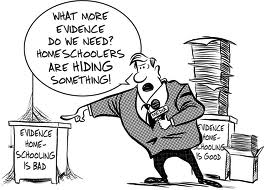
Whilst I am not a proponent of homeschooling and I see the virtues of the traditional school system, I am very frustrated by the lack of tolerance given to parents who decide that homeschooling is their prefered option.  To knock homeschooling is to ignore the many serious flaws inherent in the traditional school system.  Even though I think these flaws can be corrected and better practice can be implemented, until that is the case, parents will always look at their options.

That’s why I was particularly disappointed to read a recent article regarding the 12,000 children, aged 16 or under who are classed as “missing” from school in England.

The figures prompted warnings about the safety of those allowed to slip through the net. Children allowed to drop out of school could be at “serious risk” of physical, sexual or mental harm, charities said.

A Commons Education Select Committee inquiry in October reported that thousands of children as young as 11 who were “lost” to the education system may be turning to lives of crime, drugs and prostitution.

At this pont of the article I was naturally concerned about these kids who are so young, yet are not receiving education.  Then I read the following sentence:

Children may go “missing” due to being forced to wait for a school place or being kept at home by their parents…

How are those scenarios considered “missing?”  What if a child is being homeschooled?  Are they missing then?  Surely children waiting for a school place and being kept home by their parents aren’t necessarily “missing”.

Luckily I read another article which focussed on ending home-school stereotypes:

Despite successes with the ACT, spelling bees and math contests, home-schooled children battle a stereotype that they’re social misfits leading sheltered lives that fail to prepare them for the real world. Or worse yet, home schooling is depicted as brainwashing by parents pursuing a narrow political or religious agenda.

Nebraska law is friendly to home-schoolers, requiring basically that parents submit a form affirming their intent to home-school and provide a copy of their curriculum. The state doesn’t require state testing or home visits by state personnel.

Several parents interviewed said they cope with public misconceptions about home schooling even as the Internet and creative teaching arrangements give parents new ways to broaden their children’s education and further challenge the stereotypes.

Home-schooled students play on Little League teams, join Boy Scouts, perform in public school bands, participate in cooperative academic classes and, when necessary, take classes at local high schools and colleges, parents say. Students participate live in classes via the Internet.

Mike and Tricia Croushorn of Omaha home-schooled their children, Abi, 22, Tyler, 20, and Sam, 16, to give them a well-rounded education that included a religious component.

The Croushorns got interested after getting to know parents who home-schooled.

“We would meet these other children and they were always polite and respectful, and they could carry on a conversation with adults,” Tricia Croushorn said.

Homeschooling is not the enemy of education.  Bad teaching and poorly run schools are the enemy of education.  Until traditional schools really do offer the kind of support, care and safety that they claim to, then loving parents will always explore their options.  Because ultimately it’s not about tradition, it’s about the best needs of our children.  The only people who should be making that call are the parents.

I love being a school teacher and I see great value and potential in traditional school education, but I admire the selflessness and sacrifice that homeschooling parents make and the intentions behind their decision.  Instead of picking on the unconventional, make the conventional much better than it currently is.

The Drug Companies Are Winning at Our Children’s Expense

February 17, 2011

I have a confession to make.  I hate drug companies.  No, worse, I despise drug companies.

I may not be a doctor, pharmacist or  expert, so you can discount my views as just ramblings from an ignorant blogger if you like, but that isn’t going to change my position.

It is my belief that the drug companies have a vision.  That vision is to see children being given medication as if it were candy.  Last month I wrote about the fact that more than a quarter of kids in the US are on medication, with almost 7% on two or more prescription drugs.  The drug companies probably see that figure as merely a good start, with plenty of room for improvement.

And as much as I wish we could see through what they are doing, I’m afraid, they continue to prevail.

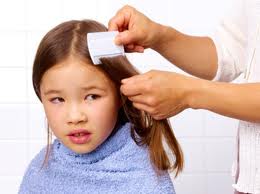
I was really disappointed to hear that a lice drug called Natroba,  has been approved by the U.S. Food and Drug Administration for use on children ages 4 and older.

A lice drug?  So let me get this straight.  You give your child a drug that goes into the bloodstream to fight a problem which is external to the body.  How on earth does that work?

The product — which is applied to dry scalp and hair, then left on for 10 minutes — contains spinosad, a compound that excites the central nervous system of head lice. The bugs, which are most common in children ages 3 to 12, become paralyzed and die.

And what about the “known” side-effects?

Common side effects of Natroba include redness or irritation of the eyes and skin.Because it contains benzyl alcohol, which can be harmful to newborns and low-birth-weight infants, the drug should not be used on children younger than 6 months.

6 months?  Why would you give a prescription drug to a baby suffering from lice?

The sad part of this is that we live in the age of the quick fix.  The solution to every problem must come at the click of a finger.  No matter how many of these drugs get released, there will always be doctors happy to endorse and prescribe them and parents only too happy to avoid the time and energy used to treat their children in the traditional way.

If this keeps up, soon it will be rare to find a child not on medication.  What a tragedy!