Posts Tagged ‘Education’

The ‘100 Greatest Books for Kids’ is Released

February 16, 2012

Scholastic Parent & Child magazine have gone to the trouble of ranking the 100 “Greatest Books for Kids.” There are some great titles among the list and some notable omissions. I am a tad disappointed “The Cat in the Hat” didn’t make the list. I suppose you can’t please everybody.

Below is the list:

1. Charlotte’s Web by E.B. White

2. Goodnight Moon by Margaret Wise Brown

3. A Wrinkle in Time by Madeleine L’Engle

4. The Snowy Day by Ezra Jacks Keats

5. Where the Wild Things Are by Maurice Sendak

6. Harry Potter and the Sorcerer’s Stone by J.K. Rowling

7. Green Eggs and Ham by Dr. Seuss

8. The Diary of a Young Girl by Anne Frank

9. The Giving Tree by Shel Silverstein

10. Frog and Toad Are Friends by Arnold Lobel

11. Anne of Green Gables by L.M. Montgomery

12. The Very Hungry Caterpillar by Eric Carle

13. Madeline by Ludwig Bemelmans

14. The Wind in the Willows by Kenneth Grahame

15. The Dot by Peter H. Reynolds

16. Tuck Everlasting by Natalie Babbitt

17. Pat the Bunny by Dorothy Kunhardt

18. When Marian Sang by Pam Munoz Ryan

19. Knuffle Bunny: A Cautionary Tale by Mo Willems

20. Where the Sidewalk Ends by Shel Silverstein

21. Bud, Not Buddy by Christopher Paul Curtis

22. Corduroy by Don Freeman

23. The Phantom Tollbooth by Norton Juster

24. The Little Engine That Could by Watty Piper

25. The Giver by Lois Lowry

26. Where the Mountain Meets the Moon by Grace Lin

27. Black on White by Tana Hoban

28. Don’t Let the Pigeon Drive the Bus! by Mo Willems

29. Are You There God? It’s Me, Margaret. by Judy Blume

30. My Rotten Redheaded Older Brother by Patricia Polacco

31. The Mitten by Jan Brett

32. The Runaway Bunny by Margaret Wise Brown

33. The Hunger Games by Suzanne Collins

34. Swimmy by Leo Lionni

35. Freight Train by Donald Crews

36. The Secret Garden by Frances Hodgson Burnett

37. The Little Mouse, the Red Ripe Strawberry, and the Big Hungry Bear by Don & Audrey Wood

38. Diary of a Wimpy Kid by Jeff Kinney

39. Zen Shorts by John J. Muth

40. Moo, Baa, La La La! by Sandra Boynton

41. Matilda by Roald Dahl

42. What Do People Do All Day? by Richard Scarry

43. The Lion, the Witch and the Wardrobe by C.S. Lewis

44. Good Night, Gorilla by Peggy Rathmann

45. The Composition by Antonio Skarmeta

46. Not a Box by Antoinette Portis

47. Brown Bear, Brown Bear, What Do You See? by Bill Martin Jr. and Eric Carle

48. Hatchet by Gary Paulsen

49. Martin’s Big Words by Doreen Rappaport

50. Sarah, Plain and Tall by Patricia MacLachlan

51. Sylvia Long’s Mother Goose by Sylvia Long

52. The Lightning Thief by Rick Riordan

53. The House at Pooh Corner by A.A. Milne

54. Through My Eyes by Ruby Bridges

55. Smile! by Roberta Grobel Intrater

56. Living Sunlight by Molly Bang & Penny Chisholm

57. The Bad Beginning by Lemony Snicket

58. Harvesting Hope: The Story of Cesar Chavez by Kathleen Krull

59. Dear Juno by Soyung Pak

60. Head, Shoulders, Knees, and Toes… by Annie Kubler

61. The Lion and the Mouse by Jerry Pinkney

62. Diary of a Worm by Doreen Cronin

63. The Invention of Hugo Cabret by Brian Selznick

64. My Truck Is Stuck! by Kevin Lewis

65. Birds by Kevin Henkes

66. The Maze of Bones by Rick Riordan

67. Esperanza Rising by Pam Munoz Ryan

68. Counting Kisses: A Kiss & Read Book by Karen Katz

69. The Magic School Bus at the Waterworks by Joanna Cole

70. Blackout by John Rocco

71. Bridge to Terabithia by Katherine Paterson

72. Are You My Mother? by P.D. Eastman

73. Tea With Milk by Allen Say

74. Owl Moon by Jane Yolen

75. Holes by Louis Sachar

76. Peek-a Who? by Nina Laden

77. Hi! Fly Guy by Tedd Arnold

78. Mrs. Frisby and the Rats of NIMH by Robert C. O’Brien

79. Llama Llama Red Pajama by Anna Dewdney

80. What Do You Do With a Tail Like This? by Steve Jenkins & Robin Page

81. Lincoln: A Photobiography by Russell Freedman

82. Ivy + Bean by Annie Barrows

83. Yoko by Rosemary Wells

84. No No Yes Yes by Leslie Patricelli

85. Tales of a Fourth Grade Nothing by Judy Blume

86. Interrupting Chicken by David Ezra Stein

87. Rules by Cynthia Lord

88. Grumpy Bird by Jeremy Tankard

89. An Egg Is Quiet by Dianna Hutts Aston

90. Puss in Boots by Charles Perrault

91. Team Moon: How 400,000 People Landed Apollo 11 on the Moon by Catherine Thimmesh

92. What Shall We Do With the Boo Hoo Baby? by Cressida Cowell

93. We the Kids: The Preamble to the Constitution of the United States by David Catrow

94. I Took the Moon for a Walk by Carolyn Curtis

95. A Single Shard by Linda Sue Park

96. Gossie by Olivier Dunrea

97. The Adventures of Captain Underpants by Dav Pilkey

98. First Words by Roger Priddy

99. Joyful Noise: Poems for Two Voices by Paul Fleischman

100. Animalia by Graeme Base

5 Tips to Better Connect with Students

February 16, 2012

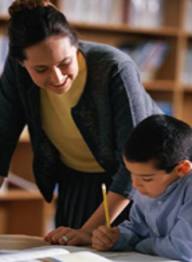
I stumbled upon an extremely useful guide for improving the teacher/student relationship. The following are 5 tips for assisting teachers in reaching out to their students more effectively:

 
1- Pay attention to your students’ interests
Now that I’ve been teaching 10 years and I’ve mastered my subject area and the pedagogy of how to teach and reach every child’s learning style, I’m able to focus on the interpersonal things that make a big difference.

Administrators, school boards, and districts may see numbers, but numbers are not children. No child is a number. Children have names and hobbies and interests and family lives. Children are individuals and it is my job as a teacher to help them find their unique talents. I want to be the one that helped them on their journey of self-discovery.

2- Tell your students what they need to hear not what they want to hear.
I’m not here to be popular, I am here to teach. I am here to love these kids and to do what is right by their future selves. I believe I have succeeded when my students come back in 10 years and thank me. Sometimes they think I’m tough now and they groan, but I know that I’m doing right by them.

3- Take time to think about individual students
.
One of my heroes is the director of our learning lab here at Westwood, Grace Adkins. Every weekend she carries home a folder with the learning profiles, test results, and current work of 3 children who she works with in the lab, and she has been doing this for 60 years. She studies her students like a college student studies a textbook. She has doctors, lawyers, and bankers who credit her with helping them learn how to learn.

4- Learn to teach using many modalities.
Lecture may be ok some of the time, but it is never ok to do this all the time. Good teachers learn about pedagogy, the methods used to teach. Yesterday, I had a student dress up in a chef’s outfit with a mixing bowl and a recipe book with labels on everything to teach how microprocessors work. When I finished, my students said, “that is easy to understand.” A good teacher can demystify a complex topic and make it simple to understand.

5 – Let your passion come through.
If you love your topic, it will come through in your voice, your body language, and everything you do. There are times I’ve loved one subject more than another, but I can always get excited about teaching a child something for the first time that I know is valuable. I think it is important to let your own personality come through in your teaching.

The greatest challenge of teaching is reaching as many children as possible. Touching every student is an impossible task — but every moment in our lives as educators brings new opportunities.

I absolutely love this list. I think they have nailed some of the most essential methods for maintaining a strong connection between teacher and student.


Are Children Getting Enough Sleep?

February 14, 2012

Kids seem to be looking and feeling mored tired than ever before.

A recent study indicates otherwise:

It is a common complaint of our modern age that kids and teens don’t get enough sleep.

Video games, TV, social media, and other trappings of our increasingly tech-centric lives are often blamed, but a new study shows that long before Facebook or PlayStation 3, kids were sleeping less than experts said they should.

When researchers in Australia reviewed sleep recommendations and actual sleep times among children over the past century, they found that kids consistently slept about 37 minutes less than recommended at the time.

Each time, new technological marvels — be it the light bulb in the early 1900s, TV in the 1950s, or computer gaming systems and social networking today — were blamed for declining sleep times.

“The message that children don’t get enough sleep has been the same for over 100 years,” says researcher Tim S. Olds, PhD, of the University of South Australia.

I wonder if children today experience a different form of tiredness. A tiredness as a result of late nights, a lack of physical exercise, a carb dominated diet and excess weight. Perhaps the tiredness is the same as always, but the presentation of the tiredness is more extreme.

Maths is Taught So Poorly

February 13, 2012

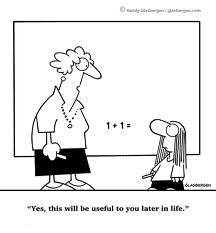
I realise that what I am writing is a gross generalisation, but I believe that maths is generally taught in a very abstract and monotonous way. No wonder the students are not benefitting from maths instruction at the primary level. Traditional maths teaching involves worksheets, a mindless array of algorithms and plenty of other rote styled goodies.

The tragedy of it all is that maths can be taught in a completely different way. I find the basic skills of maths the most refreshing and creatively exciting subject to teach. The fact that maths is a composite of everyday skills means it translates wonderfully to problem solving activities.

The other day, whilst teaching ordering numbers up to 4 digits, I got my 8-year-old students into groups, each given a particular airline to reasearch. The groups had to find the 3 lowest airfares for a return domestic trip between certain dates and times, These prices were then compared and ordered from least expensive to most expensive. Isn’t that the whole point of ordering and comparing numbers?

Whilst engaging in the exercise, the students enjoyed working in groups, competing for a bargain against other groups, learning how to book airline tickets and simply use their imagination by pretending they were actually intending in going on the flight.

Isn’t that more interesting than a worksheet that has numbers on it to order?

This is why I am not at all surprised that British students leave Primary school ‘with the maths ability of 7-year-old’:

An analysis of last year’s SATs results has shown 27,500 11-year-olds are going on to secondary school with the numeracy skills of children four years their junior.

The figures equate to a staggering one in 20 of the total of those leaving primary school. Boys perform worse than girls, with 15,600 behind in their ability.

Separate statistics published two weeks ago also revealed that one in three GCSE pupils fail to get at least a grade C in maths.

The disclosure follows the launch of a Daily Telegraph campaign – Make Britain Count – to highlight the scale of the nation’s mathematical crisis and provide parents with tools to boost their children’s numeracy skills.

It comes amid concerns that schoolchildren are less likely to study maths to a high standard in England, Wales and Northern Ireland than in most other developed nations.

I appeal to Primary teachers to give the text-book a rest and don’t be afraid to try new and exciting ideas to engage your maths students.

Tips For Supersizing a Cramped Classroom

February 12, 2012

We’ve all had the problem at stages of our career. We’ve been allocated a classroom that is far too small to comfortably teach in. There is insufficient room for mat time and the children, especially the very restless ones, need more space to work in.

I came across a piece that attempts to make this problem far more manageable:

Even if your classroom is much cozier than you imagined, there are ways to stretch the boundaries. These “big” ideas will help.

There’s no question that a small classroom is a real challenge to arrange. When I walked into my kindergarten classroom for the first time, there was wall-to-wall furniture! I had half of a room and 27 children; there simply was not enough space to set up a proper kindergarten room. With a little ingenuity, however, I was able to orchestrate a workable classroom layout that met all my — and my students’ — needs. Similar strategies just may work for your small classroom:

  • Remove excess or over-sized furniture. Instead of a large piano, I brought in my small keyboard, which could be stored in a cabinet. Round and kidney-shaped tables were quickly adopted by other teachers who had more space. I kept only rectangular tables and a few desks in the room.
  • Store rarely used equipment out of the way. I arranged for media equipment, which I don’t use on a daily basis, to be stored elsewhere. I did keep one student desk, which I made into a permanent listening center by removing the legs so that it sat only six inches above the ground. The cassette player sat on top of the desk and the headphones were stored in the desk.
  • Consider carefully your furniture needs. Midway through the year, I decided my students did not need to have their own individual desks or table spots. Eliminating just one table from the classroom and placing the other tables around the perimeter of the room opened up a large center area for whole-group activities and provided space for centers, math manipulatives, reading, and writing.
  • Explore creative management techniques. Without the traditional seat-for-every-student arrangement, I struggled with how to engage the entire class productively. I finally hit upon splitting the class; half would work at the tables and half would work in centers. I alternated the groups, so that everyone could participate in both activities on the same day.

If you’ve had this problem before and employed some strategies for maximising space I’d love to hear about it.

Are American Kids Brats?

February 12, 2012

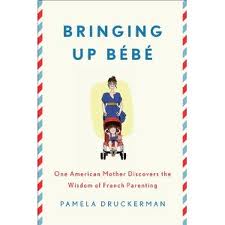
Another book that tries to paint American parents as soft and lacklustre and their kids as spoilt and bad mannered. This time the book advances the French style of parenting.

Time’s Judith Warner, in part, buys into the American parent stigma:

Amidst all the talk this past week about Pamela Druckerman’s new book, Bringing Up Bébé: One American Mother Discovers the Wisdom of French Parenting, there was one phrase that immediately lodged itself in my mind. It was in a sidebar that ran with the Wall Street Journal adaptation of her book, “Why French Parents Are Superior,” and it said this: “Children should say hello, goodbye, thank you and please. It helps them to learn that they aren’t the only ones with feelings and needs.”

That statement points directly to what I see as one of the most meaningful differences between the French and (contemporary) American style of parenting. I don’t happen to believe, as the Journal pushed Druckerman’s argument to say, that French parenting is necessarily superior, overall, to what we do in America. I don’t think French children are, overall, better or happier people — such generalizations are silly. But it is true that French kids can be a whole lot more pleasant to be around than our own. They’re more polite. They’re better socialized. They generally get with the program; they help out when called upon to do so, and they don’t demand special treatment. And that comes directly from being taught, from the earliest age, that they’re not the only ones with feelings and needs.

I say all this based on many years of extended hanging out time with French families, both before and after my own girls — who, like Druckerman’s children, were born in France — came along. In fact, that experience — and the contrast with the American way of parenting I discovered when I moved back to the States — inspired my book Perfect Madness: Motherhood in the Age of Anxiety, the main argument of which Druckerman recapitulates at the very beginning of Bringing Up Bébé. (Fuller disclosure: she interviewed me for the book as well.)

Like Druckerman, I’ve often noted wistfully how French children know how to handle themselves in restaurants. I’ve envied how French children eat what’s put in front of them, put themselves to bed when instructed to, and, generally, tend to help keep the wheels of family life moving pretty smoothly. But the difference that struck me the most deeply, when my family moved to Washington, D.C., from Paris and my older daughter began preschool, was how much more basically respectful French children were of other people. Indeed, how much emphasis French parents put on demanding they behave respectfully toward other people. And how that respect helped make life more enjoyable.

Good manners are certainly very important. Every parent worth their weight in salt attempts to teach their children the importance of graciousness and expressing thanks. But even then, there are two distinctly different types of well-mannered children. There are those who say the right things because they have been trained to do so and there are those that are well-mannered because they are genuinely appreciative and thoughtful.

The one thing I want more than good people on the surface is good people under the surface. There are too many people who will be charming and kind on the surface, yet who harbour resentment below the surface.

I’m not claiming that French people fit that category. What I will say is that books that draw such distinctions usually prove divisive, naive and filled with generalisations. American children will reach their potential when they are not characterised as spoilt brats.

The key to better American children isn’t an Asian style or French style it is a positive style. A book on the topic should include a chapter of what parents may already be doing right and then move on to some helpful hints that they may choose to consider.

But then again, who would buy a parenting book that didn’t peddle stigmas, comparisons and criticisms?

The Teacher They Haven’t Sacked, But Should

February 9, 2012

Call me a prude but I am of the opinion that when you sign up to be a teacher you are making a commitment to act with a greater degree of responsibility than most other professions. Whilst it may perfectly alright for a tradesman or receptionist to have a double life as a porn star, a high school teacher should know better and act better.

What makes this story worse is that this teacher was filmed with a former student. I find it unsavoury for teachers to hook up with their former students at the best of times. To make a porn video with them just adds another layer to what is a clear breach of standard teaching protocol.

Or is it?

The graphic video of the teacher and the student, who graduated in 2008, went viral on social media websites after students discovered it.

A preview video shows the couple naked, in sex acts, and with the girl blindfolded.

The ex-student explained yesterday that everyone who knew them understood the couple were in a committed relationship. The couple live together and jointly own a business.

“We’re consenting adults,” she said.

Oberon High School principal Alison Murphy said she took immediate action when she became aware of the video on Tuesday, but said the video did not change her view of the “successful” VCE teacher.

“He is not here today. It’s uncertain when he will return,” she said. “The matter is under investigation.”

She said the teacher was “well regarded”.

Ms Murphy said it would be inappropriate to suspend the teacher until investigations were completed.

Could someone please explain to me why it would be inappropriate to suspend the teacher?

13-Year-Old Girls Given Contraceptive Implants at School Without Consent of Parents

February 8, 2012

There may exist a rule of patient-child confidentiality, but it just doesn’t seem right that such important information would be withheld from the parents. What makes it even tougher to comprehend is that this service is all done at school.

Girls as young as 13 are being given contraceptive implants at school without their parents’ knowledge.

Nurses insert devices into their arms which temporarily prevent pregnancy by releasing hormones into the blood.

Last year 1,700 girls aged 13 and 14 were fitted with implants, while 800 had injections which have the same effect.

The 2010/11 NHS figures also show that 3,200 15-year-old girls were fitted with implants, and 1,700 had injections.

But under strict ‘patient confidentiality’ rules, staff are banned from seeking the permission of parents beforehand – or even informing them afterwards.

Both forms of contraception can bring on unpleasant side-effects including weight gain, depression, acne and irregular periods.

The jabs have also been linked to bone-thinning, although experts say fractures are unlikely if they are used only for a short time.

The implants and injections are being offered to girls in nine secondary schools and three sixth form colleges in Southampton under a scheme run by NHS Solent. The sexual health clinics also offer other forms of contraception, advice and tests for infections.

I think the patient/child confidentiality should have loopholes and shouldn’t include children under the age of 16. As parents, we have the right to be informed and the right to overrule. People might say that this is a very important service against unwanted pregnancies. That may be so. But in my opinion, the best way for 13 year-olds to avoid unwanted pregnancies is to allow the parents to do their job. The best remedy against teenage pregnancy is vigilant parenting.

Reading “Adds a Year to Children’s Education’

February 8, 2012

I’m not sure where Mr. Gibb gets his measurements from, but there is no doubt that our children are not investing nearly enough time to reading. Similarly, if children were to radically change their reading habits, strong improvement would surely follow:

Nick Gibb, the School Minister, said that reading books for just half an hour a day could be worth up to 12 months’ extra schooling by the age of 15.

Speaking ahead of today’s announcement, Mr Gibb said: “Children should always have a book on the go. The difference in achievement between children who read for half an hour a day in their spare time and those who do not is huge – as much as a year’s education by the time they are 15.

He added: “There is a group of children who can read but won’t read – the reluctant readers.

Currently, as many as one-in-six children are still struggling to read when they leave primary school, figures show. One-in-10 boys aged 11 has a reading age no better a seven-year-old.

Failure to pick up the basics at a young age is believed to have serious long-term consequences. A recent international report showed that almost four-in-10 teenagers in England never read for pleasure – considerably more than in other countries.

As teachers, we are responsible not only for seeing to it that our students read at home, but also that they grow to appreciate books. It is essential that our primary teachers choose relevant, engaging books to read to their students whenever the time permits.

The Difficulties of Parenting

February 6, 2012

This afternoon I met a colleague outside her eldest child’s school. She had just picked him up from school and was struggling to get both him and his younger sibling inside the car. Her youngest child was making life very difficult for her by having a temper tantrum by the side of the road.

When she saw me, she apologised for the commotion and looked terribly embarrassed by the behaviour of her screaming 2 year-old. I tried putting her at ease, by explaining that I know what it’s like when young children are hot and tired, but it was no use. The whole ordeal clearly embarrassed my poor colleague.

This got me thinking. Society, women in particular, are so judgemental when it comes to parenting and “proper” parenting styles. They are so good at making a poor young mother feel insecure about a whole range of related issues. Any parent can tell you that tantrums are part of the job description. No matter how good or bad your parenting skills are, your kids are a good bet to have a public tantrum every once in a while.

The same goes for parents that feed their kids the odd candy bar or take them out for fast food once in a while. The needn’t feel judged, but they are.

That is why I would like to start a movement. It’s called the “Mind Your Own Business” movement.

You think I’m too lenient on my child? – Mind Your Own Business!

You object to what I put in my child’s lunchbox? – Mind Your Own Business!

You think I should work less and be home more? – Mind Your Own Business!

What’s that? My child is too young to go to child care? – Mind Your Own Business!

I shouldn’t have given up so easily on breastfeeding my baby? – Mind Your Own Business!

You think I’m an over protective parent? – Mind Your Business!

Parenting is a might hard job. Getting a healthy balance between work and home as well as not being too strict or too lenient is so difficult. People should avoid giving parenting advice unless they are specifically called on to do so. People shouldn’t go around thinking they are better parents than everyone else, because chances are they’re not.

And most of all, people should learn to mind their own bloody business!