Posts Tagged ‘Education’

The Teacher Bashing Era Must End

February 26, 2012

Teachers have never been more criticised and devalued than they are right now. Whilst you can’t blame all negative incidents on a political and media campaign against teaching standards, I’m sure children pick up on the discontent in the wider community.

To read that three children in the 5th Grade twice attempted to poison their teacher, makes me wonder how children as young as that can rationalise in their own minds that killing their teacher would be a worthwhile solution to their problems:

Three California fifth-graders who confessed to using rat poison in attempts to harm their teacher are being moved to other schools.

The three students at Balderas Elementary School in Fresno admitted lacing the teacher’s coffee and a cupcake with rat poison in two separate incidents, according to the Fresno Teachers Association and published reports.

Miraculously, the teacher never took a sip of the coffee or a bite of the cupcake.

One of the three accused students apparently had a change of heart and knocked the coffee cup out of the teacher’s hand before she could drink from it.

The mid-December incidents came to light two months after they happened because a parent of one of the students bragged that her boy saved a teacher’s life.

No criminal charges have been filed against the two boys and one girl, according to ABC’s Fresno affiliate KFSN. The Fresno Police Department is continuing to investigate, but says there is little or no physical evidence remaining from the December incidents. The Fresno County district attorney’s office will decide whether to press charges against the children.

All three students have been expelled and moved to other schools, according to KFSN. The two boys are being transfered to the Phoenix Academy, which does not sit well with at least one of its teachers.

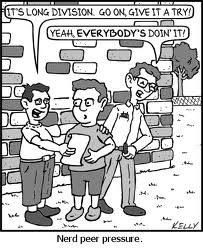
This story is quite sickening. I wonder if those students involved were in any way incited by a general lack of community respect for the teaching fraternity.

Sending Children Home With Nits is Appropriate

February 26, 2012

As inconvenient as it is for a parent to pick their child up early from school, there are times when it is necessary to do so. Yes, there is a stigma with lice than can potentially embarrass both child and parent. There is no doubt about that. But schools that are sensitive to the needs of their students will make the necessary arrangements in a discreet and private fashion.

The political correct police obviously don’t trust schools to deal with internal issues themselves. Like in other instances, they like to overrule and impose themselves:

VICTORIAN schools have been accused of discriminating against students with head lice by sending them home from school when their nits are detected, the Herald Sun can reveal.

Federal and state guidelines say schools must not send children home if they have head lice, but merely send a notice home at the end of the day telling parents to treat their child’s hair that night.

Guidelines also say teachers should “exercise sensitivity” towards children with nits for fear of upsetting them.

But schools, preschools and childcare centres across the state are flouting these policies by immediately asking parents to collect their children. Children are often isolated from classmates until they are picked up.

One Melbourne primary school has been asked to change its approach after a complaint from a parent. In a letter to the principal, obtained by the Herald Sun, the parent said any child with head lice should not be “singled out, sent home and denied valuable education, only to return the following day to be reinfested”.

 The parent, who did not want to be identified, said it was “discrimination to pick out one child and send them home when they might be in a whole class of kids with nits.”

Whenever Government regulation overrules schools you know it will end up bringing undesirable results. Lice spreads so quickly and the children suffering with lice are uncomfortable and unable to concentrate. I will continue pressing my school for the right to send children home with lice. That doesn’t mean that I am unaware that children with lice often feel humiliated and ostracised. What it does mean, is that I will handle the matter in such a way as the child receives my care and support and the rest of the class is never made aware of the child’s condition.

Beating Peer Pressure

February 24, 2012

Is a good sense of humour enough to ward off the threat of peer pressure? Child psychologist Kimberley O’Brien, thinks so:

A child psychologist from Sydney’s Quirky Kid Clinic said people should not trivialise peer pressure by saying it happens to everyone.

“We shouldn’t say it’s normal and it’s fine because it’s not,” Kimberley O’Brien said.

Ms O’Brien said parents need to encourage their children to choose friends they are comfortable with.

“It’s important to teach kids to be assertive. If parents model that behaviour and speak up in the community if they feel something is not right then children learn to do the same.”

The Quirky Kid Clinic advises teenagers to make a quick exit if they are feeling uncomfortable in a situation. They teach young people how to use humour to defuse a potentially risky situation.

“They can just laugh and say I’m not into this and leave,” Ms O’Brien said.

“If they are feeling under pressure, we encourage kids to trust their early warning signs and gut feelings and speak up and ask for help.”

Ashley Long and her friends had been drinking alcohol when the helium party trick turned deadly. The inebriating effects of alcohol can make it increasingly difficult to avoid being pushed into risky behaviour.

“[Teenagers] are much more easily influenced if they have been drinking, even physically if they are stumbling or can’t move properly,” Ms O’Brien said.

“They may have lost their phone or friends so it is more difficult to seek help.”


Tips for Keeping Children Safe Online

February 24, 2012

Geek Squad have come up with some common sense tips for concerned parents. These tips are a good starting point for helping your children keep safe online:

Filtering Software: Install filtering software such as NetNanny or the free Windows Live Family Safety 2011. These programs can help your kids surf the Internet safely – without being exposed to any inappropriate material. You can also consider setting up free filtering at the wireless router level with OpenDNS, which will ensure that all devices that connect to your home Internet are filtered.
Maximize Current Programs: Many computers already come with online safety programs. Learn how to accurately use Parental Controls in Windows and Mac Operating Systems, and other programs that aid in monitoring and managing what children view online. Maximize the use of programs you already have installed and at your fingertips.
LOL Does Not Mean ‘Learn Online Lingo’: But you should: Among the many networking sites are Facebook and Twitter. Learn how these sites work and the coded language commonly associated with them. We can consider citing this study that says teens are increasingly using Twitter because parents have figured out Facebook, so they think they’ll have more freedom where their parents aren’t.
Gaming Parental Controls: Many games have online modes, where your kids can play against others around the globe. It’s important to know who your kids are playing with and what content they can access. Set parental controls on games to protect your kids without affecting their gaming experience.
Control Your Kids’ Online Environment: Windows Vista features parental controls that help parents monitor what kids can access on a computer – even when they’re not in the room or at home. Parents can select what games, programs and websites children can access. Time restrictions can even be set to ensure that the kids are following the rules even when mom and dad are not home. This feature is found in the Parental Controls panel and is part of the User Accounts and Family Safety Control Panel applet.

Pitting Private vs Public Schools is Bad for Education

February 22, 2012

The fallout of the Gonski Report into educational spending has resulted in the typically predictable bashing of private schools. There is a misguided notion that by funding private schools, Governments are robbing the needs of struggling public schools.

This is simply not the case.

I stand by my remarks from last year:

The continued debate between private and public school funding tires me out. I am a big believer of a well-funded (i.e. wisely funded) public school sector as well as a thriving private school sector. There is no reason why parents can’t be given choice and why supporting private schools must come at the expense of quality public education.

This is where the “Moneyball” analogy fits in.

Moneyball is the true story of Oakland A’s GM Billy Beane. Oakland is severely restricted due to the lowest salary constraints in baseball. Winning means beating teams with much better infrastructure and player payment capacities. Billy is presented with the unenviable task of finding a winning team with the miniscule budget offered. Together with a Harvard economics major, a system is devised that uses statistical data to analyse and value players they pick for the team.

Public schools need to take the same approach. Just like the big baseball teams of the time, plenty of money is spent on public schools, but much of it is wasted money. I look at education in a very traditional way. Whilst it is ideal to have the best sporting fields, technologies and building designs, none of these ingredients has been proven to be essential for teaching and learning the curriculum. The school across the road may be able to give each child their own i-Pad, but that shouldn’t explain a marked difference in maths, science or english results. A teacher should be able to deliver on the curriculum with or without such devices.

Whilst many get worked up when Governments subsidise private schools, there is a good reason why they do it.

1. It takes billions off the budget bottom line. This saves Governments money, resulting in reduced taxes and smaller class sizes in public schools.

2. It allows private schools to lower their fees. This is crucial for parents who are by no means wealthy, but are prepared to scrimp and save (and sometimes take on multiple jobs and a second mortgage) to get their children into private schools. These people should be commended. They work long hours, weekends, give up overseas travel and big screen TV’s, just to give their kids the best education possible. Government subsidies allow that to happen.

In Australia, the Government gives $13,000 to every public school per student. Private schools get $5,000. Factor in to the equation that many private schools are not elite schools with truck loads of money and resources (I work in such a private school, where I earn considerably less than a public school teacher), and you realise that the subsidy shouldn’t detract from a thriving public education system.

By constantly drawing attention to private schools, we risk bringing the private school system down to the public level. What we should be doing instead is trying to get the public school system improved to the level where it gives its private school equivalent a run for its money. That way, you have a private school that sets the bar for top quality education and a public school system that is structured to be able to go toe-to-toe with them based on prudent spending, good decision-making and a workforce of supported and fairly paid teachers.

A Teacher Spits on a Student and I Lay Blame on the Student

February 21, 2012

Teachers that spit on their students should be punished accordingly. It is unprofessional, unhygienic and completely unacceptable behaviour. But there is more to the story of maths teacher David Pecoraro, who was caught on camera spitting at a boy and has since been relegated to administrative duties as a result of his moment of madness.

The video shows clearly a teacher pushed to the edge of sanity. A student trying to attach his used gum on the teachers rear is rightly put in his place by the teacher. Teachers, especially male teachers, are extremely sensitive with the dangers of being accused of inappropriate behaviour. Students that purposely touch a male teacher’s backside are putting that teacher in a very uncomfortable position.

The video also shows the lack of respect he was getting from his other students. As he screams “I want to teach you maths”, we see a student sleeping and others laughing and goading the defiant, foul-mouthed, gum chewing student.

A teacher was secretly filmed on a cell phone struggling with a male student before appearing to spit in the boy’s face.

David Pecoraro, a high school math teacher, is now working in ‘administration’, after the footage was uploaded to YouTube.

Pecoraro, who taught at Beach Channel High School in Queens, New York, has a row with the student for a few minutes before the confrontation turns physical.

Pecoraro is being investigated on allegations of corporal punishment.

The teacher, who has been in the profession for 19 years, can be heard saying in the clip: ‘You can’t make contact with me, that’s illegal.’

He then tries to explain a math problem to the student who is ignoring the lesson and covering his head with a jacket.

At one point, the student, whose identity isn’t revealed, appears to try to hit the teacher.

Pecoraro then tells the teenager: ‘You’re going to go to jail, you don’t touch me… I want to teach you math.’

The altercation is witnessed by a few other students in the class – along with one boy in front of the camera who is asleep with his head on the desk.

The row continues until the teacher appears to spit at the student who then spits back at him.

The grainy film cuts out after Pecoraro can be seen dragging the student out of his seat.

As bad a this teacher’s actions was, the behaviour of the class was absolutely deplorable. This video should be enough to implicate at least two students with some fairly serious breaches of protocol. First there was the student who should be expelled for inappropriate touching and insubordinate behaviour. Then there is the student who filmed the incident. I don’t care how juicy the footage is, any student filming class and uploading the footage on YouTube deserves to be punished.

Instead, I fear that the only person punished was the one who wanted nothing more than the ability to do his job without being touched, mocked or harassed. If those two other students got off without punishment, it reinforces their despicable behaviour, and allows them to continue their bloodsport.

I pity the replacement maths teacher. I fear they are mere fodder for the next potential YouTube hit.

Would You Notice if Your Child Was a Bully?

February 21, 2012

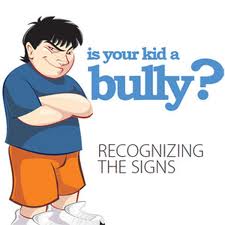
Psychologist Jodie Benveniste thinks parents are so blinded by the belief that their child is perfect that they are startled when confronted with the possibility that their child has been bullying others:

Psychologist Jodie Benveniste says most parents don’t – until they get a call from their child’s school.

“That’s often the first time you hear about it because you’re not there to observe the behaviour,” she says.

Youth worker and school chaplain Nigel Lane says in his experience parents are usually in “total shock” or “total denial” when they learn their child is a bully.

The experts agree there are tell-tale signs parents can look for, including very aggressive behaviour towards siblings, talking aggressively and negatively about other children and coming home with money or items that don’t belong to them.

Lane, who has written several books and is working on another about how to recognise a bully, says most parents eventually accept there is a problem.

 “Generally I say to parents that the first thing they should do is listen. Listen to the accusation, don’t deny and ignore it,” he says.

“Then do exactly the same with your child. Sit down with your son or daughter and just listen. Ask broad questions, such as, ‘School gave me a ring today to tell me something happened at lunch time, what was it?’ rather than saying, ‘You’re a bully’, which could make them defensive.”

Lane says this “gentle” approach is more likely to bring out the truth or a version close to it.

The bullying stigma has become a massive one. It is essential that we don’t label people as bullies haphazardly. What that does is unnecessarily complicate the issue, while it also puts children who are involved in one-off incidents in the same basket as perpetual offenders.

Parents should be open to the fact that their children acts differently at school than they do at home. Schools must realise that such a disparity often comes as a result of the unnatural array of clicks and the deep social segregation that are a common fixture in many schools.

The reason why parents may be surprised to know that their child is bullying isn’t just due to their lack of objectivity, it’s also due to the ‘dog eat dog’ environment rampant in many schools. Kids are presented with an environment that is often vicious, unrelenting and difficult to navigate through.

This of course doesn’t excuse their behaviour. What it does do, is make schools equal partners with the parents in reforming bullying children.

The Problem With IT in the Classroom

February 19, 2012

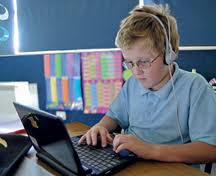
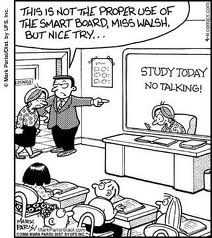
The problem with the wonderfully diverse technologies available to teachers is that it can sometimes breed lazy teaching. A SmartBoard doesn’t make a teacher. The challenge for teachers is not to rely on the technologies at hand, but to simply use them in conjunction with a well-developed lesson.

When reports show that computers don’t make a difference to learning, I wonder if they are really saying that teachers haven’t learned to capitalise from them yet:

Kids love using computers and gadgets in the classroom but the technology has not made them better learners, suggests a new report.

The non-profit Media Awareness Network interviewed a small sample of plugged-in elementary and high school teachers from across Canada and found there’s work to be done to better incorporate technology into schools.

The report suggests many students aren’t really as good at using the Internet as it may seem. While it’s assumed today’s kids are quick to learn how to use computers, the authors found many students are great at social media or finding something to watch on YouTube but their digital skills end there.

Teachers reported that some of their kids had a hard time effectively using search engines like Google and weren’t able to consistently sort out valuable sources from the clutter on the web.

“Digital literacy is not about technical proficiency but about developing the critical thinking skills that are central to lifelong learning and citizenship,” the report states.

The finding wasn’t particularly surprising, said Matthew Johnson, director of education for the Media Awareness Network.

“It’s something we’ve seen before but this really underlined it. I always like to draw a distinction between literacy and fluency,” he explained.

“When we watch a young person sit down on the computer and open a dozen different screens and do a dozen different things at once, we’re really seeing (digital) fluency — the same fluency that lets a 10-year-old talk a mile a minute. But it doesn’t necessarily show genuine literacy, it doesn’t show they understand what they’re doing, it doesn’t even show necessarily that they’re skilled at what they’re doing.”

Maths Teachers Who Can’t Pass Maths

February 19, 2012

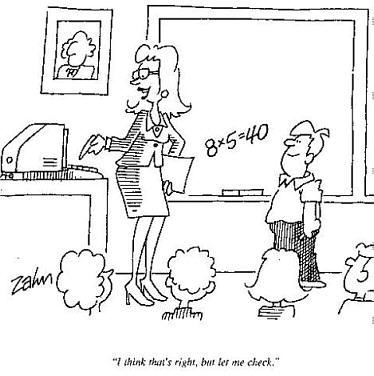
Sometimes I wonder how well Primary school maths teachers would go if they were forced to sit a basic skills maths examination. I fear many of them would stumble, especially in skills such as fractions.

How much worse it would be to have specialist maths teachers in the high school system with gaps in their maths knowledge. This may or may not be a reason for the inability for some teachers in getting the desired results from their students:

New Westminster parents are pressing their school district to investigate what they say is an exception-ally high failure rate over many years for high-school students enrolled in math classes taught by a particular teacher.

But they say the district has brushed aside their finding that three out of four students in those New Westminster secondary school math classes failed last semester. And recently, in response to their freedom-of-information request for math marks for all Grade 8-12 students in the school, the district told them they would be charged $1,385 to cover the cost of research and photocopying.

One of the parents, Lisa Chao, said she was shocked by the bill and highly doubts that much work is required to produce the information parents believe would back their contention that the teacher has been unsuccessful in teaching the lessons for many years. “This is information … they should have been gathering at the end of every semester,” she said in an interview. “It shouldn’t take more than three hours to print off.”

Parents deserve the right to information when they suspect that a teacher is letting down their children. Schools shouldn’t shy away from being open and transparent, because when they use tactics like the one referred to above, they look like a party to a major cover-up. I have no problems with schools supporting their teachers, but sometimes even the school needs to take an impartial view.
This teacher should be given every opportunity to defend the allegations. However, the doubts about his/her effectiveness seem valid and require a response.

Good Heavens! It’s the Lunch Box Police!

February 17, 2012

Governments that poke their nose into people’s daily life are extremely annoying. It is a Governments job to provide people with the freedoms and resources required for living a comfortable life. The day they impose regulations that limit our basic freedoms, is the day they have gone too far.

Apparently, in some parts of the Western world, that day has well and truly arrived:

The elementary school in Raeford, North Carolina, decided the four-year-old’s lunch — which consisted of a turkey-and-cheese sandwich, banana, potato chips, and apple juice — did not meet nutritional standards established by the U.S. Department of Agriculture. Why? Because it did not contain a vegetable.

The USDA guidelines say lunches, even those brought from home, must consist of one serving each of meat, milk, and grain, and two servings of fruit or vegetables. Those guidelines — introduced last month as “historic improvements” by the federal government — spring from the Healthy, Hunger-Free Kids Act championed by First Lady Michelle Obama as part of her Let’s Move! Campaign and signed into law by President Barack Obama.
 
Dr. Janice Crouse, senior fellow for the Beverly LaHaye Institute at Concerned Women for America, sees the incident at the North Carolina school as historic in another sense. She says it is just another way government intrudes on the rights of parents.
 
“It’s another way that the government says it knows best, another way to waste taxpayer dollars, quite frankly, and to really irritate parents,” Crouse tells OneNewsNow.
 
The mother of the young girl, in an interview with Carolina Journal, says what angered her the most was the message her daughter received. “…Number one, don’t tell my die I’m not packing her lunch box properly,” she stated. “I pack her lunchbox according to what she eats.” The child, she reported, does not like vegetables; so the mom packs fruit instead.

Why do Governments resort to strict regulations and negative tactics to enforce standards which can be met without limiting freedoms and isolating people?