Posts Tagged ‘Education’

Absent-Minded Kids Are Smarter: Study

March 18, 2012

For an absent-minded teacher like myself, this is very encouraging news. To think that we could be smarter, regardless of whether we know what day it is or recall what our passwords are, is surprising to say the least:

Is your child absent-minded? You should feel happy, for a new study says that it may well be a sign that the kid is intelligent. Researchers have found that children who have wandering minds actually have sharper brains — in fact, those who are constantly distracted are able to hold far more information than their diligent peers.

The study has shown that those who appear to be constantly distracted have more “working memory”, giving them the ability to do two things at the same time, the Daily Mail reported.

Those who appear to be constantly distracted have more “working memory”.

Participants in the study had to either press a button in response to the appearance of a certain letter on a screen, or tap in time with their breath. The researchers checked periodically to ask if their minds were wandering.

At the end, they measured the participants’ working memory capacity, giving them a score for their ability to remember a series of letters interspersed with easy maths questions.

Daniel Levinson of University of Wisconsin-Madison, who led the study, said those with higher working memory capacity reported “more mind wandering during these simple tasks” even though their performance was not compromised.

The results are the first to show the association with mind wandering and intelligence. It is thought the extra mental workspace is used, for instance, when adding up two spoken numbers without being able to write them down. Its capacity has been associated with general measures of intelligence, such as reading comprehension and IQ score.

I could sit here and show-off about these findings but I’m too busy trying to find my darn car keys …. again!

The Worrying Trend With Children and Alcohol

March 18, 2012

It really bothers me when there is a real problem facing our children and instead of tackling it head-on we get distracted by minor factors. A disturbing number of kids are turning to alcohol and instead of getting to the crux of the issue, experts are worried about alcohol advertising::

ALCOHOL is fast becoming the No. 1 threat facing Australian children and there is no adequate system in place to stop them being exposed to alcohol advertising, Australia’s foremost child health expert, Fiona Stanley, says.

The former Australian of the Year will chair a new alternative alcohol advertising review body, which health experts say is needed because the industry-based code is failing to protect children.

The Alcohol Advertising Review Board will assess complaints from members of the public about alcohol advertising, and will look at areas not covered by the current code, such as sponsorship or advertisement placement.

My tip: You could ban all advertising of alcohol and it still wouldn’t have a meaningful effect on child consumption. I really respect what Fiona Stanley is doing, I just don’t think much will come of it.

New Website Launched Gives Bullied Children Support

March 16, 2012

I embrace anything that will help victims of bullying to overcome, or at least manage their situation:

The Bullying No Way! site was launched today as part of the national day of action against bullying and violence.

It offers facts about bullying for children and their parents and tips on how to deal with it or who to talk to.

The site will also have a choose-your-own-adventure game for students to learn how to deal with bullying and moderated forums where children can discuss their problems with peers.

West Australian education minister Elizabeth Constable said the website would promote strategies to help different jurisdictions and education authorities develop ways to address bullying.

“School communities are working hard to make school environments safer, more supportive and respectful for all young people and adults – places where everyone is free from bullying, harassment, discrimination and violence,” she said.

“The new Bullying No way! website contains the latest information on bullying and violence and is a useful resource to support school communities in this important venture.”

Dr Constable chairs the council of Australian education ministers, which launched the website.

The council will also launch an iPhone app which will let students access instant information about bullying and what to do about it.

The new website is at www.bullyingnoway.gov.au.

Cyberbullying is More Harmful than Traditional Bullying

March 15, 2012

I’ve been of the opinion for quite a while that cyberbullying is the form of bullying that does the most harm and is the hardest to address. By invading the home of the child, cyberbullying takes an environment that was traditionally safe and has ensured that victims of such bullying have nowhere to hide. Cyberbullying also reaches a far wider audience, replacing the half a dozen or so witnesses in a playground incident with literally thousands online.

Children think face-to-face bullying is more harmful than cyber bullying but new research shows that perception to be false.

Researchers from Queensland University of Technology surveyed over 3000 students in Years 6 to 12 from 30 schools nationally and found 45 per cent said they were bullied.

The victims of face-to-face bullying, often referred to as traditional bullying, reported it had harsher impacts than victims of cyber bullying. However, other signs show the opposite to be true.

Lead researcher, Associate Professor Marilyn Campbell, said victims of cyber bullying reported higher levels of anxiety and depression than children who had been bullied face-to-face.

“When we measured their social problems, children who had been cyber bullied had much higher scores than victims of traditional bullying but they didn’t see it themselves,” Campbell told Education Review.

Campbell said children were usually bullied by kids they knew and often because they were different.

“It’s a cycle. They go to school, they get bullied. They go home and get cyber bullied. They go back to school and are bullied again.”

It is absolutely vital that schools stop sitting on their hands and start becoming more proactive when it comes to fighting cyberbullying. Schools are quick to point out that since the bullying is done outside school gates it becomes a parenting issue rather than a school issue. That may be true when it comes to legal obligations but not moral obligations. Schools should be expected to do what they can to ensure that their students are protected from being harassed or bullied by other students, regardless of where the harassment takes place.

Schools have got to stop obsessing about potential lawsuits and handballing issues to other stakeholders. They must show they care and fight for the wellbeing of their students!

Kids Stop Taking Risks When Constantly Tested

March 15, 2012

One of the key skills a primary teacher tries to institute in their class is the freedom of answering a problem without any trepidation. I tell my students that a wrong answer is not a negative. It is rather an opportunity to learn something new, and there is nothing more satisfying than being able to do something that one previously had trouble with.

Such a reasoning can only be effectively conveyed within a certain learning environment. A calm, friendly, supportive environment inspires children to try their best regardless of whether they are certain they have the correct answer. An intimidating and judgemental environment causes students to feel reluctant to take risks.

Standarised testing is an environment changer, and a study confirms that such ordeals make children less likely to develop the skill of risk taking:

Kids perform better in school if they know failure, and trying again, is part of the learning process, according to a new study published by the American Psychological Association.

“Experiencing difficulty when we work on a demanding problem may raise the possibility that we are not that smart after all,” said Jean-Claude Croizet, co-author of the study. “Difficulty makes us nervous because it is often associated with lower ability.”

One experiment included 111 French schoolchildren ages 11 and 12. They were given a difficult anagram problem that was too difficult for any of them to solve. Afterwards, researchers told half the kids that failure is common and to be expected when learning. The other group were simply asked how they tried to solve the problem by the researchers. The group that received the pep talk scored better on further tests than the group of kids who did not receive the talk.

“Fear of failing can hijack the working memory resources, a core component of intellectual ability,” the researchers said. “Fear of failing not only hampers performance, it can also lead students to avoid difficulty and therefore the opportunities to develop new skills. Because difficulty is inherent to most academic tasks, our goal was to create a safer performance environment where experiencing difficulty would not be associated with lower ability.”

While the researchers noted the students’ improvement on tests was likely temporary, working memory may get a boost from a simple dose of self-confidence. The researchers said teachers and parents should provide positive reinforcement and point out kids’ progress rather than test scores.

“The cognitive gains obtained in our research may offer promising prospects for application in education because working memory capacity underlies a wide range of complex activities like learning, problem solving and language comprehension,” Autin said.

Teacher Publicly Humiliates Kissing Teens

March 13, 2012

It’s bad enough this teacher made a shocking spur of the moment decision to break up a school corridor kiss between teen students by dousing them with a bucket of water. To then go on Facebook to justify it and call for the support of others is just horrible. Surely the teacher in question has enough sense to see that the punishment did not in any way match the crime. Public humiliation is a very serious offence.

Suspending this teacher was certainly an appropriate course of action:

A US teacher has been suspended after throwing a bucket of water on two students he thought were kissing and hugging in a school corridor.

The unnamed teacher was unapologetic despite being placed on administrative leave by John Overton High School in Nashville while the incident is being investigated, WKRN-TV reported.

The teacher reportedly posted afterwards on Facebook that his actions “seemed to work”.

“Got in trouble at school today,” he wrote.

“Threw a bucket of water on two kids hooking in the hallway of the high school where I plan to send my oldest daughter next year.

“It seemed to work and they stopped. Keep me in your prayers peeps.”

A mother of one of the students told WKRN-TV that there was no excuse for the teacher’s treatment of her 16-year-old son and his 17-year-old girlfriend.

Maggie Tiefenthal said her teenage son, who she claims was only hugging his girlfriend, was “embarrassed and upset” after the incident.

“They are not dogs. That is what you do to dogs and they are not animals,” she said.

Ms Tiefenthal said the principal had seen CCTV footage of the incident, but she had yet to see it.

“The administrator said based on the video, the kids did nothing inappropriate,” she told WKRN-TV.

Ms Tiefenthal said the girl’s parents were also upset by the incident.

She added that the teacher’s Facebook post had only made it worse.

School spokeswoman Olivia Brown said that the school had never had problems with the teacher before and he had a “good standing”.

Kids Need Meaningful Relationships More than Mobile Phones

March 12, 2012

No matter how advanced technology becomes, nothing will stop us from needing human contact and real interaction. You might be able to stockpile Facebook friends, but nothing can replace the loyalty and support offered by a real friend.

Sometimes I feel that we have allowed ourselves to live in glass cubicles, shielded from real people, real conversations and real experiences. The same technology which was devised to bring us closer together has been misused and ultimately, has kept people out.

Teachers have been instructed to keep emotional distance from their students, the local small business operator who cared about his/her community as much as their bank balance, has been replaced by people not interested in the place where they work or the people who frequent their establishment. People are much less likely to say things like, “I just met someone on the train. We got talking and she told me all about her interesting life.” The only talking on trains is via mobile phone.

Is this really a natural way to live? Is this how we want our children to grow up? Are we really surprised to read that children don’t play with other children like they used to?

A new study that found almost 50 per cent of kids don’t play every day has prompted an expert’s warning about a generation of depressed and anxious youngsters.

The study, hailed as the first of its kind in Australia, carried out a total of 1397 interviews, including 344 with children aged between eight to 12.

About 40 per cent of them said they don’t have anyone to play with while 55 per cent say they’d like to spend more time playing with their parents.

Forty-five per cent said they were not playing every day.

The MILO State of Play study, which also interviewed 733 parents and 330 grandparents, found that more than 94 per cent of them believed play was essential for child development.

But it is still rapidly falling off the list of priorities, said child psychologist Paula Barrett.

“The longer we de-prioritise it, the more likely we are to have unhappy and inactive Australian kids which are more likely to be anxious and depressed, resulting in a raft of social problems in adulthood,” she said.

Dr Barrett said unstructured, active play was essential to help children learn important life skills, develop imagination and creativity.

“This finding highlights a concerning yet common misperception that many parents share – they dont think that kids need to play regularly after the age of eight,” she said.

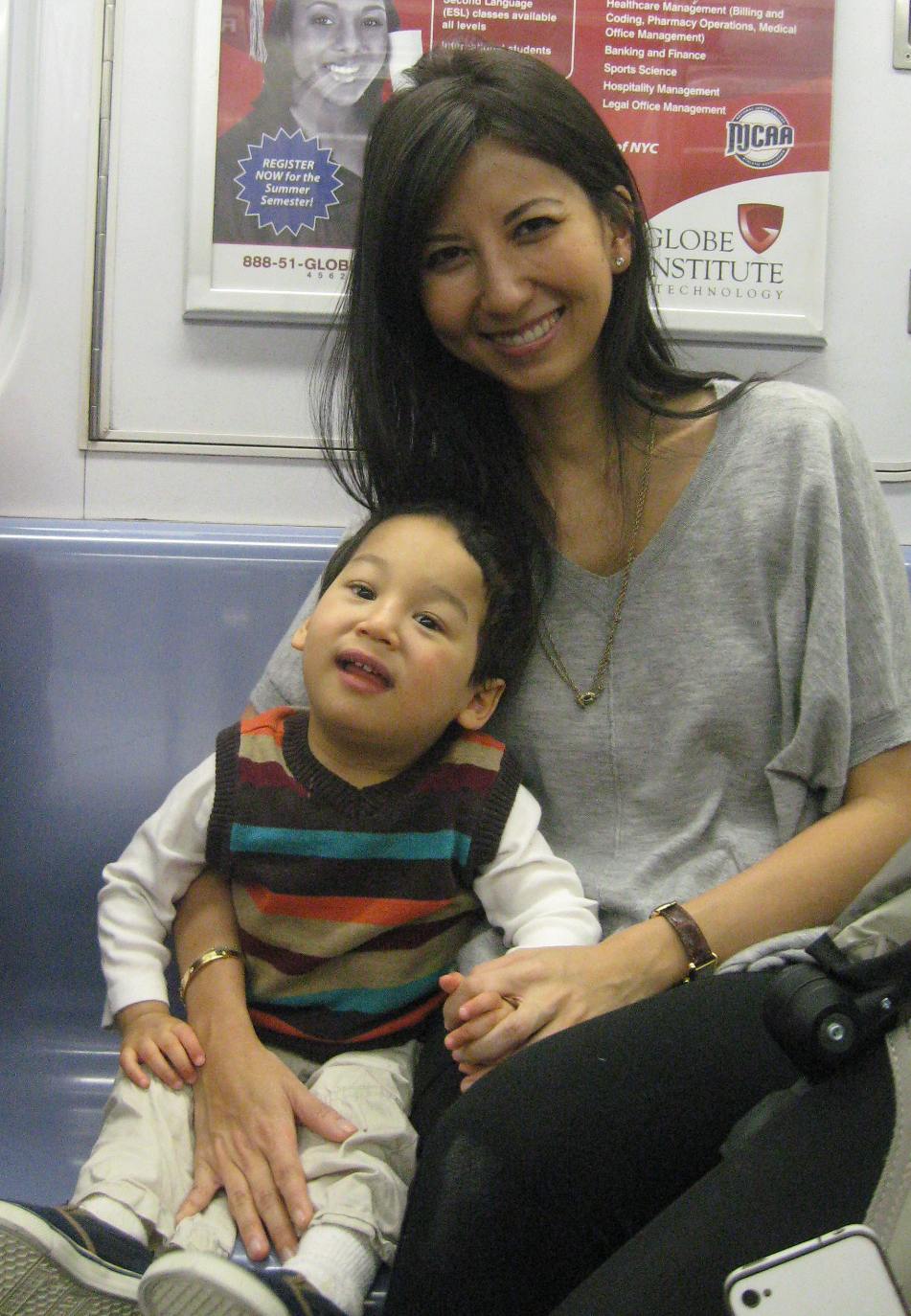
Many will criticise me for drawing a parallel with the state of society and the development of new technologies. Of course technology isn’t solely to blame for a lack of real and personal interactions. But let’s face it, they have made the issue more serious. Just look at the advertisement above. Do we really want life’s pleasures to be about how nifty our touch screens can become?

In 2005 a landmark movie was released entitled, Crash. It depicted New York as a place where people are too insecure and selfish to interact with others. The only way a person can have any dialogue with a stranger is if they, quite literally, crash into each other.

Our children need real friends, not Facebook friends, they need play dates not peer-to-peer gaming sessions and they need the adults in their lives (including teachers) to scrap any notions of emotional distance and become engaged.

Let’s tear down the barriers and bypass the touch screens and actually … talk with each another!

Introducing Late Night Childcare

March 11, 2012

I feel great sympathy for parents working two jobs and unsociable hours in order to feed and clothe their children. I would not want the opinion below to be taken as a criticism of working parents. I believe that parents who work hard to give their children what they need are inspiring.

But as much as I sympathise with late working parents, the idea of late night childcare doesn’t respond to me. I can’t see such a concept working in favour of child or parent.

Happy Faces, in the Brentwood area of Northeast Washington, might be playground zero in a snapshot of a still-languishing economy and the changing realities of the American workplace. Two years ago, five children needed “day care” past 6 p.m. on weekdays. Now there are often 25. Last week, an anxious parent called about needing regular care for a child until 2 a.m.

At 4 p.m. one recent day, staffers escorted little feet to a dining area for dinner, while men in steel-toe boots clomped out of the strip-mall storefront carrying their kids, who had arrived before sunrise. The place sounds like an amusement park and smells like applesauce.

“Leaving your kids here is one of the hardest parts of being a single parent,” said Teresa Williams, 37. She cobbles together hotel clerk shifts and takes classes at Strayer University to provide for Jaylen, her 4-year-old son.

“But nowadays, you have to take the work when you can get it; you have to go to school,” Williams said. “This was the only place I could find that would take my son.”

Happy families give me a great sense of satisfaction. I like to observe happy families interact. My worry is that whilst childcare is necessary, it shouldn’t become a childs’ home. I am concerned that the birth of the 24 hour childcare service will coincide with the death of quality family time.

The Difficulties of Parenting a Special Needs Child

March 10, 2012


Teaching a Special Needs child can be a most difficult proposition, but parenting one is infinitely harder.

I read a brilliant piece entitled, “6 Things You Don’t Know About a Special Needs Parent.” It’s honesty provides the reader with great insight into the difficulties of raising a child that suffers from a disability. Maria Lin, the author of this wonderful article, is the parent of a 3-year-old suffering from a disorder of the 18th Chromosome. Up until now she has been tight-lipped about her experiences. I have no doubt that this article will serve to educate people like myself and will provide some comfort to other parents who are in a similar situation.

Below is her list of 6 insights:

1. I am tired. Parenting is already an exhausting endeavor. But parenting a special needs child takes things to another level of fatigue. Even if I’ve gotten a good night’s sleep, or have had some time off, there is a level of emotional and physical tiredness that is always there, that simply comes from the weight of tending to those needs. Hospital and doctors’ visits are not just a few times a year, they may be a few times a month. Therapies may be daily. Paperwork and bills stack up, spare time is spent researching new treatments, positioning him to sit a certain way, advocating for him in the medical and educational system. This is not to mention the emotional toll of raising a special needs child, since the peaks and valleys seem so much more extreme for us. I am always appreciative of any amount of grace or help from friends to make my life easier, no matter how small, from arranging plans around my schedule and location, to watching my son while I am eating.

2. I am jealous. It’s a hard one for me to come out and say, but it’s true. When I see a 1 year-old baby do what my son can’t at 4 years-old (like walk), I feel a pang of jealousy. It hurts when I see my son struggling so hard to learn to do something that comes naturally to a typical kid, like chewing or pointing. It can be hard to hear about the accomplishments of my friend’s kids. Sometimes, I just mourn inside for Jacob, “It’s not fair.” Weirdly enough, I can even feel jealous of other special needs kids who seem to have an easier time than Jacob, or who have certain disorders like Downs, or autism, which are more mainstream and understood by the public, and seem to offer more support and resources than Jacob’s rare condition. It sounds petty, and it doesn’t diminish all my joy and pride in my son’s accomplishments. But often it’s very hard for me to be around typical kids with him. Which leads me to the next point…

3. I feel alone. It’s lonely parenting a special needs child. I can feel like an outsider around moms of typical kids. While I want to be happy for them, I feel terrible hearing them brag about how their 2 year-old has 100 words, or already knows their ABCs (or hey, even poops in the potty). Good for them, but it’s so not what my world looks like (check out Shut Up About Your Perfect Kid). It’s been a sanity saver to connect with other special needs moms, with whom it’s not uncomfortable or shocking to swap stories about medications, feeding tubes, communication devices and therapies. Even within this community, though, there is such variation in how every child is affected. Only I understand Jacob’s unique makeup and challenges. With this honor of caring for him comes the solitude of the role. I often feel really lonely in raising him.

4. I wish you would stop saying, “retarded,” “short bus,” “as long as it’s healthy… “ I know people usually don’t mean to be rude by these comments, and I probably made them myself before Jacob. But now whenever I hear them, I feel a pang of hurt. Please stop saying these things. It’s disrespectful and hurtful to those who love and raise the kids you’re mocking (not to mention the kids themselves). As for the last comment, “as long as it’s healthy,” I hear a lot of pregnant women say this. Don’t get me wrong, I understand and share their wishes for healthy babies in every birth, but it’s become such a thoughtless mantra during pregnancy that it can feel like a wish against what my son is. “And what if it’s not healthy?” I want to ask. (My response: you will be OK. You and your child will still have a great, great life.)

5. I am human. I have been challenged and pushed beyond my limits in raising my son. I’ve grown tremendously as a person, and developed a soft heart and empathy for others in a way I never would have without him. But I’m just like the next mom in some ways. Sometimes I get cranky, my son irritates me, and sometimes I just want to flee to the spa or go shopping (and, um, I often do). I still have dreams and aspirations of my own. I travel, dance, am working on a novel, love good food, talk about dating. I watch Mad Men, and like a good cashmere sweater. Sometimes it’s nice to escape and talk about all these other things. And if it seems that the rest of my life is all I talk about sometimes, it’s because it can be hard to talk about my son. Which leads me to the final point…

6. I want to talk about my son/It’s hard to talk about my son. My son is the most awe-inspiring thing to happen to my life. Some days I want to shout from the top of the Empire State Building how funny and cute he is, or how he accomplished something in school (he was recently voted class president!). Sometimes, when I’m having a rough day, or have been made aware of yet another health or developmental issue, I might not say much. I don’t often share with others, even close friends and family, the depths of what I go through when it comes to Jacob. But it doesn’t mean that I don’t want to learn how to share our life with others. One thing I always appreciate is whenever people ask me a more specific question about my son, like “How did Jacob like the zoo?” or “How’s Jacob’s sign language coming along?” rather than a more generalized “How’s Jacob?” which can make me feel so overwhelmed that I usually just respond, “Good.” Starting with the small things gives me a chance to start sharing. And if I’m not sharing, don’t think that there isn’t a lot going on underneath, or that I don’t want to.
Teacher Morale at an All Time Low

March 8, 2012

Should we be the least bit surprised that teachers are generally not getting job satisfaction? Did anyone consider for a moment that the introduction of standardised testing would do little for student achievement and do even less for teacher morale?

Or better yet, an even more compelling question, does anyone even care about the plight of teachers?

As long as Governments keep on peddling their diatribe about how many poor teachers there are in the system and how they are determined to expose them before slowly weeding them out. As long as Educational bureaucrats have someone to blame for low achievement levels, then why should they care?

Sure there are more stakeholders in the educational system than just teachers, and it’s true that teachers aren’t the only ones responsible for disappointing academic figures, But who cares? As long as the public buy the spin about the poor state of the teaching fraternity, it doesn’t really matter that spending on education is mismanaged and misallocated, curriculums are inflexible and politically motivated and the paperwork expectations of teachers are extremely unfair. Why should it matter?

“Those hopeless teachers! All they ever do is complain!”

So, no, I am not surprised the teachers of New York are not enjoying themselves:

More than half of teachers expressed at least some reservation about their jobs, their highest level of dissatisfaction since 1989, the survey found. Also, roughly one in three said they were likely to leave the profession in the next five years, citing concerns over job security, as well as the effects of increased class size and deep cuts to services and programs. Just three years ago, the rate was one in four.

The results, released in the annual MetLife Survey of the American Teacher, expose some of the insecurities fostered by the high-stakes pressure to evaluate teachers at a time of shrinking resources. About 40 percent of the teachers and parents surveyed said they were pessimistic that levels of student achievement would increase in the coming years, despite the focus on test scores as a primary measure of quality of a teacher’s work.

Sandi Jacobs, vice president of the National Council on Teacher Quality, a nonpartisan advocacy group in Washington, said the push for evaluations, punctuated by a national movement to curb the power of unions, had fostered an unsettling cultural shift.

“It’s easy to see why teachers feel put upon, when you consider the rhetoric around the need to measure their effectiveness — just as it’s easy to see why they would internalize it as a perception that teachers are generally ineffective, even if it’s not what the debate is about at all,” Ms. Jacobs said.

More than 75 percent of the teachers surveyed said the schools where they teach had undergone budget cuts last year, and about as many of them said the cuts included layoffs — of teachers and others, like school aides and counselors. Roughly one in three teachers said their schools lost arts, music and foreign language programs. A similar proportion noted that technology and materials used in the schools had not been kept up to date to meet students’ needs.

“The fixation on testing has been a negative turn of events when the things that engage kids in schools are all being cut,” said Randi Weingarten, president of the American Federation of Teachers.

I could argue that unless teachers are given the conditions and freedom to thrive in their workplace the results are not going to come. But solutions have never been an urgent matter for politicians. They are far more interested in scapegoats – and let’s just say, teachers make great scapegoats!