Posts Tagged ‘Education’

Do Experienced Teachers Give Enough Back to the Profession?

May 21, 2012

Although I have not had this experience myself, I have heard many young teacher talk with exasperation about their experienced colleagues. These teachers, looking for mentorship, problem solving methods and simple direction and assurance from their older and more confident co-workers, have complained that they are often left to their own devices. They claim that experienced teachers tend to find a comfortable groove and are reluctant to do any more than absolutely necessary.

Whilst I realise that this characterisation of experienced teachers doesn’t reflect all who fall into that category, I wonder whether teacher burnout as well as the fact that experienced teachers have reached the peak both in status and salary, are contributing factors to this likely scenario. Since these teachers have devoted decades to what is a challenging and physically taxing profession, the job of mentoring a new teacher can often be too much of burden.

If this is correct, it is quite unfortunate. Our young teachers, in my opinion, are poorly trained. Our teacher training courses are high on useless theory and low on practical instruction. I have never met a teacher who considered Vygotsky’s theory of proximal development of greater use to their day-to-day teaching than the precious but fleeting weeks spent visiting schools as a pre-service teacher.

There clearly needs to be a greater incentive for experienced teachers to help new teachers settle into their role and adjust to the dramatic change from student-teacher to actual teacher.

Last year I formulated a two-tiered approach to making best use of experienced teachers:

1. Experienced teachers who are deemed to be excelling at a certain standard are offered a mentoring role for higher wages. If accepted to take on that role, these teachers would offer new teachers the chance to spend a few days in their classroom, let them observe their lessons, give them access to the their planning material and be someone out of that teacher’s school environment who can deliver advice and guidance via email and phone. This challenges the mentor teacher to strive in their new position as well as their underling.

2. For the second category of teacher, I recommend that newly retired teachers, who have left the profession with a wealth of knowledge and an eagerness to maintain links with the profession, be paid to mentor and assist teachers who have not been performing at the required benchmarks. Instead of firing teachers in the first instance, I propose that these teachers get the opportunity to improve with a greater deal of support and collaboration.

WHAT THIS SOLUTION ACHIEVES

• Provides the opportunity for excellent teachers to be better paid;

• Allows retired teachers to maintain links with their profession and share their wealth of experience;

• Gives new teachers greater confidence and a non-judgemental mentor who they can approach; and

• Allows teachers currently not working at their premium a second chance that may reinvigorate and refresh them.

Babies Brought into Schools to Teach Kids About Empathy

May 20, 2012

To be able to teach children about empathy one has to get them to understand that the world doesn’t revolve around them. They need to know that everyone has problems, insecurities and sensitivities. Children that struggle to show empathy can get self obsessed and insular.

That’s why I am surprised that some have confused caring for a totally dependant baby, to the understanding that their fellow classmate has problems too. A young baby is simply not threatening. They are cute, fun to play with and a great distraction for any classroom. I don’t understand how caring for a baby has any bearing on a child’s capacity to feel the pain of a classmate:

Babies are set to be brought into primary schools in Cardiff to help improve pupils’ empathy levels and help reduce any bullying and aggression.

The scheme, pioneered in Canada, encourages children to interact in a nurturing manner after observing a parent and baby in the classroom.

Reports suggest children who have taken part are more likely to help others, share, and accept peers as they are.

The programme is being run by the charity Action for Children (AfC).

Around 2,000 school children will take part in Roots of Empathy, as the scheme is known, which will see a local parent and young baby visit their school nine times over the course of a school year.

Debra Ennis, the charity’s children’s services manager, said the project had been running very successfully in Scotland for two years and a Big Lottery Fund grant had enabled them to bring it to Wales.

“We chose Cardiff as we have a really good relationship with the local authority and already run some programmes here.

“The results in Scotland have been amazing. I was a bit sceptical at first – babies going into classrooms – but the turnaround in behaviour in children’s classrooms and drop in anti-social behaviour has been amazing.

I think this program has some value when it comes to fostering maturity and social skills, but I just don’t understand how you can teach empathy for classmates by bringing in babies to the classroom.


Student Sues School for Failing to Get into Preferred Law Course

May 17, 2012

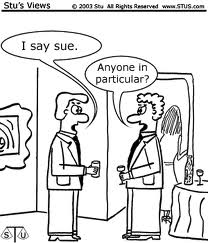
Does anybody want to take personal responsibility for anything anymore? We are become a society of ‘blamers’. Fancy a student in an exclusive Private school suing for a lack of assistance! Those schools give so much more support than Private school. Did it ever occur to her that getting into a course relies on ones own aptitude over anything else? Did it ever occur to her that there were students studying night and day to get into that course? Meanwhile, it is claimed, she was serving suspensions for coming to class late and failing to complete set work tasks.

A former student of one of Australia’s most prestigious private schools is suing the academic institution after she failed to get into the law course of her choice.

Rose Ashton-Weir, 18, claims that the elite Geelong Grammar School, where Britain’s Prince Charles spent two terms as a student in 1966, did not provide her with adequate support, The Age reported Thursday.

As a result, the teenager’s final high school score was insufficiently high enough to gain admittance to law at the University of Sydney, the Victorian Civil and Administrative Tribunal heard Wednesday.

Ashton-Weir is currently pursuing an arts and sciences degree at the University of Sydney.

She had attended Geelong Grammar, 48 miles (77km) south of Victoria’s capital city Melbourne, in 2008 and 2009, but left to continue her high school education in Sydney.

Ashton-Weir told the Geelong Advertiser that the school had failed her.

‘It was incredibly detrimental to my academic skill and development,’ she said.

Ashton-Weir, who was a boarder at the school, reportedly struggled with mathematics, and scored eight out of 68 in one test. Despite this, she was placed in a regular class. The school’s representative, Darren Ferrari, said every effort had been made to help the teen.

Ashton-Weir’s mother, Elizabeth Weir, is also suing Geelong Grammar, The Age reported.

Weir wants AU$39,000 (US$38,740) compensation for rent she paid when they moved to a new home after her daughter relocated from Geelong to Sydney.

Weir also claims that Ashton-Weir’s move resulted in her giving up her cookie business which would have raked in AU$450,000 over a three-year period.

Ferrari told the tribunal that Ashton-Weir had been suspended several times at Geelong Grammer, was absent from classes often and had failed to complete required school work.

I suppose if she wins this case, it would be ironic. Trust a future lawyer to endorse dodgy lawsuits that puts the ‘blame game’ over personal responsibility.

Standardised Testing Meets Spin City

May 15, 2012

A few weeks ago I sought to have an interview with Australia’s Education Minister regarding the upcoming NAPLAN standardised tests. I am still waiting for a reply.

Luckily, I came across his op/ed piece over the weekend, where he tries to allay the fears of the parenting community and make a case for these highly pressured, incredibly unpopular series of tests.

In his piece, he claims that:

Parents and the community should rest assured that the NAPLAN tests are simply a way of measuring how our students and our schools are performing in the three key areas of reading, writing and numeracy. Nothing more, and nothing less.

I assure you Mr. Garrett that parents of 8-years olds subjected to 4 rigorous exams in 3 days understand that these tests represent much more than just a simple way of measuring child progress.

There is nothing in any of the tests that students need to learn above and beyond what is already being taught in the classroom, namely the curriculum.

I am not sure that is true. Whilst my students are expected to write persuasive essays, there is no mention of persuasive writing in the Grade 3 curriculum.

By measuring how our students are performing as they progress through school, we can get a clear national picture, for the first time, of where we need to be directing extra attention and resources.

This is just spin. This implies that these tests exist to help direct the Government in regards to spending and programs. There is no evidence of any Governmental response whether it be financial or a simple change of priorities based on the yearly NAPLAN results. Instead, the outcome of the NAPLAN is designed to expose failing schools, inept teachers and anything and everything that can divert attention from a Government good at measuring performance but poor at performing themselves.

It needs to be made clear to schools and teachers that excessive test practising ahead of NAPLAN is unnecessary. While it helps to be familiar with the structure of the tests, carrying out endless practices should not be encouraged. NAPLAN matters, but it is not the be all and end all.

Unnecessary to whom? If you and your staff were to be tested on the performance of your portfolio wouldn’t you take the time to prepare? When a class gets appraised, so does the teacher. Are we meant to sit back and watch 8-years old kids sit for their first formal exams without preparing them for the kinds of questions and scenarios they are likely to encounter?

Mr. Garett, your opinion piece tries to win over parents, yet it completely deviates from the very issue that parents are most concerned about. Parents do not like seeing their young children exposed to so much pressure. They don’t like to see their children who may currently enjoy learning, subjected to such a negative learning experience.

Today, one of my students was so frightened by the prospect of these exams that he was reluctant to get in the car. We are talking about a child that loves learning.

I have no problem with High School children being tested. But 3rd Graders? Is it really worth it?


If You Respect Teachers, Please Stand Up

May 15, 2012

There is a growing hostility against teachers from the Government down, and children are picking up on it. There is little use reinforcing the message that respect for teachers is paramount to students whose own parents openly treat the classroom teacher with disdain. Teachers are not trusted to do their job, are having to write-up ludicrously long and detailed planners to prove they are covering the curriculum and are subjected to a distasteful smear campaign from elements within the educational system looking for someone to blame.

Why should we be surprised if children exploit the lack of respect for teachers within elements of society?

A STUDENT holds a replica pistol to the head of a staff member in the playground – while a Year 9 boy at another school sprays urine on his teacher.

These disturbing scenes are happening at schools across NSW, just two of 218 serious incidents logged during term four last year in reports to the Department of Education and Training.

The reports show teachers being abused, assaulted and sometimes forced to disarm out-of-control students during fights.

One student fight even featured a didgeridoo as an improvised weapon, while in another incident a pupil stole a teacher’s handbag and made off with her car.

Last November, a Year 8 student threatened a teacher with a replica pistol from the drama department at a south coast school. The deputy principal tried to intervene and was abused by the student.

Meanwhile, at an Illawarra school, a Year 9 student urinated into a bottle and sprayed it on a male teacher on playground duty.

Precise details of the schools, students and teachers involved are removed from the reports, which are published by the department with one-term delays.

A department spokesperson said nine in 10 schools did not report a single incident during term four.

“From time to time, incidents affect schools just as they affect society,” the spokesperson said.

Psychologist Dr Michael Carr-Gregg said the number of violent incidents in schools wasn’t rising but were being noticed and documented “more vigorously”.

“Teenagers tend to be impulsive – all accelerator and no brakes,” Dr Carr-Gregg said.

“Violence as entertainment has desensitised teenagers and made them see violence as a problem solving device.”

He said another factor was teenagers becoming disaffected with rates of family breakdown increasing.

Kids Don’t Need Gold Stars

May 11, 2012

In my opinion, the look that children give when they receive a gold star is misleading. Sure, they look excited, but that excitement is sometimes relative. In truth, kids don’t need gold stars and essentially, that is not what they are after when they produce good work.

What they really want is something – anything. They want a compliment, a smile, a gesture that will make them feel better about themselves. School can be such an overwhelming place. Teachers are so good at being critical. Critical of the way students dress, sit, answer back, talk, the speed in which they work, the neatness of their handwriting etc. The gold star doesn’t just signify an achievement of sorts, it breaks the cycle of criticism and balances the ledger somewhat.

As teachers, we need to be aware that our students crave our acceptance and approval. They may superficially be doing this by trying to earn a gold star, but essentially, all they really want is a confidence boost.

I enjoyed the tips for showing recognition to students by bestselling author and confessed ‘gold star junkie’, Gretchen Rubin:

1. Be specific. Vague praise doesn’t make much of an impression.

2. Find a way to praise sincerely. It’s a rare situation where you can’t identify something that you honestly find praiseworthy. “Striking” is one of my favorite fudge adjectives.

3. Never offer praise and ask for a favor in the same conversation. It makes the praise seem like a set-up.

4. Praise process, not outcome.This particularly relevant with children. It’s more helpful to praise effort, diligence, persistence, and imagination than a grade or milestone.

5. Look for something less obvious to praise – a more obscure accomplishment or quality that a person hasn’t heard praised many times before; help people identify strengths they didn’t realize they had. Or praise a person for something that he or she does day after day, without recognition. Show that you appreciate the fact that the coffee’s always made, that the report is never late. It’s a sad fact of human nature: those who are the most reliable are the most easily taken for granted.

6. Don’t hesitate to praise people who get a lot of praise already. Perhaps counter-intuitively, even people who get constant praise – or perhaps especially people who get constant praise – crave praise. Is this because praiseworthy people are often insecure? Does getting praise lead to an addiction to more praise? Or – and this is my current hypothesis – does constant praise indicate constant evaluation, and constant evaluation leads to a craving for praise?

7. Praise people behind their backs. The praised person usually hears about the praise, and behind-the-back praise seems more sincere than face-to-face praise. Also, always pass along the behind-the-back praise that you hear. This is one of my favorite things to do!

Attack of the Crazy Suspension Addicted Schools

May 9, 2012

There was a time there when suspensions actually meant something. If you were given a suspension, you knew it was for something major and you dreaded the inevitable grilling by your parents when they reluctantly turned up at your school. Whenever I was sent to the Principal’s office, I was on edge that my misdemeanor might lead to a suspension. The fact that I am still alive to write this post tells you that I never got one.

But today, for whatever reason, schools find it necessary to cheapen and make mockery of the very punishment that was a proven success over many years. Nowadays, you can get a suspension for scratching your head or making snorting sounds when you laugh.

You don’t believe me? Well then read this:

A school north-west of Melbourne has been forced to apologise to a student with a learning disability after he was suspended because his parents failed to attend a parent-teacher interview.

Brendan Mason was allowed to return to classes at Sunbury Downs College in Sunbury today, the Herald Sun reports.

Brendan’s father Andrew Mason said the meeting was one of many they had throughout the year with his teachers, integration aides and pathways teachers to discuss his progress.

Principal Brett Moore said Brendan was wrongly issued two detentions after his parents missed the meeting, and this was increased to a one-day suspension after Brendan failed to turn up to either punishment.

Mr Moore said the staff member who issued the detentions made a mistake. The staff member did not understand that Brendan’s parents were not required to go to the meeting because they had already attended a group session with his aides, Mr Moore said.

“I’ll investigate this matter … I’ll unreservedly apologise — I have to the father and I will in person.”

But Brendan’s father said his son would struggle to make up classes he had missed.

“I don’t think he can go back today — he’s not up to it, part of his problem is he gets affected by stress … he definitely can’t go back today,” he said.

In Australia, it is the politicians that are accused of being reactive and low on conviction. However, in my opinion, there is no better current day example of a ‘turncoat’ than schools. They seem to make these incredibly big mistakes. Mistakes that they would happily continue making, until someone gathers the courage to stand up for themselves and notifies the media. Then, without a moments hesitation, they do a complete 180 degree turn and blame their mistake on an errant staff member.

Schools come across as fickle, naive, incompetent and asleep at the wheel. They are quick to blame Governments, parents and students, but are almost never blameless themselves.

It’s time our schools woke up to their failing and got there acts together. Restoring confidence in our schools is pivotal to the hopes and aspirations we have for our children.

95% of Educators Claimed to Have Been Bullied

May 8, 2012

The plight to stop children from bullying others is a hard enough task, What makes it even more difficult, is the fact that the very same people entrusted with controlling the issue are bullied themselves:

BULLYING of staff is rife within Australian schools, with parents and students among the top perpetrators, research reveals.

A staggering 95 per cent of educators claimed they had experienced at least one of 42 bullying behaviours identified by the researchers.

The most common was personal confrontation or professional destabilisation, often resulting in a deterioration of mental and physical health.

The new book Bullying of Staff in Schools – to be launched by former defence force chief Peter Cosgrove tomorrow – examines bullying where an adult is either the perpetrator or the target.

Researchers Dan Riley, Deirdre Duncan and John Edwards surveyed 2529 employees at schools across all sectors. Respondents reflected the national profile of 83 per cent female and 27 per cent male educators.

SCHOOL bullying victims have received almost $1 million in compensation from the Department of Education since January last year.
MORE parents are becoming involved in cyber-bullying, taking up disputes involving their children, a federal parliamentary committee has been told.

Two-thirds were teachers – more than 50 per cent had 21 years or more teaching experience – one in five executives and one in 15 principals.

According to the research, 81 per cent experienced bullying from parents, and 79 per cent named colleagues, closely followed by executives.

Students were named as bullies by 75 per cent of respondents, about seven percentage points higher than principals.

The principal was identified as the most persistent bully, followed by members of the executive and colleagues.

Educators said the most common form of bullying behaviour was questioning decisions, judgment and procedures, followed by tasks set with unreasonable or impossible targets or deadlines, and then being exposed to an unmanageable workload.

This highlights the uselessness of bullying policies and programs. For us to get on top of this problem, we must address bullying of all natures to all parties. Until the culture of bullying is remedied from the Principal down, our children have no chance!

Parents of Underage Facebook Users Should Be Reported: Principal

May 7, 2012

I am a big advocate of Facebook’s age requirement specifications. Children under 13 have no place having a Facebook page. They are simply too young to manage a Facebook page with maturity.

As much as I approve of the age requirements, everyone knows that underage kids have no difficulties getting their Facebook page and Primary schools are teaming with underage Facebook users. This poses deep concerns from a cybersafety and cyberbullying point of view.

However, to suggest that parents of underage children should be reported to child services, both cheapens the important role that child services play in the welfare of our children and labels well-meaning but naive parents as incompetent and unfit for the job:

The issue of underage children creating profiles on social networking sites like Facebook and how to control it can be a problem for both privacy and security — something one UK principal apparently believes should be taken further.

Sister site CNet reports that as there are so many underage children on Facebook — signed up with or without parental consent — one educator believes official, legal consequences for breaking the rules should be put in place.

The school principal of St. Whites School in the Forest of Dean, Paul Woodward, has reason to believe over half of the students in his school are on social networking sites including Facebook. However, the problem is that St. Whites School’s attending students are between the ages of 4 and 11 — far below Facebook’s minimum age in relation to its Terms of Service.

Woodward, speaking to the Daily Mail, believes this issue is serious, and it may be something that official channels should become involved in:

“It’s illegal for you to do this, you shouldn’t be doing it for your child. You need to close down that account, or I might have to tell the safeguarding people that you are exposing your child to stuff that’s not suitable.”

The ’safeguarding people’ are child-protection services, usually reserved for cases of abuse, domestic problems or suspicions of violence. Perhaps this could be considered a drastic move, but as online networks often contain material not suitable for children of a certain age, the logic is understandable. If parents facilitate their child’s access to such networks, then perhaps they can be considered culpable.

A survey completed earlier this year by company Minor Monitor indicated that while over 70 percent of parents were concerned with their child’s activities on Facebook, 38 percent of all children on the social networking site are under 13 — and 4 percent are under 6 years of age.

Facebook says it removes approximately 20,000 underage users daily, but it is also important to note that parents are creating profiles for their children. New parents — you may want to remove that profile you created for your baby. (They probably won’t appreciated their baby photos being online once they’ve grown anyway).

Educating parents is a far more workable strategy than threatening them. I have never heard of a Principal who has gone public with a threat to report half the parents in their school to social services. That’s courage for you!

I commend Mr. Woodward for his conviction and his desire to see that his students stay safe and follow the law. I just think that in doing so, he went way too far.

The Loss of Common Sense in Education

May 6, 2012

Teacher Kathy Kenney-Marshall mourns the lack of common sense in education and shares some stories which highlight the double standards of some parents:

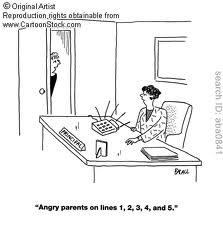
Lately though, one particular sentence repeats itself in my head when I read my school email. The line says, “Common Sense took a turn for the worse when parents attacked teachers for doing the job that they themselves had failed to do in disciplining their unruly children.”

I find this to be all too common as my teaching career marks nearly a quarter of a century. This includes, but is not limited to, expecting that kids do their homework.

Recently for example a parent was incensed when her child was not given a sticker on a homework assignment that was not completed according to directions! A sticker!!

It happened every once in a while when I was newer to the profession; a child on the verge of permanent punishment made up a story to “get me in trouble”: “MOM! The teacher is making me write every spelling word from the whole year 5,000 times each and it’s May!” “MOM! She’s making me write a 17-page paper on the 17 countries in West Africa…by TOMORROW!”

Most of the time the parents of these embellishment makers, will write a note asking why I am torturing children, but for the most part, I get a very nice call or note letting me know about the tall tales that are coming home to deflect the attention off themselves and whatever it is they have or haven’t done, and onto me, the evil teacher in room B29.

But, as I spend more and more time in the classroom, I find myself addressing situations that make me believe that Common Sense is, if not dead, rushing out the doors of many homes. Not too long ago, I had a parent call me to say that she was having trouble putting her child to bed. She asked what I could do to help her. I thought perhaps she dialed the wrong number and really meant to call the pediatrician. But sadly, I was mistaken.

She literally asked me if I could come to her home to help her put her unruly-at-home son to bed because I didn’t seem to have trouble with him at school.

Another day, I received a phone call from a distraught mother whose child was new to our school. She was upset because her very bright daughter wrote a very messy essay and reported, “Mrs. KKM said to do it this way.”

The mother berated me for forcing her child to do a bad job. It didn’t take long to figure out the confusion; I asked the children to do a rough draft, but since they are only 8, and I like to rhyme, I call it a “sloppy copy” and apparently I failed to explain the term properly to an appropriately literal third- grader. The mother and I had a laugh and so did the student the next day.One of my favorites of late was a parent of a child who transferred from a very religious private school. The parent called to inquire about a discussion that her son relayed to her from the day. The conversation went something like this:

Parent: “Are you teaching about the family in school?”

Me: “No, there is a family/community unit in first grade, but not in third.”

P: “Well are you teaching about alternative lifestyles?” (Now I was interested)

M: “Hmm….no. I can’t figure out where you’re going with this, why do you ask?”

P: “Mrs. Kenney-Marshall! We are a very conservative and religious family! Are you teaching homosexuality?!” (I almost choked on my water.)

What I wanted to say and almost did, but MY Common Sense took over just in time, “No, Ma’am, that’s not until fourth grade.” After a few more questions from me, I realized what she was talking about; in math class, I had talked about how certain numbers are related. For example; 4, 3, and 12 are related in multiplication and division. She was immensely relieved, but as I hung up the phone, I shook my head and found myself missing my good friend Common Sense who had apparently vacated her home that day.