Posts Tagged ‘Education’

We Are Losing the Fight Against Bullying

November 24, 2010

This is a point made very clear in a recent article entitled, Why we’re losing the fight against bullying.  The article suggests that school policies are flawed or just simply ineffective and bullying continues to be as rampant as ever.  Before I discuss my approach to the issue, I want to point out some interesting points made in the article:

“Some parents, I am sad to say, are not at all bothered if their child is a bully. In fact, they can be quite proud of it,” explains Ken Rigby, a bullying expert in Australia.

Schools can post warm and fuzzy messages about tolerance in the hallways, and hand out good-citizen awards at assemblies – both well-meaning, and necessary – but that strategy speaks loudest to students who wouldn’t bully in the first place, and many of those who do (between 10 and 20 per cent) don’t necessarily see their behaviour that way.

Schools can post warm and fuzzy messages about tolerance in the hallways, and hand out good-citizen awards at assemblies – both well-meaning, and necessary – but that strategy speaks loudest to students who wouldn’t bully in the first place, and many of those who do (between 10 and 20 per cent) don’t necessarily see their behaviour that way.

Zero-tolerance policies on fighting, as cases in Canada have shown, do not solve the problem either, often leading to punishment without investigation, and little follow-up.

I have very strong views on bullying and anti-bullying policy formulation.  It is my opinion that we have our emphasis wrong.  Bullying isn’t a priority – it is THE PRIORITY.  As a teacher, I am entrusted not with people’s money or belongings but with the most important and precious things they have – their children.  It is my responsibility to ensure that they are safe and secure.  Sure, I have to teach them and help them grow academically, but even more so, I have to do my best to make sure that the child they dropped off at my classroom is going to come back in as good if not better emotional shape than when they arrived.

When I speak to my class at the beginning of the year, I tell them there is a sure-fire way for them to have to repeat the year a second time.  It’s not if they find the work difficult or are struggling to pass assessments – it’s if they are not treating their classmates with respect.  Because if they are not ready to treat others with respect, they are not emotionally ready to go up a year level. 

I’m not joking.  I really do mean it.

There is a lot of talk about child centered learning vs teacher centered learning.  I prescribe to neither.  Instead, I believe in what I call “class centred learning”.  The main focus of my teaching is that everyone in the class must respect each other.  It is the fundamental rule for assessing my own performance.  They don’t have to like each other.  But they absolutely must respect each other.  And ultimately, it is my duty to empower the class and create an environment of closeness and mutual respect.

Does it mean that there is no bullying in my classroom?  Absolutely not.  I wish.  I’m only an average teacher.  What it means is, I take more interest in the welfare of my class than any other consideration.

So that means your actual “teaching” suffers?  Absolutely not.  In fact, if there is tension, poor self-esteem, bullying and disharmony in the classroom, there is no way a teacher is going to get the class to work at their potential.  Think about how hard it is for us adults to operate at work with colleagues that don’t respect us.

I think of it this way.  If my students go home still unsure about a maths problem, I can fix that up the following day.  But, if my students go home victimised by fellow classmates due to my inaction – then I may have caused potential damage.

Is it Harder Being a Kid Nowadays?

November 23, 2010

I never would have thought so.  In actual fact, I would have guessed that it is easier being a teenager now than it has ever been.

Not so according to the annual Mission Australia report.  The report which quizzed 50,000 young Australians primarily aged between 11-19 revealed that:

27 per cent of them were concerned about stress levels, while 20 per cent aged 11-14 said they were struggling to cope.

Respondents spoke of the high expectations and soaring levels of pressure experienced by young people “nowadays”, seemingly in comparison to the angst-free utopia enjoyed by previous generations.

“We’ve got more responsibilities, like part-time jobs,” one high school student offered by way of explaining the apparent cause of this skyrocketing stress.

Now, I could be wrong, but I doubt highly that our teenagers are under more pressure than generations before.  I think they are more mollycodled and  protected than they have ever been.  Teenagers have always had jobs.  The only difference is, they used to get jobs to support their family, now they are getting jobs to support their consumerism.

Perhaps they’re just better wingers than ever before?

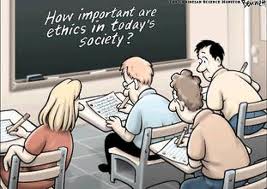
The Ethics Debate

November 22, 2010

For the past few years there has been much debate about the place Ethics classes have in Primary school education.  There has been resistance from religious groups on the basis that it is competing with formal RE (Religious Education lessons) for numbers and government funding.  Proponents of having ethics instruction in our government schools claim that people have a right to choose what is the best for their children, and that non-religious students are better off having an alternative program rather than just sitting out of RE and taking part in an unstructured lesson (basically consisting of free time or watching a movie) instead.

In a new law about to be passed in NSW, parents will have the right to ethics classes as an alternative to scripture in their child’s school even if the principal and the majority of the school community opposes them.

A Baulkham Hills parent, whose child participated in the trial, said: ”The majority of parents, ethics teachers and children at our school found the ethics classes an enriching complement to the many good SRE [Special Religious Education] classes on offer”.

However, many of those opposed were concerned about ethics competing with scripture classes.

”Ethics is already taught in other forums in state primary education and should not be allowed to attract students away from meaningful faith-based studies,” wrote one.

Whilst I am not opposed to have Ethics lessons taught at our schools, I would like to make the following points:

1.  I would like to see RE and Ethics material being submitted to a curriculum board for approval.  Everything taught at school must be rich, stimulating, engaging and subject to curriculum style scrutiny.

2.  Every teacher should, and most do, invest time in their day-to-day teaching, imparting ethics by teaching their students right from wrong, helping them to make healthy choices and showing them how to maximise their potential.  The idea that students without an Ethics program at their school are is some ways missing out on ethics instruction is just wrong and disrespectful to hardworking, caring teachers.

Is the RE vs Ethics debate prevalent in countries other than Australia?  What is your opinion regarding the validity of ethics instruction?

Drunken Teachers Beat-Up

November 21, 2010

The Sunday Telegraph should be reprimanded for an appalling article which claims that teachers in Catholic schools drink alcohol in the staff room on a Friday evening.  The article doesn’t ring true, seems designed for shock value rather than true journalism and fails to give proper evidence to back up its claims.  Read the article here:

http://www.dailytelegraph.com.au/news/happy-hour-in-school-staff-rooms/story-e6freuy9-1225957381180

Example 1:  The Sunday Telegraph understands many of the 200-odd Catholic schools in NSW to have refrigerators stocked with alcohol in staff rooms and to publicise cheap alcohol.

Yeah?  How many of these schools?  Prove it!

Example 2:  Drug & Alcohol Research & Training Australia’s Paul Dillon said he had grave concerns about the example being set for students by the behaviour.

What behaviour?  You have yet to prove such a culture of drinking exists.  You have yet to name 1 of the 200 schools.

Example 3: “Certainly I have confronted schools and principals about the practice and the worst thing I’ve seen is actual prices of alcohol pinned on fridges,” Mr Dillon said. “Young people go into the staff room, they see the fridges.”

Students do not have access to staff room fridges.  Heck, they shouldn’t have access to the staff room!  How many schools have you visited with alcohol prices?  Does it really matter anyway?

Example 4:   “There is also the issue that [teachers] are doing this on a Friday night. They are then getting behind the wheel and driving home.

“When I’ve raised this, the teachers have become very, very defensive. They say things like, ‘It is our right to do this’.”

If they went straight to the pub it would be none of your business, and since you have yet to establish that this is a clear problem, I still ascertain, it is none of your business.

So what do we have here?  Figures to prove its a problem?  Nope.  Pictures or video footage of beer-loaded fridges and booze-ups? Nope.  Can we name and shame a school that has transgressed in this way?  Sorry, we don’t have that information.  How about a quote from a student who witnessed this behaviour or saw evidence of alcohol in the staff room?  No, we don’t have that either.

There is no story here.  If I was affiliated with a Catholic school I would be ropable.  What an abominable piece of gutter journalism!

Shame on you Sunday Telegraph!

What Are We Doing to Our Kids?

November 19, 2010

It’s unbelievable how political correctness has infiltrated our schools. The intentions may be noble, but the results are sure to be disastrous. Yesterday, I wrote of the incredibly stupid hugging ban at a Gold Coast primary school. Today, I was informed of another shocking school rule at Mt Martha’s Osbourne Primary School in Victoria.

The primary school principal of Osbourne has banned students from being in groups of more than three while at school in a radical plan to combat anti-social behaviour.

Principal Liz Klein said the ban was a short-term measure to tackle anti-social behaviour around the schoolyard.

But Ms Klein denied the school, with more than 600 students, had a bullying problem.

“This is not about bullying, it’s about silly, annoying behaviour at the hands of a select few,” Ms Klein said.

But that’s not all!  Two months ago a Queensland school principal was under pressure to perform a policy backflip after he banned students from doing cartwheels and hand stands in the playground.

This is just wrong!  School is tough enough as it is.  We should be investing more time and energy into making school a far more friendly and inviting place.  Draconian rules like these are so counter-productive.

What’s next?  Outlawing monkey bars?  Bunsen burners?  Sharp pencils?  Scissors?  Smiling?

Get a grip!  If you want to make schools safe, let go of political correctness and instead change your culture!

Political Correctness at School

November 18, 2010

I realise schools try to avoid controversy wherever possible, but what was William Duncan State School in Nerang doing?  Banning primary school aged kids from hugging?

Reports indicate that the children at the William Duncan State School are being punished with detention for hugging or touching their friend.

Parent Ross Kouimanis’s whose daughter Emily was given a warning for hugging her best friend calls it “Political correctness gone mad.”

”They are making something so innocent seem dirty or wrong. It’s just normal”, he said.

So what is the reason for this new policy?

Education Queensland South Coast Regional director Glen Hoppner said there was no EQ policy banning hugging in schools.

”William Duncan State School has determined that unwanted or unnecessary physical contact, which in some circumstances can include hugging, is inappropriate playground behaviour,” Mr Hoppner said.

”The school is mindful of protecting their right to not be touched in an unwanted or inappropriate way.”

Why are we making schools, which you could already mount an argument, isn’t the most natural surrounding for a child, into a cold and gloomy place?  Whilst teachers all around the world struggle to keep kids engaged, happy and motivated at school, bureacrats work hard at making school as difficult a proposition for our children as possible.

School should be as fun and exciting as possible.  We should focus our students to get on, co-operate, care for each other and thrive.

Less rules!  Less political correctness!

Body Image and Our Youth

November 17, 2010

Young Australians are struggling with stress and school related challenges, but body image is by far their biggest concern.

The survey found stress levels had spiked this year. When asked to rank their personal concerns from a list of 15 issues, 27.3 per cent nominated “coping with stress”, putting it in the top three, compared with 18.7 per cent last year.

Anne Hampshire, from Mission Australia, said that body image issues created stress for both genders.

“What came through in the responses was that young people are worried both about their personal body image and about how the media continues to promote a level of physical perfection that is neither healthy nor achievable,” Ms Hampshire said.

Carmen Acosta, also from Mission Australia, says the results show there needs to be more emphasis on education and programs to tackle poor body image.

“The work needs to continue past adolescence and the information and the support to young people should be also included or extended to post-school environments such as tertiary institutions,” she said.

From my experience in the classroom, body image is a huge area of concern among upper-primary school aged kids as well.  The issue is a strong area of interest of mine, and an inspiration for my unpublished novel (which deals extensively with body image).

It is essential that we improve the way we deal with this very real concern.


Nurturing the Inquiring Mind

November 16, 2010

One of the most important contributions a teacher can make to their students is the ability to get them to think for themselves.  Essentially that involves giving them the tools to ask the important questions and make their own conclusions.  Just simply filling students up with facts is hardly good enough.  For our students to thrive we have to nurture their inquiring minds.

Academy-award-winning film producer Lord David Puttnam is now a member of the British House of Lords, whose policy focus is on improving education standards.  In a recent television interview, Lord Puttnam called for teachers to make inquiry in the classroom a priority.

“The most important thing I think teachers can do for young people is to make them inquiring, is to ensure that they know how to gather information, that they check information and they take their information from a multiplicity of sources.

If you can get a child to do that and then become interested in the whole process of information gathering, you’re halfway towards becoming a learner. And once you’re a learner, you’re a learner for life. That’s certainly been my experience.”

It’s certainly something to consider when reflecting about how well we are teaching our kids.

Girls and Maths

November 15, 2010

At a time when so much time and effort is exerted into getting better academic results from the boys, I wonder if we’re doing enough, if anything at all, to make maths more appealing to girls.

A study to be presented at an education conference in Melbourne this month shows girls performing poorly compared with boys in areas of high achievement and enrolment trends in year 12 maths subjects.

Its findings show a clear pattern of male dominance among the Victorian students who achieved the top 2 per cent of the study score results in each of the maths subjects between 2007 and 2009. //

Boys were heavily over-represented among the top scorers, relative to their enrolment proportions in each maths subject.

Sure, boys may be wired to excel in maths, but should that stop us from rethinking the way we teach it to girls?

I love teaching maths.  As a Grade 4 teacher, I teach all general subjects, yet maths is my favourite.  I find that there is so much scope for teaching the subject in a creative fashion rather than rote memory skills and algorithms, which can be boring and off-putting to many.  In class we become top-secret spies, prisoners, fashion designers and architects.  Sometimes the class don’t even realise it’s a maths lesson!

A creative approach to maths, especially in the early years, is just the tonic to make the subject more exciting and accessible – especially to girls.

What is the Perfect Class Size?

November 15, 2010

A report came out recently by the Grattan Institute which claims that reducing class sizes does not necessarily improve schooling.

The study’s author, Dr Ben Jensen, says that while the drive to reduce class sizes is well intentioned, his research suggests that it has little impact on the quality of education for children. He says that more effective teachers would produce a better result.

But the Teachers Federation disagrees with his report, which is based on research carried out in the US state of Florida.

“Any parent given a choice between a large class or a smaller class will choose the smaller class because they know their child will get more teacher time and support,” federation vice president Joan Lemaire said in a statement.

Just because good teachers are a better indicator of success, doesn’t mean that our classrooms aren’t too crowded.  Whilst I appreciate that there is a big cost in cutting class sizes, you can not tell me for a second that a teacher is just as capable of teaching 27 as she/he is of teaching 17.  A good teacher will flourish in most environments and will rise to most pressures, but imagine how much more influential they would be in a smaller class.

I have 17 in class which would probably be the envy of many teachers.  I feel that 17 is a good number, and I wouldn’t ideally want to teach a class of 25 or more.

How many students do you have in your class and what do you think is the ideal (being realistic of course) amount?