Posts Tagged ‘Education’

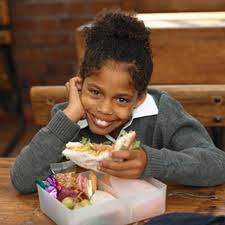
My Take on the “Lunchbox Wars”

December 22, 2010

It is my opinion that schools not only have a right but a duty to look after the welfare of their students.  Schools are well within their rights to impose sanctions on what foods are allowed and not allowed to be included in the children’s lunch boxes.  Yes, there are those who believe that being in a free country should give parents the freedom to do as they please.  I agree with that theory in part.  I think parents should be able to feed their kids whatever they want – in their own home.  At school, there is nothing wrong with imposing restrictions on sugary foods.  On the contrary, it’s commendable.

I am writing this in defense of Clifton Park Primary School, who are embroiled in a “Lunchbox War” with some parents over such a ruling:

A LOCAL school’s decision to monitor the contents of their students’ lunchboxes has sparked heated debate within the Bunbury community.

In last week’s edition of the Bunbury Mail, the mother of a Clifton Park Primary School student was outraged to learn her five-year-old son’s lunchbox snacks were being confiscated due to their sugar content.

The Bunbury Mail office was flooded with letters and Facebook posts from residents voicing their opinion.

Joy Whysall’s letter said it was an example of the world gone crazy.

“What gives others the right to choose what we eat?” she said.

“This is a disgraceful state of affairs when a teacher can go into a child’s lunchbox and take out what they feel is unsuitable for the child.”

I am sorry to disappoint the irate parents of Bunbury, but when they send their kids to a school, they are getting a lot more than a child minding service.  We teachers not only educate your kids, but we care for them and about them.  We educators strive to give your kids a safe, positive learning environment in which they can thrive.  Instead of seeing this as a violation of privacy, see this as a show of care and dedication.

I hope this exhibition of anger does not intimidate other schools from following Clifton Park’s fine example.

Breast-Feeding Benefits Academic Achievement

December 21, 2010

Findings from a recent study in the journal ‘Pediatrics’, show that breast-feeding infants for at least six months appears to give kids’ an advantage in school.

This is not a new finding in itself.  However, what was of particular interest, was that boys appeared to benefit the most.

The researchers, from the University of Western Australia in Perth, have followed 2,868 children since the early ’90s. The study showed that, at age 10, boys who were breast-fed for six months or longer scored higher in math, reading and spelling compared with boys who were breast-fed for less than six months. Girls who were breast-fed for at least six months showed a small improvement in reading. The researchers controlled for other factors that could influence school performance, such as family income and education and how often the child was read to.

There were two reasons given for the link between breast-fed babies and academic performance:

1.  Breast milk is rich in long-chain, polyunsaturated fatty acids that are critical to brain development. It’s not clear why boys showed the largest gains from being breast-fed, but the authors explain that male babies are known to be more vulnerable in infancy than females. They speculate that breast-feeding “accelerates the rate of maturation in boys.
2.  Boys may also benefit more from the mother-child relationship facilitated by breast-feeding. “A number of studies have revealed that male infants are more reliant than female infants on maternal attention and encouragement for the acquisition of cognitive and language skills,” the authors wrote.

We Can Do More!

December 20, 2010

Teaching boys especially, requires greater investment and further innovation on the part of the teacher.  Boys are falling way behind, and there is no point sitting on our hands.  We can’t let it get any worse.

According to figures obtained by the BBC’s Today programme, one in 11 boys begin secondary school with the reading skills of an average seven-year-old.

Educational experts point out that once children reach secondary school age, it can be very difficult for them to catch up to the reading levels of their peers.

Speaking to the BBC, education secretary Michael Gove said it is “unacceptable” that children leave primary school without adequate reading skills.

“We want to ensure that those schools where children are not being taught to read are tackled,” he stressed.

Teaching kids to read is a fundamental role of the Primary teacher.  Since I joined the blogosphere, I have encountered brilliant blogs from all around the world that has informed me, shared ideas and strategies and opened my eyes to new technologies to introduce to the classroom.  This kind of collaboration has such a profound effect on teaching and learning and has helped me become a better educator.

That’s why I think we can address issues such as those quoted above together.

Let’s work cooperatively in trying to improve literacy and numeracy, allow our students the opportunity to express themselves and think creatively and let us ensure that both girls and boys are achieving.


A Quarter of 4-5 year-olds Obese!

December 19, 2010

Some very disturbing figures released recently in the UK show that 23.5% of four to five-year-olds are overweight or obese.

Unfortunately it only gets worse in the following years:

One in three (33.4 per cent) of children in their final year of primary school (aged 10 to 11).

In the 2009/10 reception year, 13.3 per cent of children were classed as overweight and 9.8 per cent as obese.

But in Year Six, the final year of primary school, 14.6 per cent were overweight and almost a fifth – 18.7 per cent – obese.

Slightly more boys than girls were either overweight or obese in both age groups.

It is easy to dismiss these figures as an outcome of poor parenting, but schools have the opportunity to become far more proactive.  Schools can intervene by educating both child and parent and offer healthy choices in cafeterias.

Are Our Kids Growing Too Fast?

December 19, 2010

Is our Education system too harsh on our kids?  Is it structured to hinder natural growth?

According to the feedback from parents and Principals in WA, children are rushed to adapt to situations and environment before they are ready.  They feel that children are not ready to start high school in Year 7.

The survey by the WA Primary Principals Association also shows 85 per cent of parents do not want Year 7 moved from primary to high school at public institutions.

WAPPA president Stephen Breen said parents feared their children would grow up too quickly if forced to attend a high school so young.

I had no idea that Year 7 is still considered primary school in WA.  In Victoria it is high school.  As for the argument that children are too young to make the transition from primary to high school at the end of Grade 6 – I think it has some merit.  ‘They are young and the transition is a big one.  I do, however, believe that it is incumbent on the Grade 6 teacher to help build up their students’ maturity levels to a point where they can thrive in their first year of high school.

I wonder if the same type of issue applies to education systems around the world.  Is this the case?

Hijacking the Curriculum for Political Correctness

December 15, 2010

The proposal to include the traditions of other religious faiths as part of the formal school curriculum must be summarily ignored.  The curriculum does not, and has never contained any religious content before, why tamper with it now?

Keysar Trad, president of the Islamic Friendship Association of Australia may want more students to have awareness of Islamic festivals, but fiddling with the curriculum is not the way to go.

As someone of neither Christian nor Muslim faith, I have absolutely no problems with schools acknowledging festivals from different religions and cultures, but that doesn’t mean they have to insert them in the curriculum.  And you can’t compare Islamic festivals to Christmas, as Christmas is a holiday celebrated by non-religious as well as religious people.

It is also important to note that after finishing reading about Mr. Trad’s history and long list of controversies on his Wiki page, I am deeply concerned that a man of his reputation is allowed to represent his people, especially under the banner of a “Friendship Association of Australia.”

Positive Images and Our Kids

December 13, 2010

Schools must do all they can to integrate the teaching of healthy foods into their curriculums.  There is nothing more powerful for a class full of impressionable kids, than to see their friends chomping away happily on fruits or vegetables.  A program, that engages and gives kids cooking and food tasting experiences whilst also teaching them about healthy eating is pivotal to curbing morbid obesity later in life.

Whilst peer pressure is usually a negative thing, watching a classmate take part in healthy behaviour has a profoundly positive result on a child.  That’s why a program such as Food for Thought trialled in New Zealand schools looks a winner.

The initiative will see schools in the district implementing new, interactive health and nutritional education courses that aim to improve the health of the community.

Qualified nutritionists teach children the importance of a balanced diet, reading and understanding nutritional information panels and how to prepare healthy meals.

Children are given the opportunity to visit the supermarket to buy ingredients for a healthy class lunch, which they make back in the classroom.

I hope programs like this one spread universally. 

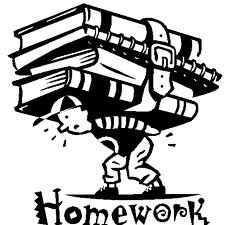
Homework: Is it a Good Thing?

December 12, 2010

I used to be a non-believer when it came to homework.  I used to think that my students work long and hard enough during the day, and that their evenings should be as comfortable and stress-free as possible.  I believed that beyond reading practice, the only work Primary kids should do after school is help their parents with chores such as setting the table and maintaining a clean room.

Homework can be nothing more than a device in keeping kids busy.  It can, if administered improperly, do precious little to extend the child and develop their skills.  But what I’ve found is, homework, when properly considered and developed, can help students revise and build on concepts covered in class.  For example, worded questions featuring relevant, everyday situations, can be a great homework activity to complement maths skills taught in class.

Whilst I still think that the best work a child can do at home is contribute to the running of the house, that really isn’t any of my business.  Realistically speaking, kids tend to waste a lot of time watching television and surfing the internet.  A few follow-up questions on concepts learnt in class seem both fair and beneficial to the child.

Worst Examples of Teacher Discipline

December 10, 2010

After reading about two recent cases of discipline gone wrong, I couldn’t help but reflect on some terrible instances of terrible disciplinary methods inflicted on me by my teachers.

A few weeks ago I wrote a post about an Australian teacher who was accused of sticky-taping some of her students lips together as a response to their unruly behaviour.

Unfortunately, it gets worse.

Today I read about the British teacher given a 3-year suspension for forcing autistic pupils to run on a high-speed treadmill as a punishment.

Glenda Partridge, 35, was also alleged to have taken food away from youngsters if they misbehaved and dragged them across the floor by their collars.

Whilst I never experienced anything as horrific as that, it did bring back some memories from my youth – three incidents in particular:
1.  I was caught chewing gum and was forced to sit in front of the class  with my hands in the payer position, chewing gum firmly entrenched between my palms.  It took hours for the chewing gum to wash off.
2.  After being caught speaking out of turn, the teacher coloured in a circle on the board and made me stand at the chalkboard, with my nose placed on the circle.
3.  I got caught writing lines in class for another teacher.  My teacher spotted me and approached me angrily.  I went to put the lines away, and in doing so dropped them on the floor.  As I attempted to pick it up my teacher slapped me on the back of the head.
I was wrong on all three occasions, but the punishments were a bit too excessive.  I was actually a very well-behaved child, so these incidents really stood out in my memory.
What was the worst examples of student discipline handed out to you?

Is Competition in the Classroom a Good Thing?

December 10, 2010

I have the least competitive class on the planet.  My class clearly struggle when pitted against each other.  They are a naturally tight class, with no discernible popular figure and no outcast.  It is a credit to them that they are so close.  Similarly, they deserve kudos for being committed to continuous improvement, not out of a desire to be better than their classmates, but simply because they want to achieve to their maximum.

But then comes the annual Sports Carnival, and all of a sudden, things change.  The kids just couldn’t cope with coming third, fourth and especially last.  They felt they let themselves down as well as their team.  Some of them were justifiably upset that they were put in the same heat as much faster runners and were therefore not even given a chance to win.

Part of me feels responsible.  I noticed at the beginning of the year that this group hated competition, and I tried to ensure that I steered clear from competitive activities and tests.  When testing the kids, I don’t give them a letter or number grade, instead I chose to give them clear feedback on skills they performed well in and found challenging.  This not only prevents students from comparing themselves to others, but also provides clear feedback on what they can do and what skills require further practise.

Some say that competition is good.  It is character building, it prepares the child for the competitiveness of the real world and motivates the child.  I am skeptical when it comes to competition in the classroom.  My experience tells me that many teachers resort to grades and levels in elementary level when the content of what they are teaching isn’t particularly interesting and requires a bit of superficial stimulus.

Am I doing more damage than good, by protecting my students from competing against each other?  Even though my students are motivated and have a natural enjoyment of learning in the current setup, am I doing a disservice by not preparing them for the realities of not winning, getting beaten and dealing with the joy of doing better than others?