Posts Tagged ‘Education’

There is Something Seriously Wrong Happening Here!

January 28, 2011

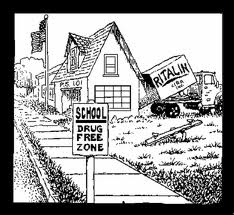
I am no expert and don’t pretend to be one, but I can’t help being quite disturbed by the incredible amount of young children being prescribed medication.  As a teacher and parent, it hurts to know that kids all over the world are being prescribed these drugs in vast numbers.

I realise that there are children that legitimately require medication – but surely we are prescribing these drugs far too easily and haphazardly.  This is not Aspirin!  These are powerful drugs.  Surely, a global body needs to be set up to review the practice of mass prescriptions and to further tighten the regulations.  I am scared for the next generations of children.  I never want to live in a society where prescribing powerful drugs to kids is seen as normal or standard practice.

In the past week alone I have read countless articles on this issue.  The article below from the UK claims drugs are being prescribed for ‘normal’ reasons, such as shyness:

Children are being prescribed mind-altering “chemical cosh” drugs for conditions such as shyness and mild social anxiety, behaviour experts have warned.

Young people are routinely being given medication to treat normal childhood conditions, it was claimed, despite fears over their long-term health.

The disclosure came as it emerged that the number of eight- to 13-year-olds on drugs such as Ritalin has soared seven-fold since 1997.

But Dave Traxson, a senior educational psychologist who works in schools in the West Midlands, warned that children were increasingly prescribed drugs for “normal” conditions.

“I feel very strongly that the time is right to challenge the growing practice of medicating our children for displaying behaviours and thought processes that until recently would have fallen within the normal range,” he said.

There was this article along the same lines from Australia:

THE use of stimulant drugs to treat attention deficit hyperactivity disorder (ADHD) is soaring, with data showing prescriptions for some medications grew by 300 per cent over seven years.

Prescription of the stimulant drugs rose by 87 per cent between 2002 and 2009, Australian researchers have found. Use of one drug commonly sold as Ritalin, methylphenidate, increased by 300 per cent.

Most studies of stimulant medication only tested its effects for between six and 12 weeks, and there was no evidence it improved educational or life outcomes, Associate Professor Jureidini said.

This description from the US site defending the use of Ritalin and other such drugs:

Stimulants are safe and effective for most children, helping them to focus their thoughts and control their behavior. In some children, these medications may cause mild side effects, such as decreased appetite, weight loss, stomachaches, sleep problems, headaches and jitteriness. Rarely, there may be more serious side effects, such as dizziness, stuttering, tics or increased blood pressure.

This article was printed in a Malaysian newspaper:

ALMOST one million children in the United States are potentially misdiagnosed with Attention Deficit-Hyperactivity Disorder (ADHD) because they were the youngest and least mature in their kindergarten classes, a US study found.

And finally, another damning article from the US:

While stimulant drugs have long been known to help children with ADHD alleviate symptoms, new studies have shown the opposite effects.

Many experts recommend prescription of a stimulant drug in severe cases, and often believe ADHD symptoms can be treated by using methods other than medication.

One dangerous possible side-effect of Ritalin is the potential alteration of personality. Some individuals have explained that when medication is stopped, the actions, thoughts, and feelings are vastly different than when taking the medication.

Whilst ADHD no doubt exists, and is often best treated with drugs, I am still of the opinion that we are drastically overprescribing these drugs.  I may not be an expert, but I still feel sufficiently concerned to speak up about it.

As teachers have a part in the decision as to whether or not a child is prescribed medication, I make the following request.  Please don’t take the decision lightly.  Don’t let an easier classroom experience ever taint your objectivity.

The Latest Sport: Degrading Our Teachers

January 27, 2011

Don’t get me wrong, I am extremely positive about President Obama’s passion for education.  It is great to hear him talk of the virtues of this great profession:

“Let’s also remember that after parents, the biggest impact on a child’s success comes from the man or woman at the front of the classroom. In South Korea, teachers are known as “nation builders.” Here in America, it’s time we treated the people who educate our children with the same level of respect. (Applause.) We want to reward good teachers and stop making excuses for bad ones. (Applause.) And over the next 10 years, with so many baby boomers retiring from our classrooms, we want to prepare 100,000 new teachers in the fields of science and technology and engineering and math.” (Applause.)

“In fact, to every young person listening tonight who’s contemplating their career choice: If you want to make a difference in the life of our nation; if you want to make a difference in the life of a child — become a teacher. Your country needs you.” (Applause.)

But if the US really needed good teachers, why does it treat its current ones so badly?  Why does it constantly refer to disposing of bad teachers instead of offering support to improve teacher performance?  It may be “time we treated the people who educate our children with respect,” but until you do, I’ll take it as words rather than substance.

I am referring to three examples which highlight the lack of respect of American teachers.

1. The recent decision by a New York State Judge to release the performance ratings of thousands of New York teachers to the media:

The judge, Cynthia Kern of the Supreme Court of the state of New York, wrote in a nine-page decision that the UFT’s argument “is without merit,” adding that the court of appeals “has clearly held that there is no requirement that data be reliable for it to be disclosed.”

The data attempt to measure the progress made by students in fourth through eighth grades under specific teachers by comparing their state test scores in math and English in a given year with the previous year.

The Department of Education has such data applying to 12,000 teachers; overall, there are nearly 80,000 teachers in New York City.

2. The  “Last In, First Out” (LIFO) sham of a policy:

This policy dictates that when there are layoffs, the most recently hired teachers in the system are the first to be fired. These decisions are based solely on seniority, without regard for teacher effectiveness.  The policy has three major negative impacts: first, it removes many high-performing tenured and non-tenured teachers from the   classroom, while retaining those that are less effective but have more years in the system; second, it causes a higher number of layoffs, since junior teachers are paid the least; and finally, it disproportionately impacts the lowest performing schools, which have the largest number of new teachers.

3. The Teacher Bashing Website, RateMyTeachers.com:

This website invites parents and teachers to rate and comment on their teachers.  The comments are public and often extremely slanderous.  Whilst being a US website, teachers from all around the world, including my country, Australia, can be rated and commented on.  Each teacher’s comments and rating can then be shared through Facebook by clicking a button on the site.  This is absolutely disgraceful, and while the authorities know about it, they have decided not to intervene.

President Obama, I absolutely love your passion for education.  You most certainly have a vision and an expectation that things improve.  But for your words to ring true and your wishes to come to fruition there is a lot more you and your Government can do for teachers.

Let’s start by offering support to your current teachers instead of giving up on them in favour of new blood.  Let’s give good teachers the opportunity to feel secure in their job.  And finally, let’s consider the impact websites like RateMyTeachers.com have on teacher morale.

If you really want teachers to get the respect they deserve, the respect needs to come from your administration first and foremost.

An Obsession With Success Leads Tiger Mother to Failure

January 26, 2011

As a teacher, it is my policy not to judge parents on their parenting styles.  I do this for three reasons:

  1. It is rude to judge another person when you haven’t walked in their shoes.
  2. Negative judgements against parents would inevitably cause me to lose focus on my responsibilities to the child; and
  3. Parenting is extremely difficult. I know this because I am a parent.  It is so hard to find the right balance for your child.  Judging others would distract me from improvements I need to make to my own parenting skills.

But every so often you find you have no choice but to make an exception to your rule.  My exception is  Amy Chua, the so-called “Tiger Mother”.

When a person writes a book about parenting they open themselves up to public criticism.  After reading her essay in the Wall Street Journal (I will not be rushing out to buy the entire book) and finding myself cringing all the way through it, I feel that it is the right time to dismiss my “no judgements policy” and respond to her disappointing advice.

The Tiger Mother’s methods are particularly extreme. Swapping one set of extreme methods (The Western methods) for another is unworkable.  Why does everything have to be so extreme these days?  The Education System operates like this.  One day the trend will be all about Teacher Centred Learning, and when that strategy falls flat, the answer then becomes Child Centred Learning.   And back and forward we go between the two very extreme strategies.   The same applies here.  Yes, Western style parenting features some methods which leaves a lot to be desired, but the answer is not its polar opposite.

Why not find “balance?”  That’s right, neither far left or right.  Why not try to focus on what works in different styles of parenting and mould them together?  Surely that’s preferable to going in the extreme opposite direction.  In truth, extremism comes about from insecurity.  The  Tiger Mother’s methods of parenting is both extreme and riddled with insecurity.

By not letting your child go on play dates and taking part in school plays, you are preventing the child from being involved in healthy social activities.  The fact that the stereotypical Asian parents see mingling as a waste of time is very sad indeed.

Pushing a child to not only achieve, but achieve beyond the rest of the class is such a terrible goal for your child.  It forces the child to see their friends as threats and rivals instead of human beings.  It emphasises selfishness and makes it difficult for the child to relate or empathise with others.  Her policy of not letting her kids be anything less that number 1 in their class is quite distressing.

“Chinese parents believe their kids owe them everything.”  This line stunned me.  Why would kids owe their parents everything?  Because their parents sacrificed for them?  Well, what are parents for?  Would it be alright for Amy’s child to approach her and say, ”Mum, how about we make a deal?  I’ll let you enjoy life a bit, and in return, you can let me live a less restrictive existence”?

Amy’s husband is spot on when he said, “Children don’t choose their parents.”  Her response to this more than reasonable point was, “This strikes me as a terrible deal for the Western parent.”  Whilst I think that parents are owed respect and honour, in return, I believe parents owe their children love and support.  I’m not looking for a better deal than that.

Whilst I don’t agree with the Tiger Mother’s approach, I understand that there are people out there looking for strategies that will improve their parenting.  However, when she happily recounted the time she called her daughter “garbage”, I couldn’t help but worry about the effect this book was going to have on others.

Amy’s father once referred to her as “garbage”, and although upset by it, she understood where he was coming from and the point he was trying to make.  That is why she had no qualms with repeating the dose on her poor daughter.   So comfortable was she about referring to her daughter by this term, she goes on to recount how she upset people at a dinner party by frankly discussing how she called her daughter by this name.

Amy, a professor at Yale Law School, should know better.  “Garbage” refers to something that is both useless and worthless.  Calling your child useless and worthless is just not acceptable!  How can a parent be proud of calling their child by such a terrible name?  I don’t care if that type of putdown turns the kid into a Nobel Prize winning scientist, it is not acceptable.

What the Tiger Mother’s  of this world have all wrong is their definition of success.  Success isn’t outdoing people, becoming famous, obtaining wealth or becoming a prodigy.  A successful person in my opinion is somebody who lives with integrity, cares and empathises with others and uses their gifts and qualities to help improve the lives of other people.  Anyone can be successful. Receiving  an A or a C for a maths quiz is not a determining factor.

The Tiger mentality is an extreme one, that combats poor aspects of Western parenting with another equally dismal style of parenting.  What you are left with is a maths whizz that may never enjoy maths, a musical prodigy that never got to enjoy music or properly express themselves through music, a person who thinks parenting is about entitlement rather than love and who is brought up to believe that a friend is anybody that doesn’t dare perform at their level.

It’s time that we preached balance and perspective rather than extremism, we dispensed with “dog eat dog” in favour of “dog support  dog”, and motivate our children without the use of put downs.

Maths and Primary Teachers Don’t Always Go Together

January 25, 2011

A school principal once said something to me which really stuck.  He said that if you look at a primary teacher’s academic background, you see a clear trend.  Most teachers come from a humanities background.  They studied Arts, Literature, Politics, History etc.  He said, only rarely do you find a primary school teacher with a maths background.  The unfortunate truth of the matter, he concluded, is that many primary school teachers are uncomfortable with teaching maths.  Many have limited skills and are simply not adept at effectively explaining maths concepts to their students.

I think there is a lot in what he said.  Whilst spending a year as a substitute teacher, I witnessed many schools and observed many teachers.  It is very rare to find a primary teacher that doesn’t possess an interest in literature and social studies.  It isn’t rare however, to find a teacher who groans at the prospect of teaching fractions or who becomes impatient when a student doesn’t seem to be taking in the method for solving an equation.

Early last year an article was printed in The Australian about the deficiencies of Australia’s education system to deliver acceptable maths outcomes. Even though it was written about Australia, I think it may well apply to many other countries as well.

A groundbreaking review of the mathematics and statistics disciplines at school and university by the Go8 found “the state of the mathematical sciences and related quantitative disciplines in Australia has deteriorated to a dangerous level, and continues to deteriorate.”

The review was compiled by a committee of the nation’s senior mathematicians headed by former University of Sydney vice-chancellor Gavin Brown.

It found that in 2003 the percentage of Australian students graduating with a major in mathematics or statistics was 0.4 per cent, compared with an OECD average of 1 per cent.

Between 2001-2007 the number of mathematics major enrolments in Australian universities fell by approximately 15 per cent.

I also came from a humanities background.  Before completing my degree in teaching, I studies Arts, majoring in English Literature and History.  I, like other teachers was terrible at maths during school.  Our school used to give high pressured maths tests all throughout the year.  I studied for them long and hard, yet managed to fail just about every single one of them.  One day I was so distraught at not being able to work out the answers, I secretly threw my test in the rubbish bin.  A week later my teacher approached me apologetically to tell me she somehow misplaced my test.

The interesting part of it was I actually liked maths.  Whilst it never came easy to me and was taught in a pressurised and negative way, I still managed to enjoy the subject.  In Year 12, I decided I wanted to do maths as one of my final year subjects.  The teacher, Principal and Vice-Principal thought I was crazy and tried to talk me out of it.  They were worried that my inevitably poor results on the three major assessment tasks would drag the class’ score down and tried to persuade me to take up economics instead.  I stubbornly refused.

As it turns out, I did quite well in the end, including earning an A on one of the assessments.  The same Maths teacher that didn’t want me in her class later told me I was her favourite student.  Not because I was the best behaved or the smartest, but because I was determined.  She was impressed that I chose to fight my maths demons rather than take the better grades on offer from doing economics.

Now as a maths teacher (I teach all general subjects), I can relate to the student that doesn’t get it.  I enjoy teaching maths in a style that I would have profited from as a child.  The creative scope for teaching elementary maths is almost limitless.  I like to set up maths role-plays in my class.  In teaching place value I set up a situation where the students are spies trying to break codes in order to thwart an evil plan.  For measurement I get the students to build towers and design tracksuits for Australia’s National sporting teams.

It’s always going to be hard for primary teachers to excel in teaching something they may have never excelled at when they were students.  But that can be a blessing in disguise.  Sometimes a rustiness in the subject helps you relate to the struggles of some of your students and encourages you to be more creative in the way you teach.

Don’t Dismiss the Effect of Divorce on a Child

January 24, 2011

Unfortunately, divorce is a fact of life. Teachers often have multiple students from broken homes in their classrooms.  It is absolutely imperative that these students get the support they need.

Because it’s so common it may be easy to overlook a child whose parents just became separated or divorced.  The teacher may be of the opinion that the child in today’s age should adjust, and with time, move on from the initial shock and uncertainty.  They may rationalise that since others in the class have been through the same situation, there is a peer support system there for the child, and no further intervention is required.

Whilst I understand that rationale, I do not agree with it.

Firstly, I need to make 2 things clear:

1.  It is not a teachers place to pry, make judgements and involve themselves in the personal decisions of their students’ parents.

2.  The support that I am talking about is one of keeping the child in a positive frame of mind, not asking personal questions or initiating dialogue about sensitive issues.

It is my opinion that while divorce is a fact of life and that in most cases there is nobody to blame, it is quite distressful for the child.  The fact that it is common and has also effected other classmates provides next to no comfort for the child.  I believe that when a child’s parents separate the teacher must refer the matter to the school councillor (if the school has one), and spend more time with child building their confidence and displaying patience when the child plays up or has difficulty completing a task.  It is not sufficient to wait until the child shows signs of anxiety or rebellion.  The time to initiate support is straight away.

There are a number of school-related changes that the child may undergo that is worth considering.  Below are just a few:

  • The child will have 2 homes.  Meaning he/she may have to bring an overnight bag to school.  It is best to have a discreet place to put the bag.  The bag, I have found becomes a sort of symbol of the separation, and the child is often bashful about it.  A special spot for the bag often reduces some of the anxiety of bringing it.
  • The child often receives 2 newsletters, notices and reports.  For the first few months (if not indefinitely), discretely handing out these notices is the best policy.
  • It is best to have both parents at the Parent/Teacher meeting, if possible, at the same time.  This can be a tense session and involve the former partners engaging in point scoring and blaming. It is in these sessions however, that the teacher has an opportunity to address the importance of co-operation and inclusion when it comes to matters concerning the child.
  • Homework, books and uniforms are often left at mum’s or dad’s.
  • When the child fails to bring money for school photos, camps or excursions it is often because one parent refuses to pay half the cost and the other refuses to pay for the entire cost.  In this event, for the child’s sake, I have paid the cost out of my own pocket (without telling anyone) and have on occasion approached my boss in a bid to get the school to wave the cost.

I read an article which discussed the link with children of divorce to higher levels of suicidal thoughts. I suppose this is not surprising at all, but it does back up what I have been discussing.  Some interesting findings from the Canadian survey that inspired the article include:

Researchers from the University of Toronto said Wednesday that they had studied 6,647 adults, including almost 700 who had been under the age of 18 when their parents divorced and found men from divorced families were three times more likely to have seriously considered suicide than adult males whose parents had not divorced.

Women whose parents had divorced were twice as likely to have thought about taking their own lives, according to the research published in the journal Psychiatry Research.

I recently completed a children’s novel about a boy struggling with the separation of his parents.  As a guide to see if the manuscript was good enough to engage an audience, I used to read it to my students (without mentioning that I wrote it).  I was always worried that the passages describing the separation may be too confronting for children who have experienced separation and divorce in real life.  I was staggered to find that the opposite was true.  They were the ones that connected most strongly to the story.

It provided them with a voice.  A voice that is buried somewhere beneath the surface.  A voice that shouldn’t be dismissed, ignored or taken for granted.

Teacher Myth #3

January 21, 2011

Teacher Myth 3:

A critical aspect of a teacher’s job is teaching resilience to their students

Forgive me, because I seem to be alone on this one.  As much as colleagues and friends have tried to persuade me that I am barking up the wrong tree, I am still firmly of the opinion that teaching children resilience, whilst not without value, is extremely overrated.

The data shows conclusively that children are more resilient than adults in absorbing severe events. Educators are blind to this fact.  They keep on stacking the curriculum with resilience training, completely blind to the fact that most students could model resilience to their teachers more effectively that vice versa.

Let me illustrate how this is true.  When adults don’t like something about their lives they have the option to make radical change.  They can move overseas, cut off their parents, separate from their partner, quit their job and break off a friendship.  Kids can’t impose radical change, especially at school.  They are often stuck at school whether they like it or not, they don’t get a choice who they sit next to and who their teacher is.  When an adult is being bullied they can more often than not find a way to leave the situation.  When a student is being bullied in the playground, there is nowhere to hide.

I’ve been to a number of professional development sessions on bullying, where teachers are given strategies on how to curb bullying at school.  In every single session, the teachers have at some point hijacked the discussion in a bid to find strategies that would assist them with issues they are having due to bullying on the part of parents and students.  We expect that these same teachers, who are at a loss to deal with their own bullying, will be able to successfully fortify a student suffering from the same problem.

When you consider these factors, children do a pretty good job of maintaining their cool and carrying on.

The definition of resilience seems to contrast significantly with what the resilience programs seek to achieve.  Resilience is defined as “recovering readily from adversity.” A recovery involves being able to completely let go of hurt and disappointment and carry on unabated.  Resilience programs instead of aiming for a recovery, focus on changing the child’s response.  They encourage students to deal with problems with greater maturity and perspective and avoid turning it into a scene or prolonged incident.

What is wrong with that?

Absolutely nothing.  As I mentioned before, the program has value.  In fact the concept of resilience is set up to be a major win/win for both student and teacher. The student learns to calm their response and the teacher faces fewer incidents that require intervention.  Instead of making a big deal about a problematic event, the student learns to internalise the pain and carry on.

The problem with that, is that on the surface of things it seems like there is no problem to solve, when in reality the problem is very real and very present.  It is just hiding where the teacher can’t notice it.

When a child confronts a teacher and accuses a fellow student of calling her fat, the typical responses include reassuring the child that she isn’t, claiming that the child doesn’t really mean it, recommending that she play away from the perpetrator or confront the other child with a reprimand.  Only the last measure comes close to properly dealing with the problem.  The others are unworkable because they expect a child to be able to accept such a put down without being too badly hurt by it.

But that is virtually impossible.  Sure the child can internalise the pain, but it asking too much of any individual to completely recover from such a remark.  Human nature dictates that people have a longing to connect with others, be a part of groups and avoid confrontation.  That means that we care what people think and say.  So any comment like that hurts.

It hurts adults too.  When I was a student teacher I witnessed a teacher remark to another teacher who was wearing a new red outfit, that “red didn’t suit her.”  The teacher in red got full marks for resilience (ie. she didn’t make a scene), but the internal pain caused was very evident.

Whilst resilience is important, instead of dealing with the problem it often disguises it.  It tries to fortify the student by helping them absorb the pain.  This pain often lingers and surfaces at another time.  Reading about child suicide, there have been plenty of resilient kids who were able to absorb shocking bouts of bullying for staggering periods of time, before it just became too much.

I wrote a post a few days ago which contained the following quote from Parenting Victoria’s Elaine Crowle:

“The best way to prevent bullying is for parents and schools to work together to build resilience within your child.”

No Elaine.  The best way to tackle bullying is to confront, punish, educate and reform the bully. Whilst resilience has its place, it is human nature to be effected and deeply hurt by bullying no matter how good the resilience training is.  The best way to deal with bullying is to make sure it stops immediately, before the damage is even more severe.

In summary, resilience training has its place.  There are very emotionally fragile students who require strategies to toughen up a bit.  There is no doubt about it.  But the side-effect of resilience is worth noting.  It often leads to burying the problem beneath the surface where it can do untold damage.  Teachers need to be aware that just as insulting comments and bullying behaviour hurt them and are not easy to recover from, their students exposed to the same types of behaviours are bound to struggle too.

Resilience should never be the centrepiece for an anti bullying program.  The only way to effectively curb bullying is to deal with the bully.

Teachers With Guns

January 21, 2011

If it wasn’t in print, you would have thought it was pure satire.  A Nebraskan senator wants to pass a bill that would allow teachers and administrators to carry concealed weapons for protection.

And that will achieve what?

Sen. Christensen explains his proposal: “I think it’s a local decision, but I think it’s important if you think about a situation that opens up where someone gets shot, that particular individual can continue shooting until police arrive. Or, you could have a security guard armed or administration—whatever you would choose to do locally to defend the situation. It would probably take care of it quickly,” he said.

The notion that the higher the proportion of people carrying guns the lower the rate of shootings is false and utterly preposterous.  Teachers in certain schools face shamefully bad conditions.  School shootings do occur and should never be underplayed.  But arming the caregiver, is the worst possible response to the problem.

Schools have to deal with the issue through constructive strategies and the safety of teachers  must be considered at all times.  But teachers are there to model positive behaviour and good decisions.  They must be there for their students.  A teacher that carries around a gun is distancing himself from all his students.  The gun becomes a representation of an “us vs them” mentality which regardless of the teacher’s school or environment, does not belong in our great profession.

Meanwhile, Christensen is convinced he’s on to a winner:

Christensen doesn’t think giving people guns can become a problem.

“I’ve never seen a gun escalate a situation,” said Christensen, “Guns don’t kill people, people do. You’ve gotta have an individual that’s out of control and at that point in time, you can have someone be shot.”

Here’s my advice for any teacher hoping to one day bring a concealed weapon into their classroom.  Find another profession … quickly!


Stop Pretending and Start Acting!

January 20, 2011

Parents looking for a school for their kids must hate reading the same line that tends to pop up in all the school’s brochures.  It’s the line that Principal’s claim they pride themselves on.  I bet if I asked you to guess what the line is, you’d come close.

“We provide a warm, safe and secure environment for our students.”

Heard it before?  Have you ever been convinced that it’s true?

A recent poll of parents of Primary school aged kids were asked about their greatest concerns regarding sending their kids to school.

The results were not surprising:

Bullying is the biggest worry parents have when they send their children back to school.

Three quarters of parents fear their child will be bullied – at school and online – a survey has found.

In a sign of their concern, 89 per cent plan to monitor their children’s online activities closely.

Australian parents are also concerned about the costs associated with sending a child back to school, with one in three nominating money as an issue.

A national poll of 1000 parents of primary school age children found almost half believed a passionate and caring teacher, and a fun learning environment, were critical to their child’s success at school.

Curbing bullying is not just a priority – it is the number one priority.  Yes, more important than academic performance.  And why shouldn’t it be the case?  Parents who invest everything they have towards their child’s health and happiness deserve the right to feel confident the school will do its utmost to provide a safe environment for their child.

Don’t just say you are.  Prove it.  Because parents obviously don’t buy it.

And speaking of parents, I couldn’t disagree with this quote from Parenting Victoria’s Elaine Crowle more strongly:

“The best way to prevent bullying is for parents and schools to work together to build resilience within your child.”

No, the best way to prevent bullying is not simply to fortify the victim – it is to stop the perpetrator.  Resilience often means not reacting when being bullied and instead soaking it up.  That is not a remedy against bullying.  Schools must invest a great deal more into curbing bullying than resiliency programs.

It’s time schools were stripped of their right to boast about their so-called safe and secure environment until they adequately prove that this is actually the case.

Am I a Hypocrite or Just Human?

January 19, 2011

As I teacher, I frequently encounter students who are struggling with fear.  Fear of failure, fear of not measuring up to others, fear of loneliness, fear of losing popularity, fear of not seeming smart enough and fear of public humiliation.

It is my job to notice a student who is fearful and help them manage their anxiety with strategies, words of encouragement and ongoing support.  In these situations I am quite adept  at knowing what to say and the steps required to deal with the issues at hand.

Only trouble is … I am also fearful.

  • I am scared of death (both myself and my family and friends).
  • I am scared of driving.
  • I am scared of rejection.  I have been fine tuning my manuscript for ages out of fear of being rejected by publishers.
  • I am scared of taking risks, doing things that seem beyond me and leaving my comfort zone.

Whilst I am constantly working on myself and have improved over time, it feels strange that I am giving advice for issues I share.

Am I a hypocrite or just human?

How Do They Come Up With These Ideas?

January 18, 2011

The latest response to fighting truancy is a full out assault against the parents.  The reasoning is clear.  It is the parents responsibility to ensure that their children attend school.  So bad must be the problem and so unable are authorities to motivate the parents to take a more diligent and proactive role, that a range of strategies, including some very weird ideas are being floated around to punish the parents.

Take this one for example:

Sen. Erik Wells wants to give parents an ultimatum: Send your kids to school, or lose your driver’s license.

The Kanawha County Democrat said Friday he plans to introduce a bill that would revoke a parent’s driving privileges if their child has 10 or more unexcused absences.

“We have to get to a point where we send a serious message to parents,” Wells told reporters at The Associated Press’ annual Legislative Lookahead conference in South Charleston.

Then there is a fine or jail time in California:

As of the new year, California parents face prosecution, fines up to $2,000, and even jail time if they don’t make sure their kids attend school regularly. The new state law took effect on January 1 and was signed into law last September by former Gov Arnold Schwarzenegger.

It’s a strict law, which holds three designations for kids who chronically miss school. A truant is any student who is 30 or more minutes late to class on more than three school days, a chronic truant any student who misses more than 10 percent of school days without a valid excuse. A habitual truant is a truant who continues to miss class even after school officials attempt to reach out to the student. Parents of kids who are chronically truant can be found guilty of a misdemeanor and face a series of fines and punishments, starting with a $100 fine for the first conviction and ending with a year of incarceration and up to $2000 for parents of chronic truants.

The UK have taken a softer approach whilst proudly dubbing it “cutting edge”:

A School in the Peterborough area is introducing cutting-edge technology in its fight against truancy.

Casterton Business and Enterprise College, in Stamford, is attempting to tackle students skipping lessons with Truancy Call, a scheme which allows the school to contact parents of absent children by e-mail, text message or telephone as soon as a child is absent.

Once registration of the schoool’s 800 pupils has been completed, the Truancy Call system automatically calls, texts or emails parents until a response is received.

Once a response is received from the parents any further calls that day are stopped automatically. The school has an attendance rate of more than 95 per cent.

This one is my favourite:

Schools are bribing parents to make sure their children attend classes with the promise of cheap foreign holidays.

Families are being offered a discount if pupils turn up for ­lessons every day next term.

Education chiefs have joined forces with a travel company to offer the holiday discount scheme, which is aimed at slashing truancy.

Please tell me they are putting just as much time and effort into conceiving ways in which to make school a more inviting and accepting place for our children.