Posts Tagged ‘Education’

In Honour of Teacher Appreciation Week

May 6, 2011

To commemorate Teacher Appreciation Week, Tamara Duncan and the editors of Patch wrote a wonderful piece about the “teachers whose influence left an indelible mark on our lives.”

Stern voice, a warm heart

“One very influential teacher in my life was one of my high school and junior high English teachers. Gerri Clifton. She is now an instructional coach at Hazelwood West High School. She was a teacher when I attended the school. Being a person of color, at that time it was her and one other teacher of color at the school and she really bonded with all of her students.

“Mrs. Clifton was like a second mom at school. She made sure you were on your schoolwork. If there were a scholarship or some type of program she felt would benefit you, she would stay on you to apply. She also sponsored an after-school club, Cultural Awareness. It’s always important to have a person you feel can mentor you and in high school, Mrs. Clifton was that person for me. I see her now and she talks to me like I’m that same 15-year-old in class. Believe me, she wasn’t afraid to tell you to sit your behind down, pay attention and do your work!” Candace Jarrett, editor, Hazelwood Patch 

Empowerment through music

“Mr. Doug Carmichael introduced me and dozens of other students to the magnificence, versatility and depth of jazz. He did so by example. Mr. Carmichael made the music cool. He played a killer saxophone. He played along with the ensembles at Niwot High School in Colorado, demonstrating techniques and showing us how to pull off a solo. He pushed us to be our best, and he made us laugh. 

“Outside of the classroom, Mr. Carmichael took time out of his schedule to help students such as myself get better at our craft. He played alongside us, walked us through musical exercises and reviewed hapless efforts to transcribe music onto paper after hearing it performed on CD by the likes of Dexter Gordon. He invited us to jam with him and his trio at local cafes and restaurants. Some might say the birth of the cool happened decades ago. For myself and many other students, it happened when Mr. Carmichael empowered us to become performers in our own right.” -Nate Birt, editor, Clayton-Richmond Heights Patch

Lost in a sea of English

Ms. Pena, my first grade teacher in Houston, Texas, was a phenomenal person. I had recently moved to the states from South America and knew only three English words: watermelon, napkin and handkerchief. At that time there were no special classes for Spanish speakers and I was lost in a sea of English. Ms Pena was a ray of light in a confusing world. She made me feel welcomed, accepted and bright. She worked with me to learn English and clearly all her hard work paid off since years later, I’m a journalist.

I also tip my hat to Ms. Lewis, who taught history/social studies at Miami Palmetto High School. She made history fun and accessible and she was a wonderful, caring human being. She also registered me to vote and instilled a lifelong curiosity about politics. Oh, and can’t forget my son’s teachers at University City Children’s Center who help me co-parent him everyday, and are so very patient with him. Thank you teachers. You are heroes! 
-Myra Lopez, editor, University City Patch

Sharing her time, her home, her dog

I had an art teacher who lived next door to me in North St. Louis as a child. I felt lucky because she had time to spend with me when her second husband died and she had no children. But she did have a sweet little dachshund dog who I adopted as my own, since my mom wouldn’t let us have a dog. Mrs. Harnett didn’t teach in my school district or school—Twillman Elementary, so she wasn’t grading me, and that was even better. I was pretty shy.

We did all kinds of art on her patio under an oldstyle metal awning, sitting on a glider, with her little dog at our feet. It was hot Missouri summers, but cool under that awning. We drank ice water all summer while we did art. There were all kinds of art supplies in her kitchen, not much food. She also taught me to knit and crochet on rainy days, for some reason. I was game for all of it.

I drew a picture of her dachshund with passion, and later won a prize.

I grew up and moved away, but returned once to show her my design portfolio after college. She was very elderly then, and perhaps didn’t quite see how she had changed my life as she looked at my ‘snazzy’ magazine design and posters for off-off (OFF) Broadway plays. I won’t forget how she leaned over my right shoulder, showing me how to use that trove of art supplies, and waking up the right side of my brain.
-Jean Whitney, editor, Sunset Hills-Crestwood Patch

A pat on the back and a solid foundation

Without Roger Carlson, my late college journalism professor, I wouldn’t be where I am today. His experience and enthusiasm about the field is what sparked my interest in journalism, and he helped me build a solid foundation and a skill set that I still use today.

Coming from the “old school” days of journalism, he was never afraid to “tell you like it was,” but at the same time, was always quick with a pat on the back for a job well done. He shared in our triumphs and tribulations and his door was always open, even after we graduated.

He also served as advisor on the student newspaper and with his guidance, we were able to take The Forum to one of the top student newspapers in the state. Plus, he made learning fun by taking us to student newspaper conventions in New York, New Orleans and Washington, D.C., not to mention the numerous parties he hosted for The Forum.

He created a real “team” environment, from which many friendships were born and memories made. Many of us still keep in touch today – 20 years later – and still reminisce about our time together. That just underscores the fact that while he may be gone, he lives on in each and every one of us, and I know he’s looking down from heaven and smiling on us. 
– Sheri Gassaway, associate editor, St. Louis Patch

Challenged and busy

I was lucky, even in the very rural area of Illinois where I grew up, to have some truly remarkable teachers. There were no enrichment classes in my school, but my teachers kept me challenged and busy. Mrs. Clay let my best friend and I perform puppet plays for the class; Mrs. Allen encouraged me to create a fifth grade newspaper; Mrs. Green asked for my latest comic strip creations; Mrs. Farney entered my writing in a contest; in high school, Mr. Allen introduced me to the wonders of Shakespeare and then convinced me that majoring in drama might not be the best strategic career move (he was right!). They created an environment where I always wanted to give 100 percent—and love every minute of it.
-Tamara Duncan, editor, Lake Saint Louis Patch.

Who was your favourite teacher and why?

Children’s Books Deemed Sexist

May 6, 2011

It turn out the classic children’s books I have grown up reading have “enforced gender equality.”  Books I appreciated as a child have been among those labeled sexist for featuring a male hero instead of a female one, according to a recent study:

A large-scale study of children’s books published between 1900 and 2000 revealed that they were almost twice as likely to feature a male central character than a female one.

The gender bias was even worse when it came to books with animal characters – often favoured by publishers as ‘gender neutral’ with male animal heroes featuring in three times more books than female animal heroines.

And female characters were even overlooked when it came to star billing – kids’ books were twice as likely to include a male character’s name in their title as a female name.

Researchers from Florida State University, USA, also discovered that while books printed during the 1990s came close to equal representation of male and female human characters, animal characters were twice as likely to be male as female.

In a conclusion that will baffle fans of Alice’s Adventures in Wonderland, Anne of Green Gables and The Wonderful Wizard of Oz, researchers said their findings indicated a ‘symbolic annihilation of women’.

They warned that the role of kids’ fiction as a ‘dominant blueprint of shared cultural values, meanings and expectations’ could send a message that ‘women and girls occupy a less important role in society than men or boys.’

Evidence of this inequality was noted in how readers ‘interpret even gender neutral characters as male’ and in the way mums ‘frequently label gender-neutral animal characters as male when reading with their children.’

And in books where the characters are animals – such as The Tale of Peter Rabbit, Fantastic Mr Fox and Winnie-the-Pooh – leading and positive female roles are scarcer.

The likes of Jemima Puddle-Duck and Mrs Tiggy-Winkle had key roles in just 7.5 per cent of children’s books. Male rabbits, bears, owls, dogs, foxes and toads were more prevalent – they were the lead characters in 23 per cent of books.

The study, results of which are published in Gender and Society journal, looked at almost 6,000 children’s books published between 1900 and 2000.

Books were chosen from three different sources, including those which had won the prestigious Caldecott Medal, awarded annually to American kids’ fiction.

Study author Professor Janice McCabe, professor of sociology at Florida State University said: “We looked at a full century of books.

“One thing that surprised us is that females’ representations did not consistently improve from 1900 to 2000; in the mid part of the century it was actually more unequal. Books became more male dominated.”

And on the problem of animal characters, Prof McCabe added: “Together with research on reader interpretations, our findings regarding imbalanced representations among animal characters suggests that these characters could be particularly powerful, and potentially overlooked, conduits for gendered messages.

“The persistent pattern of disparity among animal characters may even reveal a subtle kind of symbolic annihilation of women disguised through animal imagery.”

The study found that the imbalance has worsened since the turn of the 20th century, when the split was even.

In the early 1900s there was a move away from books about fairytales based on heroines such as Cinderella. But there were numerous strong female characters. Nancy was the captain of the Amazon in Swallows and Amazons, and What Katy Did was a major series. Male characters such as Harry Potter and Alex Rider now dominate.

I have no issue with the general findings, and I fon;t think too many would be suprised that there is a disparity between central male and female characters in children’s story.  What I do have a problem is with two statements:
As a huge fan of The Wizard of Oz in all forms, I find it absolutely mind-boggling that the researchers have called it a ‘symbolic annihilation of women’.  Talk about over analysis!  I find this label deeply offensive.

And then there’s this bold statement“The persistent pattern of disparity among animal characters may even reveal a subtle kind of symbolic annihilation of women disguised through animal imagery.”

Annihilation?  Is that the best word they could come up with for books that didn’t pass the gender test, but surely passed the good intentions test?  Is it not possible that while these classic books are a sign of the times when it comes to gender disparity, they are also largely brilliantly written and conceived stories that were written to entertain and engross children rather than to symbolically annihilate women?

Our Kids Must Be More Active

May 4, 2011

I am not that old, yet I know that my experiences growing up in many ways are worlds apart from the current experiences of our youth.  When I was growing up we used to regularly ride our bike, play sporting games outside and sign up for after-school swimming or gymnastics classes.

I’m afraid those days are long gone:

One in six children cannot swim,  a survey has revealed.

It also found one in ten had not learnt to ride a bicycle and  almost a quarter had never run 400 metres.

The study found British children were more than twice as likely to spend their free time watching television (79 per cent) than playing sport (34 per cent).

Children were also more likely to surf the internet (56 per cent), chat on social-networking websites (45 per cent) and play video games (43 per cent) than take part in sports.

The study of 1,500 children aged six to 15 reveals a generation turning its back on sport.

‘This is another sad reflection on children today,’ said Tam Fry of the Child Growth Foundation.

A study found British children were more than twice as likely to spend their free time watching television

‘We have a generation of children being fed the wrong food, which makes them fat, and fewer and fewer get the exercise they need to burn it off. It becomes a vicious cycle.

‘We need to teach children from a young age that they have to exercise and take part in sport to stay a healthy weight.’

He added that there are often not enough places for children to play and ride their bikes because there are so many cars on the road.

The survey, which reveals a generation turning their backs on sport, was described as ‘staggering’ by the head of the British Triathlon.

Even for those who could swim and ride bikes, just a third (34 per cent) had swum the length of a pool and half (46 per cent) had ridden their bikes in the past week.

In contrast, nearly three quarters (73 per cent) had found the time to play a video game in the past week.

A further 15 per cent of the children polled said they had never played sport with their parents.

The study was commissioned as part of a series of mini-triathlon events being held this summer by Tata Steel in areas including steel regions such as Scunthorpe, Corby, Teesside, Rotherham, Swansea and Shotton in North Wales.

A third of those questioned (33 per cent) said they did not own a bike, compared with three quarters (77 per cent) who owned a games console.

Remember when the fad at school would fluctuate between down ball, 4 square, hop scotch, hula hooping and elastics?  Most girls growing up now would never have associated elastic with a game.  I find this so sad.  The future ramifications of bringing up a generation of couch potatoes is quite frightening.

How Do Teachers Answer Questions About Osama?

May 3, 2011

There is no easy way to respond to questions about the death of Osama Bin Laden.  Young kids are clearly confused as to why people are gaining satisfaction from a person’s death.  It is not for a teacher of young children to go in to great detail about Bin Laden and his evil monstrous ways.

The problem then becomes – what do we say?

While many of us are still processing last night’s late-breaking news that Osama bin Laden was killed by a team of Navy SEALs, many teachers had to stand up bright and early this morning in front of a classroom of curious youngsters to field their questions on everything from assassination to terrorism, with little preparation.

“One of my students walked in this morning and said: ‘Osama Bin Laden is dead … is that a good thing?’ Leave it to a six year old to put things in perspective,” a California teacher wrote on Facebook today.

BeAtrice Mazyck, who teaches 11th-grade U.S. history at Lee Central High School in Bishopville, South Carolina, tells The Lookout she had already finished her curriculum for the semester, so she was glad to have a big current event to talk about. Her students had studied the 9/11 attacks earlier in the year, and today were debating the effect bin Laden’s death would have on the U.S. war efforts.

“Some of them were wondering, ‘Is the war over? Can the soldiers come home now?’ Because we live like 20 minutes from the Shaw Air Force Base,” Mazyck said, adding that some of her students have parents who are in the military.

 In Cincinnati, one 9th grade teacher found she had to rehash for her students the events of September 11, 2001–when they were very young–for them to understand the context and significance of bin Laden’s killing.

“Most of these students were in kindergarten or first grade and have very little memory of September 11th,” Oak Hills High teacher Amanda Ruehlmann told the Cincinnati Enquirer. “Many have even less of an idea of how much their lives have been impacted by the results and effects of 9/11. So I’ve shown students information on how bin Laden came to be Public Enemy No. 1.”

Some older students wrote they were glad for a distraction from regular coursework. A senior at Glades Central High School in Florida joked on Facebook that Monday should be a school holiday, and that he planned to “bring up the Osama killing to distract all of my teachers from teaching today.”

Teachers aren’t the only ones getting questions. Parents around the country are going online to talk about how difficult it can be to explain to a child why so many people seem happy that a person has been killed.

“I got to explain to my 7 year old son this morning about the news that osama is dead…. he was instantly happy and in his words ….. so the war is over and daddy doesnt have to go away again? really, how do you answer that?” wrote Kate Harbison in Bangor, Maine. “I explained that we all love daddy, and would love for daddy to be home all the time, but considering all that is going on in this world, daddy and all the rest of the armed forces have alot still to do, and probably always will,” Harbison told The Lookout in a note.

“In explaining who Osama is this morning to my 6 year old, my 8 year old said ‘it’s like he is Voldemort.’ I’m so glad it is clear to them now,” a woman from Coppell, Texas wrote.

Have you been asked any questions about Osama by your students?  What did you say?  Do you have any advice for this slightly tongue-tied teacher who is looking for the right words which stubbornly refuse to come out?

Encouraging Kids to Use Social Media is Not the Way to Go

May 2, 2011

My experiences in teaching has taught me that while we try to empower our kids to act responsibly at all times, reality suggests that the message doesn’t always filter through.  Sometimes, as unfair or overbearing as it sounds, it is simply naive to suggest that children can act with the responsibility and maturity required to warrant the rights and privileges of older individuals.

Facebook is a two-edged sword.  It has its benefits.  But even adults can’t ignore that there are risks to privacy involved.  The call to bring down the age restrictions of Facebook users from 13, to accommodate Primary students lacks foresight and ultimately makes little sense.  Sure you can teach them about privacy settings and warn them about cyber-bullying and cyber-safety, but sadly, there will always be frequent cases of misuse and bullying should the current restrictions be softened.

Soraya Darabi, social media correspondent for ABC America, disagrees:

PRIMARY school students should be receiving lessons in how to make the most of social media and how to protect themselves from its dangers and pitfalls, says a US specialist.

Soraya Darabi, social media correspondent for ABC America, says platforms such as Facebook, Twitter and a raft of newer sites have taken social media to a point where kids need to know how to control what they post online.

“We’re reaching the point where schools should be teaching best practice for social media, right from primary school age, and the importance of protecting their images and information online,” says Darabi.

“They need to know, for instance, that if they are using Twitter they should only be conveying information they are happy to have recorded in the Library of Congress for all time, because that is what’s happening.”

Four years ago, at the age of 23, Darabi helped The New York Times move into social media and she has more than 400,000 followers on Twitter. She says she uses a variety of sites to secure online privacy.

“You must have a few networks that are sacred. For me, anyone can follow me on Twitter. I only accept people as friends on Facebook if I have personally met them. And there’s a site called Path that I reserve for my closest 50 friends, and where I feel safer posting more personal stuff.

“My personality has changed so much online. I still post some personal things. I’m still playful on Twitter, but nowhere near as much as I used to be.

“There’s this whole thing with the personal-professional hybrid that social media is that we’re all still getting used to,” she says. Darabi is reticent about the future of social media; a five-year horizon is far too distant, she says.

Do you honestly think ten-year olds would uniformly accept only the friend requests from people they have met?  What is the point of a Primary aged child having a Twitter account anyway?  I have absolutely no issues in teaching the importance of privacy settings and alerting my students to cyber safety practices.  This is something I currently do.   But what is gained from lessons that “make the most of social media?”

Whilst it is essential to enlighten our children of the issues that arise from improper social media use, there is simply no good reason for Primary students having their own Facebook and Twitter accounts.

Girls Performing Much Better in the Classroom

May 1, 2011

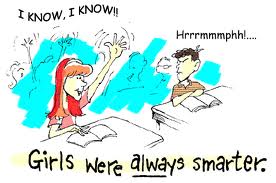
It is no surprise that girls are out doing boys in the classroom.  This has been the trend for quite some time.  But it should focus our energies on how we can teach boys in a more effective manner.

Girls are teaching their male classmates a lesson, blitzing them in almost every subject in Victoria’s classrooms.

Details of NAPLAN tests conducted last May also show Melbourne students narrowly outscore their country cousins, while those with highly educated or professional parents get the best marks.

Girls scored better than boys in 19 of the 20 categories measured in Years 3, 5, 7 and 9.

Nationwide, boys fell behind in almost all categories. Overall, Victoria’s students placed second in half the categories and lead the nation in three.

Year 9 boys were cause for the most worry – 15 per cent failed to meet the writing standard. However, their struggles matched those across Australia, meaning Victoria was still the best in the subject.

There are matters I would like to raise on this topic:

1.  We must do more to engage our boys.  Whether it’s a lack of male teachers or a teaching style that doesn’t work as well with boys, we must get to the heart of the problem and help mend the disparity.

2.  It is absolutely mind-boggling that in todays age we do not have more women in high positions and on multi-national company boards.  It is insane that we even need to talk about employing a quota system to get more female C.E.O’s.  Whilst it isn’t always the choice of women to sacrifice other aspects of their lives for a time-consuming and stressful career, there are many who are keen to get as far as they can go up the corporate ladder.  The argument that positions should be filled by those who are most qualified and capable is true.  However, that should result in females overtaking males in these leadership positions, because they are proving how much better they are in critical areas of learning and thinking.  Unfortunately, I suspect competency has nothing to do with it.

A Continuation of My Previous Post

April 29, 2011

As a continuation of my previous post about the unfair attention given to a teacher who doubled as a writer of adult fiction, I felt it was worthwhile concentrating on the role of parents in education.  There is no doubt that parents are an essential stakeholder in the education process.  Teachers are accountable to parents in the same way they are to other stakeholders.  However, there are times when parents can become too obtrusive. The hysteria that abounded concerning this poor teacher was completely unwarranted and unfair.

Below I have some recommendations for issues parents should feel free to take up with their child’s teacher:

–  Why is my child not progressing?

–  Why is my child not able to understand the set homework?

–  How is my child managing socially?

–  What steps and consequences did you implement when my child was being bullied?

These are questions and issues which parents might be best not focussing on:

1.  What the teacher does in his/her private time

2. How come my child isn’t up to the standard of child ‘x’?

3.  Can you please comment on the teaching skills of a colleague?

4.  Why has my child not received an award or certificate this year?

Whilst parents are encouraged to raise concerns with teachers, it is important to remember that teachers are human, usually fair and often try their best.  To make the education process run smoothly the teacher needs the trust and support of the parents.  In turn, the parents need to be kept up to date with what their child is doing and how they are coping.

To conclude, I wish to thank my readers for their constructive criticism of my previous post.  I was rightly pulled up on some of my opinions and have changed my position accordingly.  I strongly recommend that you visit the blogs of those that so eloquently argued for the poor teacher’s right to privacy and tolerance.  Their blogs reflect the insight and wisdom of their comments.  I am so fortunate to have such clear-minded and compassionate readers.  Thank You!

Should Teachers be Dismissed for Leading Double Lives?

April 29, 2011

Whilst I don’t think it’s ideal for a teacher to be involved in the racy novel-writing industry, I’m not sure that the crime befits anything more than a ban on writing future novels.  A teacher caught involved in such activities hasn’t broken laws but they have somewhat tarnished their reputation.  Still, is it really worth more than a slap on the wrist?

Parental complaints have led Midd-West School District officials to investigate a veteran high school teacher who writes erotic romance novels under a pen name.

The teacher, Judy Buranich, of Selinsgrove, has taught at Midd-West for 33 years. Under the pen name Judy Mays, she has been writing novels for a number of those years. Her books include liaisons involving werewolves, aliens and vampires and can be found in the Romance section at Waldenbooks.

Buranich declined to comment about the controversy Wednesday.

On her website, she refers to herself as “a mild-mannered tenth grade English teacher in a small public high school.”

Wesley Knapp, superintendent of the Midd-West School District, said he has received a few complaints, but it was after The Daily Item approached him on April 18 to ask about the connection. Until then, he said, “I didn’t know anything about it.”

Knapp said he has told those making complaints “that we’d look into it.”

He declined to discuss the matter further.

“When it’s a personnel matter, I can’t comment,” he said.

Deanna Stepp, mother of a district student, said: “We are not questioning Mrs. Buranich’s teaching credentials. We are not even questioning her ability as a writer … . What we’re questioning is that the two jobs are not compatible with one another.”

Another parent, Wendy Apple, said she had Buranich as an English teacher in high school.

“I thought she was a top-of-the-line teacher,” Apple said.

But the erotica, she said, “is unethical, totally unacceptable. Period. It just sort of sickens and saddens me to know everybody’s sort of looking at this like, hey, this is OK.”

Apple has received comments and messages on her Facebook page, she said, from people who are attacking her for speaking out.

Apple said she heard the rumor from several students, and started during her own research. Although most of Buranich’s defenders are saying it’s not an issue because she does the writing on her own time, Apple said, “then how did these kids find out? These kids knew what kind of writer she was.”

As a result of her speaking out, which she had contemplated for about a month, Apple said her son, who has Buranich as a teacher, has received backlash at school as well.

“I wholeheartedly believe that more parents are looking at things the same way we are,” Apple said.

Writing as Mays on Facebook on April 22, Buranich said, “The world is full of idiots.”

She also referred to support she has gotten.

“I have a lot of people supporting me, including students and ex-students,” she wrote.

She wrote that she hopes the expose will make the sales of her books go up, and already has.

Meanwhile, a Facebook page titled “Support Judy Mays (Mrs. Buranich)” hit 88 likes by Wednesday afternoon.

Cindy Wagner, manager, at Waldenbooks, said the novels are under the category of “Romance,” not “Erotica” at the bookstore. She said the books are already tagged when they arrive, and she simply places them on the shelves according to those tags.

So should teachers be allowed to lead a double life?  At what point would they be taking it too far?  Do you think that the parents of Ms. Buranich have what to complain about?  Do you agree that she should be advised to quit writing these novels while she is still teaching?

Monitoring Your Child’s Facebook

April 28, 2011

It’s never ideal to secretly review your child’s activities, but sometimes it’s an imperative that cannot be avoided.  Rather than recommend that parents use this new innovation that allows them to oversee their child’s Facebook page without being classified as their friend, I think it’s important to alert parents and teachers of its existence.

INTERNET security firm Check Point overnight launched software that lets parents watch over offspring on Facebook without being “friends” at the online social network.

ZoneAlarm SocialGuard alerts parents to signs of trouble in a child’s Facebook account without them being privy to all posts, comments, pictures, videos or other digital content shared between friends at the website.

The program scans Facebook profiles, communications and “friend” requests and uses algorithms to identify potential bullying, sexual overtures, or talk of drugs, violence or suicide.

SocialGuard software runs unseen in the background, flagging suspicious activity and sending alerts to parents, according to its Redwood City, California-based creators.

“It’s about protecting your kids from the social threats out there, while still respecting their privacy and fostering open communication,” said Check Point vice president of consumer sales Bari Abdul.

“We are offering Facebook users a simple way to embrace social networking safely,” he continued.

SocialGuard is crafted to detect hacked accounts, malicious links, online predators, and cyber-bullies, according to Check Point.

The software also checks to determine whether people contacting children online are being deceptive about their ages or if a stranger is trying to become a Facebook “friend.”

“Parents are increasingly concerned, and rightfully so, about the dramatically increasing trend of criminals, predators and bullies targeting children over social networks,” said analyst Rob Enderle of Enderle Group in Silicon Valley.

“SocialGuard provides a strong suite of tools that can effectively protect children from these types of social threats that are keeping parents awake at night.”

Check Point cited a survey indicating that 38 percent of teenagers have ignored requests from parents to be friends on Facebook, and that 16 percent of children have only done so as a condition of using the social network.

SocialGuard was available online at zonealarm.com for $US2 ($1.85) monthly or $US20 annually.

Spying on kids is the very last resort.  You would hope that children are able to use social media responsibly.  Unfortunately, too often that is not the case.  Therefore, for safety reasons, it is important that parents are aware of safeguards like this one.

Teacher Stress a Real Issue

April 27, 2011

At a time when teachers are being unfairly picked on by politicians and the media and forced to take the heat for standardized test results and missed benchmarks, there is no wonder why teachers are suffering from stress.  The paperwork is ridiculously high and the support is nowhere to be seen.

Just look at what toll it is having on teachers in Britain:

An increase in Government targets and high-stakes Ofsted inspections is fuelling a rise in serious mental health problems among school staff, according to teachers’ leaders.

Most teachers said behaviour policies in schools were inconsistently enforced, allowing many pupils to get away with bad behaviour

The National Union of Teachers claim stress is now the main reason for driving teachers out of the profession.

It follows the publication of figures last year that showed almost 309,000 school teachers – more than half of the workforce – were signed off sick for an average of two weeks in 2009.

The NUT claim that staff are now routinely expected to work more than 50 hours a week after being swamped by marking and form-filling.

Speaking at the union’s annual conference in Harrogate, activities told how many teachers were resorting to alcohol to get through the day or even attempting suicide because of the workload.

Sue McMahon, branch secretary for Calderdale, West Yorkshire, said: “As a divisional secretary I have seen a meteoric rise in work-related stress and in more than one occasion have had to support a member who has attempted suicide.”

She said the problem was being caused by “the demands being placed on our members to hit Government targets”.

“We got into teaching to teach, not to be beaten by the target-driven culture of those Stepford heads who relish the Government agenda,” she said.

“The target tsunami escalating from the aspirations of this Government is sweeping away those [teachers] that you are struggling to support. And as the wave gets bigger it is leaving a trail of devastation in its wake that used to be a world class education system.”

Teachers need more support and consideration.  It isn’t an easy profession, and yet it continues to be more taxing and highly stressful than ever before.  Less paperwork, less beaurocracy, more support and more leadership from our politicians and administrators please?