Posts Tagged ‘Education’
November 4, 2011

Teacher burnout is a significant problem that strike even the very best of teachers. Even the most passionate and dedicated of teachers struggle to see out a term out without getting sick or feeling extremely fatigued.
The question is, how do we address this problem?
Research shows the teaching profession has the highest burnout rate of any public service job. What can we do to keep the best and the brightest teachers in the classroom?
In April, the American Federation of Teachers (AFT) and the American Institutes for Research (AIR) released the report, “Workplaces That Support High-Performing Teaching and Learning: Insights From Generation Y Teachers.”Gen Y teachers—that is, those under 30 years of age—account for at least one in five teachers in US classrooms today. They start out intending to make teaching a lifelong profession. However, according to the report, young teachers leave the profession at a rate 51 percent higher than older teachers and transfer to a different school at a rate 91 percent higher than their older colleagues. Studies also show that the national teacher-turnover rate costs school districts approximately $7 billion annually.
In the AFT/AIR report, young teachers say they want:
- Feedback on their performance and to be evaluated in a fair way
- Time to collaborate with their colleagues
- Differentiated pay for high performance
- Technology to provide engaging and effective lessons, as well as to support collaboration with other teachers through, for instance, videos and conferencing technology.
I agree with every point, but have a problem with the third one. Whilst I believe Governments should look into a differentiated model of pay for high performers, I don’t believe such an initiative would have any bearing on cases of teacher burnout.
The list of proposed changes by young teachers above is most fair and reasonable. If responded to, the outcomes could be quite positive all around. It’s certainly time to better address teacher burnout. It’s an issue that cannot be dismissed and will not go away.
Tags:AFT, AIR, American Federation of Teachers, American Institutes for Research, and Effectiveness, Burnout, Education, Generation Y, life, National Education Association, Retention, Susan Moore Johnson, Teacher, Teacher Evaluations, Teacher Welfare, teacher-turnover, Teachers, Teaching, technology, The Workplace Matters—Teacher Quality, Workplaces That Support High-Performing Teaching and Learning
Posted in Teacher Welfare | 1 Comment »
November 3, 2011

I am not writing this in the guise of a victim. I did not become a teacher for the money, nor do I ever expect to be paid a great deal more than I am currently getting. But let’s not fool ourselves here. Teachers are not overpaid. To call them overpaid
is absolutely ludicrous!
Despite the public perception that public school teachers in general are underpaid, Jason Richwine, senior policy analyst at the Heritage Foundation and co-author of “Assessing the Compensation of Public-School Teachers,” says “the reality is that it’s just not true. There’s no way to look at the data and conclude that they are underpaid. They are certainly paid more than they can get if they work in the private sector…” In fact, Richwine found that “public-school teachers receive compensation about 52% higher than their skills would otherwise garner in the private sector.”
When working out how much a teacher is making an hour the following assumptions are normally made:
- Teachers work a 9 to 5 job – This is certainly not true. Unlike many professions a teacher’s job is not done at the end of the workday. We have to take our essays and tests home with us. We have to write reports. We are also required to do our planning in our own time.
- Teachers get generous holidays – Whilst this is essentially true, many fail to realise the amount of work we do during the holidays. From setting up the classroom, attending handover meetings and planning, much of my vacation time is dedicated to preparing for the following term or year. In the holidays, I write-up yearly planners, term planners, literacy planners, numeracy planners and integrated unit planners. Most professionals would hate to do any job related work over their vacation time. We have no choice.
- Teaching is a fairly undemanding profession – Teaching is known to be an exceptionally stressful job with the highest reported rate of bullying of any profession. Teachers can be bullied by a number of sources; from parents, students, bosses, administrators to fellow colleagues.
You can’t afford to give us a pay rise? Fine. But don’t you dare call us overpaid!
Tags:Assessing the Compensation of Public-School Teachers, Careers, Education, Heritage Foundation, Jason Richwine, Jobs, Money, Overpaid, Professions, Teachers, Teachers Salary, Wage
Posted in Teachers Salary | 1 Comment »
November 3, 2011
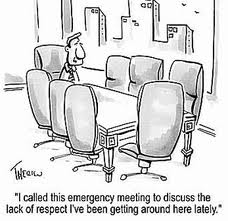
Whilst it may not come as a surprise to learn that British society casts negative views about the way children behave, the level of disrespect and animosity doesn’t bode well for the future. To liken children as ‘feral animals’ may well be an accurate description for many, but I can’t help thinking whether such criticisms results in a stronger us vs them mentality.
Almost half of Britons think children are violent and starting to behave like animals, a Barnardo’s survey suggests.
The children’s charity says the research suggests society holds a negative view towards children despite the majority being well behaved.
Of the more than 2,000 people questioned by ICM Research, 44% said young people were becoming feral.
Barnado’s chief executive Anne Marie Carrie said it was “depressing” so many were ready to give up on children.
The survey revealed that:
- 49% agreed children are beginning to behave like animals
- Almost 47% thought youngsters were angry, violent and abusive
- One in four said those who behaved badly were beyond help by the age of 10
- Whilst 36% thought children who get into trouble need help, 38% disagreed
Writing off our young is not a good move. We just can’t stand by and blindly judge. We must do what we can to ensure that the next generation of adults feel empowered to make a positive contribution to society.
However uneasy people are feeling about the state of children in today’s world, it is up to us to straighten things out. As it is, I am unhappy by the way my generation virtually ignores the contributions and sacrifices made by our elders. I hate to think how badly the younger generations will treat us.
Tags:Animals, Anne Marie Carrie, Barnardo survey, Barnardo's survey, Charity, Child Development, Children, Education, Feral, ICM Research, Natasha Cripps, Parenting
Posted in Child Development | 2 Comments »
November 2, 2011

For those of you that think your boss is bad:
A BULLYING school head has been banned from the job for life – but can still teach.
Debbie Collinson intimidated and swore at teachers and even gave pupils “Coke and doughnuts” in exchange for information about staff.
She also told teachers to falsely improve attendance records and test scores.
Collinson, head at Harrow Gate Primary School, in Stockton-on-Tees, Co Durham, was found guilty of professional misconduct.
Tribunal chairwoman Dr Barbara Hibbert told the Birmingham hearing: “It is simply unacceptable to manage a school in the manner in which she did, whatever the motivation.”
Collinson, who is in her late 40s, is no longer at Harrow Gate. It is it not known if she teaches elsewhere.
If your boss can match or better Ms. Collinson, I’d love it if you could share it.
Tags:Bosses, Bullying, Career, Colleagues, Debbie Collinson, Education, Harrow Gate Primary School, life, Office, Teachers Stress, Workplace, Workplace Bullying
Posted in Teachers Stress | 1 Comment »
November 1, 2011
I have seen first hand how the youngest children in the class are often among the most behind. Some clearly aren’t as mature as the others.
That’s why I was not surprised to read that children born in the summer may need more help to come up to the same academic standard as their older classmates.
Children born at the start of the academic year achieve better exam results, on average, than children born at the end of the academic year.
This matters because educational attainment has long-term consequences for a range of adult outcomes. But it is not only educational attainment that has long-lasting effects: other skills and behaviours affect adult outcomes too, and can also matter for children’s current wellbeing.
In line with previous research, our report shows that there are large and significant differences between August- and September-born children in terms of their cognitive skills, whether measured using national achievement tests or alternative indicators such as the British Ability Scales; these gaps are particularly pronounced when using teacher reports of children’s performance.
Those born in August are also significantly more likely to take vocational qualifications after leaving compulsory schooling and slightly less likely to attend a Russell Group university.
I was one of the youngest in my class and really struggled to keep in touch with my classmates. I was slow to mature, and in hindsight I probably should have stayed down a year to maximise my academic potential.
Having said that, I believe that parents can get fixated with their children being among the youngest and can use it as an excuse. This then filters down to the child who rationalises their performance by making the same excuse.
Tags:August-born children, Children, Claire Crawford, Education, Government, IFS, Institute of Fiscal Studies, kids, Parenting, Russell Group, Teachers
Posted in Child Development | 1 Comment »
October 31, 2011
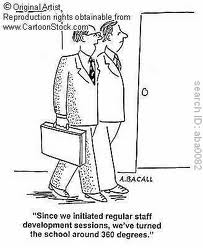
Ofsted is wrong. Teacher training doesn’t need to be tougher, it needs to be smarter. The reason why our new teachers find it so hard is not because they cruised through their training but because their training didn’t prepare them for the classroom.
Tougher teacher training is not going to achieve anything:
Tougher training should be given to teachers in a bid to raise standards in the classroom, an education watchdog has proposed.
The guidelines, drawn up by Ofsted and published on Monday, would see a greater emphasis on teachers’ behavioural management and ability to teach pupils to read, including those with special educational needs.
The ways in which trainee teachers are currently assessed would also change; inspectors will rate trainees’ effectiveness in few categories but according to a tougher criteria. The inspection will include an increased focus on trainees’ subject knowledge and the quality of training.
My University course was as tough as they come, but it was too steeped in the theoretical. I needed far more exposure to classrooms than 5 weeks in year one and 9 in the second and final year of my degree. I needed to see how different teachers and different schools operated. I needed to be in touch with resources that was shown to work and methods that I could employ later on.
Instead, I was treated to mindless theory and useless advice. It was an extremely tough course, but one that offered me precious little in terms of real experience and practical insight.
Tags:Classroom Management, Education, Lucy Sherriff, Miriam Rosen, Ofsted, School Standards, Special Educational Needs, Teacher, Teacher Training, Teachers
Posted in Teacher Training | 1 Comment »
October 31, 2011

Today I was fined by a parking officer for parking in a permit zone. I had only left my car for a few minutes, and clearly that’s all it takes.
On my way back from the shops I noticed a parking inspector processing a ticket by my car. I asked him what I did wrong. I pointed out the 1 hour parking sign. He pointed to another small sign among others that notified those with good eyesight that the spot was a permit zone on weekends but fine during the week.
I told him that I was only gone for a second and that I had made an innocent mistake. He didn’t pay attention. My daughter cried sensing something was wrong and becoming unsettled by the man’s presence. The man ignored her and kept on typing.
$75 – that’s what the tiny mistake cost me!
I realise that the man was doing his job. He probably has a wife and family to take care of and bills to pay. I don’t blame him for his actions or diminish his right to take on this job.
But ultimately, I’m so glad that I am a teacher and not a parking officer.
Parking officers serve no real value to the community. They are employed by council workers who should have enough revenue to waste through our overpriced rates. But no, through parking infringements, they have another steam of revenue they can waste in good measure.
Nobody is glad to see a parking inspector walking around. Nobody goes to lengths to welcome them or engage in small talk. Their job is to prey on people’s mistake and slug for an inordinate amount of money.
Teaching can be so much more than that. We can represent all that’s positive about this world. We can be mentors and role models. We can help children grow to reach their potential.
Unfortunately, we can also do a lot of damage. If we are not good at our job or our heart isn’t in it, we can be the manifestation of what is wrong with this world.
That’s the great challenge for teachers. To be the polar opposite of a parking inspector.

Tags:Careers, Economy, Education, Fines, Jobs, Laws, life, Mentors, Money, Parking, Rolemodels, Self-Esteem, Teacher, Teaching, Wastage
Posted in Teaching Methods | Leave a Comment »
October 30, 2011

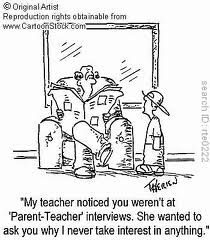
Below are some useful pointers for parents attending parent-teacher conferences courtesy of educator and writer, Susan Schaefer.
- Be punctual — Teachers are on a tight schedule so if you are late you might get bumped to stand-by.
- Come with a list of questions — Avoid wasting time by jotting down your most important concerns before the conference. If you have a question that requires a lengthy response, schedule a follow-up time to speak with the teacher.
- Focus on academics — The primary focus of school is academics so ask questions about how your child is doing and how you may help your child improve if necessary.
- Be open-minded — The teacher may have some observations you do not see at home. Our kids bring out our most basic emotions, but try to opt out of defensive mode and listen to what the teacher has to say.
- Ask for clarification — If the teacher says your child is “chatty” or “plays roughly” ask specifically what that means or ask for examples when he or she displayed that behavior.
- Don’t complain about other kids — However, suggesting she not sit your child with another child is fine. If there have been specific incidents you feel the teacher should know about, go ahead and share. The teacher will listen and handle it, she just can’t comment on other kids.
- Treat the teacher with respect — It’s sad that I even need to say that. Teachers are professionals with the education and experience necessary to competently teach your child. You would not appreciate other people that are not in your profession telling you how to do your job and either do they.
- Do not stay past allotted time — Understand that the teacher is not trying to rush you but there is only so much time and others are probably peering in the door for any sign you are about to wrap it up.
I agree with all of them except for the one about keeping the focus on the academic. I believe that parents should be able to focus on any matter or topic that concerns or interests them. I also believe that the social welfare of a child is every bit as important as their academic progress.
Tags:Academics, Education, Meetings, Parenting, Paret-Teacher Conferences, Punctuality, Respect, Susan Schaefer
Posted in Parenting | 3 Comments »
October 29, 2011
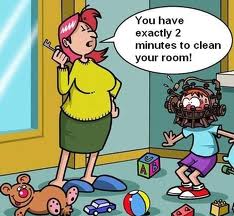
Even the best parents and teachers struggle to get kids doing menial tasks on a consistent basis. From making their beds to putting their lunchboxs back in their bag, it’s amazing how difficult it is to get children to be responsible for small yet important tasks.
That is, until an app was designed to assist desperate and exhausted parents:
You may find this shocking, but getting my 11- and 9-year-olds to do household chores is like pulling teeth. Rotten kids!
That may change now that I’ve got You Rules Chores on my iPhone. This clever new app turns household chores into a game, rewarding each kid a designated number of coins for each completed job. Whoever finishes the week’s chores first is the winner. (Of course, we all know who the real winners are: mom and dad.)
The app features cute graphics and music, and after a parent gets set up as the “referee,” each kid gets to choose an avatar (from only six available, alas).
Tags:App, Applications, Apps, Children, Chores, Education, Family, Games, Gaming, i-Pad, i-Phone, kids, life, News, Parenting, Rick Broida, technology, You Rules Chores
Posted in Parenting | 2 Comments »
October 28, 2011

It seems to be more fashionable than ever to knock teachers. Teachers are being dubbed as lazy and inept.
In truth it is easy to criticise teachers but very hard to be one.
We need more articles like this one by Patricia McGuire to defend teachers and set the record straight.
Yes, teachers should certainly be held accountable for excellence in teaching and for measurable results in the progress their students make each day. Teachers are on the front line of student learning assessment, since they really do know better than anyone else what makes a child successful or lackadaisical, engaged or detached in class. Standardized tests rarely measure the real progress that teachers make with some of the most challenging pupils whose learning styles are far off the normed curves.
The current fashion in education reform treats teachers as lazy slugs who care little about whether their students are learning anything. The assumption behind using standardized testing for teacher evaluation is that the only way to make teachers care about learning is to embarrass them publicly when their students do not perform according to someone else’s idea of norms. This assumption is what is truly preposterous!
For teachers who choose to devote their life’s work to some of the most difficult classrooms in America, such as here in the District of Columbia, the testing imperative becomes a monumental disincentive to stay in the classroom for any length of time, since the opportunities for sustained superior results on standardized tests are rare, while the risks of frequent subpar results are very high. It’s no secret that the widely-hailed Teach for America program has ingrained two-year turnover in its teaching corps. TFA teachers rarely stay to wrestle through the down years, which are frequent among students in marginalized communities.
Governments are so busy trying to find a negatively geared incentive for teachers and a scale that compares their effectiveness that they have lost sight of the most important pieces of the Education reform puzzle:
1. Revolutionise teacher training programs to focus on the practical instead of the theoretical.
2. Have measures in place that allow all teachers (especially new teachers) the support they need.
3. Spend more time critiquing schools with questionable cultures of bullying and harrasment. Give these school’s the support they need to better handle their affairs.
Tags:Arne Duncan, Education, Education Reform, Lazy, life, Parenting, Patricia McGuire, Standardized Tests, Teach for America, Teacher Assessment, Teacher Evaluation System, Teacher Evaluations, Teacher Training, Teacher Welfare, Teachers, Teaching, Value Added Teacher Evaluation
Posted in Teacher Training, Teacher Welfare | 2 Comments »







 Topical Teaching
